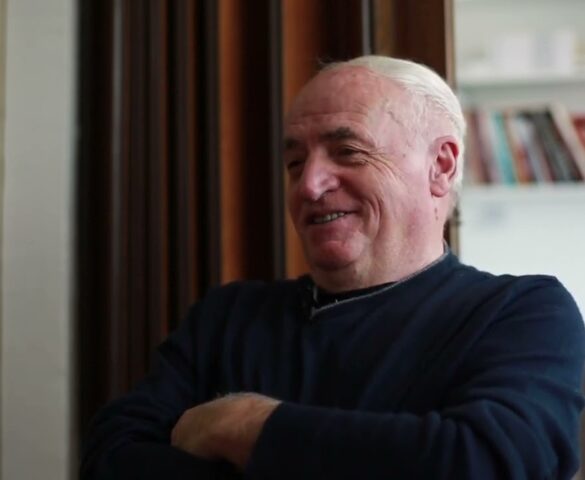
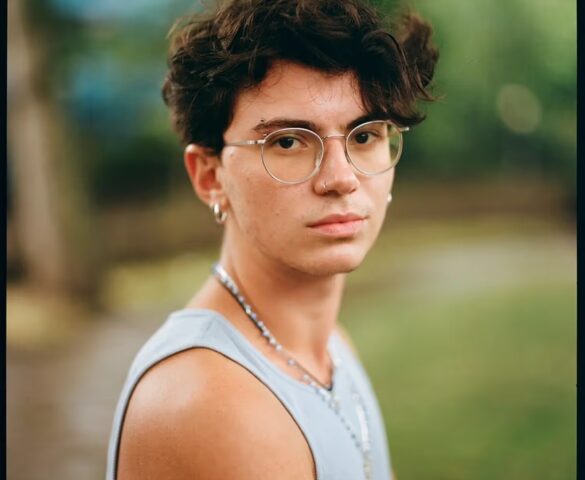
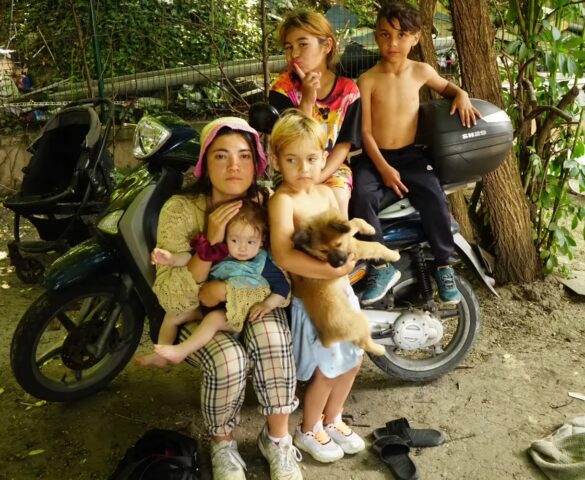
But, yeah, it’s called Stray Dog because I was bitten by a stray dog and I was in Shkodër. And then I went back home to my grandma two years ago. It was just a tiny dog, but, it was like, I went back home and I told my grandma and my grandma was like, ‘Oh, just put some raki over it, you know, it’ll be fine.’ […] And I think that’s my kind of metaphor for who I am. And the way that I inhabit that space is that I’m always walking around the streets of Shkodër looking for something, like scraps, like the stray dog looks for food, but like, I’m looking for something, you know, that I may never find, but I’m still kind of part of that. I still belong to it. But at the same time, I’m an outsider. And I think that’s my positionality with this project and just with my being.
Kairo Urovi
Wandrille Potez
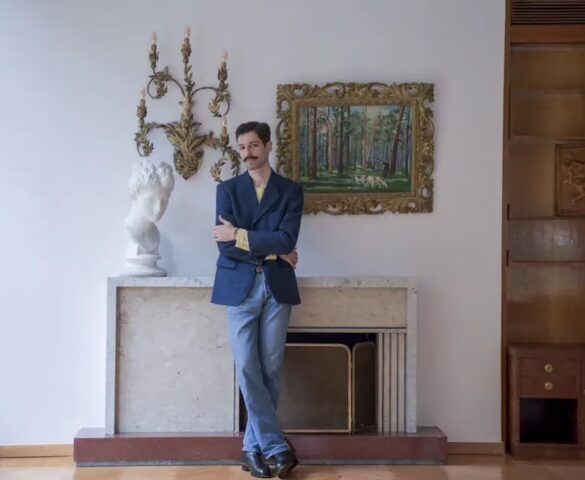
We have to protect this idea of fragility as a condition of the preservation of the space. […] When I enter in a church like this, I find it, like, wonderful, you know, it’s beautiful like this because thanks to the holes in the roof there is lights on the frescos and it’s a chance, like a beautiful chance to be able to see it like this. Very few people saw it like this. And at the same time there is this kind of anxiety because you see, you know that it’s on the point to disappear, the building or the atmosphere, like, if they restore it. So there is also a kind of contradiction, and very into– when I choose to take a photo to try to deal with it, like, a mix between admiration and anxiety.
Erdiola & Anne
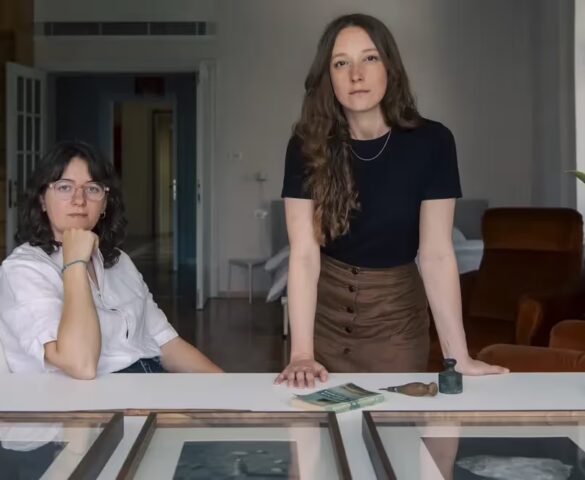
But this place lived in my memory just as a fantasy since a few years ago, because nobody had the possibility to go. I think I’m the first person that went in my family. Neither my mother nor my father went there. My grandparents for sure didn’t have the possibility at any time to go back. […] And so, in a way, it was a bit… the first trip I made to Çamëria, it was, I have to say, really strong for me because I was going there with a backpack that is not mine, and it was really heavy, emotionally it was really, yeah, heavy. And immediately you are there and you see, and you are physically touching that place that you heard [about] just by words or songs or dances.
Amie Barouh
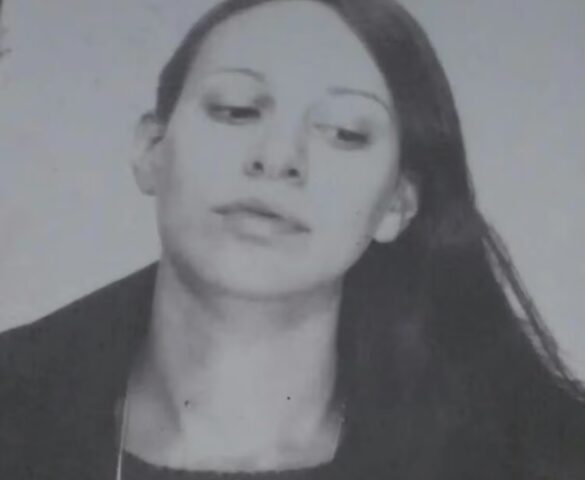
This project, that I didn’t do, but I wanted to do in Albania with interviewing the kids about their dreams, it is really connected with my work now because I am… Look, all my work is about the invisible parts of the reality, and it’s about this border that we have between reality and imagination, or what is true, what is false, what we see, what we can’t see, what we call real […] Archives, for me it’s interesting because it’s speaking about the past, and when I work with these dreams, the past is also the present. And I like to mix the time, the places
Genny Petrotta
So first, I mean, Villa 31 is just not a residency in Tirana. It was a super strong and a heavy place to be. Somehow it was a perfect place for my project, cause my project was related about power, authority, gender, death also, because the framework, the poetic framework I chose for the project was Hamlet, and the former house of Enver Hoxha was an incredible place for that also. Also, you know, when you arrive there, and the house, it was closed for many years, you realize that you are living in the former house of a killer. So everything is very heavy. […] I was dreaming a lot there. For instance, the first dream I had, it was about being poisoned. That probably is the trauma of every dictator, I guess. But I realized just after a few weeks. But every morning, I was writing all my dreams. I have to say, they were very vivid. I don’t have such vivid dreams, at least in the last time, but I’m used to have– I mean, to remember my dreams in general. […] And then it was also adding something to my work, because it was like, okay, since I don’t want to speak about– I mean, I want to take space from all the sensationalistic, exotic topics about burrnesha in the Western culture. It was also a very, to me, at least, a straight way to engage, an embodying, [to] embody the discussion, living this through the body and through the poetry. […] So, again, going, maybe, trying to use Hamlet, that it was poetic framework, but that is not from Shakespeare. Hamlet is from everywhere. Hamlet is from the legend of the North, in many, many, many years ago. There is also a Hamlet from Persia. There is a Hamlet of Amelia Rosselli. So it’s something that still, again, belongs to everybody, and is a rite of passage that talks about revenge, about gender, about death. So I think using the body is the possibility to work in a universal way.
Stanislava Pinchuk
I think because of the kind of politics of the Soviet Union, now in the rhetoric of Putin and the, you know, Russian invasion of Ukraine, it’s this kind of ideology which refuses to die, this totalitarianism that refuses to die. […] I guess I was kind of very interested in the potential of the residency to be a place of transition, of questioning and not giving answers, but actually being there not because we have answers, but because we have questions. […] And these kind of, yeah, zombie communist, early proto-capitalist cowboy years, this was a kind of a really interesting time to grow up […] like how impossible these acts of forgetting are, you know? How like, truly impossible, you know. […] So what I’m optimistic about are young people. I think, I really feel so much more, I don’t know, attuned to, and kind of more, I don’t know, sympathetic with young people, and what they’re thinking about, and how they’re making work. […] I think the kids are all right. I think they’re going to do some great stuff.
Samir Laghouati Rashwan
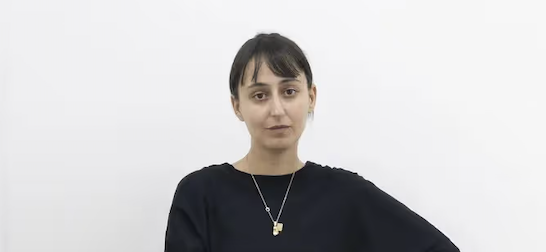
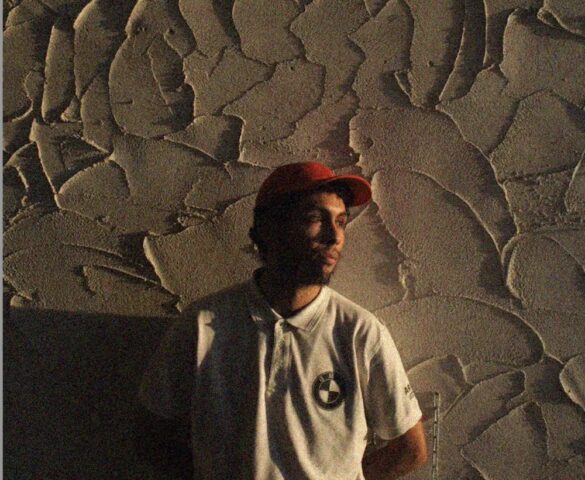
One night I start to shoot in the house at 2:00 a.m. […] and I started to be, like, afraid to think about ghosts and everything. So I think at that moment I was asking myself like, ‘Yeah, you’re afraid, but maybe they’re afraid about you too.’ […] I’m the narrator of the video but I’m also, during the video, trying to be a ghost. And I share with people, like, a lot of questions, like if everyone is afraid about ghosts, if ghosts are afraid about us, if they can fall in love. […] I was thinking, like, maybe the ghost can be, like, the universal stranger. And so I took this way to maybe talk about, like, stereotype, about, like, minorities […] I think we have stereotypes on ghosts, and with the ghosts and the diaspora, and minorities, I tried to do a link between the both.
Adriana Ramić
Like you will be wrapped up in these everyday sort of moments like, ‘Oh I have to do the dishes. I have to do the laundry,’ and then you remember where you are doing them, in this, like, horrifying house. It’s very surreal. […] I was seeing Ursa, the cat, always walking around, and I film animals as part of my work, so I thought let’s start filming Ursa and see what happens. […] Every day or every other day she will bring some sort of animal like a lizard into the house and torment it, and play with it, and then leave it frozen in one of the ground floor rooms or something. […] There is also something very uncanny about the fact that they’re, of course, this is what cats do wherever they are. They bring in smaller prey and torment them. But for that to happen here is also very uncanny, very strange. […] Maybe I experienced the paranormal through Ursa. There was a time at 3:00 a.m. I came home and she was on that grand staircase. And she had her ears completely back, and she was very afraid, and she was tiptoeing around, looking for something but nothing could be seen.
Nita Deda
The program of the residency, of Art Explora in this villa, it’s an open call that is inviting artists to apply with an idea of a research or a project that they would like to develop. And from this call, there was a jury of six members that is selecting up to 30 artists a year. These artists apply from more than a 100 countries from the world. So from all over the world. And the sessions are divided into three sessions a year. These artists, they live in the, they live in the house. There’s a studio, they have a studio space, and they have a working and living space here. They have a grant to develop a new work. And they also have a lot of help from the team, us here, to link them to the local context and to also link them to the scene here and to help them develop the research that they want to do […] For the Albanian artists that are part of the residency, this, it’s more of an emotional journey, I would say. This is what I’ve seen. [Diona Budima:] A lot of them told us that they were having very vivid dreams when they came here. [Nita Deda:] Yes, yes. And there was one idea. I don’t know if that’s going to happen, but we had one artist that had a very good idea of putting a box and of people writing their dreams, of what they’re dreaming here, and maybe after ten years, to have an archive of what people are dreaming here. And maybe after ten years to open up. I think it was Stanislava Pinchuk that had this idea of– then after ten years to open up this, and to maybe, like, do something to this archive of dreams here. But yeah, I mean, for example, Stanislava also connected to her own upbringing. It’s not that, you know, that this is a trigger of also like other similar realities, you know, of growing up in the Soviet Union, for example.
Miradije Ramiqi
PainterNobody knew I was from a village. When I came to Pristina, they thought I was the daughter of some official, that I was either from Pristina, or from Peja, or from Gjakova. What did I have to do with them? And later, you know, because they had that idea about me, they didn’t really say anything to me after that, but then later they would ask me, ‘Wait, aren’t you from Gjakova?’ I would say, ‘Why do I have to be?’ And Professor Ramiz said, ‘Hold on, girl, I want to ask you something.’ Just like that, you know. In the courtyard, after I went outside. I said, ‘Yes, professor?’ He said, ‘May I know where you’re from?’ I said, ‘Yes, professor.’ He said, ‘Are you from Peja?’ I said, ‘No, I’m not from Peja.’ ‘From Pristina?’ ‘No.’ ‘Where are you from then?’ I said, ‘I’m the complete opposite. I’m from Pozheran. Do you know where Pozheran is? I’m from the village. I’m a civilized redneck’ Exactly like that. I don’t know, I had these kinds of notions that would come to me on the spot, when people imposed them on me, and then I gave myself those labels. I would say, ‘I’m a redneck, but a civilized one.’ He said, ‘Right, because I can tell you apart, I keep seeing you in these clothes, you stand out completely. You know? And you have a completely different kind of upbringing, in the way you walk, the way you move, the way you socialize, I see it. You carry yourself differently.’ I said, ‘Alright, professor.’ Then he says to me, ‘Good. And who makes your clothes? Who is your designer?’ I said, ‘What–’ I didn’t even know what a designer was. I said, ‘Professor.’ He said, ‘Yes? Are you going to tell me?’ I said, ‘Yes, professor. You have her right in front of you. She is standing before you.’ He said, ‘Where? What?’ I said, ‘Here, here.’ I was pointing at myself with my hand, just like that. I said, ‘It’s me.’ He said, ‘How is it that you, a village girl, know how to do all this?’ I said, ‘Professor, excuse me, where are you from?’ He said, ‘I’m from Peja.’ I said, ‘That’s not true. You’re from Rugova.’ He said, ‘Yes, I’m from Rugova.’ Because later he told us what he had gone through when he went to secondary school in Peja, what he experienced, how they looked at him as a redneck and all that. And I said, ‘Professor, compared to where you’re from, Pozheran is flatland. It is a town with a very developed culture. There are also people who–’ Intellectual is a big word, in my opinion, because to call yourself an intellectual, you have to be informed in many different areas.
Merita Idrizi Behluli
ArchitectThese years from 2020 to 2025, the beginning of 2025, have been the most beautiful years of my life. My husband came [to Skri Lanka] too, I went back often, and the children came as well. It’s a very beautiful culture. Modestly speaking, it doesn’t matter where you are, who you are, or who or what you work for. You can find a home anywhere in the world, and everywhere, you find people. Even when I was sick with dengue fever, I was surrounded by people who cared for me. I wasn’t alone. Mehmet even said, ‘I’ll come,’ but I told him, ‘You don’t need to, I have people here taking care of me, there’s no need.’ That’s how you find a home, you find love, you find kindness everywhere. The world is one sky; the world belongs to everyone. Why should I confine myself only to my house, my country, my family? It belongs to all of us. We are just in one part of the world. So now my daughters, one is in Berlin, one is in Lisbon. I’m not upset that they’ve gone, and we don’t say, ‘Why don’t you stay here with us?’ It doesn’t matter, wherever you go, you contribute…Wherever they have it better, wherever they see more, wherever they contribute, they are also contributing to their own country. And this is no longer the classic form of migration; now it’s simply globalization, home and country exist everywhere.
Ukë Xhemaj
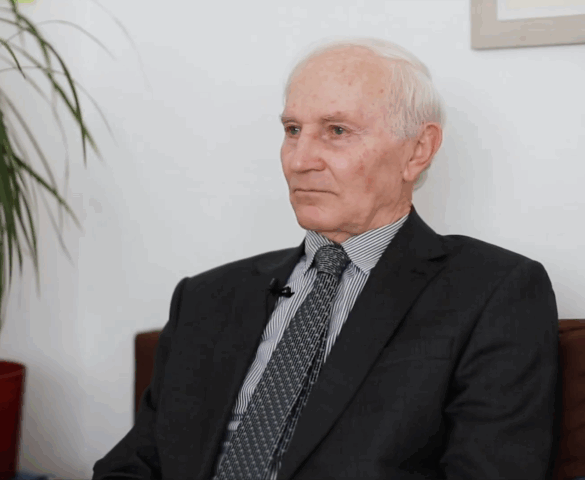
EthnologistThey first entered the Academy of Arts and Science, and people were expelled from it. They took away the library, they took the books… Everyone knew it was only a matter of time. I remember that every afternoon we would stay at the Institute, turn off the lights, and wait for them to come…It didn’t last long. In the evening, someone from the bakery Qerimi would bring us a meal with some bread. At night we stayed in shifts guarding the institute…We had spread out on different floors to guard the building. When suddenly… We were on the third floor. Anton Çetta was there, and I happened to be there too, as well as Qosja. There were others, like Adem Zejnullahu. When he came up from the lower floor, because there was a switchboard operator, he said, ‘They’ve come. The police are outside.’ He addressed the director: ‘Sadri, it’s your responsibility, you’re the director. Go downstairs and speak with them.’ Sadri went down to the entrance on the ground floor, where the police were. He said to them, ‘I am the director. Please, what is that you want?’ Suddenly one of them struck him with a punch and knocked out all his teeth. When Sadri came back upstairs, the police stormed in.
Linda Gusia
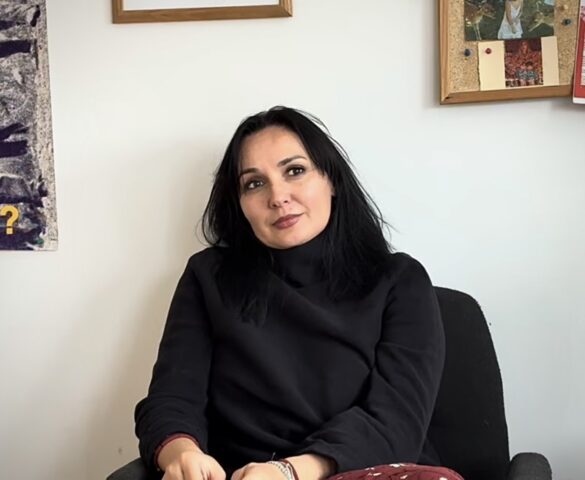
SociologistFor example, we would finish quickly, we’d just take the key information. That was also the advantage when I worked sometimes with the BBC and sometimes with other television crews. I didn’t like television at all, because it was very performative. For instance, on TV it was very important to see the fire, to capture it like that, the image was what mattered most. With investigative journalists, we would stay a bit longer, spend more time researching, but even then it was still this kind of ‘tell us’ […] and we were there asking people to tell us about the worst day of their lives, to tell us the most traumatic event they had experienced—and then we would say, ‘thank you very much, have a good day’…
Who We Were; Who We Are: Kosovo Roma Oral Histories
Who We Were; Who We Are is a text with links to oral history interviews with members of the Roma community. It was published in 2004 by a team of researchers – Sebastian Šerifović, Adem Osmani, and Afërdita Berisha – led by Bobby Anderson. Anderson kindly gave us permission to include it in our living archive. This project was sponsored by the Open Society Institute Roma Culture Initiative, with the logistical support of Communication for Social Development and Balkan Sunflowers.
By Roma, which is the Romanes word for “man,” or “us,” the researchers meant to encompass Roma, Ashkalija, and Egyptian, as well as a variety of sub-groupings, identified by the individuals interviewed as: Gurbeti, Muhadjeri, Arlija, and Bugurdjije. There is no better way to introduce the publication Who We Were; Who We Are than with the words of Bobby Anderson in the introduction:
“This project is a document of what has been lost. It’s about a language choked with
foreign words; traditions often followed by rote; a people removed from their past,
trying to preserve the things they have left that make them Roma. It’s about a people
who have lived in Kosovo for hundreds of years and have never been afforded a true
place there by others. It is said that the Roma version of history is simply the earliest
memory of the oldest member of the community. And when they die, they take their
history with them.”
Teuta & Ajshe Hadri
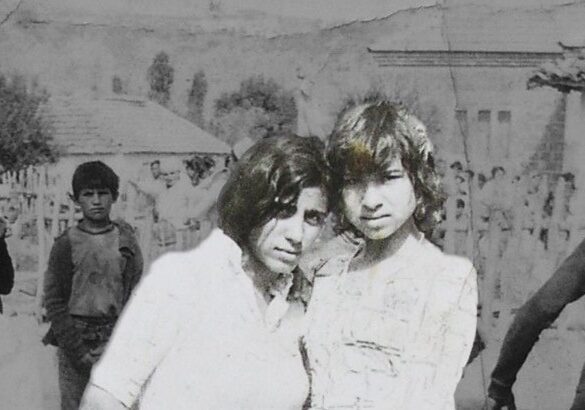
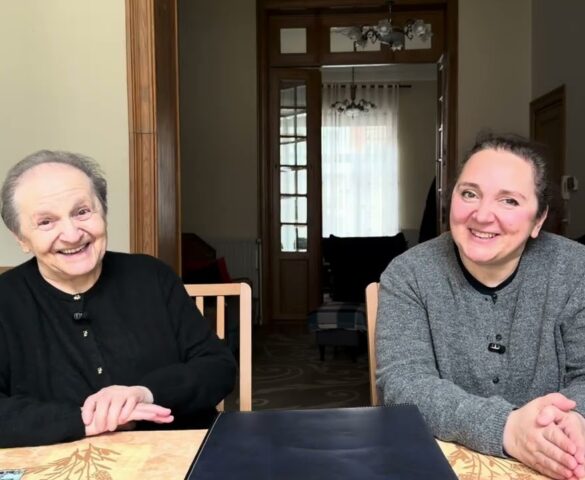
Ajshe Kastrati Hadri: “We went together to enroll at the university. I went with her and said, ‘I want to see that you really enroll.’ So I see a lady, older than me, looking at the board. She saw her name, that she had passed, and she started jumping and shouting. I said, ‘Teuta, what is this lady doing, has she passed her year, her exam?’ And I said, ‘Well then, I’m coming too, I’m going to enroll as well.’ You see, I really like studying. I got married at 18, then I had children, responsibilities, I came here, I didn’t know the language well. Now people come and they go to information centers, they learn the language and all that; I had to work, and I stayed like this. Otherwise, with pleasure, I would have gone to university. I liked studying, yes, yes.”
Teuta Hadri: “As for the trial itself, I decided to spare my brothers and my sister this heavy burden. I told myself, ‘This is my moment. I’m the one who will handle this.’ I was determined to say, ‘I will only speak with my lawyer. I won’t let any information slip, not to my brother, not to my mother, not to anyone. I’ll keep this completely under my control until the very end.’ That was the first thing. The second thing was that I also wanted to reclaim this part of history, which will forever be part of my father’s story. Because obviously there were others who tried to appropriate it, political appropriation, or simply claiming the story by saying, ‘We were by his side. We were there. We did this, we did that.’ …For me, the trial was a way of mastering something in the present, because I couldn’t control what my father was doing when I was little. Even now I still struggle to explain it.”
Selim Krasniqi
EducatorFor eight years, our gymnasium operated in the school of Lismir. Crossing the railway tracks there was especially difficult, it was almost impossible for a night to pass without some student being frightened or beaten by the police of that time, the Serbian militia. Fortunately, the parents contributed a great deal. Without their help we would not have been able to achieve anything, neither then nor today. They sent their children to school and said, ‘The children are yours. Take care of them at school where you are. You cannot accompany them on the road,’ because we had at least 400 students. Four hundred students with five teachers could not possibly be escorted. Those were the most difficult years. But fortunately, in the houses where we held classes, the students tried hard even in those small, cramped rooms, sitting on some rug with a notebook on their lap, or sometimes sitting on a plank used as a seat. Wooden boards were used in place of blackboards. They were extraordinarily disciplined and worked very hard. Many of them succeeded and today they are the intellectuals who work at the University of Prishtina and also abroad.