Sahit Berisha

Pristina | Date: February 12, 2024 | Duration: 286 minutes

[Shkolla Normale, November 30, 1968]. When Xhavit Nimani took the floor… it was already very late, almost 8 in the evening…I got angry and spoke arrogantly, I said, ‘Enough, do not tire us.’ …For this day, for this speech, I had prepared myself. I had memorized some things by heart. Ali Boletini taught them to me, as did Hamëz Shala and Halil Alidema. They made me repeat the words. ‘Ask for the flag. Because the partisans fought in the anti fascist war with this flag, ask for it. Ask for the development of the country. Ask why Trepça is being exploited.’ …And Ali never spoke loudly, he said, ‘Do not be like Halil who bangs on the table, you do not bang on the table. If you are there, you must present the demands.’.. Point by point, like reciting a poem, I mentioned all of those things… After I finished with my final sentence, I said, ‘Comrade Xhavit, it is useless to keep us. Until those in prison are released we have no intention to end the strike, the boycott of lessons.’ …On December 4,  they were released. That was our victory. But the possibility to speak, to say things, to demand, was greater…an inspiration that it was indeed possible to make even political figures like Xhavit Nimani back down.


Anita Susuri (Interviewer), Ana Morina (Camera)

Sahit Berisha was born in 1947, in the village of Leletiq, Lipjan. He graduated from the Shkolla Normale and the University of Prishtina with a degree in History. He was arrested and served time in jail as a member of the Ilegalja. Berisha taught history in high school until the 1990s, when he took charge of the security details of President Ibrahim Rugova. Later, he was involved in clandestine liaison work, logistical facilitation, and information distribution for the Kosovo Liberation Army.

Sahit Berisha

Part One

Anita Susuri: Mr. Sahit, can you introduce yourself and tell us something about your early childhood memories and your family?

Sahit Berisha: Thank you! First of all, I would like to greet you and congratulate you on the mission you have begun. It truly is an important mission, one that you yourselves will see requires dedication, experience, and, naturally, a great deal of difficult work. But it is worth it, because you are collecting the testimonies of ordinary people who, in one way or another, thought about their duty and tried to fulfill an obligation they had toward their homeland. Every person who is born has an obligation—to their country, to their family, and above all to their homeland—to contribute when the need arises. So with this greeting and this wish, I hope you succeed, and I am grateful that you have taken some time to have this conversation in which I will recount my life, my family, and so on.

My name is Sahit Berisha. My father was Nimani. I was born on September 28, 1947, in the village of Leletiq. Our family originates from Berisha, our roots are in the village of Berisha where for economic reasons, and perhaps other reasons as well, our grandfather, Alush, Alush Nimani, decided to relocate in order to find a place for the future of his children. If you allow me, I would like to say a few words about the etymology of the word Berisha, both as a place name and as a surname, as the name of a clan that is widespread everywhere.

The inhabitants of Berisha, whom I will now call the Berishas, lived mainly in mountainous areas, in highlands, in very high mountains. The lowest altitude is in Kosovo, where Berisha lies at 1,040 meters above sea level. That is not exactly low, but compared to Kukës, especially Greater Kukës, it is certainly lower. The word Berisha, in its etymology, comes from the fact that these inhabitants dealt with small livestock, sheep. Berre is what sheep were called; today people say dhen, but the elders used the word berre. Over time, the double “rr” dropped, leaving ber, and with the suffix -isha, it became Berisha. This name, Berisha, has its etymology dating back to the Illyrian–Arbërian period.

This toponym is mentioned as a place of settlement. The fact that the Berishas are mentioned even by Skanderbeg in his report, especially concerning the two brothers Nikola and Dhimitër, dates to the time when Moisi Golemi betrayed and defected. These two young men, Nikola and Dhimitër, ran mainly through the region of Dibra, the foothills of the Korab Mountains, to encourage people not to lose hope because a fellow warrior had betrayed them. It was not a single case; Skanderbeg mentions these two brothers in several instances.

The Berisha clan and settlement are also mentioned by Marin Barleti in his book published in 1510, The Life and Deeds of Skanderbeg. He mentions the Berisha clan and especially emphasizes Skanderbeg’s relationship with Dhimitër and Nikola. The Berisha clan is also mentioned in the dictionary of Kristoforidhi, where it is described as a clan spread across a wide area of northern Albania. The Berisha clan is also discussed by Hahn, you may have heard of him, a German traveler and writer who visited the Highlands in the first half of the 19th century and met with the Hoti, Krasniqi, and Gashi clans, and also wrote about Berisha.

According to him, in the Puka Highlands there is a place called Berisha Arshiçi; locally, the inhabitants there call it simply the local Berisha. In the Greater Highlands, there are two plateau regions called Greater Berisha and Lesser Berisha. Naturally, this also includes Tropoja, since the Berisha clan extends there as well. The Berisha clan is also mentioned by (unintelligible at 6:26) in his work on the 1912 uprising in the Greater Highlands.

I will not focus only on that part of the Greater Highlands where this clan lived for centuries. I want to tell you that, for various reasons, in the 16th–17th centuries these inhabitants migrated. They wandered until they found a suitable place. From the Highlands they came to Tërpezë, a village in the municipality of Malisheva. Even today, the people of Malisheva say, “the graves of the Berishas,” about ancient stones, large stones, and so on. But for reasons unknown, perhaps because the place faced the sun, perhaps because of the heat, or because there was not enough water and no river nearby, they crossed the mountain and came to Kishnarekë.

They lived in Kishnarekë for a time, and by the late 16th–17th century, there are no documents, but this has been passed down orally, the first of this family to settle was Dem Berisha, known as Demë Sallahu, who had five sons and four daughters. He settled in Berisha. Here I will try to explain something, although I am not a topographer. I used to tell my students that fshat (village) and katun (hamlet) are two different terms.

The meaning is…A katun is a toponym; in Kosovo there is only one place today called Berisha that is a katun. Why is it called a katun? Because its inhabitants descend from one brotherhood, from one lineage, from one father and one mother, and the settlement expanded into twenty households and so on. That means there are blood ties. The toponym Berisha in Kosovo is also discussed by Ilaz Rexhaj, an elderly professor and a very good researcher from Barileva. He told me, because I knew him very well: “I found it,” he said, “in documents from the 15th–16th centuries; the toponym Berisha appears in documents.”

As for the village of Berisha, perhaps the Berishas chose this mountain because of nature itself. Psychologically, people connect with nature; it serves as a shield, a fortress, a great protection. From this photograph you can see what Greater Berisha looks like. There were no other inhabitants there. The high plateau of Berisha, at 1,040 meters, served as grazing ground (mriz) for surrounding areas like Malisheva and Bajë. I don’t know if you understand the word mriz?

Anita Susuri: Uh-huh.

Sahit Berisha: Mriz means to let livestock rest during the day. When the Berishas arrived, the area was a very dense forest, mainly beech and oak. Tahir Berisha recounts in his speeches, he was not educated formally, but he was a wise man, that “the Sheikh of Rahovec came to Berisha to embrace the oak trees of Berisha.” Two or three people could not encircle one of those oaks because they were so large. I won’t go into more detail about the oak. The oak is considered a sacred tree, even for Christmas traditions. The oak log that keeps the hearth burning regularly was made from it. Many other peoples used it as well. When oak is submerged in water, it never rots; well linings were made from oak.

So Berisha, as a village, was not large in population, but it was divided into two neighborhoods: the Lazar neighborhood and the Tahir neighborhood—the first Tahir, the second Tahir, and so on. Names were repeated and inherited; children were often named after their grandfathers. That is why these names recur frequently. As for our family lineage: the first Halit gave birth to Tahir, and from there we expanded. There were three towers in our neighborhood: Tahir’s tower, shown in the photograph, Uncle Dervish’s tower, and Halil’s tower, all stone-built towers.

Tahir’s grandmother was named Razë. She was married to Tahir’s grandfather, who came from the Tahir lineage, from the people of Kijeva, Ramadan Shabani of Kijeva. Ramadan Shabani’s family is known in Kosovo as a family that mediated disputes and provided wisdom. On one occasion, Ramadan Shabani said: “When we reached a point where we couldn’t resolve conflicts, we would say, ‘Let’s go ask Razë in Berisha, because she will resolve it for us.’” Tahir Berisha kept Razë’s chair, Razë’s low stool, until late in life, until he was imprisoned in 1949–1950. She dispensed customary justice (pleqni); she gave judgments and sat just as men did in the oda.1

Tahir Berisha’s father was killed in Montenegro fighting against the Montenegrins, and Tahir was left an orphan. His uncle took him along wherever he went. From this came Tahir’s way of expressing himself, his thoughts in the form of laconic sayings. I don’t know if you understand the term laconic: the Laconians in Sparta were known for short, meaningful, logical speech. In that spirit, I’ll mention two or three examples.

One case is when Rifat, Rifat Berisha, returned from Albania, he had completed his military service there and also a military academy in Albania, and he wanted to build a house. This was in 1945–1946. People from the surrounding area, friends and well-wishers from other villages, came to congratulate Tahir because Rifat was building a kulla. The stones were brought from Pallanik, while the timber was taken from Berisha. Tahir said, “Thank you for congratulating me, but this tower won’t even reach the first floor. The timber will be used to build the bridge at Komoran.” There are thousands of such sayings.

He was also a close friend of Shtjefën Gjeçovi, if you’ve heard of him, the first Albanian archaeologist, a priest, a man who took part in the 1910 uprising with a rifle in his hands. He was treacherously killed in 1929, and so on. He was the compiler and collector of the Kanun of Lekë Dukagjini, over two thousand pages that he collected and documented. Faik Konica once said, “There’s no need to gather other notes; we have Shtjefën Gjeçovi, who has given us the notes, and no one can explain them better than he can.” Tahir Berisha never went a month without spending one or two days with him. Not only with Gjeçovi, but also with Bedri Pejani,2 with all the leaders of Kosovo and Albania with whom he had contact, spending hours with them.

To conclude, because it is not very fitting for me to praise Tahir Berisha too much, I want to tell you an event that perhaps has never been told. I have written it down, but it has never been published, and I don’t know whether my son will ever publish it.

When Tahir was imprisoned, after the killing of Rifat and others who were killed in the war in 1949, the Berishas were targeted to be killed, all the men. Anyone over 18 was imprisoned, here where the Rilindja3 building is today; it used to be a prison. Tahir was in his cell. He stood and shouted. He spoke to God. He addressed God: “O God, You who created the universe, created the plant world, the animal world, You who created humanity and gave man his first capital, speech, hear my words. I am Tahir Berisha, descended from the ancient Illyrians and ancient Pelasgians. I know we betrayed You, we abandoned the pagan faith and became Christians. We betrayed the Christian faith and became Muslims. Today we are cast out, help us, O God, to escape this evil.” God replied: “Tahir, don’t ask me. Ask yourself. I created you once, I gave you hands, eyes, legs, health, life and work.”

Then he addressed Christ: “Almighty Christ, Jesus Christ, we betrayed the old pagan faith and became Christians with You. We lived as we lived, but we betrayed You too and became Muslims. Yet in our tradition we have many cases where families were both Christian and Muslim for survival. Help us out of this great crisis into which our people have sunk.” Christ said: “I have nothing to help you with. Go to Mohamed; he may help you.”

He turned to Mohamed, repeating the same history, Illyrian, Arbër, Christian, Muslim, and asked for help. Mohamed replied: “No, I cannot help you. Help yourself. Let Tahir help Tahir.”

Anton Çetta4 explained this best, fluently and clearly. I may stumble a bit in expression due to emotion, but I believe the meaning is understood. It is a powerful expression.

When Tahir was released from prison and stood trial, they told him: “Go home, but we will kill your son, even if he is in Tirana.” He replied: “Kill him if he is not my son. If Bajram is my son, he will stay in Kosovo, and you will never be able to catch him.” I won’t dwell on other sayings. Why did all this happen? Tahir Berisha was a patriot; he was connected with the Rilindja figures.5 There is a book about Tahir Berisha, I have it right here. He participated in all gatherings, including the assembly in Harilaq with Hasan Prishtina.6 Hasan Prishtina swore to him: “O Tahir Berisha, by the blood of the Illyrians, I swear this is for the good of the Albanians.”

He met with Nazmi Gafurri and others, had secret connections and ties. Someone from Prishtina once said: “Send regards to Tahir Berisha, our friend has become a problem,”
because he had associated with Muslim circles and a Muslim newspaper in Serbian. He sent his son Rifat, along with Latif’s son and my grandfather Alush’s son, to school. Rifat and Alush’s son went to Gjakova for schooling; they stayed two years and returned.

In 1924, Tahir sent Rifat to Tirana and enrolled him in school. Rifat completed the military academy, served throughout Albania, on the Greek border and elsewhere, rose in rank, and met many patriotic figures. For this reason I am shortening these parts a bit now as well, whoever is interested in Tahir Berisha and Rifat has the opportunity to read the book. A book about Rifat Berisha was published by Shaban Braha. I may be right to briefly give a short overview of why Rifat Berisha became connected with the anti-fascist front. On one hand, he was connected to the state; on the other, to partisan circles.

He told Tahir: “Uncle Tahir, receive Fadil Hoxha and his comrades well.” Fadil Hoxha later described this meeting in his book When Spring Is Delayed. Because he describes Tahir’s meeting with Fadil Hoxha, Ismet Shaqiri, Ismet Pula, and the others from the partisan ranks. Tahir also met figures from the other side as well—the right wing of the nationalist current—such as Sadik Berisha from Malisheva, Brahim Sadiku, Imer Berisha, Lutfi…sorry, Ibrahim Lufti, and Marie Shllaku. He had connections with them and met with them.

Fadil Hoxha tried to align them with him, with the anti-fascist struggle. A correct alignment. That alignment, after Skanderbeg, was the only correct one. Here, in this case, Fadil Hoxha had that pseudonym Mark, a Serbian name, in Serbian, he used it to hide himself, to stay covered. He says, “The Serbs are treating us well.” Tahir replies, “As long as you serve them as their helpers, of course they will treat you well, but be careful, because they will betray you. Be careful, they will betray you.” He tried to present the ideas of brotherhood and unity, communism, the new current, and so on… but nevertheless, Tahir’s words turned out to be true. The person who published the book acknowledges this and expresses regret, but also bears responsibility for his killing.

Rifat made an extraordinary contribution in Gjilan. He saved Fadil Hoxha when surrounded by nationalist forces. He saved Sinan Hasani from execution. He saved him because he had his two brothers and his cousins as bodyguards, and he never agreed to replace them. He told them, “Go and take him out, remove him,” and they freed him. He did the same with Sami Peja, he saved him from the gallows. That is to say, he was closely connected with these currents…when Yugoslavia was formed as a Federal Yugoslavia, it must be said that our historians are not telling the truth. They do not have the courage to swim without stirring the waves.

In Tito’s7 main Yugoslav headquarters there was Rudolf [sic] Churchill’s EM6 and EM5. What do they call it in English? A secret military security organization. It wasn’t just him, he had an entire team, a whole team. In 1925, Has Look came to Albania, to Elbasan. He was at the technical school to provide technical assistance to educate Albanians, but of course also to recruit them for himself, to infiltrate them into his own service. Under these circumstances, this needs to be said, because they do not say it. I am saying this very briefly, extremely briefly, because this is my oral testimony. Someone may say: is he telling the truth or not?

I have documents about this issue. During the anti-fascist war, plans were made to partition Albania. The British played a key role. One British official even said, “We never recognized Albania’s independence.” At Yalta, at the meeting between Churchill, the Russians with Stalin, it was decided to divide Albania: the north to Yugoslavia, the south to Greece, and Italy because Italy had asked for Vlora, and another piece to Greece. Churchill himself said, “The anti-fascist war of Albania should not be recognized as an allied war.”

In 1947, at the Paris Conference, there were even attempts to deny it completely, but the representatives of the Albanian government at the time insisted that they had documents proving it. They argued that two missions had operated there, the American mission and the British mission, which had served and assisted the anti-fascist movement. And in 1947 this was acknowledged. In other words, the conference in Paris lasted two years, not only for Albania but for all countries, as the great powers divided the spheres of interest completely. At Yalta, Albania was divided 50–50: 50 percent to be given to the East and 50 percent to be given to the West, that is the division I mentioned.

Along this path, these services and this mission, fortunately for Albania, the headquarters also established its own service, including a secret one. They came across British safes and traces; they photocopied and took hundreds of documents. There they saw a truth: that the British mission did not trust the American mission. Albania’s leadership, with Enver Hoxha at the head, was aware of this and used it to maneuver between them, exploiting both sides. It is true that the British mission recruited and infiltrated many people, mainly winning over leaders in the north, in order to prevent the anti-fascist partisan movement from spreading north of the Shkumbin River in northern Albania.

The command headquarters that had made the decision at all costs to go out, to extend also into the north, was one of the most reasonable decisions. In these circumstances Albania found itself as an anti-fascist ally, aligned very correctly, with more than 40,000 partisans. The best young men and the best young women were, had been, lined up in these partisan ranks. In 1944 an order was given to Albania that wherever there were Albanian lands, from Dibra to Mitrovica, the partisan brigades of Albania should enter in order to liberate Albania. (unintelligible at min 34:25) entered Tetova and Dibra and other places. The other brigades entered other parts. Mehmet Shiroka entered Mirdita to take Mirdita. I will not dwell on how he took it and with what tactics, that is not important.

The liberation of Tirana on 17 November. In these circumstances they understood that a great game was being played against Albania. Therefore, supporting measures had to be taken. These partisan brigades entered, they could not enter Pristina because before them the Bulgarian brigades and Serbian partisan brigades had already entered. In Skopje, Bulgarian Macedonian brigades had entered. Someone might say, why did they enter? They wanted to enter in order to avoid something worse, so that the population of Kosovo would not be accused as a reactionary center, as remnants of fascism and so on, and that measures would be taken against them. To be able to say, it was liberated here, partisan ranks are here, and together with you we will establish order.

But there is another truth which Haki Bajrami and another historian have falsified, and I told them, “You have made the greatest mistake.” They tried to present, they said, “We will fake the photograph so that Kosovo too will appear to have had its own representatives in Jajce when Federal Yugoslavia was proclaimed.” With the help of… in 1943 a decision was taken, and in 1981 this was made public in Novi Sad at the congress of Yugoslav writers. There it says that the Albanians of Kosovo must not have any genetic connection with the Albanians of Albania, to sever that link of the genetic embryo of the trunk. Those there are “Albanski”, these here are “Shqiptari.” Therefore, the Albanian language and Albanian literature here cannot be linked, cannot have as heritage the culture and Albanian literature of Albania, but must begin with the book, Kur rrushi ka nisë m’u pjekë [When the grapes began to ripen].8

This is a reality that happened to them when they took part in the Congress of Yugoslav Writers. There, where Isak Shema, Rexhep Qosja,9 Ibrahim Rugova10 were also present, and also the one from Montenegro, from Yugoslav literature whose name I cannot recall at the moment. There, an old general, when they stood up to read, said, “No, stop, there is no Albanian.” In 1981 the Yugoslav Encyclopedia remained unfinished, not compiled, because Esat Mekuli was the head of the Kosovo delegation at that time. With the letter A he did not accept in any way to make this division between the Albanians of Kosovo and the Albanians of Albania, and so it remained unpublished because he did not accept. This means he insisted that we are one.

In these circumstances you can see the great game that was played against Albania in order to partition Albania. The historians of Albania, Kristo Frashëri, the son of Avdyl Frashëri,11 who died at the age of more than ninety, a historian, have now started to publish and say, not only to say but to prove with documents, that those partisans, twice between 1945 and 1949, saved Albania from being partitioned. Even if they had no merit for anything else, those partisan boys and girls gave their lives, they died. We must honor them, respect them for the contribution they gave in the mountains and in the snow for four years in a row. There is nothing greater than giving one’s life. It is an ultimate act. And it was done willingly, not through force or anything else, but willingly.

What happened afterward? The aim was, based on the suggestions they had regarding Albania and since we were not mentioned at all in Jajce, we were left under the administration of Serbia, measures had to be taken so that the people would support us, so that the people would stand behind us. Because the people were suspicious of the partisans, since these wars were mostly fought together with Serbs and others, it was a joint struggle. In 1942 they decided not to say “Kosovo e Metohija” but “Kosovë and the Plain of Dukagjin” and to hold a conference just as that one was held in Jajce.

A conference, they called it a conference, they could also call it an anti-fascist assembly, where both Albanians and Serbs took part. Six Serbs and Montenegrins were present in that assembly. It was held in the Highlands in the house of Sali Mani, a patriotic family known since the time of the League of Prizren. The inhabitants of the surrounding area were mobilized to guarantee and secure life there. On 31 December 1943 and 1 and 2 January 1944, this meeting lasted three days. Mostly, the figures who had become known in the path of leadership for freedom took part there: Hajdar Dushi, Fadil Hoxha, Emin Duraku, although Emin Duraku had been killed earlier, Rifat Berisha and many others.

Altogether there were 51 people. Ali Shukria did not participate for technical reasons, because he did not manage to come in time, but by written message he accepted the decisions, “I accept the decisions that you will take.” Without going into too much detail, at the Bujan Conference12 first reports were presented. The women’s organization reported, Bije Vokshi13gave a speech, the sister of Asim Vokshi,14 if you recall. Hyrije Hana15 was there. But on the political side, a political decision was taken, a resolution was issued, in which it was said that the most correct and best way for Kosovo to be liberated and to unite with Albania is the anti-fascist struggle, to join the anti-fascist war. And even though the people would decide themselves with their vote, their desire was to unite with Albania. This resolution was adopted and signed by everyone, all accepted it.

In drafting the resolution those who were more intellectual at that time took part. Xhevet Doda. Someone describes Xhevet Doda as a principal, but Xhevet Doda was not a principal, he was a teacher. I have even spoken about him, about when he went into illegality, but I will not tire you more with that, even though it is very interesting, but Hajdar Dushi, Rifat Berisha and others took part in drafting the resolution. They said that this resolution is guaranteed by the army of Albania and the army of Yugoslavia, it is guaranteed by the British mission, the Russian mission and the American mission. Just as one or another of them were present there, they said this because those missions were there as allies.

In the documents this is mentioned, but historians do not describe it properly. They should mention all the points, not leave them blurred so that an ordinary person cannot understand. The Atlantic Charter in its thirteenth point speaks of self-government, not self-determination. Whoever joins the anti-fascist war will decide where to go. It does not explain there that in all the meetings that were held, whether in Washington or in Jajce, a definitive decision was taken by the great powers, America, England and Russia. The borders of the states must not be altered, they are not to be changed. They would not recognize the borders that had been set by fascism and Nazism. They knew this, because they were in those currents, in those circles of information.

In these circumstances Albania faced a difficult situation. But things happened as they did. Tito reacted immediately. Many historians here praise Tito, “He was good for the Albanians”, but it was the opposite. With one order he said, “The Anti-fascist Council must be convened and those decisions must be annulled.” That resolution had been published in the newspaper Liria, “I call on the people to join our ranks, because it will be good for us and we will unite with Albania, since our wish is to unite with Albania.” They did not accept that, they did not accept it.

After three months, the decision was taken here to form an Anti-fascist Council, and the head of the Anti-fascist Council was Mehmet Hoxha. The vice chairs were Rifat and Pavle Joviqević. The headquarters of the National Liberation Anti-fascist Army had Fadil Hoxha as the commander of this staff. Tito downgraded this headquarters, not as a headquarters for Kosovo and the Plain of Dukagjin, but as a sub-headquarters of the National Liberation Army of Serbia. Fadil Hoxha kept silent about this. He never opposed it, at least not in any writings or meetings. Furthermore, they made another very important decision, extremely secret, led by Ranković.16 They analyzed the situation to find a way out of it.

Nationalist organizations, such as the Second League of Prizren,17 the Albanian League for the Union of Albanian Territories led by Ymer Berisha18 and others, ENDSh, called on the youth of Kosovo, who were armed, “Come and defend the border so that partisans from Serbia and the Chetniks do not enter”, because Tito had struck a deal and the Chetniks19became partisans, they all joined the partisan ranks to enter and “liberate” this part as well, and defend the border. So they tried to prevent this mobilization, but on the other hand they did not notice that in fact this mobilization served Tito. The aim was to empty Kosovo of its armed male factor with the pretext that they were pursuing fascism all the way, since Zagreb was still under the Germans and the fields there were mined by the Germans.

They mobilized the brigades in three directions: one direction toward Shkodra and Bar [Tivari],20 where many were killed, it is not known how many, but one brigade was wiped out. They were slaughtered in Tivari. Another group that went in that direction, as an attached brigade, four men without weapons, included my uncle, Ahmet. They went as far as Trieste on foot, the journey took them three years, and he returned alive. He says, “When we reached Dubrovnik some officers came and told us, ‘Now no one will bother you, they will give you shoes and provisions, you will not suffer here, you only have to go as far as Trieste,’” to take Trieste, so that Trieste would not be given to Italy. I do not know if we understand each other or not.

The other direction was here through Gjilan, to put them in transport wagons and send them to Vojvodina. Some say that there were five thousand men, some say there was a register. There was no register, so it is not good to exaggerate these things. But there was a brigade that was mobilized and sent to Vojvodina. The third group, the largest part, from Drenica, Mitrovica, Podujeva, a group led by Shaban Polluzha and the standard-bearer of Llausha. In the meantime a brigade from Kotor Bay, a Serbo-Montenegrin brigade, entered. In Devič, where the Devič Monastery is in Skenderaj, they killed people, they smashed skulls, they even killed people by hitting them in the ear with stakes. This became a big thing, a very big thing. The people rose up, “How can they go there and leave our homes, our women and children, while here they are killing us?”

The news, the report, naturally reached the headquarters in Pristina, and Fadil Hoxha. They sent Arsim Luzha to Drenica with five or six men to meet in Tërstenik with the representatives of northern Drenica there. And they explained to them that there would be no more killings, that this was the message from the headquarters and the Anti-fascist Council, “We will take measures, we guarantee that there will be no more killings. Therefore, do not spoil this, otherwise the partisan forces of Bulgaria will enter and commit great massacres.” Reconciliation was reached. When they said goodbye and were about to come back this way, a bomb was thrown and they were all killed.

They did not want an agreement to be reached. The people became even more enraged. Then, this march that had gone as far as Podujeva spread the news that massacres were being committed in Drenica. A decision was taken by the leaders, by Shaban Polluzha and the standard-bearer and others, that “dead for dead we will go and die defending our families.” They came together in Barileva to hold a kind of speech, to tell people who wanted to join them. At that point they were not only from Drenica, there were others as well. The order from Pristina was to shell them with artillery, not to let them enter Drenica. The biggest battle took place in Prilluzha, and they entered, but they had no organization.

Once they entered Drenica then a kind of assembly was held. The leaders met with Isuf Gradica, Mehmet Gradica21 and Shaban Polluzha and took the decision that they had to defend [the area]. The Anti-fascist Council sent people, Rifat and Tahir and others, so that the uprising, this revolt, would not spread further. Fortunately it ended quickly, otherwise the damage would have been greater, because this movement, this revolt, was headless. From Rahovec and beyond, my father says, “Two or three thousand armed men came and asked to meet with the captain and Rifat Berisha to give a speech, ‘Let us start the war from here as well.’”

There, they told them, “There is no solution through war. The aim here is to destroy us completely, to let Bulgarian, Chetnik and Russian forces enter here and wash their hands of Kosovo. Therefore, whoever has blood on his hands, take to the mountains, because a base has been set up in Greece and they will send you on from there. The others, go back home, no one will bother you.” That day Hasan Remniku22 was in Berisha, perhaps you have heard of him, he was treacherously killed in 1959 while crossing the border. His own student betrayed him. This resistance was limited. At the moment when this war, this revolt of Drenica broke out, Tito ordered a state of emergency to be declared. He downgraded and dismissed Fadil Hoxha. Fadil Hoxha was only a figurehead. The real head of the staff was Slava Derlević.

For six months this state of military emergency lasted, a military occupation. It was forbidden to go out, to move without papers, without telling someone that you were going somewhere. Any movement of two or three people could be punished, people were killed and liquidated. Until the train was prepared so that the Albanians themselves would deny the Bujan Resolution. It is said that on 8 July, since there was a state of emergency in Belgrade, Fadil Hoxha and Mehmet Hoxha were there and the plan was cooked up there. On 9 July in Pristina the decision was taken to hold a meeting in Prizren where the representatives would participate, with several items on the agenda. After dealing with that issue, elections were to be held for deputies, it was then called an oblast [Srb: administrative region], since Kosovo was not yet autonomous, and delegates were to be elected there for Kosovo, for Albania and for the Federation.

My father saw this with his own eyes, as he was together with Rifat and with Berisha when they went to Prizren. He says, “From Duhlja Pass and beyond, and on this side as well there were police, but on the other side every crossroads was fortified. Prizren was encircled.” The hall where the meeting was held was also guarded by the army. No one could speak about this, only the agenda was read and it was read that the Albanians of Kosovo of their own free will wanted to join Serbia for economic and other reasons, to unite with Serbia. The only one who did not sign was Rifat Berisha, the others put their signatures. Naturally, on the second day my father says, “There was nothing interesting, because it was over.”

Bajram Bresja even said to Rifat, “Could we not have joined Macedonia, since then it would be easier to separate from Macedonia, no?” And he said, “Why did you not speak?” (laughs). In these circumstances Rifat reported to Tahir when he came back. Tahir said, “What did you do?” This and that. “We betrayed, it is over, we remained with Yugoslavia.” He said, “It would have been better if you fifty men had died there and Kosovo had died, rather than going another fifty years and not being able to break free.” He said, “Uncle Tahir, do you know how Stefan Gjengjelishi died.” “Yes.” “I will be that one, because I will not betray the decision that I signed in Bujan.” And now I want to say that immediately guerrilla units were formed, by order of Enver Hoxha23 the first guerrilla units were notified.

Shaban Haxhia, Sali Shatri, Halil Berisha, Islam Berisha, I am not even speaking here about those in leadership, since there were Rifat and Xhevdet Doda who were in that leadership circle, but all of them were in completely illegal positions. They held their roles illegally. Then there is Shaban Braha, 18 years old, who took part in the guerrilla units that were formed immediately in 1945. They carried out a movement in Kosovo and had different tasks.

In these conditions and circumstances, Xhevdet Doda was killed, they murdered him treacherously. Even worse was the killing of Nexhat Begolli from Dibra, who had earned a doctorate in law in Rome. They imprisoned him, put him in a car as if he wanted to escape and then killed him brutally, Nexhat Begolli.

He had signed in Ferizaj when the decision was taken to start the uprising, together with Xhevdet Doda, Nexhat Begolli, Rifat Berisha and several others. Naturally, there was also some support from Albania. Since in 1948, as you may know, Yugoslavia, that is Tito, broke with Russia, with Stalin. Albania wanted to use this opportunity to gain support from Russia in order to liberate Kosovo. Here the major preparation took place. Rifat Berisha had 84 trusted men. They tried to liquidate them and also to replace Rifat’s bodyguards, but he never accepted it. Neither Islam nor Arif accepted. So, to conclude, when the decision was taken on Saturday, it was held in Komoran. They tried to abduct and imprison Rifat, but they could not.

That morning ten officers came. One of them was the brother of Hamza Berisha, there, and he secretly came and asked Hamza, “Has Rifat come to Berisha?” “No, he has not come.” “When he comes, at such and such a hollow, I will be in the mountain.” Rifat comes, climbs up, there were no other men there. Mustafa was in Leletiq somewhere, my father was at work in the mine in Magure. He says, “Have they come?” Just as he enters to speak with Tahir, Četopilović comes into the guest room and Berisha is filled with soldiers and partisans and conscripted Albanians. They enter the room there, sit down. They want to tie up Rifat. At that moment Islam uses the opportunity. As he comes through the door and sees them, he turns back to Halit.

They take Rifat and tie him. They say, “Fadil Hoxha is calling you to Pristina.” When they go down, as we say, when they go down the long path, Halit, Islam and Jahir go ahead of them. Jahir was 17 years old, 19, he was 19, 19 years old. And the other two had military experience and had always been together in the guerrilla units. They say, “We will not let Uncle Rifat go alive to Pristina.” They intercept them there. A fight breaks out. One is mortally wounded, [inaudible], one Albanian policeman is killed and one Serb is killed. They pull back and where could they go now. The army had surrounded everything, not only Berisha, but the entire area where the surrounding villages are.

They decide to go up above Pollanik to see the situation. When they saw that the forces were combing the area, mobilizing partisans, police and so on, Rifat says, or rather Halit says, “Arrange things so that we come out behind them.” Where could they go? They could not go to Montenegro, coming back this way they had no shelter and their aim was to reach Lepovicë. They could not go to my father’s place because everything there was surrounded. They could not go out toward the Sharr Mountains. In these circumstances, Rifat had also spoken with Fadil. He had said to him, “We have to go out into the mountains.” He replied, “I do not put my boots on twice, I put them on once, on a good day.”

Rifat had no other way out except to go to Gajrak. The people in Gajrak, all the Albanians there, the whole village, they call us “uncle,” because they had kinship ties with Berisha. Ismail of Gajrak took them in. Not into his tower, but into the stable. They talk. They say to Ismail, “Go and buy us some opanga,24 because with shoes we cannot manage, our feet are being torn apart, they are killing our feet,” and then to get them out. Earlier Ismail of Gajrak had already sent people with money to Albania, whoever had money. What happened there? They said that through all those villages he went as far as the station in Arllat to report that, “Rifat Berisha is in my house, in my kulla.” At 10 o’clock the tower was surrounded, the whole village was surrounded, and all the surrounding villages were encircled with cannons, with cannon shells and so on.

Now there were seven of them inside. Bajram was not inside, he was in lower Drenica. They were supposed to call lower Drenica to join them. There is a place there called the Hollow of the Stupcas. That is where those who were in Rifat’s units were to gather, together with others, to proclaim the uprising. I will make a small digression. When the shots are heard, Hamëz wakes up. He says, “Oh my,” and goes there. What about Rifat? They had already taken Rifat. He set out to inform his brother up there with the ten officers. They had some books and maps, and quickly put them into bags and tried to escape so as not to be captured.

They tried to go as far as Rahovec, but could not, so they turned back. There in Kleçkë they said, “As a team, as a group, we cannot move. Let us split up, each go where he can.” So those ten, or nine, it is not known whether they were killed somewhere, it is not known if they were killed. Hamëz’s brother returned home to Hamëz. Hamëz hid him in the attic and kept him in the attic for more than three months. Even his wife did not know that Hamza’s brother was in the attic. They beat Hamëz for six months, they kept him in prison, but he did not talk. Hajdar Mulaj told us this later, after he had been downgraded as an UDB officer. He said, “I have never seen anyone endure beatings as much as Hamëz Berisha.”

Now, when they were surrounded, Islam, Rifat’s brother, said, “Let us hold Ismail’s family as hostages and get out.” Rifat said, “No, we have risen up to liberate Kosovo, not to put on our backs the women and children of these people. We will ask that they be allowed to leave.” They called Ismail and said, “Go tell them that we are taking the children out.” After some debate they came to an agreement and his whole family came out. They remained in the stable, they could not climb up into the kulla. They were completely surrounded. They made plans on how to get out. In Shaban Braha’s book, Rifat says, “There is no encirclement without a passage, and this encirclement must have a passage somewhere. It is impossible that none of us manages to break through the encirclement.”

To conclude, four brothers were killed. Rifat Berisha was killed, Mustafa was killed, Brahim was killed and Sadik was killed, four brothers. Jahir, 19 years old, survived wounded, and Halit, 39 years old, also survived. They broke the encirclement and got out of there. Naturally, as long as they had ammunition they kept firing. They made it to Moroli. In Moroli we had a relative there, at Sahit of Moroli. There, they entered a vineyard. A woman came out to fetch water, she did not know that they were there. When she saw them with weapons in their hands, she screamed and ran away. They changed direction and secretly returned to Berisha and so on. He was wounded.

Bajram returned to Berisha from Drenica. All those men were dispersed afterwards because they saw that it was over. At the moment they confirmed that Rifat Berisha was killed, the encircling forces withdrew — they had completed their mission. In these circumstances they laid out the four bodies. One of the Berisha women, a certain Qama, married in Banjë, took four kerchiefs. She went to the commander there and said, “I want to see them.” She placed the kerchiefs so that the burial rites could be completed for all four. They buried them there. Ten days later my father took Rifat’s mother, Hasa, put her on a horse and they went to Lladrovicë, where our niece Hasime was.

He said, “We are going there to Moroli.” Moroli is attached to Gajrak. He left Hasa, Rifat’s mother, there. She visited the graves. I will not relate what she said at the graveside, because I become too emotional. Some years later the UDB25 found out who had taken Rifat’s mother there. Until then no one had found out. My father and our grandmother said, “That day when Rifat was killed, when he was encircled there, Leletiq was under siege as well.” We were there. “We were under siege there not for one day but for six months, every evening.” After six months, my father said, “We would smooth the gravel somewhere, wipe it flat, to see if they would come at night.”

He said, “We would wipe it there and often found cigarette butts, cigarette boxes with writing on them, ‘We are watching you well.’” Thus, my father was also a member of this unit, but that day he was on the second shift at the mine. They had told my grandmother, “Tell Liman when he comes back from work, from his shift, to come to Berisha.” She fell asleep and said, I will tell him tomorrow. When she got up the next morning everything was surrounded and there was nowhere to go. With this chapter, after a year a guerrilla unit came from Albania, they visited Latif, Rifat’s father, expressed their condolences and also gave him material support.

What had happened in Berisha was that there, in the school, was also Imer Berisha, a high school student. Vezirja and Bukurija were primary school teachers in the villages of Pristina. They all fled. All the Berisha women were imprisoned. All the Berisha men were imprisoned, and Tahir was imprisoned as well. All the children who were in school in Arllat were expelled from school. They were forbidden to study. Rasim Bujupi, the father of Bajram Bujupi, one of those mathematicians here in Pristina, was a teacher at that time.

He felt very sorry when he saw that they had expelled those boys and girls from Berisha and went out to accompany them. Immediately he was dismissed from his job. He came to Pristina, and from Pristina he was employed as a teacher in Obiliq, Bajram Bujupi’s father. Only after the 1960s, after Ranković fell, at a meeting held in Komoran, they asked Fadil Hoxha. They did not say “in Berisha” but, “We have girls who are not going to school in some villages and boys who are not being sent to school.” Fadil said, “Send them all to school.”

There the ban was broken and schooling began again. In these circumstances they had to leave Berisha, to move away from Berisha. No one even dared to grind flour for the Berishas. Naturally, illegally someone ground flour for them, someone brought them material goods and so on, and even where the women were married they were let go and sent back.


1 Men’s chamber in traditional Albanian society.

2 Bedri Pejani (1885-1946) was an Albanian politician and one of the signers of Albania’s Declaration of Independence. He was one of the founders of the Second League of Prizren, a nationalist movement whose ultimate goal was the establishment of Greater Albania.

3 Rilindja, the first newspaper in the Albanian language in Yugoslavia, initially printed in 1945 as a weekly newspaper.

4 Anton Çetta (1920–1995) was an Albanian folklorist, university professor, and prominent figure in the reconciliation movement in Kosovo during the 1990s. He led efforts to resolve blood feuds among Albanians, promoting peace and unity through traditional methods of conflict resolution. His work significantly contributed to reducing violence and fostering social cohesion in Kosovo during a tumultuous period.

5 Figures of the Rilindja Kombëtare (National Awakening), the nineteenth century Albanian political and cultural movement for national liberation.

6 Hasan Prishtina (1873-1933) was an Albanian politician, known as Hasan Berisha before he became the Prishtina delegate to the Ottoman Parliament. He led the 1912 uprising in Kosovo against the Young Turks and after the declaration of independence of Albania he held several posts in the Albanian government including the one of Prime Minister. He was assassinated in Thessaloniki on the orders of King Zog.

7 Josip Broz Tito (1892–1980) was the leader of socialist Yugoslavia from the Second World War until his death. He led the Yugoslav Partisans during the war and later became the central political figure of the Socialist Federal Republic of Yugoslavia.

8 Rrushi ka nisë me u pjekë is a 1957 novel by Kosovo Albanian writer Sinan Hasani, often cited as one of the first Albanian-language novels published in Kosovo after the Second World War.

9 Rexhep Qosja (1936) is a prominent Albanian writer and literary critic from a part of Malësia in modern Montenegro (locally known as Malesija). He is known for his contributions to Albanian literature and his role in the political and cultural life of Albanians. Qosja has been an advocate for the rights of Albanians in the former Yugoslavia and has written extensively on issues of national identity, history, and culture.

10 Ibrahim Rugova (1944–2006) was a prominent Kosovar Albanian politician, writer, and journalist. He was the founder and leader of the Democratic League of Kosovo (LDK) and served as the President of Kosovo during the war and after until his death. Rugova was a key figure in the non-violent resistance movement against Serbian rule and played a crucial role in Kosovo’s struggle for independence.

11 Avdyl Frashëri was a prominent Albanian political figure and one of the leading members of the League of Prizren, founded in 1878 to defend Albanian-inhabited territories and advocate for Albanian political rights within the Ottoman Empire.

12 The Bujan Conference was held from December 31, 1943, to January 2, 1944, in the village of Bujan, in the Tropoja District. It was a meeting of Albanian and Yugoslav Partisan leaders where they discussed the future of Kosovo. The conference resulted in a resolution that supported the right of the people of Kosovo and other Albanian regions to self-determination and union with Albania. However, this resolution was later disregarded by the Yugoslav authorities.

13 Bije Vokshi, born Sabrije Vokshi (1896–1984), was an Albanian activist from Gjakova associated with the communist movement before and during the Second World War. She is remembered as one of the notable women involved in Albanian anti-fascist resistance and political organizing.

14 Asim Vokshi (1909–1937) was an Albanian anti-fascist fighter from Gjakova who joined the International Brigades during the Spanish Civil War. He served in the Garibaldi Battalion and was killed in 1937 at Fuentes de Ebro, Spain.

15 Hyrije Hana (1929-2004) was a notable Kosovar Albanian patriot, actress, and political activist. Born in Gjakova, she was among the first professional actresses in Kosovo and spent significant periods in prison for her political beliefs under the Yugoslav regime. She was also the sister of activist Xheladin Hana and is remembered for her resistance work and cultural contributions.

16 Aleksandar Ranković (1909-1983) was a Serb partisan hero who became Yugoslavia’s Minister of the Interior and head of Military Intelligence after the war. He was a hardliner who established a regime of terror in Kosovo, which he considered a security threat to Yugoslavia, from 1945 until 1966, when he was ousted from the Communist Party and exiled to his private estate in Dubrovnik until his death in 1983.

17 The Second League of Prizren was an Albanian political organization founded in Prizren in 1943, during the Second World War. It sought to preserve the unification of Kosovo and other Albanian-inhabited territories with Albania, which had taken place under Axis occupation, and was opposed by the Yugoslav Partisan movement.

18 Ymer Berisha (1912–1946) was an Albanian teacher and nationalist political activist from Kosovo. During and after the Second World War, he was associated with anti-communist resistance and led the organization Besa Kombëtare, which opposed the incorporation of Kosovo into socialist Yugoslavia and advocated for Albanian national unification.

19 Serbian movement born in the beginning of the Second World War, under the leadership of Draža Mihailović. Its name derives from četa, anti-Ottoman guerrilla bands. This movement adopted a Greater Serbia program and was for a limited period an anti-occupation guerrilla, but mostly engaged in collaboration with Nazi Germany, its major goal remaining the unification of all Serbs. It was responsible for a strategy of terror against non-Serbs during the Second World War and was banned after 1945. Mihailović was captured, tried and executed in 1946.

20 The massacre of Tivari, currently Bar, Montenegro, was a mass killing of Albanian recruits from Kosovo by Yugoslav partisan forces in March 1945.

21 Mehmet Gradica (1913-1945) was the sub-prefect of Skenderaj during the Italian occupation of Kosovo, and continued to be a military leader against the Yugoslav partisan forces until he joined Shaban Polluzha at the end of 1994. He was killed with Polluzha in February 1945 in the war of Drenica.

22 Hasan Ali Remniku (1910–1951) was an Albanian fighter and political activist from the Anamorava region of Kosovo. He is associated with armed resistance against Yugoslav rule after the Second World War, particularly in the Karadak and Anamorava areas, and was killed in 1951 during an operation by the Yugoslav State Security Administration, known as UDBA.

23 Enver Hoxha (1908-1985) was the leader of the Albanian Communist Party who ruled Albania as a dictator until his death.

24 Opinga are traditional Albanian leather shoes, usually made from a single piece of leather and tied around the foot with straps or laces. They were commonly worn in rural areas and are now mostly associated with traditional Albanian dress and folklore.

25 Uprava državne bezbednosti [Directorate for State Security] was the secret police organization of Communist Yugoslavia. It was at all times best known as UDBA (pronounced as a single word and not an acronym), and was the most common colloquial name for the organization throughout its history. Also known by the Serbian acronym SDB.

Part Two

Now, to stay in this flow, in this brief account, because I have many events here but this is not the place. I will write them in a book, and then if my son wants, he can deal with them, read them, look at them. Because it seems that in Kosovo people are not interested in the truth. Our grandfather did not deal with livestock and agriculture but with trade. Alush had an inn. He had three sons: Muharrem, Liman, my father, and Ahmet. And two daughters, Hajrije and Hava. We call her Aunt Hava. They died in Prishtina, they lived here. She was married to a teacher from Dobraja and so on. He was very strict with Tahir. But he had told Tahir, “I cannot work the land, I want to deal with trade.”

Then Tahir, they talked and talked and he said, “We will make our inn into a kind of center where things are gathered,” because at that time books were being carried – primers, newspapers from Tirana, from Albania. The route by which they came went as far as Pagarusha, to the father of Nexhmije Pagarusha.1 He was part of this movement. He brought them to Tërpezë, to Rexhep Krasniqi. In 1935 the organization Drita [Light] was formed. The chairman was Rexhep, he was an imam but he was also the chairman of the society Drita, a patriotic society, to distribute books, information, to keep the morale of the fighters alive.

Naturally, Tahir and Alush, my grandfather, were also members. So when they sent Rifat and Tahir to school in Gjakova, my grandfather sent his own son, my uncle Muharrem, to school in Gjakova as well. But they could not stay long, he stayed two years in the school in Gjakova. So from this family, someone who knew reading and writing knew both alphabets, the Slavic alphabet and the Albanian alphabet, and that was my uncle Muharrem. Rifat was educated and became an officer and so on. In 1924 he went to Albania, to the Albanian Academy. Others went too, as they were sent, you know, others as well. And Brahim Hoxha went there, and others.

Hasan Prishtina sent more than 200 Albanians at his own expense to the school of Elbasan. But not to go too far into history. So perhaps the main reason was economic conditions. The mountain was small, these people were increasing. My great-grandfather’s brother had two sons, several grandsons. When the land would be divided, where could they live then? Therefore, he chose the road and talked with Tahir and said, “I want to move away from Berisha and find another place somewhere.” There was also a quarrel, let us say, a provocation that he had with the komit, the Committee, Qorr Ilazi. They burned his inn. He did not reconcile with them and relations were broken. Then Tahir intervened to reconcile them, because in Nekovc they fought among themselves with the shepherds of Nekovc.

He said, “I no longer have the possibility to stay in Berisha.” He decided and found Leletiq, at that time it was not much inhabited. There were only three or four families. They were all newcomers. Then he came to Magure. He did not like Magure so he went to Qylagë. That is a village very close by, in Qylagë, at Molla Rexha. And he also had an inn, and this one came with the inn. He stayed there for a time in the inn, paying rent, until he found a solution. After a year, almost two, he bought a piece of land from a Serb in Leletiq, about half a hectare, with a hollow and so on, and they bought it. They returned to Berisha. They went and took their cousins from Berisha there. They fixed those wooden frames and all that with axes, they prepared everything. They brought them to Leletiq at night and assembled them with pegs, with wood. That whole house, which later burned, was assembled like that in the middle of the yard.

Morning found them there with the fire lit. The villagers were surprised. There were few of them, there were the Kastratis and the Suhadollis. The Kastratis had come from Nekovc and settled there earlier. Then the Suhadollis from Suhadolli of Lipjan. A family had come from Doberlan, and then from Nekovc came the Çallaks. They called them Çallak Krasniqi because their hands were a bit… and the last ones were the Berishas and the Javorts, who came last. So, for things to settle there, they also had to reach an agreement with the village, with these families, to have no quarrels or troubles. As an elder, our grandfather had Sani Miftari, one of the wisest mediators. Poor, but a very good mediator. Once, when a man from Llap went to him to mediate and saw that his house had no fence at all, he said, “What kind of mediator are you? You do not even have a stake in your fence!” He replied, “Sir, have you come here to get a stake or wisdom? If you have come for a stake, go to the pile of firewood, there you have enough. If you want wisdom, come, you are welcome, there is plenty of that here.”

So, that old man said, “If you want to settle here, I will mediate differently. Do you want to benefit?” He said, “No, I want to settle here because it is close to Lipjan, close to Komoran. The boys deal with trade to secure a living for the children.” Naturally, they came to an agreement. Destan Kastrati, who was very rich, gave three hectares of forest, he granted them to our grandfather as a gift, as if saying, we reconciled. So with the three hectares of land, they had six hectares fenced. We always fenced that place there. Our grandfather did not stop his earlier activities. He took part in the 1910 uprising in Carralevë and continued, but this time he also dealt with smuggled tobacco. They brought smuggled tobacco from Gjilan there, and the books that came from Albania.

Both types of activity were strictly forbidden. Whoever was found with them was executed. Both for the primers and for the tobacco. But he dealt with them. He died early, probably of stomach illness. There were no doctors, and he left his sons orphans. Only our grandmother raised them. She lived until 1976. So, we consider our grandfather to have been quite farsighted in choosing that place. It is on a slope, there can be up to 16 hours of sunlight, the sun does not set. From there you have Blinaja, the National Park that is there, we are about 300 meters in a straight line from the park that is encircled. That means a clean place, with enough water for livestock. The fields below, on our side, for cultivation.

Naturally, they had difficult conditions at first, since they were young. For a short time, they worked as servants, until my uncle Muharrem entered the mine, not to work as a miner, because he was literate, and the director of the mine took him on both as an adviser and to drive his carriage, because there were no cars then, only carriages, to take him to Pristina and so on. Then my uncle also got my father a job in the mine as a miner…

Anita Susuri: In which mine?

Sahit Berisha: In Golesh. In Golesh here. Very close to us. This youngest boy, uncle Ahmet, was left for farming. For a year and a half he was in Peja at school, to study agriculture, how agriculture is done, how to sow, how to extract the square root of a plot of land. To know some things that he learned at school there. My mother was also in the collective farm. Poor woman, she was married very early, they took her at 16, she was married. So a new life began in a new area, a new terrain, in a new village. Every historical period naturally has its own events. Where there are events there are also characters who, in one way or another, contributed as much as they could.

These boys who had an extraordinary life were very much respected in the surrounding region. They were very honest, extremely moral, very courageous, and no one dared to mess with them. They were not troublemakers, they did not go around causing trouble, but they were bound together in that way. If one of them said, “I did this,” that was the end of it. They did not ask for explanations, “What did you do?” To illustrate this, I will tell you that my uncle, uncle Muharrem, drank raki.2 Out of spite for the Serbs he would say, “I will drink rakia in the restaurant there.” My father would come out of his shift and people would say to him, “Muharrem is in the café drinking rakia.” He came, sat at the door and said, “Come inside.” “No, I will not let these people see me in a worker’s outfit sitting next to my younger brother like a gentleman.” “Then why are you sitting here?” “I am guarding him so that no one bothers him.”

And so they continued their lives with work and honesty. They increased their wealth. In the 1950s, close to the 1960s, throughout the municipality of Lipjan and parts of greater Drenica, they brought electric power, privately, with their own money. They bought the first radio, and in the entire municipality of Lipjan no one else had bought a radio. We used that radio to listen to Radio Tirana on Wednesdays, we listened to Radio Tirana’s radio dramas on that radio. People came from Mirena, from Vërshevc, the guest room would fill with men listening to the news and listening to Qamili i Vogël3singing on the radio. That is, with work and engagement they made progress. How they did it they told themselves. They broke that land completely with pickaxes, removed the tree stumps, and turned it into farmland. Work, work, work.

Now I should say something about my uncle. In 1948 he was imprisoned and sentenced to two and a half years of hard prison in Zaječar near Belgrade. He had given a speech and had said that Albanians had no rights at all, and they put him in prison. After two years, when they released him, they told him that for two years he was not allowed to talk to anyone, to have any public contact with anyone. Neither with the village nor with others.

Anita Susuri: Which year was that?

Sahit Berisha: 1948, 1951. So, he suffered in these conditions. This hurt my father a lot. In 1949–1951, 250 people from Berisha and the surrounding area were imprisoned, among them my uncle Dervish, we called him uncle Dervish, he was in Goli Otok.4 Brahim Gashi from Llapushnik was in Goli Otok. Once he was sentenced to 50 years, later they reduced the sentence and then released him. Plakish, during the time of Rashim Plakishi, both of them were sentenced. Muharrem Lushi from Komoran, the father of the young man from the KLA who was killed in Llapushnik. That Imer Lushi, called Alushani as a pseudonym, he was sentenced to prison. Completely.

Zeqir Berisha from Vasileva was sentenced, they sentenced him to ten years and in a humiliating way they tried him in Skenderaj. They tied a bar to his neck and dragged him from the prison to the court. So that the people could see what they were doing to the Berishas. He lost his eye there from electric torture. But he was strong. In the museum they have his rifle with which he fought. Now this digression I am making, the illegals who came, the group of Berisha illegals with Aziz Zhilivota and Shaban Haxhia and others, had that house as a nest to get bread because they never stayed in houses. Halit says that he experienced… I met Halit too, after the war, he lived until 1995.

He says, “Most of the time we slept in the Serbian cemeteries, there we felt safest.” They went as far as Carralevë to carry out missions. Once, something happened in Vasilevë as well as with the Mjekiq family in Obiliq. Aziz Zhilivota had friends among the Mjekiq. The UDB officer from Gllogoc came and said to my uncle Zeqë, “Uncle Zeqë, tomorrow your cousins Halit and Bajram will come to you. Make them flia5 as you have always done.” He got upset and said, “Get out of my house, get out!” “I am telling you how it is.” He was so upset that he did not know what to do and told his wife, “Bake flija, but they must never enter inside again.” They had a conspiratorial system, to put a piece of wood, a block in the doorframe and leave the door slightly ajar so they could enter freely and so on. They were conspiratorial ties.

Halit and Bajram came, and Halit saw that the block was not there. He said, “I swear I will not go inside.” He entered the yard. Zeqë came out, “What do you want?” “Wait, we had an agreement.” “No, come here.” He took them to the barn and said, “Stay here, because they are spying on us. Yesterday the UDB was here, they told me that you were coming, are you the spies or who are you?” (laughs) He said, “I threw them out and I want to throw you out too, do not come to me anymore.” There Halit turned back and told the others what had happened. Zeqë’s wife folded the flia in a scarf and said to them, “Here, take the flia.” They turned back and did not complete the mission.

This is what happened with Aziz Zhilivota as well. They told him, “Look, the Berishas are coming to you tomorrow, they are dangerous, they will kill you if you do not receive them well. You should even serve them baklava.” When Aziz Zhilivota, Shaban and the others arrived, they said to him, “What is this, my friend? You welcome us with baklava like this, when we do not have religious holidays over there in Albania.” “No, I swear, it is not for a holiday, the UDB told me to.” “What did they tell you?” “That the Berishas are coming, and if you do not serve them well to eat, they will kill you.” Then Aziz said, “I swear I will not leave this alone, I am going to complain.” They turned back. Shaban said, “Come on, do not complain, they know what they are doing, they have their own purpose. Do not get into trouble.” But Aziz lifted his head, and at the border he stopped the commander and shouted at him, “You have spied, you have informed on us over there.” Not even a week passes before they make him “play the piano,” because he had been denounced.

So up until the 1990s, whenever Albania needed them, they sent them out, and they were ready. Halit himself says, “When we went to Albania, Mehmet Shehu came, together with the commander of the General Staff, he expressed his condolences and said, ‘Choose where you want to live.’ We told him, ‘We have not come to settle, we have come to heal these wounds and to take up arms to fight Yugoslavia.’ He said, ‘If you want, go to such and such a place, stay there, we will prepare you.’” He says, “They sent us to Vlora, to a mountain there where other groups were as well. They trained us there, gave us political lectures and also military training, and we accepted the tasks as they gave them to us.”

Halit says, “When we came, we were three men in the team, and none of us knew what task the other had. Each had his own specific task.” In these conditions, this story also comes to an end, because Kosovo has not simply been thrown into one undifferentiated period and event, no. We can divide it into periods, the first period of the nineteenth century when only Albania was divided into four vilayets. The Vilayet of Kosovo with its center in Prizren, then moved to Pristina and finally to Skopje. The Vilayet of Shkodra with its center in Shkodra, the Vilayet of Manastir with its center in Manastir, and the Vilayet of Yannina with its center in Yannina. Only to the Albanians did this happen, Turkey divided them in this way.

Anita Susuri: I wanted to ask you, since you mentioned the periods, I wanted to ask you about the time when they collected the weapons. You were a child then, maybe you remember?

Sahit Berisha: That is exactly where I was going. Yes, the collection of weapons that took place. The first period is clear, by chance, the historians themselves do not say it, but I have read the first book that came out about the League of Prizren by Xhafer Belegu in 1936. I have also read Kristo Frashëri, who describes in detail the role of the League of Prizren. Here I want to say, let people hear this, why in Prizren? Why not in Kruja, which has a great name? Why not in Lezha, where the Assembly of Lezha was held, an even greater name? Why not in Durrës, which was an international center of the Roman Empire? They could have done it in Skopje, but they chose Prizren. This is interesting.

Kristo Frashëri mentions four reasons, he says, “First, Prizren is in the vilayet that is most exposed to Serbo Slavic attacks, it is the most threatened. That is clear from the well known war and the mass displacement of refugees that took place. Second, Prizren is the nearest administrative center that is threatened on four sides, in the east by Bulgaria, in the north by Serbia and Montenegro. Third, Prizren is the center of the vilayet, it is an ancient city, and by that one proves that it is our Illyrian city. And finally, the main reason, the Serbian propaganda claims that Tsar Dušan was crowned in Prizren and they say that Prizren is theirs. To refute this, to spread the news around the world that the Albanian League was held in Prizren. That fact alone throws out all Serbian propaganda that Prizren is a Serbian city.”

I do not want to elaborate too much, but every delegate who came had to bring ten armed soldiers in traditional dress with him. Prizren hosted more than five thousand guests when the assembly was held. The rest we leave to history, to the League of Prizren. In these circumstances, the second period, which is the most dramatic period and can be considered the final phase of the Rilindja. The National Revival and the revivalists saved Albania, brought it to the surface, and awakened nationalism. They did everything possible to open schools in the Albanian language, to create alphabets and everything else, and they achieved their goal.

This last phase begins from 1908 to 1912, with many uprisings all over Albania. In 1905 the first units were formed and the Committee to Save Albania was formed in Manastir, headed by Bajo Topulli, and armed bands were formed. In these circumstances, the final contribution is the declaration of the independence of Albania, the crowning moment. I want to conclude by saying that this mission of Ismail Qemali,6 this historic journey and historic mission, begins on 3 November when he leaves Istanbul, on 5 November he arrives in Bucharest and so on, until he reaches Durrës and from Durrës to Vlora. For four days they traveled through marshes, with water up to the horses’ legs and bellies. The conditions were extremely harsh, but he persisted.

When the English journalist set off with his delegation, and when the delegates from Durrës and from central Albania joined them, around seventy men in total, Ismail Qemali raised his hand and said, “May good fortune guide us toward Vlora.” You have seen the hardships in the film Nëntori e Dytë [The Second November]7 and so on, I will not go into further explanation. But in Vlora, when the goal was reached, independence was declared and the main centers were notified by telegram. There, a French journalist asked Ismail Qemali a question. You do not find this in the books in Kosovo, they do not print such things because they are not interested. He asked him and gave a description of Albania, its coastline, mountains, barren lands, religions. He said, “How did you manage, Ismail Qemali, to unite the Catholics of northern Albania, the Muslims of central Albania, and the Orthodox of southern Albania?” Ismail Qemali answered simply, he said, “The cult of love for the homeland unites Albanians.”

He knew how to choose the figures, the people he included, from all faiths and all regions, in order to achieve this goal. In the First World War it is known what happened. Albania and Kosovo were reoccupied. During this period many very heavy events took place, because the Yugoslav Kingdom, which was first the Kingdom of Serbs, Croats and Slovenes and then was turned into Yugoslavia in 1929, took legal decisions to populate Kosovo with Slavic elements. The agreement made with Turkey for the resettlement of Albanians to Turkey is well known. One head of a family, one descendant, was worth as much as a horse in the marketplace. That is what it cost Yugoslavia to pay Turkey for each person.

Then comes the Second World War. The most correct and best alignment after 1478 onward took place in the Second World War, when the Albanians aligned themselves properly on the anti fascist side. They joined the anti Hitler front. But this does not mean that there were no hardships. We mentioned those. Here there is a kind of anecdote that is told. When in 1939–1941 Germany entered Kosovo, someone sent a greeting to Tahir, “Oh how good it is that spring has come for us!” as if we were liberated too. Three years later, when the situation completely changed, Tahir sent back an answer, “Oh how good you were when you went with the sheep, leaving behind nothing but wool!” With these laconic expressions he wanted to say that we aligned ourselves, but the evil would come back to us because they would deceive us. And it was seen that they deceived us.

The betrayal took place in Prizren, and not a single historian here speaks of it. “They deceived them,” they say. But it was not possible to deceive all those people who were there, they were not fools that they could be tricked and not know what they were writing or reading. Those who were against, were killed beforehand. Even today Vahide Hoxha8 has not given a clear explanation about Xhevdet Doda. When I sent my students to ask, “Who killed Xhevdet Doda, was he killed?” She replied, “No, we do not know.” How do you not know? It did not happen five thousand years ago, it happened in 1944–1945 and he was killed. They called him from Doda, “Come to a meeting, they are calling you,” and they ambushed him and liquidated him. That is how Hajdar Dushi was killed. Fadil Hoxha was his nephew, there was a close family tie, and many others.

Xhafer Vokshi9 escaped and went to Albania. Bije Vokshi went to Tirana, because the Communist Party of Albania was formed in her house, in the house of Bije Vokshi. In these circumstances things remained as they were. After the war there was an even more difficult struggle for the people of Kosovo. Great poverty. The collection of so-called “surpluses,” flour, grain and so on. People suffered greatly in the cities, they had no bread. In the villages they still managed to hide the flour and grain in the fields and elsewhere. But the situation was very miserable, extremely difficult. On top of that there was military rule. There were still those bands that had not surrendered, like that of Shyt Marevci from Marevc and others. Ukë Sadiku and the others were all captured through betrayal.

Marie Shllaku10 was captured through betrayal, imprisoned and executed. Above Taukbahçe in that place called Shtirilishta no one had built anything until recently, precisely because many Albanian patriots were executed there. And also in Gërguri and many others were executed there. They were sentenced to death and so on. In 1955–1956 the decision was taken to disarm the Albanian population. The collection of weapons that became known as the “weapons campaign.” It is clear that this was done by the League of Communists. The state security system in Yugoslavia functioned like this. The Party took the decision and the competent organs implemented it. According to some notes, around one hundred men were killed because they had no weapons to hand over. Many others had to go to Bosnia to buy weapons in order to hand them over.

This was a very difficult situation, extremely harsh. You cannot say that it happened only in Kosovo, as if Kosovo did not react. It is the task of historians, sociologists and intellectuals to draw a conclusion and not leave things in a fog. My children and others do not know what happened, why we did not react and so on. I want to link this with the weapons action that went on, and the winter was very harsh. You have certainly heard that even Dervish Shaqa fled. Do you remember Dervish Shaqa? In order not to hand over his weapons, he and a companion crossed the border in the snow and went to Albania. When Enver Hoxha died, he died on one day, and the next day Dervish Shaqa also died. He used to say, “I left behind snow and found ice.”

In every village where they went, the Party first had to give an order and call in the people of that village who were a bit more prominent and could speak on behalf of the village, in order to tell the villagers to hand over their weapons. I was very young then, I was born in 1947, so in 1956 I was very small, but I remember a little when my uncle Muharrem, together with my father and Bajram Fetahu, went through the village telling them, “They know who has weapons, do not keep them hidden, hand them over.” They made a register and people told them, because they trusted them. They told my uncle Muharrem, “Can you save us so that they do not kill us?”

They made a list of who would hand over what. Below our house there was a building called Kasapnica, where for May 1st they used to slaughter animals to celebrate May Day. Then it became a residential house. There, the people of Leletiq and Mirena gathered. My uncle went again to Mirena, together with someone from Mirena, from the family of Fazli of Mirena, who was involved in the Communist Illegal Movement there and had authority in Mirena. He went to convince them there to hand over the weapons. Everyone gathered in our guest room. That small house contained them all, two whole villages. At ten o’clock they were supposed to meet. Sava Batović was supposed to come with the police. They arrived earlier and sat down in the chairs, and my uncle told my father, “Stay by the door and let them hand over the weapons.” They handed over the weapons according to the list, and they stacked them up.

Someone who had been left on watch shouted, “Sava is coming.” My uncle went out to receive Sava Batović, he arrived and they greeted each other and went inside. The police put a chair for him, and he sat down. My father stood at the door with the rifle in his hand, he did not lean it against the wall. Our youngest uncle stayed in the village there, he said, “I am not coming,” and they had told him, “Do not come. If something happens to us, you know what to do.” And then the talks began. Sava was from Lipjan, he knew Albanian better than many Albanians, but he was a hated UDB officer. He said, “Muharrem, have you taken the decision, have you collected the weapons?” My uncle said, “Yes, these are the weapons, these are the names of those who have handed over their weapons here, and they can go home now.” “No, we have business with them,” he said. “No, by God, if you have any business, it is with me, no one else. They have no other weapons, I have given them my word that they will not suffer anything. These weapons that they have handed over, I will read the names, call each one, let him go out and go home.”

They argued a bit with them. Then my uncle took out his revolver and said, “Take my revolver, I will be the first to hand over my weapon.” He told my father, “Hand over your rifle.” And he said, “I will be the last to hand it over.” They began to hand them over. Sava did not let anyone go out. Now my uncle was in a tight spot. What could he do? He had given his promise, his besa,11 that he would not allow them to be beaten. Those in Mirena had also handed over their weapons. Rrahmon of Mirena had told them, “Rrahmon, uncle, are you behind me?” “Yes.” “Do you stand by your word?” “By God, Sava must not beat anyone.” They went and told Sava, “Go and get the cart and load the weapons into the cart. I will take back home these men that I brought here.” And he said to the villagers, “Get up, go home. If there is any issue, I will be here.” Then he said to my father, “Liman, hand over your rifle and you also leave from here.”

I want to make a small digression, because before this, sometime around 1951 or 1952, I may be wrong about the year, the police took Pajazit of Duhla, an old man who had thrown a wedding in 1943 with 300 guests. “Why should this Albanian throw a wedding here?” They beat him, stripped him naked and covered him with snow. The mine was near the police station. My father was in Lipjan. When the workers came shouting and saying what was being done to them, my uncle got angry and asked, “What is wrong with you?” They told him the story. “Are you the ones who swore that you would follow me to go and get him out? If you are, come now.” My father said, “Where are you going, Muharrem?” “You say we are dying, so why should we leave uncle Pajazit buried in the snow there?”

He headed down, with Rrahman behind him, my father with his rifle behind him and a few others, not all the workers, because they did not all dare to come with us. They had words, but not deeds. But a part of them came, those who were determined. They surrounded the police station. My uncle went inside, he had a revolver then, and took it out and said to the commander, “I want Pajazit here dressed, and I will take him home.” “No.” “Yes, call Lipjan, call whoever you want, tell them, ‘I have Muharrem here.’” They argued for more than half an hour, and my uncle said, “I will not leave here without taking uncle Pajazit.” They brought uncle Pajazit out and took him home. Later they tricked uncle Pajazit and he served two and a half years in prison as a result of this act.

My uncle was educated and well read. He had taken part in demonstrations organized by the Communist Party in Zagreb and Belgrade, and knew the political context. He knew the language and many other things. Above all he was a patriot and a brave man. By chance, the Anti fascist Council, and I have the decision there, granted him the status that “Muharrem Berisha may pass freely, no one, neither a soldier nor anyone else, may obstruct him, because he is carrying out his duty.” To show how courageous he was, in the form of a digression, later on Hajdar Muja, the former UDB officer, told us a story that Brahim Gashi mentioned with a bit of cynicism when he said to him, “Hajdar, you know very well what you were like when you were with the UDB, and how afterwards they made you a doorman.”

Hajdar got angry, then they made him drink some rakia and he began to recount, “Qazim Berisha was walking with the cart, I, I killed people with sticks,” as if to show how tough he had been. He said, “Look what I am telling you, Qazim Berisha,” and Qazim tried to show himself as brave. He told him, “You are nobody compared to how your father was. When he spoke a word, people were ready to die right there for it. We had him on the list to be executed, but how could we execute all three of them. If we had left one alive, he would have killed us.” That is why I want to say this, to prove that these people were very united among themselves, and that is what kept them going. They were very hardworking, very loyal, and of course they worked illegally, because whenever those from Albania came out they would meet them, but they were never discovered.

That is how it ended. Perhaps these are the only two villages that escaped without being beaten during the weapons campaign. It is said that one hundred men were beaten to death with sticks because of weapons. And many others were beaten and tortured and so on. We do not have records, because as I said at the beginning, we are weak in preserving records, in collecting data at the right time, and later it is useless to talk. These things should have been recorded at the time. About the weapons campaign, that is all I know. It was one of the most difficult periods, but the Albanians, even journalists, as a sort of boast, used to say, “Albanians have a gene in their organism that allows them to adapt to any regime” (laughs). They took advantage of that.

Naturally, the idea came that the order was coming from Albania, “Educate yourselves as much as possible, get an education.” There was no ideology otherwise, only those who had had the chance to meet people like Sadik and others. They had swum across the Drin at night and walked twenty four hours through villages. They were told, “Whoever knows even a bit of Latin script, come and we will give you a diploma that you are a teacher and you will open schools.” In these circumstances, as patriots and as initiators of education in the municipality of Lipjan and part of Drenica, my sister Mejreme was the first one to attend school, breaking that ban that girls were not allowed to study. She went to school in Pristina. I do not need to speak for her, because she has already testified herself, given her own account. She was the only woman who was a member of the leadership of the Movement for the Liberation of Kosovo of Adem Demaçi.


1 Nexhmije Pagarusha (1933–2020) was a renowned Albanian singer and actress from Kosovo, often referred to as the “Queen of Albanian Song.” She became one of the most beloved Albanian performers of the twentieth century, known especially for songs such as “Baresha.”

2 Raki is a very common alcoholic drink made from distillation of fermented fruit.

3 Qamili i Vogël, born Qamil Muhaxhiri (1923–1991), was a well-known Kosovo Albanian singer and songwriter from Gjakova. He is especially associated with Albanian urban folk music and became one of the most beloved voices of this tradition through his performances with the Radio Prishtina orchestra and songs rooted in Gjakova’s musical culture.

4 Island in the north of the Adriatic sea, from 1949 through 1956 a maximum security penal colony for Yugoslav political prisoners, where individuals accused of sympathizing with the Soviet Union, or other dissenters, among them many Albanians, were detained. It is known as a veritable gulag.

5 A traditional dish in Albanian cuisine consisting of crepe-like layers cooked with cinders under a lid.

6 Ismail Qemali (1844–1919) was an Albanian statesman and one of the leading figures of the Albanian national movement. He is best known for declaring Albania’s independence from the Ottoman Empire in Vlorë on November 28, 1912, and for serving as the first head of the provisional Albanian government.

7 Nëntori i Dytë (The Second November) is a 1982 Albanian historical drama film directed by Viktor Gjika and produced by Kinostudio “Shqipëria e Re.” The film depicts the events leading to the declaration of Albanian independence in Vlorë on November 28, 1912, with Ismail Qemali as one of its central historical figures.

8 Vahide Hoxha, born Vahide Kabashi (1926–2013), was a Kosovo Albanian educator, reformer, and activist from Prizren. She was among the first Albanian women in Prizren to receive higher education and was active in the anti-fascist youth movement during the Second World War. She later worked in education and public life in Kosovo, and served as chair of the Association of Veterans of the Anti-Fascist National Liberation War of Kosovo.

9 Xhafer Vokshi was a Kosovo Albanian partisan journalist and political activist, known also as the brother of anti-fascist fighter Asim Vokshi. After the Second World War, he was active in Albanian political and public life, but was later persecuted by Albania’s communist regime, including internment and imprisonment.

10 Marie Shllaku (1922–1946) was an Albanian teacher and nationalist activist from Shkodër. She became involved in Albanian political resistance during and after the Second World War, particularly in Kosovo, and was executed by Yugoslav authorities in Prizren in 1946. She is remembered as a symbol of Albanian anti-communist and national resistance.

11 In Albanian customary law, besa is the word of honor, faith, trust, protection, truce, etc. It is a key instrument for regulating individual and collective behavior at times of conflict, and is connected to the sacredness of hospitality, or the unconditioned extension of protection to guests.

Part Three

Sahit Berisha: As I said there, I was born on 28 September 1947 in very poor conditions. Our father had four sons and one daughter, and we spoiled the girl. Our father did not know how to read and write at first. He later learned to read as an autodidact. Another thing, he left us something, which I had and so did my uncle’s sons and the others, the 1936 Albanian primer from Albania. We handed it over later, but without much care, because we had torn the pictures, drawing snakes and things on them, you know, and it was damaged, but we handed it in. We handed in Xhafer Belegu’s book. There were some military newspapers, we deposited them in the archive, in the collection, because my sister Mejreme created her own fund and handed those in.

The flag of 1968, which our father kept, the one under which Mejreme was wounded there, we handed it in as well. The people from Llap tried to appropriate it, “No, it was ours,” but the documentation is real. All of this is documented. I completed lower primary school in Magura, at the “Stanko Borić” school. As village children we dealt with livestock, we had sheep and we had lambs and kids, we had one horse which my uncle kept. So as a household we were relatively well off for ourselves, because they had worked and created it with their own work. Naturally, in the village, as young boys, as children, nature had made me, let us say, physically quite strong. I inherited this sense of honor, being very honest, very moral. I proved this throughout my life and I never envied anyone for money or property. I always rejected wealth.

In 1960 we came to Pristina. Our mother was sick with tuberculosis. She spent a year and a half in a hospital in Macedonia. Here in Pristina in a small house on Split Street number 28a we lived in two rooms. There were my uncle’s six sons and us five children, four boys and one girl, in two rooms. Our uncle’s wife, whom we called Aunt Gramë, fed us. Our father was still in relatively good health, he had not yet retired. After my mother came out of the hospital, my father then retired. They had thrown him out of work as a reactionary and so on. Someone had told him, “Retire.” “But I do not have the required years.”

I went to Arllat with a witness, and we faked his age, made him much older so that he could retire. He retired with a full pension. In court there was some Serbian lawyer who stayed two years there and got him his money as a lawyer. Once changes began, because from 1945 to 1966 was a very difficult period for Albanians, extremely difficult. The flag was banned, there were attempts to close the schools, “No, we will register them as Turks.” Then the weapons campaign. If they saw you had one black cow and one red cow, they would put you in prison. Other informers, “He is collaborating with the Berishas, with the illegals, he is in this or that organization.”

So the situation was very, very, very hard. Extremely hard. We thought Pristina was a capital city. What kind of capital! There was no sewage system anywhere in Pristina. There was one public fountain, and we had three streets we used. Split Street, Llap Street and another street on the other side. Water came at 06:00, by 10:00 there was no more water. There was no sewage system, no running water. All this area from the [former] hotel Bozhur and over there, because on this side there was nothing, all fields. Here there were cows and sheep and goats. Nazmi Mustafa, who had been the director in Magure as an engineer, was made head of the municipality. He took it upon himself and gave the town an urban character. He banned livestock, “No animals in the city.” He took measures in the 1970s so that each household had to dig its own channel around the house and connect it to the sewage system and the water system. In the seventies. Until then there was nothing, just two or three shops.

Under these conditions, when we came, we did not really need much company because the town people did not accept us. They spoke Turkish and called us “villagers.” We had problems with them, they provoked us, but thankfully we were many and they did not dare. They would say, “Do not mess with them, those from Drenica will wipe you out.” They did not really dare to get into fights with us. In these circumstances, I finished upper primary school, the fifth, sixth and seventh grade, at the Emin Duraku school. I enrolled in the Shkolla Normale,1 and there I was enrolled partly through acquaintances. The school’s secretary was from Kaçanik, he was our relative by marriage, Qazim, because Lafit had worked in Kaçanik there. For this reason I was enrolled in the Shkolla Normale.

Anita Susuri: The Shkolla Normale was there near Germia, right?

Sahit Berisha: Yes, there near Germia. The Shkolla Normale was there. Mainly students from villages enrolled in the Shkolla Normale, but also from other regions — from Montenegro, Macedonia, Serbia. I had classmates from Serbia who did not know how to speak Albanian. I still have a female classmate who finished eighth grade in Kërpimeh in Serbian. When she came to enroll in the Shkolla Normale, she did not know Albanian well. I do not know if I am being clear. Nevertheless, as a family, not only us who came from Berisha, but in a way they came with some direction. They told my uncle, “You and all these boys, thirty family members, what do you want to do in Leletiq. Take them to school, send them to get educated.”

He came and bought a piece of land on Split Street, with the aim of educating us and then returning us back to the village. But then we did what we wanted. Meanwhile, that house had four rooms. In the other part lived that relative of ours, our brother-in-law, teacher Qazim Latifi. But when my mother came out of the hospital, he had to leave. He was employed in Kolovicë as a teacher. Back then, wherever the teacher went, they gave him a place to stay, a house, a kitchen and so on. He stayed in Kolovicë with his children, and we, Liman’s children, moved into the two rooms on the other side. Now we were separated from our uncle’s family. Imagine, that poor old mother would take a stone, boil some water and then put the poker in the stove to get it red hot and drop it into the water, to warm it a bit so it would become like tea. This was the difficult economic situation.

But we were young and endured it. As my uncle’s son used to say, “The month had thirty days, and twenty four days we ate krelanë me duqa.2” In these circumstances, still that feeling that Ismail Qemali spoke of, “The cult of love for the homeland,” did not let us rest, we lined up. The Gjinovcis of Makërmal also came to Pristina with us. Hamdi Gjinovci’s father had been secretary to Shaban Polluzha. They had told him, “Go, because there is no place for you in Drenica anymore. Go to Pristina, Pristina is crowded, you can get an education and find work.” The Bylykbashas of Baicë also came. Bajram Bylykbashi came from Baicë, stayed two years in Leleqit at Shaban Destani’s, then in Magure and then Pristina.

The Bugiqs of Vukovc came as well. Their father had been in NDSh3 and then they told him, “Go to Pristina, Pristina is like a sea. Do you not see that everyone is finding work and they are not being persecuted?” So, we maintained here as well those friendships we had in the village with them, with these families. Rasim’s father, Rasim, Cima’s father, do you remember?

Anita Susuri: Yes, yes. Rasim Thaçi.4

Sahit Berisha: Yes. Bislim Thaçi, and Ilir was there, and that singer, I forgot her name. We all went together as families. Others envied them. Ilir would come well dressed and so on, because their father worked in the police. Not to prolong it, in the 1960s Adem Demaçi5 founded his own organization. Now it is well known. A large part of this work Selatin Novosella distorted and manipulated and so on. But it is not entirely his fault, because the association itself allowed it, I told Hydajet [Hyseni]. But what can you do, that is their problem. Nevertheless, the organization was formed and my sister Mejreme was a member of the leadership. I will not say more about her now.

At the Ivo Lola Ribar gymnasium, I suspect — but I will explain as they told it, how it happened –, Hamdi Gjinovci from Mokërmali, Qazim Berisha from Berisha, my uncle’s son, Bujar Disdari from Gjakova… His father was the father of those four brothers with ponytails who sang, they were from Mitrovica. Fadil Hoxha’s son was also in that organization. The youth group of Adem Demaçi. They organized actions as well. Qazim went into youth work service, the labor action. In the meantime, during the summer, the organization was discovered, Adem’s organization was uncovered and some were imprisoned. Certainly my sister told you how she met with Fazli Grajçevci6 there at Curreli, on the border between Mirenë and Leletiq. We call that place Curreli. They met there and he gave her tasks, “We are going to prison, you young people must continue.”

They continued as they could. Now they were discovered, and it turned out that Mejreme was being uncovered too. They had ordered two or three flags from those girls she mentioned, I will not repeat it now. They sewed the flags and raised two or three of them. When Adem’s maternal uncle was imprisoned, it happened as they tried to escape. Who would escape and how? No one dared. Someone would have had to say, “I am going to marry her.” She explains the resort of the event, I will not go into more detail. When they went there, his wise father told them, “Have you seen anyone?” “Yes.” “Whom did you see?” Such-and-such a person. “There is no need to hide at all.” “Why?” “The UDB is coming now. If he has seen you, the UDB will come.” As Mera [Mejreme] also explained, “They came immediately.” Now it is known how that event unfolded.

I will explain about Qazim, this cousin of mine. They were discovered. Ymer Arifi, we always called him by that name, I never called him otherwise, he has passed away now. Skender Gashi, doctor of philology in Austria. His name had been Ymer Arifi. Once he went to Lipjan and changed it, took the name Aleksandar, then changed it again and became Skender Gashi. Dardan Gashi, who appears on television, is Skender’s son, he appears in debates, Dardan Gashi. He was selling passports in Vienna for the Republic of Kosovo and Austria caught him and expelled him, then he went to Shkodra to teach there. But that is his problem.

He was the president. A very talented student. He also dealt with literature, writing. He had come to our village and was writing a novel in the style of Nazmi Rrahmani and Adem Demaçi’s Gjarprinjtë e Gjakut [Snakes of Blood]. In these circumstances my sister Mejreme said, “Qaza is at the labor action,” you know, those road building youth actions. “We must make sure there are no books or letters.” She took some books, gave them to me and said, “Take them to Ymer,” to Ymer Arifi. Thinking that… his house was near the railway, under the bridge. They were very poor. I took the books and brought them to him. Not two or three days passed and the UDB took Ymer and took Hamdi Gjinovci.

When Qazim came back from the labor action, they took him too. They took Sharr Hoxha and released him immediately. They called in Fadil Hoxha and said, “Come, your son is involved in illegal organization activity.” We asked Leka, much later, “Leka, what did Fadil do?” “He beat me all night, saying, ‘You want to overthrow Yugoslavia.’” I want to say that when Qaza returned from the labor action, they took him and put him in jail there. He had not studied much, he dealt with music, and he was chasing girls, which they did not like, so he was the talk of the town. They beat him and said, “Confess.” “What should I confess, I was at the labor action,” he would say, wearing his youth labor shirt, as a sort of protection.

They said, “We will tell you,” they asked him, “Did you go to the exam?” “Yes.” “You will never pass, the teacher will fail you.” She was a Serb, the Latin teacher. They released him and told him, “Come again tomorrow.” They would take him for half a day, then release him, for two or three days like that they kept taking him. When he went to the exam, she failed him. We were all in the village with our uncle and everyone. Only my sister Mejreme was here in town. She was not there at that moment. She came and asked to borrow my uncle’s pistol, but could not find it and instead took an axe which we used to chop coal. She said, “By God, I will not stop until I cut that Serb woman’s head off.” She stuck the axe here [in her belt].

She approached her by the Çerkez mosque, at the fountain that is there, behind that place. The teacher was with two or three other teachers, walking home from the gymnasium. He, Qazim, stopped behind her with the axe and struck her in the head, then ran. At that time people used to say among themselves that the blood could track you if you left a metal object behind, so he threw the axe away so that the blood would not lead them to him. He went home. He did not find Mejreme there and went down to Llai Street where there was some barber from the village of Llukar. “Qaza, what is wrong?” “I killed the Latin teacher,” he said, “go home and see if Mejreme has come so she can take some clothes for me.” The barber said, “Do not worry, head to Llukar, I will hide you.”

He set off. On the way he thought, “Why should I go to Llukar, where I do not know anyone? I should go to my own village.” On the hillside he took off his trousers and went back. When he reached the house and saw how it looked from there, he stopped and saw the police jeep parked at the barber’s. The barber was signaling him with his hand, the same one who wanted to send him to Llukar. He turned and ran and ended up in Leletiq. He arrived completely exhausted. He knocked at the door and then went into the cornfield. We were all in the guest room, all the boys. At that time we would also compete over who would read the most books, you know, we held contests to see who would read more. While we were talking like that, my uncle said, “Go and see who is at the door.” Someone would go out, “No one is there.” After a while, “How can someone be knocking at the door and there is no one? Someone is there.” Our grandmother said, “I will go out.” But she was old and thought that maybe it was someone from the UDB. She went out with difficulty. Then my younger uncle went out, there was nothing, the dog was not barking.

He headed toward the hill and shouting, “Who is there?” Qaza had hidden in the corn, not in the forest. “It is me, uncle, come here.” He recognized him. He went. “What is wrong with you?” He said, “By God, I killed a Serbian woman. Take me to Albania. Will you get me to Albania?” “No, we cannot send you to Albania just like that. We cannot send you to Albania without knowing what is happening. Let us go and ask your uncle. Have you eaten?” “No.” “Come inside.” He came into the guest room, they brought him bread and water and so on. “Tell us what you did.” He told them everything. “Perhaps you did not kill her. If we send you to Albania and the UDB finds out, they will take revenge on us and send you back. How will we manage?” Then my father came from work, from the mine, and this had all happened in 1964. He came there. The three of them decided, “We will hand him over.”

Liman, you are closest to Qaza, take him and hand him in.” My father took him to the police station. The officer told him, “Liman, it is good you brought him, because we had an order to surround the area, we knew that Qaza was at your place.” My father said, “I brought him only on the condition that you do not harass us.” The police took him to Pristina and that night they did not interrogate him, they questioned him the next day. After two or three days, that Zenun, Zenun Avdia, who worked in the police, known for beating people, came. Those two brothers who were killed at Hani i Dilit, he killed them. He hit one, then the other hit back and he killed them both. He hid them in the woodpile. He told Qazim, “You will confess that you are linked with Adem Demaçi, that you received an order to kill the teacher,” and so on. Qaza was upset.

When our mothers went to see him, because he had told his own mother and ours, they both went together. He told them, “Tell uncle Liman to get away from there.” Then my father went to Cima’s father and told him, “Rustë, you are a policeman, go and tell Zenun, ‘By God, if you beat that boy once more I will not stop until I kill you.’” After that they stopped interrogating him. They sentenced him to two and a half or three years in prison in Goli Otok. He served his time there. After he came back, he went to Slovenia to work with Hamdi Gjinovci, and they could not stay well there, “No, I want to enroll in school.” I registered to the history faculty, my uncle to Albanian language and literature, and Hamdi Gjinovci enrolled in French. We enrolled him in the faculty.

He had finished secondary school at the Center for Integration, that is what it was called. Under these conditions, Qazim enrolled at the university. He did not stay long at the faculty.


1 Shkolla Normale refers to a teacher-training school, an institution that prepared students to become teachers. In the Albanian context, normal schools played an important role in the development of Albanian-language education and in the formation of generations of teachers, especially during the twentieth century.

2 Krelanë me duqa is a traditional Albanian/Kosovar dish made from baked dough or cornmeal batter that is broken into pieces after baking and usually mixed with butter, cream, cheese, or similar dairy ingredients.

3 Albanian National Democratic Movement, an anti-Jugoslav and anti- communist resistance movement in Kosovo active from 1945 through 1947. The full name would be Lëvizja Nacional-Demokratike Shqiptare LNDSh but NDSh is a short version.

4 Rasim Thaçi, also known by his stage name Cima (1949–2021), was a Kosovo Albanian actor and humorist. He became widely known for his comic character Cima and for his work in popular humorous sketches, especially with the comedy trio Treshi Përsheshi, alongside Ibrahim Krajkova “Leci” and Sevdai Radogoshi “Qumili.”

5 Adem Demaçi (1936-2018) was an Albanian writer and politician and longtime political prisoner who spent a total of 27 years in prison for his nationalist beliefs and political activities. In 1998 he became the head of the political wing of the Kosovo Liberation Army, from which he resigned in 1999.

6 Fazli Grajqevci (1935-1964), member of Ilegalja, the underground Albanian nationalist movement, killed in detention.

Part Four

Sahit Berisha: I was a student at the Shkolla Normale. In the 1960s, in 1966, major changes were made in Yugoslavia. Ranković was removed, not because of the Albanians, but because Tito and the others, Kardelj1 and the rest, had problems with him. That is not so important, what matters is that he fell. There was pressure from outside that the constitution had to be changed, constitutional changes had to be made. In those changes there had to be advancements. From 1966, when Ranković fell, to 1968 are two years. Many dramatic events took place in other centers, Slovenia, Croatia, Serbia, Bosnia, Macedonia, because Macedonia and Bosnia are Tito’s creations. Tito created the Macedonian people, there had never been a Macedonian people, nor a Bosnian Muslim people. He created these federal units.

Because of all this, the entire system had to be changed. It could no longer be a centralist system, Yugoslav unitary rule, but there had to be a decentralization of the system, what was called self government and self management. Enver Hoxha wrote a fairly good book about Yugoslav self management. For the first time, after Ranković fell, Zëri i Kosovës published the photos of Shote2 and Azem Bejta.3 A rebirth, we can literally call it that, a rebirth for the Albanians of Kosovo. This was a major change. The political structures either did not dare, or did not know, but mostly they did not dare, or did not want to. In the other centers, that same night, the secretariats were blocked. The UDB headquarters were blocked and sealed at the doors and all the materials were taken.

Here in Kosovo that did not happen. The UDB people, we called them the Ranković-ists, were given the chance to destroy all the documentation they had. Some say three thousand, some say five thousand, it is not important how many. All the documentation was destroyed and we did not have anything left, two or three people were not punished as Ranković-ists. They were not punished. The one from Deçan was punished and the others were not. The year ‘68 comes. In ‘68 the demonstrations happened in Belgrade, demonstrations happened in Europe. Rock music also started to appear in the demonstrations, coming from the student movements in Europe. They were demanding changes in all of Europe. So the spirit of the movements came from the West, just as it had come at the end of the Middle Ages with the Enlightenment. The Enlightenment brought those great changes, if you know what the Enlightenment is?

Anita Susuri: Yes.

Sahit Berisha: So, here in Kosovo things now begin to circulate more freely, the situation begins to feel freer. Besides that, in ‘68 the amendments and the discussions about constitutional changes began. Debates that were held also in the newspaper, because now they spoke more freely in the press. And I too criticized, this photograph of mine that I published in Zëri is this one {shows a photograph}. The one I published, where I criticized the League of Communists. Now, if the League of Communists wants to be reborn it has to change completely in its internal content, they’d say openly that the Albanian question is not solved.

In the meantime the symposium, the manifestation of the 500th anniversary of Skanderbeg’s death, was held in Pristina. That was something unimaginable. The arrival of professors from Albania to see us. Those drivers and others gave us eagle symbols, with photographs of the League of Prizren, of Skanderbeg and so on. There we saw the flag, because we did not know what the flag looked like. But they did not give them to us publicly. They threw them into our hands, whoever was interested took them, and we went and spent the whole day standing at the doors. They did not let us go inside, but we walked around there, we just wanted to see them. To see what the people from Albania looked like.

In the meantime, that was when they also staged that play, they put on a play about Azem Bejta. Maybe you have heard it, that play is something very beautiful, very good. We saw that Shaban Haxhia had made the journey, he had gone, just like you have come to interview me, they had gone everywhere Azem Bejta had stayed and wrote a book about Azem Bejta. He wrote a book about Hasan Prishtina. So there was a kind of rebirth for us. People wrote more freely, criticized, demanded more. No one was afraid that they would be thrown into prison or something like that. So this was also for our school youth. A great change took place. Where I studied, the school was very advanced and the teachers were extraordinarily good.

Unfortunately no one recorded Beqir Kastrati on film. He was able to teach 13 subjects. At the Shkolla Normale so much work was done and the disciplinary measures were so strict that when we entered the classroom the homeroom teacher would walk around to check our hands on the desks, the handkerchief had to be put on the table, folded, and he would say, “Fasten the button,” and hit you lightly with the pointer. If your fingernails were not cut, he would tap your hands. That means discipline, cleanliness and work were required. All the laboratories functioned. Imagine, there was also the workshop they called punëtoria, the workshop for wood processing and metal processing. There was the photography club where we learned. I myself practiced how to work with photography, how to wash the film, how to do it, Bahri Bajrami organized those.

There was the library. I do not know that there was another library, apart from the city library, that was richer than that school library. But the reading room was always full of students reading. Of course illegal books also came and were distributed. There was the dormitory. There was the art club, the musicians’ club. You could not get a grade if you did not know how to play the mandolin. So there was a very strong atmosphere. Drama. For the first time in Kosovo that a play about Skanderbeg was staged, it was the Shkolla Normale students who staged it. The athletes of the Shkolla Normale, with Beqir Kastrati, held first place in Yugoslavia as handball players. So an extraordinary amount of work was done, very great work. But here we must also say, the Slavic influence was not strong, the peasant stratum dominated. The national influence dominated.

One of the teachers, Hazif Shala, was a teacher there, later when he went to prison, he was sentenced to 13 years together with Adem Demaçi. With Rexhep Hoxha you could not get even a Two4 without knowing orthography, he was strict, very strict. This group of teachers, Beqir Kastrati, then the mathematician Ruzhdi Kastrati, Dervish Kamberi and others, Pajazit Nushi and many other teachers. Mithat Sahiti taught us. Bajram Bajrami, the street thugs once stabbed him because he went out to defend the students. Nexhat Ibrahimi taught us pedagogy. We had the didactics school where we learned how to prepare a lesson in writing and how to conduct the lesson. After every lesson the class had to hold a discussion, the group, about how you had held that lesson. You could not enter class without preparation.

In these circumstances, that Hoxha from Gjilan, they were also students but in the final stage of their studies, they were at our school. This ‘68 atmosphere that happened with the demonstrations and so on influenced the fact that we more than anyone needed the demonstrations to erupt. To present our demands more than the others, in Europe. We were the most tormented part who had to show someone that the Albanian question was not solved. Naturally, these scholars should tell the truth but they do not want to. They repeat things only superficially. At that time a consultation was held in Pristina where Fadil Hoxha held a speech as representative. Fadil Hoxha had merits there. He was not put in the Presidency of Yugoslavia by chance.

Together with the others they decided, he told them by order, to go and get the opinion in each of their municipalities through the Socialist Alliance, whether Kosovo should be a republic. I do not know if you understand me. That consultation was held in Gjakova as a conclusion and they decided, they said it had to be so. The UDB got involved and Qamil Luzha and Ali Boletini were forced to flee. They even told my sister when they met her in the street, they said, “Mejreme, we cannot go to prison anymore, we cannot endure it”, and they went to Albania. Hyrije Hana allowed them to marry there. In these circumstances, on 6 October demonstrations broke out in Prizren. At the Shkolla Normale of Prizren there was a big and small demonstration, then citizens also came out of curiosity, to feel the pulse, to see how the citizens would react.

On 8 October demonstrations broke out in Suhareka. Suhareka is a bit more rural, more connected with work and such things. But it had an effect. They did not have a flag, but they drew one and came out to demand a constitution. I, as a student, must tell the truth, did not know what the word “constitution” meant. Now I know, but at that time I did not. On 19 October demonstrations broke out in Peja. So the reaction was tested, to see how the authorities would react and how the people would embrace it. It was decided to organize a demonstration in Pristina. It is a fatal mistake to personalize the organization of the ‘68 demonstration and to turn it into a family story. It is a very big mistake to say, “We here did it”, or “We and so on”. In that case it loses its value. That demonstration went beyond Kosovo. Albania had a great influence on the outbreak of the demonstrations, because some speeches were held there.

But that is another topic. The decision was made, groups were formed to organize in Pristina, in Gjilan, in Ferizaj and in Podujeva. Not in Drenica. Under these conditions they quickly finished in Llapi, Podujeva, Gjilan and the others. Pristina was supposed to organize so that five minutes before four o’clock everything would start. Five minutes before 16:00 it was to erupt at the Faculty of Philosophy, the one that is there now. There the slogans were to be distributed and spread. I had the good fortune that I knew Osman Dumoshi much earlier and we were always together as close friends; I used to stay at Osman Dumoshi’s and he, at my place. We met almost every day. Through him and that Loxha, Afrim Loxha, we got the connection that Osman said, “You must work with these ones”.

I told Afrim Loxha, “Take a girl too, take Remzije Shala and some other members.” So I was informed that we had to organize. They gave me the task to be the coordinator for organizing the youth of the Shkolla Normale for the 1968 demonstrations. We held the meetings above Osman’s house. There was a shoemaker working there. We said to him, “Can you leave us the place for a while?” He went out. He knew what we were doing but did not say a word. And there we came to our agreements. The others, those who were linked to the students, had the task to prepare the slogans and also a song to sing. Unfortunately I did not keep that song, there was some kind of song. But there you are, I was careless and I did not keep it.

There I began the work. On 12 October, November, to organize and prepare. First of all, I had a friend from Llap there, he was a very good friend and he is still alive. I told him this and that, he was happy. He said, “Very good.” Then we took some others. There was Sylejman Kastrati, who was wounded in the demonstration, from Kishnarekë. We called him Sylejman Zhevina, because that was their nickname, but Kastrati is the surname. They lived in Pristina. There was Arif Demolli, the best student in the municipality of Pristina. He was in my class, I used to go to his rented room. He lived in difficult conditions. He would get bread from Hajkobilla and bring it here for four or five days, then on Saturday he would go back there to get bread again. Sometimes I took him to my family to eat and so on.

There was Ylber Hoti, he was chairman of the youth league. They used to say, “Now a villager has become chairman.” A kind of liveliness started. We did not hide at all. Some events happened at our school there. They brought the flag, I do not know who brought it. During the lesson, [inaudible, min. 18:4] was the history teacher. He took it and we said, “Professor, shall we put up the flag.” Before it was publicly allowed, we put up the flag. “Put it there”, he said, and we put it on the blackboard. And then it all blew up. He left, someone else came, then the UDB came, the principal came, “Who put it up?” No one would confess, they did not want to denounce anyone. After a while I said, “Can you all leave the room, and we will tell our homeroom teacher and you can decide with him.” The homeroom teacher said, “You did well, but I must give you a verbal warning and that is all, because they cannot stop us anymore.”

There were also some other events that happened. Some small incidents, you know, but just enough to heat up the situation. Maybe someone did them on purpose, I do not know, but they happened. In the meantime I went to Ferizaj. I wanted it to be as big as possible. I talked with them, with some of my cousins from Ferizaj. “No, the UDB is following us,” they said. “Look, we will hold the demonstration, and then tomorrow we will escape and go to Berisha,” I said (laughs). We agreed that all those from Ferizaj would come to Pristina. Then I went to see Sadik Patashiku, he was from Ferizaj. I had known Sadik for a long time through my father and others. “What is happening, Berisha?” he asked, he had heard. He said, “So you have come”. I said, “I have come to ask for help, to tell us what is happening, because we do not know how to do demonstrations.” “You know, you know. The way you have started”, he said, “keep pushing”, he said, “I am old, I cannot go out, but I have friends and comrades and people who like me and I will tell them”.

I told my uncle. My uncle said, “Sahit, do you understand?” “Yes.” “The UDB found out before you.” I would say, “Uncle, maybe they know, maybe they do not. We are going out for a demonstration.” I spoke like this with strong conviction. In the meantime I also had close ties with those earlier veterans. With Hamez Shala, he was from Peja. He had been in prison several times, but his family was very good, he was a very good patriot. Calm, a good educator. With Ali Boletini, with Hyrije Hana. And when I told them… “How, Sahit?” Ali Boletini, when he would accompany me out, would say, “Look, be careful, do it, but make sure it succeeds, not that the organization fails before you even go out.” In that sense he said to be careful. “Do not make it too big, say that nothing is happening, because this is not a football match.”

I took information about illegal organizations and other things from them, from them. Hamez and Halil came regularly. We have this flat thanks to them. Halil and Hamez gave it to us. They worked in the municipality and said, “You need it.” After the 1960s, after Ranković fell, it was allowed that those who had been in the anti fascist war could have their war service recognized. My father got a pension as a fighter, my uncle as a fighter, my grandmother got a pension as a fighter, my mother got a pension. They saw their war status and they got it. So we rose quite high economically, you know, as fighters. And we had the right, because everyone told us, “Apply for a flat.” We all applied for a flat, they sent the commission, through Hamez and Halil. The one who was an informant from Mramor was told, “You must not go there and you have to sign the minutes that they meet the conditions.”

Only then, my father did not know anything about the flat. He did not want to take it. “No.” “Why?” “How can I take the flat before my elder brother?” “Your elder brother will get one too, but go, because we cannot study without a flat.” Until my uncle shouted at him, “Get up, go and sign.” We have this flat as a result, thanks to Halil Alidema and Hamez. Of course he had merits, because he was a fighter of ‘43. When my father signed as an activist, his war service was recognized, together with Hanife, the daughter of Tahir. My father and Hanife, whoever they signed for, had their war status recognized so that they could get a pension.

To not break the thread, the preparations were almost endless. Information kept coming that everything was ready. At the Shkolla Normale they worked in two shifts. In the first shift, when the leaflets arrived, we took them, “Go, take them and distribute them.”

The Shkolla Normale in Llap had the first four grades there, and in the fifth year they came to Pristina, because there was no fifth year there. Now the localists would not let you enter the classroom. “Go now, throw these to the students from Llap.” By my honor, while Bajram Bajrami was teaching us, I entered and spread the leaflets in the classrooms, just lowering my head as if I saw nothing. When the bell rang, everyone came downstairs. The task of the first shift was to come into town earlier. At the Ivo Lola gymnasium a handball match had to be held, the Shkolla Normale against the Ivo Lola gymnasium.

I was in that group. We played. I knew them because my cousin was in class with some boys from Gjakova and I knew them. When the match finished, I said to them, “Do you know that today we are going out in a demonstration?” “No way.” They had no connection. “Yes, we are going out in a demonstration.” “What are you talking about?” I left and walked away. The other group, where the vocational school was, there, a short play had to be staged. That is, the students of that school and the students of the Shkolla Normale together.

I came, I ate lunch at home at 1 o’clock. There I said goodbye to my uncle. “Have those from Ferizaj come?” “No, they have not come yet.” “Where is father?” “Father,” he said, “went and said, ‘I am going ahead to see how the situation is.’”

I ate a little and said, “I am going, because we have agreed to go to the Shkolla Normale to see whether it is moving or if the group is backing out.” I went with Gani Krasniqi and with Haki Berisha. Those two were from Llap. We went to the Shkolla Normale, we went to the dormitories there, and then we came back. There was, how to say, an educator, we told him, “Do not stop them, do not lock the doors for the students, because this afternoon they are going out. Let the dormitory students also come to the demonstration.” He said, “What demonstration?” “It is done, this is decided, come quickly because they are waiting for us there.”

We came down here. We approached and when it was five minutes to four, in front of the faculty there was a group, not very large. They quickly distributed the slogans, those who had written them had prepared them and handed them out. “Take a slogan.” The shouting began, “Block the road.” To go down to the street where now those cafés are, the cafés that they have put there. They have ruined the appearance of that part. To go out and walk. There were more citizens on both sides of the street than we who were in the middle. I was in the third row. I did not even look at what was written on the banners, because I had no time. Why should I look at them? Thinking that everything was in order.

We went as far as where [inaudible] was, there at the crossroads, up to there. There two policemen tried to stop us. The crowd pushed them. Those behind did not know and they pushed us, and we broke through them, because they were only two policemen. We came up to the theater. At the theater, Osman Dumoshi and Isa Kastrati read the demands. They climbed onto the theater steps, on those side parts, and there they read them. In the meantime some citizens passed by. The bus coming from Magure, the chairman of the Pristina committee mentioned that bus too. They also stopped the bus. We, in the demonstration, when the bus came, stood in front and climbed on top. I was among those who climbed on top of the bus, and many others, we climbed onto that bus.

My father was standing over there, on the side, with Shaban Zeqa, with a friend of his, watching. He had heard some Serbs saying, “Ništa nije,” “This is nothing.” It seemed that way to them. My father told them, “It will not pass as nothing.” We went down with all the Provincial Council. We went straight to the Provincial Council. There, where today the Assembly doors are, the entrance, above on this side. In front there used to be posters of films and above on this side was Afërdita, a café, a tea house called Afërdita. That Austrian building that was built there. There was a narrow passage there. Right there, where today the police stand in the booth, there used to be an iron ring and there was where the flags were to be stuck in. We put the flag there.

We went straight to the Assembly. The police, all armed, had blocked everything with automatic weapons, but even if you put your finger in their eye they did not move. We approached close and said to them, “Look, today we put it here, tomorrow we will put it up there.” Up there to formalize it. We set off. They said, “We are going upwards.” Someone spread a lie, saying that Serbs had entered the Shkolla Normale dormitory. We, as if we were wiped out, furious, said, “So they have entered the dormitory, let us go back.” We started to go. In the meantime, Ruzhdi Kastrati and Jahir Hoxha tried to stop us, they could not. Then Fehmi Pushkolli and Ismail Krasniqi came and said, “No, we are all here, the Shkolla Normale is in Pristina.”

Then we calmed down. Someone lied, saying, “I am going to get the television.” That building did not have a television but a radio. Those were institutions, you could not interfere. “Turn back,” we turned back. On the street where the government building is, there was a narrow passage on the left where the open-air cinema was. Someone was telling us, “Come,” this way and that way, trying to put us inside that open-air cinema hall. It was open. To get us inside the enclosure and that would be the end. Someone shouted, “Hey, turn back, do not go there,” and we turned back. When we came here, because I skipped a bit earlier, at the Provincial Council in that narrow passage there was the tanker truck and the police had gone in with clubs. They beat and the first to be beaten were the Shkolla Normale students. They had quite tightly surrounded my friend, Gani Krasniqi. Also Halim Qosja.

We knocked down the toilet walls of that café with bricks. We took those bricks and the road was paved with cobblestones, not asphalt. We took out those cobblestones and we threw the stones. We slipped down on the other side, we surrounded the police, we seized the tanker truck and we continued. We rolled the tanker truck. In fact Prishtina fell into our hands. In that euphoria of ours, we tore down everything, all the slogans, and all the signs that were in Serbian. We threw them away. Someone said, “Let us go in front of the faculty.” We went in front of the faculty and then the crowd became larger, as workers came, many citizens. It became seven, eight thousand, ten thousand people. They came from Ferizaj, from Gjilan, they came from Llap. Many. They started to make speeches. Some Gjon Duzi from Presheva, a real firebrand, made speeches there, “Our land,” and some speeches like that. It started to get dark.

Adem Rukiqi from Drenica shouted, “Drenica is with you, we are here.” Then these local shout outs started that are not very tasteful, but they were allowed. We started shouting, “Rifat Berisha” and such. “Adem Demaçi.” Meanwhile the false word spread that they had arrested [inaudible] and Mitat Saraipi. We from the Shkolla Normale were on fire. Of course we would go to get them out of prison. We started downwards. There I met my cousins. Alush was young, he said, “I am coming too.” We left him at home, we said, “You stay at home with mother. Who knows what may happen to us, someone has to stay.” We set off down to go to the prison. We took the flag.

Before going out on the street, one person, one figure, now in my sober judgment I know he was an Albanian UDB man, but who did not really wish us evil. He came out in front, grabbed Mejreme by the lapels and said, “Where are you going?” The others did not let him stand at all, they pushed him away. We set off downwards. As we walked, we were afraid. Only the march could be heard around 4 o’clock. In the first row I was there, in the middle was Mejreme, there was Skender, Skender Mustafa from Ferizaj, and this boy from the technical school, this 16 year old who was killed, Muhamet Mehmeti. He was the one who was killed first, who fell as a martyr there. We set off. We turned now downward. On the left side there was the army cinema, the swimming pool was there and so on. On the right side there were flats and there was a veterinarian’s shop with masks and things. That building with some columns that are gone now, because they have been occupied and filled with shops.

Straight ahead there was Kosova Film, a two story building. It was the 27th of November. It got very dark, we could not see. One thing we knew was the shout “Freedom, freedom.” And that boy from the Technical School broke out of the row and went ahead, waving his hand, “Forward, forward!” From that building they started throwing roof tiles down on us and also shooting with weapons. They have never wanted to reveal exactly how he was killed and how the others were wounded. Meanwhile, now, I will explain it a bit more in detail, at that point, when the shots were fired, this Mehmeti Murati fell. He went down and I do not know, I did not have time nor did I think to check if he was alive or not, I must tell the truth. I was worried about my sister, what was happening to her. She fell second and stayed lying there.

I crawled over to her but kept low to the ground because you could hear stones falling, so that they would not hit me. A stone hit me in the thigh that hurt more than a bullet would have. Then I crawled over and grabbed Mejreme. She was lying there, not moving at all. When I put my hand on her head like this, it was soaked with blood. I thought… I grabbed her and lifted her up. Meanwhile other policemen had come in there and were grabbing whoever they found alive to take them to prison. They saw me and wanted to take me. The demonstrators rushed to free me because they did not know about these others. They pulled me away.

I said, “No, I am not coming, we still have others there.” We came closer and took my sister. At that moment she came to herself. We took the flag, they took Murat to bring him to the hospital. They took him to the hospital, but he did not survive, he died. Sylejman Kastrati was badly wounded. Sylejman Pireva tells how, “We put Murat in a cart and took him as a group”, since he was our schoolmate, of our generation. He says, “We took him and we met a carriage with a family. We told them, ‘Get out of the cart’ and we put this boy in, to take him to the hospital” (cries). He says, “I left him there and got out, he had no life left.”

Later, much later, it became clear from what Sylejman Kastrati said, “They had left us in the corridors.” The doctor Beqir Rimanista said, “He was the one who took us in and treated us.” To this day no one knows the exact number of the wounded. This is our low awareness, that no one even went later to those wounded to at least take a statement from each. Sylejman Kastrati says, “Sahit, your sister helped us during the wounding.” She was a medical nurse, had studied medicine, she knew how to give first aid and she helped the doctor. He said, “She was the one who gave us first aid.”

Meanwhile, about what happened to us. We marched, they wanted to take my sister to the hospital, I did not allow it. I said, “No.” They were coming, hugging us, “Congratulations for the flag.” We marched as far as the mosque in the old bazaar. Then some of them wanted to take us to the Shkolla Normale. Others said, “No, go back to the faculty.” We went back to the faculty, it got cold. She began to feel the pain then, because the bullet had hit her in the head…

Anita Susuri: It just passed close by?

Sahit Berisha: It went through her hair, but did not stay in the brain, it just grazed along here. Then we all met there, all the boys. Thirteen of us from our family were there. We told our brother Sami to come here, “Go to Qazim Latifi and if the police stop you, do not stop, run.” Ramadani and Qazim left and went down toward the railroad and went home and spread false news, as they had heard, you know, that Mejreme and Sahit had been killed. We had nothing to do, we came back to the faculty again. Professor Mark Krasniqi turned off the lights because he was endangered when speaking from the second floor. They tried to get us inside and told us, “Come inside, a hundred of you, write down your demands, what you want.” “You have seen the demands, we are demonstrators.” We were very upset.

But the information was very worrying. Police forces from Skopje and Niš had arrived. Pristina was surrounded, even with tanks. What to do? Mark said, “Break up into groups of ten and go into houses.” Someone there said, “Tomorrow let us come out again in demonstrations.” We decided to come out at 10:00. We were a bit late. I told our people, the 13 of us, “Leave me and Mejreme,” this building of the Radio was being built then. “Leave us there behind it until morning and you go from house to house.” “How can we leave you wounded, are you in your right mind?” At the crossroads where the Grand Hotel is, there were lots of police forces. Over by the cross there were lots of them, where could we go?

Someone broke out downwards and broke through a shack and we came out below where the buildings are. There were about a hundred of us there. Some demonstrators told us, “Please, please, take the flag down.” But how could we take it down? That cousin of ours, Skender, said, “Fold it, Mejreme, put it in your chest.” We folded it. We came out by the Grand Hotel, went through the center. No one bothered us. When we reached the Bozhur Hotel, there was Fehmi Pushkolli and there was also Islam Krasniqi. I had nothing against Fehmi, but he asked, “What happened, Sahit?” “We are fine, fine, professor.” “Sahit, go home, they will be at your place soon.” I could not say to the professor, “Have they released you from prison?” I could not tell him those words. They surrounded him because they did not know who he was and then I told them, “He is my professor.” We greeted each other and left.

One of our cousins did not come home to our place, he went somewhere else to another house. We entered the house. Uncle Muharrem was drinking, father of course was upset. He was in pain. My uncle said, “Nothing happened. We have been like this for 13 years, two people getting killed is nothing.” In that small house we all stayed together. There was one bed, we laid Mejreme there. She has probably told you. We laid her down and stayed until morning, but her condition got worse. Who to call? Sim Dobreci and Sokol, the eye doctor. At 2 in the morning, my father and Skender from Ferizaj, Mustafa’s son, went to that man to see if Ahmet was there. They found Ahmet, told him to stay there, and came back home. The next day we took Mejreme to the hospital.

The agreement was to go out again in demonstrations. As soon as we gathered, you know, when there were seven or eight of us, the police would come and disperse us. Then a certain Fehmi Gashi, also from the Shkolla Normale, came and said, “Sahit, the situation is bad. In the hospital there are some of ours.” “I know,” I said, “there is Sylejman Kastrati.” “No,” he said, “there are many. Come to give blood.” We went. When we reached the hospital, it was surrounded, the police were throwing stones. We were in an open field, we did not care very much. We threw stones at them, they at us. We could not get in, and we went back. They did not let us go out in demonstrations at all. We wandered around the hospital there. On the third floor was Mejreme. She spoke to me from the window, she told me, “Sahit, do not say that you were there. You came to get me when you heard that I was wounded,” she said, “this is how I gave my statement, this is what you should say too, so at least you can save yourself.”

If she told you, this is not for bragging, but in the afternoon quite a few villagers and family came, relatives. There were about 20 of them who went to the hospital to see her. We did not find her there. She has told you, the UDB had taken her and told my father, “She has escaped to Albania.” These kinds of scenarios the UDB used. But they had taken her and brought her to prison.

Anita Susuri: And did you think that was true? That she had gone to Albania?

Sahit Berisha: No. We knew it was a lie. That day Xhevdet Hamza had gone to get a passport because he did not have one. That very day Xhevdet Hamza was there and he knew about the demonstration. She had prepared for the demonstration. Meanwhile, some women and mothers went to the hospital. Those inside, like the prisoners, said, “We are on hunger strike, we are not going in to tell you anything.” The situation was tense. We went now as a family, all together. Qamil Luzha and others came with us to go and pay condolences for Murat Mehmeti, who had been killed. There was a big crowd there. We expressed our condolences and so on.

They released Mejreme later from prison. We did not go back to our classes at the Shkolla Normale until Monday. In a way, unconsciously and without any special organization, we had boycotted classes. When we went on Monday there were few students. My friend was Arif Demolli, he was a member of the leadership and I was not. I was never a member of the leadership. They were scolding them. Mostly as a joke, because I knew they were very good boys.vDrita Dobroshi came to school, she had heard that classes were being held. I said, “We must not go into classes.” She said, “Classes must be held.” I said, “No classes, you have imprisoned our students. Either we are all in prison or all in freedom, there is no class.” Ylber kicked my foot and said, “Do not talk like that.” I said, “Ylber, I am leaving, you can do what you want.”

We decided to go out again the next day, which was Tuesday. We calculated our own conditions. Tuesday was market day. The traders, those from the bazaar, came to Pristina and they would also help us, and also the Technical School and the Gymnasium would come out and a big demonstration would happen. In reality, we did not hold any classes. At 8 in the morning in front of the Technical School, we met with Gani Krasniqi and with Haki Berisha and went to the Shkolla Normale. There, quickly, we made a plan. Ibrahim Gashi had arrived. For all these developments, I consulted with Ibrahim. He was in the youth group where Adem Demaçi and Mejreme were. I had a lot of respect for Ibrahim. Also for Shemsi Hoxha.

Now Ibrahim says, “What do we do?” “Honestly, I do not know. We have said no, no.” “Look,” he said, “organize it so that they do not enter classes.” He did not dare to expose himself too much, you know. I called Gani and told him, “Gani, I will stay here by the pavilions,” there were the pavilions, the laboratories and other buildings. We told Gani, “You go from the top floor downward and see if there are students.” There were no students on the third floor, none on the second, on the first there was one classroom with students. He went in to talk to them, to tell them, “Do not go into classes, because Bedri Jusufi is in prison, Sadik Osmani is in prison. They have imprisoned our students. We as students of the Shkolla were all in the demonstrations, why should they be the ones to go to prison?”

Anyway, some agreed, some did not in that class. Students were not organized, not all. Some said, “Who guarantees, who will answer for this?” He said, “Fine then, stay, but you will regret it that you are not together with us,” and went out. When he left, a debate started in the classroom and one of them cursed Yugoslavia. At that moment, the principal of the school, Masar Nagavci, entered. He heard it and grabbed that student, together with two security men, and put him into a car. This happened and became a good trigger, so that the students got angry and all came out. We had already gone to the top of Taukbahçe, where the bend is. The jeep, no, not a jeep but a Fiat, stopped there, the principal with that student. He stopped to shout at us, “Go back.” When we saw that student pale and turned, there was no one who could stop us, patriots of the demonstration. We went up.

Back at the school, the UDB and politicians and activists filled the place. They grabbed the principal and some teachers and told them, “Go quickly to the students, do not let them go out, because the order is not to let them out into the city, they will get killed.” Of course the teachers felt sorry for us. I had contacts especially with Ali Hoxha, they were very connected with this. Ali later said, “It is a great success for you even if you do not go out, but to legitimize your demands that you made in the demonstrations also here in the school.” In a way, a continuation of the demands. Then came Nexhat and Mitat Sahiti, he cried in front of us and said, “Please, turn back” (cries).

We said, “No, we will not turn back,” and walked until almost Fadil Hoxha’s house. There, Bahri Bajrami and Nexhat Ibrahimi said, “Call whoever you want, call someone and he will come, just go back to the Shkolla Normale, because we do not oppose your demands, but we feel sorry for you.” I looked at the situation and had to make the decision, but I did not have the courage either way. I was stuck. At that moment, Ibrahim Gashi nodded to me with his head, meaning “turn back.” I called Avdi Pireva and said, “Avdi, they say we should turn back. They will send political figures, whoever we want, to come to us.” We told Nexhat Ibrahimi, “We want Fadil Hoxha and Xhavit Nimani, otherwise we will not come. Let them kill us.” Big words we used.

We started up, turning back slowly. In a way, ashamed that the demonstration had failed. In Prishtina the news had spread that the Shkolla Normale students wanted to go out again. There was a big student movement ready and the citizens too, waiting for us, but nowhere we were seen. We went back there. The Serbs were clapping on the other side, at the students, and we were ashamed, but Ibrahim kept saying, “Walk on your path. It is better for you.” We stopped. We did not agree to go to the classrooms, we stopped outside. Professor Fehmi Pushkolli came out and said, “I guarantee that nothing will happen to you.” We said, “We will not go to the classrooms. We will go into the hall, into the cultural hall. To present our demands and to have the officials come and talk to us.”

We sent a classmate who said, “Go to the pavilions”, those were the places where the morning shift students had classes and the educators made them study, not wander the streets, but study in the classroom. “Go tell them to come, they are calling you for a meeting in the school.” So that they would come out and we would be many. We entered inside. Haki said, “I am not going in.” “Fine, do not go in.” We entered the hall. This way of demonstrating, no one had thought of it, we did not know what we would do now. It was something new, a new way of presenting demands which we had never discussed before and did not know how to behave, what to do.

We waited. Meanwhile the teachers started arriving. There was Islam Krasniqi, Fehmi Pushkolli. Then all the others, Nexhat Ibrahimi, Jahir Hoxha and the others came. They sat on the chairs. Now, who would speak. No one dared, no one knew what to say. It was something new, a new way of demonstrating or presenting demands that we had not prepared for and that had never occurred to us to discuss in this way. Then Ramiz Heta, he was the head of the Drenica League, took the floor. “Look, students, here inside you cannot say just anything you want for yourself. Whoever wants to speak, must speak in the name of the Shkolla Normale.”

A student, Hafir Bujupi, stood up and said, “You know what the demands are, whatever is said here must be said in the name of the Shkolla Normale. Not in the name of this region or that one, but in the name of the students of the Shkolla Normale.” I stood up and went up to where the chairs were. Xhavit Nimani and the politicians had not yet arrived. They had stopped outside talking to the principal to get a sense of the situation. I went to professor Jahir Hoxha and asked, “Professor, what should I do?” He said, “Take the floor, do not hesitate. You speak first and state the demands, you know what they are. Do not be afraid. This is greater than the demonstrations, to present the demands directly to the political leadership.”

I stood up in front of the students. I told them, “Look, students of the Shkolla Normale, we came out as students of the Shkolla Normale in demonstrations because our students have been imprisoned.” I mentioned them by name. “For the others we do not know where they are, not all of them are here. It is possible that they are also in prison. But we know about these. All of us from the Shkolla Normale were in the demonstrations. We know what the demands are from the demonstrations. We stand for those demands and nothing else. Whoever knows how to speak, let him speak in the name of the students of the Shkolla Normale.” Meanwhile, Xhavit Nimani arrived, as did Pajazit Nushi, Xhemajl Deva and Ilia Vakiç. Later Pushkolli said, “Also Nikolla Ljubičić was there.” I did not really believe that, we were just students of the Shkolla Normale. He wanted to make it seem even bigger, you know.

Dali Emërllahu had said, “The police were in all the classrooms upstairs, on the higher floors.” They sat inside. When they sat down, the task had been given to me by professor Jahir. I trusted him and loved him very much. I asked for permission and introduced myself. I began to speak briefly. Short demands. “Comrade Xhavit Nimani, we came here because all of us students of the Shkolla Normale were in the demonstrations, not just those two. Either all of us will be in prison or all of us will be in freedom. These are our only demands. We do not intend to withdraw from these demands. You can keep us here in prison, we will turn the Shkolla Normale into a prison. Otherwise, we do not intend to withdraw,” and I sat down.

Then Remzije Shala took the floor and in her own way spoke about the violence the police had used. She asked Xhavit, “Why did police forces from Niš and Skopje have to come to beat us?” She got no answer, he just kept taking notes. Then Hafir Bujupi took the floor again to speak about culture, because he still dealt with art and so on. Now it was someone else’s turn. Xhavit took the floor and spoke for 20 to 30 minutes, for a long time, about brotherhood and unity and how enemies were trying to destroy brotherhood and unity, that the situation was very tense.

For you we will build a cable car here and we will bring the electricity line up to the Shkolla Normale from the street. Kosovo has advanced. We must not allow them to destroy brotherhood and unity. Nationalist forces of all colors are alive.” He spoke in general. I did not really understand it then. But now, from this point of view, I understand that his aim was to delay us as much as possible, to cool us down there in the hall and for us to get demoralized and go back home, to prolong the discussion as much as possible. When Xhavit finished, Kemajl Deva took the floor with some proverbs. He repeated the same words as Xhavit. “The municipal committee has condemned the demonstrations, they are hostile, they destroy brotherhood and unity.” That was the line of discussion. They were party officials.

In my book I have also written the comments they wrote, the report that the Chairman of the Municipal Committee wrote. I had taken it from newspapers, from files. I researched many files about the 1968 demonstrations. I wrote it. It has not been published. The book is fully ready for publication, but I left it there. Meanwhile, Ilia Vakiç also took the floor. But throughout the time they spoke, one thing must be said, they were constantly interrupted by the slogan, “Freedom, freedom for the prisoners!” This was shouted throughout the speeches of these political figures, of Xhavit, of Kemajl Deva, of Pajazit Nushi and of Ilia Vakiç and so on.

When Xhavit took the floor for the second time… it was already very late, almost 8 in the evening. He again repeated the same things, “We must do this, we must do that.” He gave us a promise, “I will release those two boys. Brotherhood and unity has advanced.” I got angry and spoke arrogantly, I said, “Enough, do not tire us.” Now I understand what I did, because as a young man then that phrase seemed very good to me. Now I understand that I should not have spoken in such an arrogant way to a political figure. Fehmi Pushkolli stepped in, came close to his ear and whispered something to him. Then I said, “Professor, there is no need for you to speak, I will speak myself.”

Here let me make a digression. For this day, for this speech, I had prepared myself. I had memorized some things by heart. Ali Boletini taught them to me, as did Hamëz Shala and Halil Alidema. They made me repeat the words. “Ask for the flag. Because the partisans fought in the anti fascist war with this flag, ask for it. Ask for the development of the country. Ask why Trepça is being exploited.” That is, on the economic level. Why should the city not be developed? Why should we not have our own laws, our own constitution? and so on. I had memorized all this to say in the speech, not that it came naturally. Now as a teacher I know how to line things up, but then I had to learn from them. And Ali never spoke loudly, he said, “Do not be like Halil who bangs on the table, you do not bang on the table. If you are there, you must present the demands.”

He thought that I would go on the stage here in the square to speak. “Speak so that those words remain as a foundation, as official demands and someone tomorrow may praise you for knowing how to speak.” So I had prepared in advance for this. Not that we knew beforehand. They did not know either that we would go into the hall. They thought we would speak from the stage to the demonstrators in the square. What happened there? In my speech, they say I spoke for 40 minutes. I do not believe it was 40 minutes, not even ten, but it seemed like 40 minutes to them. But point by point, like reciting a poem, I mentioned all of those things. Starting from the flag, saying, “The partisan ranks used the red and black double headed eagle flag in the war, they led the war with it, you have forbidden it. You have forbidden the Albanian language, you have forbidden communication, economic development.” I listed all this for Xhavit.

After I finished with my final sentence, I said, “Comrade Xhavit, it is useless to keep us. Until those in prison are released we have no intention to end the strike, this boycott of lessons.” Fehmi Pushkolli then took the floor. He said, “I trust comrade Xhavit. He will release the prisoners. It is good to end this meeting.” Now I was no longer in a position of power or knowledge to say yes or no, or to take the floor and interrupt my own professor there. A few seconds later, his class, where there were students like Sylejman Kastrati and Ylber, they stood up and respected the request of their homeroom teacher. They stood up and began to leave. No one was left to say anything, they left and if we had stayed it would have created a division and that would have harmed us.

We went out with that pledge and with the hope that Xhavit Nimani would keep his word. And the next day, on the 4th of November, no, on the 4th of December, because the demonstrations were on the 28th of November. On the 4th of December, Sadik Osmani and the other one, Isuf, were released. This was a victory for us. The odyssey of that spirit, that feeling that had entered us, that we could achieve something, and here we measure now our patriotic drive and the striking power that the enemy had. We fought and we won, even though it was a kind of state of siege. There were arrests and so on. But the possibility to speak, to say things, to demand, was greater. That those two prisoners were released gave us great strength. An inspiration that it was indeed possible to make even political figures like Xhavit Nimani back down.

In the last meeting they held after about a month in the Ivo Lola [Ribar Gymnasium], which the professors told me about since I was not there, with the political structures, among them also Xhavit Nimani. That meeting with the teachers of the Shkolla Normale is said to have lasted eight hours. Everyone there spoke according to their position. Of course they condemned the demonstrations as hostile and so on. A request was made that the students of the Shkolla Normale should not suffer consequences. They told me, I do not know if it is true or not, that the Secretariat had asked that I be arrested too: “Why did you insult Xhavit Nimani?” Xhavit stopped that. He said, “No, that boy must not be imprisoned.” That was the reason I was not imprisoned later because of that event.

We continued our activities. I had the impression that after that the teachers respected me a lot. They would say, “Sahit, what you said, no one else has said.” For me it did not feel like that, or I did not want to brag. I did not tell them that I had memorized these things like a poem. The following year we took an initiative, not me, the initiative came from the center, from the movement there. They told me, “Sahit, you must collect money to buy a wreath and take it to the grave of Muhamet Murati.” We started. Even the principal said, “What are you doing?” We would say, “We are collecting money to buy a football to play.” Maybe he knew too. “Should I also give a contribution?” “Yes, professor.”

We collected money, but we could not take the wreath. Not a single school managed to send it. Only the religious school, the one of the hoxhas, sent it. After that, this odyssey of the demonstrations ended. The amendments started. A harsh struggle took place here in Kosovo. The head of the commission for the constitutional amendments did not agree to change anything, because Fadil Hoxha had given the order, “There will be no republic.” He did not accept that. He went to the council here with Ramadani and many others. They forced most of them to withdraw what they had said. Only Halil Halili from Drenica and Sali Bajra from Kaçanik did not withdraw their words. He was the mayor. His students, when they came out of school, had wages in the form of scholarships. That is, as soon as they finished, they went straight to work. They received the best and biggest bursaries compared to everyone else.

In these circumstances, they set a trap for Halili Halilaj. He had beaten a Serb at the train station with a stick. How could the mayor use a stick and a strap? They told him, “Either we send you to prison or you resign.” He tried to resist, but in the end resigned. Sali Bajra did not agree to resign. He wrote a book about Fadil. He has his own book, I do not need to say much about him. In any case, he did not back down. They went and held a meeting there. The meeting lasted a whole day. The next day they had to vote. Only four people supported Sali, the others did not.
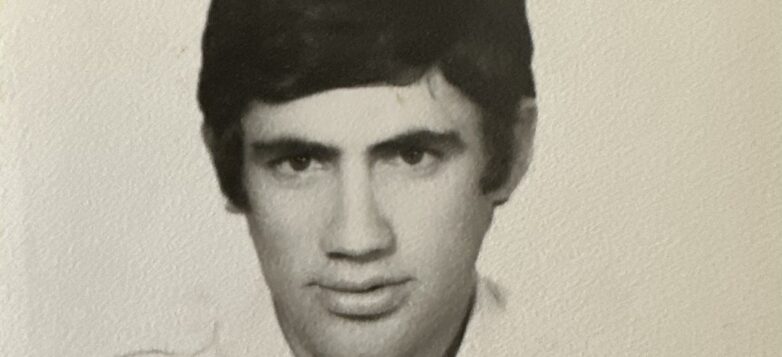

1 Edvard Kardelj (1910–1979) was a Slovene Yugoslav communist politician and one of Josip Broz Tito’s closest associates. He was a major ideologue of socialist Yugoslavia, especially associated with the development of Yugoslav self-management socialism and the country’s federal political system.

2 Shote Galica (1895–1927), born Qerime Halil Radisheva, was a Kosovo Albanian resistance fighter and one of the best-known women of the kaçak movement. Alongside her husband, Azem Galica, she fought against Serbian and later Yugoslav rule in Kosovo in the early twentieth century and became a symbol of Albanian armed resistance.

3 Azem Bejta, also known as Azem Galica (1889–1924), was a Kosovo Albanian resistance fighter and leader of the kaçak movement. He fought against Serbian and later Yugoslav rule in Kosovo in the early twentieth century, becoming one of the best-known figures of Albanian armed resistance in the region.

4 A grade of 2 is the lowest passing grade, roughly equivalent to a D.

Part Five

Anita Susuri: So, from the Shkolla Normale you just continued on. Did you then continue with university or with the higher pedagogical school?

Sahit Berisha: Yes, now that I have closed this chapter halfway, I will start. In 1970 I graduated. My diploma topic was in history. The teachers respected me extremely in that period. And I also had improved a lot, you know. I had respect and I myself became better behaved, because I had been quite a rebel, in a positive sense. I did not hesitate to speak and so on. I will describe here, as I thought of it then, that feeling that a teacher must be a real pedagogue. First of all, a teacher must have certain values. Otherwise you are not a teacher, you do not deserve that title.

The first value is to be professionally prepared. Knowledge must be constantly updated. The teacher cannot say, “I studied at the Shkolla Normale and that is it.” He must always be prepared with the latest achievements, with science and so on, professionally. The teacher is a public figure, with students, with small children, with unspoiled adolescents and so on, and he has to work with parents of different characters and different social and economic levels. Another value is that the teacher must be a pedagogue. He must know all kinds of pedagogy, pedagogy of children, of adults and so on.

He must be a psychologist. He must enter the world of the child. You cannot be a teacher if you have a harsh face. You need to be pleasant to the child, to create trust in you, so that the child sees you as greater than God. Only a good psychologist who reads, who studies psychology can achieve that. Another value, the third, is to be a humanist. What does that mean? That child might be in a difficult social situation. Maybe his mother and father fought and then you come and shout at him and say, “Here is your failing grade, whenever I feel like it.” No, you must be a humanist, understand that and say, “You are good, when you are ready, come here.”

And finally, a teacher must be a patriot. If he does not have that cult of love of homeland, with which he prepares the next generations to face different situations, he is no use. And finally, in the way I see it and understand it, maybe I am wrong, the external appearance reflects the inner spiritual state. If you go unshaven, with a beard, with unbrushed teeth, with an unbuttoned shirt, without having combed your hair, you are not a teacher, you are not pedantic. With this feeling, when I graduated, I applied in Magurë, in the Stankovec Boliq School in Magurë. I started working there, I was accepted. I had the first grade.

To tell you the truth, when I taught one letter, it took me five class hours. Not five hours in one day, but five days for one letter. The last day, the fifth lesson, was handicrafts. With scissors and colored paper and glue they would make the letter, glue it, and create an album. So that the letter A would be at the end of a word, the letter A in the middle of a word. And to make an album for each letter. During the fifth lesson, when the other colleagues, the other teachers came in, they would see me with newspapers and scissors and say, “What are you doing with all this paper and scissors?” The students were working.

But the students were so attached to me that when I called for a parents’ meeting, I told the parents, “If someone does not come, I want to see you in the meeting.” I told one pupil, he is in Slovenia now, Salih. He said, “Teacher, my father is not coming, he has no time, he is ploughing.” “Fine,” I said, “go call your mother.” He went and told his father, “The teacher is asking for my mother.” The father rushed to the school: “Who is that teacher?” I said, “Sit down.” He sat down. The classroom was full of parents. I said, “Calm down. Where were you?” He said, “Ploughing.” “Why did you not come to the meeting? You could have tied the horse or your wife could have come. What is the problem that your wife does not come? I do not eat her.” I had a healthy debate with him and at some point he calmed down. “Do you take your wife to the doctor?” “Yes.” Then the others started teasing him, they knew each other, and he became a bit embarrassed, but he did not get angry.

Later he regretted his reaction. I did not make a big deal of it. I want to say that all the parents came to the meetings. Even here in Pristina, where I worked later, there were cases when both parents came. I never allowed a parent to skip a meeting. It was a matter of principles. In Zagreb they were marking the tenth anniversary of Shkëndija.1 All the students who had been there at that time with Zef Mirdita and the others were invited, though not all came, some did. The students from Belgrade were also invited. This Edi Shukriu was a student in Belgrade. They came and seemed interesting to us, with guitars.

The Albanian students who were in Sarajevo also came. Mujë Krasniqi was deputy rector of the students. At that time the student rector and the deputy student rector were elected. Mujë Krasniqi. We colleagues went from Pristina. They called Mejreme. She took me and I took Arif Demolli. This Ali Kajtazi came as a journalist, as a collector of songs, whom I mentioned earlier. I had from my uncle the address of Hamit Thaçi in Zagreb. Hamit lived in Zagreb. He had married a Croatian woman. He had grown old. He had been in Niš prison. The prisoner Riza Strelli died in his lap.

Now both Albanians and the police all knew him. They considered him a bit odd. He always walked around with the Albanian flag. He had a red and black sash around his chest. Wherever he went, they gave him drinks in cafés and pastry shops for free. No one bothered him in the middle of Zagreb. “Long live Albania, long live Enver Hoxha.” That is how he was. People knew who he was. They did not want to provoke him. He was harmless. We went, my sister and I. The others were settled in other places. We went to Hamit’s place. In that flat, the conditions seemed poor. In the middle of the house there was a big coal heater, lit, in the shape of a square, to heat the whole flat.

That Croatian woman was a good and polite woman, she respected them a lot. She said, “He makes me tired when he goes out in the city and until I bring him back or the police bring him back saying, ‘Take this irredentist’.” But she did not complain. They had chosen their own path. “I get along well with him.” We told him why we had come and explained the program. Tomë Berisha was a general, with a military rank. We wanted him as president, to open the Albanian school and for him to lead it. Tomë Berisha. He was a military officer. But finally they elected someone from Prizren, a woman, Maria Kajtazi, as chairwoman. The place where they wanted to hold the meeting did not allow us. The leadership there said no.

In another local theater… they said it belonged to the army, I am not sure. What I know is that they did not let us there, so we held it here. A nice theater, with stage and everything.

We sat there. The Albanian flag was there, and they had not yet raised it. Then they raised it. There were greetings, speeches, presentations of the program, how the program would be. Meanwhile, Hamit came out, kissed the flag and said, “We will go out in demonstrations in Croatia, to demand a republic” (laughs). How could we go out, that was not foreseen.

We had him between us. On one side was my sister, on the other side me, and in the middle Hamit. Ali Kajtazi, whom I knew, from Drenica, said, “Why did you bring him?” “Everyone knows him, just do not say anything.” “Really?” “Yes.”

Then Halil took the floor. He said, “I want to donate these books to the school.” It was agreed that an Albanian school would open in Zagreb. When he went out and spoke about Riza Strelli, Halil, you know, with his songs and book in hand, Hamit stood up, went there, took the book, kissed it, then went near the microphone. He said, “Riza Strelli died in my lap in Niš prison.” He began to speak about Riza. I was informed, because my father had told me. He had information from when he was chairman there, when he was in the municipal leadership for that region in Radevë. Sejdë Llugiqi was chairman, Ajet Gërguri vice chairman, Riza Strelli secretary, my father was a member of the municipal council. He knew them.

But they, Ajet and Riza, had thought that my father was a communist. They had welcomed him with some reserve. But when he went and reported to them about a man called Halil Mukulani, my father went and told them, “Oh Ajet, if we had had three Albanian men like Halil Mukulani, we would have made Albania here.” He said, “This one is not a communist.” I mean, I had information about Riza as a patriot. Now Hamit said, “Give me the books.” They immediately gave the books to him.

The student rector of Zagreb had what kind of vocabulary, what kind of speech. We were afraid of what he was saying against Belgrade. They had no fear at all. The rector of Croatia, of Bosnia, they also spoke like that. And ours were all cautious, you know. They did not say that Kosovo was being divided or such things. From there came the slogan, “Trepça works, Belgrade builds.” We stayed there three days, with incredible food and everything. In the cafés and pastry shops Albanians and others respected us, the hall was full with music and so on.

I will tell you another secret. At one moment, someone cornered my sister there. Maybe she told you. He was an agent from here. Telling her, “Be careful, do not say anything.” Then I went there. She said, “I do not intend to say anything,” and withdrew. That means the agents from Pristina had followed us all the time, seeing what was happening. When we left, I stopped Hamit for a bit.

I hugged him and said, “Hamit, they are tired. They are not prepared for demonstrations. The few who go out will face prison, they will lose their jobs, we have done our part. Do you forgive us if we do not go out?” He said, “I will go out.” “Fine, we will accompany you.” We escorted him to the house, two or three of us, nothing more. We took him up to his flat and handed him over to his wife. He thanked us, and we thanked him that we had stayed there as if we were in our own home. He welcomed us well, prepared good food for us, even though we had the possibility to eat ourselves. But she wanted to honor us, that wife of his.

We came back to Pristina. What we had least expected happened. From this point of view, I now understand what happened in Pristina. There was a tendency. The events in Pristina took place. Fourth year Albanian students clashed with Serbian students in the Law Faculty. The police surrounded the Law Faculty and the rest of us students from here all went to the faculty. Popovci came out and said, “The students have clashed among themselves, we have to see.” Then it spread that a meeting of the League of Communists was going to be held at the university, in the dean’s office. I was not a communist. Someone said, “We are not.” “Come on, who is asking whether you are or not? Come, just to fill the place with as many Albanians as possible.”

[Inaudible] “Albanian nationalism,” this and that, Serbian nationalism and so on. We would bang our fists on the table like people who knew nothing. Their plan to condemn and punish failed. They had been beaten badly. But Pristina was shaken very hard, no one knew what was happening. They said they were holding secret meetings. Because a new League of Communists had been formed over there in Bar. Some professor of the Law Faculty here had formed the branch of the Serbian Communist Party in the Law Faculty. These had been discovered. “They are holding meetings at the cemetery.” Off we went to the cemetery. Until someone told us, “You fools, do not run, you will drop dead from running. They do not hold meetings in cemeteries, they have salons.”

We turned back. Rexhep Osmani came to my home. He said, “I have nowhere to sleep.” “Fine,” I said, “come and sleep at my place.” From this angle, I now see that he did not come to sleep, but to see what I would say, you know. But let that remain on his conscience. He was from the Shkolla Normale, I knew him. I went to Magurë. I told my colleagues, the teachers there, “This and that happened in Pristina, we are liberating Pristina.” Representatives had come from Zagreb, telling us there, “You start here.” Prishtina became a mess. The next day, we students blocked the faculty. We boycotted classes in Serbian, we did not want to attend them. Most of our subjects were taught in Serbian. We did not want to go to the lectures in Serbian. “No Serbian.”

At the Geography Department there were even slaps. Our nationalism was awakened. We were even ready to beat up Serbs. But Fehmi Agani told us, “Are you in your right minds? They want incidents, do not create incidents. We do not need incidents.” In this way, fortunately, the event ended. No one was punished. The attempt to drag us into those conflicts without preparation failed. But in Magurë it was different. The photographs of Ranković were still on the school walls. Before us there had been a group of teachers who had removed them: Muhamet Tërrnava, Rasim Berisha and the others. They had taken the first blows in the struggle against the dark Serbian currents in Magurë.

When we went there, we were younger. With a new drive, as I said earlier, as freshly graduated students of the Shkolla Normale. We began to make changes. On the way to Magurë, with the money we teachers collected, we bought large framed pictures of Azem Bejta, of Bajram Curri and sent them there. We gave them to the students, “Put them on the walls. If anyone touches them, just tell us.” Meanwhile, on one holiday we decided to raise the flag and now we had to assign someone on duty with the flags of Yugoslavia, but also the Albanian one, and we put ours up.

That day my uncle was on duty with some others and someone grabbed the flag. They came out, half asleep or on purpose to make trouble. Then there was a meeting, we reacted. I even treated a certain Sadri from Bllaca badly. He said to me, “You have come from Berisha to teach us.” I said, “May Berisha make you like this and like that.” I reacted very badly. “You are only older, otherwise I would have beaten you to pieces”, and I went outside. We wrote to the Committee, we sent a petition. I signed first, then 33 teachers, and we sent it to the Provincial Committee, requesting a meeting, asking why the idea of Ranković was being defended.

We decided to close the school in Vrellë for the Serbs, because there were no Serbs. And to open a school in Mirenë, in Albanian. We got involved with music and I remember that Rizah Bytyçi and others were students of the Shkolla Normaleof Magurë but were very engaged with music. We took the initiative to immediately form a Cultural Artistic Society in the school there with the students. In the culture hall, those others. No longer was Serbian heard there. We would not let them play football, because I was quite a sportsman. We made an agreement with a certain Selim Ramadani that in the finals the Serbs would not play, only Albanians would play. We told them, “You have to play well,” and of course we trained them.

So a very new spirit returned. Those Serbs were used to coming in the afternoon, entering the schoolyard saying, “Let us play football.” “We have a class to hold,” I would say. Xhemajl Bytyçi and my uncle would say, “Sahit, leave it, they will beat you. They are bandits.” They did not beat me at all. I took them and put them in physical education. I had one case regularly, but this one happened as an incident. I told my students before going out to play, “Fill your schoolbags with stones. When I say ‘throw’, if you do not throw, woe to you.” I took a short wooden stick and put it under my coat and went out. “Come on, let us run.” We did the warm up, some gymnastics. They were playing football there.

The ball came towards me and I took it and kicked it over the schoolyard fence. They rushed at me, I shouted to the students, “Throw.” They wiped them out with stones. They ran away. It became a big thing. “This Ballist”, they were talking and cursing me on the road. But I did not worry much. We went to the culture hall, after about a week or two, or about a year later, a film was being shown there. The son of the commander, of Pavli Baraba, was with a group there. Grown up girls were leaning over them. The one who was running the film, Veseli, and his brother, Fehmi Jashanica, I told him, “Look Fehmi, I am going to throw these ones out, because they are not students. Watch my back so that no one hits me from behind.”

I went up to him. He had a scarf and was throwing it over the girls. I grabbed him by the scarf, tightened it around his neck, dragged him and threw him outside. The others were behind him. I pressed my back against the wall and hit them with my elbows in the back. Fehmi was protecting me. I threw him outside. Then they all came out behind. You know that all the teachers left, they left me alone. Only me, Fehmi who was running the film and his brother Veseli. I said to them, “I am going”, “No, where are you going? You stay with us.” They put me in the middle and we went to the bus. Some Serb worked there, he gave tickets in Serbian, on the bus. I said to him, I did not have a gun, just that metal bar I always carried.

I told him, “Touch me here” (touches his belt). He said, “Are you crazy?” “No, I am not crazy, just tell them this. If they want to confront me, let them prepare themselves, because I will hit them right in the middle of the forehead.” This happened, and then one incident after another. They complained about me, “He insulted Tito,” in the teachers’ room, in the culture hall. The chairman of the municipality gave the order to have me arrested. Faik Dedushi was the chief of police, the one they talk about. He said, “To arrest a teacher and find him in class teaching, I will not do that.” He sent some of his people and told him, “Tell Sahit Berisha to come to the police station to see me.” I went and entered there. He said, “So you want to make a revolution in Magurë? There was no one else left but you.” At first I did not dare say a word.

I sat, sat, sat. Then I said, “May I speak?” He said, “Speak, why did I call you?” I said, “If I wanted to make a revolution, I would do it in Pristina, where is the center, not in Magurë, where you cannot turn anywhere from all the bad things.” He said, “I know everything you have done.” I said, “In peaceful days, everyone knows I am the best teacher” (laughs). He said nothing. After a while he said, “Look, I have the order to arrest you, but for this I will not arrest you, because I have verified that they are guilty.” He opened a drawer. “Do you know who informed on you?” he said. I said, “No, and I am not interested.” He said, “By my honor, not a single Serb, not a single Serbian professor has made a complaint against you, they are all Albanians”, and he said, “Keep your mouth shut when you go to school, do not talk. Because next time I will not protect you, they will arrest you.”

The Committee was to hold a meeting there. At the meeting of the Magura Committee and so on, my uncle was there, my uncle Ahmet, along with some people from my village, others I knew, parents of students. They got up and spoke [inaudible] to come to that meeting. They were speaking harshly, badly about me. “He is a Ballist, he should be imprisoned.” He slammed his fist on the desk: “No, by God, he will neither be imprisoned nor will anything happen to him.” All the Serbian professors got up and walked out. “We will not have Ahmet Berisha banging the table at us, no.” [Inaudible], you know, “Lower your voice a little. No one is going to imprison your nephew.” I was his nephew; he was my uncle. They had said, “That Sahir in the school, and Ahmet in the meeting, set the place on fire.” When Tito’s letter arrived, you don’t know about this. Have you heard of it?

Anita Susuri: I do not think so, I do not know.

Sahit Berisha: In 1971, when these events took place, Tito issued a letter. It was called Tito’s Letter. Nationalists had to be dismissed and imprisoned. He did not stop only with imprisoning Croats, Tuđman2 and the others, they all went to prison. But the other nationalists also had to be imprisoned. It affected Belgrade as well. Now they exploited this. Wherever someone was considered a nationalist in their workplace, they had to be removed. They exploited this against the Albanians. Of course the Serbs were happy about this. Members of the League of Communists said, “Sahit Berisha must be expelled from work as a nationalist .” They dismissed me from my job.

I came, I had nothing. Someone said to me, “Go register at the employment office, maybe they will find you another job.” I went to the employment office to the secretary with my documents. He said to me, “You are from Magurë, right?” I said, “Yes.” He said, “We have heard something.” I said, “You have heard nothing.” “No, no, tell me frankly”, he said. I said, “They are dismissing me for political reasons, not because I am redundant.” He said, “For that reason I will give you 70 percent of your salary.” He registered me as technological redundancy and I received 70 percent of my salary. This means that even in the structures there were good people who wanted to do good. If they could not, they remained silent and let a good day pass. I could not get a job anywhere until September 1975.

Musa Haxhiu was a school principal in Pristina, sitting with someone he knew. My mother and that woman were friends and she was there. She mentioned that he was a principal. My mother said, “Listen, dear, can you take my son to work, because no one wants to hire him. Since you are a principal, take him there.” “Why?” he asked. “Shall I tell you the truth?” “Tell me the truth”, he said, “I want to know.” “The police do not want him, they say he is anti Yugoslav.” He said, “Let him come to me. Without talking to him, I will not hire him but I promise nothing.” My mother came back happy and said, “I found you a job, go to Gllogovc.” I went to Gllogovc and met the principal. It was Musa Haxhiu. Some complained that he had been principal for more than twenty years. He was a member of the League of Communists.

When I went in, he said, “You are Sahit Berisha?” I said, “Yes.” He said, “Get up, let us go for a coffee, because they record everything here. I want to talk to you alone.” We went for a coffee. He asked me, “Tell me the truth.” I told him everything. “Do not tell anyone in the staff,” he said. “Submit your application, I will hire you.” I was hired. At the end of 1975 and 1976 I became a history teacher in Gllogovc there. Immediately I started my activities (laughs). Meanwhile I entered the Marxist Leninist illegal group. Now most of them have died. Gani Syla, Azem Syla, I have photographs with them. Ismail Syla. I had been his homeroom teacher.

When the newspaper Liria would arrive, I would take it, make photocopies at the hospital and multiply it. Wherever the print was not clear, I would give it to Shiribana, my wife, to complete the text by hand. The photocopies I would distribute. I would fill my boots and distribute them around Prishtina, but I also took some to Gllogovc for the teachers. We history teachers became connected. Mehmet Gjoqi, Hamdi Thaçi. We knew each other, we were the same generation. We said, “Since they changed the name of the school”, when they changed the name of the school from Skanderbeg to Marshal Tito. Rasim grabbed me and said, “Sahit, let us go outside.” He is my cousin, Rasim, the Albanian language teacher.

Why?” I asked. “They will expel you from work, you will not remain silent”, he said. “Why, tell me what is going on?” “They want to change the name of the school to Marshal Tito. In all Kosovo it will become Marshal Tito, we cannot stop it. Therefore I am taking you outside, let us go have a coffee until it is over, so that you are not present there. You can say as much as you want later, but not in the meeting, because it is being recorded.” Rasim did not let me stay in the meeting. They changed the name of the school. How could we bring back the name? We created and published the newspaper Skënderbeu. We organized seminars with students. We gave topics to the students, to give presentations about the Elbasan Shkolla Normale, about the Congress of Manastir. In the newspaper we also wrote about the partisan hospital of Berishë, about Azem Bejta and so on.

We would borrow the typist from the municipality. In one case that typist said, “By God, if I had known that you teachers talk like this, write like this, they would imprison me as well, not just you.” “They know these things before you, but these topics are allowed”, we told him. We started organizing three such seminars per year with students. Political tribunes with students, on various topics. They had to be well educated, because the high school in Gllogovc opened in 1970. Before that, there was no high school in Gllogovc. The teachers from Ivo Lola Ribar Gymnasium all volunteered to teach there, and later they were paid a lump sum. That is how a secondary school was opened in Drenica. That is how things went. I became connected with that illegal newspaper.

Now the newspaper Liria, the photocopy, I would leave it hidden in the cabinet of the party secretary. So even if they came to search our cabinet, they could not find it, it was there with him. Not all the teachers read it, but some whom we knew were good, we gave it to them to read. Then, out of carelessness, I knew who the plate lickers were. I would throw Liria and other illegal newspapers under their noses too. The Secretariat had now realized this. We did not sit idle and we created a museum. An ethnographic and archaeological museum. We went out in the field with students to collect various exhibits, a stone hammer from the Stone Age, clothes and different garments. We made an excellent museum.

Once, in the next issue of our school newspaper Skënderbeu, on the first political page, which was there by mistake, we had not written it, someone else had written it in a hurry, there was an article about Tito, because you could not publish without writing about Tito. He wrote an article, but the printer, the typist, made a mistake. Instead of writing “he took part in the revolution,” he wrote “Tito took part in the counter revolution”. The Secretariat came, entered and blocked the school. The SUP, the internal security, stopped the newspaper. Mehmet and the others said, “Sahit, they blocked us, what shall we do?” I said, “I do not know what to do.” He said, “You know nothing. Pretend you know nothing. The newspapers are in such and such place, go get them and distribute them. Send some students to distribute them so that they get into the students’ hands and let them be read.”

I went and distributed them. I told the students, “Take and distribute the newspaper.” They did not know what was happening. We distributed the newspaper. That newspaper became the pretext for starting the ‘differentiations,’3 to hold meetings in the school and to classify us. The case even reached Mahmut Bakalli4 in the committee, to evaluate the newspaper. “Why is the partisan hospital of Berishë written about, why are these things written,” and so on. Mahmut, they say, I do not know, supposedly said, “There is nothing wrong here. It is a good newspaper for students, at the level of high school students.” Then later it was used as a pretext to imprison me.


1 Shkëndija was an Albanian student association founded in Zagreb in 1962 as a club for Albanian students in Croatia. Its first secretary was the scholar Zef Mirdita.

2 Franjo Tuđman (1922–1999) was a Croatian historian, politician, and the first president of independent Croatia, serving from 1990 until his death. He led Croatia during its breakup from Yugoslavia and the Croatian War of Independence.

3 In the context of Yugoslavia, “differentiation” referred to a form of political and social ostracism. It involved isolating and marginalizing individuals who were deemed politically unreliable or dissenting against the ruling Communist regime. This could include demotions at work, social exclusion, surveillance, and other forms of repression to discourage opposition and maintain control.

4 Mahmut Bakalli (1936-2006) was a Kosovar Albanian politician. Bakalli began his political career in the youth organization of the League of Communists of Kosovo, eventually becoming its leader in 1961. As he rose through the ranks, he was elected to the Central Committee of the party’s Serbian chapter, and to the Presidium of the League of Communists of Yugoslavia’s Central Committee.

Part Six

Anita Susuri: When were you imprisoned?

Sahit Berisha: I was imprisoned in 1981, but that was close to it. That Musa Haxhiu was replaced as principal and Ymer Elshani became principal. The writer. He was the nephew of Fazli Grajçevci. I had good relations with Ymer as well as with Musa. At one point, when we were going to class there, two classrooms were on each side and the corridor in the middle. Musa was standing in the corridor. As I was going to enter the classroom, he said to me, “Sahit, come here.” I went. “What is it, Musa?” He said, “Leave the class diary and go to Prishtina”, “Why?” “They are going to arrest you”, “Why?” “Last night I heard Ajet Istogu speaking, he held a meeting at the commune, saying that Sahit Berisha must be arrested because he is distributing Liria and that someone has written a letter.” I had not written that letter. It was a threatening letter sent to the Municipal Committee.

I was scared, I did not go in. I held the lesson because at that point leaving the class without a lesson made me feel bad. I sent a pupil, “Call Rasim for me.” Rasim Berisha, the teacher. He came. “What is it, Sahit?” In the classroom, I told the students, “Stay and read.” And I said to Rasim, “Musa told me this and that.” He said, “Sahit, things are not good. The class diary of the class where you are homeroom teacher has been taken by the UDBA, it has not been lost, the UDBA took it to compare the handwriting, I do not know with whose, but they asked for your handwriting. I said nothing, I waited for the long break to tell you.”

I said, “You should have told me immediately, Musa told me immediately.” In Pristina I had copies of Liria and other newspapers. He said, “Go home, I will say you are sick.” I came, got on the bus and came to Pristina. I went into the bathroom and took the newspapers one by one, my wife would bring them to me, and I burned them one by one. It took me two or three hours until I burned everything. Whatever material they could have taken from my place, I burned it. Now I started to doubt, what is happening like this? In the school there I would give illegal books to good students, to Smajl Syla, to Afërdita Dobruna, wrapped up. There was a book called Maskat e Çjerruna [The Unmasked Masks] wrapped in another cover, and I would tell them, “Take this book and read it.” I had given her Azem Bejta’s story and others to read.

That Afërdita had asked me, “Teacher, can I give it to my father to read?” I paused and said, “Afërdita, you know. If you trust your father that he will not report us, give it to him.” She gave it to him, and he read it too. That is how the events there unfolded. When the demonstrations broke out in Prishtina on 11 March, in the evening for the beans in the student canteen, I was here. We went out. A big thing happened, the slogans became stronger. A march started there. There were no written banners yet, just shouts of “Unity and brotherhood.” People were shouting. Until 11 at night. Some had been arrested and then the police intervened.

I went to Gllogovc immediately and told them, I said, “I do not like something.” “Why?” “Without flags there are no demonstrations, demonstrations without flags are nothing”, I said, “the demonstrations were without flags.” We went to one of the relay ceremonies that was held in Gllogovc, Tito’s relay. Somehow some devil, somewhere, a dog… All the students were in two rows and the road in the middle. They tied a tin can to the tail of a dog and the dog, scared, ran dragging the tin, and they were shouting, “The relay arrived.” They took that very seriously. “Who did that?” But no one knew who did it. Some of the kids must have done it, thinking to have a laugh. I do not judge it either as bad or as good.

There in my village a shepherd saw the students practicing as if they were carrying the relay. “What are you doing?” “We are carrying Tito’s relay”, they said. “Why are you tiring yourselves? Tie it to a dog, the dog will carry it down there,” he said. He spent two months in prison for those words. In the meantime, the central relay ceremony was to be held in Pristina. In the evening, in dormitory number five they held it. Every dormitory had an assembly hall, where students would listen to the news and so on.

By then the national consciousness of the students had been raised. There were illegal newspapers, not only Liria but also other newspapers being distributed. Many groups had sprung up in illegality like mushrooms. Most of the time the Albanian Security Service had their people who moved freely in every organization, they had their own people and so on. They listened to the news there, the students got nervous. Ali Lajçi was there and said, “Tomorrow we will go to the demonstrations.” Immediately they started writing posters and putting them on the doors of the dorm rooms that tomorrow there would be demonstrations.

They went out to the demonstrations the next day around 10. When I came from school, Rasim said, “Run, go to Pristina.” When I came here, the police had surrounded the faculty. I went out. Everything was surrounded, they did not let anyone out. The students were trying to get out. The Serbian police forces could not enter. For eight hours they waited in Merdare. Until Nazmi Mustafa signed that they could enter, and the special forces entered. An order came that the citizens must go into the dormitories and faculties that had been surrounded. I went out and found some of my students from Drenica, they had been stuck in the streets, I took them and brought them here. I brought those eight here.

Among them was also Ismail Syla. Ismail later told me how the whole event went, because he had been there. There was also a girl. There were about seven or eight of them. I saw a parent who had come from Drenica to take his daughter. I called him, his last name was Curri. I said, “Come here.” “What is going on?” “Come here, your daughter is here at my place.” He came and took her. He saw the other students. He did not say, “Shall I take them too?” and I did not tell him, “Take them.” I left them there with me. They spent the night at my home. Then we had a debate, and we said, “We freed Kosovo with students,” talking like that.

The police intervened, and they intervened harshly. Very harshly, especially in dormitory number one. I do not know how it happened, who opened the door for them, because the students had blocked the doors with chairs so that the police would not be able to get to the upper floors. They entered. They caught Ali Lajçi in another dormitory while he was trying to shave, to disguise himself. They caught him and took him to prison. In illegality here there was movement, they said, “We will burst out, men and women, all will go out.” That happened on 1 April and on 2 April, that big demonstration that took place. There is no need now to explain much about that. Tanks came in, that girl was wounded when she tried to place the flag on the tank.

Up there that student was killed. Then they managed to set fire to the house of that Serb who had killed them. A very grave situation. The army entered and took over Pristina. 1 and 2 April. Hidajet was imprisoned, because they caught him delivering a speech in disguise, with a moustache and different appearance. The prisons were filled with people. A state of emergency was declared, counter revolution and all these things. They accepted everything in our committee, the counter revolution, Azem Vllasi and all the others. The dismissals began. They removed all those from Gjakova. They brought Azem Vllasi there and also Rrahman Morina, Agim… In these circumstances, on 16 April, Albania for the first time after a month issued a communiqué in Rilindja.

Kosovo Albanians want a republic; we recognize this and support them fully in their demand for a republic.” We were happy there that at least Albania was supporting us. When I went to Komoran, there was police, a state of emergency. All the federal units had police. In other words, absolutely everything was covered. I did not explain to them there what had happened when we held the demonstration in Drenas. It was not some very big demonstration, but it was used as a pretext to imprison me. In the district, I was the first one to throw something at the police. But I hid immediately. Those who came out to defend the police, I hit them on the head with stones. But things happened as they happened, and it remained as if I had not done it, because I was a professor. Ajet Istogu wanted to arrest Enver Dugolli. I stepped in front of him and said, “Leave him alone, man, he is a student. You can arrest him at home whenever you want, not here in the street in front of the demonstrators.” He turned to me and said, “Are you going to move away?” So I moved away.

Two Albanian policemen came out and said, “Berisha, come down.” I went down. Immediately I told one of them, “When you go back, please tell them at home.” I knew they were going to arrest me. They tied me up and arrested me. In Komoran they did not beat me, because there were a lot of students, people. When they took me to the station there, the commander said, “Sahit, you too?” I just looked and said, “Yes, me too.” They put me in a cell there. In the evening they brought Milaim Zeka there as well. He was shouting, Milaim Zeka. I knocked on the door and said, “I am freezing.” A policeman came and said, “Sahit, do you know your ID number?” “Yes.” “Give me the number so I can tell your family that you are in prison here.” That means there were people in the police who helped too. I gave him the number, and he called.

I told that policeman, “Tell them that I am asking for warm clothes.” I was freezing, because I was in light clothes. The cell was one meter by one meter. After nine in the evening my uncle’s son and my brother came and brought me clothes. I changed and so on. The policeman, who was on duty, came back. He brought me a triangular box of milk. It was milk from Belgrade, good milk, in tetrapak as they used to say. And a piece of meat. He said, “Eat.” When he came back he said, “If anyone asks you who gave it to you, tell them, because I will come and stay with you. They cannot do anything to me.” So he too had such ideas. I stayed three days and three nights in Gllogovc. Then they sentenced me, brought me to prison in Pristina. When I arrived at the prison in Pristina, the prison was overcrowded. Thirty-three people in a five meter room. We slept like rifle cartridges, all lined up.

In that hard situation I fainted in the bathroom there. Thirty-three people with one bathroom, with two taps, to relieve yourself or to wash or to wash off blood. They would take me for questioning in the morning at nine until about two o’clock. In the evening again the same. They brought others as well. Ismet Sopi, Naim Bujupi. Many were brought from Drenica to the prison. From Llapi and from other places they were coming. Informers were coming too, but some of the older prisoners knew them, “Haber kutia,1” the messenger. They took me away from there, we did not know where they were taking us. My mother was coming every day, going to the SUP, asking, “Where is my son?” Some Tefik from Rufci who worked there saw her and said, “Aunt Hajri, what is wrong?” She said, “I am looking for Sahit, he is in prison somewhere and they are not telling me.” He said, “I have seen his name, he is here. Do not worry.” “Good, take these cigarettes to him,” she said. As a sign that they had caught my trail.

They took me to Ferizaj with a group, there in Ferizaj. I got into the van with one of my students. He said, “Teacher, they almost killed me by beating me, telling me, ‘Say that Sahit told us to go out into the demonstrations and leave school’.” I said to him, “Jakup, play the role of a fool. Have you read the novel Fshati mes dy ujërave [The Village between Two Waters] how Prenk Sherri plays the fool with the gendarmes, with the police?” I said, “You play the role of the fool too. Say ‘What Sahit? Sahit gave me a failing grade, if I could, I would strangle Sahit. Sahit was bad.’ You speak badly about me, do not speak well.” He started playing the fool there. I had him in the same room.

When we arrived there, the son of Rizah Bllaca, the singer Rizah, was at the prison. We had had Rizah in our oda a hundred times. I have photos with him singing. Now I did not even know it was him. When he was taking the notes, “Sahit Berisha, is that you?” “Yes, I am Sahit Berisha, son in law of Ismail Çerkin.” I knew he would know him. “So what?” “It matters. Tell him that I am here, nothing else.” He had told him. He had said, “Ismail, they brought your son in law here to Ferizaj.” Anyway… Meanwhile, of the more than twenty students they had interrogated, fortunately not a single one said a bad word about me. They could not find a pretext to sentence me, because if they had, I would have suffered, like Jakup, ten years.

They let me go, with the motivation that now they would prepare a trap for mef when I got out of prison, catch me again and continue. That was for Drenica there. Meanwhile, the Marxist Leninist groups were falling. My group fell, Azem Syla was imprisoned, Gani Syla was imprisoned, Ismail Syla was imprisoned. Hidajet had fallen earlier. Mehmet Hajrizi was imprisoned, I stayed on the side. These… Ismail used to say, “Professor, give me your address so I can bring the newspapers.” I told him, “Ismail, leave these things.” But I want to tell these events, that when Tahir was dismissed from work, he went to some of his friends and said to his friend, Rexhep Zogaj, “Look Rexhep, take a cart and a shovel, load me up and take me to the hill over there, because I am old and cannot walk, to Berishë. Take me to Berishë.” He put him on and took him.

When they reached the hill, he said, “Stop so we can rest.” When they stopped to rest, he said, “Look Rexhep, I did not call you because I could not go, I could have walked slowly by myself. I called you because I want to tell you something. You are in the NDSh. It will not be a month or two and you will all go to prison. If your name is found there, you will do prison time. So go, erase your name there, give your contribution but do not leave your name, because if your name is found, they will not spare you.” He went and told the treasurer, “Erase my name. Make a new list and remove me from there. I will give contributions.” All the others, more than ten men, went to prison, these ones got only two weeks, because his name was not there.

I told him, “I do not want my name to be left. I do not want to work in order to have a name. When we finish, when we are freed, then we will tell and take credit if we deserve it.” It was very clear that Yugoslavia had no future. Movements everywhere. Especially the movements in Croatia, Croats, Serbs. You already know those things, the war was almost breaking out. The Slovenes immediately created their own state and separated, the Croats as well and so on. One of the Croats, Branko Horvat,2 had formed a party called Ujdia. He came out publicly in a press conference saying, “We accept the Republic of Kosovo.” He… had come into contact with Veton Surroi.3 He called him and said, “You form a branch of Ujdia there.” Veton formed it.

I joined once, because it was public. I wanted to join him, just to be against Yugoslavia and the League of Communists. I talked with Shkëlzen, with Shkëlzen Raci. He said, “No, Sahit, do not join. No one will support you with Veton. Wait, something else will happen, something else will be formed.” “Shkëlzen, I give you the task to tell me in advance.” In these circumstances, the state security had analysed that in the 1990s the political prisoners were being released throughout Yugoslavia. All Kosovo Albanians were being released from prison as well. The Popular Movement which was in Germany was activated and started collecting signatures from Rugova through all the organisations everywhere, “We want a republic.” Signing for the republic.

In this event, according to all indications, people like Mehmet Kraja, Jusuf Buxhovi, Milazim Krasniqi and Ibrahim Berisha know that they were called by Rrahman Morina and told that a political party must be formed. Because on May 2nd, at the meeting held with European representatives, they had been told, “Form a party for human rights.” Zekeria Cana4 had tried to form that party for human rights. At that time the poisonings also happened. The situation was very tense. Shkëlzen called me and said, “Sahit,” we had studied together with Shkëlzen. And with the others too, but the others did their master’s degrees and doctorates within the League of Communists, took positions, while I had even ended up without work. Ten years without work, ten years of my wife without work. Only with my father’s pension.

Anyway… He said, “A political party is being formed, they are asking Rugova to accept to lead it.” That lasted three or four months until he finally accepted and asked for leave to go to his village and stay there for a long time. In the end he accepted. On December 23rd you saw it on television there. Shkëlzen called me. I could not get inside, I stayed outside with Shkëlzen where it was public that an initiative council was being formed for a movement, for a party. The name LDK5 came later. I was unemployed, so I went. I went there every day. I took the membership forms and took them out to people to sign up. I distributed them here and there. From the Institute they moved to the Writers’ Association there.

There the Writers’ Association was in a catastrophic state. I used to go there regularly, distributing leaflets. Not only me, but there were many activists. They realised that they needed someone as a kind of bodyguard for Ibrahim Rugova. They had talked with others before me, quite a lot. I know with whom they had talked, and some had accepted and then said, “I do not think I can fulfil that duty and I did not accept it.” They offered it to me, Milaim Kadriu, who worked as a lawyer in the Assembly. I knew him well. He said to me, “Sahit, will you take this duty?” “I do not know, I am a historian, I do not know,” I said. “Take it until it starts.”

I was thinking of the film Nëntori i Dytë [Second November]. I said to myself, if I refuse I will remain a traitor. I had tried with all my soul to form something that… so I accepted. We went with Milaim to see Jusuf Buxhovi. Jusuf was the secretary. He introduced me to Jusuf. We were talking and immediately… he knew the story of our Rifat and the others. I knew some things. “My uncle was an informer, the others were not.” “I am not interested in that, Jusuf.” I said, “I accept this duty, but I need instructions.” “You have four days”, he said. “Talk to whomever you trust to take this duty.”

Whom could I trust? I took my brother. I said to my brother, Alush, “Alush, listen, they have asked me to write up to three pages on how I see security.” I wrote it based on films and on intuition. I asked for ten staff, for two cars. And two other people who would remain anonymous, nobody in this group would know them. So that if we went somewhere, they would go one week before us to see where we were going. I sent it to Jusuf. He read it. He said, “Very good, Sahit,” and burned it. “We burn it, this cannot be trusted.”

He said, “As for weapons, deal with that yourself.” I stopped and just looked at him once. You are engaging me and telling me to deal with it myself, you are the organisation, you want to lead the war to liberate Kosovo and you cannot even secure one gun for me. How am I to secure it myself? If tomorrow they catch me, I will suffer, I will end up like a dog shot in the vineyard. I went home and told my brother. He said, “Oh Sahit, did I not tell you?” Now I want to connect this with the fact that since I had accepted the duty, in 1981 I had come into contact with two people from the Albanian Security Service. They introduced themselves, but I know they had illegal names, they never told their real ones. They approached me to collaborate.

They would give me a device, not very big, and every two weeks I had to go up to the Berishë Mountains, to other mountains, and give news, information, with that device. Out of ignorance I accepted. But when I came home I told my brother. He stopped and said, “Are you in your right mind? It is not only yourself you are risking, but the whole family. When will you stop? Do you know that you cannot send information twice, they will catch you. Do you know what kind of state Yugoslavia is? It blocks all waves everywhere. Even before you turn the device on, they will catch you.” When I went to take it, I refused. They were surprised.

Why?” they said. “Because…” “Who?” “My brother.” “Do you trust your brother?” “More than myself,” I said. “Will he accept this duty?” “I will bring him, you ask him.” My brother was not far, they had come with me. I went out and called him, “Come.” Outside in Leletiq Mountain. They talked. My brother said, “I will not work with a device. I do not want to go to prison and for you to be exposed. I have a passport, if you want information we will arrange that.” They reached an agreement. Alush took it upon himself to work for the State Security. For ten years he worked for them. For ten years he sent information every three months. They themselves, I and on this side with Musli Dobra and other friends, collected information. We also took photographs. We stole the minutes, not all, but a part of the minutes that were on the table in the Provincial Committee and sent them to Albania.

Notes and data about Rilindja. Who worked in Rilindja, who was the director. What the youth’s position was, the peasants’ position, the workers’ position, the politicians’ position. And for hours he gave them information. When on September 3rd the strike was to take place, they called him urgently. Do you know what it means to return people to the factories by force? That is war. They told him, “You have to go in.” “No, that will not happen. If we hold one day, it will be enough.” They had taken that very seriously. For us to bring in the army to the borders was problematic for international relations, but also economically very costly.

So for ten years Alush worked, gave information regularly, and he was never exposed. Of course they paid his travel and expenses. When I took the duty, I said, “Alush, go to them and ask for help from them. Tell them my brother has taken this duty but needs some professional preparation. For them to give him a book or something.” It is a bit ridiculous, but they had said, “Let him read Enver’s works.” That annoyed him a bit, he said, “He has distributed Enver’s works, not read them. He knows them by heart.” And indeed I had distributed Enver’s works, illegally.

In these circumstances I accepted that duty. I took the duty. They gave me ten people. As courier, as a doorman, I had Ismet Beqiri, who later became a chairman and millionaire there, and many others. I also had two others, one of them a policeman who stayed in the shadows, he is still alive. He said to me, “Sahit, I have the duty, it is given to me by the police, to secure the building and to secure you.” I said, “Since you are for this work, whatever you need, let me know.” There was also that other karate fighter, Agim, the tall one. They did not stay at the door, they stayed far away in the shadows, so that if something happened they could intervene.

Meanwhile I led it for a year and a half. To tell the truth, I do not know who brought those girls to make coffee there, to make tea. I had no idea who had brought them. For those I had brought myself and to whom I had given duties I said, “You must all write me your biography. I am not asking for it, he is asking for it. I am just a liaison with you, because the boss is someone else.” There was no one else, but I did not want it to be known that I was the main one. I did not have a passport, I did not have a driving licence, I did not have a car, nothing. I would go to pick up Rugova on foot.

Whenever I could find a free car, I went and asked, “Will you come with me to pick up Rugova and bring him?” When I was late, he would come with some other car. Let me finish a bit faster. Meanwhile, the time came when two people from the presidency came to the headquarters and were asking to organise demonstrations against Albania. For Ramiz Alia6 to resign. That hurt me deeply. I went in and said, “Aren’t you ashamed? Let us liberate Kosovo first and then deal with Albania. Leave this.” I said, “Look, Mr President, not a single member of my branch”, because I had founded the LDK branch here in Prishtina, “not a single member of my branch will go out in that demonstration, forget it.”

I went out and called a guy and told him, “Go call Neriman Braha for me.” I called Neriman and told him what was happening. Neriman spread the word and said, “Sahit, this is a stab in the back. Do not let it happen.” He got involved too, and we both worked so that it would not happen. That demonstration failed. When Tom (unclear) came, you probably remember, “Free Kosova”, they were shouting and all that. I was tasked with organising the reception at the LDK headquarters. They brought the flowers, the vases and such. I called Adnan and said, “Adnan, come and arrange the lights for me. Put a light outside so that in the evening there is light.” People were gathering there in large numbers.

They came with all the vases and so on. They had an agreement that on the second floor they would first go to the Grand Hotel. Up to there, our security had to be responsible. I sent my ten men, who were like guardians, I did not call them security, to the Grand. They had received threats and so on not to let them come in, but because of the situation, they got in. Bujar Bukoshi with someone else, I do not know who, brought me an agenda and took away my mandate to secure Rugova. Hasan Dobreva, who had had a café on the thirteenth floor there, an informer.

That hurt me, but that was the situation, I could not do anything about it. They brought them… I was there, because I could not go there with them. I was at the headquarters. When they brought all the flowers and finished everything, a guy from the CIA came, a big, heavy man. I said to a certain Bedri, “Bedri, this one is from the CIA, he is coming to secure us.” He came in asking questions. He asked me, “What are you?” I said, “I finished DIF7 in Zagreb and I am a historian. I am Rugova’s bodyguard.” He said, “Good.” I did not know English, so I called my niece, Besa, Mera’s daughter, Besa Luzha. I said, “Besa, come and translate for me.” She translated.

I said, “Look, we have finished all these preparations.” Rugova came, I took out the seating plan for him and said, “Look, Mr President, this one will sit here. All the seats are marked – who sits where.” He said, “Make these people comfortable,” the members of the presidency, “because they want to be in the front rows, do not worry about me.” I went in. Adem Demaçi came with his nephew. He wanted to come in. My brother wanted to stop him so that there would not be an incident, I stopped my brother, “Leave him, let him come in.” He came with his sister, with Ajsha. They came in. Then I saw Mera there. I went out and said, “Hey Mera!” “Yes?” “Come here, Ibrahim Rugova is calling you.” I brought her inside.

Besa. “Come Besa, you will be my interpreter here.” I said to those boys and girls, “Whatever you have, coffee, sugar, pencils, watches, put everything in a bag here.” “Why?” “I will make the coffee.” I did not want something to happen and then people would say that Sahit was the boss of this work. I told Bedri, “Bedri, go bring me a piece of iron.” He came and brought it. I said, “All of you, come here.” I said to the CIA guy too, “Come here. If there is any explosive here, I am the first one who will take it.” I pushed that rod into all the flower vases. “Is it fine?” “Yes.” “Give me the keys and go outside.”

They all went out, I closed the door. I said to that CIA man, “Come with me, we will stand by the door because we have to guard this place.” Besa was interpreting. He said to me, “What do you think, could something happen?” I said, “No.” “How not?” “No really, neither the police nor any Serbs. Only if some fool, some Albanian, is given 100 marks by someone and rushes in to slap someone. No one else will touch you, relax. Has America come here? Do not be afraid. Are you from the CIA?” He would say, “No.” “Do not tell me, I am an expert on this. I have done this work.” I pretended I knew everything. He laughed. We stayed there with him. When we opened the door, the room was small, and we stayed there.

They all came one by one, they came. They talked inside. I did not go in to talk. When it was finished, Jusuf came out. We greeted each other. He said, “Sahit, you did well, you secured that place well.” Jusuf Buxhovi. I said, “Jusuf, I secured it and I had my people there too,” and I let it be.


1 “Haber kutia” is used here to refer to an informer or messenger, someone who carried information back to the authorities.

2 Branko Horvat (1928–2003) was a Croatian/Yugoslav economist, scholar, and political thinker. He was known for his work on socialist self-management and also wrote Kosovsko pitanje (The Kosovo Question, 1988), a study dealing with Kosovo’s political status and the wider Yugoslav debate around the Kosovo question.

3 Veton Surroi is a Kosovo Albanian publicist, politician and former journalist. Surroi is the founder and former leader of the ORA political party, and was a member of the Kosovo assembly from 2004 to 2008.

4 Zekeria Cana (1934–2009) was a Kosovo Albanian historian, scholar, and public activist. He was known for his work on Albanian history and the Kosovo question, and was also involved in the 1990s movement for the reconciliation of blood feuds in Kosovo.

5 Alb. Lidhja Demokratike e Kosovës – Democratic League of Kosovo (LDK). The first political party of Kosovo, founded in 1989, when the autonomy of Kosovo was revoked, by a group of journalists and intellectuals. The LDK quickly became a party-state, gathering all Albanians, and remained the only party until 1999.

6 Ramiz Alia (1925–2011) was an Albanian communist politician and the last leader of socialist Albania. He succeeded Enver Hoxha after Hoxha’s death in 1985 and later oversaw Albania’s transition from one-party communist rule to a multi-party political system in the early 1990s.

7 DIF was the commonly used abbreviation for the Faculty of Physical Education.

Part Seven

Anita Susuri: During the war, when the bombings started, were you in Pristina?

Sahit Berisha: Here, yes, in Pristina. Then the next misfortune happened to me. I ended up in prison again.

Anita Susuri: Really?

Sahit Berisha: Yes. On 8 September I went to prison.

Anita Susuri: Which year?

Sahit Berisha: I went to prison in 1991. That became a big thing. It is quite a dramatic story there in prison. Four of us were arrested. The others were sentenced less, but I was saved by another prisoner there, we used to call them the “other prisoners,” those who were in for smuggling and such, from Gjilan. He said to the commander, “I have no workers. Can I take these ones who were brought tonight to prison to work?” Because they used prisoners to mop the corridors, to clean the offices. When we went to eat there, I told the commander, “Can I speak once on the phone with home, since they do not know where I am?” I was pretending to be naive. “Let them find out so they can bring me some clothes.” The other prisoners started laughing. I was playing the fool, like I did not understand.

That prisoner who had the right to go outside to serve opened the door and took all of them and me too. “You come as well.” He gave tasks to everyone. To some the corridor, to others folding shoes in the rooms, in the prison corridor. He sent me to an office. He said to me, “Listen sir, I do not know who you are or where you are from, but I know that many policemen have come because of you. What you did I do not know. Here is the phone, take it and talk to your family.” I said… I grabbed his hand and said, “Listen, good boy, this is not the first time I am in prison. I know how prison works. If you want me to mop, I will clean this place very well, because I am used to cleaning since my time in prisons.” I said, “But I want you to tell them something outside, when you get out, tell them, because I do not want to get caught doing something I should not.”

He looked at me and said, “Write the number for me.” He had the paper there. I said, “No, because the number appears there,” you know, when you dial it shows. “These ones are experts,” I said, “it is in your hands.” He took a blank sheet and I wrote the number on it. “What should I tell them?” I said, “When they pick up the phone and say ‘Hello’, tell them, ‘Sahit is in prison. He is asking for warm clothes because he will stay here for a long time,’ nothing more. My father knows what to do.” I had always left the documents that were forbidden and such here, so that if something happened, they could remove them.

Anita Susuri: Did you stay long? How long did you stay?

Sahit Berisha: Two months.

Anita Susuri: On what charges?

Sahit Berisha: The charges were for counterrevolution, because they claimed we were forming an army, that Ibrahim Rugova had accepted, Ramiz Alia had accepted, the head of the general staff had accepted, that delegates were gathering. We were supposed to gather the delegates in Emin Duraku school there, to hold a meeting and form an army, and from Çamëria too and so on. Some people were designated from Albania to come, some military officers. All with invitations. I said, “I did not do it, I was only there to do some tasks, others did it.” The uncle of Hidajet Hyseni and so on.

Anita Susuri: You were in Gjilan for those two months, or where else?

Sahit Berisha: Yes, in Gjilan. The prison there is very harsh. They interrogated me very hard. They beat me quite a lot. But not as badly as they could have. The bad thing was that when that prisoner called home he said, “My son Kushtrim was with his father.” Sheribane and the others were in Komoran, staying there. They did not know I had been arrested. Then what happened was that my father told my son, “Go,” there was a certain Lulzim in the third building, he was a journalist. He told Lulzim, “Sahit has gone to prison, we need to get rid of those things.” They dressed Kushtrim with a long coat and stuffed under it all the materials we had, and that coded vocabulary of how to meet in Emin Duraku and the minutes.

Now, Kushtrim was carrying them, and Lulzim was walking ahead. At Qerimi bakery, to one of his cousins, he delivered those newspapers and letters. That cousin burned them out of fear. The minutes were taken by Ali Alushi, who took them to Nebi Svirça, a history teacher. Nebi held them for ten years. After ten years he gave them back to me. Those letters, the invitations, and the register of which delegates were supposed to come here. Starting from Rexhep Qosja, to Mujë Rugova and all the others here. The letter was taken to Mera. Mera’s husband, Isak, had beehives. He hid them between the beehive boxes. Luckily that boy completed that clever task with honor, so when they came on Sunday to turn everything upside down, they did not find anything, not a single paper. They could not keep me, a person, a figure, in prison, when they wanted the whole team.

Mujë Rugova came here, my brother Alush was going downstairs. When he saw them he said, “We are going to Sahit’s to get peppers.” My brother saw them on the stairs and said, “Run, the police are after you, run.” Mujë went to Germany. Avdyl Shala wandered around Pristina for four months saying, “I have lost a bull.” They created a route for him to be sent to Albania. They stayed a while, they could not find them. I did not give anyone up. When they arrested me again in 1993, this time they did not keep me overnight, just one night, for an informative interview. They asked me, “Who spoke?” How would I know who spoke, since I never spoke. Only when the forces left here did I tell them that that boy had done that smart thing and saved me. They would have caught the others otherwise. If it were not for that boy, they would have been caught.

Then the war came. I went there as chairman and found Adnan [Merovci] there from before, after I was released from prison. I immediately took on the duty. Adnan did not dare to say, “Now I am in charge.” When Ali Aliu, the professor, came, he said, “What are you doing here?” I was hurt by that. I stayed a bit, thinking about what to do. I went inside. I called Jusuf Buxhovi, “Jusuf, you have half an hour to tell me about my duty. Am I still in the duty you gave me earlier or not?” After half an hour he came out and said, “Sahit, you are chairman of the branch, this duty is nothing now. We have appointed someone else.” “Thank you,” I said. I went home. My brother got angry, went and argued badly with Adnan, but I did not take it too hard. We continued our activism.

Big events took place. The Dayton Agreement was held for Bosnia and so on. You surely know that there, in Dayton, they asked… that representative who negotiated with Milošević and Izetbegović said it. Albanians had gone out in protest there, so that Kosovo would be discussed as well. They asked, “Why is Kosovo not being discussed?” “Kosovo is not fighting, how should we open the topic when it is not fighting?” That is where the idea started that we had to start fighting. Preparations started to begin the war. The first groups were formed, they went there, and to keep it short, I was in the loop, I had contacts with the KLA. There in Berishë, Shaban Bujupi was in the Popular Movement and knew things. Through him, Jakup Krasniqi1 was chosen as spokesperson, whom I had as a colleague.

I maintained contacts. From 1997 I had information about the military movements, the armed activities of the illegal groups. Until November 28th, when they appeared publicly, Rexhep Selimi2 and the others, at the funeral of Halil Geci there. I was a kind of illegal, but I kept regular contact with them. Here I was working in the gymnasium. I had some problems with some teachers. Most of the teachers would say, “Is there a KLA or not? Where is the KLA?” I even told one teacher, “The KLA does not come out on the asphalt here, but up in the mountains. If you want to see them, I will take you there.” We engaged with Binak. Shyqyr, he helped us. We changed the youth leadership and gave the students tasks. The students took that work very seriously. Samir Ademi and Fiton Peja, my son Kushtrim. Every week, Kushtrim went to the headquarters in Berishë. He was translator for Shaban Dragaj, commander of the 121st Brigade.

In these circumstances they gave their contribution. Jakup said to me, “Sahit, we need you there, we do not need you like this. You are not needed here.” Some students I saw there were happy when they saw me in the headquarters. I jokingly said to them, “Look, train seriously, you will all have to flee.” Ferat Shala said, “Sahit, do not demoralize the soldiers. Instead of giving them morale, you are discouraging them.” During all this, I went into town after I came back from the headquarters to meet Binak. To inform my director, my friend. When we met, Ilaz Bylykbashi appeared. “Sahit, I am glad I saw you.” “Why, Ilaz?” He said, “We want to go make a TV report for the first time.” He was a journalist for Koha Ditore. “To go there, and you will take us.” “Ilaz, you are from Baica, I am from Berishë. You are there too, go by yourself.” “Do you want to come or not?” he said. I said, “I want to. Let me just go upstairs to Koha Ditore to use a phone.”

I used coded language. I called Binak at home. I said, “Oh Binak,” “Yes,” he said. “I forgot my glasses at my uncles’, and I need to go get them because I cannot move without glasses. Go to Sheribane, because she asked me to buy her something and I could not, so you go and buy it for her.” So that he would come and I could tell him. I went with them by car. Up through the Sodollan pass, we went out in Kleçkë. We spent the night in Berishë. The next day I took the journalist to Jakup. I said to Ilaz, “I will not come with you, because I was with Jakup yesterday, I have nothing to do there today. You speak with him, you arrange with Jakup. I will stay with my students here.” I joked, “Give me a rifle, can I fire a shot?” “Fire, professor, it is nothing, you are in the mountains.” I took it and fired. I said, “Now no one can say I was never a soldier.”

Ilaz came back and said, “Shall we go where the bunkers are, in the Llapushnik Gorge?” I asked, “Did you get permission from Jakup?” “No.” “I will not make that mistake. This is a military zone here. I cannot risk it, because later I do not want anyone to say that someone betrayed anything. If you want, go by yourself on the asphalt and you will find it.” He wanted to film those bunkers that had been built, you know, to publish them here in the newspaper. We came back. It ended well. Fortunately the only person who publicly spoke about my help there said, “Sahit Berisha took me there.” He told the truth.

We did not know what to do next. Jakup told me, “You do not need to come here,” to the front. “Can I form a unit here?” “Form it, Sahit,” he said. But it was not the time to form one here, given the situation. I engaged with the students and with Binak. We gave them support. But the thanks belong to them, those girls, those students who brought out the newspaper day and night. The first time we published the photograph of Adem Jashari3 and the KLA oath was in our newspaper. We distributed those newspapers to the soldiers on the front lines. In Berishë, in Kleçkë and in Artakoll. Wherever we had students who had gone. Some of the students went and put on uniforms there as soldiers.

Kushtrim went and put on the uniform there, he stayed until the Llapushnik Gorge was broken. When Llapushnik Gorge was broken, Tërpeza was attacked, a small child was wounded, and Ramë Buja used the opportunity and told Jakup, “We must take this child to hospital.” Jakup said, “Take Sahit’s son.” They called Kushtrim, they called me on the phone with those mobile phones. “Sahit, go out and pick up Kushtrim.” They took the mother and the girl. I did not dare to go out myself. I told Sheribane, “Take the car, go and wait for the bus.” She went to the roundabout. She took them and brought that woman and child to the house of Fatmir Krasniqi. Fatmir’s wife took the child to the hospital, because she worked there. To tell the truth, they knew the child was wounded, and they treated the child. The child stayed two weeks in hospital, then stayed at Fatmir’s house.

Fatmir is from Tërpezë, but his house was in the Hospital Quarter. That was the whole connection I had with the KLA all the time. Then the bombings began. I established contact with the political directorate of the KLA, where Adem Demaçi was, and Skender Kastrati and many others. With them there. Every day I went to talk. When the bombings started, I returned. There was not a living soul in the city. You could see the situation. Very heavy. I went to see Binak. I gave him advice, he gave me lectures. “Do not walk too much in the streets, do not sleep at home. Sleep somewhere else.” I stayed here all the time. Binak left because they took him.

The hardest and most touching event was the killing of lawyer Bajram Kelmendi and his two sons. She had had those two boys as students there. Never mind that he was killed, but why the children? Pajazit Nushi called Binak and told him, “Go and tell Nekibe.” When he went, Nekibe said, “Look, they wanted to plant a bomb here, in our house. They could not tell me. They called my brother to go to the hospital to identify the bodies of the dead.” That is how they found out. Adem Demaçi and Binak were in the Council for the Defence of Human Rights. They had to go to the funeral. I went out. Many others we knew said, “We are going to the burial.”

When we reached the mosque, at the triangle of Brotherhood and Unity, Binak came. He had been there earlier and was coming back. He said, “Sahit, go back. They are not leaving anyone alive. He took off his jacket and said to them, ‘Kill me’, there is nothing to stop them.” We turned back, and the situation got even worse. Columns of tanks were going through here, we did not go anywhere. In May, at the beginning of May, the situation became worse for Kushtrim, because a neighbor there accused him, said he was slamming his door, knocking on his door. A Serb, an old man. But a woman, a Montenegrin, argued with them, “Kushtrim is not like that.” A good person. I went to the door and said, “I swear, if anything happens to my son, be careful, he is my child.”

My brother Alush and my sister came from there. They said, “We are taking Besa, shall we take Kushtrim too?” “Yes, immediately.” They took them to the train station in Fushë Kosovë. Kushtrim left there, went to Norway. He came into contact there with the principal of a Norwegian high school. That principal had been here in Kosovo during the war. The war ended. I stayed here. I had 17 people in this flat as guests. Two women, daughters in law, who had given birth that week in the hospital, I had them here.

Anita Susuri: Did they stay the whole time?

Sahit Berisha: Six months. Until the bombings ended, everything. I went first with Uncle Hasan. I said, “Uncle, come, I will take you there.” When we went, there was great joy when they saw us there. And if I still have one minute. These people came, Prishtina was full. I went out with Sheribane, she wore red and black, going for a walk. Ibrahim Gashi came out, “Oh Sahit, I am the happiest man,” joy. When a military jeep of the internationals stopped. They stopped. When the door opened, one of our former students was there. He came out of the car, hugged me and was very happy. I greeted him, congratulated him, and he congratulated me.

The next day, while we were sitting on the balcony, now the Serbs had begun to leave, they had gone. The internationals had entered. Someone whistled at me. I went out and leaned over the balcony. “What is it?” “Oh Sahit, come down, come and eat.” I went down. Now it was freedom. I went out. He said, “Come, some people are calling you.” They put me in a car. They took me to Elena Gjika, a neighborhood there. To the brother of Ilmi Sopi. Uncle Shaban was there, Fadil Gashi, commander of the 121st Brigade. I knew them because I had been to the headquarters several times. Ilmi Sopi was there too. They had poured rakia and were drinking. I greeted them. Fadil said, “Sahit, do you know where the headquarters is?” I said, “I know. They moved it from Pristina to the house of Deshishku in Kolovica.” “They are not in Pristina?” “What Pristina?” “Can you take us there?” I said, “Yes, with one condition, that I will drive and I do not want anything to happen to you. You stayed in the mountains all that time and nothing happened to you, and here in Prishtina I do not want anything to happen to you.” “Fine,” he said.

He did not take the others, just them. I took them through some side streets, because I knew the streets of Pristina well. I took them to the headquarters. He went in and talked. He did not stay long, about ten minutes. Jakup came out and greeted me. I said, “Jakup, do you want to come, there is an empty flat, do not sleep here.” “No, no,” he said, “I will sleep here.” “All right, sleep, but please, come.” We came back, took the others. Uncle Shaban had his mother here. He said, “I want to go see my mother and wife.” I said, “Uncle, unless you want to get killed, because there are many paramilitaries here.” I said, “I will go get some clothes somewhere for you, if you want to come back, come back in these clothes, do not come in uniform.” That hurt them a bit.

Fadil said, “Listen, Sahit, I will go and talk with Agim Çeku4 and I will tell him, why did you not enter Pristina. He will take my brigade and we will march into Pristina.” I said, “Oh Fadil, if you come marching, let me know, keep contact by phone. All of Pristina will come out to meet you at the Mitrovica bridge in Pristina. We will come out to welcome you there.” They went, but KFOR took their weapons. Later they came back, but as civilians. They came to see their mothers and so on. After about a week we took them all there. Everything there was destroyed, only tents. That is how the whole situation was.

Anita Susuri: If you would like to add something just at the end?

Sahit Berisha: At the end, something I heard myself from Mark Krasniqi after the war. I said, “Professor, what do you think?” He said, “Sahit, I am disappointed. I do not know what to say, I am disappointed. To have a constitution that does not mention the name ‘Albanian’ anywhere has happened only to us.” I do not know if you have read the constitution. Read it and you will see, the word “Albanian” is not mentioned anywhere. To have our flag changed, that has not happened elsewhere. To surrender weapons as victors, that has not happened. With that declaration of independence they leave you under Serbia. With Resolution 12445 and with the Helsinki Final Act. Whoever does not know what that is should read it. This failure, I know how the procedure went with the change of the flag, because I was in the loop, in the events.

I had a relative whose son was on that commission. I know about these other things too. They just translated the declaration. A total disappointment. Today they do not even know how many square kilometers Kosovo has. They do not know how many kilometers they gave to Macedonia. Those 2,500 hectares they sent to the Security Council, Milošević regulated those matters. But how much else did they give? How much did they give to Montenegro? Let it be clear. An old enemy does not become a new friend. Montenegro had 4,500 square kilometers. Today it has 15,000 and something. It has all expanded at the expense of Albanian lands. The crimes committed by the Montenegrin army on Albanian land are unimaginable. The Zhablak constitution is very important, but it is not being brought up. These are taboo topics. If you try to talk about them somewhere, they do not allow you.

The other thing, since this does not interest the political class, because these are not politicians, they are feudal lords. They feudalised Kosovo even before they came down from the mountains, together with those who were here. Not only did they feudalise it by dividing land, political interests, deciding that you take this position and you take that factory. They have privatised even the right to exist, political rights. They have proclaimed themselves feudal lords. They are interested in having as much fog as possible. That is why they have organised all these television stations. You see what topics they have and how they argue in debates, because the wolf wants fog. The more fog, the better for them. So that the situation stays unclear. It has been almost thirty years and there is no law on health insurance. They have turned it upside down. They have not just ruined education, they have overturned the whole education system.

Anita Susuri: I would like to thank you very much for the interview.


1 Jakup Krasniqi (1951) is a Kosovo Albanian politician, former Kosovo Liberation Army spokesperson, and former Speaker of the Assembly of Kosovo. He also briefly served as Acting President of Kosovo in 2010–2011.

2 Rexhep Selimi (1971) is a Kosovo Albanian politician and former senior member of the Kosovo Liberation Army. He later served as a member of the Assembly of Kosovo with Vetëvendosje.

3 Adem Jashari (1955–1998) was one of the founders and commanders of the Kosovo Liberation Army. He was killed together with many members of his family during a Serbian police and military attack on the Jashari compound in Prekaz in March 1998, an event that became a central symbol of Kosovo Albanian resistance.

4 Agim Çeku (1960) is a Kosovo Albanian military figure and politician. He served as Chief of Staff of the Kosovo Liberation Army during the Kosovo War, later headed the Kosovo Protection Corps, and was Prime Minister of Kosovo from 2006 to 2008.

5 UN Security Council Resolution 1244 was adopted on June 10, 1999, at the end of the Kosovo War. It authorized an international civil and security presence in Kosovo, placed Kosovo under interim UN administration, and left its final political status to be determined at a later stage.

Download PDF