Mehmet Hajrizi

Pristina | Date: March 2 and 6, 2023 | Duration: 443 minutes

On the way to the Rambouillet Peace Conference: […] They had never given me a passport since I got out of prison. Then, in a way, they were forced to, since I was a member of the delegation, they issued me a passport. With that brand-new passport, I was traveling freely for the first time that day. […] The members of the KLA in the delegation came to the airport but didn’t go through the usual checkpoint where passports are inspected, they went straight onto the plane. They arrived in KDOM vehicles, as they were called at the time, the observers. They boarded the plane without any checks at all. Even so, they didn’t fully trust that things would go so smoothly. Each of them had taken a pistol along. Not to kill anyone with it, but they were convinced they must not surrender and would use it on themselves if it came to that. […] On the plane I said to the Commander of the General Staff, Azem Syla was in that position at the time, we had been organized together in the movement and later we were in prison together for a while. […] Jokingly, I said, ‘When Isa Boletini went to Europe, he didn’t go unarmed like you, like this,’ I told him. And he opened his coat like this and showed me that he had one.


Anita Susuri (Interviewer), Renea Begolli (Camera)

Mehmet Hajrizi was born in 1948 in Strofc, Vushtrri. He completed the Normale School and graduated in Albanian Language and Literature from the University of Prishtina. In 1973, he co-founded the Revolutionary Group of Kosovo, an underground organization advocating for Kosovo’s republican status, and was later arrested and spent 9 nine years in prison. In 1999, he was a member of the Kosovo delegation to the Rambouillet Peace Conference.  In the 1990s, he led the Central Council for the Financing of Kosovo and in the postwar period he occupied several positions as a civil servant and government advisor. He retired in 2013.

Mehmet Hajrizi

Part One

Anita Susuri: Mr. Mehmet, can you please introduce yourself and tell us something about your family, your origin?

Mehmet Hajrizi: I am Mehmet Hajrizi, born in Strofc, Vushtrri, in 1948. When you mention the year 1948, you immediately recall the historical context and the events that took place in those years in Kosovo. But let me give a full introduction. I finished the Shkolla Normale1 and the Faculty of Philology at the University of Prishtina. Back then it was the Faculty of Philosophy, and within it I studied Albanian Language and Literature. That’s enough for a start.

Anita Susuri: What kind of family do you come from?

Mehmet Hajrizi: The Hajrizi family is originally from the village of Strofc, and it was a family like all the other families in the Artakoll area, that’s what the region of several villages, including Strofc, is called. Strofc is about 19 or 20 kilometers from here. It’s a village lying at the foot of the well-known Qyqavica mountain, with all the Kosovo Plain in front of it as a beautiful landscape to see. Behind, at the edge, we have the mountain and highlands; in front, the open plains of Kosovo.

I spent my early childhood there until I was about four and a half or five years old. We left Strofc mostly for economic reasons, in search of a larger area of land to farm and survive. There were five of us brothers and one sister, since she was the eldest, one sister and five brothers in total. Our father was a farmer, a peasant, a hardworking man, an honest man, a man of his word, a man of dignity, highly respected in that area.

His only brother, older than him, named Zymber, was executed along with two close cousins in 1921 by Serbian hordes. My father took care to raise and educate the four young sons his brother had left behind in the spirit of their father. They grew up, became self-reliant, and we, my father’s children, also grew up. My father had married a beautiful girl not far from Strofc, from the village of Hade; her name was Naile, my mother.

I was the last child, the youngest, in our family. Back then they called “sugar,” the youngest, the last child to be born in a family. Some of my younger brothers went to school, but the older ones, especially the first two, didn’t manage to get much formal education. In 1953 we left Strofc and settled in a village near Fushë Kosovë. We lived there for another 18 years, and it’s been almost 60 years now that we’ve been living in Pristina.

Anita Susuri: I wanted to ask you about your uncle, your cousin who was killed, your father’s uncle, is that right? Do you know in what circumstances he was killed in 1920? Why was he killed?

Mehmet Hajrizi: They say that at that time the kaçak2 resistance war was going on, and apparently the Serbian forces had suffered losses. This was a punitive expedition, first, because they had suffered losses, and second, because Strofc and the surrounding villages of Artakoll had been defending the kaçak fighters, the kaçak movement. Strofc and then Zhilivoda before it, and the villages all the way to Vushtrri, were like a gateway into Qyqavica, the mountains where the fighting was taking place.

The resistance in this closed gate was obviously an obstacle to foreign forces. So they rounded up people from Strofc and other villages and executed them together, in a row. One of my uncle’s sons, my father’s brother, Zenel Hajrizi, and his brothers took part in the fighting as far as Novi Pazar, defending, above all, the lives of Albanians who were under threat from the Serbs.

Zenel later also fought in Shaban Polluzha’s3 war against the occupying Serbian forces in 1945, and he participated in the Albanian brigades that had come to Kosovo to help liberate it from the Nazi-fascists. Then, in 1960, Zenel and my brother Zeqir, the third brother, both joined a clandestine liberation organization called the Revolutionary Committee for the Unification of Kosovo with Albania.4

At the head of this organization, and its founders [inc. minutes 9 and 17], were two brothers, Kadri and Ramadan, though with different surnames, Kadri Halimi and Ramadan Hoxha, as well as Ali Aliu. Ali Aliu and Kadri Halimi were also prominent intellectuals of that time. They remained so for the rest of their lives, and even today, they have left their mark.

Both of them joined and were members of this organization, which in 1961 was discovered. Bear in mind, organizations like this in those times rarely lasted long, one year, a little over a year, maybe two years, before they fell. Because the surveillance and police pursuit of Ranković’s5 UDBa6 back then carried out mass arrests, sometimes randomly, without knowing whether someone was actually involved. Every Albanian was viewed with suspicion. It’s said that around 50,000 open files existed for Albanians at that time.

Mass trials were organized, tens of thousands, for individuals, for small groups, and for large organizations of Albanians who resisted the re-occupation of Kosovo and other Albanian areas in the former Yugoslavia. Zenel, my first cousin – our fathers were brothers–, served his sentence in the prisons of Niš and Mitrovica, Yugoslav dungeons. My brother Zeqir was sent to the notorious Goli Otok7 prison, where his health was destroyed. He spent the rest of his life under medical care until he passed away.

Anita Susuri: Did you have a chance to visit those people in prison?

Mehmet Hajrizi: Usually, visits were not allowed during the intense investigation phase. In fact, they didn’t even tell you they had arrested someone or that they were in prison. Families had to search, go and ask where their relatives had gone. Only after some time would they admit it, and still they didn’t allow visits until the investigations were over. After that, visits were possible.

I was a child then, not just young, but a child. I wanted so much to go and see my brother, whom I loved so much and who loved me too because I was the youngest. But I didn’t get to go; we were a big family and others went first. Perhaps they didn’t send me also because Zeqir had been physically broken and his health severely damaged.

On one occasion, my eldest brother went to visit him with my mother. As he later testified in an interview, when they entered, “Zeqir had completely changed; he was not the same person we had at home, and he could barely stand. At one point there was a risk he would collapse, and the guard gestured to me asking if we should finish, as he might fall. I agreed; I didn’t want to, no, I couldn’t bear to see my mother witness her son’s collapse to the ground.”

The poor woman cried all the time. There were times when she would sit down to eat with the rest of the family, but she would leave the food and start crying again. “Why, what’s wrong?” they would ask. She would say, “I’m eating, and maybe my Zeqa hasn’t eaten in who knows how long,” and so on. This image of a suffering, spiritually wounded mother was not unique, it was shared by tens of thousands of Albanian mothers in Kosovo and other Albanian areas under former Yugoslavia.

It was a terrible life, but the historical context in which we lived was just as terrible. Albanians were being persecuted, mistreated, killed, imprisoned, and discriminated against. The Serbian regime, throughout the policies of successive governments, aimed to destroy the Albanian race, to take the territory, but without Albanians.

Kosovo was the victim of this long-standing Serbian aim, this Serbian historical policy. And, if you take into account all those plans, documents, and final objectives, they essentially became a doctrine. A doctrine of one nation seeking to erase another nation, its neighbor. In such a situation, life was heavy, unbearable. Many could not endure it. Some, driven by repression and violence, were forced to leave Kosovo, settling mainly in Turkey, where today there are more than five million descendants of that generation of Albanians who were sent there by force.

Anita Susuri: In your family or circle, did anyone leave?

Mehmet Hajrizi: No. No one. Maybe that’s why we paid such a high price (laughs). Not only for staying here, but also for resisting. In 1981, later I’ll speak more about our organization, the peaceful popular uprising for the Republic of Kosovo broke out. This was a movement aimed at making the Albanian people in Yugoslavia, the third largest ethnic group, equal to the other Yugoslav peoples. There was no other goal or demand. We weren’t trying to destroy Yugoslavia, only to be equal, nothing more, nothing less. That was the aim, and the effort was to achieve it.

The demonstrations began in Pristina and spread to other cities and even villages, involving all social classes, students, pupils, the intelligentsia, farmers, workers. In short, all layers of society stood up in what I call an uprising, because of its scale and character, though it was unarmed. Weapons were used in some cases, but in Pristina, on April 2, 1981, severe reprisals with live fire were used against the demonstrators.

Among the leaders of the march was my nephew, Naser Hajrizi, together with his comrade Asllan Pireva. Both were committed militants and final-year high school students. They were killed near the site where the Prime Minister’s office stands today, in a square just behind it. There’s a small plaque there marking the spot where the blood of these two young men was shed. They weren’t the only victims, six more were killed in Pristina, Vushtrri, and Ferizaj.

There were further killings in Gjakova, in Prekaz, and even in prisons, where people were tortured to death. The loss of Naser was the hardest blow to our family. At the same time, my wife Haxherja, my brother Jahir’s son, and I were also active members of the movement. The family didn’t know what our fate would be, one relative had already been killed, and the rest of us could be killed or sentenced to long prison terms. The chances of escaping unscathed in such a climate were slim. In the end, we were arrested, served our prison sentences, and eventually returned home.

That was a brief overview of my family’s story, but we’ll return to it.

Anita Susuri: Mr. Hajrizi, we talked…Let’s go back to some of the details you mentioned. Your childhood was marked by the imprisonment of close family members. What was it like to grow up with such events? Even if you were too young at the time for it to fully shape you, perhaps later it influenced your ideals?

Mehmet Hajrizi: It’s not easy for any family member when the frenzied Serbian forces come and take someone away. But for a child, it’s especially difficult, the shock of suddenly losing a brother, a father, a sister without warning leaves deep marks on the mind and spirit.

My brother Zeqir, born in 1940, and my maternal uncle who lived near us, he was our neighbor, Banush Ademi, were about the same age. Zeqir was then in his final year at the agricultural school. Under the influence of Ramadan Hoxha, the brother of Kadri Halimi, the leader of the organization, both joined the Revolutionary Committee for the Unification of Kosovo with Albania. Ramadan worked as a librarian in Fushë Kosovë, where the two young men often came for books. I sometimes carried these books home to my brother and read bits of them myself.

Ramadan, seeing that they were intelligent, capable, and strong, invited them to join the organization he helped lead. They held secret meetings, careful not to let anyone in the family know what they were discussing. But I, like any curious child, would go searching for my brother, sometimes finding them hidden among wheat fields or corn. I would creep up quietly, just to see where he was. I didn’t always follow the conversation, I just wanted to know where my brother had gone.

Once I found them, I would stay, which made it hard for my brother to send me away. I remember my uncle Banush saying to him, “Are you going to get rid of him, or should I?” I must have been taking up too much of their time (laughs).

I was about to enter the fourth or the fifth grade, somewhere here I don’t remember well, I’m at home and two men came. One spoke Albanian, the other spoke Serbian. They asked me, “Whose son are you?” I told them. They asked me about my brother, “Where is he?” I said, “He’s not here.” “Where is he?” My father had told me that you don’t need to tell when they ask you where this one is, where that one is: “Tell them, ‘I don’t know,’ you are a child.” I said, “I don’t know where he is.” I knew where he was, he had gone to the city, to Pristina, and we were waiting for him to return, that is.

Then they called my father. He came out and told them, “He’s not here, he went to Pristina.” They tell him, “Come with us to the village,” because we were a bit on the outskirts of the village. The village was called Henc of Fushë Kosovë. Our house was on the outskirts. He went together with those two to the village where they, the team that had come to arrest, had settled. There they ask him again where he had been, where he is, and so on, the things I said. Then they tell him, “Look, you will tell your son tomorrow to come in the morning and present himself at the police station in Fushë Kosovë. We just have a short conversation with him without any consequences, let him come there,” and he said, “They patted my shoulders with their hands,” he said, “I didn’t like it at all because I saw who they are and they don’t caress shoulders.”

When my father returned he was in an extremely bad state. In appearance he looked fine, but he wasn’t talking, he wasn’t telling anything. Later we found out about this. Meanwhile, the police who had come for the arrest took with them a fellow villager. It seems they told him, “You will tell us if Zeqir is returning home,” so they could catch him on the way. There’s a chance that he told them at the exit of Fushë Kosovë, “Yes, this is Zeqir.” But Zeqir was together with Zenel, with that other cousin who was already in the organization.

The car stops, they ask, “Who are you?” He says, “Zeqir must come with us, we have some work. As for you,” they didn’t know about him or as the case was, they didn’t even care since they had come for Zeqir, “You can continue.” Later Zenel, who was arrested later on, told about the situation when they took Zeqir. He said, “I had with me a weapon, a revolver,” he said, “and several times the thought crossed my mind to use it. The two of us could escape, hide and cross the border to Albania. Nevertheless,” he said, “I didn’t use it because they might have killed us first.”

But he came home to us and told us how they took Zeqir. For my father this was confirmation of what he had suspected while in the village. For me it was unimaginable that I wouldn’t have Zeqir near me in the house anymore. Because he, so to speak, helped me not only because he was more educated among the brothers. He helped me in schooling, he helped me in my upbringing. I can say that the first school of my patriotic education was my brother Zeqir, Zeqir Hajrizi. I had him as a teacher above the teachers I had in school. Because he educated me openly and differently. That’s why I valued him so much, precisely for this contribution of his in shaping my personality as a child and as a young man later.

His arrest darkened my life and took away my will for everything. Nevertheless, I was an exemplary student and I could not, I could not allow my qualitative level of learning in school to drop. After all, to maintain that rhythm and that level of work was also a fulfillment of a request, of a message from my own brother, Zeqir. When I went to school, they called me to the teachers’ room. Why are they calling me now, what have I done? Usually the student thinks he has done something wrong and now he must go before judgment.

I had done nothing wrong (laughs). I was a calm person by nature and someone very close and considerate with classmates, both boys and girls, with teachers, and with others, with the respect that a student should have. Everything was on that level. But no, they had called me in because they wanted to know why my brother had been imprisoned. I don’t recall if there was anyone present who wasn’t part of the school staff, probably there was. There’s a saying, “A child tells what the house has.” They were hoping maybe the child had overheard something and knew something, and would say it honestly, thus making their investigation of Zeqir easier.

According to that instruction—if you don’t know, you don’t know—I said, “I don’t know who took him or why they took him, I don’t know when they will release him or when he will come back. I have no information, but I know they took him, someone took him, I don’t know who they are.” That was all I said to them. I went back. I went back home and carried on. He had a corner in the living room where we used to sit, a corner of the room where he had built a cabinet and kept all his books there, and he kept a briefcase in which he carried his materials when he went to teach.

All the time I kept my eyes there and it seemed to me as if I was seeing my brother there somewhere sitting in a seat up high and appearing to me. I would see him in dreams. Once I had seen a dream where he had also come to my class and had become a student. Strange for me, how is it possible he is a student, but who knows what this dream meant at that time for a child.

But surely it expressed that preoccupation of the day which appeared in dreams at night. Those feelings that were boiling in the soul, in the tender organism of a child who perhaps experiences the imprisonment of a family member harder than the prisoner himself. This was the situation that I don’t, I don’t forget. These memories are, as I said earlier, deeply engraved in memory and are remembered. Remembered until the end of life.


1 Shkolla normale was a secondary-level teacher training school that prepared students to become primary school teachers. In the Albanian context, these institutions played an important role in training educational staff before the expansion of higher pedagogical education.

2 Kaçak was an armed rebel or guerrilla fighter who operated outside regular military structures, usually in small bands. In the Albanian and Kosovo context, kaçaks were especially associated with resistance against Serbian and later Yugoslav rule in the late nineteenth and early twentieth centuries.

3 Shaban Polluzha (1871–1945) was a Kosovo Albanian military leader from Drenica who led local armed resistance against Yugoslav Partisan forces in 1945. He was killed in Tërstenik, Drenica, on 21 February 1945. His legacy is contested because of the complex political and military alignments in Kosovo during the Second World War.

4 The Revolutionary Committee for the Unification of Kosovo with Albania was a clandestine Albanian political organization formed in Kosovo in May 1960. Its founders included Kadri Halimi, Ali Aliu, and Ramadan Hoxha, and its activity was organized secretly, often through small cells. The organization advocated the political liberation of Kosovo from Yugoslavia and its unification with Albania; it was suppressed by Yugoslav authorities and appears to have ceased activity by 1961.

5 Aleksandar Ranković (1909–1983) was a senior Yugoslav communist official who controlled much of the state security apparatus. In Kosovo, his name is associated with the repressive police policies against Albanians before his removal from power in 1966.

6 UDBA was Yugoslavia’s state security service and secret police. In Kosovo, it is associated with surveillance, arrests, and repression of Albanians considered politically suspect by the Yugoslav authorities.

7 Goli Otok was a prison island and forced-labor camp in the Adriatic Sea, off the coast of present-day Croatia. In socialist Yugoslavia, it became especially known as a site for political prisoners after the Tito–Stalin split of 1948, when people accused of supporting Stalin or the Soviet line were imprisoned there. The camp was notorious for harsh labor, political “re-education,” and physical and psychological abuse.

Part Two

Mehmet Hajrizi: Zeqir was in prison but I never managed to see him. Maybe they didn’t take me on purpose so that I wouldn’t see him in the condition he was in. The tortures had been brutal, as in every period and also in later periods, they had been brutal in prison. Only one detail was mentioned that Zeqir told me when he returned from prison.

He says, “While a Serbian interrogator was torturing me and he seemed a bit… he grabbed my head and then… to a wall, he hit the wall with my head,” he said, “and there was also a power switch there which he maybe didn’t see, but that switch broke,” he said, “and now the wires, the electric cables could come out and the electricity could kill me now if this interrogator didn’t notice.”

After a while,” he said, “he saw that I was enduring all this, he put his two big fingers into my mouth and was pulling on both sides and it was obvious that he intended to tear my mouth apart. I could not endure this situation because it was an extremely terrible pain, I still had strength,” he said, “and I pushed him with all the strength I had leaning against the wall,” he said, “he collapsed to the floor, fell on his back. Meanwhile, the others who were outside maybe or nearby heard the noise,” he said, “he got up on his feet and pulled out his revolver,” as if to kill him.

Precisely at that moment they entered inside, they grabbed him and didn’t let him fire the revolver,” or maybe he wouldn’t have fired it but had it for threatening, who knows. “Then they took me.” And you can imagine how dearly he paid afterwards for that push of his and the collapse. But Zeqir, in the harsh conditions of those dungeons, prison cells where there is no light, where there is no bed, where there is no chair, where there is no normal floor but concrete, where there is no window but there is a perforated mesh that lets in the cold, doesn’t stop there. I myself have experienced that and I know what it looks like and what those conditions are like there.

Zeqir contracted tuberculosis there, tuberculosis in the lungs. After the investigations were completed, he was then placed in the same room with Zenel Hajrizi, his cousin, and with Hasan Dumani, who was a professor at the agricultural school before his arrest. Both of them were members of the same organization he belonged to. They…Hasan Dumani writes in his book Memoirs, which I gave you earlier, say: “Zeqir was completely crushed. Sometimes we would get a piece of meat in those stews they made,” as in the Investigative Prison of Pristina, which made stews unlike anywhere else. “A piece of meat would come, and we, Zenel and I, would not eat it ourselves but would give it to Zeqa so he could regain some strength and come to his senses, because otherwise, he might have died in the room.”

Then Zeqir was transferred from Pristina after sentencing, and the head of all these investigators at the time was a man named Čedo Topalović, chief of the UDBa here in Pristina, who oversaw all these investigative processes, violent, bloody investigations. They transferred him to Goli Otok, the infamous Goli Otok. There, in Goli Otok, there was a stone-breaking, or rather, stone-grinding, operation. The land of Goli Otok, an island in Croatia, is a quarry. It’s surrounded by sea so no one can escape, though it did happen that people tried to swim away to escape that prison.

It was on a slope. The barracks where the prisoners lived were below, while the workshop was far uphill, and one had to walk uphill to reach the worksite. Each prisoner had a stone, a large stone, like a lump of coal, and was required every morning, when going to the worksite, to carry the stone on his back up to the top. In the evening, when work was done, he had to carry the stone back to its original place. Everyone had their own stone to carry, an additional punishment on top of the work, which was torture in itself. They worked on machines that ground stone and produced dust that corroded the lungs of those who worked there.

Zeqa, our short name for Zeqir, already had damaged lungs from tuberculosis. He went there in a ruined state. Without receiving any treatment for the tuberculosis, the disease spread from his lungs to his kidneys. For the first time in my life, I learned that tuberculosis could spread from the lungs to the kidneys. Now he had tuberculosis in two organs, both the lungs and the kidneys. He later left prison ruined, just like that. Immediately, they sent him to the army, even though he was beyond the age for military service, but for some “objective” reason they took him.

Anita Susuri: How many years was he in prison?

Mehmet Hajrizi: Four years. When he went into the army, his condition worsened, and as a result, they sent him to the hospitals in Zagreb and Ljubljana. He stayed in those two hospitals at different times. They took measures to treat the tuberculosis, especially in the kidneys. He was treated constantly, but the kidneys never recovered and eventually stopped functioning, they failed. He then lived the last 14 years of his life on dialysis.

He spent those years in Finland and Sweden. During the war, he was sent there, as various states took in the deported. They tried to keep him alive there, and they did for a long time. Had he been in Kosovo, his life would not have lasted that long, because right after the war here, there were no resources. You had to go to Skopje or Niš, and he could not have been treated.

But for me, again returning to my feelings, it was a very heavy situation that affected my spiritual life and my formative years as a student and later as a university student. While he was in prison, we had no idea what would happen to him; when he returned, he was completely ruined. He was no longer the Zeqir I once had known; I experienced him differently before.

Then an even heavier blow came with Naser, Naser Hajrizi, who died at the age of 20. Our family, you could say, lived its life in a kind of mourning. But it was not just our family, there was terror, suffering, persecution, torture, not just for one family but for an entire people. The Albanian people, who only through their spiritual strength, if you wanted to find Albanians, managed to withstand nearly 100 years of Slavic rule in these lands.

Anita Susuri: Mr. Mehmet, can you tell us about your knowledge of the illegal organizations before forming your own organization? How was your experience in the demonstrations of 1968?

Mehmet Hajrizi: If we take only the 1960s, because there had been liberation movements since 1945, with the National Democratic Movement1 (NDSh) and with small and large organizations until the 1960s, in 1960, the Revolutionary Committee for the Unification of Kosovo with Albania was founded, which I spoke about earlier. They operated for a little over a year before being uncovered. Many of its activists and leaders were sentenced. Others escaped, as always happens that some remain uncaught.

In 1963, two years after that organization, another new one was formed, led by the writer Adem Demaçi.2 The organization was founded in September 1963 by several activists, mostly intellectuals. Later, in its second meeting, it was named the Revolutionary Movement for the Unification of Albanians, abbreviated LRBSh. Adem Demaçi was chosen as its head, and it was decided to form committees in the main cities of Kosovo. Such committees were created in the larger cities, where in most of them there had been earlier, smaller organizational activity.

Those small groups then merged with the committees, and thus the organization expanded. At the beginning of 1964, at the end of January, the organization’s program was drafted. Then in March of that same year, the statute was also drawn up. The statute, along with the program, defined the organization’s fundamental goal: the unification of the Albanians. It stated that the first and final aim of this organization was the reunification of the homeland, divided violently in 1913 by the great powers of the time at the Conference of Ambassadors and in later events.

Not all members of this organization were arrested in 1964. Arrests began in June, and then they were sentenced: about 50 people received heavy prison sentences, while several hundred, around 300, were punished for minor offenses, with lighter penalties. Those who remained free and those released from prison later undertook a sort of reorganization.

In 1968, speaking now of a time two years after Ranković had been removed from his functions, for Albanians, a somewhat easier period was beginning, including the possibility of more official not only clandestine activity to improve Kosovo’s position. Kosovo had initially had an autonomy that wasn’t even called autonomy; in Serbian it was called oblast,3 which had no real self-governing prerogatives.

Anita Susuri: Like a province?

Mehmet Hajrizi: Yes. Later, in 1963, there was a sort of advancement, and by 1968 constitutional reform in Yugoslavia had begun. Until then, Kosovo had only a statute that organized life in Kosovo, but not a constitution. Now Yugoslavia was openly admitting that it had committed many wrongs against Albanians, led by Ranković, in service of that anti-Albanian Serbian doctrine I mentioned earlier.

They began to consider whether some rights could be granted to Albanians. And there were voices during these constitutional amendment discussions that Kosovo should become a republic, since it had its own borders, territory, and a population no smaller than that of some of the Yugoslav nations. In fact, some nations were smaller than the population of Kosovo and other Albanian areas in Yugoslavia; only Serbia and Croatia had more people than Kosovo.

That idea was quickly extinguished, and they did not allow the discussion to move toward republic status. The end result of that whole constitutional reform process was a half-solution, a dubious solution that made Kosovo a constituent unit of the federation but still kept it under Serbia. Perhaps even that would not have been achieved had it not been for a very important historical event in November 1968.

This was the demonstration initiated by a political group, mainly students and young men and women, some of whom had been involved in the LRBSh earlier or elsewhere, and some who hadn’t been involved but agreed that “we must act.” For the first time since the Albanian uprisings after the Second World War, a protest, a revolt, and a demand by Albanians for equality erupted in Kosovo. They demanded more, there, they called for a republic: a Republic of Kosovo.

So the idea of a Republic of Kosovo dates back to 1968, not to 1981, it was earlier. That demonstration was not the same as the demonstrations that had been held across Europe, even in Yugoslavia and Belgrade. Those worldwide and European demonstrations of that year had a different character, focused on internal societal reforms and liberalization, human rights, and so on.

But the demonstration in Kosovo had a national-liberation character, a national character, because the national question of Albanians in Yugoslavia had never been solved. It had never been solved properly; it had been solved wrongly, among other injustices. Albanians wanted this issue brought to the table again, to end the era of discrimination and to achieve equality with other peoples.

This was the nature of that demonstration, and its significance was that for the first time since 1945, Albanian aspirations and will were being expressed publicly, openly, in the streets. This was a higher stage of resistance than had existed before, which had mostly been carried out in secret, clandestine organizations that were caught, arrested, and punished. But a demonstration involving tens, hundreds, and thousands of people, as would happen again in 1981, was nearly impossible to crush by arresting an entire people. A collective punishment of that kind was, of course, impossible…

Thus, the 1968 demonstration took place, influencing the process of constitutional reform and the achievement of some limited gains for Albanians in their status and legitimate rights, which were then enshrined in the 1974 constitution.

Anita Susuri: I’m also interested in your personal experience; did you know Adem Demaçi or hear about him at that time when you were in high school?

Mehmet Hajrizi: Yes. I could not meet Adem Demaçi because he was in prison at the time. When he was released in 1970, I did not want to contact him because I myself was organized and could have endangered the organization by contacting him. We understood, myself and others, that he was under surveillance. He was being watched, followed. Anyone who entered his house and met with him would then be followed, which could have led back to our organization and put it at risk.

Nevertheless, the influence of Adem Demaçi’s figure in prison was an inspiring influence for generations to organize, because it was said that an intellectual had risked his life through long years in prison for our good. Then what should we, who were younger than him and capable of doing something ourselves, do? We shouldn’t wait for the final result to come only from one man in prison. So, Demaçi’s influence was both educational and mobilizing, and not just his, but also that of other political prisoners.

When my brother was released from prison, his colleagues Kadri Halimi, Ali Aliu, and others were also released. I had contact with them because my brother would go visit them and would take me along, since when he returned I was already a grown young man, about halfway through finishing the Normale. When I went for the first time to meet Kadri Halimi, for example, who had been released in 1968, I had about a year and a half left to finish school. He asked me what I did, what my work was. I told him I was at the Normale. “Which year?” he asked. I told him. “Ah,” he said, “with you I could have a conversation, you’re at a level where we can talk about anything.”

I was renting an apartment near his, not far away, just a flat I shared with another colleague. I told him where I lived. “Ah,” he said, “so we’re neighbors. You can come here whenever you want.” To me, being young, it felt extraordinary: a former prisoner, a great intellectual I had heard about, someone I knew by name. One of the first, if not the first, etymologists in Kosovo and more. It felt like I had reached the pinnacle of my aim to be able to sit with such a person and hear something from him, and then to express my own feelings before him and the others. They were cultivated, intellectual people.

They would also come to visit us. I was happy whenever they visited. Or if there was a wedding or some celebration, they were always there. The whole oda4 filled with perhaps 100 people who would fall silent, even the singers, just to listen to what Kadri Halimi or Ali Aliu had to say. They were men of words, of eloquence, and of wisdom, people of intellect from whom you always had something to learn.

I was learning from them. I was at a stage where I needed to learn a lot, perhaps so that one day I too could enter into such work, into such action. Just as they had felt a debt in their youth or in their lives, that debt was passed on to our generation like a torch, a torch that must not be allowed to go out, but kept burning. We were keeping it alight without being sure whether we would see the work through to the end or not. My duty was to fulfill my role as part of my generation, and then the next generation would continue. Like a relay passed from one generation to the next until, one day, victory would come.

One thing was certain: those political prisoners also passed on their conviction that Kosovo would win, sooner or later, but it would win. This conviction was taking root and forming among the youth. I was fortunate, not only to have had a brother who was a political prisoner, but also to have spent time with his fellow prisoners and comrades, who were so accomplished and educated, and from whom I could learn so much. In other words, the influence of generations of political prisoners on shaping the new generations in the liberation struggle was very powerful, very powerful indeed. The political prisoner at that time was valued as someone who, it was believed, had not come from the earth, but had descended from the heavens to live among us and save us.

Anita Susuri: How did the events of the 1968 demonstrations unfold? What do you remember?

Mehmet Hajrizi: I was not in the 1968 demonstrations. I wasn’t organized at that time; I simply wasn’t there. Unfortunately, when the demonstrations happened, I didn’t take part because I was in the hospital for a month and a half or two. From the hospital I heard, through a doctor or a nurse, what was happening, how things were going, and from family members who came to visit me. I was in the hospital here in Pristina. It was a serious health problem at the time, but it passed. However, it kept me from going to prison at that time (laughs). Right after the demonstrations, we began thinking seriously about organizing.


1 The National Democratic Movement (NDSH) was a clandestine Albanian anti-communist movement active in Kosovo after 1945. It opposed Yugoslav rule over Kosovo and advocated Albanian national self-determination, including the goal of unification with Albania.

2 Adem Demaçi (1936–2018) was a Kosovo Albanian writer, dissident, and human rights defender who spent 28 years in Yugoslav prisons for his political activity. He became a major symbol of Kosovo Albanian resistance and received the European Parliament’s Sakharov Prize in 1991.

3 Oblast was a Serbian/Yugoslav administrative designation meaning “region” or “area.” Kosovo’s first postwar autonomous status within socialist Serbia was officially the Autonomous Kosovo-Metohija Oblast, a lower form of autonomy than an autonomous province (pokrajina), with limited self-governing powers. In 1963, Kosovo’s status was upgraded from an autonomous oblast to an autonomous province.

4 Oda was the traditional men’s guest room in Albanian households, especially in Kosovo and northern Albania. It served as a space for receiving guests, holding conversations, resolving disputes, telling stories, singing epic songs, and discussing family or community matters. In traditional patriarchal households, the oda was separate from the more private family space and was closely tied to male social life and hospitality.

Part Three

Anita Susuri: Mr. Mehmet, you were telling us about the beginnings of organizing. After 1968, after the demonstrations, were you inspired to form an organization of your own? How did it all begin?

Mehmet Hajrizi: Right after the 1968 demonstrations, speaking for myself, I was immediately inspired to organize somehow. I already had those earlier influences I mentioned. I had gained some experience from them, which I felt might serve me well. I knew people who were ready to organize, people I knew personally. We began talking about the possibilities of forming an organization and slowly started doing something, not yet giving it a formal structure, a name, a statute, a program, or defined goals, but we were active.

At some point we also became like (inaudible min 1:24) close so that cells would be formed, as we called them then, of three people. But we had understood that such organizations were also happening with others, not only with us. We had contact with them. For example, for an action in 1969, on the one-year anniversary of the ‘68 demonstrations, some young people had the idea that we should make a leaflet and distribute it not only to students but also to other citizens. It was Kadri Osmani, Binak Ulaj, and Xhafer Shatri, and some others who distributed it and immediately were caught, imprisoned, and sentenced from a few months to ten months, and served their sentences.

We came into contact with them. They had also carried out some actions before as a beginning of the organization. Now we also had a sort of coordination, a sort of cooperation. A sort of exchange of experiences, documents, materials, books. Because books which were banned here, were coming secretly from Albania at that time, and then we would give them to them. They would also give some books to us, and we had a sort of cooperation. It went on like this until the beginning of 1973. At the beginning of 1973 we were talking about uniting these small, separate groups and each acting on their own. To make a single, common, unique organization.

We gathered…we gathered on March 3, 1973, in a house not far from where we are. Tomorrow a memorial plaque will be placed there to mark the 50th anniversary of this founding I am talking about. We gathered, the representatives of those separate organizations that had existed, gathered. I was sent by my colleagues with whom I worked to go to this unification meeting. There were also Kadri Osmani, Xhafer Shatri, Binak Ulaj, and Feriz Seferaj, who later, for his own reasons, withdrew from the organization but initially acted together with us.

There we agreed to unify, to found the organization, and we named it the Revolutionary Group of Kosovo. This “revolutionary” we had also heard from the practice of the Revolutionary Committee I talked about in the ‘60s and from the LRSh Movement, the Revolutionary Movement of Adem Demaçi, with Adem Demaçi at its head, and so on. And we too kept the revolutionary character in the naming of the organization.

But what was the meaning of this revolution? It was the meaning of a national liberation revolution. Because at that time there were proletarian, communist, socialist revolutions going on. There is also scientific revolution, technical revolution, there are many revolutions. But society also has its revolutions, its types. Four or five, for example. One of them is the national liberation revolution. At that time they called it a cultural revolution [in China], for example, theirs, which made a mess. And so on.

That day we decided that our organization should have its own clandestine press, its own secret press. For the first time in the National Movement of Kosovo after the Second World War, it was decided to have a press organ. This practice did not exist, was not used anywhere. There we also decided to form, within the Revolutionary Group of Kosovo, a committee called the Students’ Committee.

Our goal was to make a committee to lead the students in the Liberation Movement because they were a motor force, as you might say, the social stratum of the students of Kosovo. They were the most willing to enter this risk, they were also prepared as intellectuals. The perspective, in the end, of the Albanian National Movement lay with them. Therefore we wanted to organize more there, to work more with them.

We decided to distribute leaflets. Political leaflets as part of the clandestine press. We immediately started with a leaflet we made for the students where we called on the students, not for the Republic of Kosovo, but for their living conditions, their study conditions, and so on, which in comparison with the students of other republics were very discriminated against.

Anita Susuri: About these leaflets, I want to ask you, sorry to interrupt, how did you organize yourselves to print them? Did you have machines? How did you get them?

Mehmet Hajrizi: Both the leaflets and this press organ… we thought of calling the press organ Zëri i Kosovës (“The Voice of Kosovo”). And maybe for the first time I’ll tell you how this proposal came about. I had finished the Shkolla Normale in 1970 and went to apply somewhere for work. My family’s economic situation wasn’t good. I wanted to work and at the same time continue my studies in language. I had enrolled at the faculty at that time. They had accepted me in Magure, Lipjan. Magure is a small town in the municipality of Lipjan. They had accepted me for work.

I went there to take a look, and I was looking at the school, the students, and the corridor. In the corridor, I saw some sheets posted on the wall. They said, “This is the wall newspaper of our school’s students.” It was founded by Gani Xhafolli, a writer mainly for children, and later I got to know him better. “What’s the name of your newspaper?” I asked. He said, “Zëri i Kosovës.” I liked it a lot. I liked it. It even had a bit of an analogy with Zëri i Popullit (“The Voice of the People”) in Albania at that time. Over there it was Zëri i Popullit. Zëri i Kosovës seemed to me even better, in fact, better formulated.

When the time came to decide on the press organ, I had remembered that wall newspaper from 1970. I told them, “My proposal is that our press organ be called Zëri i Kosovës.” No one opposed it; everyone liked it, and Zëri i Kosovës remained. For the first time, Zëri i Kosovës came out. Later, Zëri i Kosovës continued to be published even by the LPK1for many years, and before that even by Jusuf Gërvalla2 for two or three issues, I don’t know how many exactly, with that name for his newspaper. And so on.

So it was decided, it was decided like that, Zëri i Kosovës. But now, how to make these leaflets so you can reproduce hundreds of copies, thousands of copies? How to reproduce Zëri i Kosovës so it comes out like a magazine? Of course, not in color quality or anything like that, far from it. But it was black-and-white with a cover page that had a meaningful drawing. We made, we made these. At first, we made them ourselves by hand with a duplicator made from a cloth which was then inked. With that carbon paper we would type on the wax paper in a typewriter, then with a roller we would press it by hand.

This work went slowly. It wasn’t very high-quality, but still, work started with such a tool, a handmade device like that. It seems to me we didn’t use it more than two or three times, not more. Then we needed…at that time there were two machines that could be used for such work. One, smaller, which could be turned by hand, called a Gestetner, surely a German name. And another, a staptilograf [mimeograph machine], which was more advanced and worked with electricity. It was much faster; you could make as many copies as you wanted with it.

Well, you couldn’t buy it because you needed a special permit to have it. Institutions had them, different organizations had them. We had no other choice but to go into those institutions secretly and seize them. Different activists, armed, would enter inside and seize them without any consequence ever, not even with the guard. They entered with such care. They took them, carried them on their shoulders, and brought them to the bases. Then we worked with them. We worked with those machines.

It makes me sad that those staptilografs and those Gestetners, which the police took back then and confiscated, are somewhere today. Those Gestetners, those staptilografs should be brought out from wherever they are, whatever condition they are in, and put in a museum. Because that too was a kind of weapon that didn’t fire bullets but spread liberation ideas, spread influential ideas of the Albanian cause. I don’t know, I don’t know where they are. They could be somewhere in the basements of some court, the Secretariat of Internal Affairs, I don’t know.

I would be happy if they were collected, not only those but also every document, every action that was carried out. Even those revolvers that people used, as I said, that can’t be found now, should be taken to be kept in a museum somewhere. Speaking of the revolver, this son of my brother, who was also organized and here in the demonstrations, when he was in prison, had left a revolver hidden in my brother’s yard, in the ground.

While he was in prison, he told my brother during a visit, “Did you take that thing out of the garden? Take it out or the winter will ruin it if you don’t take it out early.” My brother understood the message. He was telling him that during the digging of the soil they would find there a revolver hidden in the ground. My brother came here, went into his own garden, dug up the soil, and found a container in which materials had been hidden.

We used the system of hermetically sealed plastic containers and put the materials inside, like those plastic jars for pickles people used to buy back then. We would bury them deep in the ground, for example somewhere on top of Gërmia hill. We would fill them with materials so that whenever you wanted, you could go take them and then put them back. They were like a base.

Anita Susuri: And how did you know exactly where the place was? Did you leave a sign or something?

Mehmet Hajrizi: Yes, you had to remember. Now, I’ll tell you, maybe a tree where you had broken a branch somewhere. And at the spot where it was, we would also place a stone on top to protect it. Then the soil and the moss. You couldn’t tell where it was. And the place where we went in was full of thorns and full of (unclear 16:44) so not just anyone could enter. Because there was a risk that shepherds could find it, or passersby by chance, I don’t know. No, we went in and did those things where no one could enter because of all those thorns that would scratch and bleed us when we went in to take something out or leave something there.

My brother, digging in his own yard, he was the father of Naser Hajrizi, the martyr of ’81, found such a container and took it out. When he went to visit in prison, [Jahir] said, “Did you take out the potatoes?” He replied, “Yes, we took them out and they’re very good,”meaning he had found that container, but not the revolver, not the revolver. Because when he found the container, he thought, “I found what he meant,” and he considered the task done. He didn’t ask for more. This Jahir, his name is Jahir Hajrizi, Jahir thought they had found it and stayed calm.

When he got out of prison, after about eight years, he came and asked, “How was the revolver?” “No, I didn’t take out a revolver, I didn’t find a revolver.” “Well, what did you find?” He said, “I found materials, I found writings, books.” “Aha, so it’s nowhere to be found.” Jahir then went and found it. He found it, but eight or nine years had passed in the meantime. When he took it out, water had gotten in, and it was completely rusted. There was nothing to be done with it.

So, we kept things even in such small bases. But we also had house-bases, which were more at risk. Because you would rent an apartment saying you were a student and living there. But you would store materials there and seal them so well that no one could find the place.

For example, I wrote at home at night, mainly at night I had to write for the clandestine press, for leaflets, and so on. Then, at three o’clock at night, when I finished writing, because from 3:00 to 6:00 was the dangerous time when the police might intervene, I couldn’t go to the bases to deliver them because daylight came early in the summer.

The house I had then was not here but down in the city center. The room I was in had a brick-and-a-half-thick wall, very wide. There was a light switch to turn the lights on. I had taken out the switch, drilled into the wall as deep as to fit an A4 sheet if turned sideways. I had made a round hole just before it came out the other side. I would put the writing I had done during the night in there. Then I would seal it with pieces of brick or whatever so it wouldn’t show. Then I’d put the switch box for the electricity back in its place because I figured when the police came, they wouldn’t dare put their hands where the electricity was.

It was a safe and original way for me. Kadri Zeka, a comrade of mine, while we were talking about ways to hide things, we wanted each to have their own original hiding method. Because if they arrested someone and found it, they would then look for the same hiding method in everyone else’s place. We were once discussing how something could be hidden. Kadri Zeka, you know he was later killed in 1982, on January 17, together with Jusuf Gërvalla and his brother Bardhosh, in Stuttgart in Germany, he was killed by the Yugoslav UDBA.

He once told me, “I thought that a way to quickly hide some material is that where there is a socket or a switch, make a hole there and put the materials inside until it passes.” It was a coincidence, his idea and my idea, because I was already doing this. I told him, “Forget that idea” (laughs), “forget that idea, it’s already used. That’s done.”

So, that’s how materials were kept, multiplied, and then distributed at night, usually late at night, somewhere between 1:00 and 2:00, because it couldn’t last too long. If someone got on your trail or someone reported to the police saying, “A leaflet came to my door,” they would surely run to see if leaflets were still being distributed in the streets. There was always danger. But people were armed, and if they saw the police coming to catch them, they would, as far as possible, use that weapon to ensure they could escape somewhere and lose their trail.

In the meetings, for example, in our meetings, someone would come from Drenas, someone from Gjakova, someone from Peja. We didn’t meet in the city, nor did we meet in the base apartment where the meetings would be held, no. First, you had to go into the Gërmia Mountains and take a good walk there at night. Because the spy who was following you, when you entered the forest there, would not follow you further. He would think you were luring him in so you could settle accounts with him somewhere in the mountains. Therefore, they would turn back, because none of them would risk following you all the way in. Then the tailing would also become obvious. In the city, if you were being followed, you wouldn’t know which one was following you. A person in the city…

Anita Susuri: Well, there are many people on the street.

Mehmet Hajrizi: Exactly. From there, you then had to go somewhere else, and sometimes, for safety, you had to enter the river, into the water, so that even with dogs they couldn’t track you. The river would erase the dog’s trail. Or we carried pepper with us, and while walking, you could throw some behind you so the dog that was following you would lose its sense of smell. But often I also had to enter the water, into the river, to come out somewhere completely different, and then go onto the asphalt, where even the smell of fuel would mask your scent and help you evade them. And then you would go from there.

If you tell a young person today that you’re going to hold a meeting, he’ll say, “Big deal, you gathered, you had a good time, you chatted, and then you went home.” But he couldn’t imagine or understand how much caution was needed for that meeting, and how exhausted you would be from walking back and forth to arrive safely at the apartment where the meeting was held. There, at the base, the window would be shut so no light could be seen from outside, first. Second, music was usually played by the window so that if someone came to try to record what was being said inside through the window, you would make it impossible for them because of the noise the music made.

The window was closed so that light couldn’t be seen from afar, because if someone came near it, they would hear the music and think… Well, just some ordinary music, nothing particularly important, music that any young person might listen to at night. Inside the meeting, we had light weapons, meaning revolvers, with which it was thought we could break through if needed, but with those you couldn’t stop police expeditions of 30, 40, or 50 men armed with long guns and special unit forces. You couldn’t do anything to them with just a revolver.

But it was to save ourselves, to break out of an encirclement, from the situation. We always had another exit, not from the main entrance, but somewhere else to get outside. Bunkers were also built inside houses. It happened that some were never discovered. Rexhep Mala,3 for example, one of the activists of our organization, had built a bunker in his house, underground, inside the house. That house was raided dozens of times, not once or twice, but dozens of times. They never found the bunker that Rexhep had built in his home.

Not only there, these were made in other places as well. The methods for preserving materials were among the most varied; I won’t go into too much detail, but I gave one example. Yet there were examples even more diverse, more unusual, things that it would be hard for someone to even imagine. But, as they say, necessity drove all this technical and technological development in human history. Necessity, the necessity for the wheel brought about the invention of the wheel, and so on. And necessity teaches you; it’s the best teacher. It teaches you what you must do in a given situation, how you can find your way and how you can solve the problem. That’s all I would say about the bases and about the preservation and distribution of materials.


1 LPK (Lëvizja Popullore e Kosovës, People’s Movement of Kosovo) was a clandestine Kosovo Albanian political movement formed in 1982. It advocated resistance to Serbian/Yugoslav rule and later became closely associated with the emergence of the KLA/UÇK.

2 Jusuf Gërvalla (1943–1982) was a Kosovo Albanian writer, journalist, musician, and political activist in exile. He was assassinated in West Germany in 1982, together with Bardhosh Gërvalla and Kadri Zeka, and became an important figure in Kosovo Albanian political memory.

3 Rexhep Mala (1951–1984) was a Kosovo Albanian political activist involved in the underground movement for Albanian rights and self-determination in Yugoslavia. He was imprisoned for his political activity and, after his release, continued organizing with other activists. He was killed together with Nuhi Berisha in January 1984 during a shootout with police after their hideout in Prishtina was discovered.

Part Four

Mehmet Hajrizi: At the founding of the organization, on March 3, 1973, we formed a leadership body for the organization. Then we decided to form, as I said, the Student Committee. We also decided to form local committees in the cities of Kosovo. We decided to prepare both the programmatic and statutory documents that state and define the goal, the final, strategic goal and our tactical objectives, meaning the smaller victories to be achieved along the way toward reaching that final goal.

We decided on the mode of organization and work, placing at the center discipline and conspiracy, meaning deep secrecy in activity. Because we were dealing with an organization, let me call it an organization, UDB, one of the most sophisticated security institutions in the world. I later heard, in prison even, from one of the interrogators, who said, “Most of the non-aligned countries of the world,” he said, “have received instructions for forming their security services from us,” from Yugoslavia.

They were extremely, extremely well-prepared. It was not easy to withstand the pursuit of the Serbian and Yugoslav secret police. That is why organizations could not operate for more than a year, a year and a half, two years. Seeing the experience of the past, we decided to be rigorous along these two rails, discipline and conspiracy, on which our locomotive would move toward its destination. We did this work.

Not only in theory, not only in the instructions given every day, but also in the practical activity that allowed us to survive until 1982, when a part of this organization was sentenced. The leadership, almost in its entirety, ended up in prison. But most of the membership remained outside, especially in the diaspora, where we had Kadri Zeka at that time. He then took over the organization and reorganization of this group, which later merged with other organizations and formed the Movement for the Republic of Albanians in Yugoslavia.

Later, it took the name LPK, which is now better known as the LPK. It lasted until the end of the war, and the LPK became, so to speak, the initiator and founder of the Kosovo Liberation Army. That means the ideas of the Albanian National Movement, that the struggle should be for liberation and national unification, remained. This struggle was to begin with peaceful means and propaganda activity, in the positive sense of spreading ideas and freedom; in the agitational sense, to win people over to these ideas and have them join them. And in the end, with the final means, armed struggle, in the form of a popular uprising to achieve liberation.

The organization suffered a heavy blow in 1974. We had prepared Zëri i Kosovës during 1973; as soon as we founded the organization, preparations began. But only on February 1, 1974, did we publish the first issue of Zëri i Kosovës. Then the second issue came a month or two later, I think, maybe in April. And in May, while the third issue of the organization’s publication was being prepared at the home of Kadri Osmani, whom we had chosen as the leader of the organization, and where Binak Ulaj, one of the members and leaders of the organization, was also present…

I was also supposed to go there that evening. They had gone earlier, because they knew each other and had worked together so much that they no longer kept strict conspiracy between themselves. I arrived later, carrying some paper clips, sheets of paper, and some writings. These writings needed to be typed there and then inserted into the printed publication, the third issue.

Kadri Osmani’s wife, Shukrie, and their daughter, Hidajete, came to the door. They both knew me. They said, “Not long ago, they arrested Kadri together with Binak. So, don’t go inside, leave immediately, and be careful, because there are still two, three, maybe four spies left. There they are, you can see them down there,”it was already dark, and I could only make out their silhouettes, “they’re watching to see who goes in and who comes out.”

It was no longer possible [to go in]. I told them the kind of strong words you say in such moments, to keep up morale. They had two younger sons. I finished and said, “Throw these materials straight into the fire and burn them,” because I thought, “If they catch me on the road…. “ And also the paper clips, who knows, they might figure out why I had them in my pockets, so I said, “Take these too, throw them away somewhere, and get rid of them.”

I left. This was in the area now called Kodra e Diellit, which at the time had many houses. From Kadri’s house to where you’d reach the main road near what is now called Qerimi’s Bakery, it was all fields, no houses. I got to the road and a car came by. It stopped. “Good evening.” “Good evening.” It was dark. The man said, “Are you going this way?” I was headed down toward the asphalt road. He said, “Come on, get in the car.” I said, “No, I’m not far; I’ll turn here.” He said, “Well, fine, I can take you wherever you want; I’m alone.” I said, “No, thank you.” “Get in, man,” he insisted.

I didn’t get in. I figured he might have been in contact with the others and that they were trying to catch me. But he was alone. Maybe he thought I could be armed, and I was armed. He insisted a lot but didn’t try to grab me by force. We were alone there, though there were houses under construction nearby. I kept walking but stayed a little behind him. Then I saw that at a crossroads, right at the bakery I mentioned earlier, where one road went this way, another that way, and another in a third direction, he was no longer alone. There were four of them now, standing around, talking. I saw them.

I quickly slipped into an unfinished building, passed through it, came out the other side, then through another, then another, and another, until I reached the pine trees at Tauk Bahqe. I passed through there and climbed up into our “liberated territory,” so to speak, in Gërmia. They couldn’t follow me there. Maybe that’s how I escaped that night.

I returned home late, by other backstreets. I had a few materials, books, because I didn’t carry openly incriminating materials. I hid those away, cleaned myself up, and thought, “If they come to arrest me tonight, at least they’ll find me like this, and I can say that the man they saw, who they thought was me, wasn’t me.” And that’s it, don’t admit anything.

No one came. But what happened then was that, of the leadership we had appointed, no one was left except me. I was left completely alone. What should I do, how should I manage? To be honest, I felt a kind of spiritual need to be in prison alongside my fellow activists. On the other hand, it wasn’t easy for me to act alone now, as the sole leader, especially in those conditions when I myself was at risk and was expecting at any moment that they would arrest me. Zëri i Kosovësissue number three, which was being prepared that night, had been seized…

Anita Susuri: Because in their house…

Mehmet Hajrizi: In their house… they were not just sitting, they were working at the table. When they saw a policeman looking through the kitchen window, Kadri’s wife took the material for Zëri i Kosovës that was being prepared and threw it into the fire. And he saw that it was being put into the fire. He alerted the others and said, “Run, because the material is being burned!” The forces entered from the other side and pulled it out of the fire. Half of the magazine was burned, and today it is preserved in the archive in that condition, as proof of what was seized. That served as evidence so that no one could later claim that we were just chatting and talking about our fields. That’s how it was uncovered.

On the other hand, Kadri and I had built, in the bedroom where they slept, a bunker two by two meters and two meters deep. Then we fixed the floor, so that something solid would be placed there, so that when someone stepped on it, it would not feel different from the rest of the floor. The floor was made of wooden planks, arranged so that nothing suspicious could be noticed at all. We had arranged it very well. There we had placed the typewriter with which Zëri i Kosovës and the leaflets were being produced. There we had also placed a hand-operated mimeograph machine and a large electric stencil duplicator.

I immediately got in touch with Kadri’s daughter, Hidajete, to tell her, “Try somehow to reach your uncles,” who knew about the duplicator, since at first we had taken it to their house. That duplicator had originally been seized by Rexhep Mala and his friends. They had taken us late at night to that park known as Tauk Bahqe, and the three of us, Kadri, Xhafer, and I, recovered it. We carried it on our shoulders up to the Martyrs’ Cemetery, where Kadri had friends, and we placed it with them. They took care of it.

I told her, “Call your uncles who know and recognize the duplicator since it had been in their house. Let them come, camouflage it somehow with sacks, and remove it from there.” But there was no time to move it. They found out where the equipment was located and came and seized it again, everything that was in that base, in the house.

Meanwhile, the Student Committee had been formed. The Student Committee had selected several students. Xhafer Shatri suggested that we send the matter to the leadership. There were also Rexhep Mala, Gani Syla, and Ilmi Ramadani. The aim was to reorganize the leadership and re-establish the leading committee, as the leadership of our organization was called. Initially, I came from the Student Committee, since that is where the most selected and trusted people from among the student members of the organization were. I came to their apartment, and the two of us continued working together with the leadership for some time.

It became necessary for me, when I returned from Kadri’s, so that there would be no bad impression left among the members of the organization, since the police had carried out arrests and this had become public, it was known that arrests had been made, that they should not think the leadership of the organization had been arrested, which in fact had happened. Except for me, who had escaped. So we said: “Let’s quickly prepare the next issue of Zëri i Kosovës with new articles and print it as soon as possible.” I was in a hurry and I wrote under three or four different pseudonyms, as if there were many different authors of the writings.

The problem now was printing and duplication. It was Gani Syla who took on this task with such dedication and such sacrifice that he went and printed the handwritten materials on the slopes of Berisha, on a mountain up there where the KLA later established its headquarters. Hidden in a thicket, like our bases, so that no one could see him there working during the day, because at night he would not have been to see, He worked there during the day but was not seen, he was camouflaged. There he sat, hunched over, and printed all the materials and technically prepared the entire issue of Zëri i Kosovës, and we distributed it to our comrades. Initially, we distributed it within the ranks. It was distributed there.

Later, I heard that the members of the Student Committee had said that our organization had not been damaged, that no one had been taken, because there was calm and the level of production of Zëri i Kosovës remained as it had been in the first issues. Only Gani Syla and I knew that this was how it had actually happened, and we could not tell them the truth. Later, we also withdrew Hydajet Hyseni from the Student Committee. Rexhep Mala was supposed to come into the leading committee, but Rexhep was at very high risk. We had many indications that he was being observed, surveilled, and followed. Therefore, we could not bring him into the leadership because we would then endanger the entire organization.

This was the only reason, therefore, why Rexhep Mala did not enter the leadership at that time. Nevertheless, the three of us remained and the work went well. Later Kadri Zeka also understood this. Now we were functioning normally. We produced several issues of Zëri i Kosovës for two or three years, and then we decided that we should no longer publishZëri i Kosovës. Because if one day an issue of Zëri i Kosovës from 1975, for example, were to be found somewhere, while in 1974 people had been arrested precisely for preparing Zëri i Kosovës, then the conclusion would be logical and very simple: you are the continuation of those whom we imprisoned. We did not catch you then, but now we will catch you, right?

We destroyed all the issues we had so that none would be found. Perhaps some may have remained somewhere, I don’t know, I never had the chance to find out. However, the articles themselves were not lost, we republished them in a compilation at the end of the book and called it Materials. Materials amounted to over 200 A4 pages. We compiled them there. But when we put them into book form, it became about A5 size, I believe. Then we created another new organ and called it Pararoja (The Vanguard). By then we had also changed the name of the organization, so that it would no longer be called the Revolutionary Group, because that name had already been exposed, and we decided on a new name.

A name that carried ideological coloring, although we were not there to fight for ideology. We were there for national liberation. Nevertheless, there may have been the influence of Albania, which was a socialist Marxist-Leninist state. Then there were national Marxist-Leninist organizations that Albania strongly promoted. There were also the decolonization struggles in the world at that time. As one might say, the colonial system was collapsing worldwide and colonized peoples were being liberated, and we were hearing that they were organizing their liberation movements according to Marx’s doctrine.

We thought: then why should we not also learn from this doctrine? And the organization was called Marxist-Leninist. Later on, we also dropped the designation “group” and named it the Organization of Marxist-Leninists of Kosovo, that is, OMLK for short. Why did we call it a group? We were not a small number of people. The organization had been spread out over years, since we had time to expand the ranks. It had spread over years, but we always wanted it to be called a group so that, if any material were seized by the police, they would see it as a group and would not take it as seriously to pursue it, as opposed to calling it a party or a front or using big names that would attract the attention of the UDB’s eye, prompting them to investigate further and to seek out where such a large organization was based.

We took modest designations, as if we were not many. Even when people were caught, for example, with material in hand, he could admit that “we are a group, but we are a group of three people.” That way, the organization would be saved. Thus, for example, in 1974 these people were arrested – about six or seven of them, including, besides the three in the leading committee, also some other members of the district committee, the local committee — such as an early and very active activist, Jashar Alija, and a few others. About 60 people were arrested altogether, yet the organization was not uncovered. For the first time, this was happening in the practice of clandestine liberation organizations: for the leadership, or the majority of the leadership, to be captured, and yet the organization itself not to be exposed.

We continued our activity, the leadership was consolidated properly, the Student Committee likewise, everything was in order. The cells were growing, expanding. The organization was spreading to all Albanian regions, including Macedonia, Presheva, Bujanovac, Montenegro, and others. That is to say, not only in Kosovo. Because we referred to all Albanian lands under one name: Kosovo, including the regions I just mentioned. It was expanding, moving forward. In 1975, once again, we were struck by the militia. This time about 13 or 14 members of our organization were taken and sentenced together with Adem Demaçi. And many others as well, meaning people who were not even part of our organization.

Adem Demaçi later said that, “At that time I was not organized, I had no organization at all, I was not organized, and they took me solely either to please Belgrade or to eliminate the risk that I might do something clandestinely.” But at that time they also took people who had either come under suspicion or who had gone to visit Adem Demaçi. They were arrested, not a few, but about 13 or 14, I am not certain, but the number is either 13 or 14, members of our organization. We were damaged once again. Rexhep Malaj, for example, and Ilmi Ramadani were members of the student group, and that group, the student committee, after Xhafer’s arrest, was led by Rexhep Mala.

It had been damaged, badly damaged. But nevertheless, once again the organization was not uncovered. Once again it was consolidated as if nothing had happened. The gaps that had been left were filled, compensated, and the activity continued. After that, individual arrests of one, two, or three people also occurred. They were sentenced, but the organization was not exposed. In 1981, when the arrests of the leadership of the OMLK began, they were no longer able to find everyone.

The leadership was taken, except for Kadri Zeka. Kadri Zeka was a member of the leading committee but he was abroad. We had also formed what we called an executive committee. We thought that this executive committee should exist for any eventuality. If, for example, the leading committee were to be captured in a meeting, they would immediately assume the role of the leading committee, and we would prepare our own replacement. In that executive committee, for example, among others, was also Saime Isufi, a well-known activist who now lives in Switzerland.

Part Five

Mehmet Hajrizi: One of those systematic arrests that were carried out against our organization, yet without ever uncovering the organization itself, also happened on December 21, 1979. This arrest had a sort of prehistory. Two months earlier, or a little less, Josip Broz Tito had come on a pompous visit to Kosovo, and as we understood it, his main goal was to mobilize his own people here within the political and police system to fight with greater energy the national movement, which was expanding in concentric circles across Kosovo. Because the regime needed to continuously imprison people. They considered that the movement was spreading too widely.

This was the main message Tito left behind at that time when he came here. He stayed for some time, left his directives, and departed. We thought that this event could not pass without a political leaflet that we would distribute among the citizens. We made the leaflet longer than what we usually did. We exposed, so to speak, not only his visit, because he had not come for the good of Kosovo but for the harm of Kosovo. We spoke the truth. And we prepared it so that we would give this truth to the citizens, so that they would know — know why he came, why that man came.

The leaflet was distributed in all the main cities of Kosovo at the same time. In Mitrovica, in Peja, in Gjakova, in Prishtina, in Gjilan, in Ferizaj I believe. In all the cities, in all the main cities it was distributed at the same hour. Perhaps we ourselves should not have done it that way, but we did it in order to respond that the national movement is so wide and everywhere that you cannot destroy it, you cannot imprison it. But our main aim was to inform our citizens about that visit, about its content, correctly, objectively.

But perhaps this second aim also carried some truth. It was distributed and it caused a very great stir. Meaning, the organization must be very, very wide. Then they moved to arrests. They did not know who, who might have done this, but they arrested people wherever they suspected. After the distribution of this leaflet, mass arrests began. Arrests on a broad scale without having a single address, without knowing by whom it had been distributed. They arrested especially activists of the National Liberation Movement, an organization that had been founded and led by Metush Krasniqi. Some, some of its members. Among them was also Jusuf Gërvalla, who was not arrested but fled and emigrated abroad to Germany.

Gani Syla and I were also arrested in my house. On December 21, 1979. There, investigations were conducted for two months straight, and I noticed that they did not know about the organization, but they were demanding from each person they took to admit that he belonged to an organization, etc. Nothing came out…

Anita Susuri: And how did the arrest happen initially?

Mehmet Hajrizi: Gani was then sent to Skopje, where they connected him with another colleague of his whom Gani had also been organizing with. They sentenced them there for propaganda and for organizing. Gani was sentenced to six years. As for me, the sentencing lasted two months. No, they found no connection, nothing came out, and they released me. There was no evidence. They sentenced me for propaganda, Article 133 of the Criminal Code at the time. Anyway, I served those two months and was released from prison. So the organization once again remained intact.

You asked how the arrest happened. There had been a fellow activist from Kumanovo, Gani Sylaj. His name was Muharrem Shaljani. With Muharrem Shaljani, those comrades had been together and had begun organizing. Gani had gone to him several times, and he had also come several times and met here in Pristina with Gani Syla. On December 21, 1979, Muharrem came here to meet Gani in Prishtina. Muharrem had apparently been followed the entire time by the Macedonian UDB. That day they followed him from his home when he set out and tracked him all the way here.

They had arranged the meeting somewhere near the old lung hospital. They waited for one another, I don’t know which one was waiting for the other, but they were unable to make contact and both dispersed. They had been under surveillance by the Macedonian secret police. They followed Muharrem up to that point and saw with whom he was to meet as he came to Prishtina. They also saw Gani now, at the place where he had waited for some time, now waiting there to meet. Gani finishes, in other words, the meeting fails, and he sets out to come to me.

Gani was the brother of Haxhera, my wife. Therefore, since it was late and there was no connection for him to go home to Kishnareka of Drenica, he came to us. He came to us, but now he had his followers behind him. Now, where is he going? When they came to me there, we were sitting, talking, the armed police forces arrived right up to the room, surely about forty of them were there that night. My house was not here but down in the city. They entered the yard, we did not open the door. I had two small children in the room where we were.

We did not open the door, but there was no possibility of exiting the house from the back and escaping. We were blocked. They entered. They entered and arrested us, not only me, not only Gani, but also my brother, who had been with us, and one of his sons who was 13 or 14 years old. The boy was physically developed, tall, and they took him for an adult. Then, with that clothing, with a cap on his head and so on, they arrested him too. And they took us to prison.

When we reached the stairs of the Secretariat of Internal Affairs to go inside, as we were climbing the stairs upward, my brother Zeqiri, who had been imprisoned before, as we had spoken about, in order to give some courage so that the boy would not be afraid, he was a child, turned around and said to him, “Hey Fadil, hey, you ended up coming here with us.” The policeman behind said, “Don’t speak, it is not allowed,” he said, “who told you to speak?” And shouted at him. Fine. He did what he had to with Fadil, his son.

We went inside. That night they kept them in prison. They had also arrested one of my brothers here. They released him earlier that night, sometime toward morning. Zeqiri later, because he had already been imprisoned before, they wanted to harass him a little more. They also released his son. Only Gani and I remained there. As I said, they kept me as long as they kept me. Due to lack of evidence and facts, they sentenced me only to two months. They released me. Whereas they sent Gani there to continue the other investigations with Muharrem Shaljani.

They sentenced Muharrem and Gani, and also a man named Haxhi Maliqi, all three together. Those two received about two years each, as far as I remember, while Gani was sentenced to six years. Six years because he used the courtroom to say everything he had in his heart against the regime. In a way, he also showed that he was a well-prepared man, that they had not arrested just some random person off the street. They sentenced him more, more than the others. That is how our arrest happened. I returned again and continued the activity, because in some way I became convinced that they did not know about our organization, so now I continued in even deeper conspiracy, with greater caution.

At that time I wrote a letter which you have in that book there, a letter to all the members of the organization. Other arrests, as I said, did occur, but the organization was not uncovered until 1982. In 1981 the arrests began in December, even earlier, actually, and then I was taken to prison on December 18. When I went in, I did not want to admit anything, thinking that maybe I would escape like in ’79. But they told me the names of all the members of the leading committee. “We have them,” they said, “here.” So, perhaps among the members of the leading committee, I was the last one to be arrested.

After that, much was uncovered. Even in the executive committee they were uncovered, except for Saime, who remained out. Because she had married Kadri Zeka there. Only two weeks after the marriage, Kadri Zeka was then killed. We continued…we continued the activity and decided to close that organ Pararoja which we had created in ’77–’78 after we had closed the work with Zëri i Kosovës, and to create a new organ which we called Liria. Liria, which could now be printed under better conditions abroad, since we had Kadri Zeka there.

Here Liria was prepared, entirely edited and so on, and the material was then carefully sent by our activists abroad. There Kadri Zeka printed the first issue and it was then returned here and distributed, that tract in about three thousand copies that were printed. Plus then how many were reprinted, how many were transcribed, and how many people read a single issue since it did not stay with just one person. Thus Liria became known, known throughout all of Kosovo at that time. The first issue began in October 1980 and it ended with the last issue in 1982, after we fell into prison. But the materials had already been sent for print, they were ready, in other words.

It continued for some time and had a strong influence. Especially this (unintelligible min 15:35) together with the demonstrations of 1981. We were now in a kind of pursuit, not only to expand and grow our own organization, but also to find other organizations and together form one large, powerful organization and even call it a Front. And that Front would not have those very rigorous criteria for selecting a person to enter the organization. Rather, people from different social layers would join, as long as they did not endanger us — farmers, young and old, anyone, whoever had the will to join.

No, we did not have much success at the beginning until the demonstrations happened. The demonstrations happened. Our organization then came out at the forefront of the demonstrations and had the leading role, in other words. It was not we, the organizations, who initiated those demonstrations. The demonstrations began at the university first, on March 11, 1981, for better conditions for students. Then they took on a political character on March 26. Then on March 31, on April 1, on April 2 they reached their peak and then continued in other cities as well. That is already a chapter in itself.

The entire Albanian National Movement was considered to have taken part in these demonstrations and gave its contribution, not only our organization. The uprising of 1981 was not the work of our organization. It was, first of all, the work of the people themselves, who were filled with revolt against the oppressive, exploitative, and discriminatory regime and wanted to take to the streets themselves. When the masses themselves come down into the streets, then freedom is not far. Whereas our role was to guide it, to orient it correctly, not to allow someone to infiltrate and manipulate it, not to allow foreign or Yugoslav secret services to enter and give it some unknown character, both the organization and the demonstrations.

This, this was our role. Not only to lead it, but also to orient it correctly in the purity of the struggle of those times. So that we would not express hatred against the Serbian people but against the occupying regime. Not to provoke, but also not to endanger our Serbian neighbors. Not to allow what they were doing to us to happen in reverse. There were people who, from Serbian apartments in the city center, threw flower pots full of soil over the heads of the demonstrators. Another “hero,” somewhere near the Student Canteen, at a family named Bašić, fired a weapon at the demonstrators. Then the demonstrators went and identified where the shots came from and set that house on fire during the demonstrations.

Now, I do not know exactly how many were wounded, or whether anyone was killed. Killed, no, no one was killed there at that place, but someone could have been wounded, since shots were fired. When you fire into a dense mass of people, surely someone will be hit, the bullet will hit someone. To speak about the demonstrations is a long history and a history in itself. One for the way it was prepared for some ten years in a row, for the way citizens were made conscious to come out into the streets and protest. So that it would not be only groups of people fighting for freedom, but that it would be the people themselves and that freedom would be the work of that population.

To see what the impact of the clandestine press was, and what the even greater impact was of direct conversations with people wherever we found the opportunity to speak. With people we spoke sometimes more openly, sometimes more secretly, sometimes with allegory and sometimes with symbols, but we expressed our views even verbally. Always not allowing the grass to burn while the meat cooks.

That is, to achieve our goal among the people but without being exposed as organized individuals. In the end, even if they arrested you… they arrested me, they sentenced me for propaganda back then in ’79, but one could not be sentenced too heavily. Six months for a misdemeanor. For propaganda they could sentence you even more. It happened, for example, when I later read in prison that a man who had found Liria, had read it and distributed it, was sentenced to eight years. Only because he had Liria in his hands.

The uprising of that year, I like to call it an uprising, because such it truly was in its scale, in its character, and in the depth of its dimension and meaning. An unarmed uprising, a peaceful uprising. It brought everything to the surface. It brought to the surface the bravery, the courage, and the determination of a people that wanted to be free. It brought to the surface the capacity of the Albanian National Movement to organize even such large events.

It also exposed the servility of various figures before the occupying regime, which demanded that these demonstrations be declared counter-revolutionary. Counter-revolution meant the gravest crime in a socialist state, and this was done with the intention that the participants of this so-called counter-revolution could be punished with high, severe, draconian sentences. The official leadership of Kosovo at that time accepted this qualification and made a grave mistake, one it perhaps had not made until then, that cost the Albanian people dearly. It cost them very heavily.

Nevertheless, we did not give up even under those conditions on distributing leaflets. We wrote a document that was called Theses for the Republican Front. We wrote a programmatic document for the Republic of Kosovo, where we foresaw the unification of all patriotic and liberation organizations and all well-intentioned people who wanted to fight for the Republic of Kosovo… Now, of course, the issue of national unification was somewhat muted. We wanted to achieve a tactical victory first, to win the republic, statehood, and then the right of self-determination would come together with the republic, together with statehood. In a later phase, we would then continue toward national unification.

We were further encouraged toward the republic by a broad international solidarity. The foreign press, radio, and television fully supported the idea of the Republic of Kosovo. They fully supported the demonstrations in Kosovo that had taken place and the demand for a republic, the demand for equality within Yugoslavia. Even then, the American CIA had foreseen the collapse of the Yugoslav Federation, because of the crises that were eating it from within.

And at the epicenter of these crises was the Kosovo crisis with its unresolved question. And it was gradually making its way into the world’s chancelleries, where that will, that persistence, and that struggle of the Albanians were being observed and made acceptable to these chancelleries, from Europe all the way to the United States of America. This exposure was very clear, not only in the written press but also in the media of those countries more broadly.

This, in a way, seemed to bring the victory of Kosovo even closer. On the other hand, after the conclusion of the constitutional reform in Yugoslavia, in February of 1974, the new Constitution of Yugoslavia was adopted. It had made Kosovo a constitutive unit of the federation, but with its own rights within the federation, yet not equal to the other republics. This inequality could also be seen in the number of delegates that were sent to the Central Committee or to the assemblies of Serbia, of Yugoslavia, of the federation, and so on.

But Serbia had not been satisfied with this. Therefore, in December of that same year, about ten months later, in Serbia, under the chairmanship of Dragoslav Marković [inaudible], who was the president of the assembly there, a commission was convened to draft a document against the solutions introduced by the new constitution. In that document, among other things, it was demanded that the previous status of the provinces of Kosovo and of Vojvodina, be restored. In other words, the autonomy that had been granted to them, a broader autonomy indeed, was to be denied.

But not only that. The Constitution had also created obstacles to the implementation of Serbian hegemony within the Yugoslav Federation. Now, in some way, there had been a certain liberalization, demanded both from outside and from within. Whether with [inaudible] in Croatia in 1971, with [inaudible] others… In Serbia, then a year later, with that liberal movement when Tito gave a blow both to the movement in Croatia and to the movement in Serbia. Almost as he had earlier, in 1966, dealt with Ranković. But Ranković had not been put in prison, whereas these others were imprisoned.

Serbia was dissatisfied. Dissatisfied, and in the document that had a long name but was shortly called The Blue Book1because it had blue covers, the suppression of Kosovo’s autonomy was also envisioned. In any case, not to linger too long on this issue, this topic, The Blue Book, was silenced and placed in a drawer so that discussions would not continue further. Because there were discussions at various levels, all the way up to Josip Broz Tito. It was considered risky if it were to be implemented at that time. Because even Tito himself was aware that in Kosovo, besides the opposition of officials who were in power, it would be opposed even more strongly by the clandestine national movement.

It was silenced, it was silenced, but it was not thrown into the trash bin of history. It was kept there, and Serbia was waiting for another more favorable moment, both internal and international, to implement that book, that document. That moment, as they believed, would come right after Tito’s death. Everyone knew that Tito did not have long to live because he was gravely ill, and his life was now being measured in months or perhaps a year, not more. And it is true, he died, he died soon.

From the analyses I make of that historical context, the result I reach is that had the uprising of 1981 not happened, the suppression of autonomy would not have taken place in 1989 but in 1981. Perhaps by the end of the year, perhaps by mid-year, but it would have happened. Because Tito would have been removed as an obstacle, and they would have done it. Whereas the Federation did not strongly oppose Serbia’s anti-Albanian and anti-Kosovo decisions because it had its own concerns.

They knew that they, too, were in hostility with Serbia. They wanted: let them deal with Kosovo, let them do whatever they want with it. The federation was not entirely on our side. There was some interest for it to be with us as well, and indeed they did oppose certain things, for example, later on, during the protest or the strike of the miners at Cankarjev Dom in Ljubljana. But also in Croatia, the press and others supported those miners. Yet that was already a different time.

The Serbs continued in those years with their own people and with Albanians as well, and they arrived at destruction, at the suppression of autonomy. Now you may say: how would it have happened in 1981? Just as in ’89 autonomy fell, it would have fallen. The historical context of ’81 is not the same as that of ’89. Because in ’89, profound transformations had already begun in the socialist bloc. Another, Western wind was blowing, and now it would not only be the collapse of autonomy, but the collapse of an entire socialist system in our region and beyond.

In this sense, the suppression of autonomy in 1989 could not have been long-term. They could do it as they did, but it could no longer endure. It could not, as they had thought, become permanent as it might have in ’81 or ’82 and then legitimize that suppression in continuity. But here, already in the embryo, everything was contested also by the international community. Then events unfolded as they did, and the suppression of autonomy, in fact, the Blue Book, failed. It failed definitively now because it was too late to be implemented.

There were also those memorandums of the Academy. There were laboratories created later also by Šešelj’s Radical Party2when he was its general secretary. The current president of Serbia, Vučić,3 and others. He, too, has been a laboratory product no milder than the other laboratory products produced by [inaudible], by Ivo Andrić4 and others.


1 The Blue Book (Plava knjiga) was a confidential 1977 document prepared for the Presidency of the Socialist Republic of Serbia after the adoption of the 1974 Yugoslav Constitution. It criticized the degree of autonomy held by Kosovo and Vojvodina and argued that Serbia’s authority over its two autonomous provinces had been weakened. The document became an early expression of Serbian political efforts to revise the constitutional position of the provinces and reduce their autonomous powers.

2 Šešelj’s Radical Party was the Serbian Radical Party (Srpska radikalna stranka, SRS), a far-right Serbian nationalist party founded in 1991 and led by Vojislav Šešelj. During the breakup of Yugoslavia and the wars of the 1990s, the party promoted an ultranationalist political program and was associated with the project of uniting Serb-populated territories into a larger Serbian state.

3 Aleksandar Vučić (b. 1970) is the president of Serbia. He began his political career in Vojislav Šešelj’s Serbian Radical Party and served as Serbia’s minister of information during the Milošević period, when Serbian state policy toward Kosovo was marked by repression, war, and control of the media. He later helped found the Serbian Progressive Party, while continuing to oppose recognition of Kosovo’s independence.

4 Ivo Andrić (1892–1975) was a Yugoslav writer, diplomat, and Nobel laureate. Although internationally known for The Bridge on the Drina, he is a controversial figure in Albanian contexts because of his 1939 diplomatic memorandum supporting the partition of Albania.

Part Six

Anita Susuri: Mr. Mehmet, I would like to return to the demonstrations of 1981, where we left off last time. Can you tell us how the preparations continued on your part, by your group, and what the situation was like?

Mehmet Hajrizi: From the moment it was founded, our organization carried out intensive work, not only through direct contact with citizens everywhere, but also through its clandestine press, leaflets, and special publications that were prepared at the time, several of them. The aim was to raise the national consciousness of Albanians, to tell the truth about their situation, and to point to the path we could follow toward freedom and liberation.

It was not a small amount of work; more than ten years of activity had passed, and this was the effect of that work. On the other hand, especially toward the end of the 1970s, other organizations also emerged. As I told you earlier, we were now trying to find them, establish contact, and create a union. A union was necessary because the entire potential of the national movement had to be brought together in order to achieve better results.

We were not rushing, but the time had come for something to erupt, for citizens to be brought out into the streets and to openly express their political will, to openly express their revolt, which had reached a high level, and to oppose the oppressive, exploitative, and discriminatory policies carried out by the occupying regime in Kosovo. A student protest on March 11 was enough for the great popular fire, so to speak, to be ignited in the days that followed.

Anita Susuri: How did you receive that eruption that happened on March 11?

Mehmet Hajrizi: On March 11, the content of that protest was social in character. The students were demanding better study conditions, or, in other words, they were demanding to be treated equally with their colleagues throughout Yugoslavia. I remember that in 1973 we had distributed a leaflet that we called an appeal. We even prepared it in Serbian, because the leaflet had a social character, and for that reason we wanted the Serbian and Croatian communities to have it in their hands as well, whoever spoke Serbo-Croatian at that time.

At that time, we were calling on students to rise up in strikes and protests in order to improve their conditions and become completely equal with students at other universities in Yugoslavia. So that is where it erupted, and we, as an organization, were not aware that this would happen. Even the students themselves now say that it was not some highly prepared, pre-planned organization. A plate was overturned there, and then the flames of the student youth were lit.

That passed almost in silence. Only a notice from Tanjug was published at the time in Rilindja, but nothing more than that, perhaps also in the Yugoslav media, because it was transmitted by Tanjug, the Yugoslav Telegraphic Agency. But on March 26, the day of Tito’s Relay parade, another pretext emerged to protest again, mainly by students. This time, however, workers, pupils, peasants also joined the students, whoever happened to be in the capital at that time. This happened only in Prishtina, and nevertheless it became a large demonstration. Much larger than the one on March 11.

I would say that it was on the verge of the eruption of people’s revolt, and it did not take much work to bring them out into the streets to protest. Then the next one happened on the 31st, on the 1st, on April 1 it was even larger, and at that point we assessed that we had to enter these demonstrations as organizers, because it was clear that they had the character of a spontaneous eruption. There was a kind of uncontrollable momentum, and there was a risk that someone else might intervene from within and steer the demonstrations in the wrong direction.

In particular, spies of various regimes, especially Serbian, could have intervened there, in order to present it as a grave event for Yugoslavia, and their aim was to seize this moment to implement the Blue Book we spoke about earlier, to suppress autonomy. Even if the demonstrations had not occurred, the attempt to suppress the autonomy of Kosovo, as well as that of Vojvodina, was in their plan at that time.

We entered, all of us, and the entire leadership of the organization was in different groups directing the demonstration. One of the members of the steering committee, Hydajet Hyseni, since he was living in deep illegality and could not be captured because he was, so to speak, hidden, came out there with a megaphone and presented the demands, the calls, the slogans, the orientation of the demonstration that gave the demonstration itself an organized character that night, late at night…

Anita Susuri: Was he designated to speak?

Mehmet Hajrizi: Yes.

Anita Susuri: By the organization or himself…

Mehmet Hajrizi: Yes. Then the police intervention was severe. With those stun grenades that had a tremendous echo throughout the whole city, and then they also fired tear gas grenades. They were not just to cause tears but were suffocating because people were left without breath. I remember, for example, that we tried to leave the assembly building where it is now, at that time it was called the Executive Council of Kosovo, but those forces that were firing were there and they fired at us.

Then, there was a half-street there where the optics shop is near the theater, near the National Theater; there a group of us went in. But the street was closed. Without any hesitation they came and fired precisely into that street where we were. Such a severe situation was created there that you couldn’t even go back because people were packed tightly one after another, and others there could not pass because it was blocked. Moreover, there was apparently a Serbian house there that blocked the road.

I remember that I remained, I remained without breath. I could neither go back nor forward. I couldn’t move in any direction. I had nothing with me, neither water nor anything that could… onions were used for example back then. You couldn’t take any action to save yourself from that situation. We had remained there and were waiting, whatever would happen would happen to us; we had nothing we could do. Meanwhile, it began to circulate a little ahead, and I managed to get as far as that house I mentioned.

The house had a wall; we had to climb the wall and get over it and enter into the yard. It is interesting that when I jumped there I did not see anyone coming out to ask who we were, why we were entering, why we were leaving. They could have even shot at us. It seems they too had abandoned the house. Then I had to cross another wall, also high, and I fell into the street on the other side, after that you emerged onto what is now called Agim Ramadani Street. There.

It felt as if I had been born a second time, then I took a breath (laughs). We set off, and now we had to go to our base to gather and make an analysis of how things had gone up to that point, what we would do tomorrow, and so on. Because that night it was announced that the next day, on April 2, the demonstration would continue and that we should be ready. The next day I went out in the morning together with one of my brothers; he too had been a political prisoner, Zeqir Hajrizi, whom we mentioned earlier. We went out sometime around 07:30–08:00 because we learned that the demonstration had started. It was a bit early, but we left our food—we were eating breakfast—and went out.

A girl arrived, the sister of Naser Hajrizi, who was in school, and they had gone outside the city, as they were being followed and then came out… at that time I lived on Proletarians’ Street, and she came to the door but did not enter inside, only from the street she said, “The demonstration has started, I am going there,” and she threw her school bag into the yard, nothing else. We then left our food and set off to go after her, but we did not catch her, because they, the students, were faster.

We went out, went down, and when we reached the assembly building, the Serbian Yugoslav military forces had been positioned at various points, at the corners of the assembly. There they were telling us, “Do not pass because we will shoot with weapons.” Who were they telling this to? They were telling the students and thought they would stop them. They did not stop them; they crossed. Luckily, nobody fired. Together with them, we crossed too. We went there in front of the theater where the center of the protest, of the demonstration that had begun that day, was.

Meanwhile, we lost sight of this girl with her friends; that is, she was a second-year high school student. Then they began to shoot, to throw grenades, tear gas there. We withdrew into what is now Agim Ramadani Street; at that time I don’t know what it was called, maybe Marshal Tito, I am not sure. But somewhere there. They were firing. Meanwhile, Naser with his friends—Naser Hajrizi fell from the Department Store…

Anita Susuri: Gërmia, as it used to be.

Mehmet Hajrizi: Gërmia, as it used to be, and he wanted to go out, not the new one down there but the old one, I think it was the old one, if I’m not mistaken. Anyway, one of them, in the city center, opposite the theater. Where the Skanderbeg Monument is. There they came down with their friends. With Asllan Pireva they were inseparable and were organized together. They had a flag. Coming from the Shkolla Normale there, they turned into an office that his father had, who worked at the Great Mosque; there was an enterprise called Kosova for finishing works in construction, and he had a flag there, and his son Naser knew that it was there. They went in and took it. They did not find the father, but they took the flag.

They went out to the protest with that flag in their hands, there were two of them. Sometimes Naser, sometimes Asllan carried the flag through the city. When they came out into a square there that you pass after the Department Store, behind the Department Store, there is a small square between the Old Post Office, between the People’s Bank, this building where the Prime Minister’s Office is now, and on the southern side was the Department Store; it is a small square there. There then they gathered and were protesting. Meanwhile, in the building of the People’s Bank, there was not just one, it was completely full of Yugoslav military personnel and officers.

I had been there early in the morning at 06:00 when there was not yet a demonstration. I had gone to get milk for my little daughter. I saw them; they were lying down below in that large hall that was on the first floor. It was all glass, completely glass, and one could see the people inside. They were lying down, because it seems they had slept there. From the third floor, later they told me, an officer fired with a sniper. There he killed Naser Hajrizi and Asllan Pireva, both of them together.

We who were on the street, now Agim Ramadani Street, saw in truth an ambulance, an emergency vehicle that passed by there and was going toward the hospital. I had always thought that that vehicle had transported the two of them. That was not the case, but it turned out that a doctor who now lives in the United States of America, a man called Petrit, had taken the two of them in his own car and brought them to the hospital. Later I learned that one of them was alive but at the end of his life, that is, in critical condition. The other arrived there without life. The attending physician was Zenel Kelmendi, a well-known surgeon.

He treated them and later told me how they had treated both of them and, “Be certain,” he said, “that there was no lack of medical care and that we did not even have nurses in the operating room, but everyone was a doctor, so that we would do the impossible to save their lives.” They were unable to save them. From there I then withdrew together with my brother. I lived on Proletarians’ Street below, and I think we returned there to wash our eyes from the gas and the smoke. Then we went out again where the demonstrations were also developing, over toward the Llap Mosque Street, and there they chased us again and we were forced to climb up to Kodrën e Trimave.

I remember it now as if it were today, a phenomenon, or what to call it, a kind of care. We had to go along the road that led to the cemetery. That road is long and above the Brick Factory there was a field without houses. Along the way as we were going, all of us were with tears in our eyes, with that condition of smoke and bombs and everything else. There was almost no house door where there was not a girl or a woman who came out in front of the door and offered us food, water, juices. With a tray from which you could take whatever you wanted and go on.

All the doors were open and all those women and girls I still picture today as if they had come out for their own brothers, as if for their own sisters, to give even the smallest help. Then we went and stayed in that field and rested there a little. We returned again to go out. When we returned to this road that goes toward Podujevë, someone had placed some cars and had blocked the road, like barricades, and also a bus.

Meanwhile, the Serbian forces came there, and got down. One of them got onto the bus and, to our surprise, it started. I did not expect it to start so easily. I thought they would push it or use some kind of device, I do not know what. He started it and parked the bus to the side. He opened the road and there were also other cars, some of them burned, that had been used to block the road to enter the city. The whole day went like this until the evening, April 2.

In the evening, only then did the family realize that Naser had not come home. They waited the whole night. His mother, especially, did not sleep at all. When would he come, he is not… On April 3 we went to the hospital to ask, thinking that he might be wounded. Because Zenun Gjocaj from the school had come, Naser’s professor. He came with two others and they said, “Naser is wounded.” They did not want to disturb the family so severely with the first news.

We went, I, Naser’s father, and my brother Zeqiri, the three of us. We went there. We went inside. They did not let me go in to see the clothes. Because they said, “There is no Naser Hajrizi here in the clinics,” they said, “but go look at the clothes. If you find his clothes and recognize them, then come and we will verify where he is.” The clothes indicated that he was there somewhere. The two of them went, but to me they returned and said, “No, you cannot go in.” “Fine.” I waited.

They went in and did not find them. They came back. They said, “He might find them better,” referring to me. He said, “All right, come in.” I went in and looked at those clothes laid out. It was a basement there, laid out in rows, people’s clothes with blood on them. They were torn. They were from the demonstration, from the events of the day before. I did not find Naser’s clothes anywhere and I went out. “Let us go to the morgue.” We went to the morgue there and again, strangely, as if out of spite, they said to me, “No,” they said, “you do not go in, let these go in.” Maybe because I was younger and who knows what they suspected, what this one might do. They did not know who I was or what my circumstances were, and so on.

They went in and did not recognize him. They came outside and said, “We did not see him, he is not there.” I said, “Let me go in once.” They allowed me now for the second time. I went inside and they took them out into a kind of cabin that was a refrigerator. They took out one body. He had black hair that did not resemble Naser at all, and it was Asllan. They took out the other, or it seemed to me like Asllan. Then they took out the other body. It resembled Naser but since the bullet had struck him in the forehead, the same as the other, a sniper was the weapon, it was darkened around the eyes, so… a person is often recognized by the eyes. You could not distinguish him, and the face was swollen and was not easily recognizable.

I had to open his lips to see his teeth because I knew that the teeth had not undergone any change. Right there we became convinced that it was Naser. I went out. I went outside and gave the news, the heavy news, to the father and to my brother, that “I found Naser, he is there, he is killed.” There was no transport that day, there was no possibility at all to travel, one had to come on foot. We did not come by the main road because it was dangerous. We came from the direction of Kodra e Diellit, which had… it was all field up to Kodra e Diellit, but there was a road where people had passed around it.

Every 50 or 100 meters we encountered a group, checkpoints that is, I do not know what they were, reservists or… because they had beards, they had long hair but all of them were in uniform. They stopped us, stopped us and checked us. They kept their weapons in a state of readiness to shoot if we undertook anything. They could have thought who knows who we were. Naser’s father had thick clothing, a kind of coat as they called it at the time, because he was chilled, a bit ill. They were suspicious especially of him, that he might be hiding some weapon under that clothing. He unbuttoned those buttons and told them, “I have nothing, I have nothing.”

One of them, who seemed more aggressive, said, “Do you have a weapon?” He said, “No.” Imagine now that he is speaking to a parent who had just been informed that his son had been killed precisely by these forces. He said, “No, I do not have one.” “Do you have one,” he said, “at home?” That seemed to get under his skin. “And at home,” he said, “come and see,” he said, “whether I have one or not.” Nevertheless, we escaped. I said, “Beqë,” his name was Beqir, I said, “Beqë, do not talk to them, do not make any conversation with them. Whatever they tell you, let them check and we go, because these people are unpredictable and another misfortune could happen on top of this heavy news.”

They went to get a vehicle, the two brothers, and I came home alone. Now I had to bring the news. It was not easy and they had given me the hardest duty. I would rather have found and brought 100 trucks than to deliver that news. I came and went inside. There were Naser’s sisters, the brothers were there, the mother was there, and others had come as well. I had to begin, I had to begin carefully and gradually. I said, “He may be wounded, that is what they told us.” Then later I said, “You never know,” and I did not say more than that.

The mother, a mother’s soul understands her intuition well, said, “They have killed him.” A very тяжka, very heavy situation was created there and then the truck arrived and the next day we had to take him for burial. But it was a state of siege and no more than three people were allowed, whereas for carrying the body four people were allowed. We took a truck with a tarpaulin, covered. The truck was large. The truck was filled with people, about 25, 26, up to 30 people. We also placed the coffin inside.

Before we entered that truck, there at the entrance of the door we placed the coffin covered with the flag and all of us who were present, about five or six of us, made an oath before his coffin. Those who did not enter the truck went on foot. One by one, two by two, since not even three were allowed to go to the cemetery. They stopped the truck at the Llap Mosque there and took down about five or six people, the others they left as they left us. But then they followed us afterward with their cars all the way to the cemetery there. There again it happened… because someone joined along the way. Again, another oath took place there.

His father later remembered and said, “I felt proud that day when I heard people taking an oath in front of my son’s body.” Thus those two heavy days passed, and then we learned that in Prishtina two others had also been killed, Sali Abazi and Xhelal Maliqi. Those two as well, four in total, were killed that day in Prishtina on April 2. Whereas on April 3, two more were killed in Vushtrri, Sali Mulaku and Ruzhdi Hyseni in Vushtrri. Two others were also killed on March 3 in Ferizaj.

Anita Susuri: March 3? April 3.

Mehmet Hajrizi: April 3 is what I meant. March 3 slipped out for me. On April 3. It was, it was a powerful experience afterward, the arrival of people for condolences. Here almost all the students of the University of Kosovo at that time poured in for condolences, and each one braver than the other. They came and spoke of the hatred they had and poured it out precisely in this house of ours because they knew that here they could say it freely.

But we did not know that spies could also come and enter inside because there were very, very many people. Naser’s mother had the wish to receive all those pupils, students, citizens, professors, and others. Her husband said, “Do not come because you cry and there should be no tears seen.” He came to me and said, “I want to come,” he said, “I give you my word that I will not cry.” I said, “Even if you cry, you do not disgrace the family. You can cry, you can shed tears.”

That woman did not shed a single tear, that mother never shed one throughout all the visits she received. Everyone cried when they embraced her, while she was like a marble statue. She did not shed tears. Perhaps because she had given some kind of vow that she would not cry. But I do not know how she could hold herself when the other poured tears down her cheeks and held her by the neck in an embrace. Thus passed that first wave of the demonstration, of the demonstration. I mainly call it an uprising, a peaceful uprising without weapons. An uprising that expressed the will, the plebiscitary will of the citizens of Kosovo for equality, to be equal with the other peoples. That is all, no more was asked.

This was also the reason why, for the first time, the issue of Kosovo gained not only a wide echo in the world but also solidarity. All the world’s writings, and they were not few but many. An entire book exists where those writings about Kosovo have been compiled. Then radio, foreign televisions, and others and others. All of them, all of them supported the legitimate right of Albanians to be free and equal with others. Naturally, our own press here also wrote, such as it was in that condition.

It could not come out in support of the demonstrators. But the Serbian press in particular wrote as well, which you know very well because you have studied it and worked on this topic. It spewed venom. It spewed venom, first to present the event as a danger to all of Yugoslavia so as to draw with it heavy repressive measures. It also drew the tendency for the demonstrations to be qualified as counterrevolutionary. Counterrevolution against socialism is the gravest criminal offense that can be committed.

At that time there were tendencies to once again proclaim a state of emergency, a military administration just like in the year 1945 when tens of thousands of Albanians were killed. Perhaps here too people were supposed to be killed. Being alarmed by this and possibly being known to the Albanian officials in Tirana, there they took measures to carry out a restructuring of the Albanian army. Being of a defensive character until then, they were to give it an offensive character.

A military plan had also been drawn up for a forceful intervention in Kosovo. If there were to be an escalation of the massacre against Albanians or even the proclamation of a military state of siege and military administration for a longer time, where systematic repressive violence would be exercised against Albanians. I cannot now suppose whether there was a real danger that Albania would intervene and that a war would ignite here between the two countries.

For Yugoslavia it was also a danger because then other forces from outside could intervene, or there was an external threat from the democratic Western countries not to escalate the violence and terror here, and it stopped, it stopped at that. There were no other interventions from outside. But even Yugoslavia itself was unclear about what happened here and who did it, how people emerged from the ground all at once like this. As if they were being commanded by a spring to come out. In some representation later I heard Ramiz Alia say that even Albania was involved. It should not have happened. Because Albania had been informed in time, in time. At least by our organization.

I led that organization, that is, for about eight consecutive years. In the capacity of its chairman, I went to the Albanian Embassies about three times and informed them in detail about what we were preparing. I told them that we would hold both demonstrations and protests, but that the day was not far away when we would also take up arms. We would also carry out an armed uprising for liberation. These went to Tirana because afterward the information returned again to me.

I wrote about three letters to the Albanian leadership at that time and at the head of it to Enver Hoxha. I personally wrote to him. They received all the letters and made an assessment of both our work and the organization, that is, also of the letters. I later received replies to them. So I cannot say that they were completely uninformed. They were not informed of the exact date when it would break out, for example March 11. But whether it would happen on March 11 or on November 28 of that year, or whether it would happen as it was mentioned there somewhere as a date for us, or perhaps even at the beginning of the following year. But somewhere there, that is within that limited time frame.

Because Tito had died and now everyone was racing to secure their own position. Serbia was waiting for Tito to die so that it could return to its attack against Kosovo with the aim of suppressing its autonomy. Croatia and Slovenia were also waiting to become independent and to exit the hegemonist Serbian orbit in which they had been kept especially by Ranković in his time. We, on the other hand, were also aware that we had to undertake something so that in this potential chaos we would not be caught unprepared. We had to show the world as well where we were, in what condition we were, and what we wanted, and to be part, so to speak, of future developments in which everyone would strive for themselves and we would strive for our own cause.

The date was not predetermined, as I said, but that time frame was foreseen in which such developments would occur, as was the uprising of the year 1981. Albania nevertheless recovered itself quickly, so to speak. It came out openly in support of the uprising, in support of the brotherly people it had, its brothers. The Province of Kosovo was considered and was a natural part of Albania. Then, the world as well, the democratic world likewise stood on its side. The world press wrote that this demonstration was, so to speak, the beginning of the end of the Yugoslav Federation.

The American CIA was saying that it foresaw the disintegration of the Yugoslav Federation. The crisis was deep not only in the national question in Yugoslavia, but at the head of this national issue was Kosovo and the Albanians under the former Yugoslavia. On the other hand, when crises come together, when they merge, the national crisis with national issues, the political crisis, the economic crisis especially, and others, when all of these come together it is difficult for a state to withstand this condition of very high temperature, such as Yugoslavia was.

Everyone had foreseen that after Tito’s death, he was the one who held the cohesion, held everything together, that such events would occur. But perhaps they did not think that it was precisely in Kosovo that this process would begin. Not only in Kosovo, but it had repercussions throughout all of Yugoslavia because it deepened the crisis and began, so to speak, that ending, the end of Yugoslavia.
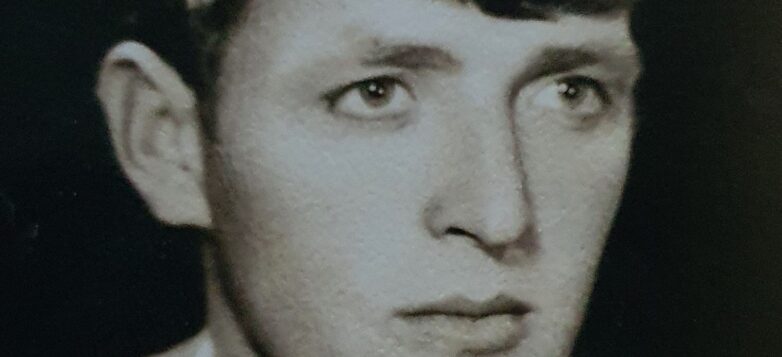
Part Seven

Anita Susuri: After the demonstrations, the differentiation began and the mass arrests of activists started, a curfew was imposed. How was it for you? It seems to me that a large number of activists, including those of the OMLK, were also arrested at that time. How did the climate continue afterward for you?

Mehmet Hajrizi: We were not in that first wave of arrests. Because they did not know exactly who all was involved there, who all the organizers were. Besides, we had maintained strict conspiracy and strict discipline. That is also why our organization managed to withstand police surveillance for twelve consecutive years. However, in order to carry out mass arrests, the Belgrade regime had to create a legal framework as well. For this purpose, they had to qualify the uprising as counterrevolution.

By giving it this qualification, the possibility was then secured for the interventions to be harsh and for the arrests to be massive. Because a counterrevolution had supposedly occurred, and a counterrevolution is not carried out by two people, nor five, nor ten, nor twenty, nor fifty. Immediately after the demonstrations, the idea of proclaiming a state of emergency and military administration in Kosovo circulated for a time. However, that idea was abandoned, perhaps for the reasons I mentioned earlier.

On May 5, 1981, in connection with the proclamation of the events as counterrevolution, I am speaking precisely about that proclamation. On May 5 the Provincial Committee of the League of Communists of Yugoslavia convened. At this meeting, where the entire leadership of Kosovo also participated, and which was held, so to speak, on orders from Belgrade, the proclamation of the events as counterrevolution was supported. I have read the entire minutes of that meeting and I have them here. They were also published in a separate book titled “The 17th Conference of the Provincial Committee of the League of Communists of Yugoslavia.”

As if guided by a conductor, all the discussions supported the proclamation of the demonstrations in Kosovo as a counterrevolution. The only one who wanted to qualify this differently in his discussion was Dervish Rozhaja. Then you see the other discussions directed against Dervish as to why, why he was making a different qualification and not as the overwhelming majority was doing. The next day, the Central Committee of the League of Communists of Serbia convened, but from the base the approval for the so-called counterrevolution had already been taken. There it was confirmed.

Whereas one day later, on May 7, the Central Committee of the League of Communists of Yugoslavia convened and there Lazar Mojsov proclaimed the uprising in Kosovo as a counterrevolution. With this, the possibility was opened and permission was given for mass arrests to be carried out. People who had previously been in prison were taken again and placed in isolation in prisons. People who, more or less, were known to have spoken somewhere about something were arrested en masse. Always randomly, as if shooting into the air, wherever they happened to hit.

In some places they even found organizers of the organizations and formed a large group of demonstrators whom they sentenced. They called it the student group, those whom they had formed in order to bring them before the court. Then there were dozens, thousands sentenced for misdemeanors and criminal offenses. It was not far from the moment when they could come and knock even on the door of our organization. They had nevertheless taken people, members of the organization and even members of the steering committee. They had taken people, but without knowing that they belonged to an organization. That made it easier for them afterward to endure.

However, by the end of 1981 they managed to capture, within a relatively short time, the entire steering committee. From the steering committee only Kadri Zeka remained, who was in Switzerland and was active abroad. Here many were arrested and trials were then organized in many places. The sentences for the uprising of the year 1981 reached, roughly, several centuries, many tens of centuries of prison years in total that were handed down. A considerable part of our organization was caught. But the overwhelming majority still remained outside. Those who afterward reorganized and entered the united movement, where our organization had also joined.

Anita Susuri: You were arrested on December 18, it seems to me.

Mehmet Hajrizi: On December 18. Yes, but when I was arrested the steering committee had already been imprisoned by then. I did not know that, I did not know this. I can say that I was not at all concerned about my personal fate, nor about my family. The weight that burdened me most in my soul was that, so to speak, the head of the organization had been caught, its leadership, the steering committee, but also the executive committee, which was another body of this organization, of this organizational structure.

Meanwhile, we had continued with leaflets throughout the entire summer and had continued publishing the newspaper Liria, which had begun to be published in the year 1980. We published issues in which we denounced the violence that was used in the demonstrations, where we called on citizens to stand in their right and on the National Movement and all the organizations that existed at that time. We had also prepared a program of the front for the Republic of Kosovo, which was not achieved in those months to be realized.

But in the year 1982, several organizations then united, including our own organization, and that organization developed and expanded. At first it was called the Movement for the Republic of Kosovo, and later it was abbreviated as LPK. The LPK continued its life until the formation of the Kosovo Liberation Army, primarily from its ranks. Until that chapter of resistance, of war and of Serbian and Yugoslav rule in Kosovo was closed. This was, this was the heaviest spiritual and emotional side of an organization of about twelve years that was endangered and damaged so badly and so severely in the years 1981 and 1982, and these continued afterward.

The rest, all the rest, were easier because they were also personal. I had three dramas, three heavy blows especially spiritually, I say, because I will not even mention the physical ones. Spiritually I experienced them during imprisonment. One was when I saw the dimension of the arrests in our organization. The second was when on January 17 the member of the steering committee of our organization, Kadri Zeka, was killed together with Jusuf Gërvalla and Bardhosh Gërvalla.

I did not receive this news on January 17 but only at the end of April. Because I had no newspapers at all, no visits, nothing. Then a young man came there who had participated in a demonstration on the occasion of the anniversary of the demonstrations of 1981 and he was from the Kamenica side. He told me that Kadri Zeka had been killed. Kadri Zeka is killed? This was the second heavy blow that I experienced. And the third was when two other members of our organization, Rexhep Mala and Nuhi Berisha, were also killed in the year 1981, on January 11, on January 11, 1982. In the night between January 11 and 12.

There they were surrounded, they decided to resist with weapons and in the end they were killed, both of them were killed. Similar to Afrim Zhitija and Fahri Fazliu later on. Afrim Zhitija was also a member of our organization at that time. Our organization has given 13 martyrs and heroes who came from its own ranks. And that day here where the plaque was placed I said this. Therefore, that day the tributes were being paid more for those 13 martyrs than for the organization itself, and rightly so. It was rightly being done, it was done well.

Anita Susuri: I want to return first to your arrest and ask you to tell me how they came, whether you have any idea how they found their way to you and how the arrest happened.

Mehmet Hajrizi: As for that… I had been imprisoned in the year 1979, also in December. At that time I was sentenced to only two months because they found nothing, since I knew that I was the first one there who had to speak and the last one. Nothing came out. They conducted investigations for two months. By then, those who had dealt with me back in 1979 already knew me. I was released then, with only a sentence for propaganda against the regime.

How they found the way to come to me, I do not know and I am not interested in knowing it ever. I did not need to know it. I am certain only of one thing, that many organizations say that from within, wrong people who entered the demonstration also entered the organization and damaged it and denounced the organization. I am certain that there was no informer who went voluntarily to knock on the doors of the police and tell them, I have something to tell you, to make a denunciation like this.

That people later spoke when they entered the system of inhuman torture that was imposed on them, that is not a denunciation. That is another condition. But I was also prepared for the fact that this arrest would happen one day, especially in those waves, even more so because I came from a persecuted family, not only in recent times and not only because of my brother who had been in prison, but also earlier and for a longer time. We had had a painful history as a family. Even if no one in our house had done anything at all, they would have come to knock here and take someone just so as to have someone inside.

Even more so because at that time Naser had also been killed and tens of thousands of people had come, not few, tens of thousands of people had entered and left our house. That alone would have been enough for them to come and take someone. But none of that was the reason. They had tracked down the organization and they did not take me first but took me somewhere in the middle. I was working in education at that time. I was at school during a lesson.

One of those investigators whom I had in 1979 opened the door of the classroom where I was inside and said to me, “We have a little talk with you, will you come outside?” I recognized him very well, I knew why he was calling me. I said, “Excuse me, I am in the middle of a lesson, it will end shortly, wait and I will come. I will come and then we will talk.”

The windows were on the opposite side of the classroom and I had always imagined that when they came to arrest me, if they came into the classroom to arrest me I would jump through the window and it was not far to the woods and I would slip inside. Then it would have been difficult for them. As for a pistol, I will say this with regret, I worked in education always armed. Armed, but never did any of my students notice that I had a weapon on my body. I carried it so that if I needed to escape, the weapon was part of my body. At home as well, where I slept, I also had it nearby. With the aim of finding a chance to break the encirclement and evade.

We always left emergency exits at those bases where we held our meetings, but also at home and in the hiding places for materials. I thought the same about the classroom. If they came, I thought I would jump through the window and then when I got outside, if they came after me I could say that I would shoot, do not come near me. Until I reached the woods and then I would manage there. It was not some great problem. I had the experience to be able to evade.

He entered. That day I did not have the pistol with me because after the demonstrations they were conducting checks, even on the buses. I was afraid they would find it on me and take me there, and then, as they say, one straw would be pulled out and six would come with it. I did not have it with me. I saw that he was not only insistent but I saw that behind me he was signaling to the others, nodding to them, and I saw that they intended to enter all together and arrest me there, in front of the students. It would have been a heavy situation for them. To avoid that, that was the reason, so that they would not see the drama, I went out.

I went out and we entered the teachers’ room. There they arrested me and we were heading toward the car. Who informed them, how they found out, I do not know. From all the classrooms the students came out. They came out to see me or to take a last farewell. One student, then 13 years old, had the whole moment in front of her eyes and wrote right then and there a poem. A poem for me as they took me, just as she had seen it. Now she is a poet and has published two books. Kimete Krasniqi. She has written other poems too, but she published this poem later in her first collection.

I later saw that experience in my students, which I still, still keep alive. They still remember it, still speak of it, still carry it, so to speak, as an anxiety of that time in their souls. There, there they arrested me and on December 18 as you said. Immediately that same day, that very day, the interrogations began and that very day the torture began, to continue afterward in a systematic way. Not only against me but against all the arrested. What affected me most was when I saw young boys, since we could not see the girls or the women, they were in other wards. When I saw young boys, young boys 15 or 16 years old, bloodied and bruised.

I had in my cell a Romani man. He was from Fushë Kosovë and with his friends they had gone and waited for the train that came from Skopje to enter Fushë Kosovë. The train had a signal before it that had to stop before entering Fushë Kosovë. It had a signal to wait for the train from Peja and others, so that then the green light would be given to pass. Each time the train stopped there, he and his friends would climb onto the wagons, onto the freight train, and take mainly shoes. They would throw them into a cornfield planted with corn from the wagon and then jump down themselves. The train would then go on. They would go in and collect the shoes and sell them.

He had been imprisoned, Sefedin. They had moved me at some point from that solitary cell where they had kept me. To tell you, my solitary confinement looked roughly like this, I will make a description. It was concrete and then some boards in the form of a kind of yard table. They had placed about four legs and the boards that moved, on which you could climb to sleep. But there was nothing to lay on the boards nor anything to cover yourself with. Only that was there. When I climbed onto it, it shifted to the side as if on a swing.

The window had no glass, but it had a sheet of perforated metal, completely pierced, through which the cold of December and January entered. When I was arrested it was December. It was very cold, you had nothing with which to cover yourself. I was already in a severe cold when I was taken. I had medicines with me, they took my medicines and never gave them back to me. They did not give me other medicines afterward either. There was there a container like a large pot, they called it a bucket, where people carried out their physiological needs. It had been full and overflowing and you could not empty it. It was terrible, that is, unclean.

Anita Susuri: This was in the Prison of Prishtina?

Mehmet Hajrizi: This was in the Prison of Prishtina. I still have not gone to see the prison now that it has been opened. But I should go to see that initial room where they placed me in that cell.

Anita Susuri: On which floor was this?

Mehmet Hajrizi: Downstairs, it was downstairs. It was downstairs, not upstairs. Especially that window, that open one without glass, it terrified you completely from the cold. On the other hand, the body was also shattered, beaten, bruised, swollen. But later they would take people out of there and place them into rooms. The rooms were not of a regular shape because the prison itself is a semicircle, therefore the rooms come out narrow at the doors and wider on the other side, toward the corridor. They come like this in the shape of a trapezoid.

They would place about ten of us there. There was no bed there. We slept on the floor. In the evening, all of us had to lie down. There were some things like mattresses. Those were spread out. There were mattresses, crushed mattresses probably from after the Second World War. They did not help much. Those mattresses had to be folded into a corner in the morning and not sat on during the day. During the day you had to sit on the floor and you had to change the positions of your body where it did not yet hurt.

They used to come and take me every so often, day and night, especially at night. When I returned after the tortures, around three in the morning, the place was already taken. Because we were packed like sardines. All of us right next to one another. And for me there was no place left to get in, no place to lie down anymore. From home they would bring me onions. Onions. My brother had experience with the Prison of Prishtina and perhaps from him this had come, but I had also asked for onions myself.

Onions are good when you are beaten and the body swells and is bruised. You apply that onion and it can help. These onions were kept in a locker, a metal cabinet that was kept in the corridor, where you kept the things that had come to you from home. Later they began to bring them to me and they did come. Then I was also allowed to send one letter home and my brother sent me a letter and now he tells me that your daughter has died. I had a daughter who was somewhere about almost one year old.

It seems that when they entered the house they had kept the door open and who knows what else while they searched, who knows how long they stayed there until they finished the check. The little girl may have caught a severe cold. She had died about one week, not even a full week, five days I think, after I was arrested. This was again, again a kind of heavy burden now, that your own child, that is, something that was not at all easy to endure there regardless of what condition you were in.

When I returned from interrogation late at night, everyone was asleep except Sefedin, that Romani man from Fushë Kosovë. He never slept. I always found him awake. He called me brother. He did not know how to read or write. He dictated and I wrote letters to his beloved wife who had just been married. He dictated and I wrote just as he dictated. He did not say “and,” but he said “ere,” “ere, I am well, ere do not worry,” and I wrote everything exactly as he dictated, “ere, ere,” just as he dictated (laughs).

He was always waiting for me when I came and he took those onions. I would ask the guard when I returned and say, “Just one onion please let me take,” and they would give it to me with some understanding. He would take the onions and place them on my body, mainly higher up. We had a bathroom outside in the courtyard walkway, with the door there toward the corridor, not toward the street but toward that cold walkway. It was full of snow there and we had to leave our clothes in the snow and enter naked to wash ourselves. Inside there was no light. The bathroom was very small, about one meter, one and a half meters at most. Ten of us squeezed against one another, you could not even move properly. They let the water run for as long as they did, and then, “Out.”

One day when the door opened, Sefedin saw many of those bruises on my body that he had been treating. When he saw that I also had many like that on my legs he said, “Brother Mehmet, what do you have on your legs like this?” I said, “You know, you have seen these.” He said, “No, I have never seen these, you never showed them to me.” Those were less dangerous and I never told him about them. I just left them to heal on their own. “What have they done to you?” My legs had become completely dark, like the rest of my body. Sefedin was worried. His surname was Sefa. That Serbian guard used to call him, “Dupli Sefa” (laughs).

I went to Fushë Kosovë together with Haxhera, with my wife, and we looked for him. We asked people, “Do you have here some Sefa, Sefedin in your neighborhood or in Fushë Kosovë?” They did not tell us. Who knows why and what they thought of us. But I was not able to find him. I would have liked to find that man just to express my deep gratitude and to thank him, to thank him.

Anita Susuri: How long did you stay in solitary confinement in that room?

Mehmet Hajrizi: In that first room there, it could not have been more than what I could endure anyway, perhaps no more than ten days in that cold winter solitude. It must have been about ten days, maybe. Then we were transferred here.

Anita Susuri: And at the time when you were arrested, did they know what role you had in the organization?

Mehmet Hajrizi: No, they did not know, and here I must also emphasize the care of all those who had been my comrades and who knew that I was the leader of the organization. Not a single one of them said this. Therefore, I was not sentenced as the leader of the organization.

Anita Susuri: It was never understood.

Mehmet Hajrizi: They never understood it. When we came to court, one of the members of the steering committee, Berat Luzha, when he came to court and they were preparing to announce our sentences, said, “Mehmet, will they bring the clothes that they will cut?” (laughs). Meaning that I would certainly be sentenced more severely. But this was not mentioned and it was not known.

Anita Susuri: You were sentenced, it seems to me, in the year 1982?

Mehmet Hajrizi: In July. Somewhere from July 8 to July 10 the trial was supposed to last, it was supposed to last about four or five days, but I do not know for what reason they shortened it. They shortened it. On that day, the first day that is, we saw that although he had been in the indictment, Hydajet Hyseni, one of the members of the steering committee, was not present there at the trial.

I had seen several decisions on the extension of pretrial detention where it was written, this one, this one, this one, Jakup Krasniqi, Berat Luzha, Nezir Myrta and others by name, Mehmet Hajrizi have acted in this way, this way, this way together with Hydajet Hyseni who is in flight. This was a kind of relief for me. I said, one of us has escaped and now he is renewing the ranks, just as I had done in 1974 when I was left alone from the entire leadership. I said, now he is renewing the ranks and that is fine, it will be all right.

The others had taken it the same way. Berat Luzha told me, “I have received such a decision where it was said that he is in flight.” I had believed it. That had surely been another lie. He had not been in flight, but at the time when the trial began he had had health problems and they did not bring him. Now for the first time we are understanding that he was not in flight, so where was he then? Had they killed him? Where was he? What was happening? We said that we would not speak and that we did not want to be here in court without our comrade who was missing there being brought as well.

Meanwhile they went and brought a, how should I put it, a result of one Albanian doctor who said that he had health problems. But for us it was some kind of confirmation that he was somewhere and that he had some problem. For us it was enough that he was alive. After that, they began and we had said that we would not speak. Gani Syla and I were in one room, they had separated us before we were to give our statements before the court there, and we were saying whether it was good for us not to speak and remain silent, they would sentence us anyway, they would sentence us whether we spoke or not. You present a defense or you do not present one, you can also defend yourself in silence.

We decided that we would speak. I went into the courtroom, they brought me forward. “Do you want to speak?” I said, “Yes.” I presented my statement, I said a few words for which later a journalist wrote, his name is Rrustem Rugova. The next day it said like this, he said this, he said that. Perhaps to help the court a little so that the sentence would be harsher, to remind them what he had said. In a way he was acting like a prosecutor himself with those stands (laughs). Then he also continued to write, in the form of serialized articles, in several installments in Rilindja of those days, about the organization itself in several lines.

I was in Prizren, they had sent me there. When the investigations were finished they sent me to the Prison of Prizren. From the Prison of Prizren they later brought us to be sentenced. There were several of us there, not a few. They brought us to be sentenced in Prishtina. There I also met people whom I had not seen before. The sentencing was concluded, the court process was completed, the sentence was pronounced and they returned us to the cell.

Anita Susuri: You were sentenced to twelve years?

Mehmet Hajrizi: Twelve years, yes. A guard came into the cell and opened the door and addressed me directly. He was an Albanian guard and in a loud voice he called, “Mehmet Hajrizi.” I saw that he was trying to express respect and gratitude but he could not say it openly because someone might denounce him, but he said everything he had to say anyway (laughs), and it made a good impression on me. An honest man. It does not matter where a person works, whether in prison or elsewhere, if in his soul he is at peace with himself.

Then we returned again to Prizren. There in my cell I mainly had young boys who were not yet fully formed but who had fiery hearts, with that will, with that endurance that I do not forget. I still keep friendships with them. That day one of them was here when this plaque was placed.

Part Eight

Anita Susuri: Mr. Mehmet, you were telling me about the prison and also the Prison of Prizren, how long did you stay there? You said that most of the time, or in fact the whole imprisonment, you spent in investigative prisons. What was it like in Prizren?

Mehmet Hajrizi: The investigations continued for about six months in the Prison of Prishtina. Then, to free space for other prisoners who were being taken for investigations there, they removed some of us from the Prison of Prizren and me they sent from the Prison of Prishtina, they sent me to the Prison of Prizren. They distributed [us] through different prisons, also in Mitrovica and other places. But me they sent to the Prison of Prizren.

There I found in the room young boys, without even having a razor touch their faces. But as I said earlier, very determined and very courageous, very steadfast. They were pleased that we were there, us others, and somewhat older were me who came from an organization that had made a long experience of activity and Shemsi Reqica who had been imprisoned with Ukshin Hoti and Ali Alidemaj and others.

Therefore, now, we two tried to channel the conversations into the education of those young ones, into information that needed to be given to them and intellectually sometimes and so on. There was being made, there was being made a good debate there with the youth of those sides. There I stayed more than one year, yes. Then, some of us were sent to Novi Sad. The others were distributed through other prisons. In Novi Sad it was an investigative prison, it was a very old prison and it was a rigorous prison.

I know in Zrenjanin, I think Ramë Buja had been and when he came and they brought him there he said, “They have brought me here with a decision for intensive re-education.” Meaning, the prison of Novi Sad was sought as an especially harsh prison. There we were in rooms as I showed earlier separated each one. For me it had importance to avoid troubles with political prisoners of various criminal activities. They often were even instructed to incite conflict and to beat the Albanian political prisoners…

Anita Susuri: You mean the ordinary prisoners that were there?

Mehmet Hajrizi: Yes. There were murderers there, delinquent people of theft and others. Mostly, mostly young people. But often also with aggressive tendencies. Sometimes even sick people came, mentally sick, psychologically sick. I had in the room for a time three with epilepsy for example. There I saw that when one of them falls to the ground then these others who have the same illness would lie down immediately. One affected, one affected the other. It happened all three would lie on the ground. Heavy health conditions but also they suffered a lot when this crisis seized them.

Then they scribble on the floor, fall to the ground and they can be endangered to fall with the head on concrete. Then they vomit also and they become, become hard to endure inside. I dealt with them. I dealt with them. One I had near me when I slept and when it seized him during the night, he had nowhere to fall because he was lying down. But he would come hit my bed with his hand to show that I am in a serious condition. I had to wake up so that I approach and help him.

Meaning even if they are not standing, that crisis seizes them in such a condition even while lying down, even when they are lying. This lasts somewhere around half an hour at least up to an hour. They have broken teeth afterwards and also soil themselves but it is very hard. They were for example on a walk outside and suddenly only when we saw [him], he fell on his back, collapsed and fell to the ground. We had to take care [of them]. Nobody worried about these matters, to go help there. We had with our solidarity to do this.

One boy, who knows how it had happened, seemed as if he had been raised in a wealthy family and I could see even from the appearance of his face that he was a boy well cared for by the family. He could have had intellectual parents too and also wealthy. I could tell also when they brought him clothes and other things that he was such. He had killed a peer of his somewhere around 16–17 years old he had been. One day, just as he was sitting, he fell face down with his forehead on the ground and all of us saw him and the others there. Not one moved to deal with him.

I went and took him, turned him over, turned him on his side but I see that he is breathing, I checked his pulse and I’m calling him. I took some water, poured water on his face and neck and so on and so on to bring him back to consciousness. After some time he regained consciousness and came, came to condition. Now he goes and asks them, “Who, did someone take care of me?” Apparently he had had this before too maybe. But the condition after the killing had caused him that anxiety which did not leave him in peace. They tell him, “Yes.” “Who took care [of me]?” They say, “Hajrizi.” He is astonished. How is it possible for an Albanian, an anti-state man of Kosovo to take care of me. He apparently told even his family.

When he understood he came to me and hugged me saying, “You saved my life. I would die if it had not been you.” All the time afterwards he behaved with me as if he were a little brother (laughs). Now for me it had no importance what nation he is, what nationality. He was an unfortunate young man to whom this had happened as it had happened. He was not from those thieves, from those, no. But he was a cultivated boy, he was educated but it had happened to him and he could not cope with it, he could not contain the condition.

When he would ask me sometimes, “How much are you sentenced [to]?” And I would tell him. “Strange,” he would say, “why don’t you kill yourself? If I were sentenced as much as you I would kill myself immediately, I would commit suicide,” I said, “To me suicide never crosses my mind, good boys. I do not kill myself.” But I would also tell them why I am [there]. The other thing is interesting as well. Many young Serbs and also older ones had understanding for my activity.

They would say… perhaps not because I had convinced them, I would speak to them about the justice of the struggle that we did. But I would say, “We have done nothing, we have killed nobody, we only asked to be equal just as the Serbs are, just as the Croats are, just as the Macedonians are, that we also be equal nothing else. That we have one republic just as all the peoples have one republic each.” “Well alright,” they would say in the end, “there is nothing bad here. Why don’t they give you the republic? If I were [them] I would give you the republic immediately” (laughs). They sympathized with me. Maybe they thought that in this way they were easing the prison for me too.

Another one would say, “When I go home I will send you money. Do they send you money sometimes from home?” “Yes they send me.” “Have they ever sent you for example ten thousand dinars?” “Yes it has happened that they sent.” “Has it happened that they sent you ten thousand and five hundred dinars?” “No, like that they never send.” “Well I will send ten thousand and five hundred when they release me, know that those are mine.” He never sent them but it was enough that he mentioned this (laughs).

My older brother came one time, Naser’s father. “How are you passing [your time],” he said, “here in prison with the people inside prison?” I said, “Good,” I said, “I have all thieves,” I said, “and I listen to them with curiosity when they tell me,” I said, “so in a way I have learned,” I said, “the details of theft from them.” “Well brother,” he said, “at least learn one craft while you are here in prison” (laughs).

Anita Susuri: You mentioned the visits, the visit of the brother but also the other visits if you can tell us how it was for the family to come all the way to Novi Sad? Was the road difficult?

Mehmet Hajrizi: It was hard because going and returning made somewhere around one thousand kilometers. One thousand kilometers. First of all they would not accept my wife in work. One time they had accepted her by mistake, by mistake I’m saying in quotation marks, in the Clinic of Gynecology and Obstetrics. It turned out well. We saw that board where those who had been accepted had come out, her name was there, alright. Then when she goes and presents herself at work they tell her, “No, you have not been accepted.”

A friend of my brother Zeqir went to see because he knew the director. ‘Why have you removed from the list the wife who was accepted here for work?’ He had told him, ‘Honestly we were forced because they came from the Committee of the League of Communists and asked us to remove her.’ They removed her and never accepted her again until ‘85 or ‘86. Then she entered work there.

I want to say that the economic-material condition was not such that a visit to Novi Sad could be afforded because it cost, it cost at least as much as an average salary of that time. And my brothers too were not in any good material condition. They too were bad. But this comes last. But the first thing was that it was hard especially for my children who were all small. It was even harder for my parents who were very old and could not come.

My father never came on a visit not even once, he could not come because of his age, which was over 80 years old. He died without seeing me. When I came I did not find him. Two weeks after his death my mother also died, I did not see her either. But my mother came one time to Novi Sad. A friend of my older brother, Beqiri, a work friend had a car and said, “I am ready with my car to take Mehmet’s mother so that she visits him in Novi Sad.” His brother likewise had been a political prisoner with the LRBSh of Adem Demaçi in the years of the ‘60s.

He came and brought my mother to me. I am grateful to that man that I saw my mother and that she saw me. She came, she came to Novi Sad and there initially we made the visits with that iron metal net through which you see the other person’s face categorized by those bars. And then they would send us into one room, one large and long room where we were far from one another when they came for visits. They would place one table in the middle, the table was covered with a cloth down to the ground. Those prisoners who cleaned the hall there afterwards told me that in that table there is a tape recorder that records the conversation inside.

But I assumed it and I knew that our conversations were being recorded also for the reason that we were speaking Albanian. They did not understand therefore they recorded [them] so that afterwards they would translate and understand what we were speaking about. The table was placed in front of me some three-four meters and some three-four meters away were those who had come to visit. Meaning we were some eight meters away from one another. The visit was once a month and lasted 15 minutes up to 20 maximum.

In order to come in turn to enter the visit you had to wait all day there and in the evening in darkness they would return, would come home. The road was long. By train one had to travel until Belgrade, in Belgrade then one had to change and take a bus to arrive in Novi Sad and when they came there, they came exhausted, exhausted, especially the children. Usually I instructed Haxhere, “Do not bring the children,” because I was afraid they would get sick and would… and one had already gone from us like that. So that evil would not happen also to these others. But nevertheless sometimes they could not endure it and they came.

Anita Susuri: What age were your children?

Mehmet Hajrizi: At that time I had left these [children] with one small little house here in front in the yard. But when I fell in prison my daughter had been four years old, the older son had been two years old whereas the other one was born six months after my arrest. This youngest one had now grown and had started even to speak when he was coming there. I ask… he had come together with the sister it seems to me, with his sister, with Albana. When I was arrested I had left them with one very small little house, it had been like a shack.

Then the brothers built it from the money they received because I had sold the house down below where I had been in the city and they built this house where we are now here, this house. Meaning this house was built in the year 1982. Therefore it has the smell of the old house, of mold. I had left them there. But I ask him now, I said these [others] are not telling me, I wished [to know] when the family was moving into the new house. I said let me ask the little boy, this one is sincere and tells me.

I said, “Have you entered the new house?” “Yes,” he said. I said, “Very good.” I believed him and was convinced that they had entered. The girl, the sister, said, “No it is not true,” she said, “we have not entered yet into the new house.” Now he got caught in a lie. He said, “I have entered several times” (laughs). He had entered the house while still unfinished, without being repaired yet (laughs). “I have entered,” he said, “several times.” We understood now I said, “Very good.”

Anita Susuri: And how was the reaction of your children toward you during visits?

Mehmet Hajrizi: They, they looked astonished, looked astonished and all the time looked straight at me but would turn and look at those guards who stood in the middle on the side, who surveilled the conversation. They had from them a fear, they wished those [guards] not to be there so that we could be together and hug each other once because we could not even speak hand to hand. They did not allow it.

I felt that they did not, did not… freer they were much more when they wrote to me and I wrote letters to them. With letters I communicated. I communicated with them well meaning. There is this book ‘Correspondent under Censorship’ that… nevertheless it was under censorship. One could not speak everything, moreover Haxhere had a file and much care was needed so that we leave no possibility that they may catch one thread somewhere that would endanger this.

After all if you would write something there that is punishable the letter would not come home. I have taken care that this not happen but many letters have not arrived either to me or to these [people], they were lost. Some that survived were preserved, they were published in one book but only the letters with the children and with the spouse were published. But with the brothers, with my sister, with my parents they were not published because the book would become too voluminous and those remained unpublished.

Anita Susuri: And like this the language with censorship was it like… what words did you use to show something and not be understood?

Mehmet Hajrizi: The letters, the letters were, were a problem in themselves because they could extract information even from the letter therefore much care had to be had. For example, I mention in the first prison when I was sentenced in the year 1979, then many activists were arrested because of one leaflet, longer than all the other leaflets that we had distributed, our organization, in all the main cities of Kosovo. This leaflet had been drafted and distributed after a visit that Josip Broz Tito had made here in Kosovo and he left instructions that there should be a more savage fight against the National Movement of Kosovo.

Then afterwards we exposed this and showed who the real Tito is. What his anti-Albanianism is and so on and so on. We wrote and afterwards they started to arrest [people]. But they did not know who had done this and they were arresting people. They took especially from the National Liberation Movement of Metush Krasniqi some [people] but they took me too together with Gani Syla. At that time I had written the leaflet. A letter had to be written home. In order to write this letter my syntax had to be changed completely and the calligraphy had to become completely different because I feared that these [people] had experts who study handwriting and find, find the person even based on that, verify [it] there where they suspect.

I did this intentionally in order to avoid the danger that they identify me based on the language and the writing. I changed it completely. I wrote differently which was not easy work to change the writing. At that time these things were studied by special experts of criminalistics in order to find, to find, to verify. For example, I am mentioning one case, when the program of the Revolutionary Movement for the Unification of Albanians of Adem Demaçi was seized they suspected that that program might have been written perhaps in Tirana and not here in Kosovo.

It was the name of Adem Demaçi that was mentioned, that he had written it, but they did not believe [it]. Therefore, they made analyses, detailed analyses, they say eight months, until it was verified exactly that the writing is authentic of Adem Demaçi. They were capable meaning, [the investigators] were capable of extracting even the true names from that writing in the investigation. I was afraid that it would be discovered that I was the author of the leaflet and if this were proven then trouble would come out. Because I could not myself distribute the leaflets in seven cities of Kosovo at the same hour. I would have had to tell also the people who had been there. But I escaped.

I wrote one letter home it seems to me and that letter completely confused both in syntax and in… I tried to write as if… they knew that I was not illiterate, I was an intellectual but nevertheless I had written there like a semi-illiterate person. To camouflage this. The letters, I have read also letters of others. Somewhere they have written more openly meaning. That they had written. But I have been very careful for the reasons that I said earlier. The letters have also been made with allegories, with symbols, with… to say something that would not be understood easily. I don’t know if I mentioned for example the case of those potatoes…

Anita Susuri: Yes, yes.

Mehmet Hajrizi: And to tell the other one take out the potatoes because they are spoiling and becoming this and that, in reality [it meant] take out the materials or take out the revolver so that it does not rust and does not get damaged and so on. Thus, this kind of symbolism there has been and different metaphors that have been used, have been used.

Anita Susuri: What, for example, that interests me? That one with the symbolism?

Mehmet Hajrizi: There have been such things. I even from these in fact have restrained myself as much as I could. But I have tried that my letters have an educational role especially for the children. Whereas otherwise for example I write with the brothers, with the other parents. But here with the children it is even harder to communicate with children, they are a world in themselves and a special world, children. That it is not easy to enter their world and communicate with them. They are, as you may say, also better evaluators even for the things that they read.

Bedri Dedja has written somewhere, he is among the best writers that the Albanian world has for children. Bedri Dedja has written much for children and by profession he was a psychologist. He was also a literary critic. He has written about literary creativity, especially for children. Bedri Dedja says, ‘There is no need for any critic for children’s literature. Have you written a book for children? Yes. Go one day where children are playing call them to come and read your book. Sit down and read from your book. If the children stay the whole time while you are reading there, your book has passed the test, it is good. If they listen a little while and leave, go to their ball and continue the game…’ this is the strictest critic that has evaluated your book that it is not for children, it is not good.

They are sensitive, they have their own world. Their letters that they write are interesting, the drawings that they make are interesting. What has caught my eye is that these [children] have suffered also in school when they went afterwards. They did not say that they had their father in prison.

Part Nine

Anita Susuri: Mr. Mehmet, you were telling us about the correspondence and about your children, those letters that you sent, about the symbolism that you used.

Mehmet Hajrizi: The letters, as I said, communication with children is difficult, but I tried to enter their world and adapt myself to that world with them and to influence, as much as possible, their upbringing even from there. One fellow activist of mine read that book ‘Correspondent under Censorship’ that I had with the children. When he came here, Hasan Malaj, the brother of Rexhep Malaj. When he came here he told Haxhere, “You,” he said, “had not been alone during the prison time. You had Mehmet here,” (laughs). He had read the letters and certainly I tried through the letters to be present in the family as much as possible.

But there were also cases when people secretly smuggled out some poem, some writing outside. Certainly with risks. Now there were possibilities for example in clothes somewhere to insert some soft paper that could not be noticed, let us say in the collar of the shirt or somewhere else here. In bread you could not or in those trays where they cooked something you could not because they cut them, they cut them and inspected them.

So they ruined all that food by putting their hands there and knives, what do I know. We had to be careful even in the language of the Lord, even in those things that we wanted to take out or bring inside. The control especially in investigative prisons is much more rigorous. As was the Prison of Novi Sad for example.

Anita Susuri: And what was the reason that you were in an investigative prison? Just coincidence or intentional?

Mehmet Hajrizi: I don’t know, maybe they should be asked (laughs).

Anita Susuri: So you did not understand? I also wanted to ask you about the reading that you did in prison maybe. Did you have the right to newspapers? Books?

Mehmet Hajrizi: No, during investigations no. During investigations you had no right either to letters, nor to any means of information, any newspaper, nothing written meaning. Whereas afterwards when the investigations ended yes. We subscribed to Rilindja and they sent it by post. But Rilindja never came, or not only Rilindja, also the other newspapers. We even had newspapers from Croatia and Serbia that the other prisoners received and then you had the possibility to read them. I followed [them]. Yes, and we, we also received those. Rilindja for example came some three-four days late always. But for us that did not matter. The main thing was that we kept ourselves informed.

Anita Susuri: Were the newspapers ever censored perhaps?

Mehmet Hajrizi: Yes, when the newspaper had something that they wanted you not to have then they simply did not give it to you at all. This was the form of censorship meaning, but not by removing some page or some sheet. But there were cases.

Anita Susuri: And inside the prison you told me earlier that there was also work that you did that affected your health.

Mehmet Hajrizi: Yes, they told us that if you want to go out to work, you may go out. This pleased us because the Albanian prisoners would meet among ourselves. Until then we had begun to forget how to speak Albanian. Never speaking Albanian except with ourselves. On the other hand we felt a little resentment to go out and work for them. Nevertheless everyone had decided that we would go out. This was good also to change the environment a little because staying by oneself in one room, seven, eight, ten years has its own effect psychologically on a person. It is that prison psychology which is heavy and certainly also has the effect of transforming one as a personality.

We went out, we went out to work but the work was hard, one worked with concrete. With concrete they made figures, not figures but concrete works with these concrete pillars. Then those roadside parts that are placed [there]. They are heavy, large. Then you had work with concrete, you had to work in concrete. I told them, “I am a driver,” and they gave me one of those cranes with those statics in front that it has for carrying weights. There was, there had been one flat field where those concrete elements were produced, now they had to be transported from there and taken to another farther place and stacked in piles.

I carried them with that machine of mine. There afterwards people would come to take them with trucks, those who bought them. There were cases when the trucks belonged to Albanians, from Tetova. Sometimes when there was a possibility they would make some greeting meaning. One time one of them told me, “Shall I bring you a bottle of rakia?” I said, “Where does your mind go to rakia. What rakia, forget the rakia, I don’t want rakia,” (laughs). But there the control of the guard was very strict.

One guard very evil, very vile. He would inspect me… when I loaded these I would grab, I, these blocks of concrete that are for constructions, there had been somewhere around 50–60 blocks that I would grab all at once. Just as they were, not with these blades, the forks underneath to grab them, but this grabbed the blocks in order to squeeze them together. If you squeezed them too much the blocks could break and all would fall down. I grabbed them, now I had learned how much the measure was to squeeze them there. I grabbed them and loaded them directly into the truck with this machine.

That guard suspected maybe I had inserted something inside the blocks when I stacked them there, maybe I had inserted something and was giving it to him in the truck so that he would now read my message. He would enter… I lifted them two-three meters high, three meters so that you could place them on the truck, the truck was high, large. He came and sometimes entered underneath that which I had lifted, 60 blocks, he inspected well what there was. There was danger. Because sometimes those blocks, each one was somewhere one and a half meter or two I don’t know how much it was, there were cases when the blocks would fall slightly downward and make like an arch. If only one fell then all of them would fall meaning.

There was the danger that I might kill that man. Whether he was aware that he was risking [himself], whether he was such a brave man who entered that risk, but I became more worried because I would say I kill him and whom did I kill, one scoundrel, and now I must go to court again for him. One time I told him, “Do not enter under these blocks because these fall sometimes, they will fall on your head,” I said, “I do not know how.” He had the possibility to climb there where I took them from, to climb and inspect there. But no… I had concern for this man for whom I had no pity at all, but even if someone had told me do you want to kill him I would not kill him. Why should I kill an unfortunate man who had come to earn some money to support his family. But I could have killed him.

Thus I worked for about, I worked about two years perhaps. One year and a half or two years. I had a habit in prison of keeping notes. I kept notes for what I read. Here and there some small comment carefully because they did not allow you to take those home. I had made notes also in Novi Sad and in Prizren. In Prizren we somehow managed to smuggle out one pencil with Shemsi Reqica because they did not allow pencils in prison. Whereas in Novi Sad they allowed you to have a pencil and I took notes. I still have today around 20 notebooks filled entirely with my handwriting because I had to save the notebooks that I had obtained then.

People who got out before me from prison had their notebooks with notes confiscated. When I got out there was one Serb, a Serb from Vojvodina. Those Serbs from Vojvodina the Serbs call llallë. The llallë was a gentle man, he did not, did not have that harshness in behavior of the Serbian guard. Nevertheless the spirit of transformations in the Balkans had begun. Therefore, also in Serbia when the verbal delict had been removed. One could speak a little more freely meaning, and so on. When I got out, I had taken all the notebooks and put them in one bag with what I had with me. He took it and was inspecting the first ones. He opened it, he sees writings, writings. There was nothing else. After a while he asked me, “Are,” he said, “all [of them] like this?” I said, “All of them.” “Go on,” he said, “carry [them],” meaning take them.

I took the notebooks, they were saved. There are notes from the books that I have read. I read a lot in prison. There you had no place to sit in Novi Sad for example nor in Prizren. As for Prishtina not to speak at all. There we had the beds but you were not allowed to sit on the bed or lie down, in no way. This was punishable and there immediately without question the whip started to work for re-education. From 03:00 in the afternoon we had the right to lie down to sleep until 05:00, two hours. Can you believe that I never slept those two hours, never used them for sleep.

I felt good that at 03:00 you could lie down and nobody could come and say why have you lain down. Because at 03:05 a siren sounded that everybody had to stand up on their feet and stand at attention in honor of Josip Broz Tito who supposedly had died at that hour. We Albanians hurried quickly at 03:00 to lie down before that siren sounded so that we could occupy the bed. Because they could inspect also through that observation hole from the room door. But during the day I read something lighter and all of it standing up.

On the upper bed, because the beds had been like those of sailors, meaning one level below, the other level above. On the upper bed it suited me exactly to place the book and rest my hands there a little and read standing like that or take notes. Whereas from 03:00 until 05:00 I would now take some scientific literature so that I could read something more serious when no sound was heard. All those colleagues of mine, thieves and criminals, slept. They slept at that time and I could read something more serious meaning. I used this two-hour period for serious reading, more scientific, heavier things to read.

Books were brought to me from home. There were few books there not many and even those selected, which surely had been sent by the Provincial Secretariat of Jurisprudence here. They gave us [some] but mostly they brought them from home. From home they brought me every month ten to 15 books and then returned those that I had read. They were always loaded, they were burdened with books to bring there and to return home. Some books disappeared completely, they did not, did not take them.

Anita Susuri: Did they send the books to you by post or?

Mehmet Hajrizi: No, no like this, the family by hand, by hand. But when I returned them afterwards the bag with clothes because I did not have prison clothes. Since it had been an investigative prison these clothes were these [ones]. I never wore prison clothes. I was with these clothes from home, my own clothes. But these had to be returned home to be cleaned, there they did not clean them. One bag was filled with clothes because during the whole month several sets of clothes had become dirty, the underwear and others. Those were returned in one bag to be cleaned and then they would bring [them] clean the next month and so on.

Besides this another bag was filled with books, with books to return. When I got out of prison there remained somewhere around three-four fellow activists who were fellow sufferers as you may say there and I left them my books. There had been somewhere over 150 books that I had left them. I had books, they brought me books…

Anita Susuri: And the fellow activists that you mentioned, how was your communication in prison? How much did you manage to talk or…

Mehmet Hajrizi: Yes. In the Prison of Prishtina you could talk if you had a neighbor in the room, in the next room. Then one knocks on the wall and the other approaches and one talks through the wall. He places his ear there and listens, listens to the conversation. On the other hand we also had some knocking, not only on the wall but also on these radiators. On the radiators when you knocked you could be heard on the other floor. We did the knocking to notify someone that here there is a political prisoner of Kosovo, but not much more. Only so that he knew that in this room there is someone because someone is knocking to us, meaning.

Anita Susuri: The knocking I think was like a melody?

Mehmet Hajrizi: It was. It was almost similar like that of the museum alphabet. You knocked the words that we spoke. For example, “Republic! Constitution! Either willingly or through war.” And now the knocking you do, “Republic!” three knocks, “Constitution!” the other knocks you make according to it and then he understood that you are someone from the organization but not exactly who without speaking. The other thing that was high risk was that you could go out at the window and the window looked toward the walking yard.

The walking yard is small not very large because it is divided into two parts. It may altogether have perhaps two-three ares of place where one walks in a semi-circle. Above there is a watchtower, the policeman stays there, the guard, and watches all below each one how he behaves. You cannot communicate, you cannot leave something, you cannot take something. Because someone could leave one letter and you bend down to take that letter. No, those things were watched very well, this could not happen.

One thief once told me in Prishtina, he said, “I have taken, I have taken the decision for the thefts that we have done, how many do we have?” He for example had committed 50 thefts before coming to prison. But they had identified let us say ten. He said, “We knew that we had to admit some of them. But the more you admit the more you are sentenced,” he said, “and when I took the paper, I only circled,” who knows with what because there had been no pencil. He circled it or somehow darkened the points which he had not admitted, he left only those that he had admitted. When he goes out he looks there, no nobody is seeing, in one corner and throws the paper.

When now that other thief comes out, the one they had worked together with, he knows where the paper is because this one had also spoken with him. “I,” he said, “knew that he had marked the acts that I admitted. Now when I went out to get [it], walking,” he said, “as if I stumbled and fell, I fell to the ground. I got up, dusted myself off and my leg hurts, I walk, what do I know but,” he said, “I took it and saved it.” Meaning even thieves have their own means of communication. Because prison life itself teaches you these things. Necessity meaning teaches people. Perhaps also all the studies that have been made in the history of humankind are from necessity. There was a need that that be done and they were achieved.

We went to the window, we went and carefully spoke but there first of all the guard who was guarding there could see and hear you. Secondly there could have been listening devices inside the room where you were speaking and those were caught. Thirdly, the prisoners themselves were unpredictable. You did not know whether they had brought some spy into your room and he pretends as if he is a prisoner or even really a prisoner but whom they had told, ‘If you do us services, if you come and tell us everything that Mehmet says there and what he does there we will lighten your sentence, you will get out of prison easier.’

They may have found and they did find such cooperative people meaning who damaged people in the room, especially the political prisoners. These were the three dangers that could spy and damage [you]. There were, there were such forms of communication. In Prizren for example there had been planted in the walking yard… Prizren had the newer and better prison than Prishtina. They even had roses planted there. So sometimes we could even take some leaf, what do I know, and let us say in the book that you return home you insert one rose leaf and the beloved finds it and sees that he is sending a greeting with a flower inside, inside the book. Which even if they found it they did not take so seriously the matter of one leaf in a book.

There by the roses sometimes when we saw that the guard was not being very careful, we would place in the ground one letter so that he would find it when he comes or when he goes, for example, to the bathroom you leave somewhere one letter hidden a little more lightly in the toilet and so on and so on. In the most different forms. In Prizren likewise one had to communicate through that net and there was one, one metal [barrier] so that the family member could not come near the net, near you to give you something through that hole or what do I know. And you also had another iron [barrier].

I have written also in the foreword of this book ‘Correspondence under Censorship’. I saw there my child whose milk teeth had fallen and only these canine teeth had remained. While she was staying there I was speaking with the family members, from there I saw the child how she was grabbing with her mouth, with her teeth that iron that she had far away and that she had grabbed with her hand. I saw meaning that resistance of a child against the obstacle that had been placed so that she not embrace her father, so that she not go into his lap, so that she not make happy the parent whom you have near.

I never forget that sight. While I was talking with these [people] I watched her how she was biting the metal, the metal that she had touched with her hand. And this too was communication. She was giving a message. I was understanding her message very well. She was not giving a message, she was doing a childish act but it was a message for me. The regime of Yugoslav prisons beginning from Prishtina and onward everywhere was harsh, was difficult. There were nevertheless differences from prison to prison. Some prisons had a more liberal regime, a little more tolerant and some others were very harsh.

The Prison of Novi Sad was very harsh. For example in Sombor they said that it had been somewhat different. It had been better. They had some permissions, some… it had been different. Whereas here in Novi Sad you could not even imagine such a thing, not to have some rights who knows what, no.

Part Ten

Anita Susuri: Before they transferred you through the prisons, did you have any notification or did they just come and take you because the transfer happened?

Mehmet Hajrizi: There was no notification at all, no, they do not make such notifications. Worse still they do not notify the family either. People went afterwards to Prizren to visit us or they went to the investigative judge, to the court, you had to go get a permit for visits and so on and so on. They were not, they were not informed until late where they are, where we have sent them, where those people have gone. One morning early, before 05:00 it must have been, they opened the door for us, turned on the light and said, “Mehmet Hajrizi prepare your things, get ready and we come after five minutes, go outside.” We understood that a transfer was happening.

The others remained inside, we said goodbye. I saw one of them with whom I had had somewhat more conversations, even intellectual ones, his eyes filled with tears. They came, I went out. We went downstairs to the ground floor of the prison and there others too were coming one after another. We became somewhere around 15, yes. The overwhelming majority from our organization who had been in Prizren. Then they loaded us, tied up like that, into some kind of combi bus and we departed. Now we did not know either where we were going or where we would end up. But I saw that even the guards experienced this heavily while we were traveling on the road.

Whereas there inside they brought us a little soup to drink before we departed. One guard had been from Vërmica of Prizren. When we started to leave he greeted me and I saw that he cried, that guard. I never forget that sight. I have never been able to see that man again. Another guard, not a guard but a policeman, because they also kept police there in the Prison of Prizren. One policeman from Dukagjin somewhere, one day while we were going out to walk through the corridors and down the stairs we were going out for the walk. He looks through the window [to see] what is happening. This policeman, I was it seems the last one as we were going out to walk, our room. We were some seven-eight prisoners.

The policeman saw me and said, “Mehmet,” he said, “come inside a little.” I don’t know. He had left a good impression on me. I went inside. “Sit,” he said, I sat down. That was the room where the guards and policemen stayed. “How are you passing [your time]?” I said, “Well, the prison conditions are alright.” The food was a little better than in Prishtina. He said, “I called you to come here if there is any need that you have that I can do,” he said, “do not hesitate, I will carry out the request.” This was the first time that we were speaking together. I had as many needs as you want, such needs. But I also had the suspicion, is he really… he gave me a good impression, that man, but nevertheless just like that bird on the branch there, you raise your hand to greet someone and it flies away.

I did not, I did not have the courage. I said, “Thank you very much. Nevertheless,” I said, “many thanks,” I said, “I do not want to endanger either you or myself, I cannot do it.” One time I wanted to escape from the Prison of Prizren there too, I don’t know whether cowardice or what it was, but I did not, I did not escape. I had stomach problems, not a little but for a long time. One female doctor there was Serbian there. She would say, “Surely you are eating cheese, they bring you cheese from home, therefore.” That had not been the problem but it had been gluten. I had been gluten intolerant, I did not know meaning. This caused me problems. Now for example I do not eat either wheat bread or anything that has white grains as we call them.

One day they sent me, they sent me to the Hospital of Prizren. I did not know where the hospital was, it was foggy that day. We went, two guards took me. When we went there we entered to the doctor. He said, “We need to do an analysis, go to the toilet so that we have samples.” I go and enter there and close the door. The guards outside in the corridor. I look at one window, it was the second floor. I look at one small window but I fit through it to get out. First put my legs through then somehow turn onto my stomach and lower myself down. But I did not know where I would fall below, I did not know even how high it was, whether that building also had a basement. How high it was. I did not have something that I could take. I could use for example one piece of clothing to lower myself to some extent with it but not more. I did not have a bedsheet let us say to lower myself all the way down.

Nevertheless I imagined that I could jump here and lower myself below, wherever I fall let me fall. I did not know the road. How to escape now uphill one would have to… because I was inside the city. One would have to go through the city. There was the danger someone would catch me because you do not know whether [they think] he is against criminals or… they say they will catch him because… and I stayed delayed quite a while (laughs) there thinking that I should escape. I remained, remained. I could not decide. Because I was afraid of the height one thing and secondly I did not imagine that I could orient myself, especially in the fog, toward the border or that I had someone known there whose house I could go to and then let him shelter me somewhere until conditions are created, let someone help me until the border is crossed.

For example, if someone took me to Vërmica then the border was close there and I could cross over there. I stayed because I was interested, I was interested to get out. Not so much to escape prison because that difficult part of prison had passed. Six months of investigations in prison are more than serving 16 years in prison. With great pleasure I would have accepted serving 16 years in prison if only I did not have those six months of investigations. Because they are very hard, hard and dangerous also for life.

The investigation phase is the hardest phase of prison. I was not worried so much for myself but I thought that if I got out beforehand I would renew all the ranks. Because even if I did not go out to Albania it would not matter to me. I could stay hidden even in Kosovo so that they could not find me. I had people who could shelter me and such bases would be made where you could stay for whole years and operate. Then also camouflage yourself and completely change the appearance and so on and so on. In short that did not happen. That good and desirable initiative did not happen. Another time afterwards I never had a chance where I could evade and escape from prison.

In Novi Sad likewise you had no possibility. When we went out to work there at the concrete we were under observation. You could not evade [them]. Because if there had been a possibility, I waited perhaps some opportunity would come for me to evade and stay somewhere three-four days or five days or one week and not move until they finished the running around to search. When they say that this time has passed, let it go, we cannot do anything. Then I would depart and I calculated that perhaps some Serb might catch me somewhere and some… I knew the Serbian language well since childhood and I spoke it with a good accent. I was not from those Albanians who say lopata [laughs].

I had even learned in case they ask me what is your religious holiday? Because they each have their saints. I had taken one theme, one Svete of mine. So that when they ask me which one, because to provoke me I would tell them yes I have the saint that we celebrate in the family and so on and so on. So that they would not, would not identify me as Albanian in any way even if I had to be somewhere in a Serbian family. This case never came, this case never came that one could escape. Because I would have escaped. Even one year before the end of prison I would have escaped from prison if the possibility had been given to me.

The Prison of Novi Sad, I am astonished when they tried, those boys whom I mentioned earlier, to get out from there because it had been in a pit. There where we walked there had first been a high wall of concrete somewhere around three-four meters. Up to there had been the road, it had the level outside there. Plus now there went another some three meters of wall that you had to climb five-six meters upward first and then fall onto the road some three meters below. It was, it was difficult. Even if you could get out, let alone that it was watched all the time 24 hours. That Novi Sad prison had been a high security prison. This chance was never given to me. Thus finally I gave up on this idea, the matter did not happen.

Anita Susuri: About these people that you mentioned who planned the escape in the Prison of Novi Sad, if you can tell us because we were talking privately and now it is not understood who these people were?

Mehmet Hajrizi: Ah, it was, I think there was one Agim Leci. We had one Vehbi Leci, then in the room when we went out to work. A very good and determined man, the others I did not know. This was that group who had gone out at the entrance of Prishtina when the Serbian forces arrived, these [people] stopped one truck.

Anita Susuri: During the demonstrations, right?

Mehmet Hajrizi: During the demonstrations. They stopped one truck. They brought the driver down, inspected the truck and saw that the truck had been filled completely with weapons. As many as this group of around eight or ten people were, they seized weapons, some weapons. Automatic rifles. And they escaped to the mountains. Afterwards they were caught and they, I don’t know whether they recovered all the weapons, but they caught that group and sentenced them heavily, from ten to 15 years. And one of them we had been together with Vehbi Leci, an excellent young man meaning.

And one fellow activist of his with those weapons that they had taken then, tried to escape from prison but I don’t know whether with someone else or alone. But I know when that commander came and told us, the prison commander, that this is what had happened. He was telling us this to give us the message of what happens to you if you try like him. That we broke the whip on him, that he will pay the damage that he caused here and so on and so on. Those were all irony and cynicism. He told us that way.

Anita Susuri: You served it seems nine years or eight years of the prison sentence that was given to you, I mean at first it had been 12…

Mehmet Hajrizi: 12, around there, I stayed about nine years.

Anita Susuri: Did Amnesty International have an influence or why did they…

Mehmet Hajrizi: No, it did not, I do not believe that someone from outside had influence. But then in order to show that we left communism behind and are entering an era of democracy, also in Serbia they decided to release the political prisoners. Because you could no longer keep political prisoners in prison for political activity under a democratic order. Therefore they released everyone in the years ‘90 and ‘91.

Anita Susuri: How did you understand that you were being released earlier or that the time to get out was coming?

Mehmet Hajrizi: I did not know, only when they told me, “Take these belongings of yours and go outside.” I did not know. All that was allowed to me was to say goodbye to those who remained there. And afterwards they too were released but later. I did not know. It was a surprise. When I go out I see also another one, one Nusret Ahmeti, now it seems he works with one hotel somewhere unless he has retired. We came out together, together.

We had some money that we had earned by working but that money had been made almost worthless by inflation. We came out with it and we did not know even what money looked like, nor how much it was, nor what it was. When we needed to pay something, the ticket for example, we would take out all that money, take as much as needed. Because I had no idea about the value of money, how much value it has nor did we know how much we had. We saw the numbers there but we did not know how, how the situation outside was.

We got on the train, we arrived in Fushë Kosovë the next morning. The road is long from Novi Sad, until Belgrade one traveled by bus then there in Belgrade you take a train in the evening. In the morning it brings you here. I took a taxi, I did not even have a way to notify home. There were no telephones, they did not have a telephone at home nor did I have from where to call. But I came here in the morning, I come to the house, I look, there is nobody. I went, here I have my brothers nearby. I went to them. My parents had died one year before. Haxhere had gone together with the children to her sister’s place meaning, they did not know that I was coming.

After some time they came. Then someone had told them that Mehmet is here. I was at my brother’s house below there. As I was climbing upward these [people] came. When the children saw me they came and threw themselves around my neck. Then afterwards began that coming of people, many and many visits…

Anita Susuri: What date was it when you were released?

Mehmet Hajrizi: Somewhere at the end of April it was.

Anita Susuri: ‘90 or ‘91?

Mehmet Hajrizi: In the ‘90s. Then it must, it must have been the 22nd or 23rd, I do not know exactly. I know that many people came and now there was some kind of freedom to go and visit, before that no. I had been for example in ‘79 but nobody came to see me because it would create problems. People would lose their jobs. I did not consider it a big thing why they did this. It ended. The prison ended.

Anita Susuri: How did you feel altogether? First of all when you understood that you were getting out of prison, that you had freedom? What kind of feeling is that?

Mehmet Hajrizi: You feel a heavy sorrow for those who remained in prison. I did not cry but many, many of those fellow activists of mine who got out before me and left me in prison went out with tears in their eyes, they cried. It is hard. Even if you ask him, “Do you want to get out?” He says, “No, I don’t want to get out.” It hurts you so much to turn your back on the friends that you have there, with whom you passed a long time, with whom you shared sufferings together. It is not easy and you do not feel some kind of joy, I don’t know. You are like lost, not… like numb. You do not see, you do not see real life, you are not able to come down with your feet on the ground.

Then afterwards when you get out it seems strange, I did not know how to walk in the streets. It was, it was unusual now, life. Nevertheless those years had passed and had done their work. In Novi Sad for the first time and then they took us out from that prison and brought us to one new prison that they had built there. Klicë is the name of that suburb of Novi Sad. They took us out from that prison from the time of Teresa. There there were even roosters. There I heard for the first time a rooster crowing. It seemed strange to me. I heard a child crying, a little one. I became happy that I heard the voice of a child once. Prison had brought me into some unexplainable condition.

Perhaps it is not a very long time in years for an emigrant for example but it cannot be compared with an emigrant because he is in open life whereas to be locked up for ten years and eight years and nine years, they are many. They leave traces in the inner life of a person until he adapts when he returns afterwards to that real life. Life is different. You see people, you feel some kind of satisfaction when you see that others appreciate that activity that we had done. You yourself do not know whether it will ever be appreciated and what people will say. Perhaps they might say, “What did they get into, now they brought us trouble, now they went and did these actions and now they are taking even us innocent ones into prison,” and so on.

No, I saw completely another, another situation. Although we had had experience of arrests before and we had seen how political prisoners are honored and respected. I went with my brother when he got out of prison as guests here and there, we were in places where there were more people and others. But he was looked at not like a person who had come on earth, but as if he had descended from heaven meaning. They considered him somehow as an accomplished person. Why? He had been in prison, he had been engaged in activity. So more or less we also knew how we would be received. But nevertheless this influenced the soul of the political prisoner as a kind of satisfaction, as a filling of that spiritual emptiness that you had there. People were appreciating the work, the activity, the sacrifice that you had made for them.

Anita Susuri: Mr. Mehmet, the ‘90s when you came out of prison there came some kind of new spirit in politics. It had started even beforehand, there had also been the Miners’ Strike in ‘89. Afterwards Kosovo’s autonomy was taken away. On the other hand in the ‘90s the Reconciliation of Blood Feuds started. How did you yourself find yourself in all this? How did your activity continue?

Mehmet Hajrizi: All these things happened while I was in prison. Both the Miners’ Strike and the suppression of autonomy. Whereas this action, the campaign for the Reconciliation of Blood Feuds was nearing its end when I came out. I did not, did not participate in them. In some two cases I participated later in fact. But not in that campaign that was with Anton Çeta. But upon returning from prison I nevertheless saw a somewhat different situation, it was not that [same situation].

First of all people were freer to come and visit as I mentioned earlier. Secondly they could speak more freely because there was no longer that punishment for verbal delict if you were to say something. There was some kind of freedom of speech. This was entirely the result of a transformative process that was happening in the whole socialist camp and was then also happening in Yugoslavia. But I found a situation of very high inflation when money had lost its value and this brought with it an economic crisis for people. Purchasing power had fallen.

But nevertheless organized people, whoever had cars, gathered them and continued around Kosovo to visit the prisoners who were then coming out of prison in large numbers. Because of the releases that were being made of prisoners so that there would no longer be political prisoners in prisons because this burdened the very position of Yugoslavia internationally. Many political prisoners were released, some remained to be released later, let us say in the year ‘91. But in any case many prisoners were released because the situation itself and the historical developments that were happening in the region forced this development of releasing prisoners. There were now dilemmas about what should be done, how we should organize ourselves.

In the West the LPK was operating but divided in two. One was called with address, the other without address. I could not prefer one and turn my back on the other. It was impossible because I had respect for both wings meaning, regardless of the reason why they had split. Nevertheless I saw the same activists, both one and the other. So for some time, not very long, I remained to first see how the situation is, what I can do, some interview if someone came to ask me, some statement. Here and there they called me to some manifestation that they were organizing.

But somewhere toward the end of the year ‘90 the first assembly of the Democratic League of Kosovo was organized. There someone had proposed me for the central council, an organ of the Democratic League. The people had given their votes, I had not been in the hall. I had not considered myself even a member of that movement and they had elected me to that central council. I did not, did not oppose it, I went there. I went. Afterwards I was elected also to the presidency of the Democratic League of Kosovo and the main benefit that I had from membership there was, first because the Albanians of Kosovo had become homogenized around one idea of opposing Serbian rule.

There, there the population was gathered. It seemed to me as if I had a spiritual need to be near those people and speak to them and communicate with them just as I had my own concepts for communicating with citizens. During that time I used all the possibilities to be mainly in the field. I was not an office activist but a field activist. I went out into the field and traveled to the four corners of Kosovo and I spoke with citizens, somewhere 300, somewhere 400, somewhere more citizens, somewhere fewer. But I spoke with them about everything that I thought.

The Democratic League of Kosovo at that time did not limit my discourse and the issues that I discussed with people. I discussed those things that I myself thought, I had not received from anyone any duty that you should speak only about this or that or that. No. I used that time and I consider it a period of my open contribution with citizens everywhere, and they are very many, they are many. To clarify things to them, to influence them, to encourage them that regardless of the consequences they may have, they should resist this regime, not recognize it as their own regime and be against it. Against it with whatever strength they have.

I remember even today that period of that activity which for me was a contribution and was productive. Meaning it was not wasted time. Meanwhile I was also doing other activities. At that time people did not have, did not have what to feed themselves with because the Serbian regime expelled people from work. They did not have means of living. They expelled my wife too. Because she went on a one-day strike that had been requested by the united trade union at that time.

A solidarity commission had been formed by the LDK, that is what they called it, so that the aid that would be given to people could be coordinated. Whatever aid came there and was left, afterwards the distribution of it was coordinated. They invited me to be chairman of that commission and I became [chairman]. I worked somewhere around two years perhaps, not more. Because very quickly now it became necessary to form a financial institution that would finance social activities in Kosovo. Education, healthcare, culture, sports, the academy of sciences and others, and for this a lot of money was needed so that one could give even a small salary.

We some activists thought to form a council. They did not call it a ministry, they called it the Financing Council. There was a Ministry of Finance outside in the government in exile, but here we called it the Central Council for the Financing of Kosovo. I was elected chairman of that council. Nevertheless the Serbian regime took it as a ministry of finance and because of this one time when they arrested me in Prizren they said, ‘You are a minister and you cannot be a minister because Serbia has one minister of finance, we do not need two ministers.’ I would tell them, “I am not any kind of minister, I am a person who leads and organizes an organization that has its branches in every region of Kosovo, in every municipality and even in villages.”

Zhuri for example, Zhuri had its own local council, its own separate one. In the end I am telling one detail, when they released me after they had also physically struck me, he said, “Take your things that you have,” it was 03:00 at night. They arrested several of us but they had released them and they were waiting for me in the city that night. I came out. “Take,” he said, “where the police took them.” The police had taken them from me at that road near Zhuri where it splits for…

Anita Susuri: For Opoja, for Dragash.

Mehmet Hajrizi: Yes, for Dragash. We were going to Dragash for one activity that was there. There he told me, “Take out everything that you have from your pockets,” I took them out. He said, “The money, where do you have the money? Take out the money too,” I said, “I do not have money,” he said, “Take out the money because we are not taking it from you,” I said, “Yes, but I don’t have [any],” he said, “Take off your shoes.” They thought that I had hidden the money somewhere in the shoes. They did not find [any] there either. When afterwards they took us to the center in Prizren, they finished their work and said, “Take your things.” I am taking them, what I had, one handkerchief, one pencil. Ordinary things. They looked at those.

He said, “Did you have money?” I said, “No, I did not have money.” “Aha. Maybe it got mixed up somewhere with us,” I said, “No, no I did not have [any],” “At all,” he said, “you did not have money, huh?” I said, “I did not have [any].” “You as minister finansija?” and then he said, “You meaning are minister of finance and have not one coin in your pocket, what kind of minister?” (laughs). It reminded me, it reminded me of Luigj Gurakuqi, he too had been minister of finance in his own time, but when they killed him those murderers searched through his pockets thinking that since he had been a minister he would also have money. They did not find even one, as we would say now, cent, they found not one coin in his pockets though he had been a minister (laughs). And these [people] also found no money on me.

They were asking where we kept the money. “Where do you have the money?” I said, “We do not have money, we do not keep it. We distribute it immediately on the spot. We collect it and distribute it.” But the truth is we did not have very much. We had somewhere a monthly circulation around three million marks. They had started with 20 marks salary, the teachers and the others whom we financed. Afterwards this gradually increased and until the end of the decade it went to 150, 170 euros I think was the last salary that was given before the war, there on the eve of the war, during the war.

Part Eleven

Mehmet Hajrizi: The Council was formed, as far as I know, on 06 February of the year 1992. It expanded quickly. We made thousands of activists throughout Kosovo. We also created the financial documentation so that the money would be collected, because being under continuous surveillance we had very strict control, and on the day when it was formed as the council of all Kosovo now for financing, the chairmen who had been elected in different municipalities had been somewhere around 30 municipal and local councils, or more.

I addressed these chairmen of the municipal councils, all good activists. But I had to be a little strict at the beginning of the establishment. I said some words that perhaps I should not even have said. That, ‘You have a great responsibility in managing the citizens’ money and this money cannot be abused even for one mark and know that if this happens to someone I feel a responsibility to pursue the abuser as long as I live in this life and one day we will have our own courts, I will also bring them to court and if I die, even in the other world I will pursue [them], but without bringing [them] before the court, today before the moral court and tomorrow before the criminal court, I will not leave it.’

I do not say that afterwards they did not commit abuses because I had said these words. No. I saw very quickly that they had been excessive because there was so much order in that organization, there was so little loss of money because it could happen that they confiscated it, they entered the council offices and took the money that they found there. These things happened little, very few cases, few. The work went so well and so cleanly… for around three years in a row I was at the head of that council, afterwards I left it because I was too engaged in the presidency of the LDK also with issues of information besides others and also the fieldwork that I mentioned.

Now with the fieldwork you had to go out into the field again also from the point of view of the financing councils in order to form the municipal councils, to assist the election of the chairmen of their other organs and so on and so on. I went out a lot into the field also for the financing councils. Together with, especially with Ismail Kastrati who had been an excellent economist, he died some time ago. Bajram Shatri likewise who had been, had been secretary and who kept the minutes. We also had another one, we had members of the central council, not few but there were nine people. All good activists, all dedicated, all of sacrifice. Because it was known that there you were sacrificing yourself.

Very few people remained who were not punished by the police, very few are the people who were not arrested by the police, very few are the people who were not heavily tortured for this activity in the councils. Whereas one of them, during an action while collecting the citizens’ contributions, was killed by the police. Meaning he became the first martyr of the Financing Council. Many activists of the Financing Council fell in the war and were declared martyrs and heroes and so on and so on.

They were chosen people, people of action and people of sacrifice and as long as I live I will be grateful to those activists of the Financing Councils who acted. They acted with such sacrifice and with that family privation as well. Somewhat later we began also to give the activists of the Financing Councils around 20 euros each. I was chairman of the council but I did not take a single finig from the council. Because it seemed to me that it suited me to be that way. Meanwhile in the family we had poor economic conditions.

It went well and properly. Afterwards Ismail Kastrati continued the leadership, who was also arrested and served two and a half years in prison also for the establishment of the Economic Chamber of Kosovo. “But when I went,” he said, “to prison there, they did not ask me about the Economic Chamber but about the contributions that had been collected.” Here inside we managed to collect somewhere above 60% of all the contributions that we had from the three million per year. 40% we received as contributions from the government that sent them to us from outside.

You can imagine how difficult it was also for that money to be carried and brought here under the strict control of the police, and then this money that was collected here, the central council here had to give the money to the local councils so that they would carry it. Many activists did not dare even to get on a bus or into a car but went through the mountains on foot in order to deliver the money to the destination where it had to go and distribute it quickly because the police intervened in their offices.

The activity of the council was half open, half hidden. We tried to keep [things] concealed. For example they could not find money when they entered. They took the documentation but we did not keep money, very rarely were there cases when they found something and confiscated money. The money was distributed with difficulty. Even when people were on buses they hid that money where they were not searched, they were not… nevertheless the activity of the council was carried out in one way, in those conditions as regularly as it was possible in order to distribute that money.

One time I remember at a gathering in Skenderaj, in Klinë, many teachers and other activists had gathered and we were talking. One of the teachers had kept after two-three years or more, surely two-three years, he had kept that first 20-mark bill that he had received as salary, he had not spent it. There he took it out in front of everyone from the pocket of his shirt, it was summer it seems. He took it out and said, “Look, these 20 euros I will never,” he said, “spend. These,” he said, “are the money of my institutions of Kosovo, of the Republic of Kosovo and I keep them, I keep them because I have them as my best memory.”

Afterwards that salary increased more, in fact we even surpassed Serbia. Serbia had smaller salaries for teachers than those that we secured. Because we gave marks and the mark had high value whereas the dinar had fallen to the ground. So it went, it went, nevertheless perhaps the monetary value that was being given to them was not so important, what was important was the first state institution that was being organized inside Kosovo. A governmental institution, a governmental department. This had a great moral effect also on people.

That is how the work with the Central Financing Council went. Afterwards three authors published, one author published one book that I gave to you, which constituted a public report of the council for all the work that it had done. We wanted this to be done as a report also before all those activists who had given, those donors, the families that had given money. The small businesses had given, once every person who had a small business had a certain amount that he had to give, but it was in their will whether they give it or not. They gave it. Many times they even gave more than we had asked from them. We had cases for example where a person sold the milk cow for his own children in order to give all [the money] to the Financing Council.

There were also activists abroad who collected some contributions and sent them and the government, I said, also sent funds from abroad. Not little but in a considerable way. We reached three million marks at that time when I was at the head of that council. Afterwards later it also increased even more surely and they were distributed. The value, the value of the council was more in the institutional meaning of the word than in the money that was collected and the aid that was given. They were given to the teachers who were around 20 thousand, they were not few. They were given to those clinics that worked voluntarily without money. They were given to the academy of sciences…

I went and spoke with the chairman of the academy and I told him, “Others come asking us for money whereas I have come to give you money without asking anything,” Gazmend Zajmi had been chairman of the academy then, I went to him and spoke with him. He did not become so happy for the money that the academy would receive. But he appreciated it as an activity, as a risk that all those activists had undertaken to give [that money] and he was pleased, it made him very happy meaning. Afterwards we met more often with him also because of the assistance that we gave them. Afterwards sportsmen also received sometimes, culture, different manifestations received [support].

We even had social assistance to help people in need who had no means of living. An activity was carried out with it, a good activity. Thus those years passed, the ‘90s. When also the formation of a liberation army for armed resistance was being prepared and special guerrilla actions and operations had already begun at that time meaning. The Financing Council from the fund also helped the liberation war. Then with Ismail Kastrati as chairman, not me, I was not there then.

I was now doing a political activity after I had given this up, although this too had been political but it had an economic character for survival. For the survival of the institutions and of the citizens and families. Until, until toward the end of the decade when the war began, the armed war. A not small group of people, mainly former activists of the secret clandestine organizations, were asking from the LDK that it be more active and that we make a more emphasized dynamic of our actions first, secondly that always while preserving the peaceful character of the resistance and secondly that politically we support the war of the Kosovo Liberation Army.

Dissatisfied with these things that they requested and that were not done in their full entirety, I do not say that there was nothing, we withdrew, we left the Democratic League at that time. It was not easy for me because I had known many activists there, not only political prisoners but many excellent activists with whom I preserve friendship even now. It was as though we were turning our backs on them somehow, I wished to be together with them. The greatest contribution in the formation of the Financing Councils had been given by the members of the Democratic League, mainly they had been theirs. With them I now had a deep friendship from the common activity that we had done.

But we wanted that one political subject where we were would support the armed struggle and we formed another subject initially, the Albanian Democratic Movement, and none of us who had come out had ambitions to be at the head of the subject or whatever. Rexhep Qosja came and we made him chairman of the Albanian Democratic Movement. Later to this Albanian Democratic Movement, which expanded quite much and quickly, another six or seven small parties joined. We also changed the name, we made it the United Democratic Movement because other parties had united meaning. I can say that the greatest contribution of this movement was in supporting the liberation war that the Kosovo Liberation Army was carrying out.

Then, its very chairman Rexhep Qosja, being a literary man, scholar, academic, when foreigners came they knew that we some activists there in the leadership of this party, of this movement because we called it a movement, were, had connections with many people at the head of the KLA with whom we had been together in prison or had been organized in our organizations. In the GRG or later the OMLK.

Therefore we were not perhaps, perhaps I say, so trustworthy to them when speaking about the war. Whereas Rexhep Qosja spoke with arguments and I saw their reaction that they believed what he said. What he said was completely in support of the war, of a just war because we had made every kind of effort up to here to solve the issue, we were not succeeding and Kosovo was forced to enter into war. Therefore we support this war, we back it and so on.

This was, this was perhaps the greatest contribution, but afterwards in the year 1999 from the beginning of the year some efforts were made for the organization of an international development that would deal with the issue of Kosovo, with its solution. Or if nothing else at least with stopping the war and fulfilling some requests of this war, some objectives of this war. I participated in these meetings quite often and many times in the American office then where Christopher Hill was very often present, who had been ambassador to Macedonia but also the envoy of the United States of America for the issue of Kosovo.

A person… and Richard Holbrooke too, he was very often with him and they came to Kosovo. They were dealing with the formation of a unity team in Kosovo to go to a possible international conference and to speak there, to represent Kosovo. Some efforts were made to form several delegations but always leaving the KLA aside. We were insisting that the KLA had to be in that delegation because they are making war, they are giving their major contribution with rifles in hand. The KLA itself had surely also made an impact.

It was not possible to achieve one one one team or one unique delegation that would go and speak in the name of all Kosovo, regardless of the political or military subject, in the name of everyone and in the name of all the citizens that would enjoy the trust of the citizens of Kosovo and go speak there being legitimate. Some efforts were made to make one group. Some kind of subject in itself had now also become the students after that demonstration of 01 October. Because they revived the dynamism of action in Kosovo with their demonstration at the head of which the rector himself had come out together with them although he had been sick. Ejup Statovci had been rector then.

Other professors also came out together with the demonstrators, which had not happened for example in the year 1981 on such a scale. But here the professors did not separate from their students, they came out together. There were sacrifices in all that work but there was also great resonance and the students’ coming out into the streets that day influenced the whole political and military scene of Kosovo.

Thus they too now were a factor that had to be included in the delegation, besides the political parties and the Kosovo Liberation Army.

This was not achieved easily, I do not know how it came to mind. Holbrooke and Christopher Hill proposed that a government be formed inside Kosovo with the American initiative and with European support. The Europeans and the European Union were represented then by Petritsch, Wolfgang Petritsch, a capable intellectual man, a scholar, but also in politics meaning he was shining also in this mediation of ours. Holbrooke as we all know him, when he took hold he pushed processes forward, he was like that bulldozer that pushes whatever it finds in front and… they proposed, the Americans proposed but also with the blessing of the Europeans, that a unity government be formed and afterwards the government should speak at a possible conference that would be organized.

They proposed me as prime minister. I accepted. I accepted, however it might be, I accepted to be at the head of that government where civil society would take part, the political parties, first of all the Democratic League of Kosovo and afterwards also the army, first of all in fact. A government should be formed with representatives from these military and political subjects and from civil society. This civil society consisted of Veton Surroi and Blerim Shala. Initially the Democratic Party headed by Ibrahim Rugova. They accepted my candidacy as mandatary meaning.

It was… I met with, the president then was Ibrahim Rugova, I met with him and he confirmed to me too that we agree that you should be the one. The problem now was to go communicate with the army, with the General Staff of the Army. One day we set out to go to the headquarters. Christopher Hill, Tina Kaidanow who had been his assistant, Veton Surroi, Blerim Shala, Hydajet Hyseni had also been there and I. We set out to go to Berishë in Kleçkë where the General Staff was.

However, one night before, the offensive had entered, perhaps it was coincidence, precisely when it was known that the unity government would be formed and also the LDK and the LBD, which was now a subject in itself, had agreed. The offensive began and the defense of Kijeva was broken. At that time they used to say the most sensitive point in Europe is Kijeva, where strong resistance by the KLA was made, but the fighting in Llapushnik was bloody, in the Gorge of Llapushnik, and we now had to go meet with the General Staff.

Hill said, “We will go here through Sllatina, come out in Komoran and go there.” It came to me and I said, “No, I would not like us to go through Llapushnik because there last night there was fighting and the blood of our martyrs was spilled and I do not wish that our car should drive over that blood today.” Fine, I understand. Then we are going, we are going through Shtime and we circle around a bit more and come out there. We departed. We departed one morning. We went to Shtime. We passed Shtime, there is a little hill there when you pass Shtime. When the Serbian soldiers, the policemen, saw us, they lay down on the ground and started shooting bursts with weapons to show that fighting was going on here. I do not believe that there was any fighting there.

When we went they stopped us. It was our car, of the United States of America, it was one large armored jeep with American flags and others. They stopped us. Behind us was one orange jeep of these observers. They said, “Where are you going?” Hill spoke, he spoke with them because he was seated in front. He said, “We are going to the General Staff of the KLA,” they said, “You cannot go, do you not see that there is fighting here? You will endanger yourselves if you set out on that road and enter. There is war, nobody can guarantee your safety. We cannot.” He said, “We nevertheless want to go with all the risk.”

He imagined a little that there was no fighting there, there might be deeper in. They saw that he was persistent. We others were not speaking. He said, “No you cannot go, turn back.” What could we do? We were forced, we turned back. We turned back but we returned with one bullet that hit the car. We came to Prishtina. “Can we now go from, since we did not manage to go from that side,” there was no other road. “Can we go here through Komoran?” I had opposed it initially. Now I am telling him, “Since things came to this, we are going.” We departed. We went until Sllatina.

In Sllatina, therem the police waited for us, they did not let us go to Komoran at all. They said, “You cannot go because there is fighting, they are fighting there.” They turned us back there too and that day our undertaking failed. We returned, “What shall we do now?” Now he was asking me because he did not know the roads as we knew them. I said, “We leave it, and go tomorrow morning,” now it had become late, I said, “We go tomorrow morning and I will find the road to go there, do not worry.” I also wanted that nobody knew and that word not leak out that we were going the next day because then they would wait for us, set ambushes for us and not let us through.

The next day again we, the same team, get into the car and are going. I knew that area somewhat, I am from Strovc of Vushtrri and I know that terrain more or less. We set out for Mitrovica. It seems to me that they thought that we were going to Mitrovica and from Mitrovica we would go out to Skenderaj and afterwards return through those roads there to meet the General Staff. It did not occur to them that when we went to Pestova, before entering Vushtrri – there is one road there, a bad road, with holes and unpaved and so on – there, I told the driver, “Turn left,” where they did not expect that we would enter.

We entered there and the road was, unfortunately, a very bad road. The jeep now started jumping up and down through those holes. I remember that Tina Kaidanow was laughing when she saw how the car was going like that. She had never in her life experienced potholes (laughs). She laughed at first but afterwards the road was full of holes all the way to the end and she laughed no more (laughs). Because it was difficult. We had informed the KLA of that zone that they should come out somewhere to wait for us.

Part Twelve

Mehmet Hajrizi: We passed that road. We needed a paved road that goes from Vushtrri to Prelluzhë. At that time, it had been paved mostly for the Serbs. That road was somewhat risky for us — someone could have been waiting for us there — but we passed it and headed up into the mountains. Half jokingly, I had told Christopher Hill that he was responsible for our safety in the area controlled by Serbian forces, but once we entered the area controlled by the Kosovo Liberation Army, I would be responsible. Fine. We entered the zone, and members of the Liberation Army came out to receive us with a kind of limousine.

They were leading the way in front of us, and we followed behind. Their rear lights were on, but our left light was broken, only the right one worked, and it constantly gave the impression that the car was turning right somewhere. Fine. We kept following them. I got out and spoke with them, and they told us that fighting was taking place in a village in Skenderaj, in Polac. “We’ll be passing somewhere near them there, just so you know. We’ll go ahead, and you follow us.” Fine. We set off.

Meanwhile, we came across many women, men, children, and elderly people who had fled the areas where fighting was taking place and were coming from the road we were climbing. They were heading in the opposite direction to settle in safer villages where there was no fighting. We saw this clearly. Later, in the United States, I think perhaps in Congress, Christopher Hill said: “That day while we were traveling, I saw Albanian refugees fleeing, and I saw the condition they were in as they escaped from Serbian forces. At that moment, I told myself that I would never stop working to protect these people and help get them out of the war,” meaning to help them.

When we reached a higher point, the KLA vehicle stopped, and they came to our car. They said, “From here, the Serbian forces can see us, and they have weapons that can shoot at us from there and hit the vehicle. Therefore, we cannot tell you to continue on this road because here you are in danger. They could easily fire from there and destroy both the car and you.” Christopher Hill said, “Mr. Hajrizi, who is responsible for security here now?” (laughs). I had told him earlier that in the KLA-controlled area, I carried the responsibility. Then he turned to them and said, “Step on it, we’re continuing.”

To tell you the truth, I was a little surprised. A man from the United States comes here to Kosovo and faces a danger that could cost him his life, and he says, “Step on it, let’s keep going.” I was not the one who could say, ‘Keep driving forward,’ no. Because I could not guarantee the safety of a man who was not… Well, we were all Albanians, but he was a guest from far away. The car went on. We arrived in Likovc. But in Likovc, the entire General Staff was not there, only a few members, maybe two, I think, three, two, two. Rexhep Selimi was there, Bislim Zyrapi was there from the General Staff, I think. There was also the commander of the Drenica zone, Sylejman Selimi, and someone else whom I have forgotten.

There, Hill spoke first about the need for a unity team, the need for a government: “We think that, as someone who can unify everyone…” At the time, there were conflicts among the political groups themselves and then also with the army and others. “We have thought that it should be Mehmet Hajrizi, who is here together with us, let him speak as well.” I also spoke. Those who were there said, “We agree, but we must present the issue to the General Staff, and the whole staff must decide. We cannot decide today because we are currently under the Serbian offensive, and it is difficult for us to meet. Give us two weeks so we can gather somewhere and come together.” They were all scattered at that point because the forces had penetrated deep into the area.

Fine. We returned with some hope. We were still waiting, while the European delegation had not yet departed. They were waiting for us to return and bring the news that the government had been accepted by them as well and that it would be formed, so that they could leave with this news. Afterwards, we did not return by that bad road because now we were not too worried. Instead, we continued through Drenas, and from Drenas we came out to Komoran. There had long been a police checkpoint there, but since there was no traffic… that road had no traffic except military forces. The police were stretched out on the ground eating something.

Two or three of them stood up when we approached nearby. They did not stop us, did not question us. They just gestured with their hands that we could continue, and then we descended to Sllatinë and arrived in Prishtina. But we did not bring the news. Then the Europeans departed and went on their way. We had not brought the news, and now we were waiting for confirmation. The two weeks they had requested passed, and no confirmation came. Another two weeks passed, and still nothing came. The offensive had spread everywhere there. We did not know whether it was because of the offensive or because it was impossible for everyone to meet together and make a decision, but no answer came.

We returned once again to the delegation. The government effort failed. It failed, and I considered it a loss for Kosovo. To tell you the truth, my aim was that all the funds being collected — the 3% contribution gathered by the government-in-exile and all the funds collected by Vendlindja Thërret — would immediately be contracted and turned into weapons for the people who wanted to fight. I was certain then, and I am still certain today, that if there had been weapons, not 20,000 or 200,000, but 300,000–400,000 young men and women could have been mobilized into the war at that time in all regions, everywhere, even Pristina would have risen up, though it was considered subdued and restrained, and so on.

There was strong motivation, especially among the youth, to go out and fight. I’ll mention just one example. I returned here again afterward…I’m making a small digression now. After we returned from Rambouillet, they told us, “You are the first targets, so do not stay in your homes, at least during the first week or the first ten days. Find shelter somewhere if you can.’ I went up into the mountains of Germia and reached the two zones that were near each other: the Karadak Zone and the Llapi Zone. There I saw young people, and the members of the Kosovo Liberation Army themselves told me there were around three thousand young men asking to join the KLA, but they could not take them because they had no weapons. The young men themselves did not have weapons either.

That area, which had previously been uninhabited, was now filled completely with residents. Who knows how many tens of thousands of people who had come from many regions to take shelter there, since it was mountainous terrain. Three thousand. Later I was also in the Llapi Zone there; by then we were acting in the capacity of the government because the provisional government had been formed. I will speak more about this later. A young man came, not from far from here, and he knew me. He said, “Bac Mehmet, I see that you are staying with the commander,” who was the zone commander Rrustem Mustafa of Llapi. “Could you please ask them to accept me into the KLA, because they are not accepting me?” I could not help him; there were no weapons. What would you do in the KLA? What did he expect to fight with? Stones? There was nothing.

As a government of unity, I would have directed everything into armaments. That was the first thing that had to be done. Then we could go into negotiations, but the armament had to be secured first. There was not a small amount of money. I do not know how much there was altogether, but it was certainly enough to buy weapons. Yet this was not done, and I came out with a statement saying that Kosovo had been harmed. As for me personally, I had no personal interest there, no. That government itself could even have been endangered because Serbia would never have allowed a government to be formed here in Pristina right under its nose.

They would have taken action against it, but we still wanted to do it, and I intended to tell the ministers: “Today we are formed here, tomorrow morning we are in Malishevë.” Malishevë was liberated at the time. And we would settle there. Wherever the people were, there we would be as a government as well, but we could not operate in Pristina, they would not allow us. It did not happen. It did not happen, and that effort ended there. Afterwards we returned again to the delegations. Let us form delegation after delegation, and discussions continued about the work of a conference: what it would look like and what could be discussed there.

As the designated prime minister, I had set three conditions. First, the war had to stop. Second, NATO forces had to enter Kosovo in order to control the areas held by the KLA and preserve the peace so that it would not be broken. Third, we had to sit down and negotiate, with international mediation, over the resolution of Kosovo’s status. “This,” I said, “in three sentences, is the program of my government. I do not want now to present a program for the development of culture, sports, or the economy and all the rest. These are the priorities dictated by the situation we are in, by the historical context we are living through.” And afterward we continued with these delegations until the end of 1998.

At that time, an agreement was reached that there would be a delegation composed of the Democratic League of Kosovo, the Lëvizja Demokratike e Bashkuar, and the Kosovo Liberation Army, with equal representation from each side. Fine. And also from those who called themselves independents such as Blerim Shala and Veton Surroi. two more members in the delegation. Fine, we agreed. On February 5th, I think, yes, the 5th, it was decided that we would depart. We were informed that the KLA could not leave that day, that the KLA part of the delegation could not travel. We refused to go. We said, “No, we are not going without the KLA with us,” because there was some suspicion that perhaps they were trying to leave the KLA outside.

Nevertheless, we traveled the next day, I think on the 6th. Two small French military airplanes had arrived at the airport; each plane could hold no more than seven or eight people. But all of us could fit in the two airplanes. We split ourselves between the two planes. We went directly to the airport. I had never been given a passport after I came out of prison. Then, in some way, because I was a member of the delegation, they were forced to issue me one. So that day I was traveling proudly with my brand-new passport.

We arrived there. The KLA members of the delegation came to the airport, but they did not go through the normal control point where passports are checked. They went straight onto the plane. They arrived in the Kosovo Diplomatic Observer Mission’s vehicles, as the observers were called at the time. They boarded the plane without any checks at all. Even so, they still did not fully trust that they would be allowed to travel so freely. Each of them had taken a pistol with them. Not to kill anyone with it, but because they were convinced that they should never surrender. It was for killing themselves if necessary. Armed, they boarded the plane, and we traveled on.

In fact, this commander of the General Staff, Azem Syla, had once been organized together with us in the movement, and later we had spent some time together in prison. I was telling him… we were on the plane, and I think Fehmi Agani was there, Ibrahim Rugova as well… The plane had tables, almost like a restaurant. It was not like those usual rows of seats lined one behind another.

So I jokingly said to Azem, “When Isa Boletini traveled to Europe, he did not go unarmed like you are now.” Then he pulled open his coat like this {pushes back the right side of his jacket} and showed me that he had one. He had brought it with him. I had not known they were armed. He opened the coat so I could see it. Fine. We went. We arrived safely. Now, Rambouillet itself is a long story, I don’t know how interested you are in hearing it…”

Anita Susuri: “Yes, tell us a little.”

Mehmet Hajrizi: “We went to Paris, and they brought the two delegations together — both the Serbian delegation and us. The French foreign minister, Hubert Védrine, was there, and the British foreign minister, Robin Cook, was there as well. Then the President of France, Jacques Chirac, came and delivered a speech before all of us together. He said that there are moments in history when the peace of nations rests in the hands of only a few people. He said, ‘Today, the peace over there, the salvation of those victims, the killings and everything else, is in your hands. You can establish peace today.’ But he also said something important: ‘Europe does not want, and will not accept, war on its continent, on its territory.’

We separated afterward. None of us could really speak. I do not even know whether anyone exchanged greetings with the Serbian delegation or not. We split up, and they put us into cars and sent us to Rambouillet. Rambouillet was maybe thirty or forty kilometers away, I do not know exactly, but it was far. We were traveling in state vehicles and under police escort, with officers on motorcycles. I had never in my life seen a police escort carried out with such artistry as the French police managed. I will not describe all of it now, but it left a deep impression on me.

I was sitting in the front of that sort of minibus they were transporting us in, and I could observe them clearly. I watched how they rotated positions with one another, how they approached, how they whistled signals, how they would then ride straight up to the car window and knock on it. When the driver looked back at them, they would say, ‘Move over there,’ and then they would block the roads so that no one could enter the route. It was an interesting, almost artistic performance for me to watch — the way they carried out all of this work with such precision.

We arrived in Rambouillet and were assigned rooms. We rested that night. The next day the work began. The Serbian delegation was placed on the floor above us, and we had no contact with them except occasionally when they came out onto the balcony while we went outside to walk in the grounds of the Rambouillet castle. It was not really a courtyard but an entire open field surrounding the castle. It was an old castle, and outside it was pleasant to walk there if you had the time. I did not have much time — I only went out two or three times in total. Our delegation was housed downstairs.

We formally organized ourselves as a delegation and agreed on several principles. Decisions would be made only through full consensus. If even one person objected, no decision could be made. Secondly, we elected a leadership group and a political working group to examine all the drafts and documents brought by the international mediators. We had already received beforehand the non-negotiable principles, and we knew that those principles did not touch the integrity and sovereignty of Yugoslavia, that Yugoslavia which then remained only as the Serbian and Montenegrin federation.

We had agreed to go into negotiations to see whether we could achieve something worthwhile. But if we were to remain within Yugoslavia, then that war would have been fought in vain, and everything would have gone to waste, all those sufferings, all those killings, all those massacres. The latest massacre had taken place in Račak on January 15. It was understandable, therefore, that we could never accept remaining there, even if it was considered a negotiable principle. What pushed us to go and negotiate, however, was the idea of a temporary agreement with a three-year time limit. After three years, we could achieve what we wanted, and if not, we could continue the war.

But after three years, the Kosovo Liberation Army would have been in a completely different position. It would have recovered, become better armed, reorganized itself, expanded, and so on. All of this would have made it possible for the army to enter the war with an entirely different capacity, with an entirely different potential than what it had at that moment. In truth, the Kosovo Liberation Army had limited ammunition and limited weapons. A frontal war could not be sustained for long anymore. A guerrilla war perhaps could still continue, you go out, kill a policeman or a soldier somewhere, then escape and hide, and so on. But here the aim was to wage a face-to-face war.

We went there in the name of this, in the name of the temporary nature of the agreement. In the political group that was formed with four members, the representative of the independents, as they called themselves, was Blerim Shala at the time. The representative of the Democratic League of Kosovo was Fehmi Agani. The representative of the KLA was Jakup Krasniqi, and the representative of the Lëvizja Demokratike e Bashkuar was me, since I had been chosen. From all the groups, we wanted to choose one representative each in order to form the political group. This group had a great deal of work. It had to review all the drafts that the Contact Group and the mediators would bring, and there were many drafts, constantly changing.

At times they made them colder, at times warmer, trying to take the pulse of how far things could go. Sometimes they drafted them in favor of Serbia, sometimes in our favor. Then we worked through these drafts and gave all our remarks and suggestions about how the agreement draft should look, not as they presented it, but with our own changes. We also had foreign advisers. Working with our political group was Marc Weller, a university professor from the United Kingdom, excellent, a very strong expert in international relations and a powerful jurist. He was our support. We worked together with him the entire time, night and day. I had no schedule at all.

Then other groups were formed as well: for the economy, for security, and so on. We had also invited different experts from Kosovo, from the relevant fields, to come there and discuss matters together with us. I was engaged with the economic group, with the economic experts who would come there. I had to lead them into discussions with the internationals. The conference nevertheless ended. I do not want to keep you too long on this. But the agreement was not signed, though it was supposed to be signed.

It was not signed by the Serbian side either, which rejected it, especially the security chapter, which foresaw the entry of NATO forces into Kosovo. They did not want NATO to enter here because they considered themselves a sovereign state and would not allow a foreign army to come in, since they saw it as an occupying force if it entered. Slobodan Milošević would not accept it. Perhaps he also refused because of his own political troubles, but they would not accept it. Meanwhile, we said, “Give us about two weeks so we can go consult with our base there,” they even said, “with the people.”

Some foreign journalists who were there every day asked, “How are these people supposed to consult with the population now, in wartime conditions?” One journalist, jokingly, said, “They consult through mobile phones, all Albanians have mobile phones” (laughs). He was joking. We returned. We came back, and I cannot say there was anything especially notable along the way for you here. We returned to Kosovo, while the KLA members returned to their own zones. Some returned to Kosovo, some to Tirana, but they all went back to their respective areas.

Part Thirteen

Mehmet Hajrizi: Then I was informed, by those who had heard it, because I had not heard it myself, that the provisional government had been formed. They told me, “You have been chosen as deputy prime minister,” and two others there had been chosen as ministers. Hydajet Hyseni and Bajram Kosumi, as well as a few deputy ministers. So we were there, representing the newly formed government in Kosovo. We did not know whether the others would send their own representatives, especially the LDK. I do not know for what reason they ultimately did not send them all. So the government remained in place during the war, but we did not really have much work to do, at least not anything particularly significant.

Mehmet Hajrizi: We were trying somehow to join up with the General Staff there and with the rest of the government. We could not manage it because it was one offensive after another. We made an attempt, but we had to turn back. It did not work. We communicated by satellite phone, like that. That was all. After the war, since it remained incomplete because not everyone came, it was only a half-formed government. It could not really have much activity. In the end, in late 1999, it ceased to function. That is how it was. Yes. Then, in 2000…

Anita Susuri: I would also like to ask you a little more about the war. Your family—where was your family? Were they in Prishtina, sheltered somewhere during the war?

Mehmet Hajrizi: My family was here, where we are now. Then they moved into a house belonging to Jashar Alia. He had a basement, and not only my family but the Hajrizi families as well went into that basement. We also had a very sick relative, Zeqir Hajrizi, whose kidneys had failed by then. His kidneys had a history dating back to prison…

Anita Susuri: Yes, as you told us.

Mehmet Hajrizi: Yes. Then the police forces came here, forced them outside, and together with many other citizens directed them toward the train station. From there, people were taken in different directions. My family went toward Tetovo through Jazhinci and ended up there with a very good family who welcomed them warmly, and they stayed there throughout the war.

Anita Susuri: And you were here the whole time, right?

Mehmet Hajrizi: I was here the entire time until a few days before the end of the war, when I left through Macedonia and went to Tirana. There, Hashim Thaçi, Xhavit Haliti, and I traveled to Italy, where we met with the Italian foreign minister, Lamberto Dini, at the time. That was it. I did not have a passport for that trip; it had remained at home. It was the Serbian passport. The Albanian Ministry of Foreign Affairs issued me a passport. They made me one that served me for another four years.

Although I had been a citizen of Albania since 1992… But let me go back to where we were. I had a brother who was ill with cancer and had to undergo surgery in Tirana. I wanted to go to Tirana, perhaps to see him for the last time, because he might not survive the operation. I went together with my brother, Zeqir, and his daughter. A neighbor here drove us in his car. We went to Macedonia, where at that time you could cross with an identity card. This was in 1992, in the autumn. Yes, 1992. I went to what was then the Party for Democratic Prosperity in Macedonia.

Mehmet Hajrizi: I went to their office and told them, “You have to help me somehow get into Albania.” They said, “Yes, there is a route, but we would have to cross through mud and water,” a clandestine route. “But perhaps we can arrange for you to cross at the border, because one of our Albanians works there. However, he starts work at 7:00 a.m., so you will have to wait until then.”

We went to a village. I think it may have been near Veles, though I am not sure. We stayed there and were received very well. In the end, we set off in one of their cars and our own. We went to the border. These party members spoke with the Albanian man there. He said, “I cannot get him across without a passport. The only possibility I have is for Mehmet to take his brother’s passport. I can get him through without any problem, even though it is not his passport.” They explained the situation to him. “You can leave using your brother’s passport.”

That would have meant that my brother would have had to return home. I could not bring myself to do that. He said, “If you want, take the passport and go.” I replied, “No. If someone is going, you go with your own passport; I am not going with yours.” It could not be done. Fine, we went back to the car. I saw the police officers and customs officials standing near our car. We were supposed to leave. I waited, looking around. The thought of turning back weighed heavily on me. These people would now have to drive me back.

My brother’s daughter was sitting beside me. I said, “Open the window for me.” She did, opening the rear window. I kept watching to see whether they were looking at me. I was talking with the others, pretending to be engaged in conversation. I said, “I’m just talking; don’t be in a hurry to leave.” I chatted with my niece, we laughed a little, and I kept glancing at them. They were not paying attention to me.

What could I do, poor me? I was never much of an adventurer (laughs). I never really was. Then I saw an opportunity. At one point I said, “Open the door.” She opened it. I said, “Pretend I’m giving you something or taking something from you.” As if I had forgotten something in the car and was reaching in to get it. While doing that, I looked over there. No reaction. The door was open. I more or less sat down inside and told him, “Drive.” He started the car. We sped off. Nobody whistled after us, nobody called out. We crossed the border.

We crossed into the Albanian side. This was at Qafë Thanë. On the Albanian side, the officials were not coming out to inspect us there; instead, all travelers with passports had to go into the office. I said, “Those of you who have passports, go ahead. I’ll stay here.” I got into the driver’s seat and waited. Now, I thought the customs officers here might assume that I had already gone through the procedures and was now simply sitting there at ease. More or less that is what happened. I was sitting in the car when a policeman came over—or at least he seemed like a policeman to me; at that point everyone looked like a policeman. Maybe he was a customs officer.

Open the trunk,” he said. I got out and went to open it. I did not even know where the latch was or how it opened on his car. We opened it. He looked inside. “You have nothing?” “No,” I said, “we have nothing to declare.” “Alright, fine,” he said. I went back and sat down, waiting for them to return. Soon the three of them came back, slipping their passports into their pockets—they had finished. When my brother arrived, I said, “Get in the car. I’m the driver.” I did not want any more movement or delays. The three of them got in, and I stepped on the gas (laughs) and drove off. The road was bad once we got out of there, but we made it safely.

I arrived there and got involved right away. When I got there, there was a possibility of holding the constituent session of the parliament that had emerged from the elections we had held in 1992. I got in touch with them and said, “I’m trying to arrange for us to hold the assembly session now.” If I had not been there, it would have weighed heavily on me. I kept thinking that someone might say, “Mehmet didn’t want to risk himself, because he knew that if the assembly session were held, the police would come and arrest all of us, and that he had simply run away.” So I had to go there at all costs. But I no longer had a passport.

Ali Aliu and I went to see the Minister of the Interior. At the time, Ali Aliu was working at the Kosovo office in Tirana. The minister was Bashkim Kopliku. I explained my whole predicament. I said, “I need a passport so that I can return to Prishtina, because there is a possibility that the assembly will convene soon.” He called in the director of the police, the director of the border police. His name was Agim—I have forgotten his surname now. Agim came in. The minister said, “Listen to Mehmet for a moment.” I explained to him how I had entered the country and that I needed a passport. He asked, “How did you get into Albania? How did you enter Albania?”

The minister interrupted him and said, “Agim, leave aside how he got in. Tell him how he can get out.” (laughs) Agim replied, “Getting out is not a problem. I can tell the border guards to let you pass. But you will have a problem at the Macedonian border afterward. They will stop you because you have no passport.” I said, “That is another problem. I need a passport.” “A passport,” he said, “requires citizenship. And applications for citizenship,” he continued, “are reviewed only by the president.” At that time it was Sali Berisha. “The president reviews applications only once every month or every six months,” something like that, “and then either grants or denies citizenship. But we will send your papers through urgently and explain that this is an emergency.”

I realized the process would take too long. I thought, let them do whatever they want; I am going back. I asked for a passport to be brought to me from home, someone else’s passport, belonging to a person I somewhat resembled. They brought it to me, and with that passport I returned home without any problems. Later on, I received a phone call. By then Ali Aliu was no longer there; Mehmet Kraja had taken over the office. It was several months later. Mehmet Kraja was the head of our office there. Mehmet said, “A passport has arrived here in your name. Do you want me to send it to you, will you come and get it yourself, or should I leave it here in the office?” I replied, “Leave it where it is.” I was afraid that if they gave it to someone else, it might get misplaced or discovered, and then it could create problems both for me and for that person. So I said, “Let it stay right where it is.”

I never saw that passport again, never collected it, and I do not know what happened to it. It stayed there and was forgotten. I never made use of the citizenship. Two or three years ago, I went together with Haxhere and saw that my file from 1992 was still there, meaning that I had held Albanian citizenship since that time. It has now been 31 years since I became a citizen of Albania. I obtained both the passport and the identity card. I have them, but I do not make use of them even now. In the autumn of 1999…

Anita Susuri: You traveled with the Albanian passport to…

Mehmet Hajrizi: The Albanian one, yes. In fact, as a joke, we were once at a meeting with several congressmen and senators, among whom was Robert Dole. I had known Robert Dole for a long time. When we left that meeting, we were walking together down the corridor. I was walking with Robert Dole, and behind us was an official, I do not know who he was. Jokingly, I said to the senator, “I need a passport, a passport so that I can come here to America with greater dignity next time.” He understood. He understood exactly what I meant.

The person walking behind us said to Dole, “Let’s see, perhaps we can look into it and see whether we can do something there.” “Leave it,” Dole said. “Leave it. His problem is not getting a passport for himself. He is asking for something else. My friend,” he said, “you will have that passport too.” And indeed it happened. It happened, but only in 2008.

Anita Susuri: In what year did you retire?

Mehmet Hajrizi: I’ve forgotten exactly, but it was about ten years ago.

Anita Susuri: Until retirement, were you still active in politics?

Mehmet Hajrizi: No. When the war ended, I gave up politics completely and never returned to it. I received requests and offers—“come join this party,” “come join that one”—but I never joined any party and I never will. The reason may not even be worth explaining, but politics seemed different then, a politics of personal interest. I no longer found myself in it, so I stepped away. I could have remained there, I could still be there today, but… After that, I worked in professional positions. For about three years I was Secretary General in the Prime Minister’s Office.

Then, for about two years, I founded the Directorate for European Integration and led it for another two years. It was just the beginning then; there was not much in place. There was a German named Priba who was also responsible for Kosovo. Nevertheless, something was started and something was achieved. After leaving the government, I worked in the Assembly as Chief of Staff and senior adviser to the Speaker of the Assembly for about seven years. One and a half mandates, almost two full terms.

I retired…I think it was in 2013. Let me calculate. It is now 2023; subtract ten years and that gives 2013, right? Yes, I retired in 2013. After that I took on no further official engagements at all. I came back home. At that time I had been working on a project about the history of an organization and completed it. It was published even before I retired, in 2008. Toena published it in Tirana. I still write the occasional article here and there, if it is something worthwhile that someone might want to read. Sometimes I am invited to a symposium or an event—“Come along”—and I go. But no longer as a politician.

That said, I have never lost interest in politics. I continue to follow it. I observe both its good and bad sides. I notice where mistakes are made and where things go right, but I do not go around criticizing people or telling them what is good and what is bad. I no longer involve myself in those matters.

I live here on the pension I earned from my work before the war. In fact, I am in a better position than my wife because she does not even receive a pension, since she did not complete fifteen years of work experience. The first time, as I mentioned earlier, she was not accepted for employment. The second time, she was dismissed because she participated in a strike. She was fired in 1990. That is why she does not have the required fifteen years; she has around thirteen years and something more, but not fifteen, and therefore receives no pension. Unlike me, who receives 200 euros. We manage our lives, in this house you see us in now…

Nevertheless, we feel happy about the achievements Kosovo has made. First, because it is no longer under a foreign yoke, and second, because it has changed enormously from then until now. It has developed. From the airplane I no longer see those black, burned rooftops; now they are red. In fact, in January 2000, I joined the Department of Reconstruction with great youthful enthusiasm. It was a product of the joint administration between local authorities and the international community under UNMIK.

We led the Department of Reconstruction for about three years, two and a half at least, an Englishman, Roy Dickinson, and I. The two of us effectively functioned as ministers, responsible for leading an executive department. Our task was to coordinate international donors, attract as much assistance as possible, and direct aid to where it was most needed. We worked in complete harmony, Roy and I. We became and have remained good friends. We coordinated very well and spent a great deal of time in the field. Again, we were out in the field, throughout Kosovo, assessing damage, evaluating needs, and directing donors toward the areas that had suffered the most.

There were many donors. We held coordination meetings approximately every two weeks, sometimes even every week. We coordinated their efforts, and they were very satisfied with the work that the two of us were doing together. Those were among the best years of my professional experience because, with the help of donors, we rebuilt around twenty thousand houses. We built roads, sewage systems, cultural centers, infrastructure of every kind, and water supply systems. Entire villages that had never had running water before received water systems for the first time.

At that stage we were no longer simply repairing war damage; we were creating things that had never existed before. I was happy during those years because of the work we were doing, transforming burned roofs into red-tiled ones. That change truly happened. Mentioning those burned roofs reminded me of the past we had lived through, which is why I made this digression.

There was tremendous international goodwill to help Kosovo, and Kosovo was indeed helped. European assistance alone amounted to billions, and the support continued even after the Department of Reconstruction was dissolved, as there were separate departments for all sectors.

The international community has helped greatly. As you know, even today international actors continue to support state-building, institution-building, the development of democracy and democratic culture, and the construction of a modern European state in Kosovo. A great deal of work has been done, truly a great deal, and Kosovo has changed. Even foreigners who visit say, “It has changed even more.”

Anita Susuri: Mr. Mehmet, unless there is something else you would like to add, I would like to thank you for your time and for your contribution.

Mehmet Hajrizi: I do.

Anita Susuri: Please, go ahead (laughs).

Mehmet Hajrizi: I have a lot (laughs). I have a lot to say, a great many memories. I have never written my memoirs, and what you have done with me is a contribution toward bringing out my memories to a considerable extent. Therefore, I thank you for coming here and for all the work you have done over such a long period so that we could talk, talk about what I have lived through, what has been done, and what remains undone. There is still much to be done for Kosovo. I am now in my old age and cannot do very much. But my heart still beats for Kosovo. For Kosovo and for your future.

Anita Susuri: Thank you very much!

Mehmet Hajrizi: And for all the young people of Kosovo. I hope, I truly hope, that Kosovo will never again return to those years of terror, but will continue to progress. And I am certain of this: Kosovo will become a modern European state. It will not only possess full international subjectivity and membership in international institutions, but it will also play a role in preserving and building peace.

Peace in the region and in the world. It will be a factor, an international factor. We will never become a superpower, but we can become builders of peace. We certainly will, because the first signs are already there. We are proving that we can contribute something to peace. Even these soldiers who go on foreign missions demonstrate it, as do Albanians from Albania.

I am also convinced that in the future the Albanian nation will be united, and I do not doubt this. A people unjustly divided should never abandon its dream of uniting, of reuniting. This nation will unite and will become both a country and a factor of peace in the region. There is a great need to build what I have called a triangle of peace here in the Balkans. These are three peoples, more or less equal in population: Serbia, Greece, and Albania, united Albania.

These should also possess roughly equivalent military defensive capacities, and that would establish a balance in the region. Then dreams of territorial expansion by our neighboring powers, expansion at the expense of Albanians as happened in the past, would come to an end. Then peace would prevail. The international community should understand this as well. There would no longer be a need for KFOR or NATO to come here to guarantee peace, because we ourselves would be in NATO and would have our own military capacity for defense. We would be cautious with one another because each would be strong enough to pose a deterrent to the others.

Therefore, we must reconcile ourselves with peace and coexistence as peoples and as states. These conflicts should belong to the past. I believe they will belong to the past. We will no longer be a people living constantly in anxiety, wondering who is attacking us, where the next attack will come from, whether we will survive. No. We will have complete security, complete security, because we deserve it.

Thank you!

Anita Susuri: Thank you once again!

Download PDF