Sabri Novosella

Pristina | Date: April 26, 2022 | Duration: 139 minutes

The second imprisonment happened like this […] I think this was in ‘70. One of our friends from prison, Hyda Dobruna, got married. He was a member of our organization, [together] with his friends. He got married in Gjakova. He invited us friends to go to his wedding. And in the wedding it was proposed, actually here Meriman Braha, he is here, he works here. I know, he proposed from someone to go up, there were more than 200 wedding guests, and to ask for a moment of silence for Fazli Grajçevci and as a sign of respect for the prisoners who were in prison. They found it reasonable, they suggested me, so I got up. I greeted the wedding guests, I congratulated the wedding and I asked for a moment of silence for Fazli Grajçevci and as a sign of respect for our friends who were in prisons. That was done and the situation immediately got messy. That’s when they imprisoned me, they imprisoned me… I was sentenced to two years in prison. And then, what Meriman Braha said, there were investigations and everything, everything, I didn’t accept any names.


Anita Susuri (Interviewer), Renea Begolli (Camera)

Sabri Novosella was born in 1943, in Vushtrri. He is the author of countless historical and political works. He was arrested twice due to his political activity in 1964 and 1970. In total he was sentenced to nine years in prison. In 1983, he moved to Turkey due to political persecution by the Yugoslav authorities. He later moved to Sweden, where he continued his political activity. Mr. Novosella is the founder of the private company Dardania Company and the owner of the Nëna Naile spa. Currently, he lives with his family in Pristina.

Sabri Novosella

Part One

Anita Susuri: Mr. Sabri, if you could introduce yourself, your birth year, place, something about your origin? Your family?

Sabri Novosella: I am Sabri Maxhuni Novosella, my father is Smajl Maxhuni, my mother Naile Shala. I was born on May 3rd, 1943. I was born in Vushtrri, our origin is from the village Maxhunaj. Our family truly has a glorious history from the past, starting from the songs sung about Cen Maxhuni and others, and so on. Continuing then, our parents, my grandfather, was a friend, close companion of Hasan Prishtina1 in 1912, in the liberation war of Kosovo, in fact, I can talk about him even later because the most important decisions, the most important times in the history of the Albanian nation are: the League of Prizren,2 the Assembly of Taksim, the Assembly of Mukje, etc.

So, what was the Assembly of Taksim?I will say a few words from professor Zekerija Cana,3 who was my friend. He said: “If the ideas of Hasan Prishtina had been implemented, if the decisions of the Assembly of Taksim had been implemented, the four Albanian vilayets4 would have been liberated, the independence of Albania would have been declared with Skopje liberated. Even if that independence existed for only two hours, the history of the Albanian nation would have taken a different course.” My grandfather was also present at that declaration of independence, Selim Maxhuni, Selim Cen Maxhuni, and when he told me as a child about the events of that time, it seemed to me like a fairy tale.

Later, I had the chance to come across Hasan Prishtina’s book, Short Memories from the Events of 1912, a book which I published, I republished again, photocopied without touching a single dot, no editing in the book about Hasan Prishtina, Hasan Prishtina dhe tradhëtia e madhe [Hasan Prishtina and the Great Betrayal]. I published two thousand copies of the first edition, three thousand of the second, and five thousand copies of the third. In total, the book was published in ten thousand copies and the book of Hasan Prishtina has been republished,in fact today in my library only three or four books remain, because all have been taken by readers.

So, my father, my grandfather from our family, then in the Second World War they killed my uncle, Xhafer Maxhuni, they killed the son of my father’s uncle, they killed 27 Maxhunis, who were in the war side by side with Shaban Polluzha,5 national heroes. I say with pride, with honor, never did a male from our family side with the occupiers, with the Serbs. They killed Jahja Maxhuni, the chairman of NDSh6 for the Vushtrri district. This was, in short, the past.

Then in 1953 we moved from Vushtrri to Pristina, we came and settled in Pristina. When we came here, our neighbor turned out to be Adem Demaçi.7 He was a few years older than us. We became very close to him. Adem Demaçi went to prison, came out of prison and then founded the organization The National Movement, Revolutionary Movement for the Unification of Albanians, LRBSh. I believe I was among the first that Adem informed, and I immediately accepted [to join] with great pleasure and I got organized. It was the year 1963, we organized. After some time, even though I was quite young, I was 20 years old, I got organized at the age of 20, we were imprisoned a year later.

They elected me as a member of the Pristina District Committee, where we were nine activists, and I was among them. Now, I’ll say this a bit with cynicism, a bit jokingly, there’s always talk that we suffered, that we endured hardship from the Serbs. No, we didn’t suffer, we didn’t endure anything, the Serbs suffered from us, the Serbs suffered from us. The Serbs, what could they do to us, they couldn’t wipe us out. With these hands, because at that time I was a tailor by profession, at the request of Adem and our comrades, I sewed 94 Albanian national flags. One morning when the ‘semi-communist’ occupiers woke up and saw the flags I had sewn with my own hands raised all over Kosovo…

One of our comrades, one of our activists who had been in prison, Selmon Berisha, had the duty to raise flags even in Fushë Kosova. By chance, he passed by the train station around two or three in the morning, and he saw a train that was going to Belgrade. At the head of the train, he placed a national flag, fap [onomatopoeia], he tied it tightly. So, the next morning, when the train arrived in Belgrade, at the front of it was the Albanian national flag. I say with pride, with honor, that I sewed it with my own hands. So, our activism was, you know… let’s say, it was genius.

The first writing I did was about Adem Demaçi, later Jusuf Gërvalla8 published it for me in Zëri i Kosovës because I was in Turkey. I called Adem Demaçi the symbol of national resistance. Adem Demaçi was the symbol of national resistance. In the declarations of our organization with program and statute, which exist today as documents, nowhere did Adem Demaçi mention Stalin, nowhere did he mention Enver Hoxha,9 nowhere did he mention any party, or communism. There is a special article in the LRBSh statute and program which says, “We will accept any help, from wherever it comes.” So, from America and from every corner of the world, “If it is unconditional.” So that is a specific article in the statute.

In our activism, an activity developed, but Adem Demaçi was very wise, he was… he actually, his goals were genius. Now, who was Adem Demaçi? I’ll tell you, this was confirmed to me by a Hungarian in Goli Otok10 prison. A little digression. I befriended that Hungarian man; we were assigned to work in the same place. On one occasion, I told him, he had been in a different prison with Adem Demaçi, because Adem Demaçi spent 28 years in prison, he knew Adem. One day I told him, “You Hungarians have it good,” and he said, “Why do you think so?” I said, “Well, you have schools, jobs, rights.”

Hungarians, in general, had things very good, like all residents of Hungary and Vojvodina. “No,” he said, he used to call me Novosellac, “No, Novosellac, we have things very bad. We’re going to be wiped out, we’re going to disappear completely,” he said, “you have it very good.” I asked, “How come? Why do we have it good? You know our situation,” and he replied, and I’ll tell you exactly what he said, and translate it into Albanian for you, “Mi nemamo Adema Demačija, vi imate Adema Demačija” – We don’t have Adem Demaçi, you have Adem Demaçi – and the struggle that Adem Demaçi is leading with great wisdom is preparing the Albanian people for the liberation of Kosovo. For the right moment when Kosovo will have guaranteed freedom.”

Adem, being the genius he was, never allowed any excesses or killings, only the development of a propaganda of preparing the people psychologically, ideologically, for the designated moment. Always foreseeing help from wherever it may come. He always foresaw the help from America. So…

Anita Susuri: Mr. Sabri, I’d like to return to some of the points you mentioned earlier, because I believe that this development, this shaping, began in your childhood…

Sabri Novosella: They killed my uncle.

Anita Susuri: Yes. You also told us about your grandfather, who told you things when you were a child…

Sabri Novosella: Yes.

Anita Susuri: He told you about those meetings from the year 19…

Sabri Novosella: The wars, the wars. The liberation wars…

Anita Susuri: What exactly did he tell you?

Sabri Novosella: He told me all those things that I later read in the book of the greatest son ever born of an Albanian mother, Hasan Prishtina. He told very interesting things. At that time… maybe this set me apart from other children, because maybe he saw my interest. He told me things that I didn’t even fully believe, but when I read Hasan Prishtina’s book, they were all just like that. The Vilayet of Kosovo was liberated, with 32,000 square kilometers. Skopje was liberated.

I’m quoting my grandfather’s words: “They came from all over Europe and asked Hasan Prishtina, ‘Why are you fighting?’ Hasan Prishtina said, ‘We are fighting to create Albania.’ Isa Boletini11 intervened, Riza Beka from Gjakova said, ‘No,’ he said, ‘we are not fighting only to create Albania, we do not want Sultan Reshat, we want Sultan Hamit.’” And Hasan Prishtina explains those in his book when he says that just by speaking, just by mentioning, not even independence, but just by mentioning autonomy, the declaration of autonomy in Skopje, he had to fight with Isa Boletini, Riza Beka of Gjakova. Because both were agents of Serbia. They had close agreements with Serbia. They needed to wage a pointless war to go and free Sultan Hamit from the prison in Thessaloniki.

These things at the time were unbelievable to me. Maybe a little also because when my grandfather spoke, he cried, and I would think maybe it was just because of the excessive love he had for Hasan Prishtina. When I read Hasan Prishtina’s book, which we still have, now it has been republished, the first part was very true. Later, these truths are also confirmed by the historian Elena Kocaqi, who has two doctorates. One doctorate she defended in Tirana, another in Vienna, and she says that from Skopje, together with the Serbian army, Isa Boletini went all the way to Vlora, all the way to Durrës. Where they killed, massacred, and bloodied the Albanian territories, he was with them.

Now let’s keep in mind, not that I have anything against him, because our family was always with Hasan Prishtina, and against Isa Boletini. But to be clear, I have nothing against the Boletinis, because it has been proven that Isa Boletini was an agent of the king. But he had, he had many children, I think he had eight sons. Four of Isa Boletini’s sons are heroes of the nation, who are very rarely mentioned. One was killed in Shkodër, two were murdered in the prisons of Enver Hoxha, and the fourth was killed in the prison of Prizren when the communists, Fadil Hoxha12 and the others, took over. So, the Boletinis are a family of heroes, but they’ve produced both traitors and heroes. So there should be no misunderstanding that I have something against the Boletinis. Absolutely not.

Anita Susuri: You said that as a child you came…so you were maybe ten years old when you came… [to Pristina]

Sabri Novosella: Exactly ten years old.

Anita Susuri: How did you see all that dynamic, both of the city being formed, and of the social and political life of people? How did you see it? I mean, maybe as a child you didn’t grasp it very clearly, or maybe… How did you experience it?

Sabri Novosella: Believe me, I grew up since childhood…I grew up from early childhood with that spirit. Why? The Serbs killed, they killed my uncle. So, in ‘45 I wasn’t that small. They killed one of my maternal uncle, Zymer Shala. Our family truly had… in our family, generally, the conversations were about how they killed us, how they slaughtered us, how this one stood, how his body wasn’t found, his corpse wasn’t found here. We came to Prishtina in 1953, and when we came in 1953, Prishtina, generally Kosovo, was going through major migrations to Turkey…

Anita Susuri: The time of Ranković.13

Sabri Novosella: Yes, the time of Ranković. So, in those days I had many, many cases that were extremely difficult to live through. My father had bought some land above the Albanian cemetery there and above the factories, there was the brick and tile factory, they called it Cigllana. One morning passing by that way, I saw people gathered under a shelter of the factory, so I went closer. When I approached, I saw that someone had hanged himself. Not with a rope, but with wire. I feel very sorry that I’ve forgotten his name at the moment, really, it’s also my age that’s making me cautious. Maybe even after the vaccine {touches arm} I’m forgetting. I forgot the name he had. His last name was Gashi. They had asked him for weapons, they had tortured him, they had told him to bring them weapons. Being unable to provide weapons, he didn’t want to fall into their hands and be tortured. He had no money to buy rope, so he hanged himself with wire. So, you grow up in a terrible time. Where we’d see people hanging themselves.

Now I want to tell you another case, because it’s very interesting. A neighbor of ours, a husband and wife, and the migration, the migration was horrible. The crying that would happen, how people experienced it. They had a dog. I had… I loved dogs. Even my children are like that, the boys, the grandsons, and great-grandsons. I told [the neighbors], they were getting ready to leave for Turkey, I told them, “When you go to Turkey, give me the dog.” They said, “We’ll give it to you because we know you’ll take good care of it, and so on. The day came for them to migrate. I went with them so they could give me the dog. The dog wouldn’t let itself be touched, it wouldn’t part from them. They walked on foot to the train station. The dog followed them. They boarded the train, the train left for Turkey, and the dog disappeared. I didn’t see it anymore at that moment.

When I returned home, it was our neighbor’s house, and I saw the dog was sitting in front of their door. I tried to touch it, it tried to bite me, it ran. I couldn’t catch it. Just imagine, an animal. Several times I brought it food, but it didn’t eat the food. After four or five days, it died, the food was in front of it. It didn’t accept it. It only waited for its owners. The owners didn’t come, they left, they disappeared. So, the crying, those experiences from the migration, they were terrible, terrible. So, we had a truly eventful life.

Anita Susuri: You said that Adem Demaçi was your neighbor. And how did his presence influence things, so to speak? He was older than you.

Sabri Novosella: Yes, he was born in ‘35, I in ‘43, so he was eight years older than me.

Anita Susuri: Right. How did he influence you? Was that also the reason why you… certainly, yes.

Sabri Novosella: Honestly, I don’t know what to say… even Adem himself says it, even Adem Demaçi himself says it…

Anita Susuri: So you wanted to read this… this is something Adem Demaçi often mentioned in your circles…

Sabri Novosella: Yes, many times he mentioned it at gatherings and so on, but he mentioned this one too.

Anita Susuri: {reading} “During the trial in 1964, the prosecutor accused me heavily of misleading these young people. Sabri stood up and asked to speak. The judge, hoping he would confirm the accusation, gave him the floor and told him to go to the podium. Sabri said, ‘Demaçi holds no responsibility for my joining the movement. It was my own will; all responsibility was mine.’” (laughs) That’s what I wanted to ask you about.

Sabri Novosella: Yes.

Anita Susuri: So…

Sabri Novosella: Yes, for example, there was another case too. Even this one, Adem mentioned many times. When they took us… because in prison, Adem Demaçi was sentenced to 15 years, I was sentenced to nine, and so on. They took us to the prison of Niš, nine of us at once in a police van. When we got near the prison doors, a guard opened the door to let the vehicle in, it was made of iron, and the gate creaked, grrum, grrum, grrum {onomatopoeia}.

One of the policemen who was escorting us started mocking Adem Demaçi. He said in Serbian, I’ll say it in Serbian, “Otvorite sarajska vrata” [Open the palace gates]. I immediately responded, “Otvorite sarajska vrata da primite Adema kosovskog junaka” [Open the palace gates to receive Adem, the hero of Kosovo]. He said it cynically, “Open the gates of paradise.” I said, “Open the gates of paradise to receive Adem, the hero of Kosovo.” Adem replied to me, “And Sabri the flag-bearer,” referring to the flag I had sewn. So, those were the moments in very difficult and heavy situations. But even then, we had our courage to always respond to the enemy.

Anita Susuri: I’m also curious about the neighborhood where you lived as a child. What kind of neighborhood was it? How was the infrastructure? The houses?

Sabri Novosella: In general…

Anita Susuri: The neighbors?

Sabri Novosella: In general, the houses were old houses, built, I could say, in Ottoman times. Old houses. We lived in one of those. But now, with Adem Demaçi, we were door-to-door neighbors and later also stayed in touch, also my mother and Adem Demaçi’s mother always had that closeness. In fact, since the time we moved into that neighborhood, it was called Çeklic because there was an old fountain. The street was called Rijeka. There, we were with Adem constantly, until we got organized.

After we got organized, we only had designated contacts, until our imprisonment. After we were released from prison, once Adem Demaçi was released, we were always together. Even after his last prison sentence… in fact, he spent a good part of his time in my spa, after I built it. Because in the spa, there’s always been a rule,and still is, that parents of martyrs are served free of charge. Political prisoners are served free of charge, war invalids are served free of charge, and so on. So… Adem had a special room, just like Nura, and Professor Skender Riza also had a special room. May he rest in peace.

They tried to show care to these people. As for Adem’s first imprisonment, he was imprisoned first in 1958, serving three years. It had a heroic purpose. Adem Demaçi’s stance before prison was magnificent. In fact, the words he spoke before going to prison spread overnight, they spread all over Kosovo. It was the time of the migrations. He gave a speech, his speech was sharp, against the migration. This is our land, here are our graves, here we must be buried, we must never leave.” Believe me, the very next day Adem Demaçi’s words started spreading and had a major impact in preventing the migration of Albanians from Kosovo to Turkey.

Anita Susuri: I’m also interested in how the atmosphere was at that time? Could you feel that spirit of resistance, or had most people given up? Because there were many who left.

Sabri Novosella: Look at what I say. As always, there was a certain number who were involved in concrete activities. The majority of the population was dissatisfied. There were few families that weren’t affected since the occupation, since the reoccupation of Kosovo by the Serbo-Slavs and onwards. So even that for us was a great terror. After Kosovo was reoccupied, a truly horrific reoccupation took place. Because people came from Albania… Albania was declared by them, with arguments, that the Mukje Assembly was one of the most important assemblies in the history of the Albanian nation. Representatives of all political currents participated in that assembly, and it was decided to fight against Nazi-fascism. According to forces, people, military capabilities, armament, in close alliance with the Anglo-American allies.

Whereas Miladin Popović and Dušan Mugoša14 in 1941 founded a bloodthirsty gang, a criminal gang named the Communist Party of Albania, which had the mission, truly had the mission, to kill Albanians. Imagine, 28,000 martyrs were killed, with name and surname, buried after killing each other. In fact, there’s an account, in a gathering in Tetovo, Paskal Milo15 spoke and praised the Albanian brigades for how they fought in Kosovo to liberate Kosovo. Then Sabri Godo16 stood up, I have it recorded, because they had invited us to that gathering in Tetovo. It was a gathering, some were from Kosovo, some from Albania. From Albania were Paskal Milo and Sabri Godo. Sabri Godo, angry with Paskal Milo who said, “We liberated Kosovo, we contributed to its liberation,” came out and said something very interesting and very revealing.

He said, “I was 17–18 years old, so I was a child. We were organized to go fight against the Germans in 1945, when the Germans were retreating. They sent us to those brigades in Montenegro. After two or three days, we got the order, we must go to Kosovo. In Kosovo, to fight Nazi-fascists, Germans, to liberate Kosovo. We were all excited, we’re going to Kosovo, to our Kosovar brothers, to help them, to contribute to the liberation of Kosovo. We went to Kosovo, and the war began. We didn’t see a single German. With my own eyes,” he said in front of 400–500 people, “with my own eyes I saw 15–20 corpses of Albanians being thrown into a well,” we call it a bunar, they say pus.17 “They were massacring Albanians, and the brigades of Milladin Popović and Enver Hoxha were participating in it.”

Those were truly very harsh, very difficult situations. So, this went on until 1948. In ‘48 then came the resolution of the Informbiro,18 Tito split and aligned with the Western world, with America. Some Albanians again… in fact, they were sent to prison. Which left very, very severe consequences. So, where were we, with Adem Demaçi. Even from prison, Adem Demaçi radiated rays of freedom, light of freedom. Why? His attitude was extraordinarily strong, righteous. Without allowing himself to fall into despair or suicide. Just as happened after the 1974 constitution, which we’ll talk about.

Anita Susuri: Yes. I wanted to ask, in Prishtina, which school did you attend? Your elementary school?

Sabri Novosella: Elementary school, Vuk Karadžić, now it’s called Elena Gjika. That’s where I completed eight years. After that…

Anita Susuri: How were those school years?

Sabri Novosella: Yes, those were schools in the Albanian language, but they were Serbian schools. Just imagine, in fifth grade, I think I had a failing grade in Serbian. I went to the exam, and just because I had one bad grade in Serbian, they failed me for the year, so I had to repeat the class. It was a very difficult, very harsh situation. Later, we were imprisoned, our teachers were also imprisoned. They imprisoned Rashit Krasniqi, they imprisoned… four or five teachers were imprisoned.

Anita Susuri: Were they part of any organization?

Sabri Novosella: Yes, yes, they were part of an organization. It was the NDSh organization, because the organizations in Kosovo that were formed after 1900, after the 1974 Constitution was achieved, were national, they were nationalist. Now, for example, the 1964 imprisonment came, then the 1968 imprisonment came, the demonstrations of 1968, which were completely national, patriotic. Even Yugoslavia itself had two lines: it had the Serbo-Slavic Orthodox line and the Croat-Slovenian Catholic pro-Euro-American line.

At the head of Yugoslavia, this clash continued constantly. I even quoted a Serbian academic whom I heard in Sweden, I’ve been in Sweden since ‘84. I had the chance to hear him in a Belgrade broadcast. That elderly academic had just gotten out of the hospital, and what he said impressed me a lot. Journalists had gone to visit him, and among other things, they asked him, “When did Yugoslavia fall apart?” The academic replied, “Yugoslavia split at the AVNOJ19 meeting.” Then they asked, “When was the breakup of Yugoslavia finalized?” He said, “The breakup of Yugoslavia was finalized with the 1974 Constitution.”

So, who organized the AVNOJ meeting? Tito, the Croat-Slovenes. Who brought the 1974 Constitution? Again, after Ranković fell, a series of actions followed. Because there were two currents clashing, one was the Serbo-Slavic-Orthodox current, and the other was the Croat-Catholic pro-European-American one. The 1974 Constitution was a major victory against the Slavic-Greek-Orthodox, Slavic-Serbo-Russian-Orthodox East. That victory for the Albanian people brought many benefits. Why? Schools opened, universities opened, people got employed.

Just imagine, a law came that required, for every four people hired, three had to be Albanians and one a Serb. That was a big win. There was also a request for Kosovo to become a republic, but the Serbs didn’t allow it. But even though they didn’t allow republic status, it became an autonomous province, part of the Republic of Serbia, and a constituent part of the Yugoslav Federation. Then, some terrible situations came. Why? On one hand, there was hard work to gain whatever could be gained, to take advantage of whatever could be taken. And everything progressed, despite the imprisonments, even we who were imprisoned were not discouraged. Because those imprisonments done by the Serbs were done intentionally to stir things up in Kosovo.

Meanwhile, we had people organized in the movement: Metush Krasniqi,20 Shefqet Jashari, Jusuf Gërvalla, and others. In our program and statute, we had written: “No action, no excess should be taken until…” because we were convinced Kosovo could not be liberated without war. We were convinced that this war would end, it would start with Tito’s death. We all knew it, and that’s how it happened. With Tito’s death, Yugoslavia would die. We had it in our program and statute: “Until Tito dies, we do not take up arms. The first bullet will not be ours.” We were deeply convinced that the Croats would start it, and that’s what happened.

Then what happened? The achievements Kosovo had, schools were massively opened, faculties opened, visas were removed. Now there was a great desire among Kosovars, and also within some of the leadership, because part of the Kosovar leadership was aligned with the Croat-Slovenes, it was nationalistic. A smaller part was aligned with the Serbs, Montenegrins, and Orthodox. For example, to mention by name, Ali Shukrija,21 Sinan Hasani,22 and others. Then, the Albanians wanted to establish good relations with Albania. Tito’s regime did not prevent that. Professors from Tirana began to be invited. They came with great difficulty.

Meanwhile, Kosovo’s condition and request to connect relations with Albania so much so that in 1980, on Prishtina Television, an announcement was made: “Next year, Kosovars will vacation on the coast of Albania, in Durrës. Students from Kosovo will study at the University of Tirana. Students from Albania will study at the University of Prishtina. Professors from Albania”—they were already coming here and there—“will come to Kosovo. Professors from Kosovo will go to Albania.”

This terrified Enver Hoxha and his criminal, bloodthirsty gang. Then they had to do something. What did they do? They founded an organization. In fact, under their influence, the Marxist-Leninist Organization was created, headed by Hydajet Hyseni, Kadri Zeka,23 Jakup Krasniqi,24 and others. Now, Kadri Zeka’s own book is the clearest program, from beginning to end. Stalin, Enver Hoxha. Comrade Stalin, comrade Enver Hoxha. So what happened? They needed to strike Kosovo.

On December 20, 1979, I was at risk of being arrested. Jusuf Gërvalla was also at risk, he fled. Shefqet Jashari was arrested, Hysen Gërvalla, Jusuf Gërvalla’s brother, was arrested, and others. Then, with great difficulty, with the help of… first of all, my sister who was here, her husband took me to Podujeva. He left me for three nights at his brother’s. After three nights, a friend of his brother, also an activist, Fuad Hajdini, came and took me by car, because I had to be moved from there, I was at risk. He even said to me, Sabri, I came to take you with my car,” while my sister stayed there. He said, “I will do whatever you say. If you say we’ll cross the border, we’ll go where you say. If you say let’s take up arms and stand our ground, we’ll stay.” A very good friend, indeed.

I said, “I want to go to Gjakova.” Because there I had, with Metush Krasniqi, Jusuf Gërvalla, Shefqet Jashari, we had founded the organization after being released from prison. We founded the organization National Liberation Movement of Kosovo and Other Albanian Areas. So I went to Gjakova with Fuad Hajdini. We went to Mark, Mark Mërturi. In fact, I even sent you a photo of Mark Mërturi, you have it there. With a family I still have a permanent relationship with to this day. From Gjakova, Mark immediately called one of his friends, an activist with a car, and said, “Don’t try to cross the border through Gjakova—the police are swarming. You have to go through Montenegro.”


1 Hasan Prishtina (1873-1933) was an Albanian politician, known as Hasan Berisha before he became the Prishtina delegate to the Ottoman Parliament. He led the 1912 uprising in Kosovo against the Young Turks and after the declaration of independence of Albania he held several posts in the Albanian government including the one of Prime Minister. He was assassinated in Thessaloniki on the orders of King Zog.

2 The 1878 Albanian Alliance that fought against border changes decided at the Congress of Berlin by the Great Powers. The League demanded autonomy from the Ottoman Empire. The building where the Albanian leaders made their besa (sworn alliance) is on the river, upstream from the center of town. It is now a museum. The current building is a reconstruction of the original one, which Serbian troops burned down in 1999.

3 Zekerija Cana (1934-2009) was a prominent Kosovar Albanian historian, publicist, and human rights activist. He was a member of the Council for the Defense of Human Rights and Freedoms and played a leading role in the Reconciliation of Blood Feuds Campaign. Cana was known for his extensive research on Albanian history and his contributions to the academic and cultural understanding of the region.

4 Vilayet, Ottoman administrative division.

5 Shaban Polluzha (1871-1945) was a regional Albanian leader of volunteer forces in Drenica. Shaban Polluzha joined the partisans, but in late 1944 disobeyed orders to go north to fight Germans in Serbia, having received news that nationalist Serbs and Montenegrins were attacking civilians in Drenica. He fought against partisan forces until early 1945, when he was killed.

6 Albanian National Democratic Movement, an anti-Jugoslav and anti- communist resistance movement in Kosovo active from 1945 through 1947. The full name would be Lëvizja Nacional-Demokratike Shqiptare LNDSh but NDSh is a short version.

7 Adem Demaçi (1936-2018) was an Albanian writer and politician and longtime political prisoner who spent a total of 27 years in prison for his nationalist beliefs and political activities. In 1998 he became the head of the political wing of the Kosovo Liberation Army, from which he resigned in 1999.

8 Jusuf Gërvalla (1945-1982) was a poet and also nationalist activist killed in Germany together with his brother Bardhosh and Kadri Zeka. These killings have been widely attributed to Yugoslav agents, though no investigation has come to a conclusive identification of the killers.

9 Enver Hoxha (1908-1985) was the leader of the Albanian Communist Party who ruled Albania as a dictator until his death.

10 Island in the north of the Adriatic sea, from 1949 through 1956 a maximum security penal colony for Yugoslav political prisoners, where individuals accused of sympathizing with the Soviet Union, or other dissenters, among them many Albanians, were detained. It is known as a veritable gulag.

11 Isa Boletini (1864-1916), an Albanian nationalist figure and guerrilla fighter. He was one of the leaders of the Albanian Revolt of 1910 the Kosovo Vilajet and became a major figure of Albanian struggle against the Ottomans and Serbia and Montenegro. His remains, originally buried in Podgorica where he was killed, were reburied in the village of Boletin, in the northern side of Mitrovica, in June 2015.

12 Fadil Hoxha (1916-2001), Albanian Communist partisan leader from Gjakova, who held a number of high posts in Kosovo and Yugoslavia, including the rotating post of Vice President of the Federal Presidency, the highest leadership post in Yugoslavia under Tito, in 1978-79. He retired in 1986, but was expelled from the League of Communist on charges of nationalism.

13 Aleksandar Ranković (1909-1983) was a Serb partisan hero who became Yugoslavia’s Minister of the Interior and head of Military Intelligence after the war. He was a hardliner who established a regime of terror in Kosovo, which he considered a security threat to Yugoslavia, from 1945 until 1966, when he was ousted from the Communist Party and exiled to his private estate in Dubrovnik until his death in 1983.

14 Yugoslav communist leaders and partisans sent to Albania and Kosovo to support – and lead – the development of the Communist Party.

15 Paskal Milo (1949) is an Albanian historian and politician.

16 Sabri Godo (1929-2011) was an Albanian conservative writer and screenwriter.

17 Both words mean “well” in English.

18 Decision by the Cominform to expel the Communist Party of Yugoslavia in 1948. After that, in Yugoslavia those suspected of sympathies for Moscow were prosecuted as Cominformists.

19 AVNOJ, Antifašističko Veće Narodnog Oslobođenja Jugoslavije (Anti-Fascist Council for the National Liberation of Yugoslavia). Its second session was held in Jajce, Bosnia and Herzegovina, in November 1943.

20 Metush Krasniqi (1928-1986) was a Kosovo Albanian educator and activist. Krasniqi was known for running illegal nationalist organizations such as The Revolutionary Party for Uniting Albanian Territories with the Motherland and National-Liberation Movement of Kosovo and other Albanian Regions in Yugoslavia. Krasniqi was imprisoned several times by the Yugoslav regime between the years 1958-1986. The last time he was taken to prison, the tortures he was submitted to led to his death.

21 Ali Shukrija (1919-2005) was a Kosovar Albanian politician who held senior roles in socialist Yugoslavia, including President of the Executive Council of Kosovo (1963–1967) and later a member of the federal leadership. Known for his loyalty to Belgrade, he was widely regarded as part of the Kosovo Albanian political circle aligned with the Serbian–Montenegrin leadership during the Yugoslav period.

22 Sinan Hasani (1922-2010) was a Kosovar Albanian writer, diplomat, and politician in socialist Yugoslavia. He served in several high-ranking federal positions, including as President of the Presidency of Yugoslavia from 1985 to 1986. Although ethnically Albanian, he was generally viewed as politically aligned with the Serbian–Montenegrin bloc within the Yugoslav leadership.

23 Kadri Zeka (1953–1982) was a Kosovar Albanian journalist and a prominent figure in the Albanian nationalist underground movement in Yugoslavia. He was one of the founders of the Marxist-Leninist organizations that later unified into the Movement for the National Liberation of Kosovo. Zeka was assassinated in Switzerland in 1982, along with activists Xhevat Berisha and Jusuf Gërvalla, in a politically motivated killing widely attributed to the Yugoslav secret service (UDBA).

24 Jakup Krasniqi (1951) is a Kosovar Albanian politician and historian. He was a spokesperson for the Kosovo Liberation Army (KLA) during the 1998–1999 war and later held several senior political roles in independent Kosovo, including Chair of the Assembly (2007–2014) and Acting President on two occasions. His political activity spans the transition from underground resistance to post-war state institutions.

Part Two

Now, what happened, from there, we went to Montenegro. The village was called Kurrec. Up to there, Mark Mërturi came. Tereza Mërturi was from that village. Her mother and brothers lived there. Then, Mark Mërturi with one of Tereza Mërturi’s brothers helped me cross the border. I crossed the border and entered Albania. Once I entered Albania, because before going there, we had already created a connection. Mark Mërturi had relatives from Mërtur, from the village of Mërtur. Every year he would go there to visit. The Albanian embassy in Belgrade would give him a visa, yes.

So then, together with Metush Krasniqi and Shefqet Jashari, we created, through connections, a link with Ajet Haxhija, Sali Shatri, and Ali Buletini. When I crossed the border to that side, I asked to meet with Ajet Haxhija, Sali Shatri, and Ali Buletini. In fact, the State Security officer who questioned me as soon as I crossed the border said, as we talked, the things I said to you here, “Our family was like this, the Serbs killed us, they killed my uncle, they killed this one, they killed seven Maxhunis, Serbs, Serbs…”

He turned to me in a threatening tone, “Don’t insult the Serbs, the Serbs are our brothers. With the Serbs, we fought the Germans. Our enemy is Tito, who betrayed Comrade Stalin, Marxism-Leninism. He turned into a servant of American imperialism and European reaction.” Believe me, at that moment, and I say it sincerely, even here in front of the cameras, Tito suddenly appeared to me as something completely different. Tap {onomatopoeia}, it switched in my head. If the king had returned, if Draža Mihailović1 had come, there wouldn’t have been one Albanian left in royal Yugoslavia. But our misfortune-fate was that we couldn’t create the Albanian state. Our fortune, however, was that Croats and Slovenes came to power, and we were saved, as much as we were saved.

At that time, he disappointed me terribly, terribly. But that was disappointing at the first step, I was shocked. After I got there, then, they sent me to the Laç house. I’ll even send you something about this, either now or later. They kept me there for two months. They received me very well, extremely well, because they already knew me. In fact, Ajet Haxhija and Sali Shatri had hosted us for years, we were in contact. We used to write letters with Metush Krasniqi and Jusuf Gërvalla. We would send, we communicated. I gave the letters to Mark Mërturi, because, as a tailor, I would hide them here on the shoulder {gestures to shoulders}. We’d send them those letters, and we collaborated with them.

Then, that statement I repeated earlier, the one I said first, that next year, Kosovars would spend summer holidays on the Adriatic coast, in Durrës; education and the rest that I mentioned… then Enver Hoxha, the government, the Labor Party of Albania, the party of violence, went completely crazy. They did everything they could to set Kosovo on fire, to cloud it with smoke. On this side, supposedly, the Marxist-Leninist Organization was operating, led by the president of that organization, Hydajet Hyseni, who today is still the head of that organization, and they are still operating, they’re based here. So after two months, I asked to stay in Albania and that we form a branch of our group there.

They told me that supposedly this was not possible. I said, “Then allow me to leave the country.” To leave either to Europe or to Turkey. At that time, Jusuf Gërvalla had already gone to Turkey, Kadri Zeka was in Switzerland. They needed someone in Turkey. Why? To do what happened in 1981. So, the situation developed, Kosovo had gained momentum in development and progress. Why? The Croat-Slovenes had power in their hands. The Serbs needed to burn Kosovo. And more than the Serbs, the Albanian Labor Party needed it. Why? To cut off relations, to stop the back-and-forth visits.

But when I saw the reality in Albania, Albania was like a grave. I found Albania in a worse state than when I entered it. The people, how they lived, the conditions there were worse than those in Goli Otok prison. In Goli Otok, we had better food, better clothing, better work. There [in Albania], it was terrible. So then what happened? The year 1981 came. In 1981, they brought Professor Dr. Bujar Hoxha to Turkey where I was, to cooperate with me. In Vienna, they sent Engjëll Koloneci to work with Jusuf Gërvalla and Kadri Zeka. Everything was prepared to ignite Kosovo. Then, the movement, this Marxist-Leninist Organization, was doing its job. Because they were completely connected with Albania’s Security Service, with [Fatos] Klosi2 and others, who still exist today. Even today, Klosi gave a speech against America, against Russia, excuse me, actually defending Russia in the war in Ukraine.

The year 1981 came. In 1981, the demonstrations erupted. Those demonstrations were organized. Let me also share a case, when [Murteza] Xaja Nura died, we were in Gjakova. There was a memorial gathering for his death… and after we left… I had never met Ali Lajçi,3 but I knew him by sight, he saw me. He said, “Sabri, I want to have a conversation with you.” I said, “Ali Lajçi, I also want to talk with you. Anytime you want, but I only have one question. Then we’ll talk,” I said. “That night when you organized the ‘68 demonstrations in the student dorms, from the evening to the morning, you were all arrested. One person wasn’t. What was his name?” “Well, those were popular movements,” he said. “Please, I know what they were, but I’m interested in the one who wasn’t arrested.” That person was a spy for the Serbian Ministry of Internal Affairs. Not Yugoslavia’s, not Kosovo’s, but Serbia’s.

He, from the inside, would come out now and then and report to Abdullah Prapashtica. Abdullah Prapashtica was Serbia’s UDB4 agent. Anyway, he had finished school in Vojvodina, and so on. Then what happened? The demonstrations were organized, Kosovo caught fire, it boiled, smoke reached all sides. Enver Hoxha completed his mission, because at the head of the demonstrations was Hydajet Hyseni. We even have a recording of him giving a speech on top of a tree. So this Marxist-Leninist Organization was fully activated. Why? Because that’s what Enver Hoxha needed. But immediately after the demonstrations, we came out with a communiqué. I, our organization, Metush [Krasniqi], Shefqet Jashari, Abdullah, Jusuf Gërvalla. In fact, Jusuf wrote the communiqué. The demonstrations of 1981 were not organized by the National Liberation Movement of Kosovo and Other Albanian Areas. Those who sacrificed, were killed, imprisoned, they were unaware of what was going on. But they are truly people we should all feel sorry for. Because they fell into a trap.

Now I quote, and I’ve said this in my books, and I’ve supported it in my books. Azem Vllasi also says this, as he does in his book where he talks about the ‘81 demonstrations.5 He brings out facts and arguments, which I had. He says, “Just as the well-known activist Sabri Novosella says, the demonstrations of ‘81 were organized by Serbia, not the Federation, not Kosovo, Serbia organized them.” Then what happened? After those demonstrations, the 1974 Constitution was finished. Hundreds of thousands, 300–400 thousand Albanians, youth, took to the roads of the world. Schools were closed, faculties were shut down, work stopped, it was chaos. So, from 1981 to 1999, until NATO and the American army came and liberated us from the Serbo-Slavic occupiers and Milošević…

Anita Susuri: Mr. Sabri, you were talking about the 1981 demonstration. But I’d like to go back a bit earlier…

Sabri Novosella: Yes.

Anita Susuri: To talk. You told me about your primary schooling being interrupted, actually…

Sabri Novosella: They expelled us.

Anita Susuri: Yes, how was that, how did it all happen?

Sabri Novosella: That happened because, in fact, in our family there was that national spirit, that spirit… with us, the word “Serb” was never used. “shka,”6 “the shka did this to us,” “the shka executed us,” “the shka took our men,” “the shka did everything to us.” So, even as children, we were spiritually prepared, both from our past and from the songs that were sung about our family. So, we were spiritually prepared for activism. And as I said earlier, and I repeat: contact with Adem Demaçi, organization with Adem Demaçi. Adem Demaçi organized, he proposed me, and without any pressure, I accepted with the greatest joy. I was married at that time. I had a son who was three months old when I was imprisoned. That is, I got organized while I was married, but the son was born later, before I was arrested. Our family’s work started this way. Then, that propaganda not to leave was very, very present everywhere we were, wherever we went, to prevent leaving Kosovo. Because what was happening, the leaving, the migration that was happening to Turkey…

Anita Susuri: You said you reacted to the expulsion of the teachers you mentioned earlier at the beginning, and a teacher sent you to the principal and then…

Sabri Novosella: Then a decision was made there, and I was expelled from school.

Anita Susuri: Then you got organized. What were the first activities?

Sabri Novosella: The first activities were writing slogans. And then, since I was a tailor, I started sewing flags. That was very important to us. Because even mentioning the word “flag” would get you killed by the UDB, let alone sewing flags. In general, our organization’s activity was propaganda-based: to spread the national issue, the Albanian issue; not to leave Kosovo; to raise awareness about education, especially of girls, because at the time girls were not being educated. Girl’s education. For example, when I came out of prison in ‘68, three of my sisters were home. My father was, in his own way…

[My sister] Igballe, who was here, wore the headscarf {he gestures how it was tied under the chin}. She had completed the fourth grade. Magbulja had completed fourth grade. Meleqi hadn’t been enrolled at all. Then I enrolled Magbulja, Igballe completed four more grades privately, eight grades, and then two grades of economic high school, and I enrolled her in the third year of the economic school. Magbulja also completed four grades privately. I had a little money from work and enrolled her in medical school, she completed the medical high school. Then she continued. I enrolled Meleqi in school. So, in every aspect, the organization’s mission was to contribute to the national revival, to not be assimilated, not to disappear, and to prepare for the right moment.

Anita Susuri: Can you tell me more about the organization you were a part of? And about the slogans, what kind of slogans were they?

Sabri Novosella: The organization had a Central Committee led by Adem Demaçi. It had District Committees. There was a District Committee for Pristina, Mitrovica, Peja, Gjakova, Gjilan, Podujeva, yes. I was elected to the Pristina District Committee. Chairman of the Committee was Xhafer Mahmutxhiku, a very, very, very good activist, a really good guy. In general, they were all good guys. Also, one guy who truly deserves to be mentioned… in total, 350 of us were imprisoned. Some women too. Out of all those activists, those who were held for two or three months, those who continued through longer sentences, none gave in, not a single one became a spy for the UDB. Despite torture, despite, for example, they killed Fadil Grajçevci.7 I was in prison cell number five; he was in cell number six in the Pristina prison. Until his last gasp, I heard his last breath, he died, they killed him. He didn’t speak a word, didn’t give up a single word…

Anita Susuri: You were in [prison] at the time he was killed?

Sabri Novosella: We were in the same organization, then we were arrested at the same time. A little later, but for the same period we were arrested. Let me also tell you, my nieces or daughters of our comrades who were imprisoned, seven of them, after they got out of prison, were incapable of having children. Because of the terrible torture they were subjected to during interrogations. We have comrades by name.

Anita Susuri: I’m interested in those meetings you used to hold, or the rules. How were they?

Sabri Novosella: The rules…

Anita Susuri: Was it a secret organization?

Sabri Novosella: A completely illegal organization. Our branch used to hold meetings at Xhafer Mahmutxhiku’s house. He had a house beyond the market; he lived with a friend. And then we would gather, supposedly just as friends for dinner, and hold meetings. The meetings were held as needed. But usually, after one meeting, the next would be scheduled for two or three weeks later. We’d gather, report on the activities during that time, on the acceptance of new members into the organization. So, the organization kept growing. We reached around 350 members.

Anita Susuri: How did you choose your members? How did you trust them?

Sabri Novosella: Look, in general, it was a requirement to know them. If you didn’t know them personally, someone from your family had to. First, we had to know the family, whether they had collaborated with the UDB or not, and to know their activity, how they behaved. In that way, people were admitted into the new organizations. Mistakes were made, mistakes were made even then, spies infiltrated us. They did infiltrate us, and they were the ones who exposed us. So, it was difficult work. It truly required extraordinary courage.

Anita Susuri: What were your rules? For example, when an activity had to be carried out, was there a schedule, or how was it?

Sabri Novosella: It depended on the situation. For example, on November 28th, flags were always raised, slogans written, that was our activity. An activity to beat someone up, to kill someone, or destroy something, absolutely not. These things were prohibited. Why? Simply because it was part of Adem Demaçi’s ideology. We, in fact, were meant to rise ideologically, to raise national and patriotic awareness. Because the shka were doing their part. And let’s be clear, there never were Turks in the Balkans. The ones who started identifying as Turks, they were manufactured. Why? Because registering as a Turk came with many benefits. So people were registered as Turks, not Bosniaks, not whatever else… So, it was a very difficult situation. But the national political organizations played a very positive role: preserving national spirit and preparing for the right moment.

Anita Susuri: What slogans did you write?

Sabri Novosella: Always things like, for example: “Long live Albania, long live the Albanian people.” Above all, unity. Because the Revolutionary Movement for the Unification of Albanians, that was its name. The Revolutionary Movement for the Unification of Albanians. So, as an ideal, it was about liberation and unification, and the slogans were written in that spirit.

Anita Susuri: Now I’m curious about the flag sewing…

Sabri Novosella: Yes.

Anita Susuri: Where did the idea come from, and how was it all formed, how did it all progress?

Sabri Novosella: The flag work. So, the idea came from, there was a meeting, maybe they got the idea from Adem Demaçi. I was in contact with Adem, and in fact I was a member of the District Committee. In the District Committee, proposals were made, ideas given, and duties were assigned there. And as a tailor, I was assigned the task of sewing the flags.

Anita Susuri: And it seems like you didn’t tell your family, neither your mother nor your wife knew what you were doing, what kind of activity?

Sabri Novosella: That’s right. No one knew. No one knew. In fact, when I had to sew flags, since I used to sew at home, I had the sewing machine,I would send Safete, my wife, to her mother’s for one or two nights, I’d finish the work. But in a way, I didn’t tell [my brother] Selatin, and Selatin didn’t tell me. But in sewing the flags, Selatin helped me, Selantin helped me.

Anita Susuri: And it seems like you sewed them during the night…

Sabri Novosella: Always, always. It was normal. At night the flags were sewn, at night they were distributed. Everything happened at night, everything went at night.

Anita Susuri: Now I’m curious, red and black, where did you get the material? Was it risky, since those colors were identifying?

Sabri Novosella: In one place I’d buy black fabric, in another I’d buy red fabric, so that it wouldn’t be traced… as much as possible to avoid being discovered. And we weren’t discovered by those shops where the material was bought. During the investigations, there wasn’t a single accusation on that front.

Anita Susuri: And what happened afterward? Did you deliver those? Did you also take part in raising them?

Sabri Novosella: I didn’t take part. Since I sewed the flags, I didn’t take part in raising them. But now, assignments were made,for example, everything was done at night. They’d be wrapped like in a bag, as if someone had bought materials or food or something, and then distributed to other towns. But it was always that, within a single night, they had to be raised all across Kosovo. We even had information that they were raised in Skopje.

Anita Susuri: And how did you react? How did it feel to see those flags?

Sabri Novosella: To be honest…

Anita Susuri: Surely, within a short time they were probably taken down.

Sabri Novosella: They were taken down quickly. But it was a great joy, a huge joy, because we knew the risk was enormous.

Anita Susuri: Were they raised in institutions or…?

Sabri Novosella: Honestly, everywhere. For example, they’d appear in the mornings, people going to morning prayer… even on the poles near mosque doors. Wherever there were mosques, they’d show up… because people would go for morning prayer, and UDB would spot them and remove them. The idea was for as many people as possible to see them. But once someone saw one, all of Pristina would hear about it. “Today, flags were distributed!” “Who?” “So-and-so saw it, he saw it.” So they made a big impact.

Anita Susuri: And how did you see the people’s reaction?

Sabri Novosella: I say this, with Adem Demaçi’s first imprisonment, there was a spiritual change in Kosovo. For example, propaganda not to leave for Turkey spread strongly. There was growing awareness, this is our land, here. There was a strong belief that one day we would be free. So the illegal organizations played a role in Kosovo.

Anita Susuri: You mentioned earlier that as a tailor, you had hidden different materials even inside clothing? Inside jackets, for example?

Sabri Novosella: No, no.

Anita Susuri: Did I misunderstand?

Sabri Novosella: No, no. The letters we sent to Albania to Sali, Ajet Aliu, Sali Shatri, and Ali Boletini. But the strongest connection was between Ajet Aliu and Sali Shatri. They were very good men. Later, when Kosovo was liberated and Albania too, I visited and spent time with them. I had the honor. They’ve since passed away… So I would open up the back seam of a jacket, and inside, there’s a cotton lining, I’d insert the letter, arrange it there. Then I’d sew it back up, finish it, and Mark Mërturi would wear it. In fact, you have a photograph with Mark Mërturi there. That’s how we delivered the letters.

Anita Susuri: The first time you were arrested was in 1964…

Sabri Novosella: On June 8, 1964, I was arrested for the first time.

Anita Susuri: Can you explain all that, how it happened? How do you remember it?

Sabri Novosella: The arrest happened like this. On June 8, around 4 or 5 o’clock, the house was surrounded and the UDB agents came in. First, they asked for me. They tied me up, put handcuffs on me. A policeman stood by me while others searched the house completely. Then my mother, this is mother Naile from Banja, mother Naile, she got up, and honestly, in my life I never did anything without asking her. I told her nothing directly about the organization. But I gave hints. Whatever she told me always came true. I didn’t just obey out of respect, I did it because everything she said came true.

That day, the police took me. I’m telling you, one held one arm, the other the other. My hands were tied. Others were there too. My mother came close and said, “Let me hug him,” but they pushed her away. With both hands raised, she said, “My son, may you return with faqe të bardhë.”8 During the worst tortures, when I’d remember her words, “May you return with faqe të bardhë,” I’d ask—can I return to my mother with faqe të bardhë? I could die, but not return with a blackened face. So prison days passed. I spent the first three months in solitary until the trial. Then, after trial, I was with four or five other comrades…

Anita Susuri: Had you been discovered, or you didn’t know?

Sabri Novosella: No, I know. I was denounced by Qerim Pozhegu. Now I’ve heard that he passed away. But yes, it happened through another comrade, another member. That guy didn’t know, didn’t recognize him. He brought him to me, and that was it. That guy turned out to be a spy for the UDB and exposed me.

Anita Susuri: So he was a spy?

Sabri Novosella: Yes, a UDB spy. And, believe me, I can’t get this out of my head, how could a man do such a thing? He was probably around 40–50 years old. I was a 19–20-year-old guy. I worked near the main mosque, there was a tailor there from Gjakova. Imagine this: he knew when I got off work. So he went and stood at the mosque across the street, by the police officer named Rela. Rela was a known criminal. He had killed two Albanians in the market. A known killer. Imagine! I walked out from work, he was leaning there watching me. He nodded to that guy {gestures with his head and eyes “he just came out of work”}. That was how I was discovered.


1 Dragoljub “Draža” Mihailović (1893-1946) was a Yugoslav Serb general and the leader of the royalist Chetnik movement during the Second World War. Initially recognized by the Allied powers, the Chetniks later lost support due to their collaboration with Axis forces in parts of Yugoslavia. After the war, Mihailović was captured by the new communist authorities, tried for war crimes and collaboration, and executed in 1946.

2 Former Director of the Albanian Intelligence Service (ShISh).

3 Ali Lajçi (1955-2024), political activist and prisoner from1981 through 1991, was mayor of Peja from 2001 to 2007.

4 Uprava državne bezbednosti [Directorate for State Security] was the secret police organization of Communist Yugoslavia. It was at all times best known as UDBA (pronounced as a single word and not an acronym), and was the most common colloquial name for the organization throughout its history. Also known by the Serbian acronym SDB.

5 On March 11, 1981, a plate was broken at the student canteen expressing dissatisfaction with poor student conditions, after which many students joined flipping tables. The event sparked a widespread student-led demonstration. The demand for better food and dormitory conditions was emblematic of the Albanian demand for equal treatment in Yugoslavia.

6 Shka (m.); shkinë (f.), plural shkijet, is a derogatory term in Albanian used for Serbs.

7 Fadil Grajçevci (1948–1969) was a Kosovar Albanian activist associated with the underground nationalist movement opposing Yugoslav rule. He is widely regarded as one of the first political martyrs of the post-war Albanian resistance in Kosovo. Grajçevci died under suspicious circumstances in a Pristina hospital after being arrested and tortured by the Yugoslav security services (UDBA) in late 1969.

8 “Faqe të bardhë” (literally “white face”) is an Albanian expression meaning to act honorably and return with dignity, without shame. It conveys the wish that a person endures hardship with integrity and does not “blacken” their name or bring disgrace to their family.

Part Three

Anita Susuri: The first time you were in solitary, three months…

Sabri Novosella: Yes, yes. And now…

Anita Susuri: Where were you? In Pristina?

Sabri Novosella: In Pristina Prison, in Pristina Prison. Now it’s turned into a museum or something…

Anita Susuri: Yes, a museum.

Sabri Novosella: Believe it or not, they didn’t even call me to take part. I was in that cell…

Anita Susuri: How was the Pristina Prison back then?

Sabri Novosella: That very prison. That was it.

Anita Susuri: What were the conditions like, for example?

Sabri Novosella: Typical prison conditions. They gave us food three times a day, that was prison food. And…

Anita Susuri: Were there tortures?

Sabri Novosella: Horrible tortures. Horrible tortures, of course. For example, they killed Fazli Grajçevci. As I mentioned, many were left infertile and unable to marry or have children across Kosovo. But our resolve was strong, because we had gone prepared to die. And I had memorized, maybe even as a child, a poem by Migjeni.1 If I haven’t forgotten it completely:

[Recites a poem by Migjeni]

Through the crucified iron bars of my window, I see the sky in forty pieces. I see the sun like a copper coin—it’s that small, that far from my pit.
My pit is called prison, and you know prison is not for fun.
But as I turn back, I see a shadow… as I turn back, I see a sick shadow… as I turn back, I see sick light and my own shadow hanging on the wall.
Like a whip-crack, the law… like a club, I go mad and hate with passion the shadow, the light, the bars, and I feel like a caged lion.”

I swear to God, that poem was so powerful, especially in those hard moments, truly felt like a caged lion. So we endured it all with great difficulty. The sentence itself, nine years in prison…

Anita Susuri: So, after three months, you were…

Sabri Novosella: Taken to court, yes.

Anita Susuri: How were you sentenced, for example? What was that day like?

Sabri Novosella: That day, they took us like cattle, handcuffed, and brought us in. All formalities were done. The judge was Tahir Dibrani. The prosecutor was a Serb. I think the trial lasted five or six days. Tap, tap, tap {onomatopoeic}, the trial ended and the sentences were handed down. Twelve of us were convicted in the same group as Adem Demaçi. Adem got 15 [years], Haxhi Shala got 14, Xhafer Mahmutxhiku got 12, Avdyl Lahi got 10 years, and three of us got nine years each. I was sentenced to nine years, Tefik Sahiti also nine years, and Tefik Straja, he was from Turkey, an activist, we had a branch there too. He was caught here and imprisoned. He too was sentenced to nine years.

Anita Susuri: Was that when you were sent to Goli Otok?

Sabri Novosella: Ten months later, they sent us to Goli Otok.

Anita Susuri: And after Pristina, where were you? Which prison?

Sabri Novosella: They took me from Pristina Prison and put us in, what I think was, a jeep with twelve people. There was a driver, two policemen, and nine of us prisoners. We were all handcuffed in pairs. As I said, when we got to the gates of the Niš Prison, when the iron doors opened, Adem Demaçi said something, and I repeated his words. But while they let everyone else into the prison, they didn’t accept me. They returned me from Niš to Pristina in that same vehicle. They kept me for another month in Pristina Prison, then sent me to Goli Otok.

Anita Susuri: I’m interested in how was the journey to Goli Otok. And did you know you were being sent there?

Sabri Novosella: Absolutely. We were living corpses. We didn’t know anything. Just handcuffed, hand-in-hand. There was a Serb, he had been a soldier and got imprisoned in the army. He had been in the Pristina Prison and they handcuffed the two of us together with those irons, the lisica [Serbian: handcuffs]. Two policemen accompanied us and took us to Goli Otok.

Anita Susuri: What was the journey like?

Sabri Novosella: By train. By train up to, I think, Belgrade. In Belgrade we switched trains. Then they took us to Zagreb. From Zagreb, they took us by police car, or something like that, because Goli Otok is an island in the middle of the sea.

[Interview break]

Anita Susuri: You were telling us about arriving at the Goli Otok prison.

Sabri Novosella: Yes, they took us to Goli Otok. There was a holding cell in Rijeka. It gathered a good number of political prisoners from all over Yugoslavia. They would load us onto a ship and take us to the island. We spent one month in pre-detention. After a month, they assigned us to our designated work areas. I was sent to a woodworking factory, and I worked there from beginning to end. Life in prison was life in prison.

Anita Susuri: Can you describe how you remember that prison? What did it look like?

Sabri Novosella: Interestingly, after the war they organized a visit. Now it’s a prison museum.

Anita Susuri: Yes.

Sabri Novosella: Goli Otok means Bare Island in Serbo-Croatian. Just rocks, nothing else. There were prisoner buildings, halls, and the prison itself. It had been a prison even before. Many of Tito’s enemies, around five to six thousand Serb and Montenegrin officers, were imprisoned and destroyed there. We continued prison life there. Among Albanians for political activity from our organization were Shefqet Jashari, Teki Dervishi, myself, Shefki Muçaj, Haxhi Zyba, the father of the Vetëvendosje activist.

There was Skender Kabashi from Peja, Shaban, and two others… We were politically close and had a strong friendship. We agreed among ourselves to show the occupiers that we weren’t thugs, not criminals. We did our assigned work carefully, to protect our health, to endure. In our free time, we had the chance to gather and read. There was a prison library. I read At Fishta completely while in Goli Otok. We made a pact among ourselves and dedicated ourselves to reading.

Anita Susuri: How many hours a day did you work?

Sabri Novosella: Like outside, eight hours a day. On one side of the prison were the dormitories, and on the other side were the workshops. We’d march in rows. Prison discipline, prison order.

Anita Susuri: What were the cells like? The dorms?

Sabri Novosella: Those weren’t cells; those were, for example, surely around 15–16 people in one room…it was like a hall. And the beds were three-tier, four-tier bunks. One on top of another, those bunks. We slept there. Twice a week they would take us to the bath to wash. Twice a week they changed our sheets. The food… by God, in this sense, it was prison, but when I went to Albania and saw the condition of the people, I never saw the prisons there, but the people’s situation was much worse, economically, than what we had in Goli Otok. Somehow Croatia had policemen and such, there were Serbs, but also Croats. Interestingly, they had a good attitude toward us

Anita Susuri: Was there violence during your sentence?

Sabri Novosella: That depended. Violence happened if you did something wrong. We didn’t steal, we didn’t gamble. Excuse the expression, I’m talking to my daughters, we had no cases of homosexuality. We didn’t violate prison rules.

Anita Susuri: What were some prison rules? One rule more..

Sabri Novosella: It was like this, we were in prison, isolated from our families. You were allowed to send only one letter to your family, and when that letter would come… There is this Azem Makolli, he has a house above the railway, now they call it Lagjja e Trimave. And he was with us there in prison. He had killed a Serb, he had avenged his grandfather, and once, for no reason at all, a policeman, who knows what he knew! said a few words and they beat Azem very badly, very badly they beat him. Talking to us he wasn’t bad. He was a big, strong man, but he had very good character, very good character. We were a group of friends in prison, and we simply agreed among ourselves: to show the occupier that we were not street thugs, that we didn’t end up there because we had nothing better to do. No, we were people of work, we were educated people, and they imprisoned us. We asked for our rights, we asked for what belonged to us, and we kept our dignity. Otherwise, prison… And you know that prison is not for entertainment. Therefore, my prison is very, very lowly.

Anita Susuri: Did you have visitations?

Sabri Novosella: Once every six months. But due to the distance, few could come. My brother, mother, and wife with the child came.

Anita Susuri: Do you remember, I think you remember, how those meetings were? Probably behind bars?

Sabri Novosella: To tell the truth, here [Pristina] they were behind bars, while over there [Goli Otok] there was a room. A prison guard would come, and an Albanian who translated for them. Truth is, that Albanian who always translated was a spy, there were spies. But among the political prisoners, there wasn’t a single one. There were some who cooperated with them, and they would come pretending to be translators, but in fact to listen to what we were discussing, what we were saying, and we were careful. We wouldn’t say anything. They were looking for… as I said earlier. Prison for us was not a horror. We endured it stoically. We told the Serbs: “We want Kosovo, it’s ours, and they imprisoned us.” There were deaths, those that happened. Only Fazli Grajçevci was killed; the others suffered health consequences and the days were difficult. We left behind young wives, we left behind children, yes. My wife lived six years without me, while I was in prison. After…

Anita Susuri: Did you have children at that time?

Sabri Novosella: I did. When I was first imprisoned, I left behind six months old Ilir. During the second imprisonment, I left four months old Dardan.

Anita Susuri: You said your sentence was reduced from nine to six years due to the fall of Ranković?

Sabri Novosella: Yes.

Anita Susuri: Can you explain that?

Sabri Novosella: When Ranković fell, every blow Tito dealt to the Serb enemies was a big win for us Albanians.

Anita Susuri: How did you feel when you learned you would serve less time?

Sabri Novosella: Honestly, we were happier that Ranković fell than we were about the sentence reduction (laughs). We expected the sentence to be reduced anyway.

Anita Susuri: Were you allowed to read newspapers? Did newspapers get to the prison? Information?

Sabri Novosella: Yes. Newspapers, there was a television. The newspapers in the library. The Yugoslav press came regularly to the library. We read the press.

Anita Susuri: I think you once said your son didn’t recognize you when he came to visit?

Sabri Novosella: Yes, I had left him at seven months. When he came, of course he didn’t recognize me.

Anita Susuri: How did that feel?

Sabri Novosella: Honestly, it hurts… (cries)

Anita Susuri: If you don’t want to speak more, that’s okay.

Sabri Novosella: No, no, it is not that. When they started taking us to prison, they led us in handcuffs. And I’m not a poet, though they have called me a philosopher of philosophy and of the philosophy of history. I have 21 books and I read enormously. Others have written 16 books about me. The acknowledgment…after he had died, one of his friends had published his book. Now again, they informed me, one poet and one writer have written a book about me. I arranged it; I even sent you one, on the day I found out that this American woman who saved us had died… Yes, you can see it there, I dedicated four or five verses to her.

Anita Susuri: How was the time when you found out, meaning you said you were happiest that Ranković had fallen…

Sabri Novosella: Yes.

Anita Susuri: How was the release process? About your return?

Sabri Novosella: So here’s how it was. The procedure went like this… the leaders of Kosovo were divided. The leaders, collaborators of the Serbo-communists, had been collaborators of Tito, of the Croat-Slovenes. Now, after Ranković fell, the president of the Supreme Court was an Albanian… Interestingly, ever since I took the second vaccine I’ve had memory problems, I forget things. He submitted a request for a retrial. In our retrial, all our sentences were reduced. So Adem Demaçi’s was lowered by five years, mine by six, someone else’s by four, someone else’s by five or six, something like that. In fact, they reduced our sentences. Why? Because even at that time, those who fought from inside the state structures of the occupier, some of them were patriots. They did as much as they could. They did what was within their power. I can’t remember now who was the president of the Supreme Court. With his request, the retrial was held. In the retrial, they lowered our sentences. And then later the decisions came saying this and that. They separated us and released us from prison.

Anita Susuri: How did you return from Goli Otok?

Sabri Novosella: Privately. We had some wages saved. Bought clothes, paid our train fare. When I arrived home, they didn’t even know I was coming. There were no phones. When I walked in, it was a surprise, of course, joyful.

Anita Susuri: Was there a celebration?

Sabri Novosella: Of course, small gatherings. We always celebrated national holidays, Flag Day, and others. Honestly, those celebrations were more heartfelt than now. We were closer back then.

Anita Susuri: What time of year was it when you returned?

Sabri Novosella: I don’t remember exactly, but not winter. Wait, yes! It was December 1968.

Anita Susuri: That’s when the 1968 demonstrations2 were happening…

Sabri Novosella: I was here for them.

Anita Susuri: How were they?

Sabri Novosella: The ‘68 demonstrations were very different from those in ‘81. The ‘68 protests happened after Ranković’s fall, Kosovo could breathe. It had changed a lot while I was in prison. There were protests all across Europe, in Zagreb, Belgrade, student uprisings.

We activists were in contact, especially Metush Krasniqi, Hyrije Hana,3 Ali Boletini. National heroes. We discussed and decided to organize protests. Nine young activists were selected: Selatin, Osman Dumoshi, Adil and Ilaz Pireva, Xheladin Arakaliu… We decided not to hold it on the 28th [Flag Day], since police would expect it. Instead, we picked the 27th of November, at 4 PM. The students were to lead it.

Ismail Dumoshi was very active in all of that… a decision was made to organize [the demonstrations]. These boys were ready, they couldn’t wait. The demonstrations were organized. Decisions about the slogans, everything, were made together. In fact, for writing the banner that was to be read out, I went and bought the machine for making flags and such things, we were always involved. The demonstrations began just as we had planned. One night before, Adil Pireva invited us to dinner. I don’t know if you have spoken to him, it would be good to, he’s a very good man. At his home he hosted us for dinner, and in fact that evening was the final meeting where we agreed on everything. There were the nine [students/organizers], and they also invited me.”

The next day, in my shop… we had decided that we, the former political prisoners, should not go out and join the demonstrations. But there was no way to stop Shefqet Jashari. He got dressed, disguised himself, and went out into the demonstrations. Meanwhile, in my shop were Metush Krasniqi, I was there myself, Ali Boletini, and Hyrije Hana. From the beginning until the end, because my shop was in the middle of Pristina, near what is now that old big department store.

Anita Susuri: Gërmia.

Sabri Novosella: Yes, Gërmia. My shop was nearby. At that time, some weapons had been brought, weapons that, in case something happened somewhere, could potentially be used. Eventually, those weapons ended up being kept in my shop. After Murat Mehmeti was killed, then even Metush, insisting strongly, since we knew weapons shouldn’t be used, because if we killed two, they would kill two thousand, they were just waiting for that, so those weapons were kept in my store. Later, after Murat Mehmeti was killed, Muharrem Musliu, Afrim Loxha [who was later killed], and Gani Graca came there and took those weapons. The demonstrations continued; very powerful demonstrations developed. They had a reason and a clear logic. Demonstrations were held everywhere, you understand. And Kosovo came out with its own demonstrations. The students,in fact, it was the students of Kosovo who came out. Why? Because those demonstrations were very justified…

Anita Susuri: What were the demands, for example?

Sabri Novosella: The demands were: the Albanian language to be equal to the Serbian language; the opening of a university; use of the flag; economic equality. And most importantly, this is my interpretation, the political demand was for the Constitution of 1974 to be fulfilled, where Kosovo had equal rights. That was the first time that Albanian nationalism, as they called it, demanded equality within Yugoslavia. We didn’t say we don’t want Yugoslavia. No! We said we want equality in Yugoslavia. As much as the Croats have, as much as the Slovenes have. But no! They didn’t allow it. We protested and they imprisoned us.

Especially what happened in ’68, six years later came the Constitution of ’74. The 1974 Constitution was salvation, a great victory for all peoples. Not for the Serbs in Yugoslavia, but especially for us, it was a great thing. It really was. Now, when Enver Hoxha’s circle chose to establish the Marxist-Leninist Organization of Kosovo, founded by Hydajet Hyseni, Kadri Zeka, Jakup Krasniqi, and others… What were they thinking? To bring Stalin’s and Enver Hoxha’s system into Yugoslavia? That was completely illogical. They still hold those positions today. This is terrible. Truly terrible, please believe me.

Until Metush [Krasniqi] died… they killed him, tortured him horribly. They said he was a UDB spy. No, excuse me, they said he was a spy for America. They claimed the CIA sent him money to build a house. In truth, he had sold some land there. Why? Because he used to say, “Without America, we cannot be liberated. Without America, we cannot be freed.” All my writings, all my statements, everything we did was based on this belief. And above all, we were visionaries. We were convinced there was no way to stand against Yugoslavia, Serbia, or pan-Slavic Russia without the support of America. That was our unwavering position.

Even during the war, there were two wars happening. One war Serbia needed in Kosovo, to make Milosevic and Serbia appear as though they were fighting terrorists, criminals, when in fact, they wanted to eliminate all Albanians from Kosovo under the slogan of fighting terrorism. On the other hand, the side symbolized by Adem Jashari4 was fighting a real war because that war was necessary for America, too. To open the door for America to get involved. Adem Jashari’s story has its own history. The first group, the second group, the third group that we sent to be trained in Albania, we organized that. Ymer Berisha, Shaban Mlloshi, and others. They were funded by Prime Minister Bujar Bukoshi.5 He has said it, or hasn’t said it, but the truth is documented. They were trained.

Now, Adem Jashari’s sacrifice is comparable to that of Jesus Christ. Jesus went knowingly to his death so Christianity could live. Adem Jashari, with 60 family members, went knowingly to death so the Albanian nation could live. These wars, these sacrifices, opened the doors to NATO, opened the doors to America, and they came and saved us. Why? Because we couldn’t do it on our own, the balance of power was not in our favor. We couldn’t free ourselves from Yugoslavia alone.

Even today, people say, “We’ll do it ourselves”… For example, I wrote a book against Albin Kurti,6 even back in 2014. I was sentenced to death seven times, but I don’t know, I must have some kind of fate. Now this so-called “Eye of the People” [a term referring to vigilante or public judgment] had condemned me to death, saying Enver Hoxha… Ibrahim Kelmendi wrote in his book, as someone aligned with Belgrade, that Enver Hoxha gave me a million dollars to fight against America and that I became an American spy. Meanwhile, others from the “Eye of the People” accused me of getting two million dollars from Enver Hoxha to fight against America and becoming an American spy. But let me tell you something, without America, there is no way. Without America, it doesn’t work.

I wrote a book titled, The Balkan Invaders and the Non-Balkan Invaders. The Balkan invaders—Slavic Greeks, Orthodox—have been, are, and will continue to be death for us until the end of time. The non-Balkan invaders—the Ottomans, Austro-Hungarians, Germans, Italians, Euro-Americans—have been our breath of life, our salvation. That is the truth. So we have known that Kosovo cannot be liberated, nor can it preserve its independence, without the support of the Euro-American world—Catholic, Protestant—without NATO, without America. When they called me, supposedly I had been sentenced to twelve years, and I even sent them a photograph of the man who had been assigned to kill me, he was sentenced to twelve years…


1 Millosh Gjergj Nikolla (1911-1938), known as Migjeni, a well-known poet and writer born in Shkodra. See: http://www.albanianliterature.net/authors/classical/migjeni/index.html

2 During October and November 1968, many demonstrations were organized by the Albanian population across Kosovo. The main demand was to recognize Kosovo’s right to self-determination. The first and most massive demonstration was organized in Prizren on October 6, 1968. This demonstration ended in front of the League of Prizren, where for the first time the demand for the Kosovo Republic was publicly articulated.

3 Hyrije Hana (1929-2004), actress. A member of the partisans formation during WWII, she was later arrested multiple times for her activism in support of Kosovo reunification with Albania. Her brother Xheladin, a member of the Bujan Conference, was assassinated in 1948 by the Yugoslav state security, UDB.

4 Adem Jashari (1955-1998), also known as “legendary commander,” was a founder of the KLA, celebrated as its foremost leader and symbol of Kosovo independence. He died in March 1998, together with his family of twenty – half of them underage girls and boys – in a shootout with Serb troops during a three-day siege of his home in Prekaz.

5 Bujar Bukoshi (1947) is a Kosovar Albanian politician and surgeon who served as the Prime Minister of the self-declared Government of Kosovo-in-Exile (1991-2000), formed after Kosovo’s autonomy was revoked by Serbia. Operating from abroad, he was responsible for managing the “3% diaspora fund,” which financed parallel institutions and social services for Albanians in Kosovo during the 1990s.

6 Albin Kurti (1975) is a Kosovar Albanian politician, activist, and the leader of the Vetëvendosje (Self-Determination) Movement. He emerged as a prominent student leader during the 1997-1998 protests against Serbian repression and was later imprisoned by Serbian authorities during the Kosovo war. Since Kosovo’s independence, Kurti has become one of the country’s most influential political figures and has served as Prime Minister (2020; 2021–present).

Part Four

Anita Susuri: I’m interested in the circumstances of your second imprisonment.

Sabri Novosella: Yes. The second imprisonment happened like this…

Anita Susuri: Which year? That…

Sabri Novosella: I think that was in the ’70s. A friend of ours from prison, Hyda Dobruna, got married. He was a member of our organization, together with his friends. He got married in Gjakova. He called us friends to participate in the wedding. At the wedding, he proposed, here this Meriman Braha, he’s here, he works here. I know, he proposed that someone should stand up, there were about 200 guests, to ask for a minute of silence for Fazli Grajçevci and in respect of the prisoners we had in prisons. They found it reasonable; they proposed me, I stood up. I greeted the guests, I wished them a good wedding and asked for a minute of silence for Fazli Grajçevci and in honor of the friends we have in prisons. That went well and immediately, things turned. That’s when they arrested me.

Anita Susuri: Did anyone talk or tell what happened?

Sabri Novosella: That became public before the wedding. Publicly that happened. And now you have, you have, in the wedding, Bardhyl Çaushi. Bardhyl Çaushi was the president of the Gjakova court. He came to court, testified against me to give me two years in prison. And it continued day by day. There, about 30 other people were also arrested, they were arrested for a month.

Anita Susuri: Where did you spend these two years?

Sabri Novosella: I spent those two years in Peja. I spent those two years in Peja. I informed them about it {looking at his phone}. There’s something very interesting…

Anita Susuri: So, besides Sabri Novosella, who during the investigations did not mention any names and took responsibility for what he was convicted of, 30 people remained unarrested.

Sabri Novosella: Yes, because Meriman Braha’s sister married Hyda Dobruna.

Anita Susuri: This was your second time being imprisoned…

Sabri Novosella: The second imprisonment, yes. He had the wedding, called us all friends, but he also invited people known, from the Gjakova family there. Among others, he invited, he certainly saw how he was working with them, Bardhyl Çaushi. Bardhyl Çaushi was the president of the Gjakova municipal court. He actually had declared and came to court and testified. I was sentenced to two years in prison. And now, what Meriman Braha said, during the investigations, all of that, I didn’t accept anyone.

Anita Susuri: Was there violence for sure?

Sabri Novosella: What?

Anita Susuri: With violence or how?

Sabri Novosella: Well now, all of that has been experienced. In fact, I swear to God, I don’t even want to talk about such things, because during the time of the regime, if I hadn’t had torture, it wouldn’t have happened. It wouldn’t have happened. But I didn’t mention a living person. I was given two years in prison, which I served day by day. Meanwhile, 30 others were arrested, they were held for about a month.

Anita Susuri: And in prison, you said you were in prison in Peja…

Sabri Novosella: Yes.

Anita Susuri: How was the Peja Prison?

Sabri Novosella: Well, I can say that the Peja Prison was a bit different than the prison during the time of Ranković. In Pejë Prison, Ranković was not there, it was a slightly different regime. Otherwise, the president of the court, Fuad Kryeziu, came. I even have it in a book. He was arrogant, and he had such… towards us political prisoners, there was an extraordinary behavior. Just now he even called me because his brother, Ekrem Kryeziu, I am friends with him. So I have friendships with them. But I had a friendship with Ekrem even before I went to prison and during… actually, Resmia wrote the preface of the first book, Ekrem Kryeziu did the editing, as is usual. Two years in prison, I went through prison. Alone and all alone.

Anita Susuri: You were in solitary confinement for two years?

Sabri Novosella: No, no. I spent about two months outside; I was in solitary for about nine months. Then Mark Mërturi came, and I formed friendships with him, and our connections continued.

Anita Susuri: What was it like to be in solitary confinement, to be alone all the time?

Sabri Novosella: Well, try spending one night in your own house (laughs). Close the door, just stay in your room for 24 hours. It’s a difficult life, a terrifying life. I’m being honest; at the time, I was a different age, I experienced… only now if it were to happen to me, if it were to happen to me, not that I wouldn’t actually eat and end my life, I wouldn’t live anymore. It’s hard. Prisons are hard.

Anita Susuri: Did you have the right to receive visits there? Were you allowed to go outside?

Sabri Novosella: Now there’s a rule, the prison had, I think it was about 15 minutes of yard time for walking. But visits were allowed once a month, I forgot. There were visits.

Anita Susuri: Were you allowed to receive anything that was brought to you?

Sabri Novosella: Yes. They brought us something from home. Yes, of course. Even here [Prison in Prishtina], my sister Igballe came, sitting at the doors of the prison to bring us something.

Anita Susuri: Was there anything, for example, that you were not allowed to take?

Sabri Novosella: No, well, a little bit was allowed; not everything was allowed. It was limited. They allowed bread to be taken, some salami, something like that.

Anita Susuri: Books, for example?

Sabri Novosella: What?

Anita Susuri: Books, for example?

Sabri Novosella: Absolutely not in the first prison. And honestly, they didn’t give us any in Peja either. In Peja, we had one political prisoner, a Catholic. He had killed his wife and a neighbor, suspicion arose. They brought him books from Italy. Now he was sentenced to execution, you know. They used to bring him books, now I was using them, I was reading. They didn’t give us books. However, in Goli Otok, we had the library books and they would come, come.

Anita Susuri: After your release from the second prison, how did life continue for you? You must have been constantly pursued.

Sabri Novosella: Look, always pursued, but I worked. I have worked my whole life. When I went to prison, I worked, and when I got out of prison, I immediately opened a shop, I worked as a tailor. I went to Turkey. In Turkey, I opened a shop selling shoes. I went to Sweden right away. I have a life principle to secure my existence with the first job, not to be dependent on anyone. When we passed through Turkey, we founded a branch of the organization of the National Liberation Movement of Kosovo and other Albanian territories. We called it the Hasan Prishtina Committee. During the time we operated, we were organized. The same thing after we got to Sweden, we organized the branch of the organization, and it operated until the liberation of Kosovo.

Anita Susuri: You mentioned earlier that you were forced to leave…

Sabri Novosella: Yes.

Anita Susuri: But what did you do beforehand? After your release from the second prison, meaning where was it, maybe in ‘72…

Sabri Novosella: ‘71.

Anita Susuri: How did these years continue, what forced you to leave? What was the last straw?

Sabri Novosella: Look now, we were organized. The organization was discovered. The organization was revealed in the year… 1979. Shefqet Jashari was imprisoned, Hysen Gërvalla was imprisoned, they attempted to arrest Jusuf Gërvalla, and he fled to Germany. I was in danger of being arrested, so I crossed into Albania. Now several friends were still not arrested. Metush Krasniqi. Several remained unarrested.

Anita Susuri: And with what documents did you leave? Did you get someone’s help or…?

Sabri Novosella: No, I left for Albania, I crossed the border. I crossed the border. Let me tell you how we crossed the border at Tereza’s when we spoke to them. Because Tereza took us to the border, her brother and her husband Mark, Mark Mërturi. They helped me get across the border. My crossing was…

Anita Susuri: Did you have any problems crossing the border?

Sabri Novosella: Well, actually I’ve gone through extremely big risks. From the moment… This was my third imprisonment… not out of bravery or manhood, but I simply could not allow myself to end up in prison. I always carried a revolver with me, even on that road. From home… somehow I had luck, I don’t know how, luck and also people helped me, really people helped me. In the last arrest, here’s how the situation developed. There was Doctor Ramadan Xhema, his brother, Xhim Xhema, is one of the biggest businessmen in America. Ramadan was a doctor at the hospital in Prishtina.

One evening two UDB agents came to do an inspection. One of them was doing a medical check. He finishes the check-ups and goes behind the curtain to get dressed. They were two men. One of them says, “Where are we going tonight?” – the UDB officers talking to each other. The other one replies, “We can’t go out tonight. We have to go in earlier, because tomorrow at five we’re going to arrest Sabri Novosella,” just talking between themselves. The doctor heard it, but didn’t say anything. When he finished his work and left, since I knew him, he came and notified me.

The next morning they came to arrest me, but I was already prepared. I had already sent my household… at that time from there to Dumnicë of Llap. I stayed there for three days. From there I went to Mark Mërturi’s, and from Mark Mërturi’s, and now Tereza will tell you how that all went. But I always carried a revolver with me. Because I could not afford to fall into prison. All my friends who ended up in prison, every single one of them was destroyed. Completely destroyed. They suffered very heavy consequences.

If I ended up in prison, who knows how long I would have stayed. They would’ve taken down all my friends… I had Metush Krasniqi, I had a whole line of comrades outside. Until I crossed the border, I kept the revolver with me. If I saw that I was going to be arrested, I would have killed myself. That would have been much easier. Once I got to Albania, only the journey I described earlier remained to be completed.

Anita Susuri: And in Turkey, how did you establish contact with your family here? Because from Mrs. Igballe’s story, I know that your family didn’t know where you were.

Sabri Novosella: For four months.

Anita Susuri: Yes. And when you sent the first letter, it was written with some kind of code, something only you all understood. If you could talk about that?

Sabri Novosella: Four months, because the issue with telephones was a problem. My family had a telephone, but I had forgotten the phone number. I stayed two months in Albania, then two months in Turkey, in Izmir, until they fixed my papers. When I got there, I had my people right away. As soon as we got off the ship in Izmir, it stopped. I had the name of my people there. I had never been to Turkey before, it was the first time. Asking around, asking around… there was a place called Leblebixhi Han, where our traders used to gather, they sent me there…

Anita Susuri: I’m interested if you could talk a bit more about the part with the family, the letters you sent.

Sabri Novosella: So then we established contact with the family. Then Igballe’s husband came. Her husband came eight times around the world looking for me. Then he brought my wife and children… because I lived twelve years without a wife. My partner… she spent six years in prison and twelve years…

Anita Susuri: Outside Kosovo.

Sabri Novosella: Outside. She lived 18 years without me. And now she got used to living without me. Now she doesn’t live with me (laughs). We live together, but not “together with me” wherever I go. I tell her, “Wherever we go, let’s go together, let’s stay together.” We have the baths, we have the village house, in Albania we have apartments, we have houses.

Anita Susuri: And how did it happen that you went to Sweden?

Sabri Novosella: At that time in Sweden… my friends had been killed. Jusuf Gërvalla was killed, Bardhosh Gërvalla was killed. So the comrades insisted, they said, “By all means you must go…” because the branch of the organization was active there. So I arranged my documents for Sweden while I was still in Turkey. My wife didn’t come, she didn’t want to come and risk losing the children. “I’m going back to Pristina,” she said, and she returned. I went to Switzerland, from Switzerland to Germany, and from Germany I settled in Sweden. There I received my official documents, because I had papers proving I had been imprisoned. After five months I got my residence papers. As soon as I got them, I opened a shop and started an activity so I could be economically independent. I always had this principle in life.

Anita Susuri: Was it in Turkey or in Sweden that someone had been sent to kill you? You said that many times they tried…

Sabri Novosella: Yes. Here’s how it was. In Turkey…now we’re actually friends with him, he bought four apartments from me in Çerret of Kavaja, together with Shukri Demiri. He had left for Turkey from Kumanova with his family when he was ten years old. He had finished school there and became a police officer. Then a man from Kumanova, someone from there, comes to him and says, “We’ll pay you to help us bring Sabri Novosella up to the Greek border.” Imagine that, to take me all the way to the Greek border. They were interested in kidnapping me. Because kidnapping me… they knew that kidnapping wasn’t just killing me. They would kill me and above all expose my friends that I had in Kosovo. He came… and all this I have written in my book. He arrived at midnight, around 12:15, he came to me in Adapazar from Istanbul and told me everything. The Turkish police arrested him. I swear, they also called me in for questioning, and one of the policemen was a Bosnian. He said, “It’s not just him, there are more.” He [the policeman] was the third one. One escaped, two were arrested. The two were sentenced to about four and a half years in prison.

Anita Susuri: This was because of the political activity you continued abroad?

Sabri Novosella: No, no, it had nothing to do with whether I was inside Kosovo or abroad. They wanted to kill Sabri Novosella as an enemy. Yes. Just as they killed many others. They killed Jusuf Gërvalla. When they killed Jusuf Gërvalla, at that time they wanted to kill me too. I survived. They killed many others. So that case happened in Turkey. Then there were also several attempts in Sweden. They happened in Germany as well, and the last one was this “Syri i Popullit” case…

Anita Susuri: Were they punished? I mean the earlier ones, were they sentenced?

Sabri Novosella: Only those two in Turkey were sentenced to four and a half years, while this last one was sentenced to twelve years in prison. The others… There was also a big problem. For example, the people who saved me from them had some kind of connection to them. They would say, “We’re telling you as a trust warning, be careful, but we cannot show up in court.” So those are the ones that were imprisoned, the two in Turkey and one from here was imprisoned and sentenced.

Anita Susuri: You told me that you left in December ’79…

Sabri Novosella: Yes.

Anita Susuri: And you were forced to go…

Sabri Novosella: On the 23rd of December I was forced to leave, and I managed to cross the border, I entered Albania.

Anita Susuri: And after the war in ’99 you returned.

Sabri Novosella: Yes.

Anita Susuri: I am interested in all your activities abroad, what exactly was it?

Sabri Novosella: Exactly, we formed branches of the organization, and we operated within the structure of the organization.

Anita Susuri: What were the activities, for example?

Sabri Novosella: Our activities were mostly to promote the Albanian cause. To prepare people for the last war.

Anita Susuri: Was it also connected to the Three Percent Fund?1 How did those things work…

Sabri Novosella: All of that existed. I was categorically against the Three Percent Fund. With three percent, Kosovo would be liberated with three percent? For Kosovo you have to give everything. But there was, for example, the Family Helps Family2 initiative, yes. You would send 200 euros to families. I sent money to two families, I sent 400 euros every month. I helped, I constantly helped people economically because I had the means. I worked, and I helped people who were in need.

Anita Susuri: And your family wasn’t reunited with you…

Sabri Novosella: For twelve years. After twelve years she came to me and we continued our life together.

Anita Susuri: This was before the war, I think?

Sabri Novosella: My wife came to Turkey and stayed with me for three years. She returned to Kosovo from Turkey. From Turkey I moved to Sweden. I lived there alone. I lived for a year and a half alone in Turkey, then my wife came for three years. After I moved to Sweden, I lived… in total I lived twelve years alone, both here and there. Then my wife and children, my family, came to me. Now one daughter has stayed in Sweden because I brought all the others back to Kosovo. One daughter remained there. She has two sons.

Anita Susuri: How did the events in Kosovo affect you? For example after ‘89, the miners’ strike, the various demonstrations?

Sabri Novosella: As for the miners’ strike, the demonstrations…for us, the most tragic were the protests of ‘81. Those were organized by Serbia and the criminal gang of Enver Hoxha. I am the author of those events. While the others were a normal development. The miners’ case for example, when the miners entered underground, we heard it on TV: “The miners have gone underground.” We held a gathering in Sweden, we gathered about 300–400 people.

So, I called them “bean patriots.” I told them, “We need to gather every evening to talk,” and so on. I stood up, and since I’m hot-tempered by nature, I attacked them harshly: “What are we coming there for, to eat dinner or what?” And as a form of protest I walked out of the hall. After me ran this Rasim Haradinaj that you now see in prison, the one being sentenced there. Rasim Haradinaj, Xhabir Zharku, he’s been in prison too, and another five or six comrades. They all came out after me.

They just said one sentence to me, “What are you saying, bac3 Sabri?” I said, as if I’d closed my shop with five or six workers and everything, “Those men are underground, and we go on hunger strike. They’re on hunger strike, we’re on hunger strike.” “We’re with you, bac Sabri.” We went back and sat down cross-legged on the floor. There we were, 27 people. The next day we were 75. And I knew well, in fact there were two intellectuals there, and I wouldn’t let them join the hunger strike at all. Because I knew them, Kadri Osmani4 and Ismail Rugova, I wanted them to deal with the media. And they knew Swedish very well. I said, “You have plenty of work to do.” Because I immediately understood that Sweden was interested.

There was more talk and more noise in the TV and everywhere about our strike, that we were showing solidarity with the miners, you know? Now, one night, actually on the second night, we entered the hunger strike. We stayed on hunger strike. After the miners came out from underground, one night later we also stopped. How many days did they stay?

Anita Susuri: Eight.

Sabri Novosella: Huh?

Anita Susuri: Eight.

Sabri Novosella: Eight days, right. We kept our hunger strike going one night longer than them and showed solidarity with them. Whatever happened, whatever took place, we showed solidarity and did what we could. Protests, demonstrations all across Europe. We organized them in America as well, you understand? For every event we did protests, we did demonstrations. And now, this Enverist mindset, even today they’re incurable. And this is interesting, let me tell you. We organized a demonstration in Stockholm. Between Stockholm and Malmö it’s 700 kilometers, but we went from all sides. Me, the same tailor as always, I took the flags and removed the star from all of them, completely removed the star. When we got there, when they raised the flags, no star. One part went “auu” {shocked sound}, some of them ran off, “auu” {shocked}. Like, “How can this be?” you know? We returned to Malmö.

Within two days Professor Doctor Fehmi Agani5 arrived. Also there was Professor Doctor Muhamet Shatri, he’s still around, an activist and our friend. I had gone to his house the next morning, and then we were going to head out to the meetings. We were there, his wife had prepared breakfast for us. We’re talking. While we’re talking, two Stalinist-Enverists came, just like the ones we still have today. One Ragip Reçica and another guy. But Ragip was older, kind of a buddy. We sat down, greeted each other, and that other one turns to Professor Fehmi Agani and says, “Professor, is this okay?” He says, “What?” “Sabri Novosella removed the five-pointed star from the flag.” And Fehmi says, “Well why didn’t you remove it? If you had removed it, Sabri wouldn’t have had to” (laughs). They were left speechless. After that, the star on the national Albanian flag was never seen again anywhere in Europe or the world, from that moment on. In fact I removed it, and Professor Agani confirmed it. After that, nobody raised it again, nobody even mentioned it.

Anita Susuri: I’m also interested in the years ‘98-‘99, during the war. You were abroad, how did you experience that?

Sabri Novosella: Look, look. At that time I went to Albania very often. Because in 1992 Sali Berisha,6 now, how did he get to know me… When the communist regime in Albania fell and Sali Berisha came to power, the ambassadors were changed. A new Albanian ambassador came to Stockholm to see how things were. What was there to see? Some poor fellow had come from Albania, all shabby, with worn-out clothes and those old shoes. After some years we organized a gathering and invited him. The ambassador came. And I told my son, Ilir, I had him then, I was working in 13 boutiques. He went and dressed him, measured him, fixed him up.

And the ambassador told Sali Berisha that, “Sabri Novosella treated me well,” and so on. Then Berisha sent me an invitation for November 28th, 1992. He invited me in a letter, saying, “Bring the person you want and come, because we are celebrating November 28th.” It was an anniversary, the 100th anniversary or whatever it was. We took a plane and went there, and from there to Vlora. The ceremony was held. I stayed ten days in Albania and I saw Albania. Albania, compared to how I had left it before, was a disaster, don’t even ask. But my love for the homeland was huge.

So, the following year, ’93… I had been working there and I had made money. I had shops with five–six workers. I brought workers from Poland… and I say that in ’92–’93, when I stopped working there, there was no Albanian in all of Sweden who was better off economically than me. After that, others made progress too. I had two workshops. I took the money and went to Albania. I bought land in Tirana. In New Tirana, in the area of Small Selita, I built the first three-story villa. It’s still there today. In Durrës I bought land too and started work there. I immediately started construction, something I’m still doing today; I never stopped.

Meanwhile, I left my work in Sweden and then I was coming and going. But I worked in Albania. When I bought the first plot in New Tirana, in Small Selita, some neighbors came, locals from there. They asked, “Where are you from?” I said, “I’m from Pristina, and I live in Sweden.” “What, you came from Sweden to Albania? How from Sweden? Albania is a hale.”7 I didn’t even know what hale meant. Xun Çetta would drive me in his car. He’s here now. With a bit of cynicism he says, “Here hale is what we call the outhouse, the latrine.” “Yes, yes,” he says, “Albania is a latrine.” I said, “If Albania is a latrine, then I am at the head of this latrine. I want to live in my own latrine.” I left the paradise of Sweden and went there. That’s how it was, we worked then, we worked and we built things that way.


Now, about the war. In 1998, I had 120 Kosovars in my houses. I had already built the houses. In 1999, I had 114 Kosovars. But our side was Ahmet Krasniqi’s side,8 because Ahmet Krasniqi had been organized since ’75 by Metush Krasniqi. We had sent him to become a soldier. In fact, he was an extraordinary young man, from the family of Aziz Zhilivoda and others. Ahmet was already a known name, a personality. He was a colonel, they later labeled him a general, but he was actually the most educated officer in all of former Yugoslavia. He was lucky to settle in Croatia, among the Croats. Then he was chosen minister, Bujar Bukoshi appointed him Minister of Defense. He accepted only on one condition. He said, “If you elect Sabri Novosella as Minister of Internal Affairs and Shefqet Jashari as my adviser, then I accept. Otherwise, I will never accept.” But regardless of everything, they were continuously in contact with…

I even had another house, a big two-story house. I handed it over to Ahmet Krasniqi, because Ahmet had his headquarters in Tirana. So the base of the organization was inside my house. I donated that house to him. I said, “Use it as long as you need; when you don’t need it, you can even sell it and use the money for the war.” Actually, two wars were fought in Kosovo. One war was fought by our side. This Rifat Jashari,9 you even have him there, I sent you a picture. My own doctors, when they were in my villa, asked me, “Had you known the director before?” I said, “Yes, in ’81… I used to travel and get materials in Istanbul. At my place were Shaban Jashari, Hamëz Jashari, and Rifat Jashari.” Rifat is still alive, you know.

In fact, we organized the first group to be trained. We organized the second group too, around 30 men each. The second group was also organized by us. The first group, when we sent them, Ymer Berisha would run the logistics together with Shaban Mulolli. We had comrades who handled those tasks. The financing was done by Bujar Bukoshi. People can say whatever they want, I don’t know who is what, but he financed the groups we sent to Albania to train, and it was expensive. Because there were 30 men; you had to house them in barracks, with military exercises, with officers who trained them. We didn’t want to send untrained people to war and tell them, “Here, take a rifle and go stand over there.” We wanted them trained and prepared.

When they returned the first time, Ymer Berisha reported back to me. I asked, “How did it go?” He said, “Bac, we sent them, prepared them, organized them. I even bought each of them Colodent [toothpaste] and a toothbrush. Don’t worry, we didn’t leave anything undone.” Everything went well, everything went properly. Our war was to open the road for America and NATO. The war of the Hashims, of the LPK… I wrote a book about it. I have a whole book, I even showed it earlier. “The Weakness of LPK in the Visionary Democratic Movement of Metush Krasniqi.” Why? Because they were directed by Enver Hoxha’s security bands.

Klosi, there are several Kloses there. Bedri Islami. People from Enver Hoxha’s intelligence services. Just a few days ago I heard with my own ears, saw with my own eyes, Klosi was defending Russia and accusing Europe. But my brother, my sisters, the Albanian nation has always had two lines: the national line, anti-Slavic-Orthodox, and the anti-national line. The national line, the anti-Slavic-Greek-Orthodox line. Through history, that’s where we are today. Today all those Albanians who are not with America, who are not with NATO, are with Russia and with Serbia, with the Serbo-Russian Pan-Slavism. That’s how it has been since the Battle of Savra.10 I have this all written in books, I have argued it, and until today no one has contradicted me. These are the truths.

Even today, for example, those “brave ones,” the ones who run the Association of Former Political Prisoners, that is a lie. That is the Association of Stalinist-Enverist Former Prisoners. Look yourself, do you see anywhere an American flag? Anything American? Anything… absolutely not. Why? Because they are anti-Euro-American. Whoever is anti-Euro-American is, like it or not, pro-Russian, pro-Serbian. That’s the truth. I say this even to my own brother. A few nights ago I nearly fought with him. Imagine, I said to them, “Bring your books, write.” They’ve written 40 books about Adem Demaçi, is there a single sentence in any of them against Stalin or against Enver Hoxha? Never!

If you take Enver Hoxha away from these people… I’ve said, “Read the books of Jakup Krasniqi, Hydajet Hyseni, Selatin Novosella,” and the others he listed. In all the books they’ve written, do they have even a single sentence against Stalin or Enver Hoxha? Never. “Albania… I love Albania.” No. I love Sabri. Because I love Sabri, I love my family, I love my nation. And I love that world superpower which guarantees my survival, which guarantees my existence. I’ve written two books about Father Fishta.11 Father Fishta, who is one of the greatest geniuses the Albanian nation has, says: “Not only we as a small people, but no small people has ever managed to create a state or survive without having a powerful state to protect it.” And he gives the formula: “For the Albanian nation to exist, it needs a strong, powerful, civilized state, which has its own interest in protecting us and keeping us on our feet. Otherwise, we have no existence.”

One evening, right after the war, there were about 30 of us at a gathering. Hydajet Hyseni was sitting here, and I was here {he points around the room of the Association of Former Political Prisoners}. He gave a long speech, like they always give long speeches. Fidel Castro would speak for eight hours, give a speech. And he would finish saying, “I’m afraid this international factor hasn’t come for our interests; it has come for its own interests.” I immediately took the floor: “I’m afraid that this international factor has come for our interests, not for its own. Because if it hasn’t come for its own interests, then it has come for ours. But when it sees what fools we are, what cows we are, it will leave. And in two hours Vučić12 will come and wipe us from the face of the earth.” How can we exist without America? How can we exist without NATO? These are insanities.

You know, honestly, some days ago, I happened to watch a TV program on an Albanian channel, I don’t know which one. There were some academics and some doctors of science. One doctor of science said, “The history of the Albanians needs to be rewritten.” The academic replied, “No, not rewritten. The history of the Albanians has to be written from the beginning. Because from beginning to end it is falsified, in the spirit of the East, pro-Slavic-Greek-Orthodox.” They accuse the Congress of Berlin, they accuse the London Conference, they accuse the Warsaw Conference. They’ve gone mad, honestly, they’ve gone mad, the Albins, against decisions, against Rambouillet. These people are not normal. They are not normal! What did the Congress of Berlin do? Let’s not get into history now, because truly… I’ve talked about it in books and TV programs; we have overloaded things too much.

Anita Susuri: Not at all, I just wanted to listen to you and hear how you found Kosovo after the war. Because you said that during the war, with all the help you gave to families… You returned in December, you said, ’99, to Kosovo. How did you find it?

Sabri Novosella: Or was it November? I returned with the American army. Tomorrow I have a meeting with the American Embassy, they’re coming there to the baths, because they’ve branded me an agent of America. Man, I hope I am, but I don’t even know what “agent” is supposed to mean, because I love America more than Sabri. Without America, I have no family, I have no Sabri. Tomorrow at 11:00, just like I met with you today at 11:00, tomorrow at 11:00 I actually have to go straight there, because people from the embassy are coming.

So, here’s how it is: I’ve lived in Sweden, and I still live in Sweden. Sweden has been a state for 600 years. They see everything through work, work. So when I came here, I immediately opened a company. I started building. I began construction in Prishtina. I’ve built 36 buildings in seven cities of Kosovo. I built the first buildings in Pristina, Fushë Kosova, Mitrovica, Malisheva, Ferizaj, Gjilan, and Kllokot. In Kllokot I’ve built five buildings; I have 66,000 square meters of constructed buildings there. Why?

Because all this talk, this babbling, these speeches… Sir, leave the babble and get back to work. Do what? Develop agriculture, develop livestock, develop the industry that processes agricultural and livestock products. Develop the mines. Develop the country in every aspect, in every direction. That is our victory. Because America removed the Serbs from Kosovo, America protects us from the Serbs. Otherwise, all the other talk is just talk.

Today, for example, the things I’ve said about Albin Kurti, he is carrying them out, you can see it. He is confronting America: “America wants pipelines, America wants pipelines. America, America…” Are you normal, man? Do you have a brain in your head or where? Who are you talking to like that? America is our salvation, because without it we’d be wiped from the face of the earth. None of us would exist. The great [Faik] Konica13 said, a professor in Tirana wrote three books [and he wrote] Sabri Maxhuni Novosella, a Konica of our time, and I said, “Professor…” I never met him before, he was imprisoned in Albania as well, I got all his books for free, professor doctor Uran Butka had sent him my books. God knows. So, I asked him, “Does my name really go alongside Faik Konica’s?” He said, “I wrote it, the responsibility is mine.” Fine, OK.

And this Faik Konica writes the following. What does Konica say? He says, “God created us, coincidences saved us, politicians destroyed us.” That’s it. That has been our fate. Whenever the conditions were created for us to form a state, the Slavo-Greek-Orthodox world has done everything to insert its own people among us, so we wouldn’t be allowed to form a state. The state was formed. Those states [around us] have always, with the help of international factors, tried to help us. The state was created and they went in to destroy it. They couldn’t destroy the state. So then what? Whenever a state leadership was formed, they went in to put their own people there. They always have, and they still have them today, in Tirana and in Prishtina, to our misfortune. That is our tragedy.

Anita Susuri: Mr. Sabri, thank you very much for the interview and for your time!

Sabri Novosella: Thank you as well. Believe me, I had imagined it differently. You know I was very hesitant about whether to come or not to come [to be interviewed]. I said, “Ah, it’s probably just some people I’ll waste time with.” But I saw that you really are very serious in your work, and I wish you success, I wish you good work. Only the tireless people, the ones who didn’t get tired of me from the beginning until now, are the ones who move the people and the nation forward.
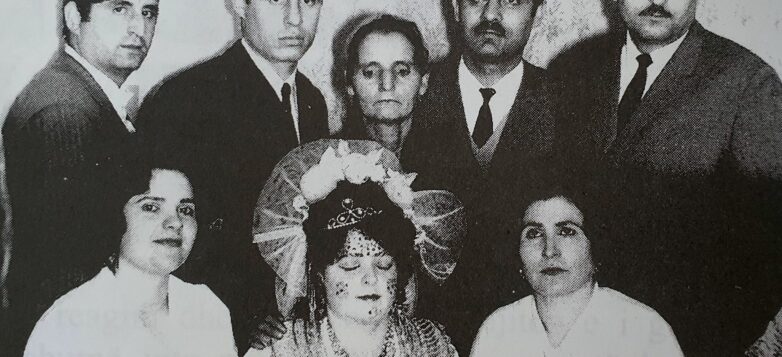

1 The three percent fund was created by the Kosovo government in exile during the 1990s. All Albanians in the Diaspora and Kosovo were duty-bound to pay three per cent of their salary into this fund to finance Kosovo’s parallel institutions.

2 Family Helps Family was a movement that started after the closing of the Trepça mines in 1989. The miners’ families were put in touch with economically better standing families from another area, and were supported by them.

3 Bac, literally uncle, is an endearing and respectful Albanian term for an older person.

4 Kadri Osmani (1932) is a Kosovar Albanian historian, academic, and former political prisoner. He was arrested and sentenced during the 1981 wave of repression following the student demonstrations in Kosovo. After his release, he became known for his scholarly work on Albanian history and for documenting political persecution under Yugoslav rule.

5 Fehmi Agani (1932-1999) was a philosopher, sociologist and politician, one of the founders of the Democratic League of Kosovo. He was assassinated by Serbian troops as he attempted to flee Pristina disguised as a woman to avoid detection.

6 Sali Berisha (1944) is an Albanian cardiologist and politician who served as President of Albania (1992-1997) and later as Prime Minister (2005-2013). A central figure in Albania’s post-communist transition, he led the Democratic Party and played a major role in shaping the country’s political landscape after the fall of communism.

7 Hale literally means an old outdoor toilet. In this context, a dump.

8 Ahmet Krasniqi (1948–1998) was a Kosovar Albanian military officer and politician who became the first Minister of Defense of the Kosovo Government-in-Exile, appointed by Bujar Bukoshi in 1998. A career officer educated within the Yugoslav military system, he later served with the Croatian Army during the Croatian War of Independence. In 1998 he began organizing and training structures that would later form part of the Kosovo Armed Forces. Krasniqi was assassinated in Tirana in September 1998 in circumstances widely believed to be politically motivated.

9 Rifat Jashari (1948) is a Kosovar Albanian public figure best known as the surviving member of the Jashari family of Prekaz, whose resistance to Serbian forces in March 1998, culminating in the killing of almost the entire extended family, became a central symbol of the Kosovo liberation movement. After the war, Rifat Jashari became a prominent moral and community representative, often speaking on behalf of the Jashari family legacy.

10 The Battle of Savra (also known as the Battle of Sauron), fought in 1385 near Lushnja in central Albania, was an early clash between the Ottoman Empire and the Principality of Zeta. Ottoman forces defeated the Albanian and Zetan coalition led by Balša II, who was killed in the battle. Historians regard Savra as one of the first major engagements marking the Ottoman military expansion into Albanian territories.

11 Gjergj Fishta (1871-1940) was an Albanian Franciscan brother, a poet, an educator, a politician, and a national hero. Notably, he was the chairman of the commission of the Congress of Monastir, which sanctioned the Albanian alphabet. In 1921 he became the Vice President of the Albanian parliament, and in 1937 he completed and published his epic masterpiece Lahuta e Malcís, an epic poem written in the Gheg dialect of Albanian.

12 Aleksandar Vučić (1970) is a Serbian politician and the President of Serbia since 2017. During the 1990s he served as Minister of Information in Slobodan Milošević’s government, a period remembered by Albanians in Kosovo for harsh censorship and intense anti-Albanian nationalism. Although Vučić later rebranded himself as a pro-EU conservative, many Kosovars continue to view him with suspicion due to his political roots, his firm stance against Kosovo’s independence, and Serbia’s ongoing policies toward Kosovo under his leadership.

13 Faik Konica (1875-1942) was an Albanian writer, diplomat, and one of the leading intellectuals of the Albanian National Awakening. Known for his sharp political commentary and modern literary style, he co-founded the influential periodical Albania, which helped shape Albanian national consciousness across the Balkans, including Kosovo. Konica later served as Albania’s ambassador to the United States and remained a prominent advocate for Albanian national rights and cultural unity.

Download PDF