But, yeah, it’s called Stray Dog because I was bitten by a stray dog and I was in Shkodër. And then I went back home to my grandma two years ago. It was just a tiny dog, but, it was like, I went back home and I told my grandma and my grandma was like, ‘Oh, just put some raki over it, you know, it’ll be fine.’ […] And I think that’s my kind of metaphor for who I am. And the way that I inhabit that space is that I’m always walking around the streets of Shkodër looking for something, like scraps, like the stray dog looks for food, but like, I’m looking for something, you know, that I may never find, but I’m still kind of part of that. I still belong to it. But at the same time, I’m an outsider. And I think that’s my positionality with this project and just with my being.
In collaboration with Art Explora, OHI documented and disseminated the artistic practices, research trajectories, and reflections of artists participating in the Vila 31 Residency Program in Tirana, housed in the former home of dictator Enver Hoxha. Functioning as both an archival and dialogical platform, these in-depth interviews explore how the political, historical, and geographic context of Tirana, and the symbolic weight of Vila 31 itself, shape and transform artistic research and creative processes. Bringing together artistic experimentation and the public reappropriation of a historically charged site, the project offers a unique perspective on the intersections of memory, history, and contemporary artistic practice.
This research has been designed and directed by Diona Budima, with Ana Morina as camera and editor.
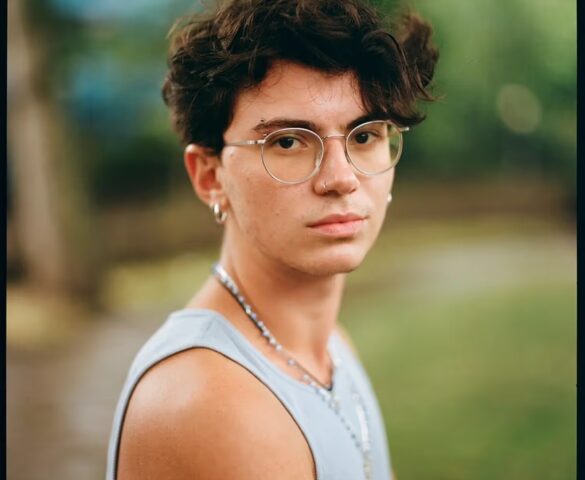
Kairo Urovi
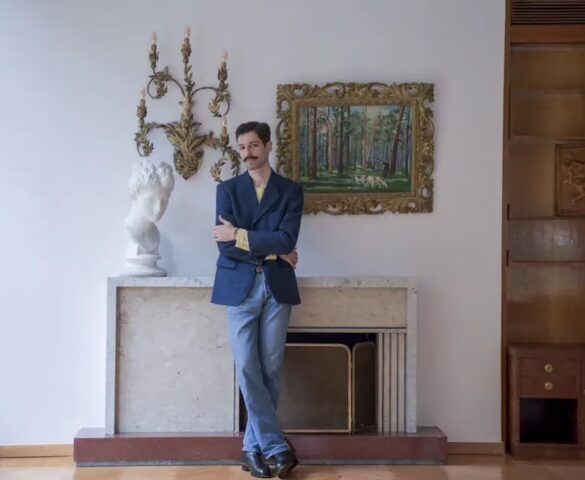
Wandrille Potez
We have to protect this idea of fragility as a condition of the preservation of the space. […] When I enter in a church like this, I find it, like, wonderful, you know, it’s beautiful like this because thanks to the holes in the roof there is lights on the frescos and it’s a chance, like a beautiful chance to be able to see it like this. Very few people saw it like this. And at the same time there is this kind of anxiety because you see, you know that it’s on the point to disappear, the building or the atmosphere, like, if they restore it. So there is also a kind of contradiction, and very into– when I choose to take a photo to try to deal with it, like, a mix between admiration and anxiety.
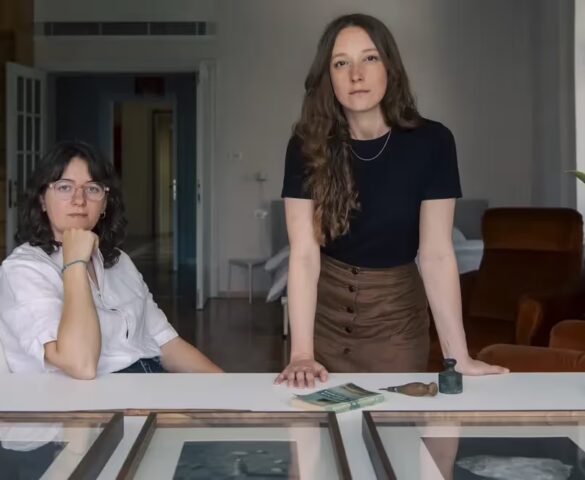
Erdiola & Anne
But this place lived in my memory just as a fantasy since a few years ago, because nobody had the possibility to go. I think I’m the first person that went in my family. Neither my mother nor my father went there. My grandparents for sure didn’t have the possibility at any time to go back. […] And so, in a way, it was a bit… the first trip I made to Çamëria, it was, I have to say, really strong for me because I was going there with a backpack that is not mine, and it was really heavy, emotionally it was really, yeah, heavy. And immediately you are there and you see, and you are physically touching that place that you heard [about] just by words or songs or dances.
Amie Barouh
This project, that I didn’t do, but I wanted to do in Albania with interviewing the kids about their dreams, it is really connected with my work now because I am… Look, all my work is about the invisible parts of the reality, and it’s about this border that we have between reality and imagination, or what is true, what is false, what we see, what we can’t see, what we call real […] Archives, for me it’s interesting because it’s speaking about the past, and when I work with these dreams, the past is also the present. And I like to mix the time, the places
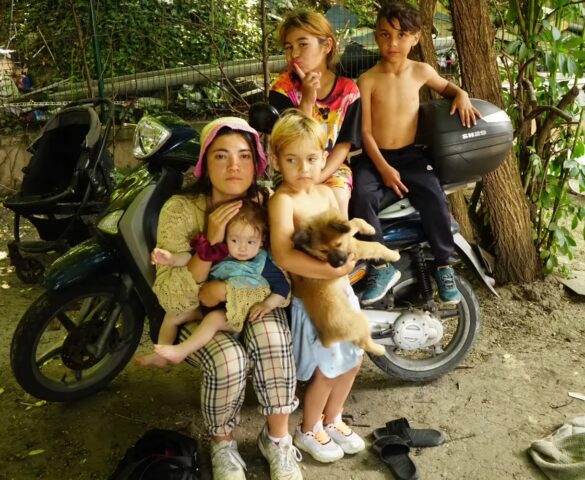
Genny Petrotta
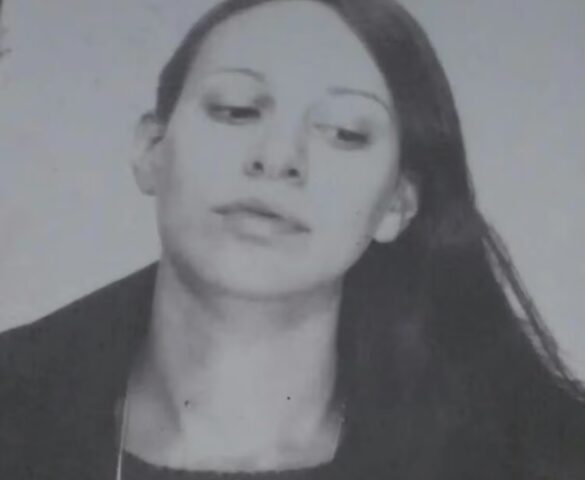
So first, I mean, Villa 31 is just not a residency in Tirana. It was a super strong and a heavy place to be. Somehow it was a perfect place for my project, cause my project was related about power, authority, gender, death also, because the framework, the poetic framework I chose for the project was Hamlet, and the former house of Enver Hoxha was an incredible place for that also. Also, you know, when you arrive there, and the house, it was closed for many years, you realize that you are living in the former house of a killer. So everything is very heavy. […] I was dreaming a lot there. For instance, the first dream I had, it was about being poisoned. That probably is the trauma of every dictator, I guess. But I realized just after a few weeks. But every morning, I was writing all my dreams. I have to say, they were very vivid. I don’t have such vivid dreams, at least in the last time, but I’m used to have– I mean, to remember my dreams in general. […] And then it was also adding something to my work, because it was like, okay, since I don’t want to speak about– I mean, I want to take space from all the sensationalistic, exotic topics about burrnesha in the Western culture. It was also a very, to me, at least, a straight way to engage, an embodying, [to] embody the discussion, living this through the body and through the poetry. […] So, again, going, maybe, trying to use Hamlet, that it was poetic framework, but that is not from Shakespeare. Hamlet is from everywhere. Hamlet is from the legend of the North, in many, many, many years ago. There is also a Hamlet from Persia. There is a Hamlet of Amelia Rosselli. So it’s something that still, again, belongs to everybody, and is a rite of passage that talks about revenge, about gender, about death. So I think using the body is the possibility to work in a universal way.
Stanislava Pinchuk
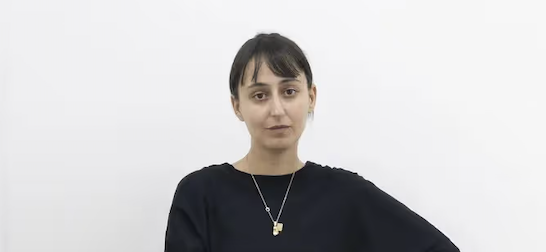
I think because of the kind of politics of the Soviet Union, now in the rhetoric of Putin and the, you know, Russian invasion of Ukraine, it’s this kind of ideology which refuses to die, this totalitarianism that refuses to die. […] I guess I was kind of very interested in the potential of the residency to be a place of transition, of questioning and not giving answers, but actually being there not because we have answers, but because we have questions. […] And these kind of, yeah, zombie communist, early proto-capitalist cowboy years, this was a kind of a really interesting time to grow up […] like how impossible these acts of forgetting are, you know? How like, truly impossible, you know. […] So what I’m optimistic about are young people. I think, I really feel so much more, I don’t know, attuned to, and kind of more, I don’t know, sympathetic with young people, and what they’re thinking about, and how they’re making work. […] I think the kids are all right. I think they’re going to do some great stuff.
Samir Laghouati Rashwan
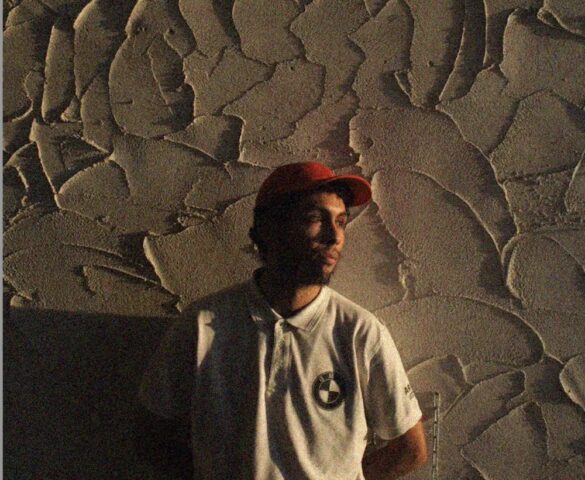
One night I start to shoot in the house at 2:00 a.m. […] and I started to be, like, afraid to think about ghosts and everything. So I think at that moment I was asking myself like, ‘Yeah, you’re afraid, but maybe they’re afraid about you too.’ […] I’m the narrator of the video but I’m also, during the video, trying to be a ghost. And I share with people, like, a lot of questions, like if everyone is afraid about ghosts, if ghosts are afraid about us, if they can fall in love. […] I was thinking, like, maybe the ghost can be, like, the universal stranger. And so I took this way to maybe talk about, like, stereotype, about, like, minorities […] I think we have stereotypes on ghosts, and with the ghosts and the diaspora, and minorities, I tried to do a link between the both.
Adriana Ramić
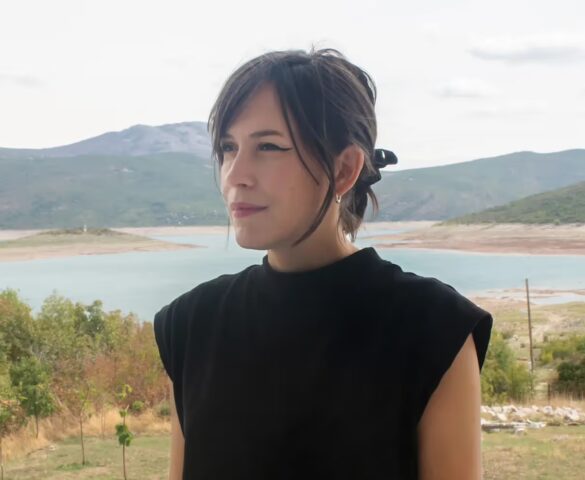
Like you will be wrapped up in these everyday sort of moments like, ‘Oh I have to do the dishes. I have to do the laundry,’ and then you remember where you are doing them, in this, like, horrifying house. It’s very surreal. […] I was seeing Ursa, the cat, always walking around, and I film animals as part of my work, so I thought let’s start filming Ursa and see what happens. […] Every day or every other day she will bring some sort of animal like a lizard into the house and torment it, and play with it, and then leave it frozen in one of the ground floor rooms or something. […] There is also something very uncanny about the fact that they’re, of course, this is what cats do wherever they are. They bring in smaller prey and torment them. But for that to happen here is also very uncanny, very strange. […] Maybe I experienced the paranormal through Ursa. There was a time at 3:00 a.m. I came home and she was on that grand staircase. And she had her ears completely back, and she was very afraid, and she was tiptoeing around, looking for something but nothing could be seen.
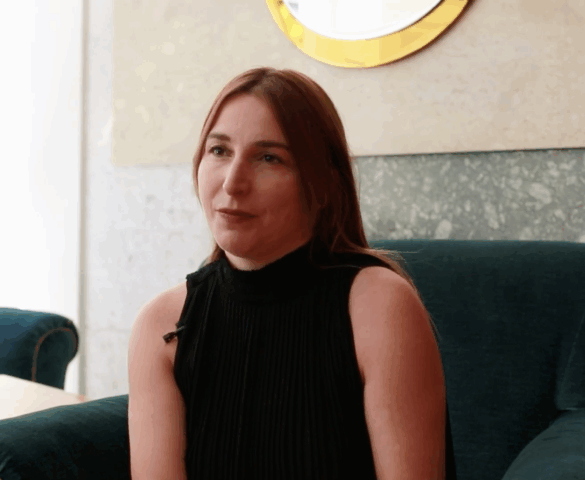
Nita Deda
The program of the residency, of Art Explora in this villa, it’s an open call that is inviting artists to apply with an idea of a research or a project that they would like to develop. And from this call, there was a jury of six members that is selecting up to 30 artists a year. These artists apply from more than a 100 countries from the world. So from all over the world. And the sessions are divided into three sessions a year. These artists, they live in the, they live in the house. There’s a studio, they have a studio space, and they have a working and living space here. They have a grant to develop a new work. And they also have a lot of help from the team, us here, to link them to the local context and to also link them to the scene here and to help them develop the research that they want to do […] For the Albanian artists that are part of the residency, this, it’s more of an emotional journey, I would say. This is what I’ve seen. [Diona Budima:] A lot of them told us that they were having very vivid dreams when they came here. [Nita Deda:] Yes, yes. And there was one idea. I don’t know if that’s going to happen, but we had one artist that had a very good idea of putting a box and of people writing their dreams, of what they’re dreaming here, and maybe after ten years, to have an archive of what people are dreaming here. And maybe after ten years to open up. I think it was Stanislava Pinchuk that had this idea of– then after ten years to open up this, and to maybe, like, do something to this archive of dreams here. But yeah, I mean, for example, Stanislava also connected to her own upbringing. It’s not that, you know, that this is a trigger of also like other similar realities, you know, of growing up in the Soviet Union, for example.