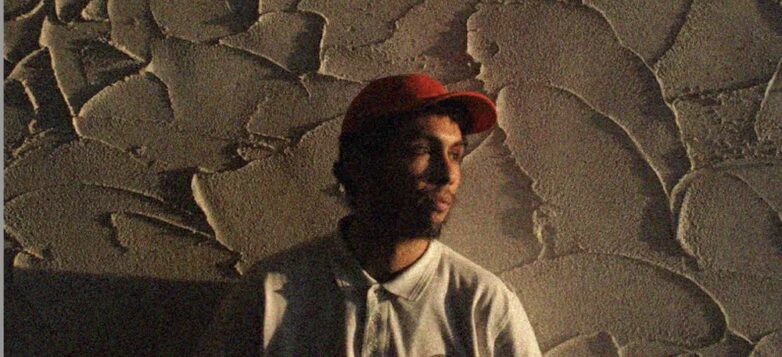
Diona Budima: Could you please state your name, for the record? And then maybe tell us where you were born, how you grew up, your background, and how you came into your current artistic practice.
Samir Laghouati Rashwan: My name is Samir Laghouati Rashwan. I’m from Arles, it’s a small town in the south of France, near Marseilles. It’s like 80 kilometers [away]. And I’m from a family of, like, workers. Not– no one is from the art world, or I didn’t grow up with art at home, for example. And, I think early in my life I was wanting to do, like, something like, stylism, design architecture, or maybe art, and I ended up at the end on art, with art. And I do art since 2009.
And I did– I started school of art in Marseilles in 2014, and I finished the school in 2000– 6 years ago, 2020. Yeah.
Diona Budima: What mediums do you work with most often? And if there are– are there any particular themes that keep recurring in your work?
Samir Laghouati Rashwan: I think what is current in my practice, it’s more like the subject and idea. But I work with, at the beginning I was working with, like, sculpture, but I came to like film and performance, but I work also lot with, like, image from internet, or I’m not a photographer, like, I don’t do photography. I don’t do picture by myself, but I use picture a lot in my work. Yeah. And I also, I don’t know if I said but performance.
Diona Budima: Okay. So yeah.
Samir Laghouati Rashwan: Since 2023.
Diona Budima: And what is the subject that keeps recurring?
Samir Laghouati Rashwan: I think it’s quite large but it’s something like between… Yeah I think it starts with, like, colonialism, history, colonial history. But I also think about, like, Arab masculinity, how we are, but also how the society sees us and, it depends, like it can go, like, in very different ways. Like, for example, I did a movie about a tree from Peru with a colonial history. It’s like the most important tree in the pharmacology. And it’s a kind of discussion between two trees, two plants, one older than the second one, and like the older shares the story of the family to the youngest one.
But it was for me a way to talk about, like, intergenerational story. Like how, for example, my grandma can share her history with me, but through the plant and the trees. But also, like my performance, it’s about like, racial fetishism. How it’s, in the context of France, always, but how like, some, in my case, some woman, fetishized me and fetishized, like, Arab and black men. So, yeah, it goes in very different ways. I don’t know if it’s a good answer.
Diona Budima: No, no, it’s perfect.
Samir Laghouati Rashwan: Yeah?
Diona Budima: Yeah, yeah. And, what drew you to apply to the Villa 31 residency?
Samir Laghouati Rashwan: It was not an application. It was an invitation. Because, like, you have the main program where you need to apply, but you have also the crossed residency. So it’s always like the curator from the previous stop of the festival, invites two– no, one artist, to do a residency. And for me, it was Albania. So I, like, I said, “Yes, let’s go.” I didn’t know anything about Albania, but I said yes. And that’s how I came.
Diona Budima: And your project changed and evolved throughout the residency, right? From what was initially planned. Could you tell us more about that, your initial idea and what pushed you to change it?
Samir Laghouati Rashwan: Yeah. As you know, maybe, like I wanted to do a kind of interview and maybe a sound piece, around the house with people, to learn more about the Albanian history and to learn, to know more about the context of the villa. And I think it’s very typical French to want to do this kind of project, like to go and to like, take material from people. But when I came in Albania, like, I didn’t feel like really well to go ask people about that history because it’s not my history. And maybe there is still, like, trauma about that history. So I didn’t want to go to do this.
And like, Nita asked me to do the work for the open studio and I didn’t know what I wanted to do, like, I start I think with– when I said like I don’t do the project with the interview, I said, like, maybe I do like a kind of like, scary movie in the house during the night. And one night I start to shoot in the house at 2:00 a.m. and like, no one was, like, in the common space of the house. And I started to be, like, afraid to think about ghosts and everything. So I think at that moment I was asking myself like, “Yeah, you’re afraid, but maybe they’re afraid about you too.” So I start to think about a lot of questions, and I said, like, “Maybe it’s the good way to start a work.” So I start this work like this.
Diona Budima: Could you describe the work for the record? What was displayed?
Samir Laghouati Rashwan: Yeah, yeah. It’s a short video, like six minutes. I’m the narrator of the video but I’m also, during the video, trying to be a ghost. And I share with people, like, a lot of questions, like if everyone is afraid about ghosts, if ghosts are afraid about us, if they can fall in love. Also about, like, the representation of ghosts in the, like, Hollywood movies. For me, it was a kind of like– Because if you think about the ghost, like, quite everyone is, like, educated to be afraid of ghosts. Not in every culture. Because, for example, in Africa we live, like, very well with the ghosts. But like various people who are afraid about– So like it’s quite the same.
So I was thinking, like, maybe the ghost can be, like, the universal stranger. And so I took this way to maybe talk about, like, stereotype, about, like, minorities, like, it can be Arab people, but it can be also Albanian people. For example, when you’re in France, or in London, or I don’t know where in the Western world, if you talk about Albanian, there is just, like, stereotype about, like, mafia, drugs, violence and things like this. And it’s quite the same with Arab diaspora in France, and also in England, or Netherlands, Germany. If you talk about Arab or black people, it’s only about bad things, it’s only about stereotypes. And I think we have stereotypes on ghosts, and with the ghosts and the diaspora, and minorities, I tried to do a link between the both.
Diona Budima: Yeah. And this sort of connects to your previous work and what you were saying about your interest in colonialism.
Samir Laghouati Rashwan: Yeah.
Diona Budima: Colonialism in the Mediterranean as well.
Samir Laghouati Rashwan: Yeah.
Diona Budima: How was it to see this other part of the Mediterranean?
Samir Laghouati Rashwan: I don’t know. I felt like very… like at home, because, like, there is some smell, you can smell also like in Morocco. A way of living also, like people stay in the street, like in the coffee, like people live during the night. Because, for example, in France, after 9:00, you have, like, young people in the bars, but you don’t have, like, grandma, grandpa staying in the streets, talking all the night or all the day.
So, yeah, it was quite familiar for me, like, to see… Yeah, my experience of Albania, and also, like, the way, like, all the shops in the street, like, selling, like, random things, kitsch things, like, you can find this kind of thing, like, in Morocco. You can find also in the south of Spain, Algeria, also Egypt. So it was quite familiar, like, I really liked it. And also it was nice because, like, I have, my aunt, she’s married with a guy, he’s Bosniak, but he has family, like, in Kosovo and Albania too, and he has, like, a sister, because his dad did a lot of marriage and children. He has a sister who is Albanian.
So it was nice for me to see, like, because I grew up with my aunt and this uncle, but also the family of my uncle. So all my life I was with like, Chechen, Bosniak, Kosovar people, but without to know [knowing] what is this. And also like, they didn’t really know because they left that place during the war and they don’t have a lot of, like, memories about that place. So it was nice.
Diona Budima: Yeah. I’d like to stay a bit longer with the historical context of the villa because that site is a site of– that carries tremendous weight and a lot of trauma for a lot of the local community. And what– in these interviews, what the residents have been saying is that they’ve been having a lot of vivid dreams there. And you decided to do this project about ghosts. Stanislava Pinchuk did a project on vampires. I feel like the paranormal and the fantasmatic is something that keeps recurring in the work of the residents. And I wonder if that is a way to sort of deal with that traumatic context, which is often difficult to approach in a more straightforward, direct way, especially for people that are coming from abroad, and don’t have that connection. Because you’re sort of, you’re coming into this supercharged environment here. So I was wondering if you had something more to say with regard to this.
Samir Laghouati Rashwan: I think, like, I did this video also because we had a lot of discussion about the dreams, the bad dreams of everyone, and everyone was asking everyone about like, “Did you do bad dream?” or, “Are you afraid?” or, “Did you feel something?” And as I said, me, I grew up in a family where we live very well with ghosts. So I didn’t have any bad dream. I really slept well there. Like it was– Yeah, I think, like, because it’s a part of my life, I don’t, I’m not afraid about this.
But– So, like, when I heard people talking about, like, the spirit and the place, and the ghosts, I was thinking like, yeah, but maybe, like, there can– there can be afraid about us and like, it’s okay, I think, yes. But like, every place is charged, I think it’s a special place. But maybe we don’t know some place like, hidden space, a place in Albania where maybe, like, the Enver did more violence than the house. Because the house was not– was just a place to live, but the violence, where the violence was during that time, maybe the prison, or I don’t know.
So it was quite banal, and like… I still try to understand this guy, but there is no, like, way to understand because it’s too weird for me. Like, because, like, you have his library in the house, but you can also find, like, all the order he did for food, he was eating a lot of banana, and he was reading, like, Frantz Fanon, like, it’s like one of the biggest writer for the colonial history and things like this, but at the same time, he was like, yeah, he was bad for some people.
So yeah, I think all the, like, experience of the other residents and the house, put me in the way to do that video, because I didn’t know nothing about the country and the history. So it was the best way to try to transcript something.
Diona Budima: Yeah. And this thing that you’re saying about where the violence is sort of strikes a note with the fact that you sort of break the boundary in your project, the boundary of who is the human and who is the ghost. By humanizing the ghost, but also, as you said, you sort of start as the narrator, but also you become the ghost yourself. And this border seems very porous, like, firm.
Samir Laghouati Rashwan: Yeah. I think for this house, it’s like I was trying to imagine myself going in the house of Macron in France. And I think it’s like– there is a lot of myth around this kind of place. But when you’re inside it’s like a normal place. Like, you can see also during some revolution in, like, Syria or Egypt, when people enter in the place of the dictator, there is no– it’s just like if you can break something, steal something, you do it. But otherwise it’s just a place. It’s just a building. I don’t know. I have very– it’s very difficult for me to put, like, emotion in, like, material things. I think it’s more something, like, invisible.
Diona Budima: That’s very interesting. Are there particular texts, or thinkers, or other references that you were working with during your research, or even during your current research?
Samir Laghouati Rashwan: Not really. During the… I don’t know, not about ghosts. I didn’t read anything during my residency. Like it was really, to be honest, like it was a kind of spontaneous invitation. And I was just like trying to spend the money from Art Explora because it’s not a good, and very ethical project. So I was just trying to spend my money and enjoy maximum with people I met. And, so I didn’t read, but actually, I’m working on three projects, one about slowness as a resistance. And I try to understand how, like, black, Arab or Hispanic people in USA use the slowness to resist to the hyper productivity and the capitalism.
And my two references for this work, it’s like a text called “Non-performance” from Fred Moten. He is a black American writer, and also Kodwo Eshun, he is a British black writer. And he writes about music. Because in my project I’m interested by the practice of a DJ from Houston, and he writes some, like, texts about his practice. And also I’m working on a project, it’s quite same like the ghosts. But now it’s the wolf. It’s a project– I don’t know where it [will] go for now.
Maybe a performance or a video, maybe just a sound piece. But it starts with a book from Ghassan Hage, he is a writer, I think Lebanese and Australian writer. And he did a book, The Wolf and the Muslim, and he tried to understand, or to make a link between, like, the ecology crisis and the Islamophobia through the wolf. So I try to understand. And it’s the same, like, everyone is afraid about the wolf, but we don’t know a lot about the wolf, and we don’t try to understand them. I don’t know if it’s– but, yeah. So yeah, these three thinkers.
Diona Budima: Yeah. You seem to use these figures; the ghost, the wolf. What are they for you? Are they symbols? Allegories?
Samir Laghouati Rashwan: I think I don’t really know. Because, like, I read a lot of texts but I try to not bring, like, too much intellectual thing in my work, to let, like, the work be accessible for people.
Diona Budima: Do you think they help to make it more accessible?
Samir Laghouati Rashwan: Yeah. Like, they bring, I think, a popular way of understanding the work. Like everyone knows about the wolf, everyone knows about the ghosts. Everyone is a bit interested by plants and trees. So for me, I think it’s just a way to talk about things without to be, like– Because, for example, in France, if you talk about racism, colonialism, like, in very, like, literal way, no one wants to show your work, and no one wants to understand. Because, for example, you have old people from all the world and they don’t want to give time to that kind of work.
So I try to find, like, a way to make everyone, like, friend to– Yeah, to be friendly with everyone so everyone can come and understand the work. And at the end, you find yourself like, “Oh, I spent this time. It’s not the kind of, like, subject I like, but the way you bring me to this, I find it, I find this interesting.” I try this, I don’t know if it’s interesting, but I try.
Diona Budima: Where do you see, or do you see the project with the ghosts further developing in the future?
Samir Laghouati Rashwan: Yeah, actually, I am in Basel now, and I’m showing– Because I do a residency in Swiss, in Vevey. The name of the residency is La Becque. And, the creator of La Becque invited me to– invited some residents, like former residents and, like actual residents, to do an exhibition in Basel. So on Friday, we open this exhibition with the video from the ghost. Yeah. So, I don’t know if you know about this, but like in the video, at one moment I ask people to draw ghosts. So the first time we show it in Albania, like, I end up with a lot of drawings. It was crazy. I did a small, like, fanzine and you can find it at Villa 31.
And now– so I show again the movie, but I continue to do that archive, that archive. So at the end of the exhibition, I’m going to end up again with a lot of drawings, and maybe to do a publication or a fanzine. We don’t know yet about the form, the shape of the archive. But…
Diona Budima: Have people already started drawing?
Samir Laghouati Rashwan: Now no, no. Like, we have with the staff and the artist to draw some ghosts, like just to signify to people, like, “You can, and you have to draw the ghosts.” But the exhibition is not open yet. So on Friday it’s going to start, yeah.
Diona Budima: Because I wonder if the shape of the ghosts is going to be different from Albania.
Samir Laghouati Rashwan: Yeah. I think yes. Because in Albania, like, you have, like, the random way of drawing ghosts a lot, but sometimes we have a kind of–
Diona Budima: What is the random way?
Samir Laghouati Rashwan: What is the random way?
DIona Budima: What does it look like?
Samir Laghouati Rashwan: Like {describes with his hands}.
Diona Budima: Okay.
Samir Laghouati Rashwan: Like this, with two eyes, and like, just this. But you have some people [who] did, like, a kind of personal ghosts, with the basic shape, but with personalizing that shape. Like the Tommy Shelby ghost, or things like this. But I found also, like, very violent one, like, with– I found the Adolf Hitler ghosts, some kind of things, like– and also very, some very abstract ghosts.
DIona Budima: Well, I think that publication is going to be very, very interesting.
Samir Laghouati Rashwan: Yeah, yeah, you can find it. I can ask Nita to give you one if you want to see. Like, maybe you can use it for the archive, or I don’t know, like– but I did that.
Diona Budima: And with ghosts as well. You have to let us know.
Samir Laghouati Rashwan: Yeah, yeah, yeah, I can send you at the end of the exhibition some selection of…
Diona Budima: Please. Just to end, can you tell us what you are currently excited about, be it personally or artistically, politically, socially? It can be anything.
Samir Laghouati Rashwan: Politically, I don’t know. It’s tricky to be excited at the moment. But like, yeah, I hope for good things. But I think we are just human. And I’m not like Élysée or a Prime Minister, so I cannot do a lot. In my practice, I’m excited because, like, I think I start to find a real way to make links between all my projects because I do very different things and when you don’t know the practice, you cannot understand what is the point.
But I start to have enough work to create a line, like a coherent line. Also about the project, I work about, on, now, about slowness. I really like because it’s a project I started in Houston, USA, and I think for French artists, it’s very easy to go somewhere to take something and to come back and to build, like, a career on this project. But my need with this project, it was to avoid all the “sexy” things you can bring and to do something, like, not catchable directly. So I’m quite okay now with that, and I’m happy. But I’m also, in my life, I’m also happy because I come to live in Albania. Yeah. Like I come in December.
Diona Budima: Oh, wow.
Samir Laghouati Rashwan: Yeah. I start with one year to see if I really like and if I can. Also it’s a bit tricky for my career because I think for art, it’s not the best place. And also the art scene, it’s very focused on, like, Albanian artists. So, let’s see, I don’t know.
Diona Budima: Very exciting.
Samir Laghouati Rashwan: Yeah, but I’m very–
Diona Budima: We are happy to welcome you. To Kosovo as well.
Samir Laghouati Rashwan: Yeah. Last time I didn’t have time, but, of course I’m going to come in Kosovo.
Diona Budima: That’s so nice. Thank you so much, Samir, that was very interesting.
Samir Laghouati Rashwan: You’re welcome. Thank you too.
Diona Budima: We’re looking forward to seeing how this project develops.
Samir Laghouati Rashwan: Yeah, I also like that.
Diona Budima: Thank you so much.
Samir Laghouati Rashwan: Thank you. Have a good evening. Bye.