Part Five
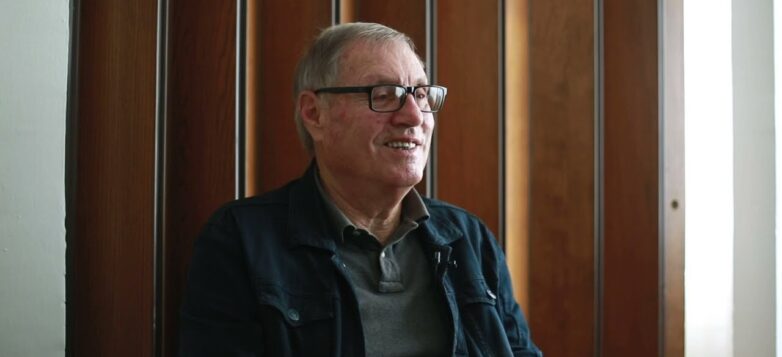
Muharrem Musliu: The demonstrations of 1968 were autochthonous, they were ours, we organized them ourselves. Without the help of any security service, neither of Albania nor of any other. In 1981 there were huge entanglements. There were forty or fifty foreign intelligence services involved: Bulgarian, German, Russian, Serbian, from everywhere. Those gains that 1968 brought us gave us the 1974 Constitution, which was a great achievement. With ‘81 we almost lost everything.
Anita Susuri: You were released in ‘85, right?
Muharrem Musliu: In ‘85.
Anita Susuri: In ‘85. How did things continue afterwards, were you able to return to your job?
Muharrem Musliu: Yes, because the Supreme Court declared me innocent. What is interesting is that this Musa Tropoja, the deputy director, because the Serb director was in hospital, and Ruzhdi Mjekiqi was an independent advisor, he is still alive. They did not want to accept me back. “He indoctrinates the youth.” It is true that all the young people who were employed came to me, boys and girls, because I was the oldest. They all trusted me, that is true. Especially those from the Economic High School who came for practice, they came to me so I would teach them, write in their daily practice logs, explain things and sign their notebooks.
I went to our headquarters. There was a Leonid Nikoliqi, the deputy director, he was a Vlach, a Cincar. I had played football with him. He said, “Go and start work.” I came back to the office here and they still did not accept me. I went back there again. Then the general director came out, a certain Sveto Vuković. He said, “Muharrem, you are not our employee, you belong to the branch,” he said, “go to the office and work. You have been declared innocent, you go into the office and work.” I got up and went straight and entered the office. I started working.
So these two went to our central headquarters there to ask a certain Marsenić, who was a lawyer. Marsenić told them, “Are you normal? If the general director said he should go to work, what do you want?” They were Albanians. Today, Ruzhdi Mjekiqi is still alive. This same Ruzhdi Mjekiqi, after the war, retired, and one of our friends became deputy mayor here in Obiliq, Hajriz Bekteshi. Do you know what he told Ruzhdi? “We Albanians had Muharrem as our blanket, he covered us all.” But that same man had gone to the party committee against me, to the committee, saying I was indoctrinating the young Albanians. Why? Because I only talked about national issues.
Those who ruled over us had collaborators everywhere. In every pore they had collaborators. But I had uncovered some on our side and I will tell you openly. The Albanian porters – I knew that porters everywhere had collaborated, generally speaking. When I got out of prison and went up to the office on the third floor, I looked through some documents, some things.
I took a blank sheet of paper, tore it up and put it in my pocket. I went and put it in the porter’s pocket and said, “Throw this on the first floor, drop it in the toilet and flush it because they are following me.” He got up immediately instead of asking, “Muharrem, why did you not drop it there yourself?” I swear to you, we later checked, this Hajrizi followed him, he went straight to the SUP, to the police, and handed it over. There was not a single letter on it, it was completely blank paper (laughs). Because they played games with us and we tried to play games with them.
Anita Susuri: I want to talk a bit about, you spoke about political activity, but you also mentioned films. We know that here in Pristina there was Kino Rinia, there was…
Muharrem Musliu: Kino Vllaznimi [Brotherhood Cinema]
Anita Susuri: Yes. Can you talk a bit about that cultural life?
Muharrem Musliu: Cultural life here, the films in general, because Kino Rinia had an outdoor hall and an indoor one, and Vllaznimi a bit later. But I started with the Cinematheque. The Cinematheque was run by some rough guy, a Roma, who worked there, it was somewhere a bit lower than where the Skanderbeg bust is now. In ‘48 it was there. As a child I started going to the cinema. When Kino Rinia was built, it was… I used to go twice a day.
Because there was nothing else to do. Or to go to those balls they called igranka. There mainly Serbs went, and Serbian girls. Our girls did not go at all, not in the ‘50s, ‘60s or ‘70s, they did not go. The Serbs went, and only rarely an Albanian. We had literary evenings instead, especially the Shkolla Normale or in the gymnasium, or in the cinema. I had a season ticket for films regularly into the ‘80s, in the ‘50s, ‘60s, ‘70s, up to the ‘80s.
Because we went to the films, for example when we went with Hilmi Rakovica, when there were American and Indian westerns. Everyone clapped when the Americans beat the Indians, but Hilmi and I clapped for the Indians, because we knew they were the natives. I tell you this in the most sincere way. We knew they were the natives. And we compared them with ourselves.
Jusuf Gërvalla was a film critic and I once went to the shop of Sabri Novosella and I saw Jusuf there. So we were talking and Sabri said, “Muharrem goes to films regularly.” Then Jusuf Gërvalla asked me to make a comparison. I said, “Jusuf, American films are extremely well shot, technically they are very advanced and the stories are very well developed. In our films, they develop one situation well, but then they cut it and jump to another straight away. But when it comes to the issue of emotion,” I told him, “those films did not make me cry, but ours did.”
I took the film Komisari i drites [Commissar of Light] as an example. When the teacher gives up his own house, his grandfather’s house, and turns it into a school. Then the children had nowhere to sit, just some stools. One boy, you know, was disabled, on three legs, and some sat on the floor. That is how they showed it. And then they could not find a bell (cries). Then the old man, the grandfather, goes and takes the bell off a goat and uses it to call the pupils. There was no one who did not cry. Even now I am tearing up, excuse me (cries).
Anita Susuri: Drink some water if you want.
Muharrem Musliu: No, no, no. But these are moments that… And I told this to Jusuf. Then, the film I teti ne bronz [The Eighth in Bronze], because people loved Enver Hoxha. Without really knowing him, we loved him. In Kino Vllaznimi they were showing The Eighth in Bronze, when the main character at the end picks up Enver’s bust and walks with it, you know. Everyone applauded. Or the film Skanderbeg when we saw it in Vllaznimi for the first time, to see the national flag in public.
Because most of us who had NDSH families had heard, “Red and black with an eagle in the middle.” Red and black, red and black. Most people did not know. For the first time here in Pristina, when the film Skanderbeg was shown… The film Skanderbeg was shot by Russia, not Albania. When he appeared with Skanderbeg’s flag, the whole hall stood up (cries). These are moments that were recorded in us and remained in our memory as unforgettable moments.
But almost everything was more individual, family-level, until ‘99. ‘99 was terrible, ‘99 was terrible. Whoever is strong, who was here in Kosovo, or at war, or abroad, these experiences are not easy to explain. I was there in Ulpiana, on the second floor, and on the fourth floor the paramilitaries came into that flat, those special units, to kill them, to take money, it was in May.
The daughter and daughter-in-law somehow managed to escape and came to us. They told us, “They went in,” those paramilitaries, “to kill them.” We all got dressed, because my brother was there too. My brother had five daughters, I had my son, my daughter and my daughter-in-law. Two of my sons were abroad. That night we all stayed dressed, waiting for them to come in and kill us too.
In the morning around six, those girls and the daughter-in-law of Bedri Keqa, the doctor, were crying thinking the whole family had been killed. My wife got up and when she went she found them alive. They did not know that Bedri’s daughter and daughter-in-law had been with us. That was just one example. There was terror here in Pristina.
We did not dare go out much in the city. When we met especially… They called me in May because I had a position at the Social Accounting Service, a job that no one else knew how to do except me (laughs). Director Marko Privica called me on the phone. “Muharrem,” he said, “are you coming?” It was May ‘99. “Because your work has been left a mess,” he said. I said, “I am coming.” I told him openly I would come, because they had given all of us two months off on 30 April. “Go home,” they said. I said, “I am coming.”
But one of my coworkers went and told the director, “If Muharrem comes, they will kill both you and him,” a Serb told him. I had gone. I said, I will go. They did not let me, because he wanted to kill me.
Anita Susuri: And you worked all through the 90s? You did not stop?
Muharrem Musliu: No, in our branch they did not fire anyone. There was a director from Laplasella, a certain Stanimir Stević, then came Marko Privica. Marko Privica, as a Montenegrin, did not fire anyone. In our branch he did not fire a single person. Why? The Montenegrins and Serbs resented him for that. But this Montenegrin… He always consulted with me, always. This one, and Vojadin Koprivica was an advisor, and a certain Denić Bane was in charge of control. Those three were the main ones during the 90s.
They consulted with me because I was fair and correct and I knew my work. They also knew that no one had ever been able to corrupt me, they knew that. It did not exist. They trusted me. Regardless of the fact that they knew I was nationalist number one, they still trusted me. They consulted with me. Because when it came to the strikes of 2 and 3 September, I was on vacation, but I went in the next day.
And I went to the director and said, “Listen, you are firing us from work,” you know how it is with some Albanians, when someone is fired, people come to see. “Now thirty people will come to me, and to those thirty I will have to say that Stanimir Stević threw me out. And those thirty will tell another thirty, and so on, everyone will know.” He said, “Muharrem, I will tell you this: those with secondary school here, I will punish only 5 percent. Those with higher education, 10 percent, but do not tell anyone.” And I did not tell anyone.
When I went in for questioning with the company lawyer, he knew that I knew. We talked about sports, about football. I knew they were going to punish us. But Marko Privica did not fire anyone, not one person from work.
I went by chance, not really by chance, but they sent me to Peja, to the Social Accounting Service, to help them. There was a director named Dragan there. His son was killed in the Panda case. Dragan’s son. He was among those six who were killed.
Anita Susuri: Yes, yes.
Muharrem Musliu: And now Dragan is telling me, but we were not talking about his son. He tells me, “Muharrem, I have not dismissed a single Albanian. Tell them they can form their own union but that they should not leave our union, because if they leave our union then I have to dismiss them. But let them give money however they want and let them form their own union, I will not stop them. But they should not withdraw from our union,” very fair, very correct. He did not dismiss anyone.
And there was a certain Šošević Slobodanka in Ferizaj, a, excuse the expression, a magjup woman, with whom I had not spoken at all since ‘75 (laughs). As long as she was director there I kept my distance. She dismissed people. They dismissed them in Gjilan, dismissed them in Mitrovica. But some were not dismissed. They did not dismiss any of us, not a single person was dismissed. I worked in the Social Accounting Service for 40 years and some. I knew it was my second home, I was very interested. In ‘99 I went to check every day, I passed by there.
On 14 June – NATO entered [Kosovo] on the 12th – on 14 June I went to the director, Marko Privica, and I said, “Give me the keys to the building, from today on I will manage the building, the bank.” He said, “Here are the keys, Muharrem,” because they did not dare stay at night. So I took the keys and that night I went to guard it with my sons, I went to guard. I went to the headquarters, where the Central Bank is, I went with my son and guarded it that night.
The next day I called some of those who were in Prishtina, whoever had remained. There was Qefsere Hatashi, there was Sherafedin Kulinxha, Afërdita Spahiu. There was also this Fahrije Dragusha. I called them to come during the day to guard, at night I guarded. This was on 14.06. On 16.06 I called the woman who had been head of the vault cash desk, very interesting, the head of the treasury cash desk, a Popović. I called her, she said, “I am in Niš,” I said, “Where are the keys to the vault?” You know what a vault is (laughs). She said, “They are with Višnja in Graçanica.” I took a taxi straight to Graçanica, on 16.06.
I went to Višnja and said, “Višnja, the money has arrived from the National Bank of Belgrade,” this is something a person could not see even in a dream. But I threw that in. How else could I say it but “from the National Bank of Belgrade”… I said, “The money has arrived from the National Bank of Belgrade, take the keys and come to open the vault.” She thought it was true. How could it arrive on the 16th, but anyway… she came. I took the keys and we opened the vault and we did the inventory of the vault.
With us there was account number 100, that is how the vault account was. I took Filipović, Filip, a Serb, Sabedin Shujaku and Hysni Rudi. I said, “Let us do the full inventory of the vault.” We found about 13 million dinars and 8617 and something. It means they had not touched it, they had not touched it, they had not taken anything. They took one car from us, because I did not let them take anything else. Everything in the Central Bank is exactly as the Social Accounting Service left it. Then with those 13–14 million we called the firms that had funds there and we gave them all back.
Then UNMIK came and brought first an Englishman as director. I went there two or three times because I had authorizations from the provisional government, to choose two directors. There were about 40 Serbs left there. Now they were asking for me to become director, I had only secondary school, for me to become director. The director from the National Bank of Belgrade also called me, because they knew me. He said, “Muharrem, you become director.” I said, “No, I will not become director.”
Then they all began to seek help from me, these Serbs, men and women, “Help us because they are taking our apartments.” I told them, “Well, you never helped us at all,” “We are not guilty, the state is guilty.” What is this? “We are not guilty, the state is guilty.” While among us I guarantee for these people and that is it. They never guaranteed for anyone. “Why,” I would say, “did you not help us?” “We are not guilty, the state is guilty.”
I told them… because I had those authorizations. I chose a director. I told Muharrem Uka, “You become director.” To this Hysni Rudi I said, “Here are the vault keys, from today you are the chief.” To all those Serbs I said, “From today you all have one month of paid annual leave,” I told them all. We gave them decisions for one month of paid annual leave. They went, not a single one came back (laughs). Because I played that game, I am born for such things, I played that game.
I knew completely where the funds were going during the 90s. This is not really for you to know, but no one came to ask me until 2007 when I retired. I had the tapes, those round reels, for all the branches in Kosovo. They brought them to me because I was the main person for funds for everyone. No one was interested to come and ask where the funds went, how much money they took, how much they did not. No one knew better than me, no one, I say it openly today. My friends know it too.
I knew approximately since ‘93 all the contributions that were paid. Because salary and contributions are 51 to 49. Meaning if you are to receive 100 euros salary, you get 51 and 49 go to contributions, taxes. In 1993 all those taxes that our workers paid, we were about 300–350 thousand employed in Kosovo, all went to Serbia’s war fund. No one is interested to come and say, let us ask this Muharrem Musliu. Because they know. I knew the doctors, professors, all the cadres here and they knew me. It did not interest them. In 2007 when I saw those tapes I threw them away, I slammed them, I put them in the container.
Anita Susuri: I wanted to ask you also about 1990 when the Reconciliation of Blood Feuds started, you said you were there…
Muharrem Musliu: Yes, yes. I was already involved earlier because the people from the Gollak area knew me. Gollak means from Orllan, Batllava, you know that better, and almost down to Presheva on this side. I knew those villages and they knew me, I used to go. But in the 90s I was also in the federation and I was known among them. With Professor Anton Çetta, with Bajram Hoti, with Musa Limani, with Professor Kajtaz Recaj. He was also my teacher for two years in high school. There was Mujë Rugova, all of them. Then some on the Gollak side I would organize in Mramor and in Marec and Dabishevc and so on. Because I knew them and I knew the area better.
We went to these reconciliations. Then we also went to Drenica and everywhere. It was very exhausting. I know that in some places the police would wait for us and escort us. Once when we were going to Mramor we knew that that house where we were going was not exactly “clean,” but we said we would go, let them arrest us and take us to prison if they wanted. Because we had to reconcile one good family with one bad family. But we never went to the murderer’s family’s house, we never drank coffee there. Never, not once.
Then, we had a rule in that Central Council for the Reconciliation of Blood Feuds that we went to reconcile, not to arrange. Not with conditions. Not with leaving the village, not with money, not with an oath, not with… no, no, without conditions. Those who started with conditions, they are arranging people, while we went to reconcile. We spoke in the name of youth, in the name of God, in the name of the war, in the name of the nation. These things. People… It was something extraordinary.
Anita Susuri: Do you remember some specific case?
Muharrem Musliu: There was one in the Bellopojë area, near Llap, now I remember the name. They had killed his two sons on the road. Almost for nothing. And he would not reconcile. We got up and went there, Musa Tropoja was there, Professor Musa Limani. There was also a man in the bus with us. He was reporting what we were saying. Then we asked, “Where is Shaban’s?” Now I remember his surname too, because he has a very characteristic surname and sometimes I forget, I am 83–84 years old now. “Where is Shaban Kuleta’s house?” He said, “I will take you,” he said, “wait here.” We were waiting at the door. He went in through another door, then came and opened the door for us (laughs).
He let us in. Now we saw. Musa was the most transparent among us, Professor Musa Limani. He said, “Listen, bac Shaban!” He said, “Speak professor.” He said, “Will you forgive your two sons so that I may go stand on the fence against the Serb tonight?” Fence, you know what that is?
Anita Susuri: Yes.
Muharrem Musliu: On the border. He said, “Yes, of course professor.” He said, “Not these two that you still have alive, but those two dead ones.” The next day in Lluga nearly 13 disputes, blood feuds were reconciled after Shaban Kuletolli forgave. This was a case where you see how one needs to know how to behave. He said, “Will you forgive them, I will stand tonight on the Serbs’ fence, on the border?” He said, “Yes, I forgive them.” “Not these two that you have, but those two.” One had to be that kind of man, there was also Mulla Idrizi in that religious way, especially around Presheva. Once we were in Miratoc there, near Presheva. Those were big religious figures, you know. Mulla Idrizi had the Quran and such things. When he spoke they were amazed. There were other moments too, but these are touching, sensitive moments.
Anita Susuri: Do you know approximately how many families you have been with, or reconciled?
Muharrem Musliu: Well, around two or three thousand killings were reconciled. Only the disputes, the reconciliations are over ten thousand. Disputes, reconciliations and such. There were many. Once we went to Marec, the professor was there too. I took with me a Sejdi Kryeziu from Rogana, Rogoçica there, and there was a certain Rrahim Kosova. Rrahim Kosova in France, he was forbidden to come to Kosovo. He was an NDSh member, he had killed here. He broke out of prison in Yugoslavia, he escaped. Anyway, he wrote a book, an Albanian writer mentions Rrahim Kosova, Redenica.
I also took him along. He had a brother, the one we were supposed to forgive in Marec, but they had come from Hogosht. He had a moustache down to here {to the chin}, this brother of Rrahim. Now, they stand up and say, “We forgive you until Kosovo is liberated.” “We did not accept the conditions,” I said. The professor stands up and says, “No, this is not reconciliation, we cannot accept this reconciliation. Either you must forgive and reconcile forever or”…
Now this older Rrahim called his brother, they called him Bubi. He also called his nephews. He also took Sejdi Kryeziu, because Sejdi Kryeziu had been in Idrizovo prison in Macedonia, they had been together. He said, “Get up, brother.” He went and pushed his brother and his nephews into the room (laughs), into the room where the women were. He took off his revolver and hit his brother and nephews on the head and bloodied them. He said, “Do you know, all of Kosovo has come to me,” he said, “I have Professor Anton Çetta here and you want to shame me.”
He had beaten them up. When that Bubi they called him, Rrahim’s brother, came out, his moustache was all bloody, his nose too. He came and said, “May they be forgiven, we have reconciled.” When they went out, Anton says to him, “What did you do, Rrahim?” He said, “I was about to kill them but Sejda did not let me,” his brother and the others. There are some cases that are unimaginable but they are true.
Anita Susuri: You said that in the 90s you continuously worked while there was a very tense situation in Prishtina…
Muharrem Musliu: In Prishtina it was very tense, but I was also in the Football Federation of Kosovo and I had a job position that… because the Social Accounting Service was a state institution. When I said, “Inspector in the SDK,” it was different, they all looked at me differently. But they did not bother us because we played in meadows, in fields. They took all the pitches from us. They left only the Flamurtari pitch here. We played in fields, in meadows and they did not bother us.
The situation in Prishtina in the 90s until ‘96, ‘97 was such that we could freely go out. In ‘97, ‘98, ‘99, I do not know how to say it, we only dared to go from Hotel Grand to those main traffic lights there. That area. On this side nobody dared to go out. But what happened? The Muhaxherët neighborhood, Pozerka as they call it, and Kodra e Trimave up there, they opened all the walls, they made sokaxhik, kapixhik. Kapixhik in Turkish means a small door, a little gate.
So they opened them so that you could leave your house and walk through the whole neighborhood without going out on the street at all, without going out on the street they opened them. Especially the Muhaxherët neighborhood and on the other side Kodra e Trimave. They opened the houses. This means people moved through the houses. From house to… and nobody ever said, “Why are you entering my yard,” or something, “why are you breaking my wall,” or something. They had broken them, that is how life was. But people were killed here in Prishtina, for example they killed a cousin of mine. Now there at the Hajrat well his father went out and attacked them, “Why did you kill him?” They killed him too. They buried him in the yard.
Here where I was in Ulpiana, in building S12, just below the street there immediately, in the first building a woman died and my wife went and washed her, washed her, out of honor. There were five daughters of my brother and my daughter. They said, “No, you have to go somewhere else, to a bath, for washing, you cannot come in here.” My wife went and cleaned her, washed her and prepared her, there was nobody else, nobody dared. Only some Roma came with carts and took them to mass graves, into those pits. It was a time out of time. The young people did not dare go anywhere. But that organization was working in Prishtina, the wartime organization, it was here.
They killed, for example, that guy from Llap at the dormitories, whom they killed during the war. In front of him, my son, two hundred people swore an oath in the Muhaxherët neighborhood. There was a presence, especially up there near the church when you go uphill, Bled street and also Rasim Kiqina. Up there our army people always stayed. I had to take aid there two or three times. Once we went with this Hajriz Bekteshi and a certain Ferat to take aid to Zllashë. Zllashë is connected with Mramor and Marec up there. Two policemen stopped us in Slivovë on the road.
I got out and said, “I am from Marec, an uncle of mine died and I am going to the funeral.” I went in, then went into a shop to buy some sugar and some tea. I said, “Because it is customary to take sugar and tea.” We had something else in the car. Now the policeman had come in behind me. I told that saleswoman, it was a saleswoman, I said, “Listen, tomorrow or the day after they will come to control you because you are not delivering the revenue to the Social Accounting Service.” I played that game, because… that policeman said, to me in Serbian, “I understand a bit of Albanian, you know?” I said, “Yes, yes, it will officially come out tomorrow and the day after in all these villages.”
We took the aid up there. When we were returning, again I said, “Again you stop us,” and they let us go. We took aid there with Hajriz two or three times. I have been to Drenica, we took aid there and so on. But I passed relatively well. Except for that imprisonment. As I said, in the federation I organized all the matches. In the year 2000 I left the Football Federation, I turned 60. I stayed on at work there. Last year this Agim Ademi, the president of the Football Federation of Kosovo, called me and gave me a wristwatch for 60 years in football. He gave me a certificate of appreciation, which I am very grateful for. For me it is a very big thing when someone values you, respects the effort we gave there.
Anita Susuri: After you retired, did you continue with football?
Muharrem Musliu: No, not at all, I left it. I left it and dedicated myself to myself. I go to Gërmia to walk. I go out with friends, we sit there, we are five or six friends who sit regularly together. We walk, we go out. I go to Gërmia regularly, I walk ten, fifteen… until recently I used to go out with one friend because many of my friends, my generation, have died, I am left only with a Mustafa Breca with whom I was in high school together and we worked together and played football together.
But he… in 1962 he broke the leg of a Bora Gerković, the brother of a hero, Trajko Gerković, whose name is also on the factory. He broke his leg here in Prishtina on purpose because he had broken his room there (laughs). He was banned from playing for life. I used to go out with him to Gërmia until four or five years ago, now he is not well with his health, he does not go out. I go out regularly. I am still mobile, I am active in life. I go out with friends, sit, and I will soon be 84 years old on 1 January.
But in social settings I am always in a good mood, I am always ready to accept things, I do not hold grudges against anyone, I do not hate anyone. I never speak out of spite about anyone, I never speak out of spite. I often tell my friends, “I know about you, you can say whatever you want about me, I say it openly, I do not give five cents.” I respect my friends, I call them. This is my life.