Mejreme Shema

Pristina | Date: July 18, 2023 | Duration: 163 minutes

Some of my brother’s friends from Normale came with a flag, they were coming from the city center. One said, ‘Sahit, they’ve imprisoned Femi Pushkolli, they’ve imprisoned this professor, this one, that one, that one too.’ ‘What happened? How?’ ‘That’s what they said, they’ve been imprisoned, we need to go and free them.’ ‘Come on, let’s go.’.. We left the faculty and set off. We got as far as the Grand Hotel here, I mean, the lower  part of the square… We stopped there because the army, the police, had made a cordon. If you kept going, you would have gone into fire. “Stop!” We stood, they stood, we stood. They started shooting from tall buildings…They were throwing things from above, even  flowerpots and everything, they were also shooting with weapons. As I was there holding the flag, talking to my brother, I just felt a kind of heat right here {the back of her head}, and said, ‘Man, something feels hot,’ you know? So I wouldn’t fall, I pushed the flagpole down, leaned on it to the ground, it had a knob, and I held onto it so I wouldn’t fall. Then my brother grabbed me, blood was running down.


Anita Susuri (Interviewer), Latra Demaçi (Interviewer), Ana Morina (Camera)

Mejreme Shema was born in 1945 in Leletiq, Municipality of Lipjan. She graduated from the Faculty of English Language in 1969 and also studied at the Department of Albanian Language and Literature from 1970 to 1972. She began working as a teacher in 1979. She is now retired and lives with her family in Pristina.

Mejreme Shema

Part One

Anita Susuri: Ms. Mejreme, can you introduce yourself and tell us something about your background and earliest childhood memories?

Mejreme Shema: Yes. I am Mejreme, or Mehreme as officially registered, Berisha, daughter of Liman Berisha. My father lived, in his childhood, in the village of Berishë in Drenica. As for me, I was born in the village of Leletiq, which is now called Rreze, in the municipality of Lipjan. I had a good childhood since I was born after World War II, that is, at the end of the Second World War. Unfortunately, I have two birthdates (laughs), because I was mistakenly registered as being born on September 10, 1945, whereas in reality I was born on November 8, 1945. This date is around when World War II ended.

So both my grandmother and father, and [there were] other circumstances too, like my paternal uncle’s son, who is the same age as me—we’re three weeks apart—did not register my birth date accurately. But it never bothered me; it stayed that way, and I never insisted on correcting it. But I always kept the actual birthday, because my father kept it written in his wallet, but it was written in Roman numerals. And back then, the people working in administration only knew a little bit of writing and didn’t understand it. The eleventh month (XI) was interpreted as the ninth (IX), mistakenly (laughs). So that’s how it remained.

Just the main documents such as my ID card, passport, and diploma, have that incorrect date. Because that’s the legal registration. But otherwise, I always use the real date. My family came early from Drenica to the Kosovo Plain, since the village of Berishë was small and didn’t have many work opportunities or prospects. My father had three brothers and two sisters, and my grandfather wanted to leave them with something, wanted to find work and a better life than what they had in Berishë.

So he searched and searched and eventually came to Magura. There, in Magura, he met a hoxha.1 They usually met people on market day, which was on Thursdays. Some would buy, some would sell things. My grandfather was involved in a sort of trade, more like a side job, tobacco, which was somewhat illegal, and other items. He had a han2 in Banja e Drenicës, and sold things like kerosene for lighting as well as basic household items, and he had an upper floor where people, mostly workers or travelers with no place to stay, could sleep.

So he was rarely at home. He was always busy, gone for about three months at a time. My grandmother didn’t praise him much, she would say, “He left me alone with the kids,” (laughs). They lived at my mother’s father’s house. In the beginning, he gave them a place to live. Then my father got a job bringing water to the workers in Golesh. Golesh was a mine that operated during the war and after the war. Always…Even for a long time, the director was Italian, Makarenko, my father always mentioned him, and that name stuck in my memory.

He carried water for the workers because he was younger. Later, he continued working. He also worked in the mine, actually, on the ninth horizon. Whereas my older uncle, Muharrem Berisha, kept gardens—he maintained gardens in the villages around there, just to make a living, to work on something. My grandfather worked in Qylagë, where they were first sheltered because they didn’t have a home or a house. He worked for the neighbors, tending the gardens, working the fields, and so on.

They lived for three years at my maternal grandfather’s, meaning at my mother’s father’s. And then they bought this land in Leletiq, which is now called Rreze. It used to belong to a great bey3 who, during the time of Turkey, would lend people land to maintain. After a while, around the year 1912 and later, Serbia, or however it was called before…

Anita Susuri: The Kingdom.

Mejreme Shema: The Serbian Kingdom took land from Albanians and gave it to those who came to settle. Meaning, in Vrellë, in Harilaq, in Suhadoll, in the municipality of Lipjan. The lands to be worked on, the hills, were located around the village of Rreze, Leletiq, and up to Mirena, where the Kosovo Plain ends and Drenica begins. There’s a spring there that always flows, it’s called Currel. A beautiful word, since the water is constantly running [curron].

When… they bought the land from Serbs. Serbs sold it because they didn’t cultivate it; they lived either in Vrellë or in Harilaq, in flatter areas. They were always employed in Golesh, in administration, and so on, so they didn’t need to work the land much. So, this bey who owned a large amount of land, had it taken away. He then brought some of his relatives, the Kastratis, and settled them there in houses.

So his grandfather, I mean, his father was the bey, and the son, Destan, Destan Kastrati, inherited most of his father’s land. And people moved there. Back then, there were no borders. They came, found it better to live there, came from Suhadoll, from somewhere else, and settled. So there were Kastratis, Suhadollis, Çerkini, and others. It was a small neighborhood, so to say. I still remember today where each house was.

Whereas now, their children have built beautiful houses, large houses, they’ve expanded, gone abroad, and worked. Life has changed for the better. After World War II, there was a lot of poverty, people didn’t have bread to eat, and there was no work for most people. Still, they survived by working the land they had. At that time, the Serbs tried to take the bread from the kneading troughs and bring it to others, to the Serbs. The Albanians resisted.

Right after the war, there was also the issue of the ban of the ferexhe,4 banning it. My uncle spent two years in prison because he said, “Albanians don’t have rights, and now you’re trying to take even their bread,” and he went to Vrellë and took it back from the Serbs to give it back to the Albanians. About the ferexhe, he said, “Why do you interfere? Whoever wants to wear it, can wear it. Whoever doesn’t, doesn’t,” because his wife didn’t wear a ferexhe, only a simple scarf. But these were issues that would only make the situation worse, make life harder than it already was.

So, my father, my uncle, all of them participated in the Second World War. At that time, Rifat Berisha and two of his fellow villagers, one from Sadllar, one from Baicë, Shefqet Kapetani he was called, and Shefqet Bylykbashi, and Ibrahim Banushi from Sadllar, were selected to attend military school in Tirana, in Albania. They completed it and were caught by the war while serving as soldiers. Rifat served on the border with Greece. The other, Shefqet Kapetani, was a bit aligned with the nationalist group and so on.

Things split off in different directions. Then a decision or order came, I don’t know how, that both Albania and the people of Kosovo should enter the National Liberation War. With the goal that at the end of the war, Kosovo would unite with Albania. That was always the aspiration of all Albanians, and still is. But the conditions were never created. There was always resistance, always persecution of those who held such aspirations.

Then there was that period, during the war, in which the group of Ballists,5 the communist group, and others, took part. There was no reconciliation, reconciliation came later, there were killings. Then they killed some, imprisoned others. They even opened the roads for them to escape to Greece and other countries. Still, they caught most of them at the Macedonian border and killed most of those who tried to escape and such.

There was a call made that those who hadn’t stained their hands with blood should surrender. There was, let’s say, a possibility of avoiding the death penalty, at least to get a lighter sentence. So, Shefqet Kapetani, during that period, surrendered with that intention… he was a nationalist, but for the good of the people and all that, he hadn’t committed murder, so he was sentenced. Even at one moment, my father told me, “When I went to see Rifat in Prishtina,” his wife was from Gjirokastër, and she asked, “What happened with Shefqet Kapetani?” He replied, “Ah, Mihri, don’t ask me about Shefqet, ask me what’s happening with Kosovo.” Meaning it was so bad, such a problem that he had forgotten about Shefqe, who wasn’t sentenced to death, but served his sentence, part of it, and then got out. That’s how it happened. He finished his prison term, nine years or so. He lived quite a long time, in fact, in Baicë.

Anita Susuri: And your father, was he with…?

Mejreme Shema: My father was both a cousin of Rifat Berisha and his bodyguard during the war. He took part in the war. With Rifat, they stood guard and did all of that. In the end, when the war ended, he stayed in the [communist] party for three months. Because he said, “I couldn’t stay in the party, because the issue was about monitoring the people that I believed were revolutionaries, patriots, people for Albania,” meaning for national unity and all that, but they [the party] were chasing people, persecuting others. So he threw away the party booklet and said, “I’m not made for this” (laughs).

Then, later because of that, they punished him by sending him to work in the mine, on the ninth horizon. He worked there until he retired. Because those are shorter years, not full calendar years, but shorter due to the difficulty of the work in the mines.

Anita Susuri: Was he in the Golesh Mine?

Mejreme Shema: Yes, in the Golesh Mine. In fact, at one point, he managed the directorate during the wartime period when the Italians were around. He used to go by carriage, as we say. What’s it called…

Anita Susuri: A horse carriage.

Mejreme Shema: Yes, all the way to Lipjan, to Prishtina, because he used to travel. He said, “I took a lot of good things from him [Rifat Berisha], because he always taught me good things.” I was born, as I said, at the end of the war. Before me, another girl was born, my sister, whose exact birth date I don’t know, but she must be about three years older than me. So that would be around 1942. Because my father married in 1940, and in a way, he “abducted” my mother but that is another story.

That girl lived about three years. After I was born, when I was about six months old, she died of a bad cough, from measles. Because at that time, there were no vaccines for children. Only around 1952 or 1955 the first vaccines came. I think it was 1952, because I remember when I started school, first grade, we started getting vaccinated. Before that, child mortality was high, both for newborns and for mothers in childbirth, because there was no… I don’t remember being born myself, or my second brother.

I remember the third brother a little. There was a woman, like a midwife, but not a trained one, who helped women give birth. My father always went to get her because my mother had difficult deliveries, and she would come to help. She was called Aunt Elmaz. In fact, her grandson was a representative, this Rugova, I don’t know, from Lipjan. Later, I had more brothers: the one after me, another brother, then twins. And finally, in 1957, the last child was born, Alush, who was named after my grandfather and one of the twins who had died. The other twin lived and died about six years ago.

So, I’m saying, life was difficult for everyone, but there was, how to say, a great will from my parents, my grandmother, my aunt, all of them who worked very hard. They worked the land, grew tobacco, and did hard labor to survive. So we didn’t really feel poverty in that sense. We even had the opportunity to help others when needed. If someone had nothing, we’d give them flour or buy something for them.

When I started going to school, I always had the feeling that we were the wealthiest. Because right away my father bought us books, and my uncle bought us those small tablets to write with chalk. I remember like it was yesterday, after two weeks of classes, I don’t know how I broke my writing tablet, and I took my uncle’s son’s, thinking that he was the head of his household, it would be easier for them to buy him another. When we got home, he said, “No, it wasn’t me, I didn’t break it.” I said, “You did, you did.” In the evening, my father said, “You know what? Tell me the truth,” and I said, “Yes, dad, I don’t know how I broke it, but I don’t know why I said that.” You know? And we made peace.

We got along really well, we never had fights or anything like that, I don’t recall. Nowadays, children grow up alone, but we grew up together. We played together. I didn’t play girls’ games because I mostly had male cousins around, so I played boys’ games. Back then, you couldn’t buy a ball, so mom would make one for us. We didn’t have toy guns or tractors, she made guns from those baggy pants’s fabric, and then we’d play war games: Germans and partisans (laughs). Those were our games. I rarely played with girls. I always played with boys.

But I was weak physically, not sick, just naturally delicate. My father always worried about my condition. I even came to Pristina to get checked. The doctor told him, “She’s healthy, it’s just how she is.” When I finished primary school, the eight-year school, during puberty I changed quickly, I gained weight because I moved less. I didn’t have a field to run in or woods to climb like before. But still, we had a good time.

We bought a small house so we could go to school. My uncle’s wife came with her children, and I lived with them. I had a scholarship from Lipjan; I was the only girl at first who continued to high school. That year, the Executive Council, what is now the Parliament, had just been established. That year it was built and not yet fully organized. When I came to see where the school was, I didn’t even know where to go or whether I had been accepted.

I had just sent the documents by mail. They found my name and surname. You had to have excellent grades every year and I met the criteria and was accepted. After a week I started going, and then we had to wear a black uniform with a white collar for high school. And when we did practical training, we had to wear white coats and everything else.

Anita Susuri: Which school did you attend?

Mejreme Shema: We were near Elena Gjika, the school that now is the music school. It was a small school, with a small courtyard back then. It was the first time this school opened, and it was called an auxiliary school. Not quite a nursing school, though we learned how to give injections, IVs, and everything, it was focused on patient care, that was the name of the program. One class was for Albanian girls, 33 of us. One class was mixed with boys and girls from the gymnasium, and one class was for Serbian girls, like our parallel class.

It was like, how can I say, a map of Kosovo with all surrounding areas. You had two from Kamenica, two from Viti, one from Lipjan, that was me. Then one from Suhareka, five or six from Gjakova, more from Pristina. So the class had 33 students. By the June term, 28 of us graduated. Two finished a bit later, and two left early, one of them studied stenography, the other did something else, but they both got jobs in that period.

It wasn’t hard to find work back then because there was demand. So, in those years, the 1960s, when I came to Pristina, I missed the village, my brothers, my mom and dad, but I still found friends, both girls and boys, and I got involved, let’s say. I liked to write, I wrote a little, participated in literary evenings at the Sami Frashëri Gymnasium, and later in the Ivo Lola Ribar, which was the name of the Shkolla Normale6 at the time.

So I met some friends. In fact, in the third year I won second prize. It was for the National Liberation War, and Zeqir Gërvalla7 won the first prize, yes, I said that right, Gërvalla, Zeqir, yes. And then… someone else, a Serb, won third prize. We went to the Provincial Council to receive the awards. I had heard of Zeqir, but I didn’t know him personally. That’s where we met. He was a very kind young man, very approachable and cheerful. He wrote then and continued to write afterward as well.

I used to write more lazily, just when I felt like it. In the first year we had more subjects in Serbian because it was the first time the school had opened. We had Albanian language too, it was taught by a student named Haxha, I think his name was Halil Haxha. I always remember when he came into the class saying, “Vid, vid, vid, pëllumbeshë [ Serb: Come, come, come, and Albanian: doves],” and one day I stopped him and asked, “What is this, professor, what are you saying?” I asked, “What happened? Why are you speaking Serbian? All our subjects are in Serbian except Albanian.” He said, “It’s not Serbian,” he said, “it’s the calling of the doves.” I said, “Aiii {onomatopoeia}” (laughs).

But we had a great time. Later, we had different professors. That one left and another came. In the end, it was Naime Qelërxhiu who taught us. She appreciated my essay. You had to write an essay, and then they would choose the best. I expanded it a bit and won second prize. It was good, it was about the National Liberation War. I loosely tied it together because the writer knows what she wants to say.

Stories were less developed back then because it was difficult, it was hard to camouflage ideas. But lyrical poetry was especially easier because you knew what you meant, but others didn’t. People could guess, but the real meaning… For example, I published a poem in Zëri about Rifat Berisha’s mother, titled “Nana me katër skiftera” [The Mother with Four Falcons]. I dedicated it to her, but the way I wrote it, it came out like “The mother of soldiers.” So when some read it, they said, “How did you dare publish that?” I said, “I wrote it about Albanian mothers, not just one mother,” and so on, that’s how it was.

Anita Susuri: Ms. Mejreme, I’d like to go back a bit to when you said you came to Pristina. That was roughly in the early…

Mejreme Shema: When I came to Pristina it was in 1960, in September.

Anita Susuri: How did Pristina seem to you? Was that your first time coming here?

Mejreme Shema: No, I had come to Pristina as a child. I remember a curve near the hammam,8 our cousins lived there. When we’d come to Pristina for something, like to visit the doctor or so, we would stop and visit our cousins. So I had been two or three times as a child. I remember it a little, I was quite young.

The first real time I came… I came to the hospital during elementary school, I had broken my arm in school. The teacher took me to the doctor, and then the ambulance brought me to the hospital. I stayed a week, and my uncle came to get me. He came to see me thinking maybe they’d release me, so he came to the city and told someone, “Here’s where I am, at Skënderbeu Café,” which was in front of the theater. “Let me know if they discharge her, and I’ll come get her.” That time.

Earlier, I had come with my cousin. We had a lot of livestock and used to drink raw milk. After milking it, we’d drink it unboiled. My cousin got parasites, like five meters long. He had to go to the hospital, and since I was always with him, I had to go too. It was in the children’s hospital, the small one, the pulmonology hospital for lung diseases. The children’s hospital was just one floor. I remember it clearly, and later when we worked at the Workers’ University, I would say, “That’s where I was hospitalized” (laughs).

So I used to meet my uncle briefly at the city center, near the theater, until something was arranged for me to go [somewhere]. At that time, it was difficult, there weren’t buses or anything like that. You had to wait for someone or something or maybe someone would come by for work and pick us up. When I came for high school, to tell the truth, it felt like I was in a village (laughs). There wasn’t much of anything. There was this main street, now known as the korzo,9 and on the lower side were some buildings, and on the side of the theater was the committee, where the cafes are now. But really, there wasn’t much at all.

The Grand Hotel was built a little later. There used to be a military base there, a swimming pool originally for soldiers, and sometimes citizens could go with special permission. Ulpiana was built much later, just a small part of it. The area above Agim Ramadani Street was all fields. Only the center, near the Gjergj Fishta school and the Bajram Kelmendi and Xhavit Mitrovica Streets had residential buildings. Below the railway line, the area from Lap Street to the Medrese, that was it. The neighborhood Kodra e Trimave didn’t even exist, it was all empty.

When we went to do practical training at the hospital, we’d walk through fields. Where the post office is now, there were no houses, just corn, wheat, and other crops. Even when I started working at the hospital, it was still like that. Later, parts started getting built up, gradually.

Anita Susuri: And the Pejton area, where the university is now, they say during WWII it was some kind of camp?

Mejreme Shema: Yes, where the Cathedral is now. That’s where the Xhevdet Doda Gymnasium used to be. Later, near the university, there were some army barracks from the war, all that area. Until recently, people still lived there, they had occupied the buildings, but luckily when they built the underpass, it all got cleared up and organized well.

The Pejton area was small but had good infrastructure. There was a slightly larger one-story building where workers from the textile factory lived, the spinning mill, as it was called. I had a cousin who lived there. I went to visit her after a month or two. She took me to see Hyrije Hana, who at the time was in prison, but we went to see her husband and daughter and her two sons, with their grandfather. They were from Presheva, Ali Aliu’s family. She had helped them a lot.

When Rifat Berisha was killed in 1949, they were expelled from their home and ended up at the small mosque in the city center, with only clothes and whatever they could carry. The children were small, and Rifat’s wife’s mother, who was from Gjirokastër, never dared to help them, not even to take them in. Hyrije Hana10 helped, they were taken to a small place near Gërmia, in smaller apartments for a while. From there, they moved near the hammam, to an old two-story house that had been abandoned by Turkish owners who had left. They lived there.

They helped because they had no choice. Rifat was killed, and everyone connected to the Berisha family was isolated. Any man over 16 was imprisoned. Women and girls too. One girl was in the girls’ school in Prizren. They took her from Prizren, held her in prison in Gllogovc for four days, then released her. The older ones were jailed. It was chaos. Rifat realized that Kosovo would remain under Serbia, under Yugoslavia, and it didn’t happen as they hoped. There was talk, even promises. But the powerful always twist the truth for themselves. The weaker ones have no say.

Even Rifat’s wife was taken to a prison in Belgrade early in the morning. She stayed there for six months. She was very sick, she had tuberculosis, which at the time was incurable. Many people had it, and they called it “the wasting disease” because it lasted so long. She had uncles in America, and they tried to get her to move there, but she said, “No, I just want the documents to go to Albania, the country my husband Rifat Berisha gave his life for, along with his brothers, in 1949.”

After six months, they transferred her from Belgrade to Vojvodina. She was near death. A doctor said, “She won’t last more than a week or two. Let her go home.” They released her. She arrived in Prishtina by bus, and her daughter said that when she came, she just said, “Leave me alone, I want to go to my room. When I’m ready, I’ll come out.” She spent four days crying, preparing herself for how she would live. Then one day, she opened the door and came out, and no one ever saw her cry again. She tried to move on and raise her children.

Her eldest son, Muhamer, was expelled from school. He had to sell movie tickets at the Rinia Cinema. His classmates and even teachers would buy tickets from him so he could support the family. Back in their village, Berisha, they were completely surrounded, isolated. Aid and food had to be brought at night. No one dared to go openly, the police and military watched everything.

Same with us in Leletiq, where we had bought land. We always knew someone was watching. You had to be careful. If you worked too much or had too much, people would question where the wealth came from. But the truth is, they worked very hard. My grandmother, her sons, everyone equally.

All the wealth they built, they built with their own hands. One of the younger brothers, the younger uncle, managed the land, livestock, and everything. The other two worked in the Golesh Mine. One uncle worked in administration, where they handled tools and materials, oil, cloth to wipe hands, papers, notebooks, he managed the warehouse.

In the end, we came to Prishtina for schooling, and the thought of our parents was that we would all eventually return, but that each child should be educated — both our family and our uncle’s [thought that]. That was the desire of our parents, especially of my father. “I didn’t finish school,” he would say, “but I want you to have a better life than I did, all of you.”

He worked alongside us children. Naturally, when we went to school, there was only one sweet shop nearby, near Golesh. He would say, “Go eat there, I’ll pay at the end.” So we’d go with our friends. Whether it was yogurt, desserts, baklava (laughs)… When he went to pay, he’d say, “What have they done?” because we’d bring other kids from the village too. We’d bring my uncle, who was in school. He would say, “I don’t have exactly that much credit, but I’ll try to manage it differently” (laughs).


1 Local Muslim clergy, mullah, muezzin.

2 Inn.

3 Beg or Bey (great), Ottoman provincial ruler but also, when included in the last name, a sort of honorary title.

4 Ferexhe, a veil concealing the whole face except the eyes, worn by Muslim women in public.

5 Member of Balli Kombëtar (National Front) was an Albanian nationalist, anti-communist organization established in November 1942, an insurgency that fought against Nazi Germany and Yugoslav partisans. It was headed by Midhat Frashëri, and supported the unification of Albanian inhabited lands.

6 Teachers training school. The Shkolla Normale opened in Gjakova in 1948 to train the teachers needed for the newly opened schools. With the exception of a brief interlude during the Italian Fascist occupation of Kosovo during the Second World War, these were the first schools in the Albanian language that Kosovo ever had. In 1953, the Shkolla Normale moved to Pristina.

7 Zeqir Gërvalla (1942), poet and political prisoner.

8 Turkish bath.

9 Main street, reserved for pedestrians.

10 Hyrije Hana (Gjakova, 1929-2004), actress. A member of the partisans formation during WWII, she was later arrested multiple times for her activism in support of Kosovo reunification with Albania. Her brother Xheladin, a member of the Bujan Conference, was assassinated in 1948 by the Yugoslav state security— UDB.

Part Two

Mejreme Shema: When I came to Pristina, I quickly connected with friends, with the girls, with others. We had a passion for reading and we found books. This was around 1960–1961. We read all kinds of materials, even mimeographed scripts. I’d get a book, pass it around to my classmates, and they’d read it even during class. Rrrrr [onomatopoeia], they’d finish it and pass it on to the next. In 1962, I would say the consolidation of the movement led by Adem Demaçi1 began.

After his first daughter, Abetarja, was born, I went to Adem’s home. They received me very well, treated me with great respect. Not just Adem Demaçi, but also his mother, and Xhemajlie,2 and the rest of the family, everyone who came was welcomed. I had great respect for all of them. I was young but read a lot. I would take books, every other day I’d borrow a book from Adem, read it, and return it. I’d ask, “Can I give them to other girls to read too?” “Of course,” he’d say, “share them with everyone.”

I truly felt a deep sense of joy. Xhemajlie was a very devoted teacher, a woman dedicated to her children and her family. Their living conditions were very modest. They had a big yard with a large mulberry tree and a small house with two steps to enter. It wasn’t a typical hallway, just a small entry space that led directly into the rooms. That main room was a bit larger, with windows that reached the floor. It had a traditional minder3 and a small iron-framed double bed that Adem used, for resting during the day and sleeping at night. There was nothing else.

But somehow that life felt warm, in the sense that there weren’t major differences between people. Everyone seemed to be lacking something, and no one could say, “This one has it better than the other.” Still, Xhemajlie worked as a teacher and had at least a little means. Adem, however, didn’t work. After his first imprisonment, he never worked again.

Anita Susuri: Was there anyone else in your circle who was organized during that time?

Mejreme Shema: So, this now is with a group of people. After Adem Demaçi came out of his first prison sentence, I think it was in ’62 he was released, and the ’62 group too, meaning along with his friends and such. Talking and all, a kind of consolidation began. Let’s make an organization for those who are for the unification of Albanian lands. People gathered, teachers, students, pupils, generally speaking. And other workers who had, let’s say, in their hearts, the desire to unify Albanian lands, because they never agreed with what had happened to Kosovo.

In this spirit, in this way, this movement for the unification of Albanian lands was created. The idea was that it would expand to all the major cities of Kosovo. It reached Peja, Gjakova, Mitrovica, and more in Prishtina. In other places, it was still in the process of consolidating. That consolidation and organization hadn’t been completed yet, so they could hold an assembly and elect all the bodies. But there was an initiative group that led this.

At the beginning, there were two youth groups. There was Abdyl Lahu, which was Demaçi’s, Adem’s group, and also Ilmi, a teacher trainee. Then we had to unite these groups. We remained one group, meaning Abdyl was in the leadership, in charge of the youth. Later on, I was responsible for the girls. And those instructions… We couldn’t hold meetings properly because we had no place to meet, so we had to go to Adem’s. Adem had a policeman neighbor who had worked in the prison. So, there was no need to make lists, no need to take notes or anything. He could photograph anyone who came, we went there. The other thing…

Anita Susuri: Was he his neighbor?

Mejreme Shema: Pardon?

Anita Susuri: Was he his neighbor?

Mejreme Shema: Yes, a neighbor. Another thing, when we’d go out on the korzo, Adem would be with Ahmet Haxhiu or Azem Beqiri, and a few of the others from the party, and we’d all follow behind him. It was obvious. The Serbs would be on the other side and we’d all be behind Adem on the korzo. Then everyone would go home. So I’m saying, you couldn’t really hold meetings by saying, “Let’s gather everyone.” You had to have a messenger or someone to distribute the information, what was going to happen and where.

Selatin Novosella has written a lot about this period and such, but he’s altered things a bit. He gave importance to some, others he left out, and he distorted the facts a little. Because now, while searching for certain things, I find what I had actually said about Abdyl Lahu, for example. I sent him to Lupç, and he doesn’t even mention that. He gives it a different form. I thought maybe I forgot, or what’s going on, but when I see the documents, I see I still have them, just as I gave them. The youth group was quite large. Some we knew, some we didn’t. There was Ibrahimi, the grandfather, can’t recall his last name…

Anita Susuri: Gashi?

Mejreme Shema: What?

Anita Susuri: Gashi?

Mejreme Shema: Yes, Ibrahim Gashi. There was someone named Hoxha, can’t recall the first name right now. A really good guy, he worked, lived in a house with big doors near Gërmia. He sold things in the market, was a student at the Shkolla Normale. Later, he was sentenced for about a month or two, and then he went with his family to Turkey, but couldn’t stay, so he came back. But they never let him finish school. Imagine, he worked as a tailor afterward.

There were many others whose names I don’t know. But many were imprisoned during that period. The first activities were carried out in 1963. A decision was made to carry out some actions, distribute flags in key locations. Everyone had a task. Fazli Grajçevci4 placed one over Golesh. Ilmi, the teacher trainee, was in Lipjan. But he didn’t complete his task, he couldn’t place the flag because of police presence, so he didn’t manage. Others continued in turn. In Gjakova, there too, everywhere. It caused a big fuss, but it passed without serious problems.

Anita Susuri: Did you have any…

Mejreme Shema: Me? No. I knew about it, but I was supposed to be with Ilmi until late, and we got caught, they said we were walking around, but we hadn’t done anything. We didn’t place any flags. But luckily, he couldn’t place his in Lipjan.

Anita Susuri: And where were the flags obtained?

Mejreme Shema: At the time the flags were sewn by Novosella, Sabri Novosella. He was a tailor. He sewed the flags. They were distributed. People were assigned to distribute them. In Vushtrri, here and there, in Prishtina. After this period, we prepared another action, again with flags, again with this purpose.

In the morning of ’64, was it June 8th or 9th? I don’t know, I think June 8th. Adem Demaçi was arrested in the morning, one person [was arrested] in Gjakova, another in Peja, and someone else, I don’t know who. Ahmet Haxhiu was never caught. Others were imprisoned. Lahu, Abdyl, wasn’t home. He came in the evening and found out, we found out, we were watching what would happen.

Ilmi’s sister, Emine Rakovica, also a teacher trainee, called me. Even her own brother didn’t know she was in our group, it was through Abdyl. She called and said, “Come, Abdyl is here, we need to do something because others were arrested, what should we do? Abdyl doesn’t want to surrender, he wants to try to get to Albania or somewhere.” I said, “Okay.” We went, it was evening. We sat, talked. He had two suitcases full of books.

Now, he needed someone to accompany him, to take him to Lupç. His brother’s wife was from there, something like that. We decided to continue the activity, at least in Prishtina, to sew flags, to distribute them through the youth who hadn’t been arrested yet, and not to give the impression that we surrendered, that once those had been arrested, there’s no one left.

That’s how it was. We found someone to sew the flags: Elhame Shala. She was studying medicine at my school. We were together in high school. She lived at “te katër llullat,” as it’s called. She agreed to sew them. At that time, Ilmi gave the flags to the youth, whom he gave them to, I don’t know. But I read a bit of what Selatin wrote, saying they were sent to Vushtrri, etc. I know we didn’t talk about other places, but at least in Prishtina we had more control, let them move around.

Who would take Abdyl? I said, “I will.” “No, not you maybe.” I said, “No.” Emine was sick, she had been in the hospital. I said, “No, I’ll take him.” I took him, we didn’t go the main road, but through Banković’s mill, via Llap Street, and reached my house. Others were asleep. Only my mother was awake. “Get up, go sleep in the kitchen.” “Oh my God, who is this? What did you do to us?” I said, “It’s Adem Demaçi’s maternal uncle,” I said, “and I’m going to escort him to a certain place. When dad comes, tell him, but don’t tell anyone else.”

I took her coat, scarf, and long skirt, and wore them. Around four or five o’clock, I don’t know, the train went to Podujeva. There, they were waiting for him… While we were waiting for the train, someone approached us, because they had searched for him. They searched for him in Podujeva, at his house there, because he wasn’t at Adem’s. He said, “I’m taking my brother’s wife to her family in Lupç.” But actually, wait, not Lupç but Koliq, sorry, Koliq. You see now, right? Not Lupç, but Koliq. The people from Lupç were in Lupç. In Koliq. It was quite a distance to walk, through mountains and such.

There, the elder of the house welcomed us in his oda.5 Abdyl explained: “Adem was arrested, several others too. I don’t want to surrender, I want to try to get to Albania.” “What about these books, what do you want to do with them?” Something had to be done, either take them or something. One isn’t very clear-headed in such moments. He took them with him, just so they wouldn’t be found.

We ate food, some breakfast. I went to the women to rest a bit while his sons were coming to talk about what to do, how to send him off, how to get him out of here. Meanwhile, one of the head of the house’s sons was supposed to take me to the train so I could take the train back to Pristina. I thought I’d return normally, like nothing happened. Meanwhile, suddenly the gazika [Serb: military police vehicle] arrived. That means the signal went off immediately in Koliq. Ibra Haskaj, an investigator, and another one, who later also became my investigator, a fat one, I swear I don’t remember his name, but he gave me a couple of good slaps I still remember, and the driver.

They tied up Abdyl, his hands, and the old man, too. They said, “Now tell us, who is the bride that came with Abdyl? Is she your daughter-in-law?” Poor man, what could he say, who could he say it to? We hadn’t even talked about that or anything. We just played dumb. I heard them when they came inside. “Which one is she?” Our women {shrugs} all had their heads down and everything. I opened the door and said, “It’s me.” “Who are you?” I said, “The one you’re looking for.” (laughs)

He asked the old man, “Is this your daughter-in-law?” He {shrugs}. I said, “No, no, I’m not his daughter-in-law,” I said, “but I came and brought Abdyl. He came to pick up the bride or something, I don’t know, but I came with him, I wanted to see Podujeva because I’d never seen it before.” That’s how I explained it. They put us in the gazika and we came.

Right there, on the road from the bridge in Podujeva, where they used to sell lime, they were talking and joking. I said, “Well, when the magjup6 became king, he killed his own father,” you know. He said, “You calling me magjup?” He wanted to get up and tie my hands. I said, “You can tie my hands, but you can’t tie my mouth.” Abdyl said something, and he punched him twice. We went to the SUP,7 and from there, we didn’t see each other again. Someone else took him, someone else took me.

I stayed for an hour or two with some typist or something – she was doing her job and everything – and then I started giving my information: who I am, where I’m from, etc. When I started giving my data, “I’m so-and-so from Lipjan Municipality, daughter of Liman Berisha,” and so on, they went to call Saba Sutatović. He was politically responsible for the Lipjan district, responsible for those matters. He just opened the door and said, “Čija si ti?” [Serb: “Whose are you?” or Who is your father?] I said, “Liman Berisha’s.” He said, “Nemoguće, ona ide u školu” [“Impossible, she goes to school”]. I said, “Yes, and I do go to school.” (laughs)

I took off my scarf, my coat, I wore a gray blouse, it was summer, June. I had my skirt and sandals underneath. I said, “Look, don’t I look like a schoolgirl?” (laughs) It must have been eleven or twelve o’clock, I swear I don’t know because I didn’t have a watch, but by then we hadn’t had lunch or anything, just that breakfast in Koliq. They interrogated me, yes. They didn’t put us together to check what he said or anything. Honestly, just last night I thought, those files are probably in the archive, and I should go see what was said in the defense, but I don’t know.

I stuck to my story: “Honestly, I was bored at home, we finished school, Abdyl called me, ‘Want to come with me to Lupç?’” And I said, “That’s how I went.” “Really?” “Yes, that’s it. I don’t know anything else. I don’t even know what’s in the suitcase.” “Alright.” Not that he believed me, but they didn’t have much evidence, and I wasn’t even 18 yet. Then they called my father. Before going to the SUP, he said, “Let me go home first to see what’s happened, because I don’t know.” When he got home, my mom told him, “Well, she hasn’t come back since that day she took Adem’s uncle to some village, I don’t know. All we know is she’s in prison.” He said, “That must be why they called me.”

So my dad comes. They say, “Do you know that…” He says, “No, honestly, I’m hearing this from you now,” and he doesn’t tell them I had been home. He says, “I’m just hearing it from you, I came straight from work.” “Well, we caught her with someone, Abdyl Lahu, the uncle of Adem Demaçi. Do you know Adem Demaçi?” “I’ve heard of him, but I don’t know him, never met him.” “Your daughter was found there.” “Honestly, I’m hearing it now. I thought maybe she ran away with a boy or something, and I wouldn’t have known what to do, I didn’t know about this.” “Well, now you know. You’re now responsible for your daughter. We won’t be.”

My father took me and we went home. We talked, and a couple days later, we had to do another action, to show that it wasn’t just those few, but there were others. We agreed with the youth to put out the flags. I know about the one in Prishtina. About Vushtrri and others, I don’t know. Maybe I’ve forgotten, it’s been a long time. But I know we prepared them for Prishtina. Ilmi collected the materials and took them to be sewn by Elhame. “Where?” I said, “Let’s take them to Elhame, she knows how to sew.” She worked a little in tailoring.

Elhame sewed them. Then they were distributed by Ibrahim Gashi, this Hoxha, oh man! What was his name? I forgot. A really good guy, known by everyone, also a teacher trainee. Probably Selatin too, Selatin Novosella, they distributed them together. The first time they went out, the flags were seen here and there. On Xhavit Mitrovica Street, three or four. In other key places, they were just spread around.

But they were caught immediately. Then there was trrap {onomatopoeia = banging} on doors. Elhame Shala, Ibrahimi, that Hoxha guy, and many others, were all taken. I don’t know exactly how it went down, but those who were caught were sentenced—some three months, some two, some one. Then only Ilmi, Eminë, Hoxha, and I, remained. And then I took over leadership of the group (laughs). I said, “Let’s continue, we will continue until tomorrow at 1:00 PM.” We took the flags, sewed them. I think Ilmi took them to Muqolli, Adile Muqolli, she was Elhame’s friend and also worked in tailoring. She knew them, since she was from Pristina. She wasn’t sentenced.

Early in the morning, before they could even put the flags out, because I had given Hoxha a bundle of flags early in the morning, they were caught. They couldn’t place the [flags]. They were taken, just as they were, already sewn, and they were sentenced. Hoxha got two months, the others had already been sentenced earlier, I was the only one left. I didn’t know what to do (laughs). What to do, how to do it. At that time, Fazli Grajçevci hadn’t been arrested yet. He wasn’t involved in that action, he was mostly in Pristina, working. I met him right by the courthouse. He lived near the Emin Duraku school with his wife.

I said, “Hey Fazli, do you know…” He said, “Yeah, they’ve been looking also for me in the village and here at home. But they haven’t found me. I don’t know what to do.” I said, “Well, since you’re free and I’m free, let’s continue, you know someone, I know someone, let’s keep going.” He said, “Okay, I’ll go home and we’ll meet in the village, at my place in Zabel.” Zabel was nearby. “We’ll meet and when I come to Pristina, we’ll talk.” I said, “Alright.”

He went to the village alone, and then came to our meeting spot. We met and said, “Okay, let’s meet in Pristina,” and we talked about what to do. I went to wait by the river, by the bridge. I waited, nothing. Waited again, nothing. I went home, to the apartment near the Emin Duraku School. I found his wife crying. “What happened?” “They took Fazli this morning,” she said. I said, “Well, so be it. They’ve taken everyone, they’ll take us too.”

They tortured him a lot, really a lot. And he died in prison. He died. It was a really terrible thing… Then everything went quiet, but it was known, people knew they had to send him to the hospital and declare him dead. But he died from the beatings and torture.

Anita Susuri: How did you receive the news…?

Mejreme Shema: Sorry?

Anita Susuri: How did you feel when you heard…?

Mejreme Shema: Very badly. I was left completely alone. Everyone I knew, gone! What could I do? Nothing. We just waited for the trial, it was supposed to be around September. The trial started at the end of August. One group from Adem Demaçi’s side and others went on trial. I don’t know how the trial went because we were taken before it began. Shazije Gërguri was our friend, they took Eminë, and then they came for me. I asked, “What’s happening?” When they put me in the police car, there was Shazije, there was Eminë. I said, “Where are you going?” They said, “This and that.” I said, “Fine, may it go well, we’ll meet Elhame in prison.” She was still serving her sentence, you know.

We joked, “What’s happening now?”, and so on. They were upset for Emine because she’d never experienced that. I had, and I knew what it was like. Shazije’s brother had been in prison, but she hadn’t. First thing, Shazije’s mother came with a blanket, because from experience people knew what you needed in prison. Emine’s mom too brought socks, because Emine was weak, frail. I said, “Oh, lucky you, with your mothers!” (laughs). My mom brought apples, pears, and fruit. She liked to eat them. She brought a whole basket, “Well, we did our part for you too.”

We didn’t even know why they had taken us, they didn’t question us or anything. We were just joking around with Elhame. I even read her the court decision, you know, so if I was asked I’d know everything. After the trial was over, they released us. One by one. I said, “Look, at least know that you got out,” each of us, you know. I was the last one. Around 10:00 at night, that’s when they released me. And I went home. The reason they had taken us was because they were afraid we might be preparing something in relation to the trial, and so they wanted to keep us in a bit of isolation. But the trial itself wasn’t really held properly, some people weren’t judged fairly, you know. They thought some shouldn’t have been imprisoned. As they say, you can’t have a wedding without meat. But everyone in their own way was saying, “It wasn’t me, I wasn’t there.” Just a lot of complaints and things.

You had Adem as your leader, so why complain now? You accepted it. Isn’t that right? It’s just that I didn’t like some of the conversations, some words said during the trial. But it ended, they released us to go home. We went home and after that, there was no more activity at all. They were sentenced. Someone got 15 years, someone 10 years, someone 4 years, and so on. But quite a lot of people were imprisoned and sentenced harshly. That was the end of it. Xhemajlie was left with two children, Abetare was still about four years old, I don’t know, and Shqiptar hadn’t been born yet. Only after prison, after Adem’s release, I mean, I don’t know which year exactly, November ‘64 or…

Latra Demaçi: ‘65.

Mejreme Shema: Yes, ‘65, he was born. So Adem didn’t see his son until he was released. The boy grew up. I was there a lot, even when Adem and his mother were around, I went, visited, felt like family. Even after he was imprisoned, I’d go to Xhemajlie, to Adem’s mother, visit them, and help when needed. My whole family, mother, father, brothers, everyone supported them. If something happened, “Xhemajlie, watch the kids!” They were little. The first priority was protecting them, so nothing bad would happen.

Until Adem’s mother died, things were okay, no major problems. They were still in Pristina, hadn’t yet been transferred to Pozharevac or wherever they sent them later. After his mother died, problems started. He sent a letter saying, “I want to divorce Xhemajlie, she’s not my wife.” To be honest, we all took it badly, even the public took it badly. Because they had become one. He was in prison, she was at home with kids, facing an even harder prison, dealing with all the burdens. That’s how it was. She worked as a cleaner.

She would run to catch the bus to get to work, and just as she got to the bus, the driver would close the door. She had to walk, nearly all the way to Vushtrri or somewhere, where she was teaching. Later, she would clean and do other things. I told her, “Go, don’t quit your job, wait until they fire you, but don’t leave on your own.” They didn’t fire her, but they changed her workplace. They didn’t let her be a teacher, just a cleaner and such. She said, “I didn’t know what my husband was doing. I had my own children to take care of, I tried to maintain the family, that was his business. You’ve sentenced him, okay.” But then some events, some things began and the whole of Kosovo was destabilized.

That period in ‘64 opened another chapter. It really had a big impact, and people were sentenced. Not necessarily because of us, but because of the situation across Yugoslavia. Some individuals were punished because they exceeded their duties, with beatings and punishments and so on. Here, Ibra Haskaj was removed, and someone else too, I don’t know who. Somewhere in Gjakova, a school janitor, I don’t know. But nothing major, I don’t know.

Anyway, it started a conversation, a debate regarding the Kosovo issue in general, even within the state, meaning within the province. Because we were considered a province, but as an autonomous unit, we didn’t really have the name or the voice to speak for ourselves or anything.

But still, there were people like Rrezak Shala and others who started to point out the mistakes of former Yugoslavia and Yugoslavia after the war, how they had treated Albanians like second- or third-class citizens, not as citizens who had also contributed to the war, to coexistence, and all that. That passed, and then came a period where a constitution had to be drafted, for the first time, Kosovo was to have its own constitution. Jurists and some educators participated in writing the Constitution.

There were so many schools and faculties, you couldn’t even count them. There was the Faculty of Philology, with departments like French, English, and Albanian language and literature. But there weren’t many students then, very few. There were some high school students. The Shkolla Normale was like a faculty for everyone. Because it prepared educators to teach students, good pedagogues and all. While the Normale existed, education was really… for students and for everyone, was very good. Those were the people who later gave great contributions in all fields of Kosovo, whether in the war, in organizing faculties, or opening the university. Because it wasn’t just one person who made it, it was a group of people who were involved.

They drafted the Constitution, and based on it, Kosovo became, let’s say, part of the constituent structure of the Yugoslav federation. It was almost like a republic, just without the name. Why did the Serbs allow that to happen? That’s their business. Whatever their motives were, the interest, even after the Second World War, was to unite Albania with the Yugoslav federation. That was the period when people like [Koçi] Xoxe8 and others were working with Yugoslav officials.

Their aspiration was to unite Albania with the Yugoslav federation, that was their goal, to reach the Adriatic coast. But that didn’t happen. Now whether it’s a good or a bad thing that it didn’t happen, well, okay. Back then, if you didn’t meddle in politics, you’d be fine. You could do your job, no one bothered you. But if you got involved in politics, then the devil got you, either you went to prison, were isolated, or something always happened. Whatever happened in that time, even if someone vandalized Serbian graves, they’d come after me. I said, “Hey, it wasn’t me. Why would I go to break Serbian graves?”


1 Adem Demaçi (1936-2018) was an Albanian writer and politician and longtime political prisoner who spent a total of 27 years in prison for his nationalist beliefs and political activities. In 1998 he became the head of the political wing of the Kosovo Liberation Army, from which he resigned in 1999.

2 Demaçi’s wife.

3 Hay-filled mattress laid on the floor or on some wooden plank.

4 Fazli Grajqevci (1935-1964), member of Ilegalja, the underground Albanian nationalist movement, killed in detention.

5 Men’s chamber in traditional Albanian society.

6 Magjup is a racial slur. The term usually denotes racial inferiority, uneducation and “backwardness” and is very commonly used by many cultures in the Balkans, including Albanians, against members of the Romani community.

7 SUP – Acronym for Sekretarijat unutrašnjih poslova, which translates to the Secretariat of Internal Affairs, of the Yugoslav Socialist Federal Republic.

8 Koçi Xoxe (1911-1949). Albanian political leader who served as Deputy Prime Minister and Minister of the Interior in the People’s Socialist Republic of Albania. He was executed for his support of Albania’s joining the Yugoslav Federation.

Part Three

Anita Susuri: So before all of this, when you were isolated…

Mejreme Shema: Yes.

Anita Susuri: You finished school…

Mejreme Shema: I had finished school at that time. I only had to defend my thesis, coursework was done, and we had started our internships. I did mine at the hospital, and we were just waiting to defend our diploma thesis. Meanwhile, I was arrested for about a week, not more, the first time. I was released. Diploma defenses were being held during that time. I went in pretending it was all normal, no one said anything to me.

I entered and appeared before the professors, the committee, to defend my thesis. There was Xhemajl Ahmeti, a gynecologist, Gazmend Shaqiri, a surgeon, and Zeka, the physics teacher. Then the principal came in and whispered something in their ears. They’d apparently been informed not to let me graduate. But Gazmend said, “You know what? She’s here, she’s defending her thesis, we should have been told earlier. Let her continue.” So I continued, I completed it, and I passed.

As a Lipjan scholarship holder, I was supposed to report to Lipjan for work. I worked for about a month and a half. After that, they suspended me, because I didn’t admit I was involved in the movement or anything. “Alright then, since you won’t admit anything, you’re suspended.” They suspended me.

Then I had to file an appeal, just so they wouldn’t say, “You didn’t even file an appeal.” It was a formality. I filed it. They had treated me well, I had worked well for that month and a half. The director, who was Serbian, said, “I feel very bad, but it’s not coming from us, it’s from higher-ups.” I said, “Fine, I understand.”

Then I returned home, I stayed at home. Sometimes I’d visit Xhemajlie, others would come and go as they pleased. In March of ’65, I was accepted to work at the hospital. I started working in the dermatology department. The first week, after I started, someone from the administration, a big and strong Serbian man, I forgot his name, said, “Weren’t you in prison?” I said, “Nope, nisam bila ja” [Serb.: I wasn’t] (laughs). He said, “Pa tako čujem ja ovde, reci mene “ [That’s what I heard, you tell me]. I said, “Well, what can I say?” “Do you have documents?” “Yes.” “Does it say anything?” “No.” “Then what?” “Alright.”

I tried, I wanted to enroll in English studies. What else could I do? But I needed a certificate, because I couldn’t enroll full-time unless I had regular status, and without that, you couldn’t get the other necessary signatures. They wouldn’t give it to me. “Why do you need to study English? It’s enough that you’re working here…”

Anita Susuri: I wanted to ask about that week in prison, were you in Pristina?

Mejreme Shema: Yes.

Anita Susuri: In the prison of Pristina?

Mejreme Shema: Yes, yes, in the prison of Pristina.

Anita Susuri: How were the conditions, for example?

Mejreme Shema: So now I’ll tell you. The entrance used to be over there, on the main road, where the administration, the police, and what was the Ministry of Internal Affairs were located. The entrance was connected directly to the prison. From there, they’d just ring the buzzer and say to the policeman, “Bring so-and-so to the interrogation.” There was a cell, maybe two by two meters, I don’t know. At the time, there were no beds, just a mattress and a container to wash your face. Some kind of basin or pot, I don’t know. It was miserable.

A little later, they would send us to wash our faces in the hallway. There were cells along the hallway, each one locked with a padlock. In the morning, they’d open them so we could get up. Then breakfast. Then if someone called you for questioning, tap, bam, bang [onomatopoeia]. There was always noise. Then the police would take you back to your cell and so on. That’s how it was. They were organized. The conditions weren’t good. Downstairs were the concrete cells, and upstairs there were some with wooden beds. But the lower cells were made of concrete, and they were dark. If you did something wrong or misbehaved, they’d send you down there to stay for two or three hours, or even two or three days.

Anita Susuri: Were you allowed any visits? Did your parents come?

Mejreme Shema: What could they do?

Anita Susuri: I mean, were you allowed family visits?

Mejreme Shema: No, no, what visit!

Anita Susuri: When you got out of that prison detention, how were you received by your family or your community?

Mejreme Shema: My family received me well, they already knew what it was about. There were no problems. My father, whenever he went out and came back, would tell my mom, “Keep money aside for her, she’s used to having it. Leave her some so she can buy something and not have to ask others.” Always. So I didn’t have any issues. While I was in school, I had a scholarship, and my father still gave me pocket money and such.

Anita Susuri: Now I want to ask you about the demonstrations…

Mejreme Shema: Just to say, the people weren’t very active in that period. Because they were kind of misled. Some had jobs, things were going well for them. They’d say, “What do they want? Tito gave us all the rights, what more do they want, what are they doing?” It was a phase like that. But gradually, as people became more aware, about education, about these things, they started sending their kids to school, including girls. The situation began to improve a lot.

That’s why people defended Xhemajlie too. They’d say, “How can Adem leave his wife? She’s raising two kids, where would she go in these conditions?” So they protected her. I was the only one from that time who was always with her. When Adem Demaçi first got out, he wouldn’t speak to me, because I had been with Xhemajlie and visited her. He had a room somewhere until that new house was built with Selatin’s initiative. People donated money for it. But Adem wasn’t really into it, he didn’t want to move in. “No, I don’t want it. I want it to be just like my old house.” But eventually, we came to an agreement.

Sometimes I’d tease Xhemajlie. “Hey Xhemajlie, why do you say those things?” She’d reply, “What can I do, they make me talk.” “Alright then, okay.” You know, there was always a bit of, “This way or that way.” Even when Adem was released for the last time, we all went to see him and everything. I didn’t go, I had kids. But my brother and my father did. Xhemajlie hosted us, and that guy Dalldur was there. “Hey Xhemajlie,” he called, “That’s enough,” and stuff like that. “You’re acting like a mother-in-law.” “Yes, yes, he helps us.” My father said, “Adem, I forgive you everything, but this, I can’t forgive.” Because he knew him, he was from Zabel, from Drenica. “What’s connecting you with this Dalldur?” Adem said, “Bac1 Liman, I like to work with people, to try to turn them into good people…” you know.

Anita Susuri: And who was this Dalldur?

Mejreme Shema: He helped Adem a lot, supported him, but he was kind of, let’s say, an informant or collaborator. Adem would say, “These are the kinds of people I want to help, to make better.” “Alright, hopefully it’s like that,” my father would say.

Anita Susuri: Ms. Mejreme, I want to talk a bit about the 1968 demonstrations. Do you remember them?

Mejreme Shema: Yes, of course I do. The demonstrations, I remember. They are connected to what happened in 1964 too. That year had a big impact, some work was done, some changes and concessions. Some were allowed to continue their studies, some were not, depending on who they were and what the situation was. As the Constitution was being changed and all that, people started demanding a university, demanding various rights. That the Albanian language be a first language, not just Serbian. At the faculty, most courses were in Serbian. There was a shift, an effort to make changes. Without movement, nothing happens, no one pays attention to you.

There was a demand for Kosovo to be a republic. But who would make that demand? From the Socialist League, Fadil Hoxha2 tried with the municipal leaders, but didn’t do anything. He said, “Forget it, this can’t be done.” It fell apart. Except in Kaçanik, its mayor, Sali Bajra, and Halil Halili in Gllogovc. They didn’t back down, they said, “No, we will continue.” Sali made a big contribution as mayor, scholarships for girls to attend high school, for boys too, many things. He acted as if Kosovo were already a republic, you know. He had a kind of power, I’d say, so did Halil Halili.

But eventually, Halil Halili gave in. As for Sali, the entire Kosovo Committee came to Kaçanik to first remove him from the Socialist League, from the party, then from his job. Kaçanik was all Albanian, so who would fire him? Albanians. So they let it go, they didn’t bother with him anymore. He was no longer mayor. Someone even wrote a book about him. Later I met his daughter at a funeral. She said, “I’m Sali Bajra’s daughter,” and I said, “Oh, very nice.”

I mean, all these events were connected. So what happened? Things couldn’t just be done in this way, you had to prepare the people, the students, the youth. There weren’t many university students, but there were more in high schools. The Normale was, let’s say, the main one, it had many students. Then there was the gymnasium. But kids from the gymnasium didn’t join, mostly those were children of the bourgeoisie, meaning people in power. Still, individually, some of them came out. They weren’t organized, but many participated individually.

First, my cousin’s son, who was in the gymnasium, and others got ready. The school principals all knew demonstrations would happen. My uncle used to say, “What kind of demonstration is this when even a baby in the cradle knows it’s happening?” He said, “When something is against the state, almost no one should know.” I said, “Well, it’s organized in a way that everyone knows.” We were all working. My brother was working at Normale, I, somewhere else. None of us would say what we were doing. “No, we’re not doing anything,” “What are you doing?” “Nothing, we’re just doing some schoolwork.” No one would admit being involved.

The day the protests and demonstrations began, the Normale students had written slogans for one or two weeks, the teachers knew and let them. They had everything ready. At five minutes to four, they were supposed to go in front of the Executive Council, that’s what we now call the Parliament. They came. Someone asked, “Where are you going?” “We’re going to play ball,” “Just hanging out,” they said. People were gathering more and more. Then even the general public became aware. Parents came along the sidelines to try and protect them in some way. It started calmly, no harassment or anything at first.

Then as they went down the main road, they started tipping over cars, breaking shop windows, chaos broke out generally. That’s when the police attacked. There were also Albanian police, but their authority was taken away, and the others were ready. People scattered. One group stayed near the Faculty of Philosophy, another went across the street from it, others went toward Fushë Kosovë road, others through the city. Slowly, in groups of one, two, or three, they started regrouping.

Earlier, I had gone to Hyrije’s. I said, “Hey Hyrije, what do you think?” She said, “Listen, go straight home, the demonstrations are happening.” I said, “I know, I saw.” So I went from her place to the Faculty of Philology. I stood there, watching, and they were shouting, “Long live this, long live that!” I knew some of the people, and knew their families. They were chanting slogans that maybe shouldn’t have been said. I just watched. Then my brother came, he was a student at Normale. “What happened?” I said, “I got stuck here. I sent our little brother to our aunt’s house, over by the student canteen, and I’m just watching what’s going on.”

He came close to me and said, “We’re all spread around town. We didn’t pick a place to regroup, so, whoever gets home first, just go straight home.” We had cousins from Ferizaj who had come because they couldn’t do anything there in the morning. Ferizaj was small, everyone knew each other. So, they came to Prishtina. Many came, some from out of town. The crowd included people, students, schoolchildren, but fewer students, and even fewer girls. There were more from Normale. We stayed, we listened. Then that guy, Krasniqi, his first name escapes me now, the one who led the Christian Democratic Party…

Anita Susuri: Mark?

Mejreme Shema: Mark Krasniqi,3 yes. He came downstairs and said, “Come on, a group of students, and present your demands. We’ll write them down, distribute them, tomorrow morning we’ll tell you what’s happening, where it’s happening.” Who should go out? Who should go? There wasn’t anyone who had organized it, I mean, no one was the organizer. I was in the corner. “Mejreme, are you coming?” I said, “No, I can’t, I’m not an organizer, I came out as a citizen. How do I know what demands they had?”. There the demands got mixed, ours got mixed. At first from above, from the dean’s office, they were calling, calling… but no one would move, no one would go.

Now disperse and leave the demands because it’s night, they’ll come after you.” No one [moved], not at all. By some luck in misfortune, some of my brother’s friends from Normale came with a flag, they were coming from the city center. They said, “Sahit, they’ve imprisoned Femi Pushkolli, they’ve imprisoned this professor, this one, that one, that one too.” “What happened? How?” “That’s what they said, they’ve been imprisoned, we need to go and free them.” “Come on, let’s go.” Now we, who were like at the back, ended up in the front. “Where are we going? We’re going to free them.” We left the faculty and set off.

We got as far as the Grand Hotel here, I mean, the lower part of the square. There I said, “Stop!” We were in the first row, me, my brother, some others. Later many said they were there too. I don’t know, I recognized one of my brothers, the others I didn’t know. We stopped there because the army, the police, had made a cordon. If you went, you went into fire. “Stop,” we stood, they stood, we stood. They started shooting from tall buildings. I mean, we reached up to where there was a shop for firefighters and such, it’s not there anymore, but it used to be there, up to that point. No further. ‘Don’t you dare go further because by God they’ll shoot. There’s no way they’d let you reach the prison.’

We stopped there. They were throwing things from above, even flowerpots and everything, they were also shooting with weapons. As I was there with the flag, talking to my brother, I just felt a kind of heat right here {shows with hands to the back of the head}, and I said, ‘Man, something feels hot,’ you know? So I wouldn’t fall, I pushed the flagpole down, leaned on it to the ground, it had a knob, and I held onto it so I wouldn’t fall. Then my brother grabbed me, blood was running down. Someone either had tobacco or something like that, wrapped it in a shirt or something, and just like that.

We turned back, we turned back. Someone said, “Do you want us to take you to the hospital?” I was working at the hospital, I said, “No, not tonight, not tonight, who knows what they’ll do to you!” And going back again, I returned to the faculty, you know? Bam, boom and bam, boom [onomatopoeia]. Someone says this, someone says that, “Long live this one, long live that one.” There were still some in prison and stuff, by name and surname. At some point, I don’t even know really, again this one, Krasniqi, Mark, came out, “Oh people, scatter, the state is no longer in the hands of our police. Oh scatter, or half of you will end up over there in prison.” Because they’d taken many, but now some had gotten away, some were removed before they could be identified, someone had known them, “Go, leave. Don’t wait for them to write down your name because they’ll sentence you to a month.”

We met Femi Pushkolli, Fetah Bylykbashi, and a third one, I don’t know, I forgot who. But my brother said, “Professor, really, they didn’t arrest you?” He said, “No, by God, they didn’t arrest me. Why? Who said that?” He said, “We were dying for you and for others they said were in prison.” We went down, I went home. They cleaned me up a bit, I laid down, then they came one by one. Even the cousins from Ferizaj and so on, the house got full, no one slept until morning, just talking, chatting.

In the morning I got up, drank a bit, but again, I wasn’t okay. I put on a cap and went straight to work, to the hospital, I had the afternoon shift. When I got there, I checked the situation, how it is. What did I see? Our people as they are, you know, “They killed someone,” “So-and-so,” and so on. Everyone was talking about me, while I was right there. Oh God, poor me (laughs). Now this, because they had also taken photos. That day, no, the following day, the day after, they’ll find me, they’ll imprison me, so why not report myself. I was talking to a colleague there, I said like this and like that, “I’ve been wounded. I went out and I got…”

Anita Susuri: They wounded you with a weapon?

Mejreme Shema: Yes, yes. Right here {back of the head}. I went and reported myself down there, opened the case. There were also some wounded, students from Normale, and such, on the third floor. The police were guarding us, but not extremely strictly, you know? I would go in and out because since I worked there, I was freer. Even one, there was a Montenegrin who said, “Go photograph,” he said, “your head, because you never know.” I went and photographed my head. The fact is, it was just split, you know, because if it had been a flowerpot or something, it would’ve turned black, made a mess, you know, the area. But that bullet, how it passed, it just grazed the skin and went through. Luck.

I reported myself, the police came immediately. We stayed for about four days, I mean, on December 2nd, I was released, in ‘68, and I headed home. There was that one woman who used to cut hair for the sick, she shaved them. I said, “Can you cut this bit of hair for me? The wound, so it doesn’t catch” {back of head}. She said, “Okay.” Straight away, I went walking through the cornfields to come out on the main road. When they came, “They say she’s gone home, she’s been released.” They were faster than me, they came by car.

As soon as I came out of the cornfield onto the main road, tap [onomatopoeia], “Hey, where are you going?” “I was going home.” “Do you know you’re not allowed to go?” “I didn’t know, no one came to tell me not to go home. I just took the release paper and I’m going home,” I said, “If it was anything, you could’ve come and taken me from home, and that’s that.” “No,” he said, “we’re taking you straight back right now” (laughs). They sentenced me to one month in prison, you know, for a minor offense like that. I served it. After two weeks, “Are you filing a complaint?” I said, “No, I’m not filing a complaint. You saw that I’ve improved, so one month, I’ll serve one month,” like that.

Anita Susuri: You were in Pristina?

Mejreme Shema: Yes, in Pristina, in Pristina.

Anita Susuri: Was it a bit different…?

Mejreme Shema: Yes, very different. When I went, I mean, it was the same people, one named Tumi, one of those who had questioned me and so on. But now a bit more gentle, more like that. “Wait Mejreme until the other one comes, not alone.” Now, they had improved some things. I said, “Honestly, I’m glad you’ve improved things.” Then a couple of others came, two or three people. “What happened?” I said, like this and like that, “I came out to see what was going on, happened to end up in front, the crowd pushed me, threw me forward. I was in the back, came out in front. The bullet hit me, luckily, I survived, and there you go.” I served one month. I got out.

They expelled me. First, they suspended me. Even the secretary was a former teacher of mine from the elementary school Azem Vllahu. “What’s the rush? Leave your salary, we’ll give it to you, slowly, slowly.” I said, “No man, I want to get this over with, whether they’ll bring me back or not, you know?” The late Xheladin Deda was on the commission, you know, to question and so on, and he said, “Come on man, what kind of questioning? I don’t want to be on the commission.” Then the commission was this one, Krasniqi, Selim Krasniqi, a gynecologist.

What did you do?” “Oh, I went out by chance,” what else could I say? The decision was issued, Telat Pallaska was in the ranks, I don’t know, of the presidency or whatever it was, and I was expelled. Then I continued my studies. I had enrolled in English just as a cover, you know, I wanted to enroll in language and literature. I liked it a lot, but I said, “They’ll say, ‘Look, this nationalist is going fully into it’.” I said, “Let me take English, they won’t bother me.” But they never gave me a passport, not even to go to Turkey. I was employed, and for March 8th when the women would travel and all, [I did not], not at all, never.

Until ‘84. I mean, I had three or four children, all of them, all my children, really, I gave birth to them, I raised them without a passport even to go on vacation with my husband to Greece and all. Only at that time, in ‘84, I got my passport, my own passport.

Anita Susuri: And after that ‘68 demonstrations period, did your activism continue, or did it quiet down for a while?

Mejreme Shema: To tell you the truth, our movement quieted down in September. I didn’t know that it would continue. Someone says it did, maybe it did with other people. But with those people from here, from our side, I don’t believe it continued. Adem was in prison, most were in prison, sentenced and all that. Sabri Novosella was released later, and some others. He took it upon himself, that he formed and continued it, but I don’t know. Not with the people we had been with. Because I also spent time with Sabri Novosella, he worked as a tailor and everything. But he never said to me, “Hey, I’m continuing, do you want to come?”

Because some people, others, were trying to convince me, but I knew who they were and where they stood, and I didn’t trust them. I said, “I don’t want to deal with this work anymore. I want to continue with my job, contribute in other ways. I don’t trust people about this,” and that’s how it was. A student followed me, “We’ve got weapons, we’ve got this, come, do you want to join our organization?” “Boy,” I said, “I don’t want to go anywhere. I want to study and contribute through my work.”

Until I had to tell a friend, “Please, can you get this guy off my back?” Every time I went out, I would run into him. I said, “Let him give the weapons to you” (laughs). It was Halil Alidemaj. I said, “For God’s sake, go and tell him to leave the girl alone and stop bothering her,” and truly, after that, he didn’t bother me. There was another guy, I won’t mention his name. After I left the job in Lipjan, every day he met me, “What do you want, man?” By nature, I’m not the type to throw words or insult, I just listen to what he says and says, you know. Now you couldn’t just stay closed in.

It was autumn and a bit drizzly. After I rested, I said, let me go out in the city, maybe I’ll see someone, a friend or someone. Right there by the theater, I stopped. “What are you doing?” Like that, walking downward, you know, I saw him bend down, “Good evening.” When I looked up, it was Ibra Haska. I said, “Whom are you bowing to? Whom are you honoring?” He said, “He told me to be careful, because you’re very stubborn.” I said, “And you want to remove my stubbornness? And send me to talk to Ibra Haska?” I said, “I’m done with Ibra Haska, I have nothing to do with him.” Right there I said, “Never stop me again.” And truly, I never spoke to him again, never stopped for him again.

In ‘95, in Berishë, there was a gathering for Rifat Berisha, for the first time many people were participating and all that. The police tried hard to stop it. I went with Hyrije Hana, someone was driving us by car. In Arllat, they stopped us, “You can’t.” I was Shema since I was married, I didn’t have the surname Berisha. Those who were Berisha and such, they let them through. I told Hyrije, “There’s nothing I can do. You return home by car, I know the road from Arllat, I’ll get to Berishë from the back.” “How?” “Just go. You can’t walk, or I would’ve taken you, you know.”

I just went to my father’s maternal uncles and found someone, because they [were all there], all of them, but some women. “Is this the road to Berishë?” “Yes,” she said, “it leads directly to the houses.” Tap-rap [onomatopoeia], I arrived. Full of people and everything. Someone was reciting [poetry], someone else something else. He was there, trying… Now, he says to my brother, “Is there any poem to recite or read?” I said, “Oh spare me, please, don’t tire me, what reciting, what reading here?” Then my brother said, “Leave it, don’t do that,” he said, “he told you not to bother her and that’s it.” And indeed, I never spoke to him again. Even now, after the war, two or three times I happened to be at commemorative ceremonies or such, he said, “Oh, how come they don’t give you your place over there, if they knew who you are?” I said, “No man, no need” (laughs). Because now he wanted to ask for forgiveness or something, I don’t know. And that’s how it was.

Anita Susuri: And after graduating, did you find a job or how did it continue?

Mejreme Shema: No. When I started working, it was in ’79. So, in ’78 I gave birth to my third daughter and while I was still nursing her, I started at the economic school. It was a one-year contract. Because back then you’d get a contract, and later other things. The principal was a Serb, close to retirement. By chance, he met my husband on the way to Belgrade, and he had these common concerns. I don’t know what it was about.

He told him, “My wife is like this, unemployed.” “What did she graduate in?” “Language and literature,” he said. “There’s a vacancy at my workplace, let her bring her documents.” I swear I didn’t send them, my husband did. He told those people, it was Rexhep Osmani and someone from Peja, the deputy, “Whatever you do, just get this wife of my friend hired.” “Alright,” they said, “we’ll hire her.” They knew who I was, because that Osmani, Rexhep Osmani, was with my brother in Normale. He had been my husband’s student and all.

Then the director said to me, “Hey, something…” he said. I said, “Who told you things about me?” you know? “Was it you?” “It’s all lies. Get rid of that stuff. These people just like to see themselves a bit higher with such lies.” “Is that so?” “Yes, that’s how it is, big deal” (laughs). I continued, you know. At the end of the year, it had to finish. There was a chance to renew, but then Rexhep Osmani got elected director, and he didn’t extend my contract. I had to go all the way to Fushë Kosovë, it was the Hivzi Sylejmani Gymnasium. I had some hours there, not full-time. But the director welcomed me nicely, the staff was small and kind.

It was hard because there were no buses. From Bregu i Diellit, I had to walk to Dardania to catch the bus to Fushë Kosovë. Oh God! And I was always late. I felt bad. He kept the students, and would not let them make noise. “Principal, I swear I’m sorry but there’s nothing I can do.” “It’s okay, no problem, I’ll hold them.” Later, I substituted for about six hours at the Workers’ University, the night school. They were looking for a teacher of language and literature. Since I had six hours there, they hired me.

But when they hired me there, two or three months later the director said, “Either I fire you or…” to get rid of me, “How could I accept the enemy?” The colleagues knew and all. But then they sent us to the army [school], since the situation had changed. Now the military was assigned to hold lectures in Albanian, to teach them Albanian. One came from Zagreb, one from Macedonia, one I don’t know from where. The colleague had eight hours, he started a year before. Now I was engaged too because the number grew, I had six hours.

I didn’t want to go. I knew that you had to work differently with soldiers, I had a kind of… I said, “It’s not that I don’t want to do something, but I don’t know how to teach. I’ve learned how to teach Albanians, to talk about Çajupi, about those, not to teach like a course,” you know? The principal wouldn’t talk to me directly, he’d say to them, “She’ll either go or she’s out of a job,” because he wanted to get rid of me. Oh dear, what a mess, I never got any peace.

One time, he said, “Don’t bother her, we’ll come, test her, and see.” I didn’t say that I didn’t want to go because of this or that. I’d say, “I don’t know how to teach, I don’t want to take a job I don’t know how to do,” you know? “We’ll verify.” But I knew it well, I even had English, though not for this. They asked at night at the SUP. There was a Kllokoqi. He talked. He knew Isak, my husband. And he said to them, “Do you know her?” “Yes, I know her husband, he’s a professor at the faculty.” “Very good, honest. As for the wife, I don’t know her but I believe she’s okay.” “Alright, good then.”

When I went, we worked in the afternoon. My husband worked late, until 3PM or 4 PM, I’d go to work after 4PM and he stayed with the kids. One colleague came, taught military students, a cousin of that Kllokoqi. He said, “Mejreme!” I said, “What?” He said, “Someone asked about you.” “What the hell?” (laughs) “What happened?”“Well, yes,” he said, “my cousin told me, like this, like that, I don’t know, but someone asked,” just like that. Two or three days later they came — one woman with a degree in English who was working in the army. A commander from the military came. They waited for me to go. I went into class.

That night at home, I thought, “If they remove me because I don’t know [my job], fine. Better they remove me as an ‘enemy’ or whatever, than to say I was removed because I didn’t know how to teach.” I said, honestly, I’ll prepare well. That colleague was from Gjilan. We went and held the lecture, the lesson. Now, they took us aside. “Why don’t you want to work?” I said, “It’s not that I don’t want to work, I’m just afraid I can’t contribute, because I haven’t worked like this, [teaching] a course. I worked with Albanian students to explain the history of literature and so on.” “With them, I don’t know what to do.”

I had a book by Gani Luboteni for foreigners, you know, but even that wasn’t really much. “No, you held the class well, really well. The students are very satisfied with you.” I said, “Well, I hope they’re good, thank God.” Done. I returned to my principal. “So, what happened?”I said, “Principal, they accepted me, they said I explained really well, very well, and I’ll keep working,” “Alright, very good” (laughs). But everything had been prepared to remove me, you know? Because if they didn’t fire me, he wanted to remove me himself. But I stayed. I retired from that school.

Anita Susuri: You worked there until retirement?

Mejreme Shema: I worked until retirement, then it became like a regular school. Then, in the 1990s, all the schools shifted to parallel teaching, meaning in house-schools. The conditions were very difficult. Extremely [difficult], and the people, the parents, the students, and the teachers all contributed a lot, because it’s hard to send your child into the mouth of the enemy. Every day you had police to deal with, someone was beaten. But we survived that hardship too, and everything.

We continued in those conditions. I even made a documentary film about those years we worked and everything. Later, in ‘96, I went to Albania to do the editing because we could not do it anywhere else. It’s a film that shows the truth — what kind of conditions, what kind of circumstances we worked in. I was even at her great-grandfather’s [house], they held the music school there. But during the day it was prepared for school, and at night they would go and sleep there, because they had nowhere to sleep. So it wasn’t the elite who gave up their homes, even though they had the most means, it was ordinary people. People who wanted to contribute so that, in these conditions, even in these conditions, they could at least share the hardship with others.

That’s how we continued. I mean, there were the teacher associations Naim Frashëri, the independent unions, and the democratic movement. All of them made a decision to begin under these conditions, in these circumstances, and not to gather in large groups. Because you never knew when… They would say, “Wait, in a month or two we’ll return to work.” “Oh, you’ll never return to work, or if you do return, you’ll have to accept whatever they say.” And that’s how it was. For example, at the Workers’ University: so-and-so, so-and-so, and so-and-so, “If you don’t work with Serbia’s curriculum, you are expelled,” and they were expelled. That’s how it was in other schools too, by decree.

I have everything ready, and I’ve prepared them to be given for digitization. These are rare documents. For example, someone being removed from work, how they wrote it: “Either use our programs or leave your job.” People formed unions in those hardships, in those conditions. I was the president of the Executive Council for secondary schools. The president was from Prizren, Ilmi Gashi, and some others. We tried hard. It was very tough. But I do feel a certain, a certain relief, when I think that I contributed in that period. I got to know the teachers, I got to know the schools, I didn’t hesitate and such.

You know, I wasn’t just a language teacher, but I went to each school, I visited them. I talked with every teacher, helped however I could in those conditions, as much as we were able, because we didn’t have much. Now, when you gather them, you might say, “20,000 francs came in.” But 20,000 francs for one school wasn’t enough to give even 100 euros to every teacher. But that distribution was done by schools and associations, we had to give money based on how many teachers each school had, 100, 300, however many, however they came.

We helped someone who was more in need, who was sick, who had many children, or lived in rentals, and so on. We helped all of them better than the unions today, believe me. We negotiated with principals and such, because an injustice was being done to them. Today? Today, nothing, [they are] thinking about money, about interest, and such, nothing.


1 Bac, literally uncle, is an endearing and respectful term for an older person.

2 Fadil Hoxha (1916-2001), Albanian Communist partisan leader from Gjakova, who held a number of high posts in Kosovo and Yugoslavia, including the rotating post of Vice President of the Federal Presidency, the highest leadership post in Yugoslavia under Tito, in 1978-79. He retired in 1986, but was expelled from the League of Communist on charges of nationalism.

3 Mark Krasniqi (1920-2015), ethnographer and writer.

Part Four

Anita Susuri: I also want to talk about some events that preceded 1999 and all the consequences that came. There were also the demonstrations of ‘81, you were a teacher at that time…

Mejreme Shema: Yes. The demonstrations of ‘81 happened, for the first time, in April. I was hired at the Workers’ University. These demonstrations included students, teachers, people, students, everyone. This is a part that’s still debatable, because no one claims the organization — who organized it, who did this. It’s still unclear. Some names come up in conversations, people were arrested, but no one says, “Yes, I was the organizer.” It started in the Student Canteen. A sort of protest, about the food, about this, that. Then, they went out into the city, into the streets. In the evening, the students and others were blocked here at this 1 May place…

Anita Susuri: Now it’s October 1.

Mejreme Shema: Yes. October 1, sorry, October 1.

Anita Susuri: At that time, it was May 1.

Mejreme Shema: And maybe it was October 1 even then, but that’s how I remember it. Professors from the university would go up to the door to see the student, and they were standing, they stood there. I was coming up and I saw my entire class from the Economics High School. They didn’t know how to go back home. I said to them, “Come with me this way.” I took them to my house, they washed their eyes, washed their hands and everything because of the onions, from the tear gas, and I said, “Rest.” I sent them as far as Dubrovnik Street near the Economics Faculty, and said, “Now you go out to the road.” They said, “Now, professor, we know, we’ll wait for the bus to go to Podujeva.” I said, “Don’t group up, no more than three together. Go one after the other, three by three.” And they went.

What to do? I came home. We had some younger neighbor boys. I said to them, “Get up, see where the bread truck is going.” They would go and take [bread] from the trucks that delivered to the bakeries. “Go, turn it back, take it to the students who are locked inside the building.” They went and delivered two or three trucks, took bread and whatever was there. “Where do we leave these?” “Leave them at the door, they’ll come and take them, don’t worry.” In the evening, I made tea. My husband was listening to the news. I had the children, my daughter Besa, Artan, a girl named Vlora, and some other boys in the basement. I made tea, put sugar in, poured it in plastic Coke bottles, two per person. The kids were small. “Go to the door, give them to someone, they’ll pass them on.”

Hot tea takes away the poison, but cold water doesn’t, it just bloats you. That’s how it was, many times. My husband would say, “What are you doing in the basement?” “Nothing, I’m just fixing something.” The kids would go, bring things, others would come, take things, all of it. I thought, “Interesting, no one talks about these things.” Instead, they invent stuff that never happened at all, but don’t talk about things like this. That tea, someone drank it, may the devil take them. They should’ve asked, “Who made it? Who brought it? What was it?” And so on. But I didn’t get involved because I no longer believed [in the organization], that belief had disappeared. I didn’t trust those organizations, because they were all connected to outsiders. I didn’t have anything like that.

But I wasn’t indifferent, I mean, I tried, in my own way, to help people. Whether at school, with this, with that, I gave students, let’s say, even just a chance to pass. Once it happened at the Economics School, a student went against me. He said, “Really, you’re only a woman, otherwise I’d show you.” I said, “Oh really? Whom are you going to show? Get up, come with me to the principal.” And I took him to the principal. I said, “Take him, do whatever you want with him.” Now, one doesn’t know, maybe he had some issue, some problem, and expressed himself like that. Not because of me. Later he did something else and was expelled. He came to take exams at the Workers’ University. When I saw him, I stopped and looked at him. He said, “Professor,” he said, “you were right. I really had some problems, some issues.” I said, “I’m glad you realized that,” and I helped him.

They needed something, work, something. Because what could you do with just primary school? We helped. We helped those from Macedonia, from Montenegro, from Ulqin — Albanians — come here, because over there they had no opportunity to get an education. But later, they helped us back during the ‘90s. Every Albanian school in Macedonia gathered funds and sent them aid to us. The same happened with those from Montenegro, from Bujanoc, from Medvegja. Somehow there was… I mean, once I said, “What is this union even?” My father would say, “My daughter, the union is the right hand of the government.” I’d say, “No, dad, now it’s in our hands.” He’d say, “Alright, I’ll show you, you’ll see.” And when you look at it, he was almost right. Because people, their greed, their desire for position, divisions and things like that, even that went too far.

We, in secondary education, didn’t continue after the war, we returned to the schools, to work, to give our contribution. To this day, I’m in contact with those colleagues. And I say, they were very good, not just because I was the only woman, but what a struggle it was to reach a decision. Because they were all men, you know, men and all that. I was just a woman. It was not like, “Let’s leave it to her.” No, no. There was debate. “Should we do it this way or that way? Why this way?” Or, “Why with so-and-so this way?” I’d say… I’d say, “Maybe he has some private business.” I’d say, “What does that have to do with me? Nothing. Not with me or my husband. But they have their own interests and so on.” Until the vice chairman, Isa Bicaj, was forced to expel him. He said, “Don’t ever come here again. We have our duties, and we carry them out.”

We left it then. We said, “Now it’s a new form of life, we have to get involved in development and all that.” We got involved. To tell you the truth, my brother was very active, and it should be said, at Normale he led the demonstrations. After I was removed from work because I was sentenced to one month in prison for the ‘68 events, I went and enrolled in higher education, language and literature. I found colleagues, I found girlfriends, it was good, we got along well. We had a… and the teachers were good and everything. So, on November 28, we told the teachers, “Honestly, we’re not coming to class,” our group. We said, “We’re not coming to class. We’ll celebrate, some at home, some wherever.”

We went to have a coffee, the school of higher education downstairs, in the basement, and then each of us left to go home. I went from there straight to the faculty. I had something, a certificate or I don’t know what, to pick up. By chance I ran into Isak, I knew him from before but I’d never stopped to talk to him or anything. I said, “You know what, I need some material in Albanian.” I had to do something about the ancient period. “Can you find something for me?” “Of course, no problem.” Just like that. One day, one meeting, something like that. I mean, it never crossed my mind, I wasn’t interested, nothing. I returned the script and everything.

One of my friends asked me, “What’s going on with you?” “Everything’s fine, all good.” “No,” he said, “you’re hiding something.” “What should I say, I have nothing to say.” “No,” he said, “it’s about Professor Isak.” “Oh dear God, me with him or anyone?” I said, “I’m telling you, there is nothing, it didn’t even cross my mind, at all.” “No,” he said, “the whole faculty is talking.” You know how people are. I said, “No, I swear, I never even thought of it. But let’s see, they say he’s a good guy.” “They’re praising him a lot.” “Well, okay then, if they’re praising him and something comes out of it, it’s good” (laughs). And that’s how we started.

Then during that time, in that period, I went to the SUP, they had taken me. When Feriz Krasniqi was elected rector, in the morning I went to prison. We were at the school of higher education, and we went as delegates, Banush and I, Banush Gjemshiti, his house was right at the beginning of the Gjergj Fishta School. We realized that the Youth Chairman and such positions were being assigned to whoever wanted them, the committee made the selection, and he simply said, ‘I’ll do it.” Drita Dobroshi said, “I choose him, you have nothing to say.” Then I said to him, “Sit down, this isn’t something you can fight, just stay seated.” He said, “This is done.” In the afternoon, there was a cocktail party. I went to the cocktail party, talked, and stayed a bit. I had friends from the gymnasium and others, I knew some like family, and I stayed with them. Meanwhile, some professors came, and also this Rozhaja guy. Now someone heard there was singing or I don’t know what. I don’t know, I stayed a bit and then left.

Isak came later, after I had already left. It wasn’t a big deal, he said, “Let me go a bit.” I had gone home. The next morning, the police car comes, “We left it at the market over there so we don’t come to the house and cause problems.” I said, “It’s the same whether it’s there or here.” “We’re going through the market and picking you up,” the two investigators in the front, the driver behind. “Tell us, what happened?” “I swear, I don’t know what this is about.” He said, “What was going on last night? Did you students have a party or something?” I said, “Is that what it is about?” I said, “Nothing happened there.” He said, “Something like that, I don’t know what.” “Alright,” I said. “Did you see anyone? When you know something, then you start figuring it out.”

I went and said, “Oh God, you never let me go, never leave me in peace.” “No,” he said, “it’s just like this. We need you to tell the truth, can you?” “No,” I said, “how can I tell the truth when I don’t know anything?” (laughs) He said, “Did you take part?” I said, “Yes, I was there. I didn’t like how the voting was done and all,” I said, “but there’s nothing you can do, you can’t influence it.” “What about the party, the cocktail?” “Yes,” I said, “I was there.” All those party people were students, and I sat with them. I said, “with so-and-so, with so-and-so,” I said, “I sat a little with them and then went home.” “Did you see, did Dervish Rozhaja come?” I said, “Yes, I swear I know Dervish Rozhaja, but I’ve had no dealings with him.” He was a student of English.

They,” he said, “sang,” he said, “some of the professors sang patriotic songs.” I said, “No, not while I was there.” Dervish Rozhaja always used to sing that one, “Raise the glass” [Cakrroma gotën], he always did. But saying that he sang it, they made it seem like he also sang other songs. I said, “No, as long as I was there I didn’t hear anyone sing anything, no songs. There were no songs,” I said, “it was a cocktail. You take a glass, have a drink, talk.” There was a student, I don’t know, maybe from Presheva or something, Daut Depërtinca, he had finished pharmacy school, worked in a pharmacy, was a medical student, and he was family. We were sitting there together and all.

I said, “I’m telling you who I was sitting with, go ask them, and good night.” “Good night.” I went home. Nothing else. I went, finished that, came back, I met Isak and I told him. I said, “Well, I just came from…” Now, it was the matter of this Krasniqi, Feriz Krasniqi, being elected rector, you know. But… I said, “No, I don’t know Feriz,” I said. “I know he’s Selim Krasniqi’s brother,” I said, “but I don’t know him because I’ve never had a chance to meet him. I know Selim,” I said, “because I’ve had the chance to work with him at the hospital,” you know. “No, but…No,” I said, “I don’t know anything, don’t know what to tell you.” But I was telling Isak, he had found out earlier but acted like he didn’t know, you know. Nothing.

Anyway, that thing was done. Then Feriz Krasniqi was elected rector. Coming out of the SUP in the center, I ran into Selim. I say, “Oh Doctor Selim, I just came from the SUP,” I said, “they asked me about Selim.” (laughs) “Do you know him?” “I told them I don’t know him.” We laughed. Well, okay. Then a kind of freedom started, a kind of opening. People were trying to change their lives a little, to change their mindset and all, but the bad ones stay bad forever, you know. They try to change, but it’s useless. As they say, “The wolf changes its fur but not its habit.” You always had to be careful, stay alert and all, but…

Anita Susuri: And when did your husband realize that you had been involved and engaged in activities like that?

Mejreme Shema: Well, to tell you the truth, as students and all that, surely he also found out. But after we got married, I mean… and now fear. Last year we were in Graz at our son’s place, because our son lives in Graz. On the way back we dropped off our daughter, the one who lives in England, in London. On the road, he starts telling, “Hey, you Artan,” he says, “this was the situation: either I had to leave my job or separate from my wife.” I look at him. I knew about it but I didn’t make a big deal out of it.

Because I know when Rifat Berisha’s brothers were killed in ’49, the eldest daughter of Tahir Berisha was married to someone, since they had been friends during the war and after. When Rifat was killed and everything, that guy left his wife to keep his position. And I wouldn’t… people talked, “He doesn’t want to let her work, that one doesn’t want to let her work, a villager,” and stuff. I’d say, “No, man,” but sometimes a person has their own problems or conflicts. My father used to say, “Oh my daughter, look, if there are more of the good things, take those good things, because about the bad, everyone has some flaw, they can’t all be perfect.” “Oh father,” I’d say, “until he finds out, sometimes I’m about to explode” (laughs).

When he was talking about it, he said, “This and that happened.” They had to go and question them, “differentiate”1 them. “Why did you marry so-and-so’s daughter, from an enemy family?” He said, “In no way is that even a possibility. My family is my family. And in the end, let them fire me, it’s not a problem.” They themselves didn’t have the courage… because he was very quiet, didn’t talk much with people and stuff. But no, he didn’t stop, and nobody could say, “That guy said this.” You could never hear anything bad. I was a bit more open, because I knew the teachers and all that.

There was this Bashota, a professor at the Law Faculty. He was friends with Rifat’s son. When that guy was expelled from school, he graduated, and Bashota sent him a letter. We received that letter. He wrote, “Congratulations on graduating.” And they [the authorities] caught it. [Isak] hung out with professors who were more active in the Socialist League, in the party and all. Each one had a little something. You couldn’t work at the faculty if you weren’t a party member, that was impossible at that time. But now it depends, some knew how to do the job properly, they didn’t deal with bad things.

In conversation, he said, “Let me talk to Isak.” He said, “Isak, this and this, they’re saying they want to interrogate you.” “That’s out of the question, I don’t even want to hear about that.” Then they went to the Committee and said…There was this Petar Jakšić, he had been my teacher, he taught me Serbian in elementary school. They said, “We can’t interrogate her because she’s not coming.” “Leave it,” he said, “I’ll use the opportunity and interrogate her.” Who knows how it came to that point, he called me in and talked.

He said, “She used to be my student, and she was a very good student. She has a good family and all, but what happened with her, I don’t know. I have no knowledge of what she did or where she went. And as for her husband, I haven’t asked where he’s from. But I think the family shouldn’t be judged for these things, either leave the wife or keep the job.” Then it calmed down, they didn’t, they never called him again, nothing. In ‘79 I started working.

Anita Susuri: You said that in the ’60s you started in house-schools…

Mejreme Shema: Yes.

Anita Susuri: Where did you say this school was?

Mejreme Shema: You mean the house-schools?

Anita Susuri: Yes.

Mejreme Shema: Well, we were like a workers’ university, we had the department of accounting, law, and trade. So, we trained the students. There was also an elementary school within the workers’ university. There were more Roma than Albanians, but whoever had failed the year or something would go there. Still, it became very attractive. In this school, people worked, got a higher salary and such, they would come and finish it. They had finished elementary school and wanted to finish high school that way. Some were expelled because of the demonstrations and such.

There was a girl they called Shote Galica.2 She had beautiful, long hair. All the teachers were going to look at her and stuff, and I didn’t know anything. Then a new principal came, he was a very good man. He later became the director of the prison. Then from the director of the prison, they brought him to us at the University. I went to sign something. He says, “This and that, professor…” I said, “Honestly, I didn’t know.” He said, “The teachers and all, I had to dismiss them.” I said, “You did wrong, principal.” I said, “Why dismiss the teachers? You should have just told them, ‘Go to your classes, don’t make noise’.” “No, because then the higher-ups would give me problems.” So he dismissed them.

There was another one, somewhere around Dobreva, a good young girl. She had also been expelled. She came. Two teachers were working in commerce and in economics, in administration, and were also teaching. One day she was teasing someone. Her brother came and said, “Honestly, professor…” I said, “Let it be, I’ll handle this.” We finished the lesson and we got in the car, one of my colleagues had a car, and I said, “Let’s go home.” We were heading in the same direction.

He said, “Honestly, that student of yours isn’t normal,” and so on. I said, “Alright, but have you seen her records?” He said, “No.” I said, “Go check with the principal. Does it say that she was expelled from school because of the demonstrations? No. She was expelled because she did this and that.” “Well then, what do you want?” I said. “What do you want? I’m not defending her. If she really did that, well then, here’s the principal, we’ll take the documents and look at them. After all, there are procedures, ways of expelling someone. But not like this, saying, ‘You’re keeping so-and-so and not expelling her.’ It’s not my job to expel anyone. She hasn’t done anything to me, and I have no document saying she was expelled because of the demonstrations or anything like that.”

Later, I found out, she was the daughter of one of my father’s friend’s sons, when we went to a condolence visit, a group of us teachers. “Are you this person?” she said. “You saved my school year.” What can you do? Then our school reached, let’s say, the level of other schools, meaning, it changed its form from Workers’ University and became the School of Trade and Hospitality. After the war, we worked near Gërmia, where there was kind of a dormitory, or whatever you’d call it. During the war, Serbs, Croats, and Serbs who had fled lived there. That place was given to us to hold classes.

As a unionist that I was, I immediately got involved, figuring out how to clean the schools, to clean and fix them up. I went to the UNHCR, the UNHCR is across from the police station, you know that building that stands out. I asked around, didn’t know where. I said, “This and that,” and they said, “Very good that you’ve come. This afternoon there’s a meeting at the sanitation company,” it was called Technical Hygiene, cleaning. They said, “There everyone gathers with KFOR and others to clean the city,” they said, “And you’ll be responsible for the schools.” I went. They received me well. I took all the documents, all that.

What do you want?” I said, “I want, first of all, to clean up the schools, there are more schools in Pristina and everything, but then also in other cities, ” I said, “because we entered in them just like that, quickly, without painting, without cleaning, without anything at all,” you know? They assigned me a foreigner from the health organization. Some Sara from England. We made a plan for how, what, and where for each school. Supplies, the trash bins, how the students would draw for example something from the war, you know? One school to do drama, theater. Another school to write essays. Another school to draw.

I still remember today, the school near the medrese,3 the May 1st school, I think it was, near the medrese. A student from the elementary school wrote, “Oh man, I can’t hear the teacher explaining because of the chainsaw cutting wood.” And another one drew a barrel bursting with garbage and wrote, “The city is filled like this barrel, bursting with trash.” With all those works we made the annual calendar for ’69, well, not ’69, I mean ’99, for the year 2000. They distributed them through KFOR and all around. At the Grand Hotel, they bought around 20 of them and all that money I collected was used to help the schools and all that.

It turned out very well, a very good activity. Honestly, I didn’t even have time to go home and change, just how I went through the schools, like that, I gave TV interviews. I didn’t even watch it, because I couldn’t. I went to my school, my colleagues, my friends, only came to take photos. Nobody would pick up a rag to clean. I was with the students. The students listened to me a lot. “Let’s go!” “Oh professor, we’ll do everything for you.” Whether it was cleaning the windows, or sweeping, or pulling out the weeds, or removing stuff…

Then we organized a small cocktail for the principals, for some union members. There wasn’t much of that at the time. Near Dubrovnik street, there was this kind of place. And there we did a kind of cocktail gathering for some principals. We stayed, chatted. I’m very glad that it was a good initiative, and then I gave [parties] for colleagues in other places too, but it didn’t continue. But it was lucky the foreigners took it in hand. Over there in Prizren, the Germans cleaned it, they organized it, and so on. They got involved.

Anita Susuri: I want to go back to the war period. Were you here when the bombing started and everything?

Mejreme Shema: Yes. In March, I mean, that’s when it started and so on, and the classes were stopped. We came home, thinking we’d return to school within a month, within a week. But I had this kind of belief that it was impossible, you know? We had people from whom we got information, we had those movements and such. Some people, some even volunteered, whoever could go, up to age 50 or so. Not everyone could go to help. We were expecting the army, but there was no regular army. It was all volunteers, kids who didn’t even know how to use a rifle.

But there was such goodwill, that they went out, they contributed, and all that. We coordinated, we talked. Even we, as the union, collected money. We didn’t have much, about 150 Marks was the salary we received from the 3 percent from abroad, for teachers. But we split that and helped the war zones, Skenderaj, Gllogovc, Komoran. In fact, I had a bit of a conflict because the ones from LDK wanted to send more here and there. I said, “No, it doesn’t work like that,” I said, “it works based on the number of teachers in each school. [Money] doesn’t get distributed equally. In Komoran there are 20 teachers, in Gllogovc there are 100. It must be divided.”

Twice we sent aid. We collected it, others took it and delivered it to help. When all this started happening, soldiers and all that started showing up, you couldn’t move around to take them their salaries and such aid, but somehow, one way or another, but somehow it still got through. It was difficult for everyone. I had my father sleeping in my apartment. He was old, a bit sick, [there was also] my brother with his family, plus we had my father’s maternal uncles from Drenica who were directly involved in the war, and had sent their wives and children here to our father’s place.

I had my brother with his children, he was separated from his wife. He lived down in the center, they called it “Bahollt.” There was a car company called Bahollt. I went in the morning, picked him up and said, “Look, come because you never know how things will go, come to my house.” My brother worked at the bank, and at that time the bank was in the process of bankruptcy. A group remained, both Albanians and Serbs, who were staying on during the liquidation. He was required to go to work every day. It began. To tell the truth, at first, it was very hard. Because I was involved, I was in the third branch [of the movement].

We were also at the Women’s Forum and in the executive committee. We received instructions on how to place the wool blankets, how to keep the windows so the glass wouldn’t shatter and so on. But nobody had told them, everywhere and completely inexperienced and all… what could we do, I was with the little boy and I said, “Come on, let’s take some bottles, make them into Molotovs and leave them by the stairs. Maybe someone will even throw them at them.” After three or four months, when I saw them still there where they’d been, I had forgotten that we had left them. “Who left these bottles here?” Then it hit me, those are Molotovs.

It was hard, there was fear. Then I also had my daughter with her little daughter. She lived down below, but came here right when the bombing started. We were scared, we were covered with onions and stuff [for tear gas or protection]. Now, we would take shifts, someone would go up high to watch the street, taking turns. For over three months, I didn’t even change my clothes. Never in my life had I worn jeans. I don’t know whose jeans they were, I just grabbed them, also a blouse, never changed. To be ready. On the first day we said, “Let’s go to the attic, do something,” you know? I sent the boy and the girl up. I thought, “Dear God, if the roof falls in, with the tiles, it’ll be worse.” Right here where we all are, we had nowhere else to go. But we made it through.

Anita Susuri: Did anyone come to make you leave?

Mejreme Shema: No, here they didn’t make us leave. They didn’t remove us. They came, they entered the house, they came inside twice. “Who is here?” I told them, “I have my brother with his family.” “Do you have anyone else, any outsiders?” I said, “No, there isn’t anyone else,” and really, there wasn’t. Later on, at some point, the daughter of my maternal aunt, who had been somewhere else, came with her husband for two or three days.

Then one night, some people came from Podujeva who had tried to leave for Skopje and couldn’t, so they returned. They had nowhere to go. They said, “Oh, we have nowhere to go, can we stay? We’ve knocked on every door and no one has opened it.” I said, “Come in. Here’s a room. Here’s what I have, sheets and such.” They said, “We don’t want any food or anything. We’ll leave in the morning.” And really, they left in the morning without any problem, thank God.

There were others, people came and stayed because they had nothing else to do. Once I was just coming back from having coffee with a neighbor, and just as I was returning, I saw the police beating someone in front of the door. I came upstairs and said, “Oh Isak, I see they’re beating someone.” It was like that. That man’s wife [was sheltering] some students from Klina. I told them to jump over the fence, and go into the neighbor’s yard, because no one was there, just to hide in the corner. I said, “Stay there until I wave my hand to show that they’ve left, then you can come back.” I forgot about the husband who got beaten. The poor man barely made it into the house. What could you do?

I jumped the fence straight to the neighbor’s house. “Anton, are you okay? Do you need anything?” “I’m fine,” he said. I said, “Stay a bit longer,we don’t know if they’ll return or not. Vera will be back soon anyway, she’s coming.” I looked to the other side, no one was there. I said, “Come on Vera, go.” Honestly, they beat him really badly. There wasn’t anything like forced expulsion, but people were leaving. As soon as they heard we were organizing watches or doing something, the next day they’d be gone. They’d say, “Mejreme, we have to leave because of the children.” I’d say, “What are you telling me for?” “What can we do?” they said. I said, “I’m not planning to go anywhere. I’m staying here.”

Some of them returned. They hadn’t been taken; they came back. When I saw the lights on, I said, “Who entered? The problem is someone else must have entered.” When they came out, they said, “No, they turned us back.” I said, “Good, they did the right thing. Come, stay home.” But there wasn’t really any big trouble here. Two or three times, some trucks came by and unloaded right as they reached us, then ran out of supplies. They said, “We’ll be back, we’ll bring more.” People kept going, picking things up, thinking that after the war ended, we’d all be compensated. But what compensation? They just wanted to count how many people were left, figure out a percentage, and be done with it. “Come on, let’s make some sort of agreement,” they’d say.

We didn’t go to collect anything. They were giving things at “Bankosi” over there. We didn’t go to take them, and no one came back to give us anything. The distribution was done, we understood that later. Earlier, when the massacre of the Jashari family happened, that was very hard too. We gathered as women and teachers. I even wrote something about the women’s march… I met Xhemajlie there too. We went to bring bread to the Jashari family. It was symbolic, what bread can you really bring? They stopped us before we even got to Fushë Kosovë. “Turn around,” they said, and we turned back. I was supposed to go, get ready to go, leave earlier to get to work. They went and turned back at the American Embassy, leaving the bread there, pretending that we weren’t allowed to go further. You know, those kinds of things, peaceful, democratic actions without trouble.

Anita Susuri: The war ended when the KFOR troops arrived..

Mejreme Shema: I went out with my daughter, we went out. Right near the Grand Hotel we ran into some journalists, some were speaking French, others English. We started explaining, this is how it was, this is how things happened. My daughter translated into English, and then she became involved in those circles. She would go to the war sites to translate, where fighting had occurred and people had died. Especially the BBC, from England, from London, had a big presence. She even got involved directly, when he was wounded at the Jashari site when she went to report with him.4 He got hit by a bullet. But he had a phone, and that phone… he had pounds, [British] money, and that’s what saved…

Anita Susuri: The journalist?

Mejreme Shema: The journalist. It saved him, she took him to a mill at the Jashari’s, there was that mill. She has been here a few times now, gave interviews and so on. The first photographs are by them, of children running, escaping there, there. It was difficult for everyone, for everyone. But what happened at the end, let’s say it like this, no one does you more harm than yourself. If someone else harms you, you’re defended. But if you do harm yourself, you can’t be defended by anyone.

They got involved in bad things, with looting and all that, and then even the people became irritated with the army. So it turned out they weren’t fighting to liberate Kosovo, but to take power and gain wealth. That same story still continues. Now, wherever you go, if you try to do something good, [they say that] he’s not with them. You held power for 20 years, may the devil take you, and signed off on everything, and now in two years you want to fix everything? You can’t lay a foundation in two years.

Anita Susuri: Mrs. Mejreme, if there’s anything you want to add at the end, if you’ve forgotten something or want to say more…

Mejreme Shema: Look, you never say everything. Things come to mind later, something, this or that. Then there are some things people keep to themselves a little, think about sharing in other ways. Not everything is for here, but maybe for memories, or…But overall, I’m glad I was part of all these movements, that I followed them. Maybe not very actively, because I had this principle, I wouldn’t get involved somewhere if I didn’t know who was behind it or what it was. It’s better to contribute in other ways, in other forms.

The goal wasn’t to end up in prison. If Adem Demaçi, from his first prison sentence, had stepped back, maybe things would’ve been better. You can’t do anything from prison. He sacrificed his life, his youth, the best years, his family and everything. And for what? Okay, that’s all fine, but in prison… He himself said, “You can’t do anything from prison.” People can create illusions, but you don’t have the possibility, you’re locked up all the time. But people create illusions, some this way, some that way.

Now this issue with the veterans, it got bad. The number went up. And now it’s creating problems. The minimum wage isn’t for veterans, it’s for those who work. And the possibility of giving them some money under the table, not paying taxes, that’s a way of… how should I say… taking for oneself. People abroad don’t do that. In Austria, for example, you have to give 40 percent to the state. But you have good living conditions, everything is how it should be. Here, 2 percent, 3 percent, it doesn’t work. There are, I’m saying, some things, but maybe with time, we shouldn’t… Everything shouldn’t be prioritized equally. Those who helped you, yes, they helped you, but they can’t always be in charge. You have to know, either it’s this way or that way.

As for now, analysts, journalists, they seem to feel sorrier for Serbia than for Kosovo. They’re ready to devour Albin Kurti,5 I don’t know why. When they were the ones who did all these things, signed off on everything and now they say, “You ruined our relations with America.” Who ruined anything with America? America has its own affairs. It knows what it’s doing and how. It doesn’t listen to Albin or anyone else. It follows its own path. Of course, it has its norms, its standards, it’s a global issue. It’s not just Kosovo’s issue, it’s a global issue, global change. Our people? A disaster. Sometimes when I hear them, I wonder, are they even normal? (laughs)

Anita Susuri: Let’s end the interview on a more positive note. Today you live here in Pristina, you’re retired, do you write or do anything else?

Mejreme Shema: Yes, yes. I also worked in the Women’s [Trade Union] Network. When I left the union, in 2000 we left the education union, I remained in the Union of Independent Trade Unions and I formed the Network of Women Trade Unionists, at the Kosovo level. I collaborated with the international trade union network, with unions around the world, in Europe. I had the chance to travel to almost all former Yugoslav republics, except Belgrade, where I never went. I would justify it by saying, “I don’t have a passport. I don’t know where to get one.” So I didn’t go.

Even though the discussions and seminars were in Serbo-Croatian, many Russians would participate, and Russians, French, etc. But it wasn’t done in Albanian because there were few of us, even Albania had limited presence. They would complain and make problems, I didn’t complain because I knew Serbian, English, and Albanian. Just some small things. But we contributed, a great contribution, during that time. From 2000 to 2014 I led as coordinator of the Women’s Trade Union Network.

We did many activities, campaigns. Everything the government is doing now, we did already in the unions. We sent letters to the Prime Minister, to the union associations and others. Honestly, no one responded. Now there’s a need again. All of that, I have all the documents. Now these associations are dealing with it. I’ve taken part in a few things later on, but I’m not very fond of that whole “gender equality” concept as it’s being done now.

Gender equality is not abstract, it doesn’t fall from the sky. You have to create the environment first within the family. If you don’t have understanding in the family, and you don’t change your family and your children a little, then you can’t bring about change in public and elsewhere. And it shouldn’t be personalized. I’m divorced from my husband, and now all men are bad? Or this one, or that one, that’s not right. You have to consider what you contributed to that family in terms of gender equality. As for me, I worked a lot with my children and I never made a distinction between daughter or son, never anything like that. They were treated equally. No one was allowed to say, “You’re a girl, you can’t do that.” They were raised with that mentality, and even today they contribute [to society] with it.

My daughter is a professor at the Faculty of Music, she’s also an analyst. She worked with the Germans at Friedrich Ebert Stiftung, which is an organization that deals with unions, associations, all of that. She says what needs to be said, she says it the way it should be said. Sometimes they pick on her, not because she rushes, but because she says what should be said. It’s better to speak correctly than to say what someone else wants. But here, no one even listens to what someone is saying, it’s all, “Oh no, what’s going on? I don’t even know what she’s saying.” (laughs) But I’m saying, I worked a lot, and we were engaged with women, with girls, with everyone. But it was a bit limited, the level was low. Because even the unions didn’t function as they should have.

People in politics didn’t engage with women, with these issues. They were more involved in other matters. Only now is a newer, better approach beginning, one that tries to combine these rights a bit more. I’m not a supporter of the idea that if a woman has fought with her husband, or he’s beaten her, then she should be the one to leave, go stay in a shelter with the children. No. I would take the man and kick him out of the house. Just like the rest of the world does. The woman, the mother, with the children should stay in the house. You [the man] do what you want. Take it to court, get divorced, that’s your business.

But as long as the court hasn’t ruled otherwise, she should stay in the house. Where’s she supposed to go? One apartment with ten people, arguing, fighting, shouting, different problems… It just creates more and different problems. But here, the law doesn’t function the way it should, it should. The man is the one who can more easily leave and find other opportunities. But our men, “The house belongs to my father, to my mother, not to me,” they always find ways to avoid their responsibilities.

Anita Susuri: Alright, Mrs. Mejreme, thank you very much, it was a pleasure!

Mejreme Shema: Thank you as well!
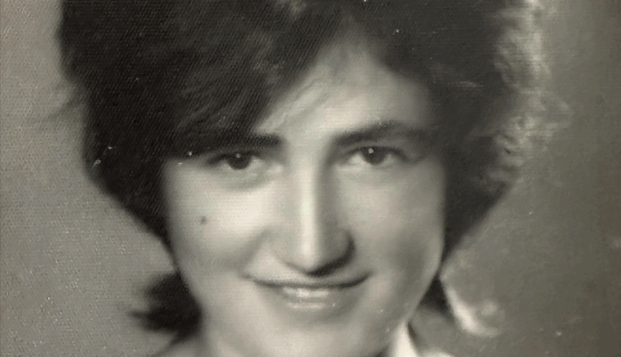

1 In the context of Yugoslavia, “differentiation” referred to a form of political and social ostracism. It involved isolating and marginalizing individuals who were deemed politically unreliable or dissenting against the ruling Communist regime. This could include demotions at work, social exclusion, surveillance, and other forms of repression to discourage opposition and maintain control.

2 Shote Galica, born as Qerime Halil Radisheva, was an Albanian insurgent fighter and the wife of Azem Bejta, the leader of the Kaçak (outlaws) movement. Galica participated in dozens of attacks against Royal Yugoslav forces in the beginning of the 20th century and the Kaçak movement succeeded in putting under their control temporary free zones.

3 Madresa or medrese – Muslim religious school, the only school where teaching could be conducted in Albanian until 1945.

4 This episode refers to Vaughan Smith, a British video journalist for whom Mejreme’s daughter Pranvera worked as a fixer. He was wounded in Prekaz but the bullet lodged in his mobile phone.

5 Albin Kurti (1975) leading activist and former leader of Vetëvendosje!, currently Prime Minister of Kosovo. In 1997, he was the leader of the student protests against school segregation and the closing of the Albanian language schools.

Download PDF