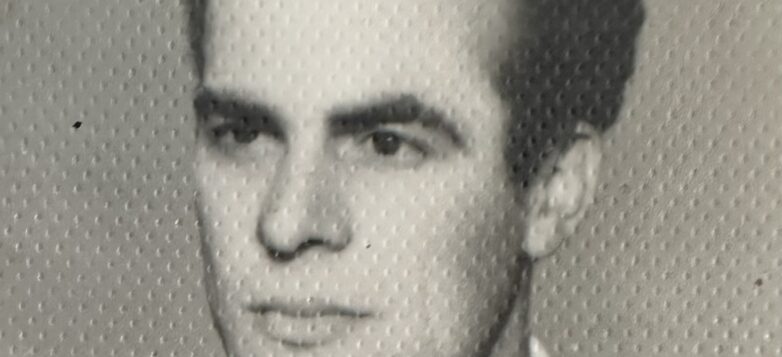
Fehmi Elmazi

Pristina | Date: February 14, 2024 | Duration: 84 minutes

I was beaten in the Niš Prison, they crushed me, they trampled on me. It wasn’t just that they beat me, there were three supervisors. I was sentenced by [Aleksandar] Ranković because I didn’t stay quiet, even in prison, do you understand? Three of them trampled on me, and I spent months recovering, do you understand? In isolation for 14 months with 200 grams of bread. From 72 kilos, I dropped to 32 kilos. What more can I tell you? A greater punishment… there was no cell light, nothing, no window, no threshold. I could never sleep because in Niš the wind blows, and the Niš Prison is in a place where the wind hits from all sides.


[…] My father came to see me. My father was elderly, as I told you, 89 years old. He came to see me. When he saw me at 30 kilos, he almost walked into the path of an oncoming bus. But I had a cousin who was the conductor, and he recognized him and stopped the bus.


Anita Susuri (Interviewer), Ana Morina (Camera)

Fehmi Elmazi was born in 1941 in Gjilan. In 1964, he was imprisoned due to his political activity and was released in 1966. He worked as an accountant at the “Ramiz Sadiku” enterprise until 1990. After 1990, he worked at the Ministry of Labor and Social Welfare. He is now retired and lives with his family in Pristina.

Fehmi Elmazi

Part One

Anita Susuri: Mr. Fehmi, could you introduce yourself and tell us your date of birth, a little about your family, and what your childhood was like?

Fehmi Elmazi: My name is Fehmi Elmazi Bajrami. I was born on April 13, 1941, in Gjilan. Unfortunately, I come from a family that was persecuted. My father lived in the village of Malisheva. Back in 1924, something happened in our neighbourhood, the one we lived in, which was called the Hashani neighbourhood. The gendarmerie came after someone had informed on people there, and they killed four kaçaks.1 They also beat everyone else who was there, you understand? The Serbs always seemed to target men who were handsome and physically strong, men who were capable of standing up for themselves. These people were uneducated, but there was this man, Migja Shaban, who was a big, strong man. They wanted to kill him too.

They started beating people and telling them, “Say that the kaçaks were at Migja Shaban’s place.” He didn’t dare say anything. He took the beating and walked away. I won’t go into too much detail, but my father was young at the time and very brave. He had been with Mulla Idriz,2 and in 1924 he spent nine months in Albania helping bring Ahmet Zogu3 to power. He spent those nine months in Shkodra. When they came to my father, they pointed a rifle at him and said, “Say that they were at Migja Shaban’s place.” My father replied, “No, that’s not true.” They asked, “How do you know?” He said, “I know. I know where he is and where they were.” There was a relative of ours there, a man named Bajram Murati. The Serbs asked him, “What do you say? Is it true?” And he answered, “Yes.”

My father managed to save him. He said to him, “Sahit, may my son repay you in the next world,” because he had saved his life. But immediately afterwards, they beat and tortured the others and eventually sent them all to Turkey. Our entire neighbourhood was emptied out, except for one house. Hajdar Malisheva remained there, along with Rrahman, his brother. Everyone else went to Gjilan or to Turkey. So, as you can see, ours was a family that suffered and was constantly persecuted. As I told you, my father stayed with Mulla Idriz until the very end, when they lost the Battle of Gjilan.4Perhaps there’s no need to go into the whole story. I just want to explain that we were persecuted and suffered greatly because we were left without land. The Serbs took it all away.

They were driven out, and eventually some of them settled in Gjilan. My mother didn’t go to Turkey because my father was a difficult, stubborn man, you know. She said, “No, I’m not going to Turkey.” So they stayed in Gjilan. My mother, however, was incredibly strong. She had nine children. We were extremely poor. You can imagine what it was like, with no land and practically nothing. We struggled, working other people’s land, until 1962. Then, in 1964, three of us brothers and one of my uncle’s sons were imprisoned: Rexhep Elmazi, myself, my older brother Elmaz Bajrami, and my uncle’s son. I’m telling you, we were persecuted throughout our lives. And it continued after that…

Anita Susuri: Mr. Fehmi, at the beginning you gave me two surnames…

Fehmi Elmazi: Yes.

Anita Susuri: Why did that happen?

Fehmi Elmazi: I’ll explain. When I first started school, the authorities didn’t really know how to handle the paperwork. They asked me, “What’s your name?” I said, “Fehmi.” “What’s your father’s name?” “Sahit.” “And your grandfather’s?” “Elmaz.” You understand? Our great-grandfather’s surname was Bajrami. But that’s how we knew it at the time, and we completed the eight-year school system using that surname. Rexhep’s written works are under the name Rexhep Elmazi. He was a writer; perhaps you’ve read something by him. That’s how he signed his poems, as Rexhep Elmazi, and the name stuck. That’s why we have two surnames.

Anita Susuri: Tell me about your father…

Fehmi Elmazi: Yes.

Anita Susuri: What generation did he belong to? How did he end up fighting?

Fehmi Elmazi: He was born in 1892. I remember that because Tito was born in the same year (laughs), and that date has always stayed with me. My father was born in ’92. He died at the age of 80, in 1972. We went through terrible hardships. After the Communists came to power, they wouldn’t allow my father to work. There were practically no factories in Gjilan, except for the tobacco factory. He worked there for about six months, but he was already old by then. We struggled terribly. Sometimes we couldn’t even afford to put food on the table.

I actually fought for my father’s pension, if you want to know. I took the case all the way to the Supreme Court of Serbia. In 1957, when he turned 65, they put him into retirement. But he wasn’t entitled to a pension because he didn’t have enough years of service. I hired a lawyer, appealed the decision, and eventually won after five years. In 1962, I was doing my military service when his pension was finally approved. It was a very small pension because he had only seven years of employment. He received a small disability pension, but at least it helped put food on the table, you understand? But the worst was that three of us brothers were imprisoned in 1964. The misery continued.

My oldest brother had five children and couldn’t even afford to feed them. They wouldn’t let him work. It was horrific. Rexhep and I were imprisoned together. He was sentenced to nine years, and I was sentenced to four. These terrible experiences continued. They kept persecuting us, over and over again. I told you, it happened six times. In 1969, my brother Rexhep and I were sentenced to one month in prison for attending a wedding in Gjakova. In 1981, they rounded up all of us former political prisoners and kept us locked up so that we wouldn’t have any contact with the demonstrations. And that’s how this cycle of persecution continued throughout our lives.

Anita Susuri: Which child were you, in order of birth? You mentioned that there were nine of you.

Fehmi Elmazi: I was the fifth child. My mother had five daughters and four sons. The oldest boy was Elmaz, my eldest brother. Rexhep was the second. My older sisters were older than me. One was born in the village of Malisheva in 1924. Another was younger, born in 1946. They have since passed away. I’m telling you this so you understand the family: there were four brothers and five sisters.

Anita Susuri: What do you remember about that period of your childhood? It would have been sometime in the 1950s, when you were…

Fehmi Elmazi: I remember everything.

Anita Susuri: Was that during the Ranković5 era, and also the period of weapons confiscation6 and the collection of surplus weapons?

Fehmi Elmazi: I experienced all of it. That happened in 1956. I had a brother-in-law in the village of Livoç. He came and told us, “They’ve arrived…” Apparently, they would play music in one place while beating people somewhere else, so nobody would hear their screams. He said, “They came and beat people. They threw them into freezing water. They did all sorts of things to Albanians.” Many people died. They beat them so badly that some died a month, two months, or even three months later. They would put them inside sheepskins in an attempt to save them. It was absolutely horrific, you understand?

Anita Susuri: Did anything like that happen to your father’s family?

Fehmi Elmazi: No, not in that particular case, because my father was in Gjilan, you understand? They weren’t aware of those events from 1924. But they did kill my paternal uncle in 1945. They caught him in the mountains while he was fighting alongside Mulla Idriz. They captured him and killed him. His name was Pajazit. Pajazit Bajrami. His name is mentioned in the history books. They killed him.

Anita Susuri: Was he fighting against the partisans, for example?

Fehmi Elmazi: Yes, he was fighting against them… But the Battle of Gjilan was against the Serbs. It wasn’t about the partisans; it was specifically against the Serbs, you understand? My father guarded the border until they were defeated. He was stationed at the border in Zarbinca. My cousins and other relatives would go there every week to guard the border and prevent the Serbs from entering Kosovo. We experienced terrible things. This is all part of the history that has been written about.

My wife’s uncle, Sylë Zabinca (pointing towards his wife), was a commander there in Zarbinca, where he had his home. His territory extended all the way to Marevc. He was responsible for the area stretching from Vranje to this side. Albanians were constantly fighting, and they were persecuted, killed, and subjected to all kinds of violence.

Anita Susuri: I’m interested in how you first became politically active. How did that happen?

Fehmi Elmazi: How?

Anita Susuri: How did you get involved in political activities?

Fehmi Elmazi: I’ll tell you. I was a very lively child. Wherever people gathered or there was some kind of activity, I would go and join them. I used to go to cafés where Albanians generally didn’t go at the time, because people said those places were only frequented by Serbs. The UDBA7 would gather around people who were on their side, and those were the people they went for coffee with. We didn’t really… But I didn’t understand any of that back then, you understand? I went there because I wanted to listen to music. As I told you, I loved music. There was no Albanian music at the time. It was all in Serbian, with perhaps a few Turkish songs. There was nothing else. I was interested in listening to it. What else was I supposed to do at home, without electricity, you understand?

But there’s something else. In 1943, when people fled Albania and came to Yugoslavia, the Americans and Yugoslavia had brought them out to fight against Albania and its political system. I used to go to the émigré club. That’s where I listened to Radio Tirana. I listened to the news and everything else. I remember it as if it were yesterday, when they sentenced Belishova, Nako Spiru, and many others. Many years have passed, you know, and I’ve forgotten some things, but those names have stayed with me. I spent a lot of time at the émigré club. That’s where I saw the Albanian flag, although I never saw Enver Hoxha himself. I became indoctrinated through all of that.

But there was something else, too. My brother Rexhep was more capable than I was and had read much more. He found books from Albania. We had our own political group in Gjilan. It was called “Mujo Ulqinaku.” Have you heard of Mujo Ulqinaku8?

Anita Susuri: Yes.

Fehmi Elmazi: Well, as you may know, he fought against the Italians. When the Italians occupied Albania, he gathered his friends, went up onto a hill by the sea, and fought against them. Rexhep had read about him, so we named our organisation after Mujo Ulqinaku. I want to say that we were indoctrinated, but Rexhep was also very politically conscious. He read more and had access to more books. There was a professor named Zabica, perhaps you’ve heard of him. He was a very capable man and a good Albanian. He recognised Rexhep as a trustworthy young man, someone who loved his homeland and Albania, and he gave him books to read.

Rexhep also wrote a poem for Riza. Riza was a great man. Riza wrote something for Rexhep, too, and Rexhep wrote about him. That’s how our political awareness developed.

In 1953, one of my sisters married an Albanian émigré from Kukës. I told you that he had relatives in Zhur. When he came to marry my sister, he had cattle with him. He had left Albania with cattle and horses. He had three horses in Gjilan. He went and sold the cattle, and I think he used the money to cover the wedding expenses and buy clothes. That’s how our indoctrination developed.

We were very much influenced by all of this. When electricity arrived in 1957, we were working with tobacco, you understand? There wasn’t much else we could do because we had no land. People who owned a lot of land would grow tobacco on it, but we had to rent small plots, sometimes around a thousand or even ten thousand square metres, to grow tobacco ourselves. One year, the harvest was particularly good. My oldest brother, believe it or not, didn’t even have a decent pair of trousers. He was wearing torn trousers. He asked us, “What should we do with the money? Do you want me to buy you some clothes? What do you want?” We told him, “No, honestly, we don’t want anything. We just want a radio.” A neighbour had one, and the whole neighbourhood would gather around it (laughs), you understand?

He bought us a radio from Niš, one of the first models that came out in 1957. From that point on, we never stopped listening to Radio Tirana. In other words, we felt spiritually connected to Albania. Later, when my sister married the émigré, we also became close to him. I would go to the émigré club as if it were my own home, because I felt comfortable there. That’s how we became indoctrinated.

First of all, these ideas were rooted in our family history. My father and grandfather had fought, as I told you, back in 1924. My father had spent nine months helping bring Ahmet Zogu to power and make him king. After those nine months, he said, “I’ve done enough military service,” and returned home. But they never talked about it because he was accused of having territorial ambitions. You know the story of Ahmet Zogu. I just want to explain that all of these things were part of our upbringing. They were deeply rooted in us.

Anita Susuri: What kind of activities did you carry out with the group you mentioned, Mujo Ulqinaku?

Fehmi Elmazi: Rexhep was very politically engaged and loved Albania deeply. He started talking about doing something. He would say, “Come on, Rexhep…” I was younger, you understand. We were supposed to put up Albanian flags. I was the one who put up the flags in 1964, together with Rexhep. I told him, “Fine, we’re working underground, but if we put up those flags, we’re practically telling the Serbs where to find us. The UDBA will identify us, and we’ll end up in prison.” He replied, “I don’t care. Let them send us to prison, wherever they want. Either I’ll do something for Albania, or I won’t do anything at all.” That was Rexhep’s attitude.

Rexhep was friends with Zeqir Gërvalla. Zeqir was connected to Adem Demaçi.9 There was a group in Prishtina, a group in Gjakova, another in Peja, another in Mitrovica, and groups in other cities throughout Kosovo. At some point, Zeqa told Rexhep, “Rexhep…” “Yes?” “You already have your own organisation, but would you be willing to join the movement? We’re organised throughout Kosovo.” And Rexhep agreed. He established contact with Adem Demaçi, and they reached an agreement to unite. That’s why the name Mujo Ulqinaku is no longer mentioned separately: our organisation merged with the National Unification Movement.10

Anita Susuri: What exactly did you do?

Fehmi Elmazi: I’ll tell you. We started… At that time, you couldn’t speak openly because the UDBA had informants everywhere. There wasn’t a single household without someone reporting what was going on. First, the three of us brothers joined the organisation. My brother’s friend joined too, along with a neighbour. There were five of us.

We put up the flags. If we hadn’t done that, we might have been able to continue our activities underground for much longer. But as soon as we put up the flags, the authorities moved against the whole of Kosovo. They had an informant within Adem’s leadership, and they arrested all of us on the same day. That’s what happened. Do you understand? That’s how the Mujo Ulqinaku group eventually became part of the National Unification Movement.

Anita Susuri: You mentioned putting up flags. How exactly did that operation take place?

Fehmi Elmazi: I’ll explain. Rexhep was in contact with Zeqir. Zeqir knew a man named Enver Mehmeti, who worked in radio or television, I think at Radio Prishtina. He was university-educated. They had arranged for the flags to be prepared in Prishtina, you understand? I don’t know who made them, but Rexhep told me, “I’ve arranged it with Zeqa. On Friday, someone will come and bring us four flags.” He said, “We’re going to put them up around the city.” I told Rexhep, “Fine, but you should know that we’re practically telling the Serbs where we are.” He replied, “I don’t care. I’ve made up my mind. I’m ready to die for Albania.”

We went out at night and put up the flags. Within about a month, they caught us. It was supposed to be on the day commemorating Yugoslavia’s Ministry of Internal Affairs. I don’t know if you know which day that was. I remember it was either May 13 or April 13. I’m getting the dates mixed up. You can look it up. But that was the day we put up the flags.

That’s how we did it. After putting up the flags, they managed to identify us quite easily. At the time, I was working in Pogragjë as a tobacco instructor. I started getting involved in other activities and talking to two people. I had a friend named Isa Musliu. We got together and began working with them.

We started becoming more active and even began collecting weapons, but they shut everything down and arrested us. It happened very quickly. The whole operation against us had already been prepared. The UDBA had all the information. They arrested everyone at once, including people in Gjakova, Peja, and other cities. In other words, they couldn’t have done all that without having someone on the inside.

Anita Susuri: In 1964, were you still attending secondary school?

Fehmi Elmazi: No. I returned from military service in 1963. By 1964, I was working at the Tobacco Combine. I had completed my tobacco studies in 1958 and was working as a tobacco instructor in the village of Pogragjë. That’s where they arrested me. I was arrested in Pogragjë.

Anita Susuri: When you were arrested, were you initially brought to Prishtina for interrogation, or…?

Fehmi Elmazi: No, the interrogations took place in Gjilan. We were interrogated there. I think we spent eight or nine months there, although I’ve forgotten the exact duration. It was around seven or eight months at the Gjilan prison. After that, they transferred us to Niš. We actually requested the transfer ourselves, because the regular prison in Niš was easier than the investigative detention facility. That’s how it happened. We were held in Gjilan during the investigation. Our trial and sentencing took place in Prishtina, not Gjilan, because they didn’t want the public to find out that an organisation existed.

On the day we were sentenced, there were around 100 people. About 50 or 60 of us were held in Niš Prison. But the press only reported on two people. They wrote about Adem Demaçi and Ramadan Shala, just those two. But Hazir Shala was there, along with many others, including Nuredin Gërguri and others from Gjakova. Xajë Nura was there, as was Kadri Kusari, the leader of the Gjakova group, and Hydajet Dobruna. There were many of us. That’s how things unfolded.

Anita Susuri: Was there physical violence during the interrogation period?

Fehmi Elmazi: What? Violence?

Anita Susuri: Was there physical violence?

Fehmi Elmazi: Yes. Let me explain why we managed to avoid physical violence during the initial interrogations. They had seized all the material from our meetings. They had everything we had discussed and written down.

My brother Rexhep was arrested in the morning. They came for me later, at around five in the afternoon, because I was working as an instructor in Pogragjë. The investigator started questioning me. He asked me all kinds of questions, and I kept telling him, “I don’t know anything.” I denied everything. I didn’t admit to anything.

Then one investigator, whose name I’ve forgotten… Gariqi, that was his name, said to me, “Fehmi, don’t play dumb. We’ll beat you, we’ll break your bones, and you’ll have no choice but to confess. Look, we already have Rexhep’s written statement about you.” You understand?

They had seized all of Rexhep’s material from the meetings, including what he had written about everyone. So what could I say when they showed me what Rexhep had written? How could I stand there and claim it wasn’t true? That’s how it happened.

They didn’t beat us during those interrogations. But they beat me severely at Niš Prison. They kicked me and stomped on me. And it wasn’t just the beatings. There were three prison guards [Serbian: nadzornik] who dealt with me. I had been sentenced under Ranković’s regime, and I wasn’t someone who kept quiet, even in prison, you understand? The three of them kicked me and left me suffering for months.

I spent 14 months in solitary confinement, receiving only 200 grams of bread. My weight dropped from 72 kilos to 32 kilos. What more can I tell you? As punishment, they put me in a cell with no light, nothing at all. There wasn’t even a window.

I could never sleep because of the kosava, that cold wind that blows through Niš. Niš Prison is in a place where the wind hits it from every direction. The worst part was that my cell was right where the wind came through the window. They had broken the windowpanes. When the wind came through, it sounded almost like water rushing through a pipe. That’s how fiercely it blew. I could never sleep. That’s how it was.

Anita Susuri: How long did you stay at Niš Prison?

Fehmi Elmazi: What?

Anita Susuri: How long did you stay at Niš Prison?

Fehmi Elmazi: Four years. Four years, from 1964 to 1968. But the nine months or so we spent under investigation in Gjilan aren’t included in those four years, you understand? The prison in Gjilan was just as bad as the one in Niš.

Anita Susuri: Did your family visit you or have any contact with you?

Fehmi Elmazi: Yes, let me tell you about the visits. When I was in solitary confinement, during the period when I was being punished under Ranković’s regime and given only 200 grams of bread, my father came to visit me. My father was already elderly, as I told you. He was 82 at the time. He came to see me. When he saw me weighing just 30 kilos, he nearly collapsed as he got off the bus. Fortunately, the bus conductor was a relative of mine and recognised him, so he stopped the bus.

That’s how it was. We weren’t allowed to receive parcels while we were there. We had absolutely nothing. We weren’t even given paper to write letters. Nothing at all. Absolutely nothing.


1 The Kaçak Movement refers to the armed resistance of Albanians in the early 20th century against the oppressive regimes of the Kingdom of Serbia and later the Kingdom of Serbs, Croats, and Slovenes (Yugoslavia). The term kaçak, meaning “outlaw,” was used to describe the guerrilla fighters who opposed the forced assimilation, land confiscations, and suppression of Albanian cultural and political identity. Active from the aftermath of the Balkan Wars (1912-1913) and continuing into the 1920s, the movement was particularly strong in regions like Kaçanik, Drenica, and Rugova. The Kaçak fighters are remembered as symbols of resistance and struggle for Albanian autonomy and self-determination.

2 Mulla Idriz Gjilani (Idriz Hajrullahu, 1901–1949) ishte imam dhe një nga udhëheqësit kryesorë të rezistencës së armatosur shqiptare në Kosovën Lindore kundër vendosjes së pushtetit komunist jugosllav në fund të Luftës së Dytë Botërore. Ai organizoi dhe udhëhoqi forcat shqiptare në Anamoravë dhe mori pjesë në përleshjet me forcat partizane jugosllave gjatë vitit 1944. U arrestua nga organet jugosllave të sigurimit dhe vdiq në vitin 1949.

3 Zog I (1895-1961) born Ahmed Muhtar bey Zogolli, taking the name Ahmet Zogu in 1922, was the leader of Albania from 1922 to 1939. At age 27, he first served as Albania’s youngest ever prime minister (1922–1924), then as president (1925–1928), and finally as king (1928–1939).

4 The Battle of Gjilan (December 1944) refers to the fighting between Albanian resistance forces and Yugoslav partisan units in the Gjilan region towards the end of the Second World War. The Albanian forces, which included units led by Mulla Idriz Gjilani and Hysen Tërpeza, opposed the establishment of communist Yugoslav rule in Kosovo. One of the attempts to liberate Gjilan from partisan forces took place on December 23, 1944.

5 Aleksandar Ranković (1909–1983) was a senior Yugoslav communist politician and one of Josip Broz Tito’s closest associates. He served as Yugoslavia’s Minister of the Interior (1946–1953) and headed its security apparatus, including the UDBA. During his years of influence, Kosovo Albanians faced extensive police surveillance, intimidation and repression, particularly during the 1956 weapons confiscation campaign. Ranković was removed from power at the Brioni Plenum in July 1966, following accusations of abuses by the state security services.

6 In 1956, as Minister of the Interior, Ranković launched a Weapons Collection Action in Kosovo to collect illegal weapons he argued were a grave risk to the security of the state. This campaign was characterized by widespread abuses of the Albanian population, and was criticized for that reason after the fall of Ranković in 1966.

7 Uprava državne bezbednosti [Directorate for State Security] was the secret police organization of Communist Yugoslavia. It was at all times best known as UDBA (pronounced as a single word and not an acronym), and was the most common colloquial name for the organization throughout its history. Also known by the Serbian acronym SDB.

8 Mujo Ulqinaku (born Mujo Cakuli; 1896-1939) was an Albanian sergeant of the Royal Albanian Navy, known for his resistance on 7 April 1939 to the Italian forces during the Italian invasion of Albania. He was given the People’s Hero of Albania award posthumously.

9 Adem Demaçi (1936–2018) was an Albanian writer and politician and longtime political prisoner who spent a total of 27 years in prison for his nationalist beliefs and political activities. In 1998 he became the head of the political wing of the Kosovo Liberation Army, from which he resigned in 1999.

10 The Movement for National Unification (Lëvizja për Bashkim Kombëtar) was an underground Albanian nationalist movement active in Kosovo during the 1960s, advocating national unification with Albania. In September 1963, Adem Demaçi helped establish the Revolutionary Movement for the Unification of Albanians (LRBSh), which developed clandestine committees in several Kosovo cities, including Gjilan. Its political programme advocated self-determination and the unification of Albanian-inhabited territories under Yugoslav administration with Albania.

Part Two

Fehmi Elmazi: Among those who were sentenced at the time were myself, Avni Lama, a professor from Gjakova, Metush Krasniqi, Nezir Uka, Nezir Gashi… There were others too, but honestly, I’ve forgotten their names. More than 50 years have passed. All of us were placed in solitary confinement. They put us there because we had gone on a hunger strike. The first hunger strike at Niš Prison took place in 1965. Initially, they took the leaders of the various groups: Adem, Kadri Kusari, Rexhep Elmazi, and another man from Peja whose name I’ve forgotten.

They took all the group leaders and scattered them across prisons throughout Yugoslavia. Those of us who remained continued our activities. Later, they sentenced us too and put us in solitary confinement. The conditions were horrific. We were completely alone, with no parcels, nothing. As I told you, I was reduced to 30 kilos. What more can I say?

Anita Susuri: Did you have any contact with the other prisoners, for example, the political prisoners?

Fehmi Elmazi: You mean contact?

Anita Susuri: Yes, contact.

Fehmi Elmazi: No, there was no contact. Look, those of us who were in solitary confinement were kept in a separate section precisely so that we wouldn’t have any contact with the other prisoners. I was alone in one cell, for example, and someone else was in the next one. There was also a vocational school for prisoners who were learning a trade, you understand? Those were the prisoners who had been convicted of murder. That’s where I was, someone else was in another cell, and my friend was somewhere else. There was absolutely no contact. Let me tell you how afraid they were of Metush Krasniqi.

One day, a prison guard made a mistake. We were allowed outside for a walk, about half an hour each day. Metush was already outside when the commander forgot about it. He let me out of my cell and sent me outside just as Metush was coming back in. Metush saw me. You should have heard the shouting he gave that commander. He was furious, asking, “How dare you allow this?” All because he had seen me, nothing else. In other words, they wouldn’t allow us any contact whatsoever. We weren’t even allowed to see or hear one another. It was absolutely horrific.

Anita Susuri: What were the hygienic conditions like?

Fehmi Elmazi: Let me tell you about the hygienic conditions. My cell was completely underground. It was just a concrete cell, nothing else. I had to clean it every morning, you understand? There was nothing else in there. Do you know what we had? In the evening, because during the day they wouldn’t even give us a board to rest on, they would bring a wooden board at nine o’clock. That was what I slept on. But I couldn’t sleep anyway, because, as I told you, there was no window and no proper doorway. It was absolutely terrible. I could never sleep. I would move the board around, putting it on one side and then the other, but it made no difference. The kosava wind blew in from every direction. It was horrific.

Anita Susuri: What about the day you were released from prison?

Fehmi Elmazi: What?

Anita Susuri: The day you were released…

Fehmi Elmazi: Yes.

Anita Susuri: Do you remember it?

Fehmi Elmazi: Yes, I do.

Anita Susuri: What was it like?

Fehmi Elmazi: Look, let me tell you something. Among all the former prisoners, I have documents to prove what happened. I’m not just saying this; I have the official decision. Ranković fell in the sixth month of that year, you understand? After that, our sentences were reduced by 50 per cent. When Ranković fell, the Supreme Court reduced everyone’s sentences by half. But I still had to serve another two years. They didn’t release me. I have the documents to prove it, you understand? I was released in 1968, even though I should have been released in 1966. That’s what happened.

Anita Susuri: Why did that happen? Was it because of your family background or your history?

Fehmi Elmazi: No, no. I had been sentenced under Ranković, and the others had been sentenced under him too, but they didn’t treat everyone the same way. In my case, the persecution continued. I was considered incorrigible, you understand? I never… I never had a civil conversation with them. That was the problem. I challenged them and insulted them. There wasn’t much else I could do. They beat me, moved me from one cell to another, but I didn’t give them an inch. That’s how it was.

Anita Susuri: After you were released from prison, how did your life continue? Did you continue your activities?

Fehmi Elmazi: I’ll tell you. When I got out of prison, I got in touch with Hyda Dobruna. He’s still alive, 93 years old, or 91. We correspond regularly. He had a brother, Musa Dobruna, who was a director at Ramiz Sadiku. May God grant him Paradise, if that’s what he wished for. If he didn’t wish for it, I don’t know (laughs). Hyda wrote to Musa and told him, “Musa, I have a friend from Gjilan who doesn’t even have enough to eat.” My brother Rexhep was also in prison, you understand? Both of us were there. He had been sentenced to nine years but served five and a half, while I served four.

When I returned, Musa Dobruna hired me at Ramiz Sadiku in Prishtina. Fortunately, I had a Category C driving licence. I had been a driver during my military service, so I had the necessary qualification, and Musa took me on. I worked there delivering bread to the factory canteens. I continued doing that for another two years. After about two and a half years, I applied for an administrative position in Kishnica. Musa hadn’t dared to employ me in administration, even though none of the other employees had completed secondary school. He was afraid because I had been a political prisoner. But the people in Kishnica didn’t know who I was, so they hired me. I worked in accounting there until 1990. I was one of their best employees. I worked in the inspection department, overseeing the entire mining operation in Kishnica and Novobërda.

Anita Susuri: I’d also like to ask you about 1968. Were you involved in the demonstrations1 that year?

Fehmi Elmazi: Yes, I was there. I had been released from prison in April, so I was there when the demonstrations happened.

Anita Susuri: What was that day like?

Fehmi Elmazi: What was it like…? You know how young people gather, especially when they organise themselves. Dumoshi and Skender Kastrati were among them, and I won’t mention all the others. You probably know their names better than I do. More than 50 years have passed. How am I supposed to remember everyone? They organised themselves and started the demonstrations. They went ahead with it, and the police chased us. That was it.

Anita Susuri: So you weren’t involved in organising them?

Fehmi Elmazi: No, I wasn’t.

Anita Susuri: You simply took part spontaneously?

Fehmi Elmazi: No, I mean, I went out and joined them, but I wasn’t an organiser. I took part in all the demonstrations, but the UDBA agent was always watching me. Wherever I went, wherever I showed up, he was there, waiting for an opportunity to put me back in prison. I would go out and observe, you understand? I didn’t take part in any actions. There were young people doing that, so there was no need for me to get involved. Someone had to go out there and stand up for the cause, especially when all those young people were already doing it. That’s how it was.

Anita Susuri: Did you face any consequences afterwards, in 1968?

Fehmi Elmazi: No, I didn’t. They couldn’t identify me as someone who had done anything, you understand? The person who was watching me had seen that I hadn’t done anything wrong. The young people were the ones throwing things and breaking things. I hadn’t done any of that.

Anita Susuri: Did you continue your political activities afterwards? Did you become involved with another organisation?

Fehmi Elmazi: Yes, let me tell you. I wasn’t an organiser, but my brother, my friend, and Nazmije’s brother were connected to Rexhep Mala. Nazmije’s brother was friends with him. I used to drive Rexhep Mala around Prishtina, Gjilan, and everywhere else. When he went to Switzerland, I drove him there too. During the most difficult period, when the UDBA was searching for him everywhere, I helped keep him safe. One time, they stopped us near Kino Rinia. Rexhep was there with his wife, and I was with my wife, Nazmije. The police stopped us.

I slammed on the brakes (onomatopoeia). I was driving. The policeman asked for our documents, and I handed them over. My wife, who was a little hungry, asked the policeman, “Is there somewhere around here where we can get something to eat? We’re hungry.” He replied, “Of course there is.” When he heard her, he apparently realised there was nothing suspicious about us. Then he noticed that I had the same name as him. His name was Fehmi too. He said, “You’ve got my name. Drive on.” And I managed to get away. I’m telling you, I could easily have ended up serving ten years in prison over something like that. I took Rexhep all the way to his friend’s apartment, near the military headquarters. You know where the army headquarters used to be? His friend had an apartment there. I drove him right there.

I also drove him to Gjilan and brought him back from there. I took him everywhere. I was always involved and connected to these activities. Ilmija was also involved, and we would consult with each other. Twice, I transported materials for Kosova e Lirë [Free Kosovo]. Ilmija organised it, but I was the driver. I took the materials as far as Shtime, to the place where the people involved in the armed struggle would come and collect them, you understand? In other words, I never stopped my activities. I also transported soldiers from there to Zllashë. You know where Zllashë is. I took soldiers there, and I had a friend in Mramor as well. I never stopped. Nothing could make me abandon my activities.

I stayed in Prishtina until May 30, 1999. They didn’t know who I was. I was staying in the apartment of Nazmije’s brother. A Turkish woman had informed on us. She told them, “There’s a female doctor staying there.” The woman was Teuta Hadri, the wife of Nazmije’s brother. They came and asked, “Where is the doctor?” We told them, “She’s in Germany.” You understand? They had no idea who I was. They didn’t know who I was at all. They told me, “Look, don’t leave. We’ll be back in 15 minutes.” I said, “Come on, if I had wanted to run away, I would have done so already.” Three months had passed. It was already June, and the Kumanovo Agreement2 had been signed. On that particular day, my wife had just made some soup and put out a pogaçe.3 You understand?

But I knew what they were looking for. They eventually left. Fortunately, I had my own rented apartment just downstairs. We quickly took our son and left before they returned. A neighbour of our friend had a telephone. He had one son in the Kosovo Liberation Army (KLA)4 and another in Germany. He had spoken to them at seven o’clock. I told him, “Let me use your telephone. I need to make a call.” When it was seven, I called. The person on the other end said, “Listen, stay where you are. They came back less than five minutes after leaving. They tried to break down all the doors and said that if they caught you, they wouldn’t let you get away alive.” That was my last activity. As I told you, I transported soldiers to Zllashë and all over the place.

Anita Susuri: Now, going back to 1981…

Fehmi Elmazi: 1981?

Anita Susuri: Yes. You were imprisoned in 1964, and then there was 1981.

Fehmi Elmazi: Yes, 17 years later.

Anita Susuri: Seventeen years?

Fehmi Elmazi: Yes. From 1964 to 1981, that’s 17 years. Look, in 1981, they rounded up all of us who had previously been political prisoners. They were afraid we might influence the younger generation, so they wanted to keep us away from them. They arrested all of us. We were taken to Lipjan Prison. There were about 150 people in one room. They had gathered former political prisoners from all over Kosovo, and most of us were older men. There were outside police personnel who had come from different parts of Yugoslavia, from Croatia and Slovenia. Perhaps you know about this. Inside the prison, however, it was our own local police officers. They wouldn’t allow the outside police to come in and mistreat us. Those officers had wanted to take us away and beat us, to do all sorts of things to us. But our local officers told them, “No. You stay outside and guard the perimeter. We’ll take care of things inside.” They treated us exceptionally well.

Let me tell you something. It wasn’t exactly a holiday, but I was actually happy because we were all reunited with our friends. We had all suffered. Some had spent ten years in prison, others five, and so on. We were all older men by then. Kadri Halimi was there. You’ve probably heard his voice. He was there, and I was there too. He was older than me and had also spent years in prison. When he was first released from prison, he went to see my wife at her workplace (pointing towards his wife) and told her, “Don’t worry, they’ll release Fehmi too.” You understand? They kept us there for a month. Those against whom the authorities had obtained written statements from younger people were kept in prison. There was a driver from Rahovec, I think, or from… What’s the name of that village near Rahovec?

Anita Susuri: I’m not sure…

Fehmi Elmazi: I mean, the municipality.

Anita Susuri: Suhareka? Malisheva?

Fehmi Elmazi: Suhareka. He was from Suhareka. Anyway, that’s not important. He was a driver. He had some connection with his nephew or another relative. He came to speak to me. Since I had experience as a political prisoner, you understand, he wanted my advice. He said, “Fehmi…” I replied, “Yes?” He asked, “What do you think? Here’s what happened. One of my relatives has been arrested. What will they do to me if he gives a statement?” I told him, “No. If he gives a statement, you should prepare yourself for prison. There’s no other outcome. That’s precisely why they arrested you.” And that’s exactly what happened. When they took him away, he came back and told me, “Fehmi, they questioned me.” I said, “Didn’t I tell you? I told you not to lie.” His relative had given a statement, and there was no point in resisting. They would beat him until he admitted everything anyway. He eventually confessed, and they took him to prison.

There’s no getting around it. Once someone gives a written statement, there’s nowhere for you to go. That’s how prison life was. Otherwise, we actually enjoyed ourselves because there were 50 or 60 of us in one room. We didn’t have parcels or anything else, but we had conversations, and we had bread to eat. We were used to that. As long as we had bread, we didn’t need anything else.

Anita Susuri: Where were you initially taken? How did they arrest you?

Fehmi Elmazi: Well, let me tell you. As I said, I was considered a troublemaker. Some of our friends had been arrested, but I didn’t know why or what had happened. I wanted to find out. You see, Nazmije’s brother had been underground with Hydajet Hyseni. I spent ten days underground myself. I was in contact with Ilmija and some of the others, but I wasn’t directly involved in their activities. I stayed there for ten days. After those ten days, I still had some unused annual leave. I couldn’t afford to stay away from work any longer because I risked losing my job. But I had stayed there.

When the director came in, he called me. His name was Nazmi Mustafa. He was a very brave man. He said, “Fehmi…” I said, “Yes?” He told me, “Don’t be afraid. There’s nothing they can charge you with at the moment.” Because I hadn’t committed any offence, you understand? Then he said, “But there’s that old matter…” I replied, “Don’t worry about that old matter. I’ve already served my time. I don’t care about that anymore.” At one o’clock in the afternoon, after those ten days, they took me from work and brought me to the secretariat. When they brought me there, I was actually fortunate in one respect. That very day, the fighting in Drenica broke out. Tahir Meha5 was fighting there. I was sitting in an office. They were too busy to deal with me, you understand? They were trying to organise the police, even using helicopters, to send as many officers as possible to fight Tahir Meha.

They kept me there until nine o’clock. I could see that there was a commotion, but I didn’t realise that actual fighting was taking place. At nine o’clock, a man named Lutfi Ajazi came. He was the one who took me away, because there was nobody else available. Another man came too, a particularly nasty fellow from Gjakova. I’ve forgotten his name. He had a very aggressive tone. He came over and started questioning me. “Where have you been?” “I’ve been at home.” “What do you mean, at home?” “Where else would I have been?” I replied. He started shouting at me. I told him, “Don’t shout.” He went outside and said, “Just wait. You’ll see what’s going to happen to you.” I’ve forgotten his name… Nazmi, do you remember? (He asks his wife.) Nazmi Kursani. Now I remember (he cries). Nazmi Kursani was the one who started threatening me like that. But I had already been through so much that I wasn’t easily intimidated. He said, “I’m telling you what will happen, so you’d better get moving.” Then he left.

They had informed the authorities in Belgrade, because Belgrade was running everything at the time. Everything was controlled from Belgrade, particularly the Belgrade UDBA. Then an official from Belgrade came. “Fehmi…” “Yes?” “What have you done?” “Nothing.” “What do you mean, nothing?” “I haven’t done anything. Ask the people who arrested me what I’ve done.” He realised there was nothing against me and left. He said, “Videćemo kasnije” [Serbian: “We’ll see later”]. In other words, he was leaving the matter open, saying they would look into it later. But then they went and checked with the people who had arrested me, and they told them, “No, we simply took him from his workplace.” That’s how I got through that situation.

Later, at nine o’clock that night, they transferred me to Lipjan. All those friends I mentioned earlier were there. The prison had two floors. I don’t know whether you’ve ever been to Lipjan Prison.

Anita Susuri: No, I haven’t.

Fehmi Elmazi: It was a facility for young people who were sent there to learn a trade. That’s how it was. Nothing else happened to me there because they had no grounds to do anything.

Anita Susuri: How long did they keep you there?

Fehmi Elmazi: For one month. One month. And Kadri, whom we called Baci Kadri, went and told my wife {pointing towards her}, “Don’t worry. They’ll release Fehmi too once I get out of here.”


1 During October and November 1968, many demonstrations were organized by the Albanian population across Kosovo. The main demand was to recognize Kosovo’s right to self-determination. The first and most massive demonstration was organized in Prizren on October 6, 1968. This demonstration ended in front of the League of Prizren, where for the first time the demand for the Kosovo Republic was publicly articulated.

2 The Military Technical Agreement between NATO (KFOR) and the Federal Republic of Yugoslavia (FRY), commonly known as the Kumanovo Agreement, was the accord concluded on 9 June 1999 in Kumanovo that ended the NATO bombing campaign of FRY.

3 Pogaçe is a traditional round or flat bread commonly prepared in Albanian households.

4 The Kosovo Liberation Army (KLA) (ALB: Ushtria Çlirimtare e Kosovës, UÇK), was an armed ethnic Albanian guerrilla organization that emerged in the 1990s to fight for Kosovo’s independence from Serbia and engaged in armed resistance against Serbian forces during the Kosovo War (1998–1999). It was demobilized in the summer of 1999 after the end of the war.

5 Tahir Meha (1943–1981) was a Kosovo Albanian resistance figure from Prekaz, in the Drenica region. On May 13, 1981, Yugoslav police surrounded his family home to arrest him. He refused to surrender, leading to an armed confrontation that lasted several hours. Meha and his father, Nebih Meha, were killed during the clash. His death became an important symbol of resistance to Yugoslav rule among Kosovo Albanians.

Part Three

Anita Susuri: Do you remember the demonstrations in 19811? What was the situation like at the time?

Fehmi Elmazi: How could I not remember? I remember everything. My office was at Bankosi, you know where that is? It was the directorate of Kishnica and Novobërda, in the building that is now the Academy of Arts, which was established there after the war. I worked there from 1972 until 1990. We followed everything that was happening. Let me tell you a story. One day there would be demonstrations, and the next day there would be more. When the tanks came out, there was a Serb working with us who spoke Albanian better than Albanians themselves, you understand? He was a teacher, a man called Cobi. When he saw the tanks coming out, he couldn’t contain himself. His chauvinism came out, and he said, “E, sad će da vide [Serbian: Now they’ll see].”

I couldn’t help reacting, you understand? I was furious. I could see the young people being run over and killed. I asked him, “Šta će da vide, Cobi? [Serbian: What are they supposed to see, Cobi?]” He replied, “Sad će da vide tenkovi[Serbian: Now they’ll see the tanks].” I said, “Dobro, hoćeš da mi kažeš ti čija su ova deca? [Serbian: Fine, are you telling me whose children these are?]” I said, “Whose children are these that the tanks are going to run over? Do you realise you’re wrong?” I told him, “Your own son could be among them. Being a Serb is one thing, but your son could be there just as much as mine.” What I’m trying to say is that they never openly expressed their views until they felt the time was right. But I wasn’t afraid. I always spoke to them like that. I was there in the office, following everything. I also went out to the demonstrations in the evenings, you know? Around the university and places like that…

Anita Susuri: What did you see? What was it like?

Fehmi Elmazi: What?

Anita Susuri: What did you see? What was it like?

Fehmi Elmazi: Look, for example, I saw what was happening up by the university buildings and the Student Canteen. They brought out rubbish bins and used them to block the road. They caused all sorts of disruptions. They put things in the streets to prevent the police from getting through. There were beatings. One time, I remember, I wouldn’t let my son come with me. He was ten or eleven years old at the time, I think.

Nazmije Elmazi: I’ve forgotten. He’s 35 now.

Fehmi Elmazi: I told my son, “Stay at home.” I went out. When I got to the university, they were beating people. Perhaps you remember that professor who was beaten by women, when they attacked those they thought were Communists.

Anita Susuri: Yes, Statovci.

Fehmi Elmazi: When they started hitting him, you understand? I was right there. My son was behind me. I saw all the beatings and the mistreatment. I witnessed everything. I followed the events closely. That’s how it was.

Anita Susuri: Afterwards, you were released after a month. Did you still have… I mean, you continued working until 1990. Did you experience any problems at your workplace?

Fehmi Elmazi: No. Let me explain. I was successful at my job. I knew the work, and I carried it out meticulously. In 1972, I took over from an employee who had left the position two years earlier. It was an administrative position dealing with fixed assets. I replaced him. There was a Macedonian man working there, and I took over that position. A backlog of two years’ worth of work had accumulated. You may know a little about accounting, but all those records pile up, and eventually someone has to sort them out. There were a lot of fixed assets and inventory belonging to Novobërda and Kishnica. All of them needed to have their depreciation calculated. Assets depreciate by around ten per cent each year, you understand?

I had to process all of that. I had an old German-made machine from 1933. I had to sit there working it, going back and forth like this, raga-raga, raga-raga (onomatopoeia), turning it with my hands. I wouldn’t get up from my chair all day. By the end of the year, I had completed everything. Once I finished all that work, the director had a number of women working there who were connected to other directors. There were 17 Serb women. A man named Gërković, who was a director at Elektro Kosovo in Ferizaj, spoke to me about one of them, Ilana Gërković. He told me about her because she hadn’t done any of her work. She had left everything in a terrible state. Her supervisor had noticed, but those people didn’t want to turn against one another, you understand?

He asked me, “Fehmi, would you be willing to take over this position?” I said, “Of course. Why wouldn’t I?” So I took it. From the very beginning of the company’s operations, going back to 1949 or 1950, I reviewed every single document and checked it against the records on our registration machine, you understand? I checked whether everything had been properly recorded. Within two or three months, I had brought all the figures down to zero. The machine had a red and a black setting, and when you combined them, they produced zero, you understand? I managed to reconcile all those figures. I never lost a single case in court.

He saw that I was doing the work properly, that I had completed everything, and he started sending me around Serbia. He sent me to Šabac because we had conducted business there through Kishnica. He also sent me to Metal Servis in Belgrade. I went and collected several million in money that people owed us. The others hadn’t known how to pursue those debts. I brought the money back. I don’t remember the exact amount anymore, but it was probably around ten million, or seven or eight million. There was also a Serb who was the head of inventory control. We carried out continuous inventory checks throughout the year because Kishnica and Novobërda had a lot of assets. He spoke to me… After the previous employee left, they couldn’t find anyone better than me. I was doing all his work. He put me in that position and asked, “Would you like to take it over?” I said, “Of course.” My salary was higher too, because it was a higher-grade position, you understand?

So I took the position and did the work. I never received a single complaint. The first people to come for inspections were the SDK,2 the Social Accounting Service. They would come to me first, to the person responsible for the records, to establish the situation. They would first check the warehouse inventory and its records before moving on to everything else. I had everything reconciled, right down to zero. I never received a single complaint. That’s how it was. In other words, I did very well at work. Neither the Serbs nor the Albanians could intimidate me. There was one Albanian employee, whose name I don’t want to mention because he was incompetent. His brother was the head of the accounting service there.

I took him under my wing and tried to teach him. I told him, “Take the files and start from the beginning, from A onwards.” He went and told his brother what I had said. His brother replied, “No, I didn’t send you there to work as an accountant. I sent you there to be a manager.” You understand? Then he came and told me that. I said, “No, no. I’ll do the work myself. I’m only trying to teach you.” He replied, “As far as I’m concerned, don’t touch a single sheet of paper.” So I did everything myself. Believe it or not, I had three other people in administrative positions working alongside me, and two of them wouldn’t even pick up a pen. One was a footballer. I won’t mention his name because it wouldn’t be appropriate. Believe me, he could spend 30 days without even touching a pen. I had to do his work for him just to avoid arguments, because the director was a Serb, you understand? And that’s how it was. I did my job better than anyone. I never received a complaint at work, in any position I held. That’s how it was.

Anita Susuri: I’m also interested in what you remember about 1988, when the miners’ marches3 began.

Fehmi Elmazi: I was with the miners from Kishnica. We were involved in the events and supported them. We provided whatever assistance we could. But we had to do these things secretly, you understand? I was involved in all those events. Whenever the miners went on strike, we were with them, especially my friends and I.

Anita Susuri: Do you remember anything in particular about the miners’ strike?

Fehmi Elmazi: Yes.

Anita Susuri: What do you remember?

Fehmi Elmazi: The miners’ strike… Let me tell you something. Only someone who has actually been inside a mine knows what working in a mine is like. Unless you’ve been down there, you can’t understand it. You can imagine what it’s like, and you can see it from the outside, but the reality is different. When I first started working in Kishnica, they initially sent me to Hajvalia. You’ve heard of the Hajvalia mine, down there, haven’t you? They sent me because water had flooded the mine and covered several of the ore wagons, you understand? The wagons used to transport the ore. They sent me to carry out an inventory because I was responsible for fixed assets. That was the first time I went inside a mine, you understand? That’s when I saw what it was really like.

I also went down to the section where there had been a collapse. Mines are fascinating in their own way. When you first go inside, you might think there’s nothing particularly unusual. But when you see the dust… Back then, there were no filters. It was… absolutely horrifying. When the light hit the dust, you could see it glittering, and then you realised how black and thick it was. It was terrible. Imagine someone working down in a mine without eating for one or two days. There is no greater horror. Death is nothing compared to that. I’ve seen all of it. Everything.

Anita Susuri: You mentioned that you worked there until 1990, and then you left…

Fehmi Elmazi: We left on August 30, 1990. That’s when we stopped working. The trade union people told us to leave. That bearded man led us astray, you understand? I don’t want to go into it too much, but he led us astray, and we left our jobs. The Serbs wouldn’t have removed us in that way if it hadn’t been for him. But he believed that was the right ideological approach, that it would bring things to a standstill. It’s like Albin Kurti now, trying to block Serbia by stopping the dinar, you understand? Perhaps I don’t need to comment on that, but it’s painful. America has turned against us. When America turns against us, and we’re practically nobody in comparison with the rest of the world… I’m not saying we’re nobody, but we have no real power. No power at all.

They have mortar launchers, you understand? They have aircraft, three different types of aircraft. Do you know when Yugoslavia first had aircraft? In 1962. I was doing my military service in 1961, and they had two types. Remember these names because they’re interesting: Ora and Galeb. In 1961, when I was in the army, those were the aircraft they had. And now Serbia has the ones supplied by the Chinese, the Russians, and others.

Anita Susuri: What did you do after that, when you found yourself without a job?

Fehmi Elmazi: Let me tell you. When I lost my job, she (gestures towards his wife) knows that I did all sorts of work. I worked as a security guard for Arif Hoxha, who owned a clothing boutique. Do you know where it was? Along the road behind the theatre, where the shops are. That’s where I worked as his guard. I was paid ten euros to work there for 24 hours. Sometimes it was ten or twelve hours, you understand? My job was simply to make sure nobody stole anything. I… Even as a child, I was always well dressed, and I never begged for anything. I worked there, and the police beat me. It’s in that newspaper Adem Demaçi published. Perhaps you remember it?

Anita Susuri: Which newspaper was that?

Fehmi Elmazi: It was a newspaper from 1990. You would have to look for it. You’ll find the article there about how they beat me. The whole shop was covered in blood.

Anita Susuri: Was there any particular reason for it?

Fehmi Elmazi: No reason at all. They simply wanted to steal. Someone told me that the police had been saying I was a soldier of Ibrahim Rugova. They beat me, broke my teeth, and kicked me. That’s how it happened.

Anita Susuri: Did they also interrogate you during that period?

Fehmi Elmazi: No. They didn’t interrogate me because they had nothing to question me about. They simply beat me. The UDBA knew what they were doing and had sent them, you understand? They had nothing to question me about.

Anita Susuri: I mean, were there any other incidents?

Fehmi Elmazi: No, no. I don’t think so. Perhaps they took me in once more… I’ve forgotten.

Anita Susuri: You mentioned earlier that you transported soldiers…

Fehmi Elmazi: Yes. Let me tell you. During the war, the relative of my wife whom I transported is now a major in our army. He’s a major. He was with another relative of his too, but that man didn’t stay, you understand? He got scared and left. But this one stayed. He’s now a major, and he completed his entire military education with the Americans. He’s very capable… you should see him. His wife is a professor, he has children, and they’re doing wonderfully. He’s a very capable man. His name is Driton. That’s how it was. I transported other soldiers too. Did I tell you about the Radio Kosovo equipment that I transported twice?

Anita Susuri: No, I don’t think so. You haven’t told us about Radio Kosovo.

Fehmi Elmazi: Nazmije’s brother bought the Radio Kosovo equipment, and it was transported in a car, an Opel. We loaded everything into it. I drove it as far as Shtime, to the place where the KLA soldiers were stationed. They came out, collected the equipment, and took it from there. I wasn’t allowed to go any further. They wouldn’t let me. So I turned around and drove back.

Anita Susuri: Did you ever have any problems at the checkpoints?

Fehmi Elmazi: No, I didn’t, because I only went there twice. My wife’s brother survived, thanks to the OSCE4 and that commander. What’s his name again? It’s just come to me… You know that old man who was there when they came to see the people who had been killed…

Anita Susuri: Yes, I know who you mean.

Fehmi Elmazi: It was just on the tip of my tongue.

Anita Susuri: And I’ve forgotten his name too.

Fehmi Elmazi: Anyway, it doesn’t matter. That man.

Anita Susuri: The one in Reçak,5 right?

Fehmi Elmazi: Yes, he was in Reçak.

Anita Susuri: Yes, that’s right. Now I remember too.

Fehmi Elmazi: That’s the one. My wife’s brother was one of the founders of the KLA. He was friends with Jakup Krasniqi; they had been in prison together. The two of them continued working together. Jakup was based further up, while my wife’s brother came and brought materials and delivered them to the soldiers. This was even before we knew that the KLA existed, you understand? One time, the Serbs stopped him at a checkpoint. They detained him, took his identity card, and called their base. They told them, “Likvidone” [Serbian: Eliminate him]. But fortunately, at that very moment, the OSCE jeep arrived. They told him, “Beži” [Serbian: Run], and he managed to escape. That’s what happened. It wasn’t me, but my wife’s brother. Ilmi Ramadani experienced all of that. He survived because someone told him, “Beži.”

Anita Susuri: You also told me a little earlier about the war, but I’d like to ask you about the NATO bombings.6 Were you here when they started?

Fehmi Elmazi: I stayed here the entire time. I was in Prishtina. You know what gave me the greatest joy? It was when the first bomb exploded in Hajvalia. The first explosion happened there, and afterwards the bombing continued here. I remember because I was living in a rented apartment near the post office, on the sixth floor. I had a balcony from where I could see everything. I could look down and see where the army was stationed. Whenever the bombs hit the military positions and flames erupted, I watched it all.

I remember sitting there, with my wife and son (pointing towards them). My son kept saying, “Dad, please don’t go outside. They’ll kill you” (he cries). I told him, “No, I’m going out.” But when I saw my son becoming distressed, I decided to stop and stay inside for a while. I would spend the whole night waiting for the aircraft, wondering whether they were heading towards Serbia, you understand? Because I knew what was happening here. I was simply watching to see whether they were going to Serbia. When they headed towards Serbia, the bombing would begin there. I followed everything. Believe me, pieces of debris from the bombs that hit the barracks landed right by my apartment. When they bombed the post office, I was at my wife’s aunt’s place (gestures towards his wife), and pieces of debris landed there too. I experienced all of it.

Anita Susuri: What was the city like? What was the situation for the people?

Fehmi Elmazi: Let me tell you what the city was like. It was a dead city. Especially after they started expelling people. You know how they forced people out of their homes? They forced me out of my apartment too, along with everyone here (gestures towards his wife). But I didn’t leave immediately because, if they stopped me and checked my identity, they would have killed me. That’s why I didn’t go out. When they forced us out of the apartment building, Teuta, my wife’s sister-in-law, came and said, “They’ve forced us out of our apartment.” Her apartment was further down the building. She said, “We’re coming over.” They kept saying they were on their way. What could I do? They came.

People were terrified. They were losing their minds. They didn’t dare speak, go outside, or even use the telephone. Believe me, I wasn’t afraid. I never was. Of course, there was a natural fear, but I wasn’t terrified like some people who would make all sorts of frightened noises (onomatopoeia). I told everyone, “Stay where you are. Don’t make the mistake of going outside until they force you out. When you leave and they ask, ‘Did you run away?’ you can say, ‘No, they drove me out of my home.'” That’s what I did. That’s what I could do. I kept the entire building together until they came with machine guns. When they arrived with the machine guns, I told everyone, “Stop acting brave. You’re not brave if you don’t have a weapon.” I had an old pistol, a Walther. What the hell could I do with that? They had machine guns, you understand? That’s how it was. It wasn’t easy. It really wasn’t easy.

Anita Susuri: And when were you liberated?

Fehmi Elmazi: When we were liberated… Let me tell you. The night before the Russians entered, I was at Sami Peja’s house. I don’t know whether you know where that is.

Anita Susuri: I know he died around that time…

Fehmi Elmazi: The professor. The professor had died a day or two earlier. I was friends with him. Not just ordinary friends; we had been prison companions. We never cared whether someone was 50, 20, or 30 years old. We were close friends. My wife’s brother was close to him too (gestures towards his wife). We met him at Tre Sheshirat, together with my wife’s brother, and he was so happy to see us. He said, “Come on, let’s go to my house.” We said, “All right, Baca Sami.” We didn’t go that day, though. He died that afternoon. The following day, we went to his house and stayed there until the end. And on the last night, the one you’re asking about, when the Russians entered, I was at Sami Peja’s house. His son was there… He didn’t have his children with him. It was Sami and his wife, my wife and me, and his mother.

Let me tell you, he had a pistol and I had a pistol too. We weren’t pretending to be brave because, as I told you, there was no way we could have stood up to them. But at least I wanted to be able to say that I had fired a shot rather than simply being killed without doing anything. You know what happened when they came and started taking things? Sami was more afraid of Nazmije shooting at them than he was of the police themselves. Those people were coming to rob us. There was a man from Gjakova named Faik Fruthi, whose sons were involved in business. They had money in their house. He was Sami’s neighbour, and the police would come through his yard and go over there to steal. Believe me, they even removed the iron bars from the house so they could get inside and rob it. The police were stealing from people.

That same night, they killed Nazmi Gojani downstairs. There was a burst of machine-gun fire at the door. Believe me, we had practically nothing to defend ourselves with. The apartment was laid out in such a way that he went around one corner so they wouldn’t have a direct line of fire at us, you understand? I went around another corner, and we stayed there until the situation calmed down. That’s how we remained. You understand? Neither I nor Sami were really afraid. We didn’t give a damn. They kept firing and firing. By ten or twelve o’clock, it was enough for them, and they stopped and left. Even the dog was traumatised. It was a wolfdog, and it died from fright. When a dog hears gunfire, it goes into a state of panic. That’s what that night was like. It was horrific. Truly horrific. Do you understand what that means? Anyone could kill you, and nobody cared about anything. That’s how it was.

Anita Susuri: What about when KFOR7 entered?

Fehmi Elmazi: What?

Anita Susuri: When KFOR entered…

Fehmi Elmazi: When KFOR entered, I went out to welcome them. I welcomed KFOR as if they were God himself. My wife and I went out near the hospital and waited for them. They had finally arrived. To me, America is God on this earth. But this Kurti doesn’t recognise that. He’s irreligious, he’s a disaster. My wife said, “Don’t talk about politics.” But honestly, I have to speak up because he has damaged our relations. He’s putting us at risk of losing our relationship with America. That’s how I see it.

Anita Susuri: Did you work after the war, or did you retire? What happened?

Fehmi Elmazi: I worked after the war. Where did I work first, Nazmije?

Nazmie Elmazi: He worked in the private sector, and then at the Ministry of Labour.

Fehmi Elmazi: I know that the last place I worked was…

Anita Susuri: She’s saying it was the Ministry of Labour.

Fehmi Elmazi: Yes, yes, at the Ministry of Labour. I retired from there. I also worked for Sabri Novosella for about five or six months. But he had his own issues, and he let me go. Then I went to a friend of mine at the Ministry of Labour. He asked, “Would you come and work as a security guard?” I said yes. I just needed to earn a living and have something to do. I started as a security guard, but later they needed someone in administration. You wouldn’t believe the amount of dust I inhaled working there. Do you know what I did? There were documents and decisions that had come from abroad, dating back 20 years. They had all been left there untouched. Nobody had dealt with them unless someone paid them to locate a particular file. Otherwise, everything just sat there. I worked through all of it.

The director, who was a friend of mine, called me and said, “Come on, Fehmi, we need your help.” So I went and started classifying everything, assigning the numbers first. But they just kept throwing documents back there anyway. When he saw what was happening, he moved me upstairs. Believe me, I inhaled more dust there than I ever had during the bombings, in prison, or anywhere else. But you know what? By the New Year, there wasn’t a single sheet of paper that I hadn’t processed and forwarded to the relevant employees. That’s how I left things. Not one document was left unfinished. I had completed the work. One security guard told me, “Oh, leave it, Fehmi. Nobody here has ever done what you’ve done. I’ve been working here for more than 30 years.” They hadn’t wanted to deal with those documents. They had deliberately left them there so that they could get rid of them. Whenever someone paid them, they would go and locate the relevant file. That’s how it was. I processed everything and sent it to the responsible employees.

Anita Susuri: Mr. Fehmi, would you like to add anything before we finish?

Fehmi Elmazi: I have a lot more to say, but let’s leave it at that for now.

Anita Susuri: All right, thank you very much!

Fehmi Elmazi: Thank you too!

1 The 1981 demonstrations in Kosovo were a series of mass protests led by Albanian students demanding greater rights and autonomy for Kosovo within Yugoslavia. Beginning in March at the University of Prishtina, the protests soon escalated into widespread demonstrations involving large segments of the Albanian population. Key demands included recognition of Kosovo as a republic within Yugoslavia, equal treatment for Albanians, and improved living and educational conditions. The Yugoslav government responded with harsh repression, including mass arrests, police brutality, and purges of Albanians from political and educational institutions. The events marked a turning point in Kosovo’s struggle for political rights and are considered a precursor to later movements for independence.

2 SDK (Social Accounting Service; Služba društvenog knjigovodstva) was a Yugoslav public institution established in 1963 to oversee financial operations and payments across socially owned enterprises and public institutions. Its responsibilities included accounting supervision, auditing, processing financial transactions, monitoring compliance with financial regulations and collecting economic statistics.

3 The Trepça Miners’ March (November 17, 1988) was a major protest against the forced removal of Kosovo Albanian political leaders Azem Vllasi and Kaqusha Jashari and proposed constitutional changes that threatened Kosovo’s autonomy within Yugoslavia. Miners from the Trepça complex in Stantërg, near Mitrovica, marched approximately 52 kilometres to Prishtina, sparking several days of mass peaceful demonstrations. The miners’ protest became an important symbol of Albanian resistance to increasing Serbian political control over Kosovo.

4 OSCE (Organization for Security and Co-operation in Europe) is an international organisation established to promote security, stability, human rights and democratic governance. During the Kosovo conflict, its Kosovo Verification Mission was deployed in October 1998 to monitor compliance with international agreements, document human rights violations and report on the situation on the ground. The unarmed mission withdrew in March 1999 as the security situation deteriorated.

5 The Reçak Massacre (January 15, 1999) was the killing of 45 Kosovo Albanians by Serbian security forces in the village of Reçak, near Shtime, during the Kosovo War. The victims included civilians, women, elderly people and children. The killings were documented by the OSCE Kosovo Verification Mission and condemned by the international community. The massacre became a turning point in international responses to the conflict and intensified pressure for intervention to stop the violence in Kosovo.

6 NATO’s 1999 Intervention (Operation Allied Force) was a 78-day military air campaign launched by the North Atlantic Treaty Organization (NATO) against the Federal Republic of Yugoslavia on March 24, 1999. The intervention followed the escalation of violence and human rights abuses against Kosovo Albanians and the failure of diplomatic efforts to resolve the conflict. Its stated objectives included ending the violence and repression in Kosovo and securing the withdrawal of Yugoslav and Serbian military, police and paramilitary forces. The air campaign ended on June 10, 1999, following an agreement on the withdrawal of Yugoslav forces and the deployment of an international security presence in Kosovo.

7 The Kosovo Force is a NATO-led international peacekeeping force in Kosovo. KFOR entered Kosovo on June 11, 1999, two days after the adoption of UN Security Council Resolution 1244.

Download PDF