Part One
Anita Susuri: If you could introduce yourself, your date of birth, place, something about your family.
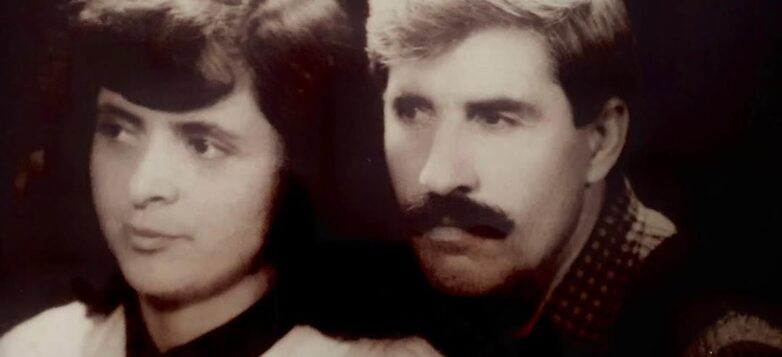
Nuhi Bytyqi: I am Nuhi Bytyqi, born on March 11, 1954, in the village of Semetishtë near Suhareka. However, sometime in 1957, we moved from there and settled in Prizren. We lived in Prizren for a long time, almost until ‘70. Then, in ‘70, we moved here. It was my father’s initiative to leave the village because, at that time, he was a bit more educated than most of his generation and worked in Suhareka. But due to the high demand for skilled workers at that time, he had to move to Prizren. However, in Prizren, imagine, he had work, he worked at KEK, and I don’t know if he had more than 300 meters to walk to get to the house.
He was forced to sell the house, not wanting to stay in that neighborhood, it was a very bad area where we lived, with mixed people, different races. I wouldn’t say different races, but different nationalities. Out of fear that we might degenerate, he was forced to move and settle here in Arbana. But in Arbana, we did well. I finished elementary school in Prizren, and also high school in Prizren. At that time, when I finished elementary school, our family was almost the first in that neighborhood to own a TV. We would gather around and watch the TV a bit, and the neighborhood kids would gather there too. In the meantime, we would also secretly listen to the radio a little. Almost all of that influenced me to become somewhat rebellious, if I may say, in political terms, we would call it revolutionary and restless.
At that time, in ‘67-‘68, I always had debates with some of the older generations because they defended Tito’s politics. Meanwhile, we started to develop a sort of aversion towards Tito and opposed him at that time. I even remember there was an old man from Koriç who, not out of my arrogance but due to my enthusiasm, told my father, “You’re going to have trouble with this boy.” And indeed, not long after, I started to develop some convictions of my own and began to get more politically involved. Even though I was still studying, we got involved with friends, carrying out different propaganda against Tito’s regime, though the events hadn’t really taken off yet at that time.
Anita Susuri: Were you organized or was it just on your own from…
Nuhi Bytyqi: We, on our own, opposed their politics, as I mentioned before, we secretly watched Albanian television. Almost, that television inspired us to love Albania. At that time, we also loved uncle [Enver], but that was the time to love him. So, that national inspiration began, and I, along with some of my friends, got involved on my own, let’s say spontaneously, and I continued my career, I would say, politically. I interrupted my studies and got involved in that direction.
Anita Susuri: And were you studying in Pristina or elsewhere?
Nuhi Bytyqi: Yes, the Faculty of Economics.
Anita Susuri: And how was it, for example, for you as a student at that time, how did you live as a student?
Nuhi Bytyqi: I dabbled a bit in poetry, and I thank my landlord in advance, as he had somehow received information that we were developing anti-Tito propaganda, and he warned me. I tore up all the notes I had, those poems, and gave him my word, saying, “There will be no more problems from my side.” I started distancing myself from him, so to not… avoiding getting him into trouble, but also to avoid falling into a trap myself too soon.
In ‘79, some of our friends were imprisoned, even two from Prizren, but I managed to avoid those events. However, it wasn’t long before other events started, and although I wouldn’t say we predicted or knew about them, the events of ‘68 gave a stimulus to the later events of ‘81. But we never stopped, in our own way, we continued to act, underground, spreading advocacy against Yugoslav politics and for a state that we Albanians should have.
Anita Susuri: And the life you had in Prishtina as a more… how to say, as a student, trying to engage in activities to raise awareness among the people about the position of the Albanians. How did life in society continue, for example? What kinds of engagements were there, both cultural and social, during your years of study?
Nuhi Bytyqi: At that time, we couldn’t afford to expose ourselves or come out publicly in that way, but there were different ways of bringing friends closer. It was the early phase when we had to figure out who our friends were, those we could trust and continue with, and who were the ones aligned with Yugoslav politics, whom we had to avoid, as it was risky at that time. But we didn’t stop, we continued, we advocated. Even in the student circles, there were various contradictions, some supported Tito’s politics, while some of us were against it, but life went on.
I remember, as a philosophy student, I was asked a question about the Cominform, and there’s a saying there where Tito says, “We must walk the straight path, and not resort to lies.” I said, “Professor,” I said, “every morning my father tells me that we must walk the straight path, not the crooked one.” He said, “Are you mocking me?” I said, “No, isn’t it true?” It was indeed true, as his own father had likely told him the same thing about walking the straight path. He kicked me out of the class and said, “Passing grade, but get out.” That reflected a bit of my attitude, but we still had to be cautious because, as I said, we weren’t fully convinced that something was going to happen.
But then the events of ‘81 happened, and we were overjoyed, overjoyed beyond measure, because it gave us the opportunity to act a little more freely. From that moment on, the activities didn’t stop, in various ways. As I mentioned, I almost completely interrupted my studies and committed myself to working with friends. We formed a group, which was then called KOMKOS, meaning Kosovar communists, with the motivation that we would achieve our goals, our demands for our own state.
Anita Susuri: And this group was independent, not connected with the Ilegale or something? How…
Nuhi Bytyqi: No, we were a separate group. I didn’t initially agree with the work of the Ilegale groups. To be honest, I was a bit more open because I expressed my thoughts freely, and I insisted that we should come out publicly and demand something. So, we formed the group, and we managed through various tracts, as I had a typewriter, and we wrote them ourselves. We prepared them with Azem Ramadani and Fazli Memaj, who is now in Germany. Azem and I would prepare the text, and I would type it myself, and we would distribute them in different parts of the city.
Anita Susuri: And how did you manage to get hold of this typewriter?
Nuhi Bytyqi: We had it, I had it at the time. My father was an accountant, if you understand in terms of economics. He worked in the accounting service, and he secured the typewriter from there for me, I had the typewriter, and I would write little by little. There was a large board {gestures to the right}, and at that time I even wrote a tract, or rather a slogan. Something like, “It’s time to wake up from our sleep, the moment has come to wake up.” The police surrounded the area, they gathered there, formed a crowd, and I approached, pretending I didn’t know what had happened.
A peer of mine from the neighborhood, I provoked him and said, “Will you write [the slogan] and I’ll put up [the sign]? Or you write it and I’ll put it up, or you write it, and I’ll put it up.” He didn’t agree to either option. So, I had to write it myself. He noticed me there and said, “Whoever wrote it, may they…” excuse my expression [addresses the interviewer]. Anyway, he didn’t report it, but he told me that he knew I had written it. And I looked at him, somewhat ironically. It caused a big stir for just one slogan, what was the slogan, “We want our own state, not under Yugoslavia.” But that passed.
Then we… even my brother’s son was very active. He was a bit younger in age, and he would write during the night. The streets were completely full of patrols, and I was afraid because they would come by where I lived. At one point, I had completed my action, distributing the pamphlets at night, and they were coming. They saw me, and I was near a water source, so I washed my face, and the police passed by in a line. “Good morning!” “Good morning!” I was surprised, [and they asked], “Have you been working all night?” I said, “Yes, yes.” They left because they were looking for traces of where the paint had been used. My brother’s son had run off from here and escaped over there. That moment passed.
Then we continued our activities tirelessly with Azem. And the moment came when we were caught and sent to prison, without resisting. One of our friends was caught during an action, and he couldn’t hold back, so the police came for me early in the morning. What was interesting about that moment was that they knew exactly where to go, as they came directly to my room. Not to my brother’s bed, but to mine. They said, “Come on, wake up, Nuhi.” I woke up. My mother, who was a bit weak in health, my grandmother, an aunt, and my father, they were all shaken, and I didn’t say a word. I got dressed and stood like this {crosses arms} in a corner of the room, under their watch, under the police’s supervision.
They conducted a search, looking for materials. I didn’t have anything, because I had already distributed everything, I hadn’t left anything behind. But they took some photographs… whatever papers they found, like poems, and they sent me to prison. They sent me to prison, and that’s when the mistreatment started. To be honest, I had a neighbor, an investigative judge, Skender Berisha. He was actually our next-door neighbor in Prizren. He asked me to withdraw and get out of there, to repent. He gave me a cigarette and said, “And don’t say your last word first.” He said, “Shall we begin, let’s begin.” The typist…
Anita Susuri: In Prizren, right?
Nuhi Bytyqi: Prizren, Prizren. The typist there {motions as if typing} said, “We shall begin, Nuhi?” I said, “I don’t consider myself guilty, I’m fully aware of the act I’ve committed.” “Stop, stop,” he said, {motions with hand to stop} “stop here,” he said. And he told her, “You stop too, don’t write.” He said, “Nuhi, we agreed that you wouldn’t say your last word first. Shall we continue?” I said, “Let’s continue.” And I repeated the same thing. I said, “I don’t regret the activity I’ve done, and I’m fully aware of the act I’ve committed.” “Oh, stop,” he said, “stop for a moment, stop.” And honestly, he ended the session, he stopped it because he needed to take the statement.
And with the thought that [they might convince me], they called the prison guards and took me back to the cell. Then, he [the judge] went to my father and said, “Smajl, go talk to Nuhi and get him to withdraw.” My father came, and they intentionally left me in visitation, hoping I’d repent and get out of prison. He said, “Look, my son, you’ve grown, a man doesn’t regret what he’s done consciously, there’s no backing down.” Oh, they grabbed my father by the collar and threw him out. Then they took me back to my cell. Later, they informed the judge, and he questioned me again. He said, “It seems like you and your father are the same. Go ahead, say what you have to say,” he said, “I’m not planning to interrupt you.”
And I continued, giving my full statement about what I had done, and it wasn’t a problem because I didn’t need to repent or deny the act since we were standing for such a demand, for a state. We went through mistreatment, we went through beatings. Again, I say, not only the judge, but even Astrit Koshi, who was a neighbor of mine, living about 150 meters away, we knew each other as families, and he didn’t lay a hand on me. But the Serbs would come, and they saw that they couldn’t get anything out of me, because I had already admitted to the act. But now, they wanted to force me to invent new names, new people. They slapped me from one cheek to the other, from one wall to the other. But anyway, those [moments] passed.
Azem Ramadani was beaten a lot, they beat him extremely severely. And then the investigations continued, as my wife also mentioned, even at night, when you thought you had finally fallen asleep, that you would get some rest, they would come to the door. They would say, “Come on, wake up!” It wasn’t that they needed to take any more notes, but just to not allow you to properly calm down. And those moments passed, the time for the trial was approaching…
Anita Susuri: How long were you under investigation?
Nuhi Bytyqi: About a month and a half, because we had all admitted to the act, so there was no problem there. But another group from Arbana was joined to ours, as they had also been involved… indeed, with writing slogans, from the same neighborhood. They were joined to our case, and we were sentenced. Neli managed to escape, Fazli Memaj withdrew and went to Germany, and the rest of us remained in prison.
Anita Susuri: Did he escape from prison?
Nuhi Bytyqi: No, before getting arrested. He got information that we had been arrested, and he…
Anita Susuri: Did he leave illegally?
Nuhi Bytyqi: Yes, he escaped. And then we were sentenced. I was sentenced to seven years by the District Court, Azem to five years, and the other friends, some to three, some to two, some to one year. But in the cell where we were in prison, we got along very well. We would sing songs, I didn’t have a [good] voice, but the others did and they sang beautifully. When we went out for a walk, because the prison and the Security building were opposite each other, we would lift our shirts and slap our stomachs, chanting: “Republic, Constitution! Either peacefully or by war!” Out of spite, they would come to the windows and shout, “Get these idiots back inside!” The guards would put us back inside, but some of the reasonable ones would say, “Don’t cause trouble, because we’ll have to put you back inside, and we don’t want to. Don’t make problems, you’re only hurting yourselves.” But it was our motto to irritate the Security officers, not to let them be at peace. That was our goal.
Anita Susuri: Were you here in Prizren prison?
Nuhi Bytyqi: Yes, yes, yes, in Prizren, until the moment they transferred us, they took us to a more notorious prison in Yugoslavia. They came at night, took us, and brought us to Pristina, and from Pristina, in an organized manner, they transported us in a closed truck. Imagine, about forty people, cramped, with smoke. To put it bluntly, we had no place to relieve ourselves, so we had to use bottles, what a disgrace. They tied us up and took us to Belgrade. In Belgrade, we were tied up in pairs, and now, in the Central Prison of Belgrade, we had the need to go to the bathroom little by little.
Imagine, my friend was in front of me, and someone else was taking care of their needs. It was such a disgrace, but that’s how we experienced it, until they sent us to Gospić. Let me tell you, Gospić was the most notorious prison in Yugoslavia at that time because, somewhere around ‘42 or ‘43, they say, that prison was destroyed. We were on the third floor, meaning from ‘43 until ‘82, that floor had been closed. They opened that part of the building for us, and we were put in there, on those old, worn-out beds. They barely found some mattresses for us, brought them over, and set us up there.
And there, to tell you the truth, the moment when… because I had a young boy with me, around 17-18 years old. He had been arrested for writing slogans, imagine, just for writing “KR Kosovo Republic” on a blackboard. They had given him five years, and he would struggle for air, there was a crack in the door, between the doorframe, and he would get close to it to breathe. When we arrived there, because we didn’t know where they were taking us, we had no idea. Thinking they were taking us somewhere in Serbia, you know, we traveled for 17 hours. When they brought us down, I and the boy were the first ones, and they just said, “Strip!” Meaning, we had to undress completely, as our mothers brought us into the world.
With clothes on our shoulders and guards lined up on both sides. They beat us on the stomach, back, head, legs, and body, wherever they could, with some kind of large whips. They even hit as far as the genital area, as much as they could. They placed us in rooms until everyone was settled inside. The worst part was when you realized that everyone was being beaten. You wouldn’t believe it, because we were two at first, then since there were supposed to be three people in the cell, they had to bring in one more. When they brought the third one in, he was completely covered in blood in the lower part of his body.
We took care of him, calmed him down, and spent about two or three hours until the situation settled. Then he went to see the doctor, supposedly for a check-up. More beatings on the way down, and at the doctor, provocations like, “Don’t you dare hit them,” he would say, while on the other hand telling them, “Hit them,” who knows. “This side, no, it’s bad, but on the other side, hit them…” And then, going back up the stairs, on the legs, wherever they could, the body, and again in the corridor, guards lined up on both sides. I’m telling you, ten on one side, ten on the other, hitting as much as they could. But we got through it. We didn’t know where we were. You wouldn’t believe it, but for about three months, we didn’t know where we were.
Even my father couldn’t find out where we were because he searched through the investigation office and the courts, traveling all the way to Croatia, almost to the place where we were being held. They told him, “No, they’re not here, they’re in Serbia or somewhere else.” My father had to return from Croatia without being able to visit. Then, after about three or four months, they told us we could each write a letter, but without an address. We each wrote one letter. Believe me, I had forgotten even some of my family members’ names to mention. I had forgotten, they just wouldn’t come to mind. But, we wrote, “We’re okay,” and then visits started happening little by little. One of my brothers came, he had his own son, the one who had written slogans, as I mentioned. Then he disappeared, he fled from the Security organs, as a young man he got out, made his way to a road, caught a bus to Vërmica, and escaped to Albania.
They were searching for him, these ones here, and they had found him in Albania. He came to inform me, saying, “Nuhi, they found Fatmir,” because he had heard them say, “Don’t speak Albanian, speak Serbian.” What’s worse, we had a guard, Agim, but they called him Pero, meaning Agim was known as Pero, and we didn’t know he was Agim. We weren’t allowed to speak Albanian. When he introduced himself and told me they had found Fatmir, they pulled him away and turned me back because they told me to speak Serbian. I said, “No, no, if I can communicate with gestures, fine, if not, I won’t speak,” I said, “we won’t speak Serbian.” They turned us back.
Then things started to get better, with my father visiting here and there, but they didn’t keep us for long. About six or seven months, and from there, because we went on strike a few times, demanding our rights, we also started to get released. They thought we were savage people. They didn’t know that we were peaceful people, asking for books to read, we would just say, “Bring us books to read, and then there’s no problem.” Meanwhile, the Croatian legal authorities came, interviewed us in our cells, and soon after that, they took us away. We organized a strike there, in an organized way, as the lady [referring to his wife] said, using signs.
When the next group from Prizren arrived, believe it or not, because I had sharp eyesight, I saw very clearly. Meanwhile, a friend of the events on March 25 in Prizren, Begzat Gashi, had excellent hearing. And he says, “Two groups from Prizren have arrived.” “No way,” he said, “I swear, I can hear the sound of beatings.” And we started chanting, “Republic, Constitution! Either peacefully or through war!” {He raises his fist as a sign of protest}. They responded, and we showed, by scratching the wall, how many years we had been in prison, and immediately we figured it out, we identified who our friends were. But it wasn’t that we were happy they came there, it was more that, in a way, we multiplied.
After about six or seven months, they moved us from there. Then they transferred us uncuffed because they were convinced they were no longer dealing with savage people. They sent us to Lepoglava. Lepoglava was a bit more open type of prison, but still within walls. In Lepoglava, there was a prison, but there was also, I must say, a large factory. There were many prisoners there, but they were also forced to work. In other words, there were many departments, they brought in people, didn’t let them stay idle, they organized and assigned us to different cells.
There were criminals, there were thieves, but they didn’t care about that, they placed us all together. That’s when I received the news that my sentence had been reduced from seven years to five. While I had been counting the seven years day by day, because we, as prisoners, would count the days, suddenly 700 days were reduced. And I thought to myself, “Here I am, only four years left.” But look, when you have good friends, good intellectuals, we lived a very good life in prison.
We experienced mistreatment, we went on a nine-day hunger strike just because they beat one of our comrades. Nine days without eating anything, not even a bite of bread. After nine days, supposedly, some of our demands were met, but some of our comrades were transferred to other prisons, and a few of us were left there. However, we did have a bit more freedom to communicate with each other, to spend time together, after work hours, not during, as that was restricted. We would sit in the yard, talk, communicate, play, joke around, even engage in some sports activities, so time passed. But there were also moments when we ourselves caused some trouble from time to time.
Our status kind of forced us to create some trouble, you know? Our cause itself pushed us to cause a bit of trouble, to remain steadfast. There was a moment when we were supposed to stand up… it was Tito’s birthday, and everyone was expected to stand. None of us Albanians stood up. They came, took our information, and then sentenced me to solitary confinement, not just me but others too. Many times they sent us to solitary confinement. There were moments when, honestly, we would sometimes create problems just for fun, just to grab some books and go read a little in the cell, until they caught on.
Believe me, they realized we were purposely trying to go to solitary confinement, and they said, “No, you’re not going to solitary,” they said, “you’re going to be moved to another unit.” So they changed my unit, but they didn’t send me to solitary. I’d say I was in solitary about six or seven times during that period, but we didn’t worry about it because we had already been through much harder moments of torture. Those in Gospić are unforgettable for what we endured there.
Anita Susuri: Were the solitary confinement cells smaller, and did they have windows?
Nuhi Bytyqi: They were smaller, yes, smaller, they had windows, but you didn’t have shoes with laces, [you wore] shoes without laces, and the pants were oversized, as were the shirts. In other words, they might not fit properly, and you had to hold them up, and the shoes had no laces. They’d let you out to walk for a bit, about ten minutes, and then take you back inside. But that wasn’t the issue, why we stayed in solitary, no, no. This was the first phase when I finished my prison sentence and came home.
Anita Susuri: Did your family know that your sentence had been reduced, of course?
Nuhi Bytyqi: Yes, yes, yes, because the visits continued after that. The visits became a bit more regular. They would come to visit, and we had contact with our parents. My father came often, as did my sister and brother, they would come and bring us a little food. Although we didn’t need food there because in the prison where we were, it was about serving the sentence, and Josip Broz Tito had apparently said when he was appointed president that prisoners should have the right to be well-fed, meaning they were given enough to eat. It wasn’t like in Prizren or Gospić where the portions were limited.
Anita Susuri: Where was this prison, where Tito was?
Nuhi Bytyqi: In Lepoglava.
Anita Susuri: Aha.
Nuhi Bytyqi: In Lepoglava. And there, as I said, we had good food, there was no problem. We had a decent time. I completed my sentence, and that was the first phase of my life, the period I finished.
Anita Susuri: Which year does that mean you were released from prison?
Nuhi Bytyqi: ‘86, at the end of ‘86. I was fortunate enough to meet my partner in our cause, and we got married. But I was still restless, and she was even more ideologically restless. Then, my friends started involving me, saying we needed to form something, not just stay like this. I got involved a bit in trade to distance myself a bit from politics and focus on family matters since I had gotten married and needed to generate income.
Anita Susuri: So, you weren’t able to…
Nuhi Bytyqi: No, I left it, I said, because I had almost finished that career and continued to work a little. But again, we were restless. That drive {touches the center of the chest}, the cause wouldn’t let us be at peace, so we formed another group, this time with intentions for armed resistance. In fact, one of the founding meetings was held in my house. The group’s reports exist, but they were taken by the security services at the time. In ‘90-‘91, they took the records, and I wasn’t able to retrieve them and have them in my possession. The worst part is that I couldn’t even note the date when it was held, you know, I didn’t manage to record those dates.
Then other meetings were held in Prizren, in Nashec, and in Vrri. The group was formed, but the outcome was that, from Prizren, only I and Naim Krasniqi were sentenced. The others, the connection was cut off, and they didn’t have [evidence]. Some fled, some went abroad, some went into hiding here, so they didn’t end up in prison. In Gjakova, there was a large group, around 14 people. Thirteen were from Gjakova, two from Prizren, one from Suhareka, one from Mitrovica, and one from Pristina. So, we were 19 in total. The group of 19 is also known as the Gjakova group, led by Mentor Kaçi. From Prizren, they transferred us to Peja, where we were stationed until the trial was held.
So, the investigative process lasted about ten months. During that ten-month period in Peja Prison, there was no mistreatment because there was a better method in place to discover whether you were telling the truth or lying. Through those methods, they managed to uncover where the truth lay and what we were hiding.
Anita Susuri: What year was it again, the second time you were…
Nuhi Bytyqi: It was the ‘90-‘91 period, yes. And there, as a group, we were sentenced to two years because there was no new offense to be punished for, but rather as repeat offenders. So, I was sentenced to two years, but then during the trial, we were released. What’s more interesting is that in Peja, during a visit, imagine this, there was an Albanian guard who brought his daughter to visit, but they didn’t allow her to visit me, and she didn’t tell me anything about it. If she had told me, I might have caused trouble, because we didn’t hesitate to make trouble in prison. Not in my favor, but just to cause a problem, for example, about not allowing the visit.
At that time, we went through that period and managed to get out, once again defending ourselves in freedom, three or four of us who had been sentenced to two years. I had already served ten months, so there were 14 months left, depending on what the Supreme Court would decide. Unfortunately, a few years later, in ‘95, the Supreme Court’s decision came, and it was enforced. That meant I had to serve the remaining 14 months. I didn’t attempt to escape, I knew I had to serve the two years, including those 14 months. The police came, looking for me, but they didn’t find my house. Then the young people came to me and said, “Uncle Nuh, the police are looking for you.” I said, “Well, here I am.” I was right there, across from them {points to the right}.
I was doing some small trade. And when the police came, they asked me in Serbian, “Jel duguješ nešto? Do you owe anything? Do you have any debt?” I shrugged {raises shoulders}. They took me and brought me to the Secretariat. There… there were a lot of psychological pressures, especially about my family, because for myself, I had no problem anymore, but for my family. But after about three or four hours, Zenel Kabashi came, I don’t know, he was a veteran, and he had also been imprisoned, he was part of the nationalist group, the Ballistas. He was incorrigible, a great enemy to them.
Together with him, in one of those vans, as they call them, they took us to Peja. We stayed there for about two weeks in what they called quarantine, before transitioning to a more open type of prison. Not completely open, the truly open type was for those who stayed outside, but it was a bit different. You had a yard to go out for walks, to get a bit of physical activity. Then I moved there, and for a long time, I was with Ukshin Hoti, six months, we shared a cell. For a period of time, I was also with Haxhi Ferati, I don’t know if you’ve met him. He was also part of that group, the Government’s [Ministry of] Defense.
They were a group of intellectuals who were imprisoned at that time, without intending or trying to engage in the front. But they were arrested and served their sentences. He is a professor, Doctor Professor Haxhi Ferati. Ukshin Hoti, you already know. However, I had the fortune to be with many other comrades, intellectuals, with whom we shared good moments. After 14 months of serving my sentence, I was released once again. But that was the third time I went back to prison. I served those 14 months as well and managed to return home, healthy and well, to my family. We built a good family, I have three daughters, one son, grandchildren, but most importantly, I have my wife who is truly a joy for me.