Fetah Bylykbashi

Pristina | Date: November 25 and 26, 2024 | Duration: 152 minutes

The decision came from Rugova, from the president and from other bodies as well, that it was absolutely necessary to organize a nationwide, popular protest [against the expulsion of Albanians from school]…The Teachers’ Union proposed that I serve as the chairman of the protest, yes…The decision, the proposal of the late great Rugova was that the protest should be held, but that it must not cause bloodshed…We held about three meetings a day so that the protest would be exemplary, one that would make the enemy nervous and keep us disciplined. […] That’s how we held the meetings… Fetah Bylykbashi was the chairman. And quote and quote at the end is Fehmi Rexhepi—Fehmi Rexhepi is a doctor of science. Because we had planned that if Fetah Bylykbashi were arrested during the protest, and first wounded, or second, killed, the protest should not stop, and then this Fehmi would come and continue… It was a miraculous organization.


Anita Susuri (Interviewer), Adea Batusha (Interviewer), Ana Morina (Camera)

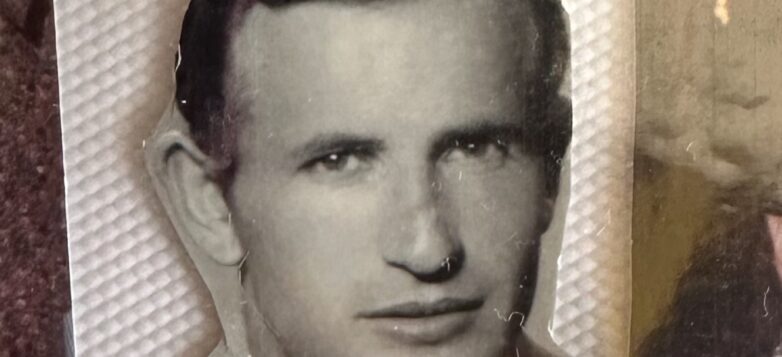
Fetah Bylykbashi was born in 1941 in Bainca, Drenica. He graduated from the Shkolla Normale. He was a teacher and also director of the Pedagogical Entity of Pristina. During the Milošević regime he managed the transition to the “parallel system” of schools through the  Albanian Teachers Association (LASH) and the Financial Council for Education. After the war, he was an adviser on pedagogical matters to UNMIK and the Ministry of Education.

Fetah Bylykbashi

Part One

Anita Susuri: Mr. Fetah, if you could introduce yourself and tell us something about your earliest memories as a child? What kind of family were you born into? What was your family like?

Fetah Bylykbashi: Yes, yes, yes. I already told you when I was born and the name of the village. A village… everyone loves their birthplace, but to me it seems like the best place in the world. It really has a fantastic geography. There’s a mountain, and when you climb up the gorge of the mountain you reach Kleçka, you’ve heard of Kleçka, where the KLA1was…

Anita Susuri: Yes, yes.

Fetah Bylykbashi: In Kleçka, on the right side and on the left side is Duvlaka. There were many KLA shelters there. On one side there’s a spring where mills used to grind with cold water. On the other side there’s another spring with hot water, and many mills also ground there. There were so many. Irrigation for the land… that village never suffered for bread. Even if not a single drop of rain fell all summer, there was water there. That’s where I started the first grade of primary school, in my own village.

Anita Susuri: In Baincë?

Fetah Bylykbashi: Yes, in Baincë. The class was held in a neighbor’s oda2 that belonged to the family… because we had neighborhoods: the Bylykbashi neighborhood, the Bajraktari neighborhood, the Kolshi neighborhood. There was a Kolshi there, one of the Kolshi family, it was their oda. We had a male teacher and a female teacher from Gjakova. The female teacher’s name was Hidajete. We didn’t stay long in that village, in that oda of theirs, but they sent us to the village of Shalë e Drenicës, which in Serbian is called Sodllar. There I completed the first grade, the second, the third, and the fourth, fifth, sixth, seventh, and eighth.

My late father decided to take my mother and us children, we were three brothers and three sisters, six of us, and we went and settled in a village near Magura called Leletiq. Very close, almost attached to the mine that is there. Later on, not much time passed and we moved directly to Magura. There were urban-style buildings there. I remember those times very well, very well. There was a teacher, when I was in the seventh grade then. In fact, there’s a school here in Prishtina named after him, Qamil Batalli. Qamil Batalli was a teacher there and he was the first to organize a theatrical performance in that village. You can imagine what kind of time that was.

So he was a very important man. Later when I grew up and finished school I got to know him, but he died very young. He died. In fact, before his death his daughter experienced an accident and lost her life. We had other teachers as well, but they all had only eight years of schooling themselves. When I moved here to Magura in the eighth grade, the school was organized by a Serbian principal. The teachers were Albanian, but some subjects were also taught in Serbian. I finished primary school there. There were great hardships because of housing for our family. After we left our home… we had had a two-story house.

Our family was viewed badly by the state. My uncle, Shefqet Kapetani, known among the people as Rifat Berisha together with Brahim Banushi, those three… Hasan Prishtina had organized for them to be sent to study in Albania. All three went and completed the Military Academy in Tirana during the time of King Zog.3 After finishing school they were assigned to duties. My uncle had a small booklet with a poster of him as a soldier who had served. But after some time King Zog invited him to become an officer of the royal palace. An officer of the king’s palace.

Then Italy invaded Albania. They began sending soldiers to Italy to specialize, to improve themselves professionally in military matters. He spent three and a half years in Rome. With his wife and children. My late father even went from Drenica, from Baincë, to visit him, and he used to say, “One of my special memories is that I learned how to ride a bicycle there,” in Rome. Later, when the Second World War began, Italy returned and also occupied Kosovo first. That was the time they called it Albania, what they called Albania. My uncle returned to Prishtina because he had the rank of captain. In Prishtina he had an apartment somewhere above where the assembly building was. Then the fighting began with Serbia here. With Serbia and Bulgaria the fighting began…

Anita Susuri: The Kingdom of Yugoslavia that existed then.

Fetah Bylykbashi: Yes. My uncle, together with a man from Dibra, Fuad Bekë Dibra, he had a higher rank than my uncle. There were other officers as well. And many soldiers, many soldiers from our side of Drenica went to fight, and my father was also among them. My uncle even took his wife with him there… Tugjec and the border area with Serbia, Prapashticë and all those regions, he fought there against the Serbs and the Bulgarians. His wife used to tell the story, may she rest in peace, aunt Hanë. She was very capable. She said that when they had captured a village there, there were both Serbs and Albanians living there.

She said, “While Shefqet”, speaking about her husband, “was preparing to go on duty, someone knocked on the door. When I opened it I saw a Serbian woman dressed in their village clothes.” Village clothing is different. She said, “She had brought with her all kinds of good things, walnuts, honey, all kinds of food.” And she said, “Shefqet asked who it was.” I said, “A woman has come with some things, all kinds of food.” Uncle Shefqet came out and said, “Madam, why have you come?” “Captain sir, I came to bring you these foods.” “Madam, how much do these cost?” “Oh captain sir, I didn’t come to sell them, I just brought them.” “Either tell me the price or take them back home.” He didn’t accept them.

Aunt Hanë used to say, “If the captain hadn’t been there, I would have taken them,” she would joke. She had humor. Then something else happened. Communist forces grew stronger. My uncle didn’t like communism at all, never accepted it. He used to say, “There’s no soap that can wash a communist clean. Communism is…” I would often say to him, may he rest in peace, “Come on, Uncle Shefqet,” because he would curse all those memories. “Where should I leave them, uncle?” “Put them somewhere,” he would say. I was standing near the wall and I told him, “Uncle, in socialism even a brick is a spy,” and unfortunately that’s how it was.

Then the number of communists increased. Uncle Shefqet decided, he said, “Better that I am killed than that hundreds of Albanians be killed,” because now the communists were supposed to be killed. He himself was not in the Communist Party. He had come from Gjilan, the border with Serbia was beyond Gjilan. From Gjilan he came with troops and weapons to our village. Now those two friends of my uncle that I mentioned earlier, who had studied in Albania during Zog’s time, they both became communists.

This Rifat Berisha, whom we considered family, because my grandfather’s mother was from the Berisha family, and Brahim as well, both of them. When he arrived there and the communists began to organize, Uncle Shefqet and my father went and took shelter with some of their friends. They hid, so they wouldn’t surrender to the communists. That was how the circumstances were. In some places people didn’t show generosity because they were afraid, naturally. Finally they found a connection in a village called Karaçic. From there you can see the lights of Prishtina in the evening and even the lights of Prizren.

A nephew of ours from Kishnarekë had friends with the people of that village Karaçic. He accepted them. At the back of their house they made a cave and they stayed there, bringing them food when needed and staying in contact. They took away the livestock, the sheep and cows, so that the tracks would disappear because the UDBA of that time was… They stayed hidden there for a year, Uncle Shefqet and my father together. My father never left his side. Eventually he decided to surrender. He said what I mentioned earlier: “Better that I die than that a hundred others die.” And they surrendered.

Uncle Shefqet was first imprisoned in the Sharamet Tower. The Sharamet Tower was a terrible prison in Peja. He was imprisoned there. Then he was imprisoned in Prishtina for a short time and later they sent him to Niš, and also to Smederevo. In Niš he served more than five years like that. But something very interesting, I almost forgot to mention it, not a single soldier of Uncle Shefqet ever dared attack any of the residents there. Not to steal, not to harm them. They say that once someone had tried something like that and he got information about it… he had people who informed him. He was a military man with experience from Italy, imagine that.

Every morning the army would line up the soldiers for inspection. With respect to you, he once pointed to someone and said, “Take him over there.” He carried a watch. Physically he was small but very capable in his profession. Now sometimes I lose my train of thought. But I remembered something important. When Uncle Shefqet was on trial, two Serbs came and said, “While this man was serving there, he never mistreated anyone nor allowed anyone to be harmed. We have only good words for him.” But those words were not enough. He was imprisoned. He had cooperated with a man from Gjilan, a very important figure. A hoxha, a religious scholar…

Anita Susuri: The one who has a monument in Gjilan, I can’t remember his name either.

Fetah Bylykbashi: Yes, a monument. He collaborated with him. He used to say, “One night when I stayed with him, I left behind the Qur’an translated into Albanian by Hafuz Ali Korça at Idriz Gjilani’s place,” Idriz, Idriz.

Anita Susuri: Mulla Idriz Gjilani.

Fetah Bylykbashi: Idriz Gjilani. There you go. He also had great authority. As I heard people from that region say, there wasn’t a tree without the name Captain Shefqet written on it. Meaning…

Anita Susuri: Was he part of Balli Kombëtar?

Fetah Bylykbashi: He was a soldier of the Albania that had organized those forces. Some were with the Germans, some with the Italians and so on. But he never liked communism and never accepted becoming a communist. Those two others did become communists, but they suffered badly later on. Rifat Berisha even managed to become a minister. But he realized the Serbs couldn’t be trusted. The promises were that after the war everyone would declare whether they wanted to be with Albania. That was the meeting of Prizren. At the Prizren meeting… are you from that region?

Anita Susuri: Yes.

Fetah Bylykbashi: Then the only one, oh, what was his name, the one who opposed it and was imprisoned for twenty years. He was the only one who said, “I want to be with Tirana, with Albania.” The others accepted. He spent twenty years in prison together with one of his nephews. There was also a professor from that family, I can’t remember his name now. He too was imprisoned. In fact, the day we were released from prison here in Prishtina… because Ramadan and I had spent 23 days in Gjilan. I hadn’t yet endured the tortures they did to me.

For a week they washed me and treated me with Borova water. I was in terrible condition. My whole body was black like this object here. I couldn’t even hold bread, nothing…

Anita Susuri: I wanted to ask, you told me earlier that your family had problems because of your uncle, that you were persecuted…

Fetah Bylykbashi: Yes, yes.

Anita Susuri: But first just tell me, was your uncle executed?

Fetah Bylykbashi: No, my uncle lived. He was released from prison after serving seven years, I’m not sure exactly, I’ve forgotten. He returned to the village but was constantly under surveillance by the regime. Constantly. I was not given a scholarship simply because I was the son of Captain Shefqet, who had fought with soldiers against Yugoslavia. So we were… well, there are things we will continue later when we come to them.

Anita Susuri: During the weapon collection campaigns, you were born in ’41, so you were a child then, but you surely remember it. What happened to your family at that time?

Fetah Bylykbashi: With our family they didn’t arrest anyone, my uncle I mean, but other neighbors were arrested. They didn’t arrest my father either. My father was an employee in Lipjan.

Anita Susuri: I see. Earlier you were telling me about your schooling as a child in Lipjan. I meant the period when you went to live there…

Fetah Bylykbashi: Not in Lipjan, in Magura.

Anita Susuri: Yes, in Magura, in the municipality of Lipjan. What was it like then?

Fetah Bylykbashi: It was terrible. Terrible. They called it an apartment but it really wasn’t an apartment. Later when we moved down to Magura it was also a place with two rooms. One side was given to my father, the other side to a policeman from Llap who served in Magura. It was very bad there. Later, when my father came to Prishtina in 1961, fortune seemed to follow us. I was studying at the teacher training school in Prishtina. When he arrived he found an apartment in the Pejton neighborhood.

The night I was released, that very night, I went to a cousin who worked at the Red Cross, Vebi Bylykbashi. I asked him, “Uncle Vebi, when is the bus for Magura? For Golesh?” He said, “Oh nephew, Bajram has arrived with his wife and children. I’ll send my son to take you, he has found an apartment in the Pejton neighborhood.” Not even two weeks had passed. But when the owner of the house heard that Bajram’s son had been politically imprisoned, he called him and said, “Bajram, please leave the apartment as soon as possible. I can’t keep you here because your son was imprisoned for political reasons.”

I have never mentioned that man’s name, never. If he hadn’t liked my father he wouldn’t have given him the apartment in the first place. He was protecting himself. A person has to understand that there are people who insult you after doing you a favor. I have never done that and never will. He said, “You must leave immediately.” We hadn’t even stayed two weeks there. We then moved near the Vushtrri road in Prishtina, by the railway. That apartment was a catastrophe as well. My father was looking for housing because he had begun working in the water supply company after coming from Lipjan.

There were no apartments. Then there was a neighborhood called Nantjugoviç. Many Albanians had gone to Turkey from there. The municipality didn’t have the money to pay for those houses, so they remained under municipal control. That’s where we found an apartment. I’m telling you, the prison in Gjilan was more hygienic than the apartment we lived in. Everyone got sick there except my youngest brother. My father died there too, in that house. My father died when he was only 47.


1 The Kosovo Liberation Army (KLA) (ALB: Ushtria Çlirimtare e Kosovës, UÇK), was an armed ethnic Albanian guerrilla organization that emerged in the 1990s to fight for Kosovo’s independence from Serbia and engaged in armed resistance against Serbian forces during the Kosovo War (1998–1999). It was demobilized in the summer of 1999 after the end of the war.

2 Oda is a traditional reception room in Albanian houses, historically used for hosting male guests and holding social gatherings or discussions within the community.

3 King Zog (Ahmet Zogu, 1895–1961) was the ruler of Albania who first served as president (1925–1928) and then as king (1928–1939), establishing the Albanian monarchy before being forced into exile following the Italian invasion of Albania in 1939.

Part Two

Anita Susuri: If we can talk about the teacher training school when you came in 1957.

Fetah Bylykbashi: Yes, in 1957, in the first year.

Anita Susuri: How did the circumstances come about?

Fetah Bylykbashi: The teacher training school had a dormitory. Whoever lived there had good conditions. I lived there too, and I thank my father for making that possible for me. But there were constantly arrests of students there. Before us, a group of teacher training students had been arrested. In fact, one of them… I went to the trial, I went with some of my friends when their trial was held. Unfortunately, there was a man from Drenica, one of them… he would come out and accuse his own classmate, the one he had shared a room with in the dormitory. Because the dormitory was like the army. I finished military service without problems because I had already lived that kind of military life there too.

He would say, this one said this and that against Yugoslavia, and I demand that he be punished, and I do not know what else he was asking for. He was very low, very low. One of them was sentenced to a year, one to six months, another to four months.

Anita Susuri: What year was that?

Fetah Bylykbashi: It was before the year…

Anita Susuri: Maybe before your time?

Fetah Bylykbashi: Before 1960, a little before 1960, so that would make it 1959. Like that. Now I do not remember exactly. I know the names of two of them, though I have forgotten the third. One was Rifat Zhdrella from Llap. And another was Mehmet Çunaku from near Barileva. Those two were among them. Even earlier they had arrested others too. The teacher training school was like a university in those days. It had professors… all the professors we later had at the faculty when it opened had passed through there. We had Rexhep Hoxha for Albanian language. Avdullah Zajmi for Albanian language. Demush Shala for Albanian language. All of them. Rexhep Hoxha was a writer.

Then for history there was Drita Dobroshi. And Zekerija Cana taught us for a while too. Then for the other subjects, psychology and logic, there was Pajazit Nushi, who was a professor in the Pedagogy Department. For biology there was Faik Rizvanolli. For botany, I forgot his name, one man from Albania. For methodology, Tajar Hatipi. Beqir Kastrati taught French, he was a genius, that Beqir Kastrati. For any subject, if someone was absent, he would replace them. He was… for mathematics we had Mumxhiu, Hamet Mumxhiu taught us. Burhan Begolli from Peja also taught us mathematics. He was our class supervisor… Sadik Vraniçi taught physical education. For music there was Jozefina Bala. Then some others came too, including the one whose son is now a lawyer, of the Christian faith, Catholic.

Anita Susuri: Mark Krasniqi?

Fetah Bylykbashi: No, no, not Mark. He taught music, I have forgotten his name.

Anita Susuri: He taught music?

Fetah Bylykbashi: Yes, yes.

Anita Susuri: Could it have been Kaçinari?

Fetah Bylykbashi: No, no. I think their surname was Lekë. The professors were all better than one another and very polite. We had an educator who was from Montenegro.

Anita Susuri: I am interested in history, who taught it to you and what did you learn in history?

Fetah Bylykbashi: Pardon?

Anita Susuri: Who taught you history and what did you learn?

Fetah Bylykbashi: Drita Dobroshi taught us. Drita Dobroshi. Later others were taught by someone else, and before us Ali Hadri1 had taught it. There was also another one from Macedonia, and one more whose name I have forgotten, but he stayed only a short time. He left for Turkey.

Anita Susuri: Before the interview you told me about your arrest. But I am interested in whether you had in any way been politically active. Had you done any kind of activity? Or what was the reason, and how did it all happen?

Fetah Bylykbashi: Yes, like this, in 1958 there was an attempt to organize a demonstration when Adem Demaçi2 was arrested. This Ramadan from Ferizaj, that one there, now this term is used, which we had not heard before, chemistry. Chemistry brings people together, chemistry. Somehow he gained my trust and told me, “A protest is going to be held, it will happen, do you want to come and take part?” I said, “Yes.” I already had that orientation from my family. I did not want the occupation, I did not want it at all, and I was never in the Party, absolutely never. But we went to follow… Ramiz Cërnica is the one who said, now I remembered, “I want to be with Tirana.” Ramiz Cërnica was the only one.

I went… because one of that family was there when he was imprisoned, and when he was on trial I went with those friends to listen in court. He is the father of this woman, the wife of that Brestovci, no, what was his name? That rector the students beat when they caught him, when they organized that… Ejup Statovci. His wife, Ejup Statovci’s wife, is the daughter of that cousin of Ramiz Cërnica, though I have forgotten his name. He was very capable. In fact, that day when they released us, the police chief was a certain Četa Popollović. He was the highest-ranking man for the UDBA in Kosovo.

He said, “We thought that you were members of the party of…” this one whose name I am forgetting, the one from Gjilan, yes, and he said, “we tried, as the investigators told me,” those who beat us and tortured us. “As they told me,” he said, “but we were unable to prove that you had been members.” He addressed me personally and said, “Look, the investigators told me that you are very stubborn.” I said, “I am not stubborn, but I will never accept something untrue.” Whenever they tortured me, I told them, “Kill me, but you will never get another word from me, because I will not accuse a person who has done nothing. I will not accuse him. Go ahead and kill me.” “Come on, you are young,” they would say. Some of them beat me, but there were some who did not. All of it was their tactic.

Then one man from Obiliq, I said to Ramadan, “Ramadan, this one did not beat me.” He said, “That one beat me the most.” He was waiting there by the door. So they kept telling me, “Look, we have the car in the prison yard, right now we will take you, just admit it. Go out and tell those friends that you did not raise the flag, Ramadan did, and you simply accompanied him. Right now we will take you back to your village, to your mother, father, and brothers.” “I will never admit it, never.” I never had a bed. For 23 days I slept… there are those brooms, with the short handles. There are the long-handled ones too, but these were short. I would put them in the corner like that and sit on them, and that is how I slept for 23 days. Except for the times they would also take me into the cell, do you understand? Oh my God, oh my God. Like that.

Anita Susuri: But did you organize that protest or what happened? Because we stopped there.

Fetah Bylykbashi: No, and now, yes, good that you reminded me because I did not finish. In the middle of the night someone came to my bed. Sometimes we had bunk beds, but later some space opened up. He came and said, “Fetah, it has been canceled,” he said, “the protest has been canceled because we have information that the danger is very great, and then all schools in the Albanian language will be shut down.” That is what the Serbs wanted. So the protest was canceled. But we always had, we always kept that national spirit. Yes.

Anita Susuri: Did you do any other activity? You did not do that thing with the flag?

Fetah Bylykbashi: No, we did not do it, we did not do it. But the one who accused me, the one who accused me, because these two friends here, Faik and Vebi here in Prishtina, they had been stopped. When they released us, me and Ramadan, when they released us that day, those two had already… their hair had not been cut, and they had clothes, bedding, and covers. My father had brought them, but they had not accepted them. In Gjilan he had sent clothes, food, and things, but they did not bring me clothes or anything. The whole time in prison I stayed in that sweater, in one pair of trousers, and that shirt.

Anita Susuri: Did you have any visits? Did your family know where you were, for example?

Fetah Bylykbashi: Later, later. My father had decided, when he heard that I had been arrested, he said, “I want to go to Prishtina, there is no need for the UDBA to waste gasoline arresting my children.” Just imagine, my father was accused because besides having finished… I mean, he was an administrator, but he also knew how to type. And the typewriter produced in factories had one part of the ribbon in red. They accused him by saying that he was anti-Yugoslav because even there he had raised the flag, the red and black flag. Like that.

Anita Susuri: And then you told me when you came out of prison…

Fetah Bylykbashi: Yes. When we came out of prison they told us, “You are free.”

Anita Susuri: You were declared innocent?

Fetah Bylykbashi: Innocent, yes. There at the municipality, an Albanian took us…

Anita Susuri: In Gjilan or in Prishtina?

Fetah Bylykbashi: No, no, in Prishtina, in Prishtina. An Ali Reçica. He told us, “You are free.” For one year they did not give us the right to take the diploma exams. For one year we wandered around like that. After a year, after a year, we took the diploma exam, we completed it. The professors treated us very well, yes. I started work on February 15, 1962. And my late father says to… there was a Metush Ballabani, who had also been a leader here in Prishtina in the Socialist Alliance, he had been an authority. And there in the municipality of Lipjan too, he was chairman.

He said to him, “Metush, where should I send Fetah to work?” He said, “Oh come on,” he said, “do not tire me, for God’s sake, send him to your Drenica, where they do not even have a single eight-year school.” He said to him, “Metush, do not tell me about Drenica. If our family had a tail in Drenica, they would cut it off, and if we did not have one, they would force one onto us. We are in the eye of the authorities because my brother was an army captain and fought against Yugoslavia.” He said, “I found the place for him.” I remember it and will never forget it. “We are sending him to Janjeva. The Catholics will not frame you for nothing. We are sending him to Janjeva.”

Anita Susuri: Very interesting.

Fetah Bylykbashi: When I went to Janjeva then, that is where it became even more interesting.

Anita Susuri: Mr. Fetah, yesterday we spoke earlier, but we stopped at the part when you had started working in Janjeva.

Fetah Bylykbashi: Yes, yes, now we will continue. In Janjeva, as I told you, I worked only one year, one year. I keep extraordinary memories, extraordinary memories. Janjeva had many inhabitants, many inhabitants. There were five butcher shops. There were two communists, two members of the League of Communists of Yugoslavia. That is why the municipal chairman said to my father, “I found where to send your son. We are sending him to Janjeva because those Catholics will not frame him for nothing.” Like that.

Among my students I had some of the Catholic faith, yes. They came from a village called Brus, a village named Brus. So, when I started working there, the principal, who was a Montenegrin, asked me, “Which subjects would you like to take?” I said, “The ones that are free.” I did not want to take from people who were already there. And now I will tell you another thing very briefly. When he asked me, “Whose son are you?” I told him, “Bajram Bylykbashi’s.” He said, “I owe your father, because I am seeing you now, but I know your father.” My shoulders dropped. He said, “He worked in Magura as an official…” And Magura had been like a small municipality. “I completed higher pedagogical school in Skopje in history and geography. As for dealing with administration, he handled all the administration for me.”

I took four subjects. Albanian language, French language, physical education, and music education. Believe it or not, I taught French, though today I do not know it. Those children went to church more often than they went to school. But…

Anita Susuri: At that time, was the school near the church, some kind of building there, or was there a separate building? Because I know there was some kind of…

Fetah Bylykbashi: It was a little farther away. The school had… it was a primitive school, I do not know. I spent my time there, it was a wonderful place. All kinds of fruit and vegetables were cultivated, everything… and I ate there, together with that principal we ate… He had an apartment and he said, “You will come and live with me. We will have separate rooms, and you will eat food from the church.” There was a dish with three portions, soup, salad, and the main meal. We paid for it. The son of the owner of the house would go to the church, collect it, and bring it to us. So I keep extraordinary memories.

I parted from those children, and believe me, when they grew up later some of them came to visit me several times. One of them had written a book. We were in the Municipality of Lipjan three or four years ago and he had written a book and mentioned me in it for the work I had done. He came and brought me the book and said, “I would love to take a photograph with you.” Because of travel, I later went to Hade. Hade. That uncle Ymer, may he rest in peace, arranged it for me, though not in Hade itself, but in the administration for Hade and Shipitullë that I mentioned to you. I went to Shipitullë and took over the entire fifth grade. Someone else had been in charge of that fifth grade, but he had finished law school and then went into his own profession. I led that class and a wonderful generation came out of it.

But what I noticed there, and what I believe I carried out very well in my duty, you may judge me or even accuse me. Now I will make a very small digression. When we went for inspection, we entered the lesson, but first we took the plans, we knew the timetable and what lesson was being held. We entered the class and observed how the teacher organized the introduction, the main part, and the conclusion. Then when I spoke about it afterward, I gave my thoughts. “Colleague, why am I an adviser if, when you have arguments and I am not all-knowing, you cannot correct me freely? If I am wrong, I thank you very much.” Never, ever did I…

For example, I never rejected someone just to act important, as if I were somebody, or used unacceptable and inhuman methods. Now, what was it? During physical education classes, whenever we could, depending on the weather, I would take them outside and organize games. But I noticed that some of them did not mix with others. Who were they? The muhaxhirs living in that village there, Bërbatovc and I do not know where else, those whom Serbia had expelled in 1877 and who had then come there. Later the authorities took land from the locals and gave it to them, and that is where hatred between them grew.

I convinced them that we are Albanians, we have one language, we must love one another. This is not right. I never let them form teams however they wanted, but however I wanted, with the best intention. So I managed, I managed to do a great deal successfully. Believe me, I respected my duty so much. I traveled from Prishtina to Fushë Kosova, then from Fushë Kosova by the train going toward Peja until the place called Grabovc, where the station was. There were times when the train did not run that day, and Fetah Bylykbashi would come on foot from Fushë Kosova through Ballaqevc, through Grabovc, all the way to Shipitullë to teach, and my boots would be covered in mud.

People appreciated that, everyone appreciated it. Now do not take this the wrong way… a few days ago a brother of my brother-in-law from Drenica died, from the Zariç family, the Zariç family. I went there, I went with my cousins to pay respects. When I arrived, the Zariç family’s friends came, and they had information about me. When they mentioned me, when they mentioned my name, one man who had heard of me stood up and said, “Are you Fetah Bylykbashi?” “Yes,” I said. He said, “You are a genius,” and went on and on. Then he turned to them and said, “A bust should be built for this man.” I said, “No, no, that is not how it is. I simply tried with all my sincerity.” So wherever I worked, wherever I worked…


1 Ali Hadri (1928-1987) was a prominent Kosovo Albanian historian and professor at the University of Prishtina. He was one of the most influential historians in Kosovo during the Yugoslav period and a key figure in the development of Albanian historical scholarship in Kosovo.

2 Adem Demaçi (1936-2018) was an Albanian writer and politician and longtime political prisoner who spent a total of 27 years in prison for his nationalist beliefs and political activities. In 1998 he became the head of the political wing of the Kosovo Liberation Army, from which he resigned in 1999.

Part Three

Fetah Bylykbashi: I went to Shipitullë, yes. I will continue now with where else I went afterward. I worked there for around eight years, eight years. Excluding the army, because I spent a year and a half as a soldier. In 1970, a vacancy was announced at the Faculty of Law, a vacancy was announced. Actually, before that, a vacancy had been announced at the teacher training school for a student affairs officer. I went there for a week, and the secretary told me, “Do whatever you want.” But in the meantime, a vacancy was announced for a translator at the Faculty of Law. I was accepted. I worked there for five years as a translator.

After 1976, in 1976, a vacancy was announced at the kindergarten to hire a pedagogue there. I applied and was accepted. I worked there in both languages. I told you that enrollment at that time was 0.86%. Just imagine what kinds of injustices were being done. The director was Fadil Hoxha’s sister, Myrvete Limani. I said, “Director, the structure of the population is what it is, we know how it is.” Tito had given a speech in Split, a talk there, in which he spoke in favor of Albanians. Before him there had been Ranković. He was an executioner, an executioner of Albanians. He organized that beating… the weapons collection campaign and all those crimes, he was the one who did them.

So, “The population structure should be respected.” The director later, she too was very fair. And then the number of Albanian children included began to increase in comparison with Serbian children. There in the kindergarten, when I worked, I worked in both languages. When… when I entered in the morning, I would visit all the rooms, I would visit the children, and when I entered a room where there were Serbs too, I would greet them first in Albanian, “Good morning,” and also in Serbian. There was a nurse who never once returned my greeting. Not never, but for about five or six months, while I kept doing my part. After five or six months, I could no longer be the first to greet her.

So there were Serbian educators there, and some from Vojvodina too. They are something else, those from Vojvodina are different from the other Serbs. Austria-Hungary ruled there in Vojvodina. But where the Turk ruled, he turned it all to ashes, ashes, black and burned. Unfortunately, I think I told you yesterday when we went out there, why should I have the name Fetah? Turkey has been gone for a hundred years. By what right? I do not hate Turks in their own country, but why should someone trample on me? How long are we going to keep being trampled on? Because in this regard I am very… in our family we were enemies of the regime. Our family was treated as hostile. Where was I…

Anita Susuri: At the work in the kindergarten.

Fetah Bylykbashi: At the work in the kindergarten, yes. We organized, we organized lessons, we observed classes with the director. Every time I went, I told her, “Come, let us go together.” Sometimes we would clash because she had completed history and geography studies in Macedonia, and I had… because we pedagogues, for example, in the Pedagogical Institute were the most burdened. We had classroom teaching. Classroom teaching includes all subjects. Whereas the other advisers in subject teaching had geography or mathematics or music, so only one subject. But we were very burdened.

In fact, I will mention now that Halim Hyseni and I were the most burdened in that period, the most burdened. Halim was director of the Pedagogical Institute of Kosovo, and I was director of the Pedagogical Institute of Prishtina. But let me tell you something else too… first of all, when we Albanians decided to continue the work of the Pedagogical Institute, we chose Vagjit Nuredini from Presheva. Vagjit Nuredini had been director of pedagogy science. He had been at the Pedagogical Institute, though not as a field adviser, but as an analyst. He did analytical work.

Believe me, he did not keep that position for even two weeks. I do not want to comment now on his problems. Whether he got scared or not, I absolutely was not afraid of the work, because who was going to defend this people if we did not, if we did not? He left it. He found some excuse somewhere and went away. The others then proposed Fetah Bylykbashi. I accepted. There is no duty that Fetah Bylykbashi has refused when it was in the interest of education, no duty. Together with someone else, from the Dukagjin side, exactly as I said, that village where I went to give a speech, from Dukagjin, Istog.

A man from Istog, yes, whom I had known from the teacher training school. He was the first to form this council for financing education, and he became its head. They engaged me there to help, but…

Anita Susuri: What year was that?

Fetah Bylykbashi: Right away, 1991, 1992, immediately. Yes. These things started immediately. Now I already had the duty of director, I already had the duty of adviser that I carried out, do you understand? And now I was also a member of that council. Then he says to me, “You become the director because I want to leave.” I said, “Come on, I cannot tear myself apart on all sides, not that I do not want to.” Then another director came there, and later again they engaged me, as I said, for one term only as a member. I had to go and give speeches to convince, for example, the association of jurists, the lawyers.

Then at Ramiz Sadiku there were some, then among the tailors, then everywhere, taking interest in education and securing something. When I went there to the association of jurists, most of them promised 1,000 marks, the currency at the time. But there were also some cases when I myself had to go with the financier, since I was a member, and accompany him, to tell them, this is what you promised when we held the meeting. This work never, never, never stopped until 1995. In 1995, a decision was taken at the Kosovo level to close the pedagogical institutes. To tell you the truth, Halim and I opposed it, and some others too, and a large part of us opposed it.

Then these municipal education directorates were formed, the municipal education directorates. The decision said something like that. When these were formed, there was another kind of organization, another arrangement. At that point, our Pedagogical Institute started to be split up. Because in the Pedagogical Institute all of us Albanians were together, and I should mention that the greatest help was given to us by Sadri Fetihu, director of the Institute of Albanology. He secured a room there for us once a week. Every week we held meetings there with the advisers. We made our reports, how things were going, our tasks, and the plan for the coming week. I have all that written down.

I used to note who was attending and who was not attending. Records were kept. We were very, very serious, very serious. This continued, and when the time came that these municipal education directorates were formed, they proposed again that I continue as director. I said, “Thank you…”

Adea Batusha: Mr. Fetah, sorry to interrupt with a technical question. As director of the Pedagogical Institute, how was this arranged? And Halim, Mr. Halim, was there in that period too. How were you divided? How was the work divided?

Fetah Bylykbashi: He was at the Kosovo level, he oversaw all of Kosovo, while I oversaw, for example, I held meetings with the education directors of Prishtina, of the municipality of Prishtina. Halim and I held joint meetings very often. Halim had once been an adviser, we were both advisers. I have very good memories. He had… a certain quality. There was no one more gentlemanly in company than he was… I used to tell him, “If I ever win the lottery, I will never let you put your hand in your pocket,” he laughs. I used to joke with him.

He was director, yes, like that. And in the League of Albanian Teachers,1 Rexhep Osmani was chairman, I was secretary, Halim and the others were members, Hajrullah Koliçi was a member. There was also this…

Adea Batusha: Were you secretary from the beginning?

Fetah Bylykbashi: The League of Albanian Teachers was founded on December 12, 1990, on December 12, in the hall of the Faculty of Philology, that is where the gathering was held. And the League of Albanian Teachers was at the level of all Yugoslavia, of all Albanians. It was not only for Kosovo. It had a very great impact. To tell you the truth, there were some deviations. When that financial council was formed within the League of Albanian Teachers, Halim said to me, “Fetah, I want to propose you.” I said, “Halim, do not drag me into this. I do not like finances, because that is where things can stick to you even if you do nothing, do you understand?” He said, “I want you because I know by God that you would not do anything wrong there,” and I accepted.

Believe me, after, I do not know how many months, we started very well. Information would come from our own area about who was contributing to education. Help would come from other areas too, from Presheva, from Macedonia. Aid would come from Switzerland, from those who were abroad. Then we started figuring out the best way to register where it came from. Who came, how much came. Then which school had priority in receiving that help. Do you understand? Time passed. After a while, nobody invited Fetah Bylykbashi to the meetings anymore, not at all. They held the meetings themselves, the others. At one meeting we had in the Naim Frashëri Association, I said, “I resign, I do not want to be here only formally. I accepted this in order to work sincerely, and it is not working.” Some criticized me. Then there was a Neriman Braha, he too was a member. I…

Adea Batusha: What happened, because I do not understand. What was the disagreement?

Fetah Bylykbashi: The disagreement was that they were not inviting me.

Adea Batusha: But why did that happen?

Fetah Bylykbashi: Why? Maybe because I was ruining their calculations, perhaps. There is nothing else there, that matter is understood. When I criticized them there, nobody defended me. Then I meet that Neriman Braha at the court, together with uncle Ymer whom I mentioned earlier. He says to me, “Fetah, you were absolutely right,” Neriman said, “you were right, but now is not the time.” I said, “Neriman, come on now, do not talk. It was your place to speak there, and you did not speak there.” But in general, a great job was done. We worked sincerely. Most of them were at a very high level, do you understand? We passed a test, the test that was needed.

We held meetings regularly. We held meetings regularly. We carried out class observations regularly. We continuously wrote reports when we… because in the Pedagogical Institute, those of us who were in the field had the task of going to inspect the state of things from the schoolyard gate all the way to the roof of the school, and everything had to be recorded there. There were four forms of monitoring, I do not know whether you know that or not. There were two forms. Forms of inspection. Inspection took place at the beginning of the school year and at the end of the school year. At the beginning of the school year, we checked whether everything had been prepared, both the pedagogical side and the physical side and everything else. Hygiene and all of that, and we reported on it. If it had not been prepared, it would go… because we…

For example, have you spoken with Zijadin? Zijadin was secretary for education. He was part of the executive body. The pedagogical institutes are advisory bodies, advisory bodies. We had the right to propose, if someone… on the contrary, even though we were helping as advisers, if someone still was not successful, we had the right to propose to that body that the person be removed from work, but we never did that, it never happened.

Anita Susuri: I would like to go back a little to the 1980s before all this happened. Because you were… until when did you work…

Fetah Bylykbashi: Wait a bit, because something came to mind from what you asked me yesterday. Fetah Bylykbashi got Gjergj Fishta’s The Highland Lute from my nephew. If Serbia had found that on you, they would have burned you along with everything else. I took that book and copied almost the whole thing by hand into a notebook, then returned it, because it had to be returned.

Anita Susuri: You were a student…

Fetah Bylykbashi: In the eighth grade of primary school, in the eighth grade, before going to the teacher training school. Then, when I went to the teacher training school, everything I heard came from my uncle, Captain Shefqet, from Uncle Shefqet. He had such knowledge and culture about Albania, about Italy, and about everything. He used to say that the great Leka, Alexander the Great, was Albanian. That he belonged to Albanian roots. I asked him, forgive me, what was your name again?

Anita Susuri: Anita.

Fetah Bylykbashi: Anita. May you bear it with health and honor. And Anita, I used to hear these things from my uncle, but then I wanted to ask the history teacher whether she knew. “Professor, Alexander of Macedonia, was he Albanian or Macedonian?” She answered me in such a tactless way. She said, “When I studied, he was Albanian. Now he is Macedonian,” he laughs. May she rest in peace. Just imagine, even in class there were spies among the students. When… that prison I told you about. When I went there and they asked me other questions, they said, “What did the history teacher say? How did you ask her?” I said I asked her like this, and she said that. I mean there were plenty of spies, there were spies everywhere.

We also had Avdullah Zajmi from Vushtrri. Those professors were so good, my God, so good. And we would ask them too, and he… something about writers and so on. He used to say, “Boys, a grave that has started to grow a new skin on it, do not scratch it now, do not scratch it.” But I wanted to know, without any mischief, just to know whether my Uncle Shefqet was right or not. So that day when my father found out, they told me after I came out of prison. As soon as he got the information that I had been imprisoned with my friends, they immediately burned it. They were afraid the UDBA would come there and search and find that notebook with The Highland Lute, so they burned it. That is how it was.

Anita Susuri: I wanted to speak a little about the 1980s. You were working, and then there were the 1981 demonstrations, the protests. How did all that find you, and where were you working at the time?

Fetah Bylykbashi: In 1981 I was at the Pedagogical Institute.

Anita Susuri: Since which year had you been at the institute?

Fetah Bylykbashi: I was at the Pedagogical Institute from the year, I have it written down somewhere there, until 1999 I was… I worked 20 years at the Pedagogical Institute, 20 years. I made a small digression there, a small digression. I went out to Germia with my wife and children and I met Professor Gazmend Zajmi. What a great man he was, my God, my God. My brother worked as secretary at the Academy of Sciences for 36 years, from its foundation until he retired he worked there. “Brother,” because he was younger than me, “there is no one as capable as Gazmend, not even among the Albanians over in Albania.”

Professor Gazmend, when I was there, sometimes… he loved sports, he loved table tennis, he loved music. He even composed. I said to him… a vacancy had been announced at the rectorate. He was rector of the University of Prishtina by then. A vacancy had been announced. This Mahmut Gërmizaj, have you heard of Drita Gërmizaj, the speaker? Mahmut worked at the rectorate and left that position. I expressed my wish to go to the rectorate. I said to the professor, this and that. He said, “Are you interested?” “Yes,” I said, “I am interested.” Without asking Halim at all, he laughs. He said, “Apply.”

Someone with a master’s degree applied, someone from Montenegro also applied, but they did not accept them, they accepted me. I worked for one year as adviser for university instruction. Those at the Pedagogical Institute missed me, Halim would send a typist, “Go tell him to come back.” It was the Pedagogical Institute, and we worked, and it was an atmosphere that made you want to go there gladly. Even with those scoundrels… so I was there. I left and then returned again to the Pedagogical Institute after one year.

Anita Susuri: And how did the work at the Pedagogical Institute go during the years when differentiation started, for example after the demonstrations? How difficult was it?

Fetah Bylykbashi: It was… for example, when they began changing the constitution, when they began changing the constitution, believe me, believe me, no Albanian objected except Fetah Bylykbashi. I had a classmate, we sat in the same desk, from Deçan. I am forgetting the name of his village, from Deçan. He, he had been… later I heard that he had been with the state line, yes. His family had been, yes. When he heard the tape where I had said that if Yugoslavia does not treat us as equals, I do not accept that constitution, he called me on the phone, “Could you really not keep from speaking? Could you not keep from speaking?” “No, I could not.” So we are not as we should be, we are not as we should be.

That thing I said, that for a hundred years we preserve other people’s names, we embrace other people’s names. We trample with both feet on… even now I see people who have finished university and everything, and they do not respect the Albanian language, they immediately adapt to this English. For example, support, support. Whenever I hear it, at home to myself I say, “May your mouth dry up.” Support, backing, help, say it however you want, in Albanian. Sometimes I even say to people, “The Albanian language is crying, crying because of these things, and we do not hear how it is crying. We must protect this language.”

It is such a situation, a situation where we still do not understand things as we should. Now forgive me, but I will make this digression too. Tell me your name again?

Anita Susuri: Anita.

Fetah Bylykbashi: Anita. The Serbs have their own religion, Serbian faith, Serbian faith, do you understand? Montenegro had it together with the Serbs while we were in Yugoslavia. Now it has separated from Serbia and says Montenegrin faith. The Greek says Greek faith, the Bulgarian says Bulgarian faith. And what are we? What are we? Why should we not support our own national awakeners? Do you know what Vaso Pasha of Shkodra said? Let me tell you also why he said it… Vaso Pasha of Shkodra said, “Seeing the danger that was approaching…” this one, the father of the Albanian language, Kostandin Kristoforidhi.

Kostandin Kristoforidhi wrote a letter in Bucharest to Nicola Naco there, to the Albanian society in Romania, “Please send us books as soon as possible, because if we do not open schools, all Albanians of the Muslim faith are being treated as Turks, all Albanians of the Orthodox faith are being treated as Greeks, and all Albanians of the Catholic faith are being treated as Latins. Tomorrow, when the geography of Albania is taught, they will say that once a people lived here.” When UNMIK2 first came, there were three of us Albanians. Rexhep Osmani, Fetah Bylykbashi, and one Nazmi Caka. With UNMIK, yes. We were there.

Now UNMIK’s role was decision-making, while ours was advisory until 2002. In 2002 the roles changed. Then they remained advisers and we became decision-makers. One of them was from Pakistan and was minister of finance. He liked us very much, respected us. I went to his office with another colleague, Nazmi Caka. In 2002 I was 62 years old. I said to Jehona, who worked there as a translator, “Ask him what the name Fetah means. I am 62 years old and I still do not know what Fetah means.”

So she asked him, she translated it for him, and when she did, he said, “Get the key to the door and bring it.” I said, what does he want with the door key? When I put down the key, he said, “Fetah means you kill 20 Serbs,” that is what he said. Because that Fatih of the Turks had been terrible. Then this Nazmi asked him too, “And what does Nazmi mean?” He said, “Nazmi is not in the Qur’an. Nazim yes, but Nazmi no.” Every time he spoke, he would say, “Forget it, you were not in the Qur’an,” he laughs. He found it amazing.

1 The League of Albanian Teachers was a professional organization formed by Albanian educators in Kosovo in the early 1990s to coordinate teaching and defend Albanian-language education after Serbian authorities removed Albanians from state schools. It played an important role in organizing the parallel education system that operated in private homes during the 1990s.

2 UNMIK (United Nations Interim Administration Mission in Kosovo) was established by the United Nations in 1999 after the Kosovo War to administer Kosovo on an interim basis, overseeing governance, civil administration, and the development of local institutions.

Part Four

Adea Batusha: Shall I go back to the 1990s so we can talk a bit about this organizing council, the protests?

Fetah Bylykbashi: Yes.

Adea Batusha: To talk a little about your role…

Fetah Bylykbashi: Yes, yes, yes. The decision came from Rugova,1 from the president and the other bodies, that there was definitely a need to organize a mass popular protest. Then people were appointed, people were appointed. The League of Teachers proposed me to be chairman of the protest. So we would go, each political party, like that Flamur fellow. Flamur belonged to the Democratic League,2 I think from one of the zones, because Prishtina had several zones. So all of them, and then we chose the place, at the Peasant Party, in the house of the great Ali Hadri. Ali Hadri, the history professor, very famous. We held the meetings in his house.

The decision, the proposal of the late great Rugova, was that the protest had to be held, but it must not cause bloodshed. It must not cause bloodshed. If it came to bloodshed, then it had to be stopped. What happened was that I have even three meetings a day written down in this notebook, and another one too, in fact a bigger one than this format. We held as many as three meetings a day so that the protest would be exemplary, disciplined, and so good that it would even make the enemy nervous. The names are there, you have them there. Yes.

So we held the meetings. Selatin Novosella, he had been a political prisoner, and he had contributed earlier too. He constantly took part, helping us and giving us support. There, now, among the names you have those brackets, those brackets. For example, Fetah Bylykbashi, chairman. And in brackets there at the end is Fehmi Rexhepi. Fehmi Rexhepi is a doctor of science. At least he was then. Because we had planned that if Fetah Bylykbashi were arrested during the protest, first, or wounded, second, or killed, the protest should not stop, and then this Fehmi would come and continue it. We had organized it like that for everyone.

It was a wonderful organization. I swear to God, my heart would grow like a mountain when I saw how calmly it was all going. Then the command that went out from us, from those of us who were in the protest leadership, immediately reached the end of the crowd. It would not have traveled faster by telephone. When we said it was time to disperse, immediately. There was one surprise there, a real surprise. When we went… because at 12:00 we all had to be there, the whole council, to receive the protesters when they arrived. And then during the protest, during that half-hour, we had decided to stay in front of the Faculty of Philology. After half an hour, to move forward on foot in protest toward the assembly, as far as we could go.

Within that half hour the police came twice. I did not see them because we were in the first row. Someone came, I have forgotten his name, and said, “A policeman is calling you here.” He was only a few meters away, three or four meters. He was threatening me. “Naređujemo ti da ti narediš masi da se raziđe.” “We order you to order the crowd to disperse.” Very calmly I said, “Imamo svoj program i delovaćemo u skladu sa svojim programom.” “We have our own program and we will act in accordance with our program.” Then I turned back to the other colleagues again. Not even five or six minutes passed and then came the second threat, the second threat again. He made the same threat to me, and I gave him the same answer. Very calmly, very…

So then we began exactly at 12:00. I kept looking at my watch… since you saw it on television too… in fact this one, what is his name, Sadiku, Sadiku from the Faculty of Physical Education, used to say, “Look at Professor Fetah checking the time to see whether it is the moment to move forward.” The surprise I wanted to mention was that Adem Demaçi came to us, may he rest in peace. Adem Demaçi was chairman of the Council for Human Rights when he returned from prison. He had that prize they gave him. He had become a major authority throughout the whole world. But he had never attended any of our meetings. So he had a completely different stance, and I was in a difficult position, I was in a difficult position before his authority and before the obligations of the plan we had made.

The way he was talking, we would have had to start running, he laughs. Whereas our plan was completely different. But never in my life, Anita, right? You see? Anita, never in my life would I pin someone else’s medals here on myself. The ones I have are my own. He helped us a lot there by Bankos and the Rectorate. When we got there, there were some Serbian police forces there, quite a few. They formed themselves like a wall. We did not give up, we wanted to… but his authority helped, because the police did not know me. Although now another small thing comes to mind, because I am afraid I might forget it later. Those days, the wife of my uncle Ymer’s brother, the youngest brother, uncle Ymer. His wife had been in Belgrade because of cancer. When she came back from Belgrade she said, “Uncle Fetah, they asked me, what relation are you to Fetah Bylykbashi? The doctors asked me,” because they had seen it in the press.

He helped us there because, yes, his authority helped us by saying, “We have… the street does not belong only to you, the street does not belong only to you, it belongs to us too. Therefore, you do not have the right to stop us.” And they withdrew. Now we had, we had a special person for information. One who had earlier worked in internal affairs, Rexhep Maqedonsi.

We had this one, oh come on, the one who wrote all these, Professor Agni Dika, he wrote all those banners, and then the students brought them out during that first half hour when we stayed there. They displayed them. He prepared them for all the centers, because they were held in seven centers, in the seven centers of Kosovo, in Prizren, Gjakova, Ferizaj, Mitrovica, Peja. In Peja they had even torn a girl’s ear, her ear. And here we were careful to respect the late Rugova’s request that there be no bloodshed.

Adea Batusha: And how did you manage that? To keep the crowd under control, so to speak? What strategy was used?

Fetah Bylykbashi: Here is the strategy. The way we held our meetings there in Ali Hadri’s house, they held theirs in their own neighborhoods too. They held them in their own neighborhoods. Flamur, for example, held them among those in the Democratic League. So that is how the organization worked.

Adea Batusha: How many protests were held?

Fetah Bylykbashi: The protest lasted two days, two days. The two-day protest was organized in such a way that each institution would set out before everyone gathered there in front of the Faculty of Philology. They would set out from their own institution, from their own faculty. And that is how they carried it out, they carried it out. Then the next day everyone had the duty to go, we had all been assigned. I was assigned to go to the Sami Frashëri Gymnasium together with a man from Gjakova. I have forgotten his name, may he rest in peace, he was a sociology professor. I went there too, and that is where the beating happened, do you understand?

Adea Batusha: Where?

Fetah Bylykbashi: The police in front of the Sami Frashëri Gymnasium. One man, the director of Sami Frashëri, they had beaten him a few days earlier, he was called Avdyl Gashi, he was the gymnasium director. That day he refused to come out in his capacity as director. But his deputy, his deputy, accepted. So we went there, and they beat this deputy badly as well. That deputy came to me and said, “Uncle Fetah, he really put me in a difficult position. He says, ‘Why did you go out in my name? I am the director.’” I said, “Where is he? Where are you all?” We went beyond the gymnasium then, to that other gymnasium that was made there, not far away.

There are a couple of shops there. I saw Avdyl in one of the shops. “Avdyl, what is wrong with you?” “Why this?” “But Avdyl, had we not told you that on that day it was the directors who had to come out in every institution and stand there in defense? And you did not accept it. We understood, because you had already taken a beating there, we accepted that. But instead of thanking this man for carrying out your duty,” I said, “what kind of behavior is this?” So I am saying, there were… and then another thing that angered me. We held a meeting after that, after we appeared on television, we held a meeting.

We agreed that each of us would write a report on what had happened that day. I wrote my report that very day about what had happened. The Serbs inside the gymnasium building were more frightened than we were. Because the director there, at what was then called Ivo Lola, later Sami Frashëri, was Serbian. That is how it was. Then I want to mention this too, I have said it in many places. Even with Flamur and Sadik. During celebrations, when we worked in private houses. The gymnasium had been there in that place, what do they call it there, the Heroes, or whatever they call it? The Trimat neighborhood. They had it there…

Anita Susuri: In Vranjevc.

Fetah Bylykbashi: Yes, in Vranjevc, bravo to you. In Vranjevc. It was the school holiday, the day of the gymnasium. Avdyl was director. Since I was director of the Pedagogical Institute, he invited me too among the others. I went there. Three great people of our nation were there. There was Professor Mark Krasniqi, there was Professor Fehmi Agani.3 I had Fehmi Agani as a professor in the teacher training school, he taught us sociology. We had great people teaching us. Esat Mekuli’s4 brother, Hasan Mekuli, was there too.

Let me tell you what Hasan Mekuli said that day. He said, “When the Montenegrins entered Plavë and Guci with the army, they also brought the priest, the Orthodox priest. They lined the Albanians up and said to them, ‘Do you want to be killed or do you want to accept the Orthodox faith?’ One of them,” I have forgotten whether it was Omeragić or something like that. He said, “That man did not accept the faith and they killed him before noon. Then the wife of the man who was killed came with two sons, and they said to her, ‘Do you want to accept the Christian faith or shall we kill your sons?’ She accepted the Christian faith in order to save her sons, but after noon she too died of heartbreak, and the man who was buried before noon was buried in the Christian cemetery, though in truth he was Muslim because he had not accepted it,” maybe Omeragić or another name, I have forgotten.

She accepted it and then they took her…” They were very barbaric, these people, and impossible to satisfy. If they had the power, they would leave no people alone. There is no lower Slav race than them. I do not hate them without reason, without reason. Another thing, in one neighborhood there, the apartment I have now is a little beyond Qerimi Bakery, our house used to be there, we brothers owned it. Now there is even a kindergarten, a little one, where children play on the balcony.

Adea Batusha: What is it called?

Fetah Bylykbashi: I do not know. And that house had been ours, ours three brothers’. In our neighborhood there had been only one Serbian woman, a pharmacist. Very polite. We socialized, and my wife socialized with her too. But, Anita, at 5:00 in the morning when we turned on the television, fire. You would think Kosovo was in flames. I would go out onto the balcony and look. The kind of propaganda they know how to make, they are terrible. It came right up to here, he touches his nose. My wife’s name is Shqipe. I said, “Shqipe, listen to me. From today on I do not want to see you going to Millanka, and I do not want Millanka in the house. Why does Millanka not raise her voice and say that she lives with these Albanians and has never had anything bad from us? Why does she not speak up? I never want to see her again. Do we understand each other?” “Yes.”

If I had the power of America, I still would not wrong anyone. Then after two or three days, while I was still heated up, I was on my way to meet the others where the Pedagogical Institute had its building. You see that large OSCE building there? Below it there had been a Serb from Peja, in fact that house is still his. He was deputy director of the Naim Frashëri School, though at the time it was called Vladimir Nazor. He was deputy director. Whenever we advisers went, the Serbs came with us too, because we were one institution. We behaved well with one another, and then… I was walking down and he greeted me. I did not want to return even the greeting.

He says to me, “Dober dan, Fetah,” and I said nothing. When he said it a third time, I said, “Prljaviju rasu od vas nisam video…” “I have never seen a dirtier race than you. What wrong are we doing to you that you are doing all this to us? I never again want your greeting, nor do I want to see your eyes.” One of our colleagues in physical education, a Luan Ramadani, had his daughter in that school. He said, “Luan and I have talked about these things.” I said, “I do not care at all.” Another thing, Anita, there were many colleagues, many colleagues who kept communicating with them. I told them, “Look, the only way I will communicate with a Serb is if our own institutions, from Rugova down, assign me to go and speak. Otherwise, I do not want communication with them, because they are low.”

We went by bus to visit a school in Marec. There was a place called Flotacion, some kind of pit there. We went there. There were two people, two businessmen, who helped us at the Pedagogical Institute either with money or with their own cars so we could go and visit. We did not stop our school visits. We went by bus as far as Novobërdë. When we got there, the road further on was a catastrophe, there was no road. We started climbing on foot to go down there. When we reached a hill, and just before we started descending, a car arrived with twelve policemen. They stopped us.

Ko je direktor?” I said, “Ja sam direktor.” Hysen Gashi, from mathematics, may he rest in peace, said, “Why?” I said, “Hysen, there is no point now, nobody can hide at a time like this.” Then the policeman asks me, “Kakvim planovima i zakonima radite vi?” “With what plans and what laws are you working?” I said, “Zna ceo svet, mi radimo…” “We work according to the laws of Kosovo and with Kosovo’s plans,” I told them to their face. We are going to that school over there. “At 12:00 we will be in Novobërdë when we return,” because that was when classes started. “Come if you wish, but we are not going to stop our activity.” Anita, what time is it now?

Anita Susuri: We have time.

Adea Batusha: Another half hour.

Fetah Bylykbashi: Another half hour. Ask if you have something.

Anita Susuri: And what happened with those policemen there afterward?

Fetah Bylykbashi: They did not touch me.

Anita Susuri: They let you go.

Fetah Bylykbashi: Yes, we continued, we completed the observation there, and then we returned. After this protest here, another organization began too, to hold protests now in centers where there were Albanians, in Skopje and elsewhere, but that was not realized.

Adea Batusha: And in Kosovo?

Fetah Bylykbashi: In Kosovo, on that day when they were held in Prishtina, they were also held in Peja. With the same program we had in Prishtina, with the same slogans, with the same demands. Also in Ferizaj, in Prizren, in Mitrovica. In seven centers. In seven centers, all in all.

Adea Batusha: In all of them, were they two-day protests?

Fetah Bylykbashi: Yes, yes, two-day, all the same. It is considered that around 600,000 people took part, do you understand? Prishtina had 100,000, and then the others. Prishtina included Lipjan, Drenas, Podujeva, Lipjan again, Novobërdë. All of those belonged to the Prishtina Region. So the protests were held…

Anita Susuri: And what were the slogans, the demands, for someone who does not know them?

Fetah Bylykbashi: We have them all written down, we have them written down.

Anita Susuri: What were the demands, for example?

Fetah Bylykbashi: The demands were, “We demand our institutions, our schools, our rights. We work under our own laws. We do not accept laws that are oppressive in character. They do not allow Albanians to exercise equal rights properly.” Right now I cannot remember the rest, and believe me, dementia, he laughs… but we do have them written down.

Adea Batusha: I only have two more questions about this period, Uncle Fetah.

Fetah Bylykbashi: Go ahead.

Adea Batusha: The first is about that monograph you mentioned, and the second is how you think these protests helped the situation in education. Do you think they had an impact? Or what changed?

Fetah Bylykbashi: Of course they had…

Adea Batusha: In your opinion, of course.

Fetah Bylykbashi: Not only in my opinion, but in everyone’s. Because it was decided that we would not give up and that we would continue working in private homes,5 but that we would not close our schools, which was what the Serbs wanted, do you understand? If the League of Albanian Teachers had not done this, and I am not saying this because I was there, but believe me, believe me, if the schools had been closed, and the children had had nowhere left to go, half of Kosovo would have emptied out. I am not saying all of Kosovo, but it would have emptied out. We kept it going through those schools. There was also a little preschool education, maybe two or three that functioned. All the schools were working. With difficulty, but we managed, we managed.

Let me tell you something else, maybe I have told you another day. We tested the students every year. Every time we did it, when the tests were prepared and we had to distribute them where the testing was being organized, we had to guard them, because the police were seizing many documents. They seized them from some people, do you understand? With this Zijadin, the one I mentioned, day and night we were together. He had one inspector, one inspector, because he belonged to the executive body. I had twelve or thirteen advisers whom I led at the Pedagogical Institute. We were in charge of both subject teaching and classroom teaching.

Anita Susuri: We were talking about the protests and everything that resulted from them.

Fetah Bylykbashi: That is what I am saying, what resulted was that the population became convinced that it was more important to continue teaching, even under difficult conditions, and that we called on everyone who had space, like that Ali who gave his house for the Sami Frashëri Gymnasium. He did a very great deed, he gave up his new house. So the people became convinced that we had to help one another and not stop our professional work.


1 Ibrahim Rugova (1944–2006) was a prominent Kosovar Albanian politician, writer, and journalist. He was the founder and leader of the Democratic League of Kosovo (LDK) and served as the President of Kosovo during the war and after until his death. Rugova was a key figure in the non-violent resistance movement against Serbian rule and played a crucial role in Kosovo’s struggle for independence.

2 Alb. Lidhja Demokratike e Kosovës – Democratic League of Kosovo (LDK). The first political party of Kosovo, founded in 1989, when the autonomy of Kosovo was revoked, by a group of journalists and intellectuals. The LDK quickly became a party-state, gathering all Albanians, and remained the only party until 1999.

3 Fehmi Agani (1932-1999) was a philosopher, sociologist and politician, one of the founders of the Democratic League of Kosovo. He was assassinated by Serbian troops as he attempted to flee Pristina disguised as a woman to avoid detection.

4 Esat Mekuli (1916-1993) was a Kosovo Albanian poet, writer, and intellectual, widely regarded as one of the founders of modern Albanian literature in Kosovo. He was also the first president of the Kosovo Academy of Sciences and Arts and the founder and long-time editor of the literary journal Jeta e Re.

5 The parallel education system in Kosovo refers to the informal network of Albanian-language schools organized by Kosovo Albanians in the 1990s after Serbian authorities removed Albanian teachers, students, and staff from public educational institutions. Classes were held in private homes, basements, and other improvised spaces to ensure the continuation of education in Albanian.

Part Five

Anita Susuri: I also wanted to ask you about the time of the bombings. Were you in Prishtina? Did the police come looking for you? What was the situation like?

Fetah Bylykbashi: During the bombings we were in Prishtina, yes. Esat Stavileci came, the law professor. Actually, Professor Stavileci had left the apartment where his sister lived near the Faculty of Philology, not Philology but the engineering one, the Faculty of Engineering. His sister had an apartment there in those red apartment blocks. He left from there because the police had come there, so he moved. He left and went to Dua Lipa’s father, to Sait Lipa. He had been our neighbor. At one time they had lived down here in Dardania, close to one another.

His wife… he had said, “I have a Serbian neighbor, I cannot take him in here.” Then Professor Esat told him, “Come and tell me which houses these are now, from your house all the way over there by Qerimi Bakery.” He told him, “There is Ditar Qamili, there is Daka, there is Sedat Dida, there are the Bylykbashis.” “Well,” he said, “go to those Bylykbashis, and if they accept me, I would go there.” When I told you that I had worked at the Faculty of Law for five years, that was when he had gotten married, and he had invited me and my wife to the wedding. We went. Wherever I worked, I always parted from people in the best possible way.

His wife came. When she arrived, she was out of breath and could hardly speak. “Mr. Fetah,” like this, like this, I will not repeat all those words. “Professor Esat said that when they told him the Bylykbashis would accept him, he said he would come to you.” I said, “Look, go tell Professor Esat that I have no guarantee even for myself, let alone for you, but the door is open, he is welcome.” Esat came and had his own room, because we had a house with four rooms. On the last day, March 31, on March 31, he ended up staying three or four days in my house.

That same day, March 31, when they heard that Esat was with me, they got up and came over, Rexhepagiqi, the pedagogy professor, came because his house had been a little higher up. These neighbors came, Sedat Dida came with his son Agon, uncle Ymer came, and who else, my maternal uncle came with his son. Murat Blaku came too, an Albanian language professor at the Albanological Institute. We had a conversation like that, and then they got up to leave. But just as they had gone, just as they had gone, they came house to house, a formation of police, paramilitaries, and soldiers. “Within seven minutes, leave at once in the direction of the train station.”

It was chaos there, beyond words. This brother of mine had his mother-in-law there, his friend’s wife, and their five children. I was there with my daughter, because my son was already married. B.B. Poqi, maybe you know him, he is my son. B.B. Poqi. He was in another neighborhood with his wife. Then my wife Shqipe’s mother came, my wife’s mother came with her daughters and her son-in-law. “Come on now, let’s go.” They had a car, they had a van, and they asked my daughter to go with them. My daughter declared, “I am not separating from my parents, I am not separating from my parents.”

Then a decision had to be made. There were two of us brothers, because the youngest brother was in Germany. The one who had that whole crowd with him said, “Brother, we should set off the way they ordered us to, toward the train station.” I said, “As long as I am alive, I cannot turn my back like that.” But he was in poor health. He said, “But what can I do, can’t you see I have my wife, my friend’s wife, five children, and my two daughters? What can I do like this?” And once again I looked back at the house, turned away from it, we locked it up, and we went to the train station. Dear God. At the train station it was exactly like in the time of German Nazism with the Jews.

We moved around there. My daughter, her name is Ardianë. “Ardianë, do not let them see your face, turn away, hide your face.” What could you do? He had a gun. So we got on the train. At 12:00 at night we reached that place, what do they call it there where the train is? That village?

Anita Susuri: Bllacë?

Fetah Bylykbashi: In Bllacë.1 They made us get off there. Then April 1 began, April 1. There was nothing there except the sky. We had nothing… in rain and cold and mud and filth and all of it. Five days. The Macedonian police and the Macedonian army would not allow anything, nothing at all. Ardiana, my daughter, said, “Dad, I cannot take this anymore. Some friends and I have agreed that we will try to get through,” right there where the police were, or wherever. I climbed up a big tree to see where my daughter was. Luckily, her brother, who was in London, had bought her a red jacket, one of those. A jacket. I could see her, I kept watching her until I saw her come out on the other side.

She took advantage of the fact that Albanian people were bringing food, giving bread and water and all sorts of things. Then when she got through, she told them, “I have my father and mother, and my uncle, and my uncle’s wife.” Then there was my brother’s daughter too, because we had with us a nurse from Drenas. She had stayed at our house there, and she was with us too. What was the name of that village? Their surname was Istogu. From that place where that fighter from Drenica had been. With all due respect, when she had gone off a bit for a physical need, people were standing like this {gestures with hands together}. Her foot slipped and she injured her leg badly.

Then they called those people who were coming, those Albanians bringing us food and things. They informed the medical team and they came and took her on a stretcher. She asked not to go alone, so she took my brother’s daughter, his eldest daughter, with her. Those girls who had gotten through to the other side organized themselves with the Albanians in Macedonia. They had been told, “She said she has her father, mother, and uncle there.” So when they came, those Albanians had prepared some tactics. When they came, they told Shqipe, shortly before we reached the place where we had to come out, I held one side of the stretcher, and on the other side was an Albanian man named Fatmir.

When we get close there, cry out that you are very ill.” That is what she did, and when we got through to the other side, he said, “That’s enough now, we got out.” Then the Albanians had organized buses, and so we set off by bus. My brother’s daughter had gone with those people when they took her there, and she had gone to Struga. Then she secured apartments for us there. So, is that enough?

Anita Susuri: No, we still have 15 minutes.

Fetah Bylykbashi: Good then. When we went… once we got to Skopje, we were a sight to behold. Mud, beyond words, terrible, terrible, terrible. First we got food, then we got onto a truck belonging to local Albanians, and they took us right to where the Albanian quarter is, what is that neighborhood in Skopje called? They gave us food there, and then we wanted to leave. In fact, we had already gotten tickets for Struga. We got onto the bus to go to Struga because my brother’s daughter had secured a place there for me and for Shqipe and for our daughter. But when we got to that town, what is the name of that town now?

Anita Susuri: Struga?

Fetah Bylykbashi: No, no, further in.

Anita Susuri: Gostivar?

Fetah Bylykbashi: Gostivar, bravo. When we reached Gostivar, the police said, “Stop, no one else is going on. We have orders from the Ministry of Internal Affairs, now all of you have to go back to Gostivar. We are not sending anyone else onward.” We got off there. When we went over there, they had organized a makeshift kitchen to cook food and meat and everything. And there were simple seats there, ordinary simple ones. It had been organized so that this would become the meeting point for every refugee. We had become refugees by then. For everyone coming from Kosovo. So then whoever wanted could take in those who had left their homes. An old man and a young man came. The old man took me and my wife and daughter. The young man took my brother with his wife, and he had two daughters.

We stayed there and they welcomed us in the best possible way. We stayed for twenty-something days. Then my son came from Australia and said, “Come.” Because then anyone who wanted could go wherever they liked. Planes were available, whether you wanted to go to America or Africa or wherever. Anyway, nobody wanted Africa. Whether you wanted South America or Europe, wherever. His name is Arbnor. He said, “Dad, you, mom, and Ardiana should come there.” I said, “Arbnor, maybe we will return now.” He said, “Fine. If it becomes possible to return, even from there I will not stop you, but is it more right for you to come to your son or to someone else?” I said, “That is true, but let us wait a little.” Like that.

This brother of mine went to Germany because his son was there. So in the end it was me, Shqipe, and our daughter. Because now our daughter… our daughter insisted and said, “I want to go, I want to go to my brother.” Young people wanted the West, they wanted it. My son had enrolled at university, had even passed the electronics exam, and then he did not continue, he went to London. My daughter said, “I want to go, I want to go to my brother.” But if we had gone there then… because on the 12th or something like that, the possibility opened up for whoever wanted to return. But there had been calls not to return because there were mines, there was great danger. Yet there the Albanian people showed a love of country that did not care even about the mines, they still wanted to return to their own land.

Now if we had gone there, she would have lost that right, because from that position, as someone displaced from her country, she had the right to go to her brother. We all remained there until August 13. Everyone else left, not a single person stayed there. Then we went to my wife’s sister’s husband’s brother’s house in Germany, to that house where her married sister was, though they themselves lived in Prishtina, but her brother had been there. Shqipe and I stayed there until the 13th. On the 13th we saw Ardiana off at the airport for Sydney, and the next day, on the 14th, we came to Prishtina. Just imagine. We came on August 14. So that is how the story goes.

Anita Susuri: If you want, maybe we can talk a little about the monograph too while we still have time? Only if you want.

Fetah Bylykbashi: About the protest monograph?

Adea Batusha: Yes. You said you published it two years ago.

Fetah Bylykbashi: Yes. There is nothing new in it, just those things. When I find it, I can bring it to you, because there are written down all the people who led this protest, all of them are listed there. And even in what we presented that day, the monograph on the protest of October 12, 1992. It is all there. There is something there, one part was written by Flamur. He had written there about how the Illyrians had organized, I do not know, certain things. Those did not exactly fit with this subject, but it is not unnecessary, even if he found that material. That material is useful too.

Anita Susuri: All right. Mr. Fetah, thank you very much!

Fetah Bylykbashi: I thank you much more. Once again, Anita, as I told you yesterday, what is it with us that… and I want to say that it is good that these things are being recorded, because once there were people who were ready for anything, and the contribution was given, and schooling continued. It is often said that those days of crisis were perhaps the time when people were most serious in their work. I even criticized them once. A commission had been formed when Enver Hoxha2 was minister. A commission had been formed to draft the new curriculum, the new curriculum for education in Kosovo. Now, for this branch, because I retired from the Ministry of Education, I retired from there. I was head of preschool education, I was the main…

Adea Batusha: From which year? When did you start? Right after the war?

Fetah Bylykbashi: Yes, after the war of course. Since 2002. In 2002 we became the decision-makers, our institutions then. That was when I got this duty. Before that happened, the internationals had already assigned me responsibility for preschool institutions. Primary schools and special schools too. Then I had experts from UNMIK. I had them for the special schools, those in Peja and Mitrovica, in Prizren and so on. One from Australia was very capable. We cooperated a lot. So for these things… I led the primary schools too, continuously, those directors…

But that was the phase when we were only advisers. Then in March 2002 the positions changed. The internationals became advisers and we locals took over the responsibilities. That was when I took on these duties. But besides that, at that time, as I said before, I had been the first Albanian to carry out the duty of pedagogue in a kindergarten. In Mitrovica there had been one Serb. And then… I told you that we, the kindergarten directors and educators, had gone to Albania to visit, I told you.

We went from Prishtina, me, the director Myrvete Limani, Sanija, a nurse from Peja, and one Serb, an educator whose name I have forgotten. The four of us from Prishtina. From Ferizaj a Serb went, the director. From Lipjan a Serb went, the director. From Peja a Serbian woman went, the director. From Prizren the director was Serbian. From Mitrovica the director was Serbian. And there also went one Albanian educator or maybe a nurse, and we all went there. When we arrived, now this is a long story, our first meeting was with a kindergarten. When those children came out, the way Enver’s regime had prepared them. The children gave such a performance that not even real soldiers…

Anita Susuri: What year was this?

Fetah Bylykbashi: The year 1976, yes, 1976. I was still at the kindergarten then. In 1978 I moved to the Pedagogical Institute. Believe me, the material conditions were catastrophic, catastrophic. Our first visit, the very first visit, was to the Yugoslav Embassy. There had also been another one, the main figure had been this Serbian woman, the director from Prizren, together with one Albanian woman from the Socialist Alliance of Kosovo, I have forgotten her name. We went. They insisted that we had to go to the Yugoslav Embassy and report there. The ambassador was from Macedonia. Trajko Lipkovski, I think, if I have not forgotten.

He gave a speech and said, “Our relations with Albania used to be bad, but we have started improving them. Professors from the University of Tirana are now coming to the University of Prishtina, and these ones are going there. They are coming to Titograd and Skopje too. We have developed trade nicely, we have good trade with Albania.” But he ended his speech by saying, “Do not forget that Albania has not stopped insulting us.” Do you know why I am mentioning this? Because it was like with that Staniša Marković, the minister of education, when I said, “I am not hateful, nor uninformed, do you understand?”

So we went to Durrës. We went, and then there, we went to… honestly I am forgetting these cities… we went to Fier. Then we went to this, oh come on, that city… Ismail Kadare’s house is there…

Anita Susuri: In Gjirokastër.

Fetah Bylykbashi: In Gjirokastër. Help me like that because I get blocked. We went to Gjirokastër. When we went to Gjirokastër, and to those kindergartens there, it was poverty, extreme poverty. When we went to Gjirokastër we also visited a primary school called Urani Umbo, the Albanian school. They told us that now it was school break time, you know, the break between lessons. They said, “We have Albanian language, we have geography,” we have this, we have that, those subjects. I chose to go into the Albanian language class. So I went.

When I went in there, this Albanian nurse came with me. This Serbian educator came with me too. The Serbian director from Lipjan came. This secretary of the kindergarten from Ferizaj came too, an Albanian. And who else? Then the lesson began. When the lesson started, it was a student teacher, she had finished higher pedagogical school, I have her name written down somewhere. The lesson, the teaching unit, was Migjeni’s3 poems, the poems of Migjeni.

The lesson began according to the proper method. First reviewing the previous lesson and so on. Then they repeated some poems from the previous lesson. But it was interesting, those Tosk speakers found it difficult to handle the Gheg dialect. Luckily now we have one language. One of the students, when reciting the poem, said the line, “How the Titoists crushed us. How the Titoists crushed us.” The lesson ended. Then we left that school to go to Hotel Çajupi. In fact they called it tourist something, Hotel Çajupi, to eat lunch.

On the way they stopped me. That main woman, and this Albanian from the Socialist Alliance, and the Serbian woman from Prizren who was leading the group. “How could you not stop the lesson? You were the most elevated of all of them, you are a pedagogue. How could you not stop the lesson?” But I silenced them. I said… and my director was there too, and she was very fair, very fair, she said nothing, she said nothing. I said, “Please, do you know, have you forgotten what the Yugoslav ambassador told us there in Tirana when we went to visit him? Do you remember?” I said, “Just as you are now asking me why I did not stop the lesson, if I had stopped it, you would have asked me whether I was normal. Did the ambassador not say that Albania had not stopped insulting us?”

Stone silent. They could not speak anymore. The director, thanks to her, said, “Fetah, when we get to Prishtina, first thing in the morning the security people may come to speak with you.” And that is exactly what happened. She said, “But you tell them, I have orders from the director not to give any report at all. The director has taken responsibility for the report and she will tell you everything about how our visit to Albania went,” do you understand? In the morning they came. In the morning they came. I had my own office, and I had turned it into a little library, something wonderful. Knock, knock. When he came in, one of them was that Kllokoqi, Ibush Kllokoqi, the one they later killed when Kosovo had just begun to be freed.

So it was Kllokoqi, and another one came too, a Montenegrin. He did not speak. He said, “How did you get on in Albania?” I said, “I have orders from the director not to make any report. The director has taken on the reporting, and she said that whatever you need, go to her.” They left. No one ever came again… is that enough? He laughs.

Anita Susuri: Whenever you want. Thank you very much once again!

Fetah Bylykbashi: Thank you very much!


1 Bllacë is a border crossing between Kosovo and North Macedonia that became a major refugee site during the Kosovo War in 1999, where tens of thousands of Kosovo Albanians expelled from Kosovo by Serbian forces were held in difficult conditions before being allowed to enter North Macedonia.

2 Enver Hoxha (1908-1985) was the communist leader of Albania who ruled the country from the end of the Second World War until his death, establishing a highly centralized and isolationist socialist regime.

3 Migjeni (1911-1938), the pen name of Millosh Gjergj Nikolla, was one of the most influential Albanian poets and writers of the twentieth century, known for his socially critical poetry and prose depicting poverty, injustice, and everyday life in Albanian society.

Download PDF