Faik Bllata

Vushtrri | Date: July 27, 2021 | Duration: 113 minutes

[Radio] Television of Prishtina gave us the news that the miners have entered the mine pit. Me and a lot of other physicians, with doctor Adem, with a lot of general physicians. Trepça had its own in-house physicians. I remember the first day when I went there, we took the elevator down Trepça’s levels. It’s not a good feeling to go into the elevator, and go down 700-800-900 meters in the mine pit. But, I was always thinking of going to help the miners down there. I was their in-house physician in the ‘80s, so all the miners knew me. They were really happy to see me. I took a bag of medicine, [as] I told you, at the time the medicine and the check ups were free of charge. We stocked enough medicine, antibiotics against fever, against coughing, against throwing up, against poisoning. And I went to check on them with my bag full of medicine. But there weren’t any health issues the first few days. […] It’s worth mentioning, it’s very interesting, many miners whose health worsened didn’t want to leave the mine after we told them they must leave it, they didn’t want to. They said, ‘Only dead. Four people can carry my body and separate me from my striker friends.’


Anita Susuri (Interviewer), Korab Krasniqi (Interviewer), Besarta Breznica (Camera)

Faik Bllata was born in 1951 in the village of Rashan, Municipality of Mitrovica. He graduated in the Faculty of Medicine at the University of Prishtina in 1981, and specialized in 1987 at the University of Zagreb. From 1981 to 1992, he worked as a physician at the hospital of Mitrovica. Like most Albanians in public institutions, Mr. Bllata was expelled from his job in the ‘90s, after which he worked at a private practice. After the war in 1999, he returned to the hospital of Mitrovica, where he continued his medical practice until 2016. Currently, Mr. Bllata works and lives with his family in Vushtrri.

Faik Bllata

Part One

Anita Susuri: Mr. Faik, could you introduce yourself? Please tell us your date and year of birth, where you were born, your background, and a little about your family and childhood.
Faik Bllata: My name is Faik Bllata. I am from the village of Rashan, and I was born on 30 August 1851. I started primary school at the age of nine in Rashan. After that, I attended secondary school in Vushtrri, studied at the university in Pristina, and completed my specialist training in Zagreb. I grew up in a patriotic family that placed great importance on education. My father, may he rest in peace, put three of my cousins and the three of us through school. My eldest brother became an electrical engineer, I became a doctor, and my younger brother became a chief judge after graduating in law. I remember my father selling firewood twice during Ramadan so that he could pay for our education.
My grandfather, Xhemajl Bllata, took part in the Battle of Novi Pazar alongside Shaban Polluzha. It is worth mentioning that, in 1943, Xhemajl took in twelve Jewish people and sheltered them until 1945. Our stone tower in Rashan still has a stone carved with the Star of David, in their honour. During the 1981 demonstrations,1 many protesters were injured. We doctors in Mitrovica treated them in people’s homes because they did not dare report to the hospital under the regime. It was quite difficult, but we managed. In 1988, when Slobodan Milošević came to power in Serbia, severe repression began, and the groundwork was laid for Kosovo’s autonomy to be taken away. There were many protests and demonstrations.
I remember when twelve people who were very seriously injured were brought to us. We Albanian doctors were working in three operating theatres. To our great surprise, there were Serbian surgeons there, but not one of them came into the operating theatre to help the patients. Four people died: two while waiting to be taken into surgery and two during the operations. We managed to save the others. It was an extremely distressing and difficult experience for us. Then…
Anita Susuri: I would like to go back a little before we get to those events. I also wanted to ask about your education. You mentioned that your father worked hard and did whatever he could to make sure you could study. What was your educational journey like? Did you live in Vushtrri, or did you move there later? How did it work?
Faik Bllata: We travelled from the village of Rashan. The journey took an hour and a half. In winter, we had snow, rain and fog; the conditions were difficult. But our determination, and our wish not to let our father’s efforts go to waste, helped us complete both primary and secondary school. We did well in our studies, earning top marks, and then went on to university. Still, it was not easy.
Anita Susuri: Was your family particularly well known or respected in the area?
Faik Bllata: Our family was well known because we were very involved in farming. We had a lot of land, fields, meadows and woodland. We had everything we needed. Our home was a hub for the Partisans. Many people used to say, and I only understood what they meant later, that my father, Murselin, had been their magje. A magje is the trough used for preparing bread dough; in other words, it was where people went to get their bread. They were saying, “Your family was our breadbasket. Whenever we needed help, you were there for us.”
Anita Susuri: You also mentioned the Jewish people your family sheltered during the Second World War. Did you later have any contact with them? Do you know anything about those families?
Faik Bllata: I found out about it later. My father told me about it much later, and only by chance, because at the time they could not speak openly about it. The Jewish family came and did not leave the house at all for about six months, until they had learned Albanian. Their women became very close to our women, including my mother. They cooked together, and the women learned how to make flija. Later, the men began going out to help with the harvest. When people asked, “Who are these men?” we would say, “They are our uncles”, because my father was an uncle on the mother’s side to the Mihaliq family. We would say, “They are the Mihaliq family’s uncles. They are here helping us.”
Anita Susuri: Where had those Jewish people come from? Were they from the local area or somewhere nearby?
Faik Bllata: There were many Jewish people in Kosovo, and many families sheltered them. In Vushtrri, people asked who could take this family in, they were three brothers, and were told, “Only Xhemajl Bllata has the means and the space. He has an oda, and his house is large enough. They can be helped and sheltered there.”
Anita Susuri: I find this part of your family’s history very interesting. Do you remember what the house looked like when you were a child? Do you remember your father’s house?
Faik Bllata: The oda2 is still there. I can show it to you on my phone later. It still exists. It was a very beautiful, spacious and carefully built oda. My father told me that a stonemason from Dibër spent eighteen days carving the stone around the fireplace. He stayed with us, worked during the day and slept there at night. People were particularly interested in that carved fireplace stone, which bears the Star of David. Some Jewish and Albanian-Jewish associations were interested in it; they came and interviewed me. I told them that the Jewish family had become so close to us that they worked alongside my father and uncle, in the mountains and elsewhere, in just about everything.
Anita Susuri: I wanted to return to your education, as I mentioned earlier. You completed secondary school…
Faik Bllata: In Vushtrri.
Anita Susuri: In Vushtrri. What was that period like for you? That would have been in the 1960s, or was it the 1970s?
Faik Bllata: I attended secondary school from 1968 to 1972. Yes…
Anita Susuri: Do you remember the period when the demonstrations took place?
Faik Bllata: Yes, I do. We students went out, and the teachers went out too. We were young and did not really understand what it all meant, but we were very excited. In 1968, I was in my first year of secondary school. We left the school and marched through the town square. We were very happy that we could do something too.
Anita Susuri: What was that day like? Was there police violence?
Faik Bllata: No. There was no violence against us at our school or against the students, as far as I know.
Anita Susuri: How did the rest of that period unfold? The 1974 Constitution3 was also introduced…
Faik Bllata: The Constitution, yes.
Anita Susuri: Things changed, and it became a better period for Kosovo at the time. How did you see it?
Faik Bllata: After the 1968 demonstrations, the situation in Kosovo improved somewhat, both politically and in general. Then, in 1974, the Constitution was adopted. In a sense, Kosovo came close to having the same status as the other republics, although it remained the Autonomous Province of Kosovo. We no longer had to ask Serbia for permission. For example, Trepça’s battery factory was well known, and when it exported batteries to Russia and other countries, it did not have to consult Serbia about the contracts it signed. We were finally able to breathe more freely.
Anita Susuri: You then completed your university studies in Pristina.
Faik Bllata: Yes, at the university in Pristina.
Anita Susuri: What was it like going from a village in the Vushtrri area to Pristina? I assume you lived there.
Faik Bllata: We lived in Pristina.
Anita Susuri: What was Pristina like back then? What was student life and the city like?
Faik Bllata: We rented a private apartment. I lived alone in the first year, and in the second year I shared an apartment with my brother, who was studying law. Pristina was a small city at the time, but our main goal was to finish our degrees. I enrolled in the next year of study every September. We knew exactly why we were there. My father, may he rest in peace, the Serbs killed him, had sacrificed a great deal for us, and we always had enough money. We never went without anything we needed for our education, including books. It is worth mentioning that, until our third year at the Faculty of Medicine, most of our professors came from Belgrade. Just imagine how much studying that required.
I knew very little Serbian, but I had to read in it. I had to know a great deal just to get a passing grade from a Serbian professor of European standing. There was a professor called Bešković, whose textbook we used to study anatomy. I was sitting between two Serbian students, with me in the middle. I knew the answers to questions that they could not answer. And do you know what happened in the end? He gave me a seven, even though at one point he swore by his mother and God and said, “This one can barely speak; he stammers in Serbian, yet he knows more than you do.” In the end, he gave me a seven and gave them nines. I just looked at him and said, “Well done, Professor!” He went red. But that was how it was. Later, from our fourth year through to our fifth, we had professors from Albania.
Anita Susuri: What was the difference? For example, how were the professors from Albania? Did you feel freer, or were you happy to have professors who taught in your mother tongue?
Faik Bllata: At that time, we would have given our lives for Albania. We secretly listened to Radio Kukësi, and it made us so happy. When the professors from Albania arrived, we were overjoyed. They felt a very close connection with us, and we loved them. They were also very pleased with our work and our knowledge. They were delighted when they examined us and saw how much we knew. We were very motivated to learn from them.
Anita Susuri: Did they ever offer advice or talk with you about the political situation in Albania, or about the situation in Yugoslavia? Do you remember what they said?
Faik Bllata: There were many professors, but they did not discuss those things in front of a large group of students. I remember two or three occasions when only two or three of us were together. We would invite them for coffee or lunch, and then they would speak openly. They said, “It pains us to see the system you have to study under.” Once, I gave one of them a rather sharp reply. I said, “Well, this is all thanks to you.” He asked, “How so?” I said, “We are like orphans. We have always called you Mother Albania. You left us in Serbia’s hands when you could have stood by us, both during the war and after it. We are small and powerless; we cannot stand up to the regime of the former Yugoslavia on our own.” And it was not Serbia alone at that time; it was the whole of Yugoslavia. Nobody wanted us. In the end, he admitted that this was the reality.
Anita Susuri: Alongside all the time you devoted to your studies, I would also like to ask about cultural and social life. What was there to do for entertainment? Were there theatres or cinemas?
Faik Bllata: There were. My brother and I often went to the cinema. But one thing that was better then than it is now was the korzo,4 the evening promenade. It was a great pleasure to go out for a walk. We always set aside an hour or two in the evening to stroll. Even now, when my brother and I go for a walk here in Vushtrri, people come towards us from the other direction, and you have to make room for them. Back then, there was an order to it: people kept to their side, and nobody cut across your path. The other flow of people walked on the opposite side. That does not happen anymore. It was a great pleasure. We went to the cinema often, and there was a theatre too. Cultural and social life was very good, and people really enjoyed themselves.
Anita Susuri: What kinds of films were most popular at the time?
Faik Bllata: There were mostly Westerns. Albanian-language films came later, such as Era dhe Lisi and Lepuri me pesë këmbë. There were a few others, although they were shown less often at the theatre. We also watched Italian films and films of various kinds.
Anita Susuri: After graduating, did you start working straight away?
Faik Bllata: Yes. I had a five-year scholarship from Obiliq, and they were very understanding. Under the rules, I was supposed to work in Obiliq for five years, the same amount of time for which I had received the scholarship. But because of the distance and the great need for doctors in Mitrovica, in the 1980s there were very few Albanian doctors, they allowed me to work in Mitrovica without having to repay anything. I have always been grateful to them for that. I worked in Mitrovica until 1992, when the so-called “violent measures” were imposed. We received an order saying that if I was treating a patient, for example, if Korab [the interviewer] were my patient and I were operating on him, then the consultation had to be conducted in Serbian and the discharge papers had to be issued in Serbian. We had a repressive director, Aca Belović. I slammed my hand on his desk and said, “Aca Belović, you will never live to see the day when you force me to speak Serbian to my own brother.” Within five minutes, he had issued the decision dismissing me. I was fired.
Anita Susuri: Before that, I never asked what led you to become a doctor. Why did you choose this profession?
Faik Bllata: That is a good question! I always forget to tell that story. When I was in the seventh grade in Rashan, during the summer, my father became ill. His throat swelled up, and we took him to Mitrovica in a horse-drawn cart. The doctors in Mitrovica did not dare to operate. I later found out that he had an abscess, a large pocket of pus inside his mouth. The ear, nose and throat specialists in Pristina performed an operation, and he recovered. When we were in the eighth grade and about to finish primary school, we were given an essay topic, what we would like to become and which secondary school we wanted to attend. I wrote: “I will finish secondary school, enrol at the Faculty of Medicine, and become a surgeon so that I can save people’s lives, just as the doctors saved my father’s life.”
Anita Susuri: That must have made a strong impression on you…
Faik Bllata: Very much so. From that point on, I knew what I wanted to do and what I wanted to achieve.
Anita Susuri: So, after graduating, you had a job lined up, as you mentioned. But why did you decide to stay here rather than go to Pristina to work?
Faik Bllata: At that time… in 1977, we moved here from Rashan. Vushtrri was closer to us, but I wanted to live and work in Mitrovica because my village was part of the Municipality of Mitrovica. I wanted to work there. In fact, the day after I graduated, I started working in Mitrovica. They had advertised a position because there was a great need for doctors. The director at the time was the respected Professor Sami Haxhibeqiri. Thanks to him, the staff balance improved considerably. Previously, the ratio had been four Serbs to every Albanian. During his time as director, he managed to change it to two Serbs for every Albanian, in favour of Albanians, across the staff, including nurses, doctors and everyone else.
Anita Susuri: You began telling me about the 1981 demonstrations and the people who came to be treated. So you treated them privately, in their homes?
Faik Bllata: In most cases, we treated people with injuries to their legs or arms, where no vital organ had been hit, in their homes. Certain people from the Democratic League would identify the injured, make a note of their names and find out where they were staying. We then went to their homes and treated them. Otherwise, they would have ended up in prison. We treated more than twenty-five injured people in this way.
Anita Susuri: What were those days like? How long did it go on? Which cases were the worst, the most difficult or challenging for you, especially considering that this was, in a way, illegal, since the regime labelled those people as irredentists?
Faik Bllata: We were fortunate in one respect: at that time, medical treatment in the hospital was free, and medicines were free at the pharmacies if you had a prescription. We organised things so that even people who were not ill at all would come in for a check-up. We would prescribe antibiotics, pain-relief injections and medicines for poisoning, for example, Tetabolin, which we used in doses to treat blood poisoning. We wrote plenty of prescriptions and had a place where we could store the medicines.
That helped us enormously. If things had been as they are today, when patients have to buy their own medicines, it would have been a catastrophe. Back then, we could use prescriptions. Someone could come once, twice, three times, even five times, each time with a different health booklet. For example, someone would come for a check-up and I would say, “Take one or two other health booklets and come back.” We would write the prescriptions and stock up on the medicines. It was not so much a source of stress for us as it was a source of great motivation. We were able to help people wounded by the Serbian regime in two ways. First, we helped their injuries heal. But, more importantly, we prevented them from ending up in prison. We never hesitated. There were times when I was still out visiting wounded people in their homes at one in the morning.
Anita Susuri: Did the police ever come to question you? Or did you know other doctors who were questioned?
Faik Bllata: Later, yes, in 1989. There were some Albanians, whom I will not name, who worked for the UDBA,5 the state security service. Fortunately, one of them knew the whole story. Fortunately for me, I had operated on his son after a traffic accident. I was on duty at the hospital in 1988, working as a surgeon, when his son was brought in with a ruptured spleen. I operated on him and saved his life. In 1989, after the events involving the wounded people I mentioned, the people who had been killed as well, this man came to my office to question me. I said to him, “Just think about your son for a moment, and then question me.” People have often said that those who worked for that regime had no compassion. But I saw tears in his eyes when I told him, “You can arrest me if you want.” I will not mention either the name of the injured boy or the name of the man. But I said to him, “When you get home, tell your son that you arrested the doctor who saved his life.” He left with his head bowed and tears in his eyes.
Anita Susuri: I would like to talk about the period after 1981 and everything that happened then, the political purges, the increasingly severe violence. As a doctor, what was your life like at that time? Did you treat many people who had been abused by the police or the regime? How did you experience that period?
Faik Bllata: Mitrovica and the surrounding area were very fortunate in one respect. At the time, Shahin Bajgora was the municipal president. Mitrovica was spared much of the political purging and mistreatment. I remember that, five or six days after the 1981 protests and demonstrations began, the armed forces and special units from Serbia and the former Yugoslavia arrived. Shahin Bajgora told the police, “I don’t need you here anymore. I am the head of this household.” He sent them to Zubin Potok.
Two weeks later, Serbs from Zubin Potok came and protested outside the municipal building, demanding that the police, the special units, be removed from Zubin Potok. Shahin Bajgora told them, “You asked for them, so they will stay there. Only if Yugoslavia decides to withdraw them will they be withdrawn. I cannot do that for you.” So it was a great piece of good fortune that Mitrovica had such a patriotic municipal president. He made a major contribution and did not allow others to interfere much in his work. Quite a few people were imprisoned, although I cannot remember their names. Fortunately, none of the patients we treated secretly ever fell into the hands of the regime.
Anita Susuri: I would also like to ask about the prisons. When people were tortured there, did they have doctors on site? Who examined them? I assume those doctors were appointed by the regime.
Faik Bllata: Sometimes, when a prisoner’s condition became very serious, they brought him to the hospital under police escort. I remember one case in particular, although there were others. They brought the man in handcuffs, and I told the police officers, “Take off his handcuffs.” They replied, “We can’t. He’s dangerous.” I said, “As a doctor, medical ethics do not allow me to examine a patient who is restrained. As long as he is in my office, I guarantee that he will not escape or do anything.” Those cases were terrible. But we got through them.
Anita Susuri: I would now like to ask about another part of your biography: your family life, how you met your wife and started a family. When did that happen?
Faik Bllata: I put off getting married for five years because I was looking for a woman who had every good quality. But when I realised I could not find someone who had absolutely everything, I decided to marry a girl from Vinarc. It is quite an interesting story. At the time, in 1981 and 1982, I was teaching medicine. One day, a girl came with a student to collect some medicine. The girl had long hair. One of the things I was looking for in a woman, one of the requirements for making it through the first round, so to speak, was long hair. So I said to the student, “You have long hair.” She replied, “Oh, my sister’s is even longer.” I said, “Really? What is she like? Can I meet her?” She told me, “She’s a student of Albanian language.” I asked, “Can I see her?” She said, “Yes.” When I saw her, her hair reached all the way down to her knees. That was the first time we spoke.
The nurses who worked there saw that she was coming to see me and kept telling me, “Faik, you have to marry this one!” In 1983, we had a very large wedding. At the time, around 106 cars went to Vinarc. We held the wedding here in the garden, because these houses had not been built yet. We organised the celebration in the garden, and I married her. She later completed her university degree and works as a teacher here in Vushtrri. She has about three years left before retirement. We have four children: two sons and two daughters.
Anita Susuri: And what do they do?
Faik Bllata: My eldest son is an ophthalmologist. When he finished secondary school, he took part in the all-Kosovo school competition and came first in Gjilan, winning first place in all of Kosovo. After his specialist training, he spent a month or two at a time in different European cities. He spent two months in London. He called me and said, “Dad, they’re begging me to stay.” He speaks English, German and Spanish. “They’re asking me to stay and work here.” I told him, “No, my son, come back here.” And he came home. He works at a clinic in Pristina and also has his own practice here, in the house one below mine. He has a son who is two years and three months old. His wife works at the Ministry of Foreign Affairs, as a procurement manager, or something along those lines; I am not entirely sure of her exact title.
My eldest daughter has a law degree and a master’s degree. She works as a procurement manager at the hospital in Vushtrri. My son has a degree in physical education and waited six years to find a job. My eldest daughter waited fifteen years to find work. Nobody seemed to take into account the contribution I had made all those years, both before and during the war. But after fifteen years, she finally got a job. My son went to Zurich in Switzerland, met an Albanian woman there and got married. My youngest daughter has a degree in economics and works at a bank here in Vushtrri. She has one daughter and three sons. My eldest daughter has one son. That is my family.
Anita Susuri: You mentioned that you completed your specialist training in Croatia…
Faik Bllata: In Zagreb.
Anita Susuri: When did you do that, and what was the experience like?
Faik Bllata: I did my specialist training in Zagreb in 1986. Let me tell you something very interesting. The Croatian professors in Zagreb were happy when we came there for specialist training. One professor, Sillo Brqiqi, I am sure he is no longer alive, as he was close to retirement, pulled me aside and said, “Faik, those four are Serbs. Be careful around them.” The next day, a Serbian surgeon asked me, “Why didn’t you stay in Belgrade to specialise? Why have you come all this way to Zagreb?” I told him, “To avoid being mistreated and provoked by you.” He said, “How can that be? Belgrade is the capital of the state you belong to as well.” I replied, “No. We are Kosovo. We do not belong to it.” He took that very badly. I heard him muttering insults under his breath, and then he walked away. In other words, the way we were treated in Zagreb was exceptionally good.
The nurses prepared breakfast there. They had a half-hour break and a staff kitchen, and they always invited me to join them for breakfast. We were made to feel very welcome. They explained a great deal to us during operations, and I learned many things there, including how to deal with cases we had not encountered back home. They also had good equipment. They would use a scalpel for one operation and then throw it away. I said to the head nurse, “Collect those scalpels in a jar and let me take them back to Kosovo.” She was very offended and asked, “Why?” I said, “Because we sterilise ours and use the same one for seven or eight operations, sometimes even ten, because we don’t have enough.” They had everything there, both the equipment and the doctors. Operations sometimes lasted eight or ten hours. Zagreb served as the main medical centre in the former Yugoslavia, and patients from most of the other centres were sent there.
Anita Susuri: Which year did you finish?
Faik Bllata: I finished my specialist training in 1987 and returned the very next day. At that time, the hospital sent you for specialist training, so you did not have to go through the process people have to go through today. I feel very sorry for doctors now. They complete their specialist training, but even when there is a great need for doctors, they can wait for months before finding a job. Back then, we already had our jobs waiting for us. I finished my training, came home, and started working as a specialist the very next day.

Part Two
Anita Susuri: I’d like to talk now about the miners’ march on 17 November 1988. They walked, most of them from…
Faik Bllata: Trepça.
Anita Susuri: Stantërg.
Faik Bllata: That’s right.
Anita Susuri: All the way to Prishtina. What was their condition like? Were you in contact with them? Did they ask for help afterward?
Faik Bllata: The moment we learned that the Trepça miners had decided to walk all the way to Prishtina, I felt an enormous sense of joy. I thought this was a great spark of hope: who else but the miners could help preserve Kosovo’s autonomy? We knew what had happened. On 28 June, at Gazimestan, Milošević1 had delivered a terrible speech for us, saying that Kosovo was part of Serbia and that its autonomy had to be taken away. And now television was often showing the miners walking.
It was an enormous sacrifice on the part of all those miners. We owe them a great deal for trying to defend autonomy and support the political leadership at the time, including Azem Vllasi and Kaqusha Jashari. They went all the way to Prishtina on foot to support them. They had an extraordinary amount of determination. It was very difficult. Even getting from here to Mitrovica, or from Vushtrri to Mitrovica, is hard. Yet they walked all the way to Prishtina.
The march had a tremendous impact. Other workers’ organizations and members of the public joined them. The stadium was completely filled. But what I remember most is that many of the miners’ health deteriorated. We had a particularly difficult time for two or three weeks afterward, treating their feet. I can still picture their feet covered in blood and blisters, with sores that were very difficult to treat. Walking such a long distance is extremely hard. Some miners had to stop marching because their condition worsened, and ambulances took them to hospitals.
Anita Susuri: After the march, many of them were also wanted by the police. Did they come to you asking for medical leave or anything like that?
Faik Bllata: We gave it to them. Every patient who came to us for treatment, because they could no longer walk and their feet were covered in blood, was given about a month of medical leave. At that time, we doctors had it relatively easy: we could grant someone a month off without referring the case to a medical commission. The strikes were led mainly by the great Avdi Uka and Veli Osmani. They were pillars of strength, both during the march and during the strikes. They listened closely to all the miners and to what they had to say.
Anita Susuri: When did the strike begin, and how did you hear about it? Could you tell us about your experience of it?
Faik Bllata: On 20 February 1989, when the miners, Kosovo’s society, and the people of Kosovo realized that the autonomy of Kosovo was being dismantled, the miners decided to go on hunger strike. It was an almost unprecedented strike, perhaps unique in the world. All those miners had not gone on strike over economic issues or to demand higher wages. They had gone on strike to defend Kosovo’s autonomy. Radio Television Prishtina gave us the news that the miners had gone down into the mine. I went with many other doctors, including Dr. Adem, and several others. There were also doctors who worked for Trepça itself.
I remember going down on the first day. We took the lift down to the different levels of the Trepça mine. It is not a pleasant feeling to get into a lift and descend 700, 800, or 900 metres underground. But all I could think about was going there to help the miners. I had been the workers’ doctor throughout the 1980s, and all the miners knew me. They were very glad to see me. I took a bag of medicines. As I mentioned, at that time medicines and medical examinations were free. We gathered sufficient supplies: antibiotics, and medicines for fever, coughs, vomiting, and poisoning. I examined them with my bag full of medicines. During the first two or three days, there were no health problems. They began later, because some miners were older and others had chronic illnesses. It is rare for someone who works inside a mine to have completely healthy lungs or normal blood pressure.
Korab Krasniqi: What were the most serious problems you saw?
Faik Bllata: The main problems were high blood pressure, breathing difficulties, and general weakness. Something worth mentioning, and quite remarkable, is that when many miners’ health deteriorated and we told them they absolutely had to leave the mine, they refused. They said, “You’ll only get me out of here if I’m dead. Four people would have to carry me out and separate me from my comrades on strike.” That was when I felt at my happiest, and deeply moved. I thought, “Look at what an Albanian, a miner, can do for a great cause, for the cause of Kosovo.”
There were cases when someone had a death in the family and did not go to the funeral. At one point, as we were discussing this, news came that Avdi Uka’s daughter was very ill, in a critical condition. I was there when he was told. He said, “You know where the graves are. If there’s been a death, bury the person. I’m not leaving the mine until we all leave together.” You can see the determination and commitment those miners had.
There is something else worth mentioning, which I have spoken about many times on television. I do not want to diminish the work of Anton Çetta2 and the students, but you young people should remember that the Blood Feuds Reconciliation Campaign began in the mine. During the strike, people forgave blood feuds out of respect for the strikers and the miners. That is where it began.
We faced some very serious cases. I spent eight days with the miners inside the mine, moving between its different levels. I don’t know, have any of you ever been down in a mine?
Anita Susuri: No.
Faik Bllata: You can imagine that it feels as though you cannot get enough air. You are 900 metres underground, in a deep, enclosed space. But the miners who were feeling better never stopped singing. When we doctors went down to see them, they felt much better. They became happier and more determined to keep going. Then came the moment when the miners heard that the regime, led by Rrahman Morina and Ali Shukriu, had signed their resignations. The miners’ first demand had been for the leaders of the time to resign. The document saying they had resigned was brought to them, but they had been deceived.
I remember the miners coming out as if it were yesterday. Most of them had to be supported by two people. I mentioned Avdi Uka earlier; he was unconscious, exhausted and completely drained. Only after we gave him an IV infusion and the appropriate treatment… He often asked me, “Who put my pyjamas on me?” Avdi Uka had spent one night at Trepça, in that makeshift hospital. He then spent seven days in the hospital in Mitrovica. On the eighth day, he ended up in prison along with the directors. It is worth mentioning that the director at the time was General Aziz Abrashi, with his assistants Burhan Kavaja and Ibush Jonuzi.
This strike is also worth remembering for another reason. I believe it was the only case, in Kosovo and perhaps even in the world, in which the management of Trepça, the directors, stood united with the miners, the demonstrators, the protesters, and the strikers. It was a very difficult time, but they never abandoned the miners or the strikers. They stood together as one. A great deal of credit goes to the remarkable Aziz Abrashi. I don’t know whether you have heard of him. He led the strike together with his colleagues, including Avdi Uka and Veli Osmani, whom I mentioned. I hope the others won’t take it amiss that I can’t remember everyone who was on the strike committee.
Korab Krasniqi: Sorry to interrupt, but I’m interested in something. The miners have told us a little more about the atmosphere and the medical support they received. You had a kind of makeshift hospital…
Faik Bllata: Yes, yes, yes.
Korab Krasniqi: How did you set that up? How did you organize the miners’ examinations? Could you explain a little about the work you did there? Did you lack equipment, or how were you supplied? All of that.
Faik Bllata: No, no. Fortunately, as I told you, medicines were free at the time. We organized other doctors as well, all of us, to secure as many medicines as possible. We had enough IV fluids, enough nurses, and enough non-medical staff. For example, we did not have anything to hang the IV bags from, so someone had to hold them by hand for an hour, an hour and a half, or two hours. A person would simply stand there holding the infusion. The makeshift hospital was set up throughout the room, with patients lying everywhere.
Korab Krasniqi: How did you organize the hospital?
Faik Bllata: The greatest credit goes to the doctors who worked for Trepça. They organized it, and we doctors came to help them.
Anita Susuri: Did you go voluntarily, or were you assigned there?
Faik Bllata: We went voluntarily, entirely voluntarily. As I explained, there was a problem at the time: the Serbian doctors we had, the surgeons, tried in every possible way to stop us from going. The regime also tried to prevent us. But fortunately, the leadership of the Municipality of Mitrovica, headed by Shahin Bajgora, protected us and helped us greatly.
Anita Susuri: Where was this hospital? Was it in tents, or how was it set up?
Faik Bllata: No, no. It was inside Trepça’s premises. We set up the hospital in the kitchen there.
Anita Susuri: Did the miners have any other complaints? I know many of them also had problems with their eyes…
Faik Bllata: They did, because it was dark. They had many eye problems, too. But we had eye drops and eye ointments, and we had eye doctors who came to examine them.
Anita Susuri: Was there a psychologist as well?
Faik Bllata: No, no. There were no psychologists at the time. But we talked to them, and they understood the purpose of what they were doing. That made it easier for them to endure the enormous trauma they were experiencing inside the mine, because they knew what they were there for: a great cause, the cause of Kosovo.
Anita Susuri: What did you personally think at the time? Did you expect something good to come out of the strike? Were you hopeful?
Faik Bllata: The Trepça miners’ hunger strike had an enormous impact, not only in the former Yugoslavia. Stipe Šuvar came down into the mine and supported the strike. He did not ask the miners to come out. But what was most remarkable was how loyal and united they were. My greatest fear during those days was that one of the miners might die. The miners had sworn that if one of them died down there, they would all die; not one of them would come out alive. That was the hardest thing for us to think about. We prayed to God that there would not be another death among the miners because of their deteriorating health.
Korab Krasniqi: Did you personally have any problems as the situation worsened?
Faik Bllata: No, no. We went in and out from time to time. We would also come to work in Mitrovica, for example, and then go back down there. When our working hours ended, or sometimes earlier, we would leave. In other words, we did not spend eight days continuously underground. We stayed in the makeshift hospital, went down to examine the miners, spent an hour or two with them, and then went back to our other work. It never occurred to me to think of it as exhausting or as a burden.
Anita Susuri: Did you notice any changes from one day to the next? Did their condition get worse? What was it like?
Faik Bllata: Until the third day, things were very good. The miners’ spirits were high. It was only from the fourth day onward, as the strike continued, that their overall condition began to deteriorate, especially among the older miners. We did not have problems with the younger ones.
Anita Susuri: Were there any miners who could no longer continue the strike because they were physically unable to stay?
Faik Bllata: There were. In a sense, we had to insist that about three miners whose condition was very serious be admitted to the makeshift hospital, and we did not allow them to return. It was astonishing: as soon as a miner came around, received an IV, vitamins, antibiotics, whatever else he needed, and something for the pain, they also had headaches, he would immediately get up and try to go back down into the mine. Some of them, do you know how we managed to keep them there? Instead of letting an infusion run for two hours or an hour and a half, we made it last five or six hours, slowing the drip right down. We would tell them, “You mustn’t move around; your treatment is still running.” Otherwise, they had such determination and were so motivated to get back to their comrades. Some of them cried and said, “Let me go. I want to go back to the miners.”
Anita Susuri: Do you remember the day after the strike, when they came out with bandages over their eyes? I think the police came the following day and removed everyone. Do you remember that?
Faik Bllata: I remember it very well. I clearly remember the decision that the military hospital was to be dismantled. The patients were taken away. Those in serious condition were transferred to hospital, although there were provocations there, too. Most of those who were a little better off were taken care of at home: nurses and doctors went out into the field and administered IV infusions in people’s homes for three or four days.
I should mention a doctor, a surgeon who was head of surgery at the time, Dr. Adem, Adem Ademi. As a person and as a professional, I have always said that another surgeon as capable as him might not appear even in 200 years. I learned everything about the work and the profession from him.
He was the chief surgeon, and at the time I held a position, I’m trying to explain it, that meant the general director could not sign an order or anything of that kind without my agreement. The very next day, Dr. Adem was removed as head of surgery, and I was removed from that position. As soon as the repressive measures were imposed, we were dismissed from our jobs. We immediately learned that Azem Vllasi, Aziz Abrashi, Burhan Kavaja, Ibush Jonuzi, Riza Musliu, Avdi Uka, all those miners, and the leadership and management of Trepça had been arrested. That was extremely difficult for us.
Anita Susuri: Did you then continue working privately?
Faik Bllata: I was dismissed from my job in April 1992. I will never forget the period up to July 1992. I had four children, and I had got them used to having things bought for them. As soon as the income stopped, it was difficult. Salaries had been very high at the time, paid in German marks. Surgeons’ salaries were ten times what they are now. The cash we had saved was going quickly, and I thought to myself, “Money really does disappear quickly when you’re out of work.”
But I was a surgeon by profession, so I set up a makeshift clinic in our old house, in a room that had been used as a summer kitchen. I started working there. Gradually, people began coming for circumcisions and for consultations. Patients who trusted me continued to come even after I had been dismissed. And I said to myself, “Thank God I wasn’t left with nothing.”
Anita Susuri: You told us that the Blood Feuds Reconciliation Campaign began in the mine, and that you took part in several cases where blood feuds were reconciled. Could you tell us a little about those experiences?
Faik Bllata: Could I first take two minutes to explain the poisoning of the students in 1990, and then we can return to that? I was on duty when some very serious and shocking cases came in. I don’t know whether you have ever seen online what symptoms those mass poisonings caused. There was severe, terrifying shaking and loud screaming. The hospital was full. All the students from the medical high school came in. We put two students in each bed. Later, we ran out of beds, and the whole hospital was full. We laid students on the floor, too, using the blankets we had in the hospital, and they were given IV infusions there.
The Serbs did not like this. Zoran Boshović, a neuropsychiatrist, came to examine them and gave them a medication used for people with schizophrenia. I reacted very strongly and said to him, “What kind of Hippocratic oath did you take, giving people this medication?” In those cases, they would give the students that injection and send them to Shtime, to the institution for people with schizophrenia, to the psychiatric hospital. I confronted him very harshly, and he left the hospital.
About three days later, a group of police officers arrived. I will never forget that their leader was a man named Ismet Ferati, from Bara. I knew him very well because his maternal relatives were in Bajgorë, as were mine. The hospital management had issued an order that no one who had been poisoned was to remain in the hospital. The police had come to remove them. I told him, “If you have even a little sense of being Albanian, if you have any patriotism or Albanian blood in you, take your policemen and get out of here. I will not leave this hospital while there is a poisoned patient still here.” I thank him from the bottom of my heart: he took his police unit, around ten or fifteen people, and left. We did not discharge the patients until they had recovered.
Now, to answer your question: in 1990, I was part of a blood-feud reconciliation team with the great Latif Berisha, the equally remarkable Adem Ademi, the imam Mulla Osmani of Zhabar, and students. It was a very meaningful experience. It was difficult to visit a family whose son or father had been killed, but in the name of that campaign, the vast majority, 99 percent, I would say, agreed to forgive the blood feud.
There was one family we had difficulty persuading. I don’t want to name the village. Another team had already visited twice. I was on duty and could not go with the team that day. When I found out which family it was, I said, “Come on, let’s go one more time.” I had my car, so I picked them up and we went there. The man whose father had been killed had a son whom I had operated on. The boy had appendicitis, his appendix had ruptured, and he had recovered without any complications.
Do you know what I did? When we entered the oda, I said, “Call your son. I’d like to see the patient.” I brought him over, sat him on my lap, and kissed him. Then I asked, “Who is this to you?” He said, “My father.” “Do you love him very much?” “Very much,” he said. I told him, “Your father is refusing to forgive the blood of his own father. He is stepping away from this whole movement of reconciliation.” Do you know what the man did? He came over, put his arms around my neck, and said, “You saved my son. Another team came and I turned them away. But stand up, man, the blood of my father is forgiven. I’m doing it because you held this boy, put him on your lap, and saved his life.” I will never forget that moment.
There is another case from the reconciliation campaign that I will never forget. Two brothers were in conflict over an irrigation channel. We went to reconcile them. The older brother welcomed us very warmly. I said to Professor Latif, “Excuse me, but I’d like to go and see what the problem is, what they are arguing about.” They had an irrigation channel that carried no water at all in summer. It could irrigate only three or four plum trees. I said, “This really shouldn’t be something that keeps you apart.” They had built a reservoir, but it filled only in winter; in summer, the water could not reach it.
I returned to the oda and said, “Professor Latif, Dr. Adem, the solution… this matter is settled.” They asked, “How?” I said, “There’s no water here.” Both families had two professors. The host wanted to serve us food because it was evening. He said, “Dinner is ready.” They knew we were coming. I told him, “We’re getting up; we won’t eat here.” The homeowner said, “Dr. Faik, we will never let you leave without eating.” I said, “Only on one condition. You are bringing shame on your own children, who are professors and teachers, and on the children who are still in primary school and won’t be able to show their faces in public. Your mother is still alive. Imagine how she feels when she sees her two sons not visiting one another. We will not eat with you unless you call your brother here with his sons and we all eat together. Even if there isn’t much food, we can each have just a bite. I want us all to eat together.”
They eventually gave in. He sent someone to call his brother. They came, faced one another, and asked each other for forgiveness. I went out into the yard crying. I’m perhaps more sentimental than I should be. Their mother put her arms around my neck and said, “My son, may Allah protect your children and bring you happiness. You managed to sit these two sons at the same table. My heart was breaking when they would not visit one another. Whenever they had a disagreement, I was always afraid that something worse would happen.” Those are the two cases I remember most.
Anita Susuri: How did things continue after that? How many cases were there? Were there cases where…
Faik Bllata: There were many, many cases. There was only one case we could not reconcile. To this day, they have not reconciled.
Anita Susuri: That is what I wanted to ask you about. What was that case?
Faik Bllata: A young man had been killed, and I don’t want to name the village. The families could never bring themselves to reconcile. Anton Çetta also came to help us. There is another village in the Municipality of Vushtrri where we went with Anton Çetta and our team, but those two families could not be reconciled either. Those are the only two families we were unable to bring together.
We held the reconciliation gatherings on the grass in front of the mosque, in the mosque courtyard. You can probably find recordings online of me speaking, as well as Adem Ademi, Latif Berisha, and Mulla Osmani of Zhabar. It was a great experience. A very large crowd would gather, and for God’s sake, for the sake of Albanian youth, and for the sake of the situation the country was in, people would forgive the blood of a son. Sometimes two or three men had been killed.
Something interesting was that the road from the mosque was only about 70 or 80 metres long, and there were always two Serbian police cars on it. They were very unhappy about these preparations for reconciling blood feuds. The idea was to make sure that, if war broke out the next day, people would not be enemies with one another because of old feuds.
Anita Susuri: And the families you say were never reconciled, were there any further killings between them?
Faik Bllata: No, there weren’t. Not to this day. I even tried again last year. I wanted to bring Mulla Fatmir along, you’ve probably heard of him. I always call him “the new Anton Çetta,” because he reconciles many blood feuds, but they did not accept our offer. One of the men is a very good friend of mine, but the person who is the main obstacle lives in Prishtina. He did not want to come. I went to their house and took up the effort again because that killing happened around 35 or 36 years ago, and they have still never reconciled. Those are the only two cases.
Anita Susuri: Have they remained confined to their homes, or…?
Faik Bllata: No, no. Both sides go out. They have never been confined to their homes.

Part Three

Anita Susuri: How did the 1990s unfold for you? I’m interested in that period, when you were working in private clinics and the political situation was tense. How did things go for you?
Faik Bllata: The political situation became especially tense in 1997. Whenever there were beatings in people’s homes, two policemen would go into a village and beat someone until they were covered in blood. I always went to help. I remember one young man in particular, Muharrem from the Merovci family. My dear girl, I had nowhere to put an IV in him. His whole body was bruised, covered in hematomas. In medicine, we call them hematomas when blood vessels rupture and the skin turns dark. His entire body was like that. I couldn’t even put an IV in him. I gave him an injection in the buttock because I had nothing else available. I had never seen anyone so badly beaten.
In cases like these, people would slaughter a ram and wrap the injured person in its hide. Folk medicine had its ways. In the old days, when there were no doctors, people knew certain ways of easing the symptoms of an illness. I went from house to house treating injuries and stitching people up. Then 1998 came. I was the first doctor from this area to go to Qirez to treat the wounded. I also went to Kaçevë, to the oda of Sheremet Sejdiu, whose four sons had been killed. For four or five minutes, I didn’t know where I was. I couldn’t speak when I entered the oda.
They thought I was deaf and mute. To stand in front of a parent whose four sons had been killed, at the beginning of the war, because many more people were killed later, was the hardest moment of my medical career. When I finally came to my senses and began to speak, there was a wounded man there, Sefer Nebihi. Two of his sons had been killed, as had his pregnant daughter-in-law. I treated his wounds, and from then on I was always there to help them.
I remember another incident. I was coming from Prelloc and had put an elderly man in my car. I had a Fiat 101. Some of my instruments had fallen, so I stopped to put them away. He asked me, “What are these? Who are you? What are all these tools?” I said, “I’m a surgeon. I’ve been to Qirez to treat the wounded.” He asked me, “Can I ask you something?” I said, “If I know the answer, of course.” He said, “Are you afraid when you go?” I replied, “Very much!” He asked, “Then why do you go?” I told him, “Let me explain. From the moment I leave home and say goodbye to my children until I reach Dubovc”, I can’t remember exactly which village, but it’s five or six kilometres away, “my eyes don’t stop filling with tears, because I don’t know whether I’ll ever see my children again.”
He asked, “Why do you go, then, if you’re afraid?” I said, “Something greater than my fear makes me go. I’m a surgeon, and those people need me. I go because, if I’m killed in the war, I want to leave my children, grandchildren and great-grandchildren a good name. They’ll be able to say that their father, grandfather or great-grandfather was killed in the war while helping a patient wounded by the Serbs. But if I survive, I want to be able to hold my head high, open the door of my clinic, walk down the street, get on a bus, attend a funeral or a lunch, go wherever I need to go without ever having to lower my head in shame.” He said, “I really admire you.” I replied, “Whatever God has written for me will happen.”
Anita Susuri: Did you have trouble crossing the river?
Faik Bllata: We had a great deal of trouble. I organised most of these trips. A trusted person would come to me, take my instruments and cross through the fields towards the Sitnica bridge. I would cross over to the other side, and he would hand me the bag. It was too dangerous to cross in a car. But I had a good strategy. My wife and children were a problem because I had to protect them, too. I would put them in the car and pretend we were going somewhere to visit someone. That way, no one would suspect anything. Then, when we arrived at a house, my wife would say, “Just go by yourself.” I would tell her, “It’s safer this way.” For example, when I drove into a courtyard, my wife and children had to stay either in the car or inside the house. Most of the time they remained in the car while I treated the patients. It was difficult.
I was helped by my own resourcefulness and by Commander Ilaz Kodra. Once I asked him, “I need to travel around and reach the wounded. If things get really difficult, am I allowed to throw logs and stones at you?” He had great foresight. He said, “Faik, we need you alive. You’re no use to us dead. I carry an automatic rifle. If I’m cornered, I’ll save my last bullet for myself so I don’t fall into the hands of the Serbs.” That helped me a great deal. There was one occasion when they caught me. I call it the time I came close to being executed. I won’t tell you about the other incidents.
I was on my way to help the wounded in Zhilivodë when they caught me in Novolan, near a mill that had been built but was not yet operating. It was Commander Duraku, Jashar Jashari from Strovci, during an operation in which many police officers were killed and many others wounded. It was one of the first and most successful operations by our army. They threw my instruments aside and put me near some thorn bushes by the road. A policeman came to blindfold me. They spoke to the commander, who said, “We’ve found all his instruments. Shoot him.”
A policeman came to blindfold me, but I said, “No. I want to see where the bullets hit me.” He said, “Terrorist! We’ve caught a terrorist.” I replied, “The only thing I regret is that you’re killing me as a terrorist. I’m not a terrorist. I’m on my way to Mihaliq…” Korab [addressing the interviewer], I had made sure to have someone I knew in every village. I had written their names down. For example, I was taking those instruments to circumcise Mustafa’s two sons in Mihaliq. He was my father’s uncle. I said, “I’m also sorry that you’re making me miss the flija they’ve prepared for lunch, and the hundred marks I’ll lose. As for you thinking I’m going to the KLA, you don’t hate them nearly as much as I do. I don’t even want to hear about them.”
One of them went farther away and called the others back. I heard him say, “This man apparently hates the KLA. He’s going to Mihaliq, to Rexhep Mustafa, to circumcise his two sons.” The man who had been holding his automatic rifle to my head came back, lowered it and said, “Come on, have some flija with us.”
When I reached Zhilivodë to treat the wounded, I will never forget what happened. Jashar Jashari from Strovci had been killed. Commander Duraku looked at me and said, “What’s wrong with you? You look as though you’ve seen death.” I said, “It hasn’t worn off yet, has it?” He replied, “You really do look pale.” I said, “If you knew where I’d just been, you’d be pale too.” He asked, “Where?” I said, “I can’t tell you.” He insisted, “For God’s sake.” I replied, “How can I tell you that I escaped from the police, when you might kill me now?” He had been both my patient and my friend before the war. He said, “No, tell me.” When I told him, I said, “I said all sorts of things about you.” [Laughs.] He asked, “How did you know what to say?” I replied, “I have Ilaz Kodra to thank. He taught me.”
Those were very difficult moments, some harder than others. I want to tell you about one more. On 7 March 1998, I was called to treat a wounded patient in Dubovc, Sadik Halili. He was one of the very few who went to Prekaz1 to die. Nowadays, many people claim they helped the Jashari family. But the only ones who went there knowing they might die were Sadik and his brother Isak. Isak was killed in the Jashari family’s courtyard when he went to help them, and Sadik was very seriously wounded. I kept going to treat him. To this day, he is one of my closest friends. He often comes over, we sit and have tea or coffee and talk, and he calls me regularly. That’s one story.
On 18 April 1998, the Shala Operational Zone and the 141st Brigade in Shala were formed. I was in Zaberxh. I went there and was very happy. When people in Drenica asked me where I was from, I wouldn’t tell them. I would just say, “Vushtrri.” I felt ashamed to explain why Shala had not yet formed its own army. So I was glad to go there. I met Commander Daja and Kadri Kastrati, brought them some supplies and money, and said, “From today on, whatever you need in your zone, I’m at your disposal.” During the September 1998 offensive, on 15 September, I had nineteen wounded soldiers to treat. For fourteen and a half hours, I didn’t have time to drink water. I kept asking the nurses, “Why don’t you at least bring us some water?” They said, “Doctor Faik, we haven’t had any either.” There were extremely serious injuries: people with their eyes blown out, legs amputated, intestines exposed. It was a terrible tragedy.
The next day, as Serbian forces were closing in, we transported the wounded through Kovaçicë and Vesekovc, all the way to Sllakovc. We spent one night there and then moved the wounded to Gradicë, where Dr Leci was. He was killed. We don’t know under what circumstances, but it broke my heart because he was an excellent doctor. Later, there were even more serious cases. I remember 3 January 1999, when Commander Besi was mortally wounded and a soldier who was with him was killed. I can’t remember the soldier’s name right now.
I went out that night. Ibush Jonuzi and his brother came to get me. We went as far as Smrekonicë, but couldn’t find anyone. No one would tell us where they were. When I got back, I called a commander, who said, “They’re somewhere in Pasomë.” Then Rifar Mustafa from Smrekonicë came, along with Ajet Dedija, the commander who had called me. He came from Smrekonicë with his wife and sister-in-law, pretending that she was ill, and they brought me there.
You mentioned the checkpoints [addressing the interviewer]. We passed through three of them and no one stopped us. I found Commander Besi unconscious, with a broken leg, shrapnel wounds and several severed blood vessels. It took me about an hour to stitch all his wounds, set his leg in a cast and prepare him to be transported up to Shala. One of the seriously wounded soldiers from the September 1998 offensive was Sherif Rama. I operated on him for two and a half hours. He is alive today.
There is one more event from the war I want to mention: the Studime massacre.2 We had moved from the hospital in Kovaçicë and set things up elsewhere because we had to leave Bajgora in April 1999. Later, I heard that a grenade had hit the village of Dumnicë, killing and wounding many people. We then walked from Vesekovc to Sllakovc, where there was a military hospital. We found the wounded there, including Faruk Beqiri. I have a photograph of him here. He was very seriously wounded. One morning, while he was in the hospital, I didn’t come by to see him. He had become used to me being at his bedside so often. He told the nurses, “Faiku must be upset with me. He hasn’t come to visit me.”
The day before, a young woman from Vushtrri had come and told me, “A woman who lives near us is in a very serious condition.” I told the nurses, “Put her on an IV and give her an injection for the pain. I’ll add to her treatment as soon as I finish this operation.” God had arranged it so that I had gone a long time without knowing where my children were, where my brothers were or where my father was. I asked the young woman, “Where have you come from, my girl?” She said, “Vushtrri.” I told her, “I live in Vushtrri too.” She said, “Yes, doctor, I know you. Have you been very worried about your father?” At that moment, my legs gave way. I stood there for four, five, maybe six minutes, unable to understand anything.
Thank God, He gave me the strength to come around. I prayed, “Oh God, please bring me back to my senses.” That was when I learned that my father, the father the Serbs had killed while he was defending the threshold of his home [gestures towards a photograph], had been killed. They had killed him here on 27 April. This was the burned house of my older and younger brothers; their own house had not burned. My father had been there. He held his position until his ammunition ran out, but then they entered and killed him. Faruk died on 2 May. We buried him. We had barely finished the burial when the shelling on the hill began again, with countless explosions. We doctors and nurses were ordered to join a convoy with the wounded. We had many wounded people. I have never forgiven myself for making the mistake of joining that convoy, because in a way we were walking straight into the wolf’s mouth. But I did it because of the patients.
On the evening of 2 May 1999, the police surrounded us. They entered the convoy and began killing people. One hundred and sixteen people were killed that day. I went through some very difficult moments: so many wounded, so many dead, so much crying and screaming. When those of us who were still alive reached the asphalt road, I was wearing a rather shabby jacket to disguise myself and was looking down. A policeman recognised me. He came over and kicked me until I lost consciousness. I fell onto the asphalt, but, strangely, they didn’t kill me. When I realised I might survive, I joined the convoy again. They stopped us at the agricultural cooperative and took us inside. We spent the night there. Four wounded people died in the tractors. During the night, we had to move on our knees and elbows, because whenever someone stood up, the police fired their automatic weapons. We went around trying to help the wounded, but four of them died.
The next day, the police came and began separating people. They chose whom they wanted to take away in a truck. I should also mention that the children were crying because they were hungry and thirsty. There was a motel nearby, where some Serbs were staying. There was a well inside a fenced area, but they wouldn’t let people take water unless they paid. I had enough money, and many people were asking for water for their children. I kept telling them, “All right, I’ll get it now.” I bought bottles or containers of water for ten marks each. Later, someone asked me, “Why didn’t you buy water for the children?” I said, “They took everything I had. I didn’t have a single mark left.”
I remember when they separated us from the rest of the convoy. My hands were tied like this [gestures around his neck], and three of us were put onto a truck, a livestock truck. Then a policeman came over quickly, grabbed me by the arm and said, “Come with me.” I thought they were going to kill me in front of everyone, to terrorise the whole group. But when we had moved five or six metres away, he said, “Don’t be afraid. You’re safe because of me.” He was a Bosniak.
I had a very close friend, Jakup Izmaku. In 1997, he came to me for an abdominal operation. He had a lipoma about the size of an egg. I felt very uncomfortable, so I took Jakup out into the corridor and said, “Your phone is ringing.” He asked, “Why have you brought the policeman here? I feel uncomfortable even seeing him on the street.” Jakup said, “My friend, this man did me a very big favour. He’s a Bosniak, and even if the operation costs fifty marks, I’ll pay him one hundred and fifty.” The operation was done. When it was time to pay, I said, “Jakup will pay for you.”
He said, “You operated on me and didn’t charge me anything. You’ll leave here with the first convoy, on the first tractor, as soon as we gather the others we’re trying to get together.” And so, with the first tractor, I left with some people from Tërstenë. When I got onto the road, I had received incorrect information that my children were with some people in Pasomë, at the home of a teacher named Isa Sadiku. I got off the tractor and went through the fields. Someone from a nearby house told me, “Come through the courtyards. Yesterday they killed someone here for walking through the fields.”
The greatest joy of my life came when I was about twenty metres away and my youngest daughter, Shkëlqesa, spotted me. She shouted, “Daddy!” She ran towards me, and I caught her and hugged her tightly. When I went inside the house, I found my other children too. My wife was cutting the hair of a neighbour’s little girl. They told her, “Faiku has arrived.” [Cries.] And that was how I survived.
Korab Krasniqi: You didn’t find out about your father until you were at the hospital, is that what you mean?
Faik Bllata: I found out while I was at the military hospital, when that young woman told me, as I explained.
Korab Krasniqi: And when you reunited with your family, had they already buried him?
Faik Bllata: My older brother had stayed around here. He hadn’t fled. He went to the police and got permission, and, with our uncle’s help, they went and buried him. It is some consolation that we know where his grave is. What hurts me most is thinking of all the families who don’t know where their father’s, son’s or another relative’s grave is. At least we have his grave. A hodja happened to be there, and they buried my father with the proper religious rites.
Anita Susuri: And how did you come to decide that…
Faik Bllata: In my father’s memory, because the Serbs killed him, I made a promise to myself. My own children could have been left orphans too, so I decided that no child whose father had been killed in the war would ever have to pay me. I circumcised 482 orphans free of charge. [Shows a folder.]
Anita Susuri: Was that after the war?
Faik Bllata: Yes, after the war. And every time I help an orphan or someone in need, and I still do so today, I end up with three times as much work. When I sit down at this desk to write a patient’s medical report, the first thing I look at is my father. [Cries.] In his memory, I charge people less. I always tell patients, “Pay if you can afford it. If you can’t, it’s free.” Every time I help someone in need, I end up with three times as much work. I give a great deal of assistance. Helping people is what I live for. Every Ramadan, two or three days before it begins, I distribute around €1,200 to €1,500 in aid. I also help people at Eid, and I give substantial support to families I know are struggling and to orphans.
I don’t neglect myself, because, thank God, I have enough work. I turn seventy on 30 August. Thank God, He has given me a sound mind and a steady hand, and I can still perform surgical procedures and circumcisions. I have plenty of patients, and I’m doing all right financially. All my children are working. But what I really want is to help people in need. My patients have trusted me throughout the forty-one years I’ve been working. When someone comes to me for an operation, I first advise them, “Go to the hospital. It’s free there.” They tell me, “My friend, doctor, we know where the hospital is, but we want you to treat us.” They trust me.
Because of the trust they place in me, and in memory of my father, who did so much for us, I don’t want to let him down. I told you how he used to sell firewood twice a day during Ramadan, in the middle of winter, so that we could go to school. I want to honour that. At the Stanovc checkpoint, they stopped my father. I want to tell you this story about him too. I don’t know if you’ve heard of that notorious checkpoint, where many people were beaten and killed. They stopped him as he was coming from visiting his nephews in Stanovc. His white plis caught their attention, and they told him, “Old man, take off your plis and stamp on it.” My father, may he rest in the gardens of Paradise, put his hand in his pocket and took out ten marks. “Here,” he said, “I’ll pay for your bullets. I want to see the bullets coming towards me, not have you shoot me in the back like cowards.”
Shaban Bllata told me this. He had been there with his wife and children. My father said to them, “You get away from here. They’ve decided to kill me, and I don’t want a bullet to hit any of you.” In honour of God and in my father’s memory, because he refused to remove his plis in those difficult moments, I make sure that elderly men wearing a white plis are never charged at my clinic. I’ve also told my son, “When an elderly man wearing a white plis comes in, write down ten euros for his eye examination. I’ll give you thirty euros myself. Just don’t take money from people who wear a white plis.” That’s how it is.
Anita Susuri: I’m interested in the day Kosovo was liberated. How did you hear about it? Where were you?
Faik Bllata: On the day Kosovo was liberated, I was about seven hundred metres from this house, at the Pasomë family’s place, because there were wounded people there and many others in the surrounding area. After we came here on 3 April, there was no longer any way to leave the city. We heard the news that the Kumanovo Agreement3 had been reached, but we still didn’t believe it. We only believed it when NATO helicopters landed in some meadows up there. There were no houses there at all. That was our greatest moment of joy. It happened on 16 June [1999], when NATO forces arrived here. That evening, we came home.
The house had been completely burned down. But the two rooms over here, which I had intended to turn into a private hospital and operating rooms, were made of concrete and had not burned. I decided not to open a private hospital. Do you know why? I wouldn’t have made any profit from operations requiring general anaesthesia. Given the kind of person I am, I wouldn’t have been able to charge people enough. You have to pay the anaesthesiologist, the nurses and the cost of the medicines. I decided to limit myself to procedures that could be done under local anaesthesia, rather than opening a hospital. I didn’t dare do it. I could have bought all the equipment, but I wanted to be at peace with myself and be able to face the people without anyone having reason to criticise me.
Let me tell you something. Adem Ademi, whom I mentioned earlier, opened his own hospital and operating theatre. I went and assisted him with two or three operations. Then a man came to me and said, “He charged me 300 marks for an appendectomy. How could he ask me for that?” I told him, “Man, that money doesn’t all go into his pocket. He had to pay one hundred marks to the anaesthesiologist, the nurses, the equipment, sterilisation and everything else. Dr Ademi would have had only seventy or eighty euros left in his pocket, at most.” At the time, people would go to the public hospital and pay someone like Janković 300 marks to perform an operation. But when they started laughing at private hospitals, that was another reason I decided not to open one here. I kept only this surgical clinic.
Korab Krasniqi: The street where you live today has the surname Bllata, which is certainly connected to your family. Whose name is the street actually named after?
Faik Bllata: It is named after my father.
Korab Krasniqi: Could you explain how that decision was made?
Faik Bllata: I had no idea when they were naming the streets. This used to be the Brothers Frashëri Street, and we were proud that it was named after the Brothers Frashëri. But when the municipality reorganised and named the streets, Sami Istrefi played a major role. He said to me, “Where in the city would you like your father’s name to be given to a street? He gave his life defending the threshold of his home.” I thought about it for a long time. He said, “You just choose. Point to the place. We know what you and your father have done. Even in his old age, he rode his bicycle to Reshan to take supplies to the soldiers. He was always with them. So choose wherever you want.” I stopped and thought about it, then asked my brother, “What do you think? Let’s do it wherever you prefer.” I made the decision after discussing it with him and with my wife.
I said, “You know what? I feel quite bad about taking the name Brothers Frashëri off the street. We’ve been used to it for so many years. But since you’re asking me where I want it, I would like to name the street after my father.” Every time I go out or come back onto the street, or when patients call and ask me, “What’s the street called?”, I tell them, “Mursel Bllata Street.” And it feels very good. [Cries.] It makes me very happy. There is also a street in Rashan, the main street, which bears the name Mursel Bllata. I only found out after they had named it. When I go to Rashan, where I’m from, I often visit our land there. Whenever I see the name, my heart swells with pride.
Anita Susuri: Is there anything you would like to add at the end, anything we may have forgotten to ask?
Faik Bllata: I want to thank you very much. I don’t have the words to express my gratitude for making this long journey to share some of these memories with me. I’ve forgotten many of them, and many others just don’t come to mind. Do you know why? I’m not comfortable in front of a television camera. I know how to speak in a men’s oda, and I know how to talk with people, but I get stage fright and somehow the words disappear. It’s different when we’re sitting together, and different when you know someone else will watch the recording. I’ve never really felt at ease in front of a camera.
I cannot thank you enough. May God help you in the work you’re doing, because this will remain part of history. The effort you’ve undertaken to bring new facts to light about the miners’ strike is very important. I also told Kolë Berisha, who was President of the Kosovo Assembly at the time, I think it was in 2004, or around then, that a memorial plaque should be placed at the ninth level of the mine, saying, “Here lie the foundations of Kosovo’s statehood.”
There is one more very important thing I forgot to mention. Veli Osmani, whom I mentioned together with Avdi Uka, was one of the main pillars of the hunger strike, the protests and the march. In 2003 or 2004, his general health began to deteriorate. I often went to his home to examine him and help him with IVs, injections and everything else. We were talking in 2005 when he died. Two or three weeks before his death, he made a request of me. He said, “Doctor Faik, people are talking about Kosovo becoming independent and becoming a state. On the day it becomes a state, come to my grave and tell me.” I said, “Veli, we don’t know which of us will die first. Maybe I’ll die before you. If you’re still alive, you can come to my grave and tell me.”
He passed away. When Kosovo declared independence on 17 February 2008, I took Avdi Uka to Veli’s grave on 18 February. I sat down and said, “Veli Osmani, from today onwards, Kosovo is a state.” Three days later, on the 21st, during Miners’ Week, I gave a speech. The miners loved me then and they still do. I have provided them with free medical services ever since. Not a single miner has ever paid me for treatment. Among other things, I said, “I have fulfilled Veli Osmani’s final request. I went to his grave and told him that Kosovo had become a state.” That is all I have to say. Thank you very much.
Anita Susuri: Thank you very much.
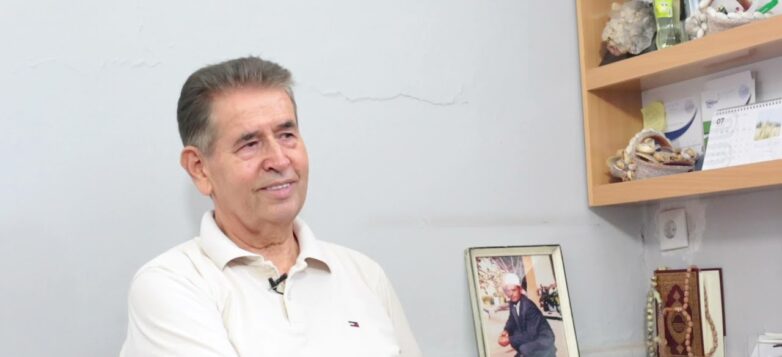
Download PDF