Muhamet Bicaj

Prizre | Date: November 29, 2024 | Duration: 63 minutes

I was lucky: I had done my specialization together with Angela Merkel’s husband at the Moscow University. […] Some of the professors who taught us there, English-speaking, American professors, had taught me earlier in Zagreb. I distinguished myself very much. Believe me, when I went to see Merkel after I became Minister of Albanian-language schools [for the Government in Exile], the Serbian state seal was still dominating. I took the seal of the Republic of Kosovo and told them… As soon as he saw the request with my name, her husband asked, ‘Were you at Moscow University?’ The government’s secretary came running, together with Merkel’s staff, and said, ‘ Merkel will receive you at this hour.’ Ilaz said, ‘So fast? Not even two hours have passed.’ I said, ‘He recognized me as a professor.’ I hadn’t even reached Merkel yet when her first question was, ‘Were you at Moscow University?’ I said yes. ‘You were there with my husband.’ I told her, ‘You know, there are many Albanians here. We’ve opened Albanian-language school courses in Germany. I see that the Serbian Republic’s seal still dominates. We have the seal of the Republic of Kosovo. We are a republic now.’ She said, ‘No problem.’ A few days later, half of my teachers and students came to me saying, ‘Minister, Professor, look, the stamp has arrived: Republic of Kosovo.’


Anita Susuri (Interviewer), Adea Batusha (Interviewer), Ana Morina (Camera)

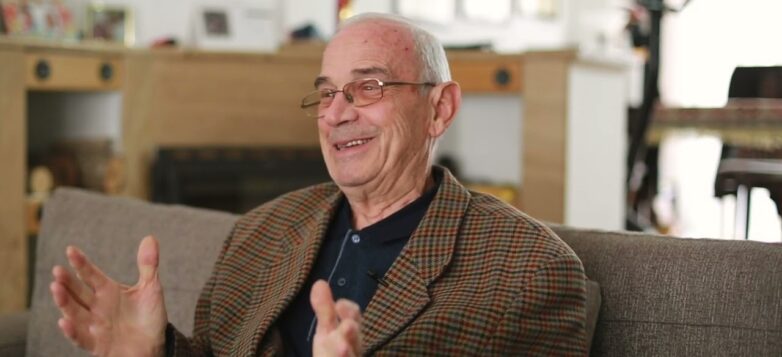
Muhamet Bicaj was born in Vrellë, Istog, in 1943. He holds a doctorate in Organic Chemistry from the University of Zagreb. Bicaj was a founding member of the Faculties of Medicine, Pharmacy, and Dentistry in Pristina and served as the Pro-rector of the University of Pristina during the 1980. He was appointed Minister of Education for the Kosovo Government in Exile in the 1990s. In this role, he organized Albanian-language schools across the diaspora, including in the UK, USA, and Scandinavia and managed the funding of the home schools in Kosovo. After the war in 1999, Bicaj was a leading figure in the group responsible for drafting and distributing new textbooks.

Muhamet Bicaj

Part One

Anita Susuri: Mr Muhamet, if you could tell us something about your earliest memories, about the school you attended, and the family you grew up in?

Muhamet Bicaj: I was born in Vrellë, in Istog, and I also completed primary school there, primary school there. Then… in ’58–’59 I enrolled in the Normale School1 in Pristina. At the time, it was the only normal school in Kosovo. I graduated in ’63. In ’63–’64 I enrolled at the Faculty of Philosophy in Pristina, back then it was the Chemistry Department. I graduated on January 6, 1969. So in 1969 I completed the Faculty of Philosophy, the Chemistry track. Back then all the departments were together. Later, when I became vice-rector, I separated that faculty into the Faculty of Philology and the other departments, chemistry, physics, philosophy, Albanian language, Albanology, and so on.

So, I graduated in ’68. Then I worked as a chemist at the Chamber of Commerce for a few months. After that, at Ballkani in Suhareka, as head of the chemical laboratory, at the time that was the most developed industry in that Yugoslavia, and they took me there as head of the lab at Ballkani in Suhareka. Then, on October 1, 1972, I was chosen as an assistant at the Faculty of Philosophy, Chemistry Department. Back then everything was together, Philosophy, Chemistry, all of it. The Faculty of Natural Sciences, basically. The faculty where I taught at that time. The Faculty of Medicine, the Faculty of Dentistry, and others too. Then I enrolled in postgraduate studies in 1970–’71 in Zagreb. That’s where I went.

And I didn’t go to Belgrade like people did back then, back and forth, I went straight to Zagreb. Dervish Ruzhaja, Gazmend Zajmi, those people sent me. I enrolled in chemistry in Zagreb, physical-organic chemistry. At the time there were special tracks, so I did the physical-organic track, and I was lucky to have famous professors, Nobel-level professors, especially Vladimir Prelog. Professor Vladimir Prelog, who later, during that revolution in Zagreb, anti-Serb, when I was there too, as a kind of student activist and all that… he left and went to Switzerland.

In Switzerland he became rector at ETH, the biggest university in the world. When I visited, I had the honor of visiting, because I’m the one who opened Albanian-language schools and organized the diaspora across the world, Switzerland, Germany, America, and elsewhere. I opened Albanian schools there. And I had the honor to see him when he met me… when I met him in Switzerland, he came out immediately, what a welcome he gave me. Everyone was shocked, how is it that the Nobel laureate is taking this man around to restaurants and this and that?

Because he says, “It wasn’t that anti-Serb revolution in Zagreb. The Albanian committee was very well developed, me included.” He never forgot that. They removed the Serbs completely from Zagreb. So I became a kind of activist there. Then I enrolled in Zagreb in that third-level program, physical-organic chemistry, in ’70–’71, and I completed my master’s on January 21, 1977. I did my master’s in Zagreb. Then at that university I did my doctorate. I had the honor of having very good professors. I did the doctorate and defended it on May 12, 1984, in physical-organic chemistry. And then I graduated there in that period.

In October 1972 I was accepted as a chemistry assistant at the Faculty of Philosophy, back then it was the Faculty of Philosophy with chemistry, with physics, with everything. I became an assistant. In the Faculty of Mathematical and Natural Sciences, chemistry. I taught, for example, not only in the Chemistry Faculty but also in pharmacy, medicine, and dentistry. I’m one of the founders of the Faculty of Medicine, pharmacy, and dentistry. When I go to the faculty, medicine here, dentistry there, others, everyone points me out: “Come here, prof, come here, prof.” These days they even fixed my teeth (laughs). All those students of mine, now they are professors and assistants at the Faculty of Medicine.

So when I worked as a chemistry assistant, medicine, pharmacy, dentistry, and then I advanced, I became a university professor. I advanced to higher titles, from assistant to full professor at the University of Pristina. Then, in the university work, Dervish Ruzhaja was changing rectors. For the first time a Serb rector had come. They were thinking: who is the vice-rector who can stand up to him, Fehmi Agani,2 Dervish Ruzhaja, I was vice-rector of the Faculty of Sciences. They came and took me, they said, “Come to the Faculty of Medicine there to become vice-rector… come to the faculty to become vice-rector,” because a Serb rector was coming.

Back then Boro Čolaković came, a Montenegrin, who was very positive. At the Faculty of Medicine he was a professor, and he was also being hounded by the Serbs from Montenegro, he found refuge in Pristina. So then I became vice-rector of the University of Pristina. And in reality I played the role of rector too, and everything, in that time which was very, very important, years ’83, ’84, ’85. In that period at the University of Pristina until ’85, ’86. As vice-rector of the university, later Ibrahim Rugova3 made me Minister of Education of the Republic of Kosovo. I was minister in the ’90s, until ’99. The hardest times, when the “house-schools” were organized.

Then when there were those talks about curricula, back then it was at the Yugoslav level, I was Kosovo’s representative in Belgrade at a conference for all of Yugoslavia. There were projects from Slovenia, Croatia, Serbia, Macedonia, and others. I voted for the Croatian and Slovenian projects. And I told Serbia there, I was with my colleague Halim Hyseni, the director of the Pedagogical Institute. He was my best colleague. I told them, “No curriculum and program drafted in Belgrade for education, without the participation of Albanians, experts from Kosovo, will be used.”

The Serbs were running propaganda. I said, “Ask Hilmi Hyseni,” because the Pedagogical Institute, “where are those programs Serbia sent? In the basement. Why the basement? So nobody sees them, only me and Minister Halim.” The next day I… I annulled all the curricula. I told Serbia, “No curriculum drafted in Belgrade for Kosovo’s education without the participation of experts from Kosovo will be used, period,” I said, let that be known. That evening Stjepan Mesić from Croatia called me. He said, “Professor, we received a warrant, you have a warrant from Serbia, 16 years. Tomorrow please come early to the airport in Skopje and you have a secured ticket to Slovenia, to Ljubljana.”

From there I went to Ljubljana, then I settled in Croatia. That’s when I got, how to say it, asylum, and I left Kosovo. They sheltered me there, in Croatia. I was in Croatia, and they engaged me a lot for this. Then I lived in Slovenia in an apartment there. I was lucky, because the president of the Academy of Sciences in Croatia had been on my doctoral committee in Zagreb. I remember the committee for the doctorate, he received me extremely well… they sheltered me, the Slovenes sheltered me, and they said, “Don’t go out,” because I had a warrant. And when Ibrahim Rugova and Fehmi Agani asked, “Where is Muhamet? Where can we find him?”, the ’90s, this place, that place… they came. He said to me, “From today you are Minister of Education of the Republic of Kosovo.” While I was in exile. “But how?” “No discussion,” he said. “Minister of Education.”

They made me Minister of Education, those were the ’90s and everything. Then I went to Germany. That’s where I started opening Albanian-language schools across the world. The diaspora. I organized the Albanian diaspora. In Europe, in England, in America. They supported me incredibly, so, so much. Incredibly. And then after that, I became minister in exile. I went… I had good collaborators, Halim, and Rexhep Osmani. Rexhep Osmani, they even used to call him the Minister of Education there (laughs) in Kosovo. Halim was the Pedagogical Institute. They were my main collaborators. All those programs we did with Albania and here and there, I would call them, we would do them. They were truly the best workers I ever had.

Those curricula and things became completely independent from Serbia. Meanwhile I also wrote school textbooks: Njeriu dhe Natyra (Humans and Nature) for third, fourth, fifth grade. Then chemistry, I’m the author of the chemistry textbooks with a few collaborators I had as assistants. So I basically secured the literature for the natural sciences, chemistry, physics, biology, I mobilized everyone… but I’m the full author of the chemistry books. And to tell the truth, the 12th-grade chemistry book, even the Germans took it. At that time they would put it to a commission for book verification, a European commission. I wrote a special chapter on drugs in the 12th-grade chemistry book.

The one from Zagreb tells me, this German too, “Why,” he says, “this special chapter?” Back then I travelled a lot around Europe, and when I would stop in Zagreb or in Germany, at train stations, full of young people on drugs, in train stations, so many. “Because,” I said, “I travelled a lot, and when I’d get off at a train station or at an airport in Germany, I saw young people at night at the train station, basically all of them asleep, so many,” I said, “and when you see cases like that, you think,” I said, “you know Kosovo has the youngest population. So I was inspired and I wrote specifically about drugs.” And he goes, “Yes, yes,” the German.

They took the book, and that German has that book now, there. It’s specifically about drugs, a special chapter on all types of drugs. Where they come from, how young people can access them, and so on. That’s how it went. Then in Germany I had asylum, and I was, in practice, a representative, they had the “embassy,” the one we had in Germany there [unintelligible at 16:28]. I opened Albanian schools, Germans supported me a lot, incredibly. In some cities… across all of Europe I opened Albanian schools. In England, for example, I went to Oxford and gave a lecture there and they received me extremely well. Some professors I had back then in Zagreb were actually from Oxford.

I opened Albanian schools in England, across France, across all Albanian lands. In America… in Sweden, do you know what kind of schools Sweden has? Even today the Albanian schools are still there. In Norway… all those European countries, I opened Albanian schools. We also appointed teachers. We prepared them in Kosovo. And seminars for there. The diaspora is huge and they call me often. I even have a diaspora guest, from Norway, here (laughs). He’s upstairs. Just came by and all that. So my time went like that, Kosovo, then the diaspora, and being an author of textbooks, and now I’m retired.

Anita Susuri: We have a few questions about all these phases of life you mentioned, but I’d like to start with primary schooling, because it was the period after the Second World War. What was it like for you?

Muhamet Bicaj: Well, that “school-in-a-house”4 that was created then.

Anita Susuri: No, no. When you were a pupil.

Muhamet Bicaj: Ah. Look. There was a certain level. To tell you the truth, from primary school up to secondary school, the teachers were the most serious, the best there were. There were seminars and so on… when I was in the Normale School, the Normale School here, because back then it was the only school of its kind in the Balkans, the Normale School here in Pristina. People came from Skopje, from Macedonia, from Montenegro, from different areas and all… and I even organized it so that all Albanian regions… today, for example, Albanians in Serbia, Presheva, Bujanoc, and others, respect me. We enrolled them all, many of them. Dormitories and all that. It truly had standards.

I remember in the Normale School we had a professor from Albania, I will never forget Tajor Hatipi. He was among the best professors in Albania, and we brought him… we brought Tajor Hatipi, but we also had others, others too. But he came to the Normale School. He taught us methodological and pedagogical sciences. He organized… the Normale School in Pristina at that time was basically a university. From all Albanian lands, it was the Normale School of Pristina back then. That helped me tremendously. We had dormitories… we had them like a home.

Believe me, the wardens, we had women wardens, do you know what kind of upbringing they gave you? How to dress, in long dresses, and so on. They checked us, especially the girls, whether their clothes were folded properly, whether they were cleaning, whether they were washing. So it was basically a home. A home, and those pedagogues, male and female, were like mothers. They were at an extraordinary level. So I’ll never forget that, for example, never. Especially Tajor Hatipi, he was incredible. And he taught methods, pedagogy, all of that.

Anita Susuri: And during the Normale School, did you live in Pristina, or did you commute?

Muhamet Bicaj: No, in the boarding school. The boarding school was extremely good and big. People from all Albanian regions were in the boarding school. Believe me, when we travelled on Saturdays and Sundays by bus, the bus would drop us down there, by those houses below. The professors would come, because you had to go from here to there on foot. Back then we were young, there were dogs around and so on. They knew, on Sundays in the evening, when the bus arrived, the professors, the educators would come to meet us there, take us, and walk us up there. What care, what respect there was, what an incredible organization.

For example, the supervising professor would come, they were the supervisors, and they knew when the bus would arrive. Because the bus came only down to here, how do they call it, by Fadil Hoxha’s house, those pastry shops that are there, those… they would wait for us, and then on foot, they would take us up. Because back then there wasn’t… this whole Taukbashçe area and all that, it was full of wild boars, wolves, foxes, all around. Taukbashçe was full. Biology. Often they would take us there. We would see everything there. It was a level, an extraordinary level.

Anita Susuri: And where was the boarding school?

Muhamet Bicaj: At the Normale School. The Normale School was there, right there. That big building that’s there now, when I go to Gërmia I say, I lived right there.

Anita Susuri: Now that’s the AUK School?

Muhamet Bicaj: Like that. The American University, that big building was the boarding school. The other ones were the school. The Americans… even my son’s wife works at the American University. That whole thing was the boarding school. So in that boarding school, from all over… believe me, we had such educators, such women educators, each of us had our own wardrobe. They checked whether we folded our clothes properly or not. They taught us to iron. There was a place for ironing trousers, “Come on now.” You had to make just one crease. So now, unfortunately, it’s not like that. And I feel very sorry.

Anyway, back then the organization was like that. There was a standard. Food, boarding school, cleaning… every Sunday we were obliged to go wash. Absolutely. We had soaps, detergents, everything there, because we stretched this out a bit…

Anita Susuri: And in ’68, were you active when the demonstrations5 happened?

Muhamet Bicaj: Yes, of course, of course. I might even say, an organizer.

Anita Susuri: Do you remember exactly how it was? How it happened?

Muhamet Bicaj: Look…

Anita Susuri: What day was it?

Muhamet Bicaj: Those, I remember them, they were extraordinary. People cared about me a lot because Fehmi Agani, Gazmend Zajmi, Dervish Ruzhaja, we had them as teachers in the Normale School too. I was lucky because Dervish Ruzhaja, my grandfather sent him to the University of Belgrade. Because back then there was nothing here. My uncle was among the first professors of Albanian language, Riza Bicaj. Jusuf Gërvalla6 and others were his students. My father was among the first teachers in Kosovo, around Istog, up to… with Halil Kajtazi they opened Albanian schools all the way to Mitrovica.

Back then the university was in Belgrade. When my uncle went there, an Albanologist, among the first Albanologists, my uncle Riza Bica, they asked… my grandfather asked, “That Zaifi,” Zaid Dervishi it was. Dervish would tell us himself, he would say, “His grandfather called me Zaif.” He says, “No, my father won’t allow it.” “Why?” Dervish’s father was a farrier. My grandfather went. My grandfather was very authoritative. Shaban Polluzha and my grandfather always had their houses together. My grandfather went to Peja and said, “Why are you separating the boy from his friends?” Because the friends were Fehmi Agani, Gazmend Zajmi, my uncle, those generations. He says, “Well, his father won’t let him.” “What?” My grandfather goes, “Why are you separating the boy from his friends?” “I don’t have the means,” he says. “Look,” Dervish himself would say, his father was a farrier, “If you separate the boy from his friends, I’ll shut down the farrier shop. Whether there’s money or not.”

Believe me, every Saturday my grandfather, Fehmi Agani, Gazmend Zajmi, all of them were organized, one Saturday Peja, one Saturday Prizren, sending food to Belgrade by train. Fehmi Agani and Dervish would say, “We knew when the train came on Saturdays, and everything came to us, petulla, flija, suxhuk, meat. We made a schedule,” in the dorms, “who would go pick it up.” They supported them for two years until scholarships and other things got sorted out, those generations of Dervish Ruzhaja. And Dervish never forgot it, because I was dean of the faculty. When he came, “Come be vice-rector of the university,” because a Serb was coming then.

They were thinking who could stand up to him, and they said, “Only Muhamet.” Because I was vice-dean of the Faculty of Sciences. I had the most well-known professors. They sent me as vice-rector of the university. That’s how my activity was…

Anita Susuri: And in ’68, when the demonstrations happened, what was the situation like?

Muhamet Bicaj: In ’68, look, back then I was also a teaching assistant here and there. I had… people respected me a lot. I remember we organized the dorms then… slowly, we organized them. We made that equipment. But there was a moment when things got so organized and they started going, let’s say, into extremes. Fehmi tells me, I was with him and the others organizing, directing. A student comes up, a demonstrator, and says, “Professor, Fehmi Agani and Dervish Ruzhaja are calling you. They’re down there.” Because they were coming from the Faculty of Philosophy, a lot of them.

He says, “Muhamet, be careful, Serbs have organized near the city center, near the student center, police units, soldiers, and so on, to shoot them. They killed about three. Tell the students not to go down there, but to stay in the center.” Then I started organizing, talking to those who were the leaders of different groups. I said, “Look, go as far as the Faculty of Philosophy, but no further down, because the Serbian army and police are waiting there to shoot you. Be careful. Gazmend Zajmi, Fehmi Agani… go as far as the Faculty of Philosophy, but no more.” Some went here and there, I started going around… and people still respected me, they recognized me.

Those demonstrations were extraordinary, extraordinary. Organized, and Fehmi Agani, Dervish Ruzhaja, the professors. It made a huge echo. I saved them, I truly saved them.

Anita Susuri: Was this ’68, or ’81?

Muhamet Bicaj: ’68–’69.


1 Shkolla Normale refers to a teacher training institution, a school specifically established to educate and prepare future teachers in pedagogy and curriculum. The term comes from the French école normale, originally created to set standards or “norms” for teaching and was widely used historically in Europe and elsewhere for teacher training colleges. In Kosovo and Albanian-language regions during the Second World War era, Shkolla Normale “Sami Frashëri” in Pristina was established in 1941 to train Albanian-speaking teachers and operated until its closure in 1944, with later continuations after the war.

2 Fehmi Agani (1932-1999) was a philosopher, sociologist and politician, one of the founders of the Democratic League of Kosovo. He was assassinated by Serbian troops as he attempted to flee Pristina disguised as a woman to avoid detection.

3 Ibrahim Rugova (1944–2006) was a prominent Kosovar Albanian politician, writer, and journalist. He was the founder and leader of the Democratic League of Kosovo (LDK) and served as the President of Kosovo during the war and after until his death. Rugova was a key figure in the non-violent resistance movement against Serbian rule and played a crucial role in Kosovo’s struggle for independence.

4 By 1991, after Slobodan Milošević’s legislation making Serbian the official language of Kosovo and the removal of all Albanians from public service, Albanians were excluded from schools as well. The reaction of Albanians was to create a parallel system of education hosted mostly by private homes.

5 During October and November 1968, many demonstrations were organized by the Albanian population across Kosovo. The main demand was to recognize Kosovo’s right to self-determination. The first and most massive demonstration was organized in Prizren on October 6, 1968. This demonstration ended in front of the League of Prizren, where for the first time the demand for the Kosovo Republic was publicly articulated.

6 Jusuf Gërvalla (1945-1982) was a poet and also nationalist activist killed in Germany together with his brother Bardhosh and Kadri Zeka. These killings have been widely attributed to Yugoslav agents, though no investigation has come to a conclusive identification of the killers.

Part Two

Anita Susuri: And then you continued your studies in Zagreb after the Normale School. How did it happen that you went to Zagreb?

Muhamet Bicaj: Look, back then people went to Belgrade, here and there. But I didn’t want Belgrade, because my family had been sentenced in prisons, here and there. I went, I had a couple of Albanians in Croatia there who had some firms. I spoke with them and they said, “Come here.” So I went. Then I met Stipe Vesić, because the organizers of the demonstrations and all that sent me to Stipe Vesić. I told him, “Look,” I said, “my family were people who had been imprisoned in Serbian prisons and so on. I can’t enroll in Belgrade.”

I had enrolled and continued my studies for half a semester in Belgrade. I said, “I can’t,” I said, “I’m asking you to make it possible for me in Zagreb.” “No problem.” He called the rector and I enrolled. I enrolled in the dorms and everything in Zagreb. They assigned me a place and everything, and I continued my studies. Then I completed the master’s. I stood out tremendously there, I worked. They brought me a bed, a bed into the lab. I slept in the lab. Compared to others, it made a very strong impression on those professors.

There was a reaction, an experiment, that ran continuously for 24 hours. Twenty-four hours without interruption. I had to stay with it. Then they chose me immediately for the doctorate: “Come to me, come to me, come to me.” I chose the most well-known professor, Sulko, for my doctorate. The bed in the lab, me…

Anita Susuri: You studied chemistry?

Muhamet Bicaj: Chemistry, yes. Organic chemistry. Believe me, my chemistry reactions went down to -20 degrees, -24 degrees. That kind of thing, you had to stay there all night. I left an extremely, extremely big impression. I did my master’s and doctorate in Zagreb. The University of Zagreb, the oldest university in Europe, 450 years. The University of Zagreb. When I went to Germany, when they mentioned a doctorate and a master’s from Zagreb, what respect the Germans showed. I had extraordinary respect in Germany. But I wanted to be a patriot: “I won’t stay here, I want Kosovo, Kosovo, Kosovo, Kosovo.” Because they asked me there too, to work.

I worked a little, like this. For example, the chemistry, I wrote it… the 12th-grade chemistry I wrote, they took it. The Germans took my 12th-grade chemistry book, it’s exceptional, extremely strong. So I had this huge will to work, here and there, then being minister. Now, in the hardest times there were, those times, when pupils were displaced, when students were displaced into Albania and so on. These were extremely difficult times. And Albania helped me tremendously then.

Because at the University of Tirana, and professors from the Faculty of Medicine, I brought them to Kosovo. They had suffered a lot there. When they came to Kosovo, what a welcome we gave them, how we placed them, here and there, tremendously. And when the displacement of pupils happened into the mountainous areas of Albania, from Gjakova, for example, I went there. They welcomed me extremely well. I was very close with Fatos Nano, the prime minister at the time. Believe me, he organized… I also sent them, and I went myself through the northern parts of Albania.

Many, many students, some assistants, some professors in universities in northern Albania, I enrolled them in Kosovo. They welcomed me extraordinarily. Believe me, Fatos Nano called the minister and told him, “Anyone coming displaced from Kosovo, place them in primary schools and secondary schools, according to their level.” Believe me, I went and visited those villages, what respect they showed us. There were houses with two or three floors, two or three floors of Kosovars housed there. From northern Albania all the way south, everyone was housed. At that time universities opened their doors to students who had left. Primary and secondary schools as well. In that time I enrolled them in Albania, we were received extremely well, extremely well, and they completed. That was my activism in that time.

Anita Susuri: Yes, the ’90s.

Muhamet Bicaj: The ’90s.

Anita Susuri: Yes, yes, but I’m also interested in a bit earlier, when you graduated. Did you return from Zagreb? Did you become a doctor here, or…?

Muhamet Bicaj: No, first I was a professor, an assistant at the Faculty of Medicine, the Faculty of Dentistry, and in chemistry and agriculture, two or three faculties. But mainly the Faculty of Medicine and Dentistry, I taught chemistry and those subjects. Today they respect me a lot, extremely well. Back then the Faculty of Medicine and all that, there was an extraordinarily high level. For example, when I was vice-rector, I made Musa Haxhiu the dean of the Faculty of Medicine. And that Prelog in Switzerland told me, “Bicaj, you made the University of Belgrade feel inferior, especially with the Faculty of Medicine.” But I tell doctors now, “Be careful not to train a vice-rector, an academic, because that’s what Serbia wants.”

The Faculty of Medicine is not like it was before. Unfortunately it’s not at that level. It’s not at that level. Many students, many good students and doctors today are in Germany, all over the world, they left Kosovo and went there. Often… I have brothers there, “Bicaj? How are you, Prof Bicaj?” “Brother.” They support me a lot there because I placed them with scholarships and everything. So, as I said, they respected me. I was lucky that I had been in specialization with Merkel’s husband at the University of Moscow.

Anita Susuri: With Angela Merkel’s husband?

Muhamet Bicaj: With Angela Merkel’s husband. Because Zagreb sent me on specialization at the University of Moscow, the biggest university in the world. There I stood out from them a lot, I stood out a lot. Even materially and things, I stood out there a lot. Plus some professors who taught us there, English, American professors, who had also taught me in Zagreb. And I stood out there a lot. Believe me, when I went to Merkel, when I became minister of Albanian schools, the Serbian stamp was dominating. I took the stamp of the Republic of Kosovo and told them… as soon as her husband saw the request, Muhamet Bicaj, he asked, “Were you at the faculty in Moscow?”

They came running, the government secretary and Merkel. She says, “At this hour, Merkel will receive you.” And Ilaz says, “That fast? It hasn’t even been two hours,” and I said, “He saw ‘professor’.” It didn’t occur to me that her husband had said it. I went to Merkel, her first question: “Were you at the University of Moscow?” I said, “Yes.” “You were there with my husband.” I said, “You know there are many Albanians here, we have opened Albanian-language school courses in Germany. I see the stamp of the Republic of Serbia is dominating, but we have the stamp of the Republic of Kosovo. We are a republic now.” “Kein Problem.”

After a few days, half of the teachers, my students, “Minister, Prof, look what arrived: ‘Republic of Kosovo’, the stamp.” Meanwhile now I tell my brothers, “Merkel… good, now we sent him into retirement.” I opened Albanian schools there everywhere, here and there, tremendously. Great. Every time I went, they welcomed me extremely well.

Anita Susuri: I wanted to ask you also, as rector, these were the years ’85–’86, what problems did you face?

Muhamet Bicaj: Look, rector, under the Serbian structure, they made a Montenegrin, anti-Serb, who had fled Montenegro and come here, friend of Begraca, Bjekaj. Friend of the most well-known doctors in Kosovo, in Pristina. They needed the Serbian structure to come. When they did it, all the Albanians became… he, Bekë Racaj, was among the best doctors, the most authoritative. He says, “From these,” because a lot of chetnik-type candidates had applied, “Boša.” Because he had fled as an anti-Serb, a Montenegrin. They made Božidar Čolaković, and they made me vice-rector. Boža told me, “You just sign, Bicaj, let the rector and all that…” In reality I was the rector in that time, and he signed everything, because he was anti-Serb. The Serbs didn’t want him at all. What a revolution when Božidar Čolaković became rector. He was among the best and oldest doctors in Kosovo. We benefited a lot from having him as rector. In practice, he was just the signature, and I was the rector of the university. Very good. In that time the university was at a level. At a level. Very good.

Anita Susuri: And in ’89 when the student demonstrations started and the problems as well, how were those for you?

Muhamet Bicaj: Look… for me… those demonstrations had an anti-Serb effect, yes, but you have to be rational, not to lose things like that. They organized them, but I would tell them, “Go up to here, don’t go further.” So they were positive, positive at the right level. The Croats supported us, the Slovenes, half of Bosnia, the Bosniak part, the Montenegrins. I had a whole team. Back then, when it came to republic status, I went with the Croats and others. I talked. They accepted us.

Ibrahim Rugova at that time was at a level, at a level. Ibrahim listened to me a lot because he had been my father’s pupil and our villages were close. His wife, I even brought her into the Faculty of Philosophy, Rugova’s wife. It went well. Extremely well. The Croats, Slovenes, Montenegrins supported us… then I went to Hungary, Hungary and Vojvodina, and I convinced them, I told the Hungarians, “I ask you, convince the Hungarians there,” the Croats positioned themselves in that area, “to vote for Kosovo as a republic,” they organized. Except Serbia… Serbia was left alone. The Croats… when Serbia thought Bosnia and Montenegro would be with them, they didn’t vote for us, but they were convinced too, and Kosovo became a republic.

Adea Batusha: Mr Muhamet, we were focusing a bit on the period when you were minister. You mentioned you were in exile and had to carry out the duty from a distance. How did that work?

Muhamet Bicaj: It worked well, because I had the foundations there. I told you, I had Halim Hyseni, the Pedagogical Institute. All the municipal education secretaries we selected were people properly oriented that way. It functioned extremely well.

Adea Batusha: And how did contact happen? How did you coordinate?

Muhamet Bicaj: The contacts were through the embassy, they always came to me. I often went to Croatia, we met in Slovenia. They came to me, we met, yes.

Adea Batusha: And when did you return to Kosovo?

Muhamet Bicaj: I returned to Kosovo as soon as it became a republic. Now I can’t remember the exact date, honestly.

Adea Batusha: And this, for example… we’ve talked a lot about the house-schools and where primary and secondary schools were generally located. But I want to talk a bit about the university, how was higher education organized?

Muhamet Bicaj: Yes, yes. Look, the house-schools… the house-school system was at an extraordinary level, extremely. We spoke with mayors, I spoke. We organized the most well-known houses that existed, patriotic houses, basically, but schools and municipalities. I allocated investments so their school expenses could be paid. Meaning every house that had a school received a sum of money, for electricity, water, and other expenses. So we selected the right people, the right patriotic houses. The school, the house-school became a very high level. Truly incredible idealism. We supported them financially, financially we supported them. Especially the houses, rather than the school, I gave the budget to the house itself.

Adea Batusha: For example, for UP, and since you know the Faculty of Medicine very well, how did those years function, since it’s quite hard to…

Muhamet Bicaj: Very hard, very hard, but we also made some clinics, well-known houses that were among the best, we made them into clinics. We worked at a level, we did.

Adea Batusha: What was it like? Were there resources? How could they…

Muhamet Bicaj: We financed it. I financed medicine specifically, documents, instruments, those special medicines that existed… we financed it specifically. There was a separate budget for medicine, a separate budget.

Adea Batusha: As minister at that time, what might be one of the most critical decisions you had to make then to keep education alive?

Muhamet Bicaj: Determination, not to be influenced by Serbia. Absolutely not to be influenced by Serbia. Total independence. That was it. That was it. Finances, look, the Albanian community helped a lot. Every house that served as a school, we financed it, every house. That house had no problem with heating, electricity, food expenses, nothing at all. We financed everything, by name. The house of Muhamet Bica, the house of this one, the house of that one, this much, this much, this much, financed. A special budget went to houses then, just like to municipalities. No, no, back then the idealism was incredible. The diaspora helped, Albanians helped a lot, they helped a lot.

Adea Batusha: And higher education continued the same way?

Muhamet Bicaj: The same, the same, higher education too, in certain houses. Yes, yes…

Adea Batusha: When you say “certain houses,” can you elaborate a bit more, what do you mean?

Muhamet Bicaj: Certain houses, houses that were more well-known, better organized, that had completely given themselves over, that were truly house-schools. We financed them. There were special houses for the university, for example, we financed exactly what was needed. Laboratories, expenses. Plus we organized practical sessions in Belgrade for students, and in Albania too, in Albania too. Albania, at that time, for doctors, I was there, I had the laboratory and the office for a long time… At the Faculty of Medicine we had brought some places to Albania because medicine accepted us. Fatos Nano, for example, helped tremendously.

Laboratories, for example, pharmacy, dentistry, medicine, because I was also a professor of medicine. We sent them there. Many professors from Albania’s medical university had been professors in Pristina, I had brought them. They helped tremendously. So much, so much, I’ll never forget. For example, the Chemistry Faculty of natural sciences that I had, friends here and there, basically the whole Faculty of Natural Sciences of Albania was also Kosovo’s, with labs and everything, everything.

Adea Batusha: Going back again to the part where they issued that arrest warrant for you, what exactly was the situation?

Muhamet Bicaj: I did have a warrant, but Germany, the West, protected me.

Adea Batusha: When was the warrant issued?

Muhamet Bicaj: The warrant, immediately in ’90. Immediately. Before ’90, a warrant, before ’90. They told me: that seminar we had in Belgrade, you know? The issue was that Croatia and Slovenia had applied with projects too. I organized with the Croats and Slovenes to support them there, and also that no curriculum for Kosovo drafted without the participation of Serbs, without the participation of Albanians, could exist. Where are they? Basement, basement, basement. The next day they immediately tell me I have a warrant.

Adea Batusha: And they arrested you too?

Muhamet Bicaj: No, I…

Adea Batusha: So nothing, basically.

Muhamet Bicaj: No, no. I fled quickly. In a day or two I fled. I had a sentence of 60 years in prison. Immediately I went to Skopje, got on a plane, and to Germany.

Adea Batusha: When you reflect on this part of the ’90s…

Muhamet Bicaj: My wife later told me, they went, because they didn’t think I was like that… they were following me, civilians came and stayed around the house to see if I would come out, until they found out… I had my house, my apartment in Banja of Peja. Until they found out, every day following. We had very good neighbors, organized. Following. Because there were Serbs there too. They assigned them to wander around. Until they understood I wasn’t there. They searched, they entered the house, they found documents… so, in exile, what can you do? My family suffered, my family suffered a lot because of them. A lot.

Anita Susuri: And when you mentioned you had political prisoners in the family, who was it?

Muhamet Bicaj: My grandfather and two uncles. They were in Goli Otok.1

Anita Susuri: Before the war?

Muhamet Bicaj: Before the war, before the war. In Goli Otok. My grandfather was anti-Serb. He was connected with Shaban Polluzha, as I said, known. My grandfather and two brothers were imprisoned in Goli Otok. I never got a scholarship from Istog. Because “hostile.” Me, for example, my uncle’s son, another uncle’s son, we were at the faculty level, we never got scholarships. Absolutely none. We were always… and my father was among the first teachers in Kosovo.

For two or three years they didn’t accept him until people came from those villages of Mitrovica. From Mitrovica, where those schools didn’t have teachers, they called my father, and my father, in Mitrovica, in those schools, together with Halil Kajtazi, they were teachers there. In Vrellë, in Istog, they didn’t accept my father because he was an “enemy,” “hostile.” And he was among the first teachers in Kosovo.

Anita Susuri: Did you then have any problems personally because of that?

Muhamet Bicaj: Of course. I never had a scholarship at all.

Anita Susuri: Anything else, were you persecuted, or…

Muhamet Bicaj: No, they protected me, look, colleagues and that sort of thing respected me… still, the police and those ministries of internal affairs didn’t really do anything to me, but citizens and leaders respected me. Because my father was among the first teachers. Half of those leaders had been his pupils. My uncle was the first professor of Albanological Albanian language, you understand? Jusuf Gërvalla and those… so the villages loved us, only the state didn’t. They didn’t give me a scholarship. The municipality, for example, the municipal administration didn’t give me a scholarship because I was an “enemy.” That’s how we had it.

Anita Susuri: And to go back a bit again to the ’90s, we’ll return. During all that time, did you work abroad the whole time, or were there times you came to Kosovo?

Muhamet Bicaj: No, no, I wasn’t there until…

Anita Susuri: During the war as well, and after the war?

Muhamet Bicaj: Yes, yes. For example, the main commander of the army, this one, what was his name, that Bicaj? He was from Bosnia, a commander in Bosnia, I brought him there. We, the army, the organization and all that, I mainly did, I helped a lot from abroad, with aid and things, tremendously. A lot. Because during the war and afterwards they supported me. After that I didn’t have danger.

Adea Batusha: Mr. Muhamet, in which places did you live during this period? Where were you?

Anita Susuri: In the West?

Adea Batusha: Because you didn’t stay in just one place, right?

Muhamet Bicaj: I was in Germany. Mainly I had… first I was in Croatia. Croatia supported me a lot, then the Slovenes. Mainly I was in Croatia, Slovenia, and then I went to Germany. The Albanian community called me because I had opened Albanian schools.

Adea Batusha: So during this period, the opening of Albanian schools happened in…

Muhamet Bicaj: Yes, yes. Mainly there, mainly there.

Adea Batusha: What was your role in opening Albanian schools? What did you have to do?

Muhamet Bicaj: Decisions. Decisions as Minister of Education of the Republic of Kosovo. With decisions, and I also appointed the teachers. I remember Agim Ramadani, I was close with him, I visited him, he was a great hero in Switzerland. When I opened Albanian schools, I appointed teachers; his wife had been a teacher. I made her a teacher by decision. When she received the decision… imagine, the Swiss minister of education had been Albanian, from Croatia. When I went there, because I had to go through ministries, when she saw the name Prof Bicaj, she received me. I told her, “Albanian schools, plus we have the stamp,” because in some places the Serbian stamp, the old one, was being used. I said, “We are a republic, here is the stamp of Kosovo.” She said, “No problem.” I said, “These teachers I appointed,” I sent her the list, I said, “I ask you to…” “No problem.” She walked me out, because you couldn’t speak in the office. She said, “I’m Albanian too, Albanez from Croatia.” That part of Croatia has Albanian land along the coast there. And I appointed Agim’s wife as a teacher by decision. And with that decision, Agim got his residency in Switzerland, because without a decision, he couldn’t.

Later he opened a painting salon, and he would call me. I visited. I spent a lot of time there, here and there. Until he sent me word, he said, “Minister, tomorrow I’m leaving for Albania with Sali Çeku.” I had Sali Çeku in my office, what a guy he was. He had arranged documents for all Albanians, because he was a great administrator. With a stamp. He used to call me minister sometimes, sometimes prof. He said, “I went.” “Where?” “Agim and I went.” They went to Albania. Because during the war I was head of emergency…

Anita Susuri: Where?

Muhamet Bicaj: For Kosovar fighters. I secured crossings and so on, and northern Albania respected me a lot, a lot, a lot.

Anita Susuri: And you returned to Kosovo immediately after the war, in ’99?

Muhamet Bicaj: Yes, after the war.

Anita Susuri: When?

Muhamet Bicaj: I forgot the date now, I don’t know, but I returned.

Anita Susuri: After it ended, basically?

Muhamet Bicaj: Yes, yes, after it ended.

Anita Susuri: And then, it seems, you were also involved in drafting textbooks…

Muhamet Bicaj: Yes, yes. After that I was also head of the School Book (textbook) institution. Because I opened… the School Book played an extremely big role. Bajram Shatri, for example, had… an extremely big role. I became head of the group for drafting school textbooks. I organized everything, and I brought people from Albania too, for language, history, geography, and others. I myself, since I was chemistry. I opened the border for Albanian schools, everything possible. Then I organized authors from Albania together with Kosovars, whatever was possible, and so on. The School Book played a very big role because it opened everything through cooperation with Albania, with Albania’s books, with Kosovo’s books, and we filled the textbooks and distributed them across all of Kosovo.

Anita Susuri: Okay. Mr Muhamet, thank you very much!

1 Island in the north of the Adriatic sea, from 1949 through 1956 a maximum security penal colony for Yugoslav political prisoners, where individuals accused of sympathizing with the Soviet Union, or other dissenters, among them many Albanians, were detained. It is known as a veritable gulag.

Download PDF