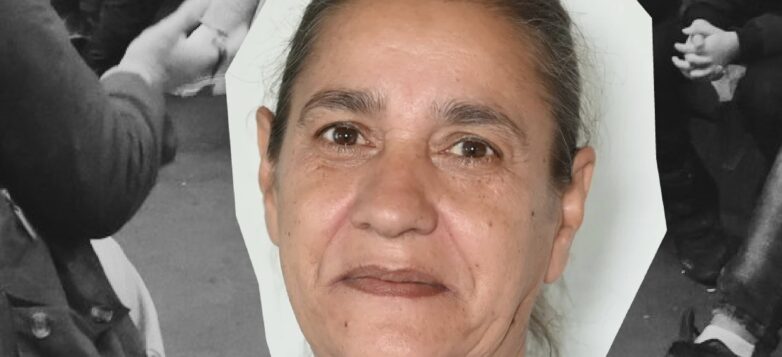
Nenad Andrić: What is your name, can you tell us something about your family and the place where you were born?
Mamudija Mustafa: My name is Mamudija, I am originally from Prilužje and now I live in Plemetina.
Nenad Andrić: Tell us something about your family.
Mamudija Mustafa: My husband’s family or my own family?
Nenad Andrić: Start from your own family to your husband’s.
Mamudija Mustafa: In Prilužje we were fine… {shrugs her shoulders}.
Nenad Andrić: Your family, they do have a trade, are they craftsmen?
Mamudija Mustafa: Yes, my family are blacksmiths, they have worked as such ever since and it was fine.
Nenad Andrić: They have worked but are they still working as blacksmiths?
Mamudija Mustafa: They still work as blacksmiths.
Nenad Andrić: How was your life and the life of your family before the war?
Mamudija Mustafa: To tell you the truth, we as blacksmiths were never rich, because we were just blacksmiths, then it was worse, people were leaving, Albanians were gone, Serbs were scattered, it was hard but yet there was still some work. Enough to provide food and we were satisfied with that.
Nenad Andrić: You, personally — were you employed, did you have a job?
Mamudija Mustafa: Yes, I was working, I was a seamstress and was working until the war. Then we had no jobs, I had to leave my work, Serbs left, Albanian left and the company was dismantled.
Nenad Andrić: What company was it?
Mamudija Mustafa: Polet, it was just behind our house in Prilužje.
Nenad Andrić: How did Roma and others live together before the war?
Mamudija Mustafa: To tell you the truth it was fine, with us in Prilužje they lived fine, because they had good relations, were working together, we were blacksmiths and they all would come to us for services, and they still do to this day. Not as much as before, before there was a line of people waiting to fix their plows or fix their axes to my father. I was also helping my father and my brothers.
Nenad Andrić: Can you tell us a bit about celebrations, what were those and how important were they, to you and to your family?
Mamudija Mustafa: Ah those celebrations… Those celebrations were something most important to us, especially Vasi. On that day, we would slaughter turkeys and geese as a sacrifice, we couldn’t wait for that celebration. Children were specially amused and interested in the banka, a special bread, pogacha that my mother used to make and would put a coin in the bread and whoever found it would consider him the luckiest one of us all, and would have luck through the year. That was most important for us. Then after Vas we would celebrate Ederlezi, where lambs were slaughtered, parents would buy new clothes and we would dress well for that day. We would go to the river, we would pick spring flowers and willow branches.
Nenad Andrić: The Ederlezi celebration, was that something that only the Roma people did or others did as well in Prilužje?
Mamudija Mustafa: It is a Roma tradition but also Serbs would come with us, they would just pick flowers and willow branches, but we Roma… it was like a rule, the music, lamb meat, dressing up the best way possible. Eat and drink all day.
Nenad Andrić: You have mentioned music, how big or a role is the music, the language and culture in the life of your community?
Mamudija Mustafa: Oh… Music is the center of it, not just for us there, not just the Roma, we had bands coming from Plemetina and playing, trumpet orchestras where not just Roma but Serbs and Albanians we all danced together and that was very good.
Nenad Andrić: There were also a lot of sabor celebrations that you had back then, how were those?
Mamudija Mustafa: The sabor celebrations were many where the whole village, both Roma and Serbs and all would celebrate. People from all over would come that day for these celebrations.
Nenad Andrić: How did you meet your husband?
Mamudija Mustafa: The first time, I was here visiting my auntie and I met him.
Nenad Andrić: Who made the first step in getting you two together, did your auntie do it?
Mamudija Mustafa: No, it was me and my husband together, no one started it for us. However my family was against it at the beginning, when they heard, they didn’t let me but as we say “Love wins all the battles.”
Nenad Andrić: What else do you remember from life before the war?
Mamudija Mustafa: I remember only the good things, when I was working, spending time with my colleagues, going to weddings, and having a lot of friends, both male and female. We had the freedom to walk at night, no one would tease us, we had permission from our parents, all. In general one good and peaceful life for me and my family.
Nenad Andrić: When we said before the war, how did the war influence your life and the life of your community?
Mamudija Mustafa: War had a great negative influence, especially when the bombing started. My father was very afraid and full of fear because next to our family house there was a big aerial antenna, and he was afraid that planes would bomb that antenna and would destroy our house as well. He was very afraid of that and in fear and from that fear after one month he died. From that fear.
Nenad Andrić: What other memories do you have of the war?
Mamudija Mustafa: It was very scary for us, I had two small children, we didn’t have food. We had money but couldn’t go out to buy anything. One foreigner, his name is Rand, helped us a lot. He was bringing me food and diapers for my children. He couldn’t do it every time but he did help us a lot. I can never forget that he did that and helped us a lot.
Nenad Andrić: You have mentioned the case of Rand. Has there been help that came from the members of the Roma community?
Mamudija Mustafa: No, to us no. Maybe I helped others but our family did not.
Nenad Andrić: Have there been help from other communities, like Serbian or Albanian?
Mamudija Mustafa: Sometimes we would get the food packages, if we would hear about it and go right away on time, if we were late we would not get any food packages.
Nenad Andrić: After the war has ended, how did your life and the life of the community change?
Mamudija Mustafa: It has changed for the better. One of the organizations has helped us and built our house, for me, my husband and three of our children. When we got our house our life changed for the better, then slowly little by little…
Nenad Andrić: What were the main struggles for Roma people to rebuild their lives after the war?
Mamudija Mustafa: Housing, getting a job.
Nenad Andrić: When we say jobs, do Roma people now have more or less jobs than before the war?
Mamudija Mustafa: I think it’s better now. Now our youth can go and get a job anywhere, something that they couldn’t before. My son has finished his studies and couldn’t get a job, my daughter has studied medicine and couldn’t find a job.
Nenad Andrić: Do you think that the relationship between the Roma community and other communities has changed after the war?
Mamudija Mustafa: I think that people have changed a lot. How? I’ll tell you now. All of us, Roma, Serbs and Albanians, are doing better now. One had hate for the other before the war, and also right after the war, but now it’s better. I do go out and spend time with people and I keep looking and I see people do better, Roma, Serbs and Albanians, we all are doing better.
Nenad Andrić: Why do you think that is?
Mamudija Mustafa: Because I think that no one wants another war, to go through that fear and destruction again. No one wants their child to have to go through what they had to go through the war.
Nenad Andrić: What role had the education, work and emigration had on your family after the war?
Mamudija Mustafa: Many people left, first my brother in laws, then my nephews and my own son left. They all thought that life is better there somewhere.
Nenad Andrić: What is the greater difference before and after the war?
Mamudija Mustafa: Before the war, before the bombing, it was better. The war was not good but now I see we are doing better.
Nenad Andrić: What messages from your life experience do you think it’s important for youth to know about?
Mamudija Mustafa: Nothing special, to be righteous, to know until where to go, not to think that they cannot make a mistake, get on a right path, to take care of their life, their children, their wives, their families and not to stray of the “good” road for Roma people. To make sure to be able to afford all the things necessary to their parents, children and family. To be smart.
Nenad Andrić: What hopes do you have for the Roma community in Kosovo?
Mamudija Mustafa: Thinking that as the Roma people are today, if we continue to get better as we do it will be good. Roma already started having jobs, before they had very simple lives, barely survived, didn’t have a proper house either and couldn’t support their own family. Now those who are employed have their own money here in Plemetina, all educated as well. They started driving as well, it’s good. Our children are educated, attending medicine and economics schools. We are advancing a lot, as we would do without the war. We need to know how to maintain and keep the peace. I think that most of the people know how to keep peace which is more than before.
Nenad Andrić: What message would you send to the other communities?
Mamudija Mustafa: I would tell all the nations to be united, to keep up their own homes and not “look at the neighbor’s yard,” take care of their life and family and keep up the good work.