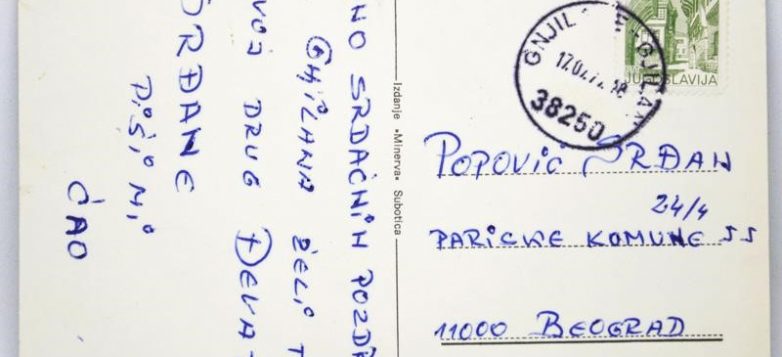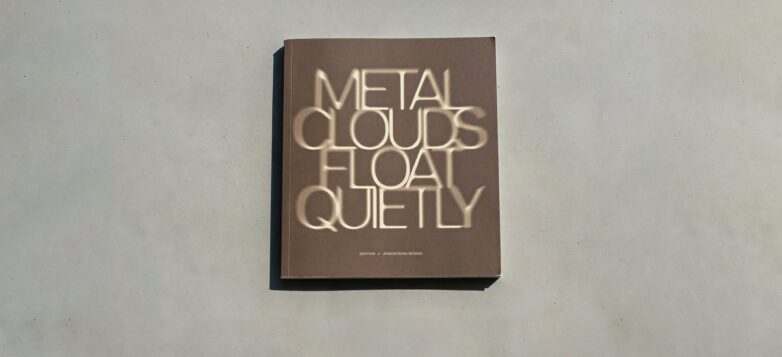
Metal Clouds Float Quietly: Industrial Heritage, Work, and Collective Memory
Heritage is not a frozen fragment of history.
It is the awareness that our lives are the bridge between what was imagined before
us and what will emerge after.
METAL CLOUDS FLOAT QUIETLY is a long-term research and documentation
project focusing on Industrial Heritage, on spaces that enabled the development of life,
work, and social organization of Kosovo’s past; The Factory.
Factories were the early laboratories where people first experienced what it meant
to build community through purpose & creation rather than place. The workers’ gestures,
the machinery’s rhythm, the thoughts that filled the halls, they all became early expres-
sions of a collective experience.
The industrial development changed the way of living. It fueled the economic
growth through production but also shaped education, employment, and art & culture.
This creative activity was made possible by the workers themselves, either through indi-
vidual participation or through cultural collectives.
Almost every factory had its own monthly newspaper and a cultural collective
dedicated to one of the creative fields—folk dance, singing or writing. For us, today, it is
inspiring to reflect on how workspaces could once again become grounds for creativity
and collective learning.
Every age has its architecture of belonging: places where the human needs and as-
pirations find a home. And in one particular age [industrial] that home became the factory.
Researchers and text written by:
GROTESK
Blerina Muriqi
Ardit Sheholli
Jednostavno Rečeno
Ivana Bogićević Leko
Nenad Pinter
Luka Knežević Strika
Editorial design:
GROTESK
Drawings and Illustrations:
Blerina Muriqi
Ardit Sheholli
Photography:
Blerina Muriqi
Scanned documents:
National Library – Belgrade, Serbia Library of Matica Srpska – Novi Sad, Serbia
Translation:
Sani Sheholli
Publisher:
XHAD, Prishtina
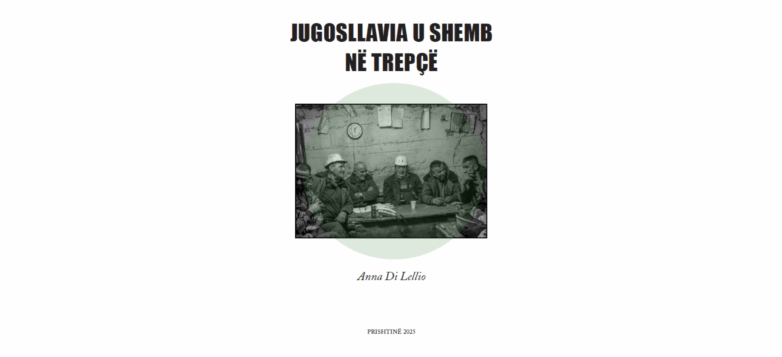
NEW E-PUBLICATION – ONLY IN ALBANIAN: JUGOSLLAVIA U SHEMB NË TREPÇË
“We saw that from that moment on, everything changed in Kosovo; the strike dealt the strongest blow to Yugoslavia.”
Ibush Jonuzi Technical Director of the Stari Trg mine
In February 1989, 1,300 Albanian miners from the Trepça mining complex refused to leave the tunnels for eight days and eight nights. They protested against the amendments to the 1974 Yugoslav Constitution, which had guaranteed the province of Kosovo autonomy from the Republic of Serbia, giving the Albanian majority the opportunity to elect local leadership and granting workers the right to self-management. The strike failed, but it became the catalyst for a popular movement. The repression that followed caused an irreparable rift between Albanians and Serbs: the Trepça strike marked the beginning of the bloody end of Yugoslavia. This is an oral history of that pivotal event.
by Anna Di Lellio
With a Foreword by Korab Krasniqi
First published in Italian in 2024 by Prospero Editore as:
La Jugoslavia crollò in miniera. Kosovo 1989: Lo sciopero di Trepça e la lotta per l’autonomia.
Also published in English in 2026 by Oral History Kosovo and Pro Peace as:
The Miners’ Strike that Broke Yugoslavia. Kosovo 1989: Trepça and the Struggle for Autonomy
Translation from the Italian: Majlinda Bregasi
Editing: Aulone Kadriu
Published by the Oral History Initiative and Pro Peace (formerly ForumZFD)
© 2025
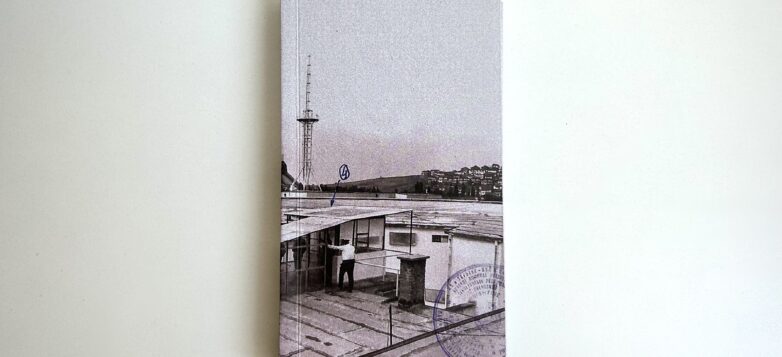
NEW PUBLICATION: BREAKING OUT
The publication Breaking Out brings at the center the story of Martin Çuni and Muhamer Shabani, two former political prisoners of Yugoslavia. The initial stage of the publication was conducting oral history interviews. From Martin Çuni we have learned about his attempt to break out from the Detention Center in Pristina, otherwise known as the Pristina Prison. This story brought us in touch with Muhamer Shabani. Both of them have worked for months on end to create a path that led out of the prison. In the absence of textual and visual sources, we considered that the shared experience of Çuni and Shabani should be conveyed through a publication that rests on their experiences and recollections. In collaboration with them, the interviews have been reworked into first-person narratives. The story of the breaking out not only brings forward two perspectives of the same event, but also has two very different endings: Çuni was captured, while Shabani broke out.
Edited by Erëmirë Krasniqi
Assistant Editor: Anita Susuri
Researched by Anita Susuri and Renea Begolli
Translated into English by Donjet Behluli
132 pages, 16 black & white photography
Softcover 10,5 x 18 cm
Single edition in English and Albanian language
Published by the Oral History Initiative
© 2023
The publication was supported by National Endowment for Democracy and Rockefeller Brothers Fund.
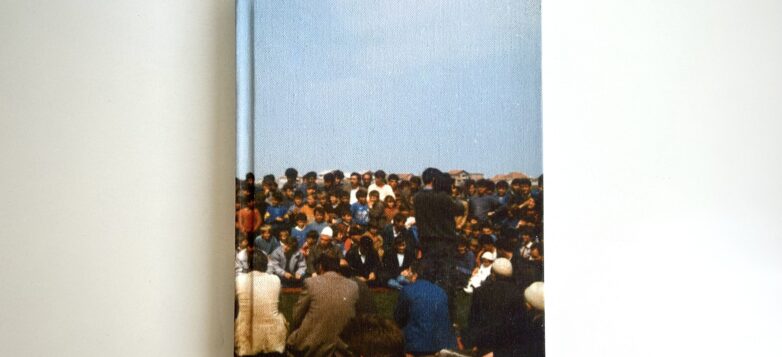
NEW PUBLICATION: THE RECONCILIATION OF BLOOD FEUDS CAMPAIGN 1990-1991
The Reconciliation of Blood Feuds Campaign 1990–1991 was a call for action and unity among the Albanians of Kosovo. The campaign started on February 2, 1990, in Lumbardh, a village in the Municipality of Deçan in northwestern Kosovo, in response to the Serbian media’s misrepresentation of the deaths of thirty-three students who were killed by Serb police forces during protests opposing the revocation of Kosovo’s autonomy by Yugoslavia. The campaign quickly branched out and gained momentum in all Albanian-inhabited lands in Yugoslavia. The result was hundreds of public gatherings, thousands of reconciliations, and the liberation of families from the duty of honor killings. The archival project and exhibition of the Reconciliation of Blood Feuds Campaign 1990–1991 is an attempt to construct a place of living memory, a setting that celebrates storytelling and personal memory, and confronts official narratives, and explores what remembering means.
Edited by Erëmirë Krasniqi
Lead researcher: Erëmirë Krasniqi
Research assistants: Jeta Rexha and Lirika Demiri
200 pages, color photography
Hardcover 27 x 23 cm
Single edition in English and Albanian language
Published by the Oral History Initiative
© 2023
The publication was supported by the Municipality of Pristina and Rockefeller Brothers Fund.

NEW PUBLICATION: A Site of Political Struggle: Trepça Mine 1989
Published in conjunction with the exhibition, “A Site of Political Struggle: Trepça Mine 1989,” the publication takes the form of a compendium, cataloging key events that have defined the mining community of Mitrovica in Kosovo. Both the publication and exhibition are driven by a commitment to understanding new forms of political engagement that emerged during the miners’ strike organized from February 20 to 28, 1989.
Edited by Erëmirë Krasniqi
Researched by Anita Susuri, Erëmirë Krasniqi, Korab Krasniqi and Renea Begolli
Translated into English by Donjet Behluli
142 pages, 45 black & white and color illustrations
Hardcover 17 x 22 cm
Separate editions in English and Albanian
Published by the Oral History Initiative
© 2023
The publication was supported by Foundation for Arts Initiatives (FfAI).