The stories of Roma people affected by the 1998-99 Kosovo War and its aftermath are largely unknown. We present here the narration of individual lives which highlight the long-term consequences of displacement, social exclusion, and economic hardship for Roma communities. Our aim is to address the historical exclusion of Roma narratives from mainstream accounts of the Kosovo conflict, providing a better understanding of their vulnerable social position but also of their resilience.

This research had developed over time. It includes interviews with individuals conducted by the OHI team and specific projects executed by other organizations.

Five interviews were conducted in partnership with the organization Versitas and supported by the Heinrich Böll Stiftung. The interviews were conducted in the  dialect of Romani language spoken by the speakers [Gurbetski,  Arljiski, Burgurgjiski, or Prizrenski],  and then translated into English.

Who We Were; Who We Are is a text with links to oral history interviews with members of the Roma community. It was published in 2004 by a team of researchers – Sebastian Šerifović, Adem Osmani, and Afërdita Berisha – led by Bobby Anderson. Anderson kindly  gave us permission to include it in our living archive. This project was sponsored by the Open Society Institute Roma Culture Initiative, with the logistical support of Communication for Social Development and Balkan Sunflowers. 

By Roma, which is the Romanes word for “man,” or “us,” the researchers meant to encompass Roma, Ashkalija, and Egyptian, as well as a variety of sub-groupings, identified by the individuals interviewed as: Gurbeti, Muhadjeri, Arlija, and Bugurdjije.  There is no better way to introduce the publication Who We Were; Who We Are than with the words of Bobby Anderson in the introduction:

“This project is a document of what has been lost. It’s about a language choked with

foreign words; traditions often followed by rote; a people removed from their past,

trying to preserve the things they have left that make them Roma. It’s about a people

who have lived in Kosovo for hundreds of years and have never been afforded a true

place there by others. It is said that the Roma version of history is simply the earliest

memory of the oldest member of the community. And when they die, they take their

history with them.” 

About the dialects: The Romani language spoken in Kosovo is rich, diverse, and shaped by centuries of cultural interaction, migration, and local history. Within Kosovo, Romani is not a single uniform language but is instead composed of several distinct dialects that reflect the regional identities of different Roma communities. These dialects share a common linguistic foundation but differ in pronunciation, vocabulary, and influences from surrounding languages such as Albanian, Serbian, and Turkish. Together, they represent an important element of Roma cultural heritage and identity in Kosovo. One of the most widely spoken varieties is Gurbetski, used particularly by Roma communities in the central and southern parts of Kosovo (Mitrovica, Peja, Fushë Kosova). Another important variety is Arljiski, spoken by groups with historical roots in the Balkans who migrated over different periods. Arljiski maintains certain older grammatical structures and contains substantial lexical borrowings from Serbian and other South Slavic languages, showing how Roma communities adapted linguistically to their surroundings. The Burgurgjiski dialect is historically associated with Roma communities who traditionally worked as metalworkers and craftsmen. While today the occupational distinction is less common, the dialect retains unique terminology related to trade and craftsmanship. It also shows a mixture of influences depending on the region where families settled, making it an important marker of group identity and tradition. Similarly, the Prizrenski dialect reflects the cultural and historical environment of Prizren, one of Kosovo’s most ethnically diverse cities. It incorporates elements of Albanian, Turkish, and Slavic languages, and is well known for its strong oral and musical traditions passed through generations.

Dialects demonstrate the adaptability and resilience of Roma language and culture in Kosovo. While they differ, they also maintain enough grammatical and lexical similarity to remain mutually understandable among Roma communities across the country. Today, with increasing interest in cultural preservation, education, and linguistic documentation, the Roma dialects of Kosovo continue to play an essential role in strengthening identity, community cohesion, and the transmission of linguistic and cultural heritage to younger generations.
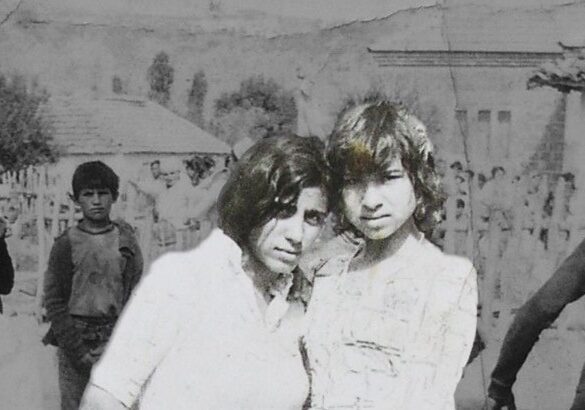
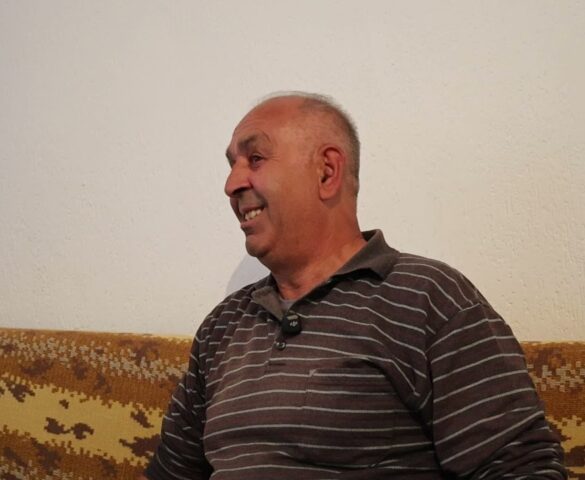
Who We Were; Who We Are: Kosovo Roma Oral Histories


Who We Were; Who We Are is a text with links to oral history interviews with members of the Roma community. It was published in 2004 by a team of researchers – Sebastian Šerifović, Adem Osmani, and Afërdita Berisha – led by Bobby Anderson. Anderson kindly  gave us permission to include it in our living archive. This project was sponsored by the Open Society Institute Roma Culture Initiative, with the logistical support of Communication for Social Development and Balkan Sunflowers. 

By Roma, which is the Romanes word for “man,” or “us,” the researchers meant to encompass Roma, Ashkalija, and Egyptian, as well as a variety of sub-groupings, identified by the individuals interviewed as: Gurbeti, Muhadjeri, Arlija, and Bugurdjije.  There is no better way to introduce the publication Who We Were; Who We Are than with the words of Bobby Anderson in the introduction:

“This project is a document of what has been lost. It’s about a language choked with

foreign words; traditions often followed by rote; a people removed from their past,

trying to preserve the things they have left that make them Roma. It’s about a people

who have lived in Kosovo for hundreds of years and have never been afforded a true

place there by others. It is said that the Roma version of history is simply the earliest

memory of the oldest member of the community. And when they die, they take their

history with them.”

Sinan Ramić


Live, work and be fair and honest, honesty wins over everything. Earn the money with your sweat, not with lies. If someone hires you, go, take your pay, but do your work fairly, so they can come another time and hire you again. I have the case of a former secretary at the Utility Company, now she lives in Niš. Every year she would call me to go and mow her lawn in Prilužje. Aren’t there others that can do it? Yes. But she saw an honest person in me and she would only hire me. Price was never an issue. When she would ask me, ‘How much?’ I would tell her, ‘As much as you want to give me.’

Mamudija Mustafa


All of us, Roma, Serbs and Albanians, are doing better now. One had hate for the other  before the war, and also right after the war, but now it’s better. I do go out and spend time with people and I keep looking and I see people do better, Roma, Serbs and Albanians, we all are doing better…Because I think that no one wants another war, to go through that fear and destruction again. No one wants their child to have to go through what they had to go through the war.

Mehdi Skenderi


Roma music was everything! I always loved music. When I got married in 1995, during the peak of inflation, I had a huge wedding. I even wanted a helicopter, but couldn’t get it!… Yes, it was [one of the biggest weddings in the Pristina region]. I prepared two oxen and five sheep. We had everything:  fish, barbecue, drinks. I even brought a brass band from Vranjska Banja in Serbia, 10 musicians! I paid them 100 German Marks upfront with help from my cousin Jashar,  may he rest in peace. I loved music. I worked, saved, and did it properly… Definitely my wedding [is the most unforgettable memory].

Bajram Kafu Kinolli

Musician

The KLA came first, when the KLA came we went out to celebrate in the center of town, I wasn’t there actually, where was I? I was at my uncle’s, there at home staying with my uncle, and I know that my brother was there… I know that they didn’t let him go with the crowd to celebrate that we were liberated, because we felt as part of those who had been liberated. But actually they didn’t let him in the crowd, ‘Who are you? Go away or we’ll kill you!’ They were all with Kalashnikovs, they went out with Kalashnikovs, those who were hiding in the attics or were staying in Çabrat, they came, I don’t know where they came from… I don’t know where were those people hiding. There were many, but I don’t know where they found those guns. And NATO started to come, but NATO was very insensitive, it was… they stayed in trucks, in armored cars, in tanks, but nothing happened from their side. They were just planning where to settle down.


[…] There was big chaos, all the bandits of Gjakova, for example, there were some who had sold cigarettes before, I know them very well, I sold cigarettes as well, I sold cigarettes, man, from ’96 to ‘98 I sold cigarettes in the streets and I know very well who they were, they had sold cigarettes with me, they were two or three years older than I was, and they wore [uniforms], they became KLA. They took it in their hand, they went to Albanian houses to rob, these kind of things happened.

Kujtim Paçaku

Poet

I remember our picnic in first or second grade, when we used to go out of Prizren, we used to go to the City Park […] I was greatly characterized [by the fact] that my grandmother sometimes embarrassed me, because we went walking far two-by-two, singing, “Spring has come, spring has come to the gardens with other flowers, the violet has just bloomed, and the nightingale is coming out.” I was the last in the line, while my late grandmother Raza carried me on her back. She came (smiles) to carry me on her back, I was the last, so the teacher said, ‘Why are you coming grandma, to carry Kujtim on your back?’ ‘No, no, my boy will get tired and that’s why I have to carry him on my back. But tell me when you get back.’ The teacher said, ‘Sometimes around four.’ Grandmother would return home, finish her house chores, then she waited for me at the edge of the park when we went back, and again I was on grandmother’s back. So when we walked I felt embarrassed  (laughs) in front of my friends because my other friends walked, sang, but I sang on my grandmother’s back.