Ilaz Pireva

Lupç i Poshtëm | Date: August 2, 2023 | Duration: 122 minutes

At that plateau, Osman [Dumoshi] started but couldn’t continue, so Skender Kastrati took over. Then the police began attacking us, along with firefighters, using batons. They hit one of our friends so badly that he was disoriented, wandering back and forth because they had struck his head. Then they took him somewhere, as he no longer knew where he was. At that point, the demonstration began to escalate, becoming more intense. Shop windows started getting smashed. They even took the firefighters’ water hose because they were trying to disperse us with water. They managed to take that away from them, and we continued up to the Faculty of Philosophy.


Mark Krasniqi and a few others came out, trying to calm the situation. There were demands, we had demands, ‘Come on, let’s talk.’ […] At that time, one of the figures was the chairman of the Prishtina Committee, Rrahmon Bakalli. It seems he said, ‘Let’s call those students, let’s talk to them, see what they want, where they’re headed.’ We didn’t want to negotiate. We knew that was just a ploy to calm things down.


We went back, and the friends were cheering, saying that some had been arrested. […] Later, it ended, and the arrests started. By morning, they had arrested Osman Dumoshi. Then the others followed. I was the last one to be arrested, nearly a month after the demonstrations, on December 25th.


Anita Susuri (Interviewer), Latra Demaçi, (Interviewer), Ana Morina (Camera)

Ilaz Pireva was born in 1945 in Lower Lupç, Municipality of Podujeva. He studied Albanology at the Faculty of Philosophy at the University of Prishtina. In 1975, he was imprisoned due to his political activities. He was also held in isolation in 1981 and 1989. After the founding of the Democratic League of Kosovo, Ilaz Pireva was elected chairman of the Podujeva branch for two terms. In the parliamentary elections for the Assembly of Kosovo, he was elected twice, serving the 2001-2007 terms. In 2007, he was elected mayor of Podujeva. He was part of the cabinet of the President of Kosovo, Fatmir Sejdiu, serving as a political advisor for local governance. He is now retired and lives in Lower Lupç.

Ilaz Pireva

Part One

Anita Susuri: Mr. Ilaz, can you first introduce yourself and tell us something about your background, what kind of family you come from?

Ilaz Pireva: Like many other families, we cannot go very deep when it comes to our ancestry. We don’t know much. Our surname, Pireva, comes from the toponym of this place. According to some maps, there was a Pirovo, Pirevë around the year 1420. There were two families here. Back then, during the Ottoman Empire, this land was purchased from large landowners when some reforms were made. Our family and another family, the Hysi family, bought it, two shares. Our great-great-grandfather’s family had one share.

The other family’s share belonged to a man named Beqir Pireva. In the time of the Ottoman Empire, around 1850-something, he was mobilized and sent to the Russo-Turkish War. He returned home after 12 years. His fate later ended during the period when Serbia occupied Kosovo in 1912. They took five men from Lupç and killed them, there’s a neighborhood near Podujeva called Surkish. There they had what were called the Surkish wells, where they killed many people, I mean, when Serbia entered Kosovo.

My grandfather’s brother was mobilized in 1912 during the mobilization organized by Hasan Prishtina1 and Isa Boletini.2Skopje was liberated, it is known, up to Skopje. After that, they continued their journey, and their fate was never known again. Just like today, when we have missing people whose fate we don’t know, back then too there were people whose whereabouts were never known. So, the fate of these people has not only been heavy in our times, but also much, much earlier.

Later, the family had other troubles. It is interesting, my grandfather had an oda3 that was well-known. The building has now been destroyed, and it wasn’t some extraordinary construction like some fine odas; but what made it famous was the person, not the building itself. I am convinced now that it was the man who made the oda great, not the building. It is known that during the occupation, and later in the 1940s during the events of the Second World War, many people were mobilized in the name of forming an Albanian army.

Every household, at least in this area from what I’ve been told, was obliged by the partisans to send one male, one man. In our case, the lot fell on my father. Later, events unfolded as they did. In fact, they escaped, in today’s military jargon, we’d say they deserted. In some ways, our two households were somewhat under suspicion by that post-’45 regime. I was born in ’45. In the name of višak, which in Serbian means “surplus,” they even took the flour from the dough troughs in our home.

My father was forced… We had plenty of land, but they took everything under the pretext that, supposedly, “You are sabotaging, you have enough.” And it wasn’t just us, they did the same to many families that were better-off. He had to go to Vojvodina to buy corn, and not the good corn that people eat, but the kind meant for livestock. In fact, we felt that shortage of bread. We had a housemaid who used to tell us, “Start with Bismilah4 and you will be full. But if you don’t start with Bismilah,” and she even had a brother who was an imam, “if you don’t start with Bismilah, no matter how much bread I put before you, you won’t feel full.” So, we had to start with Bismilah to feel satiated.

In fact, as a child I experienced that very difficult period when our tables were empty. Then I started elementary school here in Lupç in 1952. Two classes were opened, the fifth and sixth grades. A new school building was also built. After two years, they closed the school. It’s worth mentioning that in that school, those who had completed the fifth and sixth grades were dispersed, apart from Zeqir Gërvalla,5 the poet Vehbi Kikaj, Sabit Retkoceri, and an Ilmi Kika, who continued the fifth and sixth grades in another village within the municipality of Pristina. I mean, from Podujeva to here, there wasn’t a single complete elementary school.

Anita Susuri: And why was your school closed?

Ilaz Pireva: They immediately made the decision to close Albanian-language schools, that was the reason. They kept one elementary school somewhere above Podujeva, where there were more Serbs. Otherwise, only Podujeva, in all of Llap, had an eight-grade school. Then I completed two years in Bardhosh, which at the time was called Jugoviq. There wasn’t a single Albanian household there; they were all [Serbian and Montenegrin} colonists. We stayed there for three years, then they sent us back again to Besi, the village of Besi. I then completed seventh and eighth grades in Besi.

There I had the good fortune, among other things, to have as my Albanian language teacher the great academician Ejup Statovci.6 In 1958, I had the chance to buy the book that had just been published, Adem Demaçi’s7 The Snakes of Blood. It was bought by a Zeqir Kapiti, whose brother, Sabit Kapiti, had been imprisoned. He was our teacher. We had a problem because we belonged to the municipality of Podujeva, and if there was any trouble with the Serbs, they would threaten us saying, “You are not from this municipality, and we will remove you entirely from school.” Nevertheless, these things were overcome.

Although… As a child, the train would arrive here at 5:00 in the morning for the workers, it was the train from Podujeva to Pristina, we would arrive in Bardhosh at 5:15. Now imagine, in winter, a 12–13-year-old child arriving at the station at 5:15 in the morning, just think about what kind of clothing we had, you can’t imagine. We had a loaf of cornbread. There were about 20 of us from Llap traveling there. The school would open at 8:00.

Later, the train came at 4:00 a.m. And now, a child, I mean, waking up at 4:00 a.m., getting ready, going, but we managed all of this, because sometimes you might ask, “What kind of childhood did you have? Where could you find any joy in all these circumstances, in these conditions?” Yet, a child still found a way, still managed to enjoy something. I finished high school in Pristina. We got to know each other, I mean, Osman Dumoshi, the late Afrim Loxha, now both deceased, Xheladin Rekalina, Skender Muçolli, and many others.

In 1964, we became a group, we became part of the youth group within Adem Demaçi’s group. Some of our friends were arrested, they kept them for about a month in prison. Osman Dumoshi, Avdi Pireva, and I weren’t imprisoned. Later, we began to grow up in that spirit, that sense of belonging to the cause, even though we hadn’t been imprisoned. Then came 1966, when the so-called clique of Ranković8 fell, supposedly he was the root of all those evils. Still, we were able to breathe a little.

Anita Susuri: I also wanted to ask you, do you remember anything from the time of Ranković, the weapons collection that took place? Was there such an event in your village?

Ilaz Pireva: Yes, yes. I remember, as children we were in school in the afternoon, and it was a harsh winter. They released us before classes were over; they told us, “Go home because we have a meeting with the citizens of Lupç.” We, as children, “Go home!” like any other kids, we didn’t even know what it was about. Later, when we got home, we found out there had been heavy torture. As a result of that torture, not my father but the grandfather of Ylfete Humolli died, as a result of torture. And there were others as well, as we later heard from our parents, because we were small. We saw the consequences that those people suffered from such very heavy torture.

It came… What I am saying is that ’66 brought again a somewhat lighter atmosphere. Expectations were that things would be better and that those who had created that situation would be held accountable. Thinking now that it was one man, but in fact it was a whole system. It wasn’t about just one person.

In ’67, the Kino Rinia cinema and a coal separation facility in Hade were burned, as a sign of what had happened. In other words, these were the forces that had remained from Ranković’s system. Unfortunately, some of our own people were found to have carried out those acts. In fact, we later went and followed those trials held at the District Court of Prishtina.

The father of Ilir Tolaj was a prosecutor there. The judge was a certain Tadej Rodić. They sentenced those individuals for acts that had been linked to the state security forces, the same ones who had committed atrocities against the people. I don’t know what happened to those people afterward or how long they served in prison. But the point is, even back then, we wanted to understand the course of events.

Then came ’68, which was a jubilee year marking the 500th anniversary of Skanderbeg’s death. For the first time, we met people from Albania, led by academic Aleks Buda, Bujar Hoxha, Dhorka Dhamo, Mediha Shyteriqi, Thoma Muzarku, and several others who participated. There were also participants from Europe at that symposium marking the 500th anniversary.

For us, above all, it was the fact that we were meeting people from Albania for the first time. In fact, the youth would often, when the sessions ended… That symposium was held in the hall where the Assembly of Kosovo is today. It was held in that very hall. And we, with great difficulty, managed to sneak in to listen to them, because they wouldn’t allow us…

Anita Susuri: Do you remember what was presented at that symposium?

Ilaz Pireva: Yes, it was about the life and death of Skanderbeg, about his deeds. In fact, at the end, when that symposium concluded. It was May of ’68, an evening was organized in honor of the guests with the Shota Ensemble. They went… Anyway, we went, out of curiosity, but couldn’t get in. It was held in the theater, then called the Provincial Theater. We lingered there around the theater stairs. Some children tried to enter, but they weren’t allowed, the police chased them and beat them.

I happened to be there by chance. I don’t know how I managed to grab a policeman’s truncheon, he had it tied to his wrist. I lifted it unconsciously and went down the stairs. When I got to the bottom, several plainclothesmen, from the security service, came after me. But I escaped. In other words, I took the first beating there for the children. Sometimes, when I came to Podujeva, people would say to me about children, “Please, don’t mess with the kids; with everything else, do what you want, but don’t play rough with children.”

But that same year, on April 22–23, a linguistic consultation was held at the Faculty of Philosophy, and it was approved that the Albanian literary language would also be used in Kosovo, as the process had not yet been fully completed. It was decided that in schools and in the administration, the literary language would be implemented immediately. We, as young people and enthusiasts, almost swore, “From this moment, we will begin to speak only in the literary language.” Later, I came to see that…

We had Sadri Fetiu as our Albanian language teacher in technical school, and we asked him, “How long will it take us to master the language?” He said, “A hundred years.” We said, “Professor, a hundred years?” He replied, “To be spoken, a hundred years is not too much; to be written, it will be mastered quickly if we have the desire and will. But to be spoken, it will take a hundred years.” I still consider, as I did then, that this was a major achievement after the 1908 Congress of the Alphabet in Manastir, a Manastir we have forgotten. I tell people, “Don’t just go to Durrës, but also take the road to Manastir. Go there, see the museum and the people. They need us. Durrës doesn’t need us.”

After that, debates began within the framework of the Socialist League, about the advancement of the status of the Socialist Autonomous Province, although at that time it wasn’t yet called socialist; it was the Autonomous Province of Kosovo and Metohija. We did not have the same status as Vojvodina; they were more advanced. We were, as they say in Serbian, oblast, in Albanian, that means region. So, we were not yet a province. The debates began, and we followed them, trying to understand what they were asking for, listening to the most knowledgeable people we had.

The goal was to advance the status of the province to be on the same level as the others in Yugoslavia. Around August, that debate was interrupted. It had been relatively free. Rilindja,9 the only newspaper, covered those debates, and we learned about them through Rilindja, although, in the beginning, we didn’t fully understand what we wanted; we didn’t have much knowledge. Don’t forget, ’68 was a year of upheaval throughout Europe. They had their own demands, although, to this day, they remain somewhat unclear as to what exactly…

We, as students at the University of Belgrade, were even given a kind of offer, because there had also been demonstrations in Belgrade. We said, “No, we won’t take part in those,” because we knew that even then, people like Dobrica Ćosić,10who, after ’68, following the clash with the Brioni Plenum,11 started to raise their heads. But people like Dobrica Ćosić and others… We said, “No.”

When the debates for the advancement of the province’s status ended, a decision was taken, at Gërmia, they said back then, that this issue was settled and would go no further. Then we said, “Now it’s our turn to speak,” and we began to talk. We made efforts to consult with the most knowledgeable people we had at the time, with professors…

Anita Susuri: Sorry to interrupt, but I’m interested first…how did you become this group with Osman Dumoshi? Were you friends or how?

Ilaz Pireva: Well, we were organized already back in ’64. We had been together in school.

Anita Susuri: You were together in school?

Ilaz Pireva: Yes, we were together in school. And then we continued that life, because at the Technical School it was me, Osman Dumoshi, Skender Muçolli, Afrim Loxha, and Xheladin Rekaliu. I even joke now that the Shkolla Normale12 was at that time the center that really led on many of our issues, along with the gymnasium. But the Technical School had just opened in Pristina, and we really suffered a lot in that school, we were “mowed down,” so to speak.

We had more subjects in Serbian than in Albanian. Just for formality, a bit of Albanian language here and there. Otherwise, the professional technical subjects, only occasionally one, were in Serbian. ’68 showed that the Technical School had now become the main center… starting from the fact that the first martyr of ’68 was from the Technical School, a student there, Murat Mehmeti. So, we started thinking about what needed to be done now.

Perhaps it was that spirit in all of Europe, demonstrations everywhere, that made us say, “We will organize demonstrations with demands,” and those demands that were being discussed, as I said earlier, were about the advancement of that status. But we were organized, even though we weren’t in prison, in Adem Demaçi’s group. In his program, Adem Demaçi had the unification of the Albanian territories.

So now, should we take these demands, which were somewhat not very well articulated, or stick to the demands we had as part of Adem Demaçi’s group? We felt a responsibility, who were we to change Adem Demaçi’s program? We said, “No, we will go out with the demand for self-determination, and the others,” which would have to be in that spirit.

I personally took part in some meetings where there was discussion, in the framework of the Socialist Alliance, where these debates took place. At that time, we still hadn’t reached the maturity needed to properly articulate those demands in the debates. They would even mention things like, “We should have the status of those Baltic states” that at the time were within the Soviet Union, or something else, or something else. But we didn’t have enough knowledge.

We decided, in other words, to go out with… though we also had doubts, would we make things worse if we organized demonstrations, maybe ruin something… because at that time, something real was happening: the enrollment of students began to be done according to the percentage of the population. At that time, I think we were 75% Albanian and 25% others. The decision was made that in the faculties, since at that time I was actually a student at the Higher School of Technical Studies, I was also a member of its presidency. The chairman was from your own town {addresses the interviewer}, Eshref Ademi. He had been my math assistant, and he was the one who decided on the admissions.

I stood up and said, “Professor, it should be 75% Albanians and 25% others.” Some Serbian professors reacted badly. One of them even left the meeting. And then, as sometimes happens in films, the phone rang, they were calling from the provincial education sector at the time. They asked, “Have you announced the admissions yet?” He replied, “No.” So anyway, after some discussion, he hung up the phone and said, “I have a request, that we follow the criterion of 75 to 25, just as the student said.”

Then they started looking for staff. because there were not enough qualified people in leadership positions, directors, and so on. They began searching, but they couldn’t find staff that met the criteria according to them, because there was a shortage. Don’t forget, in ’68 we had only around 670 people in all of Kosovo with university diplomas. The University of Skopje was producing about 1,000 graduates a year. That’s why the demand came up, “We want a university.”

We developed debates in the field, we consulted with people we thought would be cautious and safe. The decision came that we would organize demonstrations on November 27. Why the 27th? At first, we thought about the 28th, but on the 28th students would go home for the holiday, so there would be no one left in the city. So, we said, let’s go one day earlier, that was the reason.

Sometimes there’s a distortion here, even on plaques about ’68, where it says, “The demonstrations did this, this, and this, and liberated the flag.” The flag had already been legalized. In October 1968, a decision was made to allow the flag for use. But it didn’t yet have the full official status, meaning it was considered a natural step, but not immediately… supposedly, you could have the flag at home, use it at weddings, but not yet fly it in institutions.

However, in the demonstrations we came out with the national flag, which was produced by the textile factory in Gjakova, at the time called Napredak. The red wasn’t very bright, it was a bit faded, but it was the Albanian flag with the later-added star, which of course came later. The point is, don’t write on plaques commemorating ’68 that the flag was liberated by the demonstrations. No, the flag was there; it flew during the demonstrations. This is where I say things often get mixed up, sometimes intentionally, sometimes not.

The demonstrations happened, and those involved were sentenced, no one said a harsh word to us during the interrogations. The sentences were served. Then talk began again about constitutional changes, because at that time some amendments were made. There was also a campaign in the ’70s for the education of Albanian women, meaning there was a demand from within Albanian women themselves to take on a role and accelerate their own emancipation. There was a slightly easier breathing space in every aspect.

The Serbs began to sell their properties, slowly withdrawing, those who had come from Serbia with only four grades of primary school… because now bilingualism was made obligatory, meaning that Serbs had to learn the Albanian language. In administration, they were required to know it. Interestingly, they so ignored Albanians here in Kosovo that even in Pristina they would rather speak Turkish than Albanian. This showed that some of them could not accept any kind of equality and began, little by little, to pull back.

They began selling their properties, and the prices of those properties rose. They had acquired them in the way colonists had, because there had been few so-called raje (locals) who had been here since Ottoman times. The majority had come after the 1920s as colonists. Then came 1974, and that constitution was adopted. I think it was given more importance than it deserved and later events proved that.


1 Hasan Prishtina (1873-1933) was an Albanian politician, known as Hasan Berisha before he became the Prishtina delegate to the Ottoman Parliament. He led the 1912 uprising in Kosovo against the Young Turks and after the declaration of independence of Albania he held several posts in the Albanian government including the one of Prime Minister. He was assassinated in Thessaloniki on the orders of King Zog.

2 Isa Boletini (1864-1916), an Albanian nationalist figure and guerrilla fighter. He was one of the leaders of the Albanian Revolt of 1910 the Kosovo Vilajet and became a major figure of Albanian struggle against the Ottomans and Serbia and Montenegro. His remains, originally buried in Podgorica where he was killed, were reburied in the village of Boletin, in the northern side of Mitrovica, in June 2015.

3 Men’s chamber in traditional Albanian society.

4 Bismilah (from Arabic) means “In the name of God” and is a shortened form of the Islamic phrase Bismillahir Rahmanir Rahim (“In the name of God, the Most Gracious, the Most Merciful). Prayer before a meal.

5 Zeqir Gërvalla (1942), poet and political prisoner.

6 Ejup Statovci (1940-1999) was a Kosovo Albanian jurist and law professor who served as Rector of the University of Pristina from 1991 to 1997, where he became a key figure in defending Albanian-language education and the institution’s autonomy under Serbian repression in the 1990s.

7 Adem Demaçi (1936-2018) was an Albanian writer and politician and longtime political prisoner who spent a total of 27 years in prison for his nationalist beliefs and political activities. In 1998 he became the head of the political wing of the Kosovo Liberation Army, from which he resigned in 1999.

8 Aleksandar Ranković (1909-1983) was a Serb partisan hero who became Yugoslavia’s Minister of the Interior and head of Military Intelligence after the war. He was a hardliner who established a regime of terror in Kosovo, which he considered a security threat to Yugoslavia, from 1945 until 1966, when he was ousted from the Communist Party and exiled to his private estate in Dubrovnik until his death in 1983.

9 Rilindja, the first newspaper in the Albanian language in Yugoslavia, initially printed in 1945 as a weekly newspaper.

10 Dobrica Ćosić (1921-2014) was a Serbian novelist, essayist, and politician, known for his influential nationalist writings and for serving as the first President of the Federal Republic of Yugoslavia from 1992 to 1993.

11 The Brioni Plenum was a key meeting of the League of Communists of Yugoslavia held on the Brijuni (Brioni) islands in July 1966, at which the powerful party official Aleksandar Ranković and his centralist faction were removed from leadership, marking a major shift toward decentralization within the Yugoslav Communist Party.

12 Shkolla Normale refers to a type of teacher-training institution established to prepare primary school teachers and standardize teaching methods. In Kosovo, the Shkolla Normale opened in Gjakova in 1948 to train teachers for newly established Albanian-language schools. Except for a brief period during the Italian Fascist occupation in the Second World War, these were the first such schools in Albanian. In 1953, the institution moved to Pristina.

Part Two

Ilaz Pireva: In ’75, an unprecedented trial began, headed by Adem Demaçi.

Anita Susuri: Before we talk about this next part, which is very important, I’d like to go back to ’68 for a bit, so you can tell us more about the demonstration and the organization, since you were part of that small group that also wrote the slogans. I’m interested in both the organization and that day, what it looked like, how many people participated, how the police behaved. All of that.

Ilaz Pireva: I said that in the beginning, we were part of the Adem Demaçi group. But even during our schooling, we were on the same wavelength in many ways. By ’68, we had talked a lot, we were inseparable, and slowly we expanded our circle. Even earlier we had been friends, but now, to become part of the group that would organize the demonstrations, that happened in the summer of ’68, in August.

We were the kind of friends who were apart only when sleeping. Same ideas, same viewpoints. And after many discussions as a group, we narrowed it down to people we thought also had organizational skills. In the end, we held about three meetings to define the program for the demonstrations, from the slogans to the way the day itself would go. We planned everything like a script, without writing anything down, because we didn’t dare put it on paper (laughs). We had to memorize it all…

Anita Susuri: So, they wouldn’t catch you.

Ilaz Pireva: Exactly. I had that habit, I never left anything written, never kept a diary, nothing. Even to this day, I avoid writing things down. We wrestled with some doubts, whether we might do more harm than good, even though our intentions were for the better. We got the approval of many people who said, “It’s just that we feel bad for you… the idea is good, the goal is good. Just be ready for prison.”

Actually, even before prison, we prepared ourselves for the possibility of not making it out alive, like what happened to Murat Mehmeti. You always must prepare for the worst, and then whatever comes after, that’s something else. We decided, as I told you, on the 27th, because we would still have students in town then. We also agreed to place people in big enterprises like the Kombinat, Ramiz Sadiku, and others, to inform workers. But only at the last moment, because we feared being exposed, which would have meant the demonstrations could not be held.

Let me go back to something that was lucky for us. We had also wanted to organize a demonstration on November 8 in Podujeva. Ali Shukrija1 was holding a big rally there. He was one of the most hated figures among the people. After WWII he had been a prosecutor, and with his own hand had sent many people to their deaths.

We wanted to use that rally, because they had called the population en masse to attend, calling it the “liberation day” of Podujeva in 1945. But fate had it that we were detected, especially Osman Dumoshi, who was recognized by some of the security men from Pristina. He told us, “They’re following us.” Osman had come to stay here on Friday, since the event was on Saturday. If we had gone through with that demonstration, we would have been exposed, and the one on November 27 would never have happened. It was lucky it didn’t.

The young people we had engaged for that Podujeva action. Most of them from Podujeva, were upset when we canceled. We told them, “No, no, it’s nothing,” but later it turned out to be a very good decision. We then decided, based on our core group of nine people, to connect also with Gjilan, Ferizaj, and Podujeva, making sure those places would also have actions.

In Pristina, ours was set for 15 minutes before 4:00 p.m. Demonstrations were held in Podujeva, Gjilan, and Ferizaj, and afterwards, those who could made their way to Pristina to join the main demonstration. Remember, back then there weren’t yet 40,000 students in Pristina like later, when the university became the largest in Yugoslavia for a time.

Skender and I wrote the slogans and transported them by horse cart to the front of the Faculty of Philosophy, on the upper road where the Chemistry Institute is now, you know where that is? It’s a gallery now, I think. That’s where we went. But don’t forget, that road didn’t exist then. It was only built after the ’70s. Where the dorms are now, there were no dorms then, only fields. So, when I say, “We came that way,” I mean the road only went that far, and no further.

The students were waiting for us, quickly took the slogans, and we set off toward the city center. When we reached what was then called Tre Sheshirat before getting to the Grand Hotel, a large police cordon blocked our way. They had come from Kraljevo, a city in Serbia. We broke through that police cordon and reached the theater. In front of the theater, someone began to speak… The optician’s shop owned by Simon Shiroka was right next to the theater at that time.

Anita Susuri: It’s still there.

Ilaz Pireva: And in that kind of square, Osman started to speak but couldn’t, and then Skender Kastrati took the floor. Then the police started to attack us, with firefighters, with batons. They beat even one of our friends so badly, that he was just going from one side to the other because they had hit him on the head. Then they took him and sent him somewhere with that [treatment], because he didn’t know anymore where he was. And now the demonstration started to become, let’s say, harsher. They also started to break the shop windows. That is, they took from the firefighters that water [hose], because they had wanted to disperse us with water. They managed to take those, and we continued until the Faculty of Philosophy and further there.

Mark Krasniqi2 and some others came out, they wanted to calm the situation a bit. The demands, we had the demand, “Come on, let’s talk.” Because those politicians told them then… Fadil Hoxha3 wasn’t here, he was at a meeting there… because it was their 28th of November.4 He wasn’t here. But then one of the figures was the chairman of the Pristina Committee, Mahmut Bakalli. It seems he told them, “Go call those students, let’s talk with them, what do they want, where do they want.” We didn’t want to talk. We knew that it was a game, to calm those things down.

We turned back, and now there the friends, the friends were shouting that they were saying some have been arrested. It was rushed to go where now… we passed the Grand Hotel to that street that goes toward the youth center there, then the prison was a bit higher. Now you know, I believe you know where the prison is. But we didn’t arrive there. In fact, there. Murat Mehmeti was killed. Then again, we returned like that through the city. Those windows were broken but no one touched them, to say like it usually happens then they take those things and all that, no, no one touched anything at all.

Sometime later, that is to say, it ended. The arrests started so that in the morning they arrested Osman Dumoshi. The others then. I was arrested last, I, only on December 25, that is to say, almost one month after the demonstrations, I was arrested…

Anita Susuri: How did your arrest happen?

Ilaz Pireva: It happened when they had been talking, they hadn’t put out, we don’t know those details… sometime later I even went, here a meeting was held, and I went… because they started to hold those meetings in different places. And in the faculties, I took part where they wanted to condemn the demonstrations. I also took part here in Lupç and I stood up, I defended them.

And now those who had come now from the committee and some judges and here and there, and the matter broke, and they called me. They tell me, “Son, repent because we can’t go to Podujeva with these things you are declaring.” I was expecting an arrest at any moment. In fact, I felt bad how the friends were arrested, and I was still (laughs) outside. I said, “No, what I had to say I said where it was the place to say it.” That was on a Monday, on Wednesday they arrested me.

And those things that I told you also at the start were, I say, within the whole framework of that correctness, “What did you want? Why did you want?” But no insult, no swearing, no threats, nothing. We tried with our little ability to justify to them. Afterwards, after three months, the trial was held. We were sentenced from three to five years. There were many others who were sentenced two months, six months, three months, one month as participants of the demonstrations.

Anita Susuri: How long were you sentenced?

Ilaz Pireva: I, three years, but then I served two. We went to Niš. There I even found then, I read a Belgrade newspaper, it was a weekly, a certain Nin. It was a newspaper from the strongest journalists but pro-Serbian, of course. They started now to speak about the demonstrations of Belgrade and say, in the organization of the demonstrations of Belgrade there were the Academy, there was the University, there was also a… have you heard of it? a certain Francuska sedam [Serb: Francuska 7 street] they call it, that is the Writers’ Association. It was very active for them and for us very hostile.

Only they didn’t mention the [Serbian Orthodox] church because at that time the church had been left a bit more aside. Because in fact the main pillar of all these was the church, then came the academies, then came the universities. We used to say, “Oh God, when will we be together, the professor and the student.” The professors had such [a role], the students were those who carried out those demands that had been made by the professors, the academics, the writers, but also the church. Then, as I said, in ‘70 the university was opened. Students started to come from all Albanian territories.

It was a special kind of joy when they saw that everything was in Albanian, that films were in Albanian, that life was in Albanian. And like I said, later their children or their brothers and sisters would say, “No, no, we want to go to Prishtina to study, not to Tirana.” That’s how connections were formed, both family ties and everything else. In ‘74, what people had hoped for, that Kosovo would be equal to the republics, was not achieved, it remained only an element. We thought it would become a federal unit, not just a federal element but a full unit, that was the difference. That wasn’t achieved. So it remained, in a way, still tied to both Serbia and Yugoslavia. It couldn’t break away from Serbia.

In ‘74 some groups fell for writing slogans in the dormitories. One group was caught, some I have known. In ‘75 likewise that writing of slogans in some settlements but more in that part of Gjilan and of Kamenica continued. Tito came on a visit in ‘75. He was in Macedonia, from Macedonia in the spring of ‘75 he came to Brezovica. After that in May the arrests began here. From the beginning we have said, “They will follow us like this for our entire life. We must get used to this.” Anyway, first Skender Kastrati, whom I knew, fell into prison. Later some others.

But my father and the others tell me, “My son, some of your friends are saying they have been taken into prison, do you have anything?” I tell him, “No, father, there is nothing.” Later a station chief here, he was Albanian, from that same village I mentioned, Vranidoll, comes at night to my father. Ujup was my father’s name. He says, “Brother Ujup, some from the security are staying at my place,” since he was the station chief there in the office, “and they are following Ilaz.” My father says, he comes again, at night he had come, I did not see him. “My son,” this and this they are saying. I said, “No, father, I have nothing.” Truly I had nothing. Again later he came, “Brother Ujup, your son’s affairs are not good,” again my father tells me, “Oh father, I have nothing.” It was true that my friends and I were going around, they had come.

Even once, as I told you, with that professor of Albanian language that we had in the Technical School, Sadri Fetiu, he was also persecuted. He had been a journalist even on the radio, then he came there to us. Three days we were here, the guest room we had there. We talked but something more, no. On September 15 at 05:00 in the morning I was surrounded, not this house because this house is new now (laughs), that one there was demolished. Many police entered and also one policewoman.

I had an aunt in Turkey, they had returned, and they were even our neighbors right there. Some tailors who had been there before. I had all my aunts here, and they came, they entered the room there. They arrested me. I struggle with them. Just like that, from the bed to the police station there. There I got dressed even. Afterwards they told me, “There were 40 police when they surrounded you.” I didn’t believe it to tell the truth, I was saying that is a bit of a big number.

But then one from the security told me, when they took me in ’89 for Leskovac there, “Do you recognize me?” I said, “No man, how to recognize you?” He was a Serb from Shtime. He said, “I was at your house,” he said. “When,” I said, “were you at the house?” “In ’75,” he said, “when we took you. Forty police,” he said, “we surrounded your house, you didn’t know, the whole mountain,” he said, “was surrounded by police.” Oh God, I said, but what need was there? If only one had sent someone to summon me, I would have gone. Anyway…

When I went, the torture immediately began. “You attacked my workers,” they said, “those from 02:00 until they found your house.” That trouble began. Tortures which we thought had stopped in ‘66. Because even ’64 had had heavy tortures. As is known, Fazli Grajçevci5 fell from torture, he suffered the consequences of torture. But now, knowing ’68, we thought those had stopped. Then now in ’75 you had all your own people. Because sometimes we use that expression Albanian-speaking. No man, not Albanian-speaking but Albanians they are. Now nothing else, not only that they know to speak Albanian but they are of Albanians. Mother and father and all. Not only Albanian-speaking.

Torture, torture until madness. Heaviest insults, the family with mother, with father, with wife, with children, with all. All the Serbs only were sitting listening, ours were doing those things. They say that historians still do not have the courage to take this process and unravel what happened, where it happened. Maybe it is also good not to know some things, it seems life is like that. Afterwards, then, for six months I stayed in Pristina there, not a living person I saw. Nor we had walks, which is the first element a prisoner has, the right to go out for about ten minutes, but no, nothing at all.

After six–seven months they sent me to Mitrovica, here ours. After one year they sent me to Mitrovica of Srem. I finished there in ’79. When I came after some time again the police came here. They said, “Tito is coming to Pristina, you have been back now from prison for one week, we are not sending you to prison but to stay in the house.” House prison as they call it now. “Well, stay another week in the house.” Tejatoniqi came, in isolation they took me, to Lipjan. After that in ’89 they sent us to Leskovac, about 200 people, 200 and something. They crushed us.

I had even been sitting with Academician Rexhep Ismajli on the bus there where they took us. Afterwards they dispersed us. I was sent to Zaječar, a city, some others were sent to Belgrade. After two months some of us were released. At that time they called it isolation. Even though in terminology they had removed the word isolation and called it relocation of residence instead. They know how to play with those kinds of terms. They came from Belgrade, because some security officer, an Albanian, had raised the alarm, and when the bus door opened there was a police cordon until they forced us inside while beating us. They beat us once again, all of us, and then they beat us as much as God allowed. Again, again, and again.

The next day they issued the decisions, you know, supposedly they were releasing us… but again there they put us into a police cordon and again all of that… and then 1990 came again, demonstrations. Ylfete Humolli was killed on February 2 here in Lupç. Then the Reconciliation of Blood Feuds began…

Anita Susuri: Before moving on to the 1990s, I would like to stop a bit at the prisons, if we could talk about that part. I am interested in 1975, you were tried together with Adem Demaçi’s group, right?

Ilaz Pireva: Yes.

Anita Susuri: How did this trial go? How many years were given, I mean, how many years were handed down? It seems to me that Adem Demaçi received the maximum?

Ilaz Pireva: Yes, the maximum was Adem Demaçi, the second was Skënder Kastrati, both of whom they kept until the end. That was one process, but I say that 1964 had been earlier, because I followed the processes of 1964 as well, both the Mitrovica group and the Gjilan group. Whereas with Adem Demaçi’s group, those of us from Prishtina could not enter there. But I remember it very clearly, as if I can see that image now. We stood opposite the entrance of the courthouse, where the court is, you know where it is.

Uncle Adem, just as Uncle Adem, arrived with his hands tied and climbed those stairs. He even had trousers that were a bit shorter than usual (laughs). If these were today’s people, I would say maybe he was… (laughs). And he turned toward us, toward the citizens who were gathered on the other side of the road, with his hands tied, and greeted us with both hands raised. But we were not allowed to enter. The other two processes I followed, I followed the trials.

This was all something… first of all, it was not, when they took me, the file was {explains with hands the thickness, more than 50 centimeters} that thick. The investigating judge came, the prosecutor came, and another one came too. He said, “You are not in our hands,” neither the investigating judge nor the prosecutor, “you are in the hands of State Security.” Meaning, normally the investigating judge comes first, then the prosecutor, then this and that. They play games, but they do it behind the scenes. But this was a direct State Security matter.

I was in a room that had no light at all except for some holes {points to several holes in the room} there. Just like those, only they were thick sheet metal. There was no light. They did not allow you to go out at all. During the day you stayed like this, at night…

Anita Susuri: In Pristina, right?

Ilaz Pireva: In Pristina. At night they took you until 3:00–4:00 in the morning. The worst tortures, the worst insults. But one thing at the end, that investigator, because they changed them, they rotated them. They come, they torture you, they insult you. But you usually have two who are more permanent, so to speak. Toward the end he says to me, “Hey, speak, and don’t go with the first group, go with the second group.” As if the first group gets heavier sentences, the second lighter ones. I said, “I have nothing to say, because if I had something, I wouldn’t have endured all these insults, let alone the torture, I would have spoken already. But I have nothing. That’s the problem.”

At the end he said to me, “Would you drink a coffee with me?” I said, “What coffee with you?” He told me something at the end. He said, “You are not the first, and you will not be the last to go like this,” meaning innocent. “But you will go like this.” I thought, why is he telling me this? He was like a gorilla, heavy-handed as they say, but he didn’t strike me. The others were like dogs with those insults. He also mentioned something about the West, where they had sent people.

Anyway, when they sent me to Sremska Mitrovica, I was reading Rilindja, it said that so-and-so welcomed the Kastrioti Ensemble. The Kastriotis from Ferizaj were a group of very good singers at that time, in the 1970s. So-and-so at the Yugoslav Consulate in Germany. Meaning, from here they had sent him there. I said, you’ve gone high up. In 1981, when I was in isolation in Lipjan, I read the newspaper Politika. So-and-so was sentenced to seven years in prison by the Belgrade District Court for giving reliable information to Western secret services. It was him.

Later I met two guys in a café in Prishtina, and the one I knew, the café owner, was a bit talkative. He asked them, “Who are you? Where are you from?” They said, “We’re like this, from Ferizaj.” Because that man was from Ferizaj. Anyway, they said the surname. I said, “Do you know so-and-so?” They looked at each other. “Well,” they said, “we know him,” but they didn’t want to talk. I said, “No, no, he once offered me a coffee, tell him Ilaz Pireva sent word, come let’s drink a coffee together” (laughs).

Anita Susuri: Did you meet him?

Ilaz Pireva: No, I didn’t see him. Just that coffee he had offered me then, now he got seven years in prison from the Belgrade Court, as I said. It was some kind of enigma with him. And I said, “Tell him Ilaz Pireva sent word, come let’s have a coffee” (laughs).

That was that process. Even our families, you know, God forbid, they tried to find solutions. They even hired some well-known Belgrade lawyers to defend us. The materials were not even given to the lawyer to defend you, nor your indictment. They gave them to them during the sessions and immediately said, “Look at these,” and then took them away.

It was, in every aspect, from the fact that the trial was not held in the building where it should have been held. A building that is a court institution, but not improvising a hall. Near the prison they improvised a hall and brought us directly from the prison to that kind of hall. It was held day and night until midnight, those processes, just to rush through them.

So in every aspect, from the tortures…

From those other procedures, they brought judges from Prizren, they brought the prosecutor from Peja, while the investigating judge was from somewhere around Rahovec, based on the surname, something like that. Meaning, they brought people from other regions to Prishtina because Prishtina did not have judges and prosecutors, so they had to go get them there.

Anita Susuri: And how long did the investigations last for you?

Ilaz Pireva: The investigations lasted, as I said, about a month of torture like that, without… I was arrested on September 15, Adem was arrested on October 6. Meaning Adem was the last to be arrested. They had started in May. Now some young students appear who wrote some slogans, but we from 1968 and Uncle Adem did nothing at all. But why and how, those are other issues that someone else should explain here. But I’m saying… we come to the 1990s.

The 1990s were again a spirit of rapprochement and reconciliation. Reconciliation in the name of the cause, in the name of forgiving Kosovo, not the enemy who had committed grave killings. It was not mediation in the old sense, because mediations had existed before. They divided justice like a court divides justice, and those mediations tried here and there. But this time there was only the extension of the hand. An offer of reconciliation for a very big issue. That had a great effect, which perhaps even today we need something like that, to extend a hand. Because “Uncle, it’s over,” it wasn’t over. We are again with a fire, again we need an approach, because I’ll tell you honestly, something emerged where now we cannot blame everyone else entirely, but we must also take some responsibility ourselves.


1 Ali Shukrija (1919-2005) was a Kosovar Albanian politician who held senior roles in socialist Yugoslavia, including President of the Executive Council of Kosovo (1963–1967) and later a member of the federal leadership. Known for his loyalty to Belgrade, he was widely regarded as part of the Kosovo Albanian political circle aligned with the Serbian–Montenegrin leadership during the Yugoslav period.

2 Mark Krasniqi (1920-2015), ethnographer and writer.

3 Fadil Hoxha (1916-2001), Albanian Communist partisan leader from Gjakova, who held a number of high posts in Kosovo and Yugoslavia, including the rotating post of Vice President of the Federal Presidency, the highest leadership post in Yugoslavia under Tito, in 1978-79. He retired in 1986, but was expelled from the League of Communist on charges of nationalism.

4 November 28, known as Dita e Flamurit (Flag Day), marks Albania’s Independence Day. On this date in 1912, Ismail Qemali declared Albania’s independence in Vlorë, ending Ottoman rule. It is also commemorated by Albanians in Kosovo and throughout the diaspora.

5 Fazli Grajqevci (1935-1964), member of Ilegalja, the underground Albanian nationalist movement, killed in detention.

Part Three

Anita Susuri: Mr. Ilaz, you were telling us earlier about your release from prison and how you continued life in 1979 and 1980, that is. Were you employed?

Ilaz Pireva: In 1981 I was employed at the Faculty of Medicine. I travelled every day from Prishtina to here, that is, to Lupç. I had, I had a particular approach with the students of the Faculty of Medicine, starting with Shqiptari [Demaçi]. I kept a little distance from some activists who were present. I had some cooperation with them. Few people knew who I was, and I guided, little by little, those student leaders who enjoyed a certain regard. Until the 1990s, when we were dismissed. Then, again, when the faculty reopened, I worked then in the student administration, and at that time I was also chairman of the LDK in Podujeva…

Anita Susuri: After the war?

Ilaz Pireva: No, no, in 1993, in 1993. But continuously I worked at the Faculty of Medicine in administration. There, work was done to create as good an environment as possible for the students, for their studies. Because if a faculty can be completed even in those circumstances, medicine does not tolerate improvisation. To complete medical studies without laboratories, without institutions, without everything a medical student needs, can only be a deception. But thanks to the great will they had, they managed to show that when they later went to other places for specialization, they demonstrated success. That is a truth that should not be forgotten.

The Faculty of Medicine always had it somewhat easier with its own children. Because they were selected students from all of Kosovo, and not only from all of Kosovo. It was an ambition: to become a doctor, at that time the only profession that could allow one to live somewhat at the level required, to raise children and to live a bit. But on the other hand, being a doctor is a very great responsibility. Still, they selected the best students. Competition was such that out of 1000 candidates, 150 were accepted. Almost every seventh or eighth was rejected, all excellent pupils.

Thus, even that period was relatively well endured by the Faculty of Medicine, thanks also to the teaching staff, their commitment, and also the students. Thus, with the return to where the student belongs, in the amphitheatre, in the laboratory, at the bedside of the patient, only then can what is sought be achieved. But unfortunately, we all expected that we would revive a bit faster and better. Again there were difficulties, again… do not forget, the criteria for enrolling in the Faculty of Medicine were very strict. Even under those house-school conditions, schooling was preserved. Later, that level somewhat declined.

Thus later I served two mandates as a deputy of the Assembly of Kosovo. I will not mention the mandate from 1992 to 1998, when the Assembly of Kosovo could not be constituted. In 2007 I ran and was elected Mayor of the Municipality of Podujeva. It was the first mandate in which the mayor was elected by direct vote of the citizen. Until then, mayors were elected by Municipal Assemblies. I made efforts, bearing in mind the very difficult post-war situation. First, I promised the citizens that you will not have deceit; you know that possibilities are limited even for a mayor. As much as possible will be done.

I said, do not burden me through my children and my circle with various matters, let my hand reach where the need is greatest. I had the understanding of my family and my circle, and honestly I believe I did not fall into any trap of greed, neither from family members nor from my circle. Now citizens often tell me, “You helped me here,” even though you do not have many possibilities to help. Thus I consider that I parted satisfied; even today people tell me this, people I do not know, I do not know who they are.

I returned later and worked as an advisor to the president for several months. When President Fatmir Sejdiu resigned, that was also when the retirement age came. I retired with 75 euros. Later, thanks to the law passed in the Assembly that recognized prison time as work service, I managed to have my pension now at around 260–270 euros. With the money from prison and with the help of my family, I built this house. I have a daughter there in London. She was the initiator to begin then…

Anita Susuri: I wanted to ask a bit about your family, about how you met your wife. How did you marry, and did she have to wait for you while you were in prison?

Ilaz Pireva: To tell you the truth, my marriage, on July 16, will mark 62 years. That is, my mother and father married me in the traditional way as it was done then. In that respect, as a traditional family we were, even when I was in the Prison of Sremska Mitrovica, I met other prisoners, Serbs, Montenegrins, and Russians. We talked. They knew that it was my second time in prison, they knew I was married.

They asked me, “How can you endure life in this way?” At that time I had three daughters, in 1975. One of them I had left at one year and something. I said, “I am not worried, I live in a family household with my father,” I also had my uncle, “with brothers, with my uncle’s sons. I do not even think whether the children have bread, because as much as we have, they have as well. They have all the conditions. They are even more privileged than other children.” “Oh,” he said, “for you it must be easy to endure prison.”

They also asked me something else, since they too were imprisoned for the second time, an issue worth mentioning. “We are interested,” he said, “how did your surroundings receive you when you returned from your first imprisonment?” I said, “For a month the door of the men’s chamber was open,” I said, “people came to visit me and welcome me and say other words that are said to someone returning from prison.” “Oh,” he said, “but you know why you are in prison. Us,” since they had also been imprisoned before, “not only did no one visit us, but even our closest relatives did not speak to us. We were ignored.” All of them were separated from their wives, meaning broken families.

Anita Susuri: Were they political prisoners?

Ilaz Pireva: Yes, yes, political. It was about politics. Some had fallen in 1948 for entering some kind of bureau and were imprisoned, then for the second time in the 1970s they were imprisoned again. And now when I told them how it was with family. “You know why you are imprisoned, but we were destroyed and society did not accept us when we returned from prison.” I say, all of them had been separated from their wives.

Only one, I say, had a devoted wife. She even had another profession. She went and trained as a nurse, because he was ill, to help her husband. Only this one, a Morača, his family was well known in the Second World War and had many generals. And his wife, from Vojvodina there, retrained as a nurse to help her husband. Later the husband died in prison.

Thus with all of us, I mentioned my case, but it was like that with everyone. I had a sick wife; she underwent surgery and no one believed she would survive. Then some of her friends would come like this, and I would serve them. Like I served you a glass of water. They would say to me, “Blessed are you for such merit.” I would say, “Oh, my wife says you have no merit, only may God forgive the debts.” She never said that to me, but I would say it to them as if she said it: “Only may God forgive the debts.” That is the reality, look at it directly, that is how it is. If we can, to have our debts forgiven.

Anita Susuri: I am also interested in whether you have any memories from prison in Sremska Mitrovica, especially to speak a bit about visits and how difficult it was for your family to come all the way there to visit you.

Ilaz Pireva: In the Niš Prison, when I was in Niš, this daughter of mine, Afërdita, was born. So the children didn’t… in Mitrovica they came to see me… here they didn’t allow my children to see me at all. I spent a year in Mitrovica and they never allowed the children to come. Here, after six months. There, yes. I had a photograph of myself in the room. When all three daughters came to visit me, they arrived with the image they had seen in that photograph, with that picture in their minds.

When they came and saw another man, with the clothes of a prisoner, they said, “This is not our father.” So it was not easy, you know, for a child to say, “This is not my father,” because they had their father in front of them, in that portrait in the room. It’s not an easy experience. But one thing must be understood: in time we learned that first you place yourself, and then, once you are prepared in yourself, you can also sacrifice others in a way – your wife, your mother and father, your children. How right that is is another question, but you do that consciously.

I, especially, had great support from my family. In that respect I did not have… there was no, “What happened? Why did we end up like this?” because life was not very easy. Those are the consequences… later my brother was driven out, for a year – no, not for a year, he spent ten years unemployed because of me, that is. Not to mention the other consequences. But I will tell you something from the heart: all these things that happened to us, their head was in Belgrade, and that is easier to bear. What can you do when the head is in our own place. That cannot be swallowed. Because when it comes from your historic enemy over there, we have nothing more to say.

So, the other day I saw the interview with Shqiptar [Demaçi]. He said, “They didn’t obstruct me during my schooling. Serbia is smart; she deals with big matters, not with these.” Meaning, they didn’t interrupt him, they didn’t tell Demaçi, this Shqiptar, “You’ve lost the right to study.” “No, no, go on, you study, we’ll work on something else.” That’s why Serbia has a clever policy – strong, low, everything. And so we can say the family was preserved. The family was preserved.

Anita Susuri: How often did you have visits?

Ilaz Pireva: Once a month. We had visits once a month. Fifteen minutes. The interpreter was right over your head, so to speak – you were allowed to talk only about family matters, nothing else. Letters, the same, once a month you could send one: “I’m fine, may you be well.” You couldn’t say anything else… Sremska Mitrovica was the first time… when they sent me there, they sent me with a Serb and a Montenegrin. That Serb was actually from Prishtina, his father had been director of the theatre in Prishtina, and he too was there for political reasons. They had wanted to form new communist parties, not the one that already existed. A very sharp young man. The prison guards’ commander told them, “I’ll bring you a compatriot of yours, with whom you won’t be able to cope.”

I could see they were paying extraordinary attention to me. They were very cautious with me in every way. Because he had said, “He’s a bit…” you know. They watched me closely in everything. After a month… Montenegrin, more than him, he was more prepared. “Ilaz,” he said, “we have to tell you: this and this. That commander of the guards threatened us he would bring us a compatriot of yours,” because they had refused to work. “But you’ve shown completely correct, normal behaviour in everything.” Then we started talking. I explained the issue of ‘68 as well, because they had interpreted it completely differently from the way we interpret it here.

We started… later others came, new people came, in other rooms there were also prisoners there. We had a kind of debate; for the first time I had a conversation and harsh polemics with Serbs. They were so unreasonable that in ‘81 you might have thought they had come out of prison and taken power. Then I began to read those Belgrade newspapers, what they were writing, you know, with politics, with interviews, with Danas and all the rest of that cursed press. I think the conversations I had with them back then, now you have them in newspapers and on television. It’s the same logic. And when they sometimes say, “The Chetniks, the Chetniks,” there is no Chetnik and Partisan, they are one and the same. There, in that prison, in a way we were isolated…

Anita Susuri: Did you have walks?

Ilaz Pireva: Walks yes, we had walks. It was a prison where foreigners had also served time, international prisoners had been held there. You had to prepare yourself for the treatment, so they couldn’t lead you into some traps. Because they make certain preparations that… so that you must, as we said earlier, come out of prison with as few consequences as possible. Because in prison you can’t really do anything, in the end. So that also passed. But we were fully aware that… once, back in ‘75, I had told a State Security investigator, I said, “I thought I had finished my prison then,” for ‘68, “and that I had become like all other citizens.”

No, man, you will never be like the other citizens,” he said. “Fifty years after you die, only then will a line be drawn over your name and over the others’.” And the truth is, reality was like that.

As I said, in ‘74 there was that overthrow in Chile, Allende was toppled. Some Pinochet, they later caught him at the end of the 2000s, or ‘90s, the generals detained him. That socialist system of Allende’s. They filled the stadiums with arrested people because they had no other place. They committed terror and killings. I had said to them, you know, “You are acting like in Chile there.” Then he said, that security man told me, “Remember one thing: the police here, in Chile there, in China, in America, and in that Albania you love, the police is the police,” and it turns out the police is the police (laughs).

Anita Susuri: I’m interested now also in ‘89, which you mentioned, when they took you again and you were subjected to those tortures. How bad was it… you said there were around 200 people.

Ilaz Pireva: More than 200, yes over 200, there is also a book about that, it’s called Izolantët [The Isolated]. Those of us they sent to Serbia, that is, to Vranje they had sent us, to Leskovac, to Valjevo, to Prokuplje, then Zaječar, Belgrade. They filled… but it’s interesting to stress that in ‘89 the overwhelming majority of those detained were not former political prisoners, but leading cadres in enterprises. Because back then, as I told you, in ‘68 there had been a debate about advancing the status of the province, and in ‘89 there was a debate about some constitutional changes.

Those debates were developed also in work collectives. And there, whoever had stood out a bit more among directors, chiefs… from all the major enterprises in Kosovo there were people, the leading figures of those social enterprises that existed then, and some other figures as I said. I was sitting with – he had been my professor – Rexhep Ismajli, and another former political prisoner. Now whom fate touched I don’t know, you know, but me, I was always there…

Anita Susuri: Did it also happen as an arrest, or how?

Ilaz Pireva: No, they don’t say “arrest,” they just threaten you, that you are one of those and so on. Then they issue a decision, just “change of place of residence,” nothing more. Then for some they extended it, and later, based on the investigations that were developed somewhere, they even sentenced them, that is. But the vast majority were released after five–six months. We were released after two months. When they had tortured us so severely, someone – some voice – reached Belgrade, and they came from Belgrade and saw the condition we were in.

Then they took us, tried with some medicines, some ointments, to smear our bodies, which were covered in wounds. Then they dispersed us to other places, you know. And then they opened, supposedly, a case against the director of the Leskovac Prison. We had even received summons to go to that trial. I said, “No, I’m not going.” And do you know what his response was, when they asked him, “Why did you torture them to such an extent?” He said, “That’s how they brought them to us from Prishtina, in that condition.” So that was his justification. “We didn’t touch them with a finger, God forbid, but this is how they arrived from Prishtina.”

Anita Susuri: Was he sentenced to anything?

Ilaz Pireva: Hm?

Anita Susuri: Was he punished at all?

Ilaz Pireva: Three months suspended, or I don’t know. Just, you know, a formality, because they came from… at that time Vrhovec, a Croat, was foreign minister. A certain Drnovšek was president of Yugoslavia then, with that rotating presidency.

Anita Susuri: Did any organizations intervene, like Amnesty International and such?

Ilaz Pireva: Those above all, let’s say, from that centre. The very fact that they came from Belgrade and saw the situation – now we can suppose maybe it was at someone’s initiative, we cannot know. But rather, considering that things had gone a bit too far, what happened in Leskovac had gone beyond limits. Now, from whom… but what was, let’s say, good in this case, is that someone of ours has said, “We left them in the worst condition, those we sent to Leskovac.” Then he added something somewhere. Now how it all evolved, I cannot say.

Anita Susuri: Could you now describe the road and what you were thinking would happen to you? Or did you not know where you were going?

Ilaz Pireva: In those situations you do not think about anything at all. Nothing, to tell you the truth. Because for me, again, all of this seems small compared to what happened in ‘99 in Dubrava.1 So like for many others… Once someone asked me, “Why did you not take some photos or recordings of the burned house?” Leave those things. Where the burned house is mentioned, or where so many other things are mentioned.

So, when you think again about what happened to so many others, you say no, do not, it even makes me want to say sometimes that maybe we are overdoing it a bit, you know. Because, let me tell you something honestly, there are many fighters, many activists who did their work and you never heard their voice. Some others do it with a bit more noise, a bit more here and there. Therefore, we must be careful here. We must be careful here.

Anita Susuri: Then you said after two months you returned home…

Ilaz Pireva: Yes.

Anita Susuri: And then came the nineties. You mentioned the Reconciliation of Blood Feuds, did you also take part?

Ilaz Pireva: Yes, I took part in it as well. I did, but I was not an official part of it, more as an activist, as a name that I had at that time, you know, in that sense. But I followed it, I was also in Bubavec when a big gathering was held, and at the Verat e Llukës, where half a million people is mentioned. And in this area here, and not only then but also later, I contributed to bringing many families closer together.

So I can say that I tried, within my possibilities, because there is always room and space to work in a good and right way. Even when I was a deputy in the Assembly of Kosovo, some of those who until yesterday were with us but were now lined up on the other side would say to me, “Come here, this is where you belong, come here, over there…” I would say, “If these are bad, I will try to make them good as well.” So I was not burdened with the question whether someone is this or that…

In fact, there was the Parliamentary Party, Zahir was in the Parliamentary Party then in Orllan, and someone comes and tells me, an activist whom I did not know, only that he said he was from the LDK, “Some from the other party have entered into our share, they are collecting the Three Percent.” One of our activists was killed under three tortures because of the three percent. Where am I supposed to find people who go there, whether they belong to the Parliamentary Party or to the LDK… because otherwise, one villager was a social democrat, another something else… For me it was very understandable that everyone should act under the circumstances we had.

So I said, “And what do you want to say with this? Leave those things, where am I supposed to find people,” because to tell you the truth it was not easy to engage people. At the beginning, those letters we had were of great value, for those who were tortured, so that we could give them to those who entered work in the West. At first I hesitated, I thought I might become the cause for separating them from their families. But at some point I became convinced that whoever is a good person, wherever he goes, his hand will reach. But the bad one, you have him neither there nor here nor anywhere.

So also in that aspect, you have to bear in mind the solidarity that existed not only in reconciliation but also in the assistance to the families so that there would be a bite of bread. There was also that “Family helps family”, and that gave a great contribution. Many families supported other families, every month they sent them as much as they could within that standard of need. So it was a field where you could act, work.

And once they tortured me, they took me several times here as well, for so-called informative talks, the Serbian police. They came here two or three times and searched my house. We had begun to build a school here in Majac, I had its project and everything, construction had started vigorously, they came and interrupted us. They came, took the project from me, summoned me and threatened me. “You know this is a military secret, the school project.” That is how they had it. Because in wartime they turn the school into an object for their own needs. Now you have supposedly taken the secret. Just as once they tortured us, they laid us on the ground when one of their security men was killed. That security man was Albanian, he was killed.

Anita Susuri: The nineties?

Ilaz Pireva: Around ’95 somewhere there. As chairman, and together with seven other members of the presidency, but I felt it easier because believe me, there was no day on which activists were not taken and beaten in police stations. So I shared that fate also in this period, even though I already had some years and some troubles. But again with these young ones I shared a fate with them. So, it was all right.

[Here the interview is interrupted for technical reasons]

Anita Susuri: Are you ready?

Ilaz Pireva: Yes, yes, I am ready.

Anita Susuri: I think you wanted to say something…

Ilaz Pireva: The secretary of the branch was the commander of the territorial defense for the operational zone of Llap. I sent him word, in fact, because I knew him, not that I knew him personally, but I knew one of his relatives. I sent word, he had this man as his son-in-law. “Tell Muhamet that you no longer have a place here, go higher.” He comes and says, I do not know if the message had reached him. But this one comes and says so and so, “I intend…” “May it go well for you, just one piece of advice, bring people closer. You are fighters of freedom, there is no ‘this one belongs to this group, that one to that group,’ you are all one.” “Honestly I did not know this,” he said. “I have heard some words,” I said, “therefore I am just advising you too.”

Later when I met him he said, “There had been something, but we have overcome it.” So we have overcome also those differences that could have occurred. We secured flour from the traders of Llap, they bought it wholesale by trucks from Serbia and we sent it as far as Leposaviq through Shala e Bajgorës. It even reached the point where that trader trusted me with credit because we did not have the money right away, so we took care. And in another situation I had my daughter engaged, and this is like a crime you know, but… her dowry, all that she had prepared as a bride, with blankets, with all those quilts and things, we sent it. I wanted just as a symbol, you know.

We organized… the citizens expressed it at once, and I said, “Just do not rush, do not spend everything on me at the first step, because we do not know how long this will last.” So also in that aspect work was done, and above all for bringing people closer, for care, for… then I also worked at the Faculty of Medicine. There was the headquarters as well… the dean, he is in the other world now, Hashim Aliu, there where… they drew up the schedule of all the doctors who were to go out into the field. The doctors did not spare anything. Some of them even stayed there until the war ended and could not return to Prishtina. So in all pores, in all segments of life, we tried and worked. As for the others I cannot speak.

Anita Susuri: You were here during the war, right?

Ilaz Pireva: Yes. I was in Pristina; in fact a certain activist died here, who I had even closer than just as an activist. I stopped there at the crossroads, the Serbian police were there. When they saw that my ID card was from Lupç, they immediately, “Kako ti je UÇK, kako ti je… [Serbian: How is your UÇK, how is your…]” you know, “how is it, how is…” I saw that I could no longer… and I stayed in the Muhaxherët neighborhood at my sister’s house until April 4, 1999. On April 4 we went to the border there at Hani i Elezit in Bllace. We stayed two days, but we did not experience that horror that others experienced for a week without stopping in the rain.

I stayed ten days in a camp nearby. They came and told me to go somewhere, I said, “No.” I had planned to go toward Albania. A high NATO officer came, he talked about some things, I also gave him an address of someone he should talk to, I told him some things which, unfortunately, turned out exactly as I had said. Because he was a high military officer of NATO, but a Frenchman. I mean the role of France, which it has had in what Serbia is today.

From there I went to Tetova, from Tetova again with some connections I went to Dibra intending to go to Albania. But I saw that I had no place, so to say. And immediately after that I came back. I started working again here…

Anita Susuri: In what condition did you find the place when you returned? You said your house had been burned as well?

Ilaz Pireva: Yes, yes, starting from my house they burned another six or seven houses in the neighborhood. So, as I said, I lived for some years in Prishtina in rented accommodation. When I later came to run for mayor, toward the end I moved back here. As I said, I then somehow built the house and now I live in Lower Lupç, not “low” (laughs).

Anita Susuri: You said now you are retired…

Ilaz Pireva: Retired, yes, and for quite a long time. For quite a long time. But now that solidarity of our traditional family still functions. Now, with you young women and with my daughters… we have extended the circle so that even if someone is a bit distant in line, now they say “bring the circle closer, bring the circle closer, bring it closer.” Now I remembered when we approved the law on the definition, the delimitation of what a close family is. Do you know what we get as “narrow family”? Partner, partner, wife, husband, mother, father, child. Not the brother, not the sister, let alone the uncles and others…

I even pointed it out there, I said, “Remove this ‘partner, partner’ from here,” they had put it before wife, before husband. I said, “It is a matter of translation,” as there were many bad translations… so we used to have quite a broad definition of family. I grew up with six paternal aunts; I was raised in their laps. Not with sisters, but with paternal aunts. We also had some other old women who had no one, because their kin had gone to Turkey. We took them in. Because at that time the custom here was that twice a year the daughters had to visit their parents. We took also those others. Not only the paternal aunts, because they had no one… and those were distant relatives.

Now, the daughter Afërdita’s side says to me, “That time has passed.” Now they say you must focus on the close, close, close. I said, no, broaden it, broaden it, broaden it. One last thing as a conclusion, because when people write, not only now but even before, many say something I do not agree with, when they say, “I would not remove a comma, a dot from my life.” I would remove many commas, many dots, many words, many sentences, many periods, many pages, if I could remove them. Thank God, I do not regret those things, but there are other things, and if I had the scissors in my hand now, I would cut out a lot. So I do not agree with those who say, “I would not remove a comma from my life.” No, honestly, I would, but they cannot be removed.

Anita Susuri: All right, Mr. Ilaz, thank you very much for the interview, for your time!

Ilaz Pireva: I do not know how sincere I was, you know that I was, how far I managed to clarify things, that is another matter.

Anita Susuri: Thank you very much!
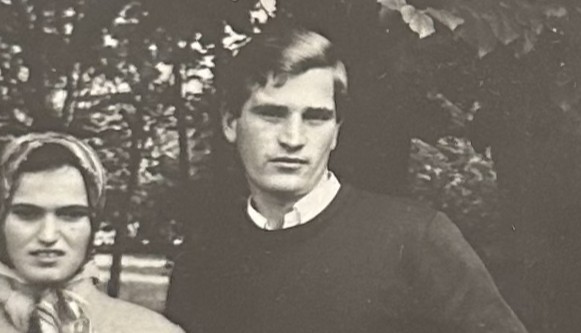

1 Dubrava prison, located in Kosovo, was one of the largest high-security prisons in the former Yugoslavia. Prior to the Kosovo War in 1999, it housed various inmates, including political prisoners, and conditions were often harsh, with reports of overcrowding, inadequate facilities, and instances of mistreatment. Ethnic tensions, especially between Serbs and Kosovo Albanians, contributed to discrimination and stricter treatment for minority prisoners. The prison gained notoriety during the Kosovo War when, in May 1999, Serbian forces allegedly massacred over 90 Kosovo Albanian inmates during NATO’s bombing campaign. This event highlighted the extreme violence and human rights abuses during that period.

Download PDF